





























Spring bulbs that are easy to naturalise: let nature do the work for you!
Our guide to stunning spring flower carpets
Contents
Spring’s arrival is synonymous with renewal and flowering. In gardens, it’s the moment when bulbs planted in autumn reveal their full splendour. Among them, some stand out for their ease in adapting and naturalising to a variety of environments. These spring bulbs not only brighten the garden with their vibrant colours and varied shapes, but they also offer a long-lasting, low-maintenance solution for gardeners. In this article, we will explore a selection of spring bulbs that are easy to naturalise, such as crocuses, muscari, Anemone blanda and many more.

Crocuses
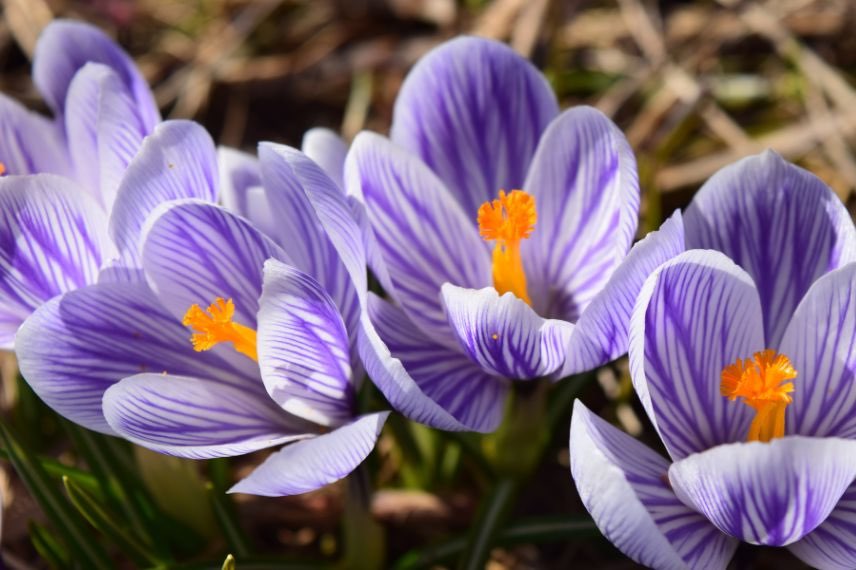
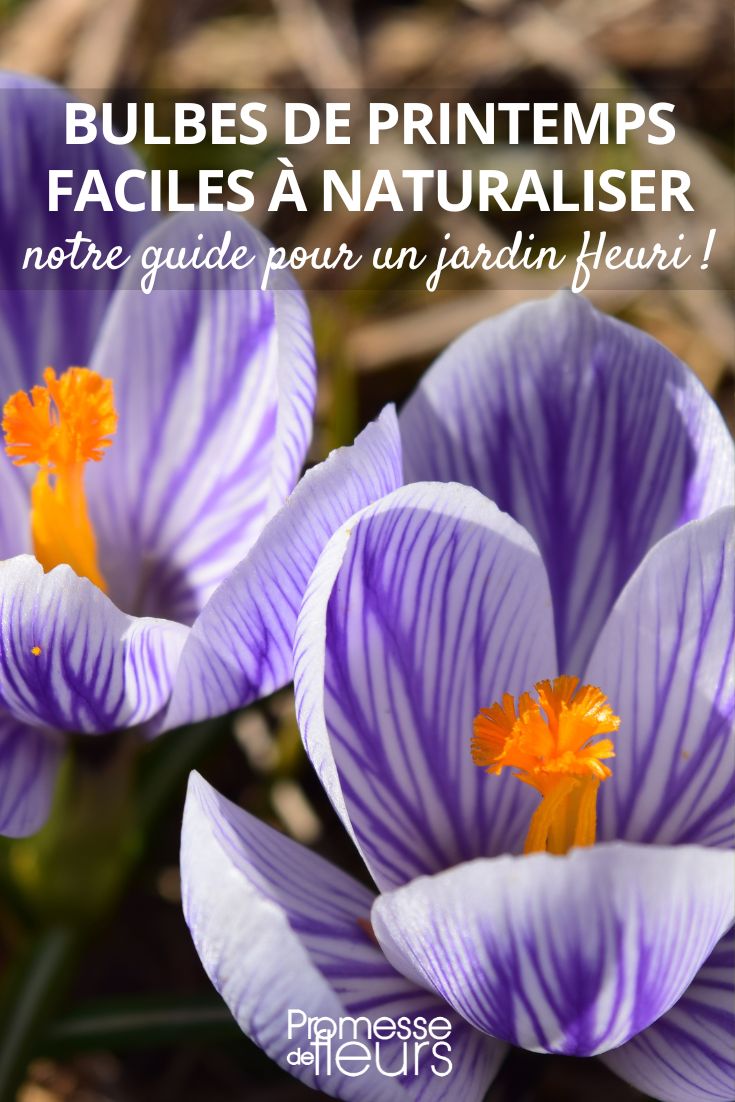
Crocuses are spring or autumn bulbs. The spring varieties offer colourful flowering and are among the earliest to bloom. These small plants, native to Europe, Asia and North Africa, develop a varied colour palette ranging from white to purple, including yellow and orange. Among notable varieties, there is Crocus ‘Orange Monarch’, brown-veined, Crocus tommasinianus in lavender, and Crocus sieberi ‘Tricolor’ mauve, orange and white.
For successful cultivation, crocuses prefer well-drained soil and a sunny or lightly shaded exposure. The planting of the bulbs takes place in autumn for spring varieties, at a shallow depth. These bulbs are frost-resistant and require little maintenance, readily naturalising to form charming colour carpets.
Crocuses pair well with other spring bulbs such as snowdrops, scillas and muscari. They are superb in borders, in rock gardens or under deciduous trees, forming broad carpets. Their early flowering brings colour and cheer to gardens still asleep from winter, creating a striking and refreshing visual effect to welcome spring.
Read also
5 easy spring bulbs for beginnersSnowdrops
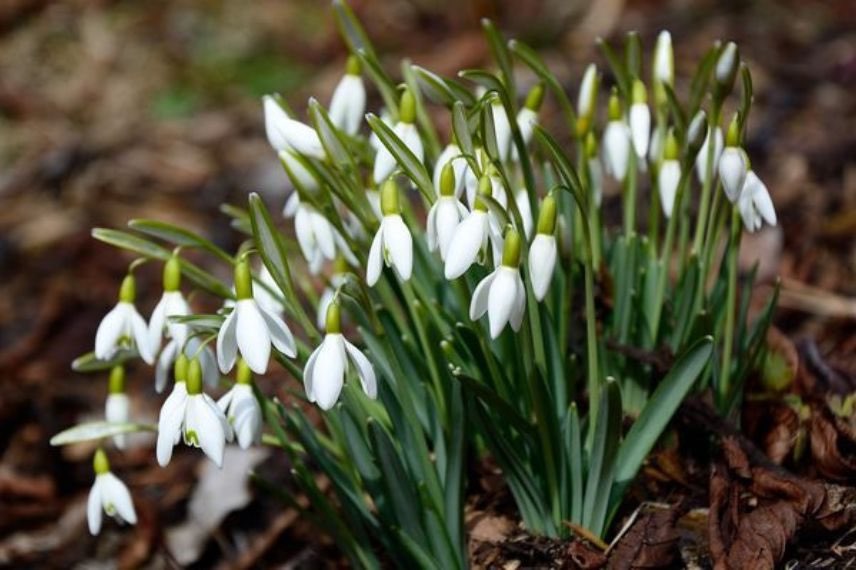
The snowdrop, in Latin Galanthus, is an early spring bulb, hence its name, valued for its ability to adapt and naturalise easily in gardens. This delicate plant, symbolising the arrival of spring, is characterised by its small white bell-shaped flowers, hanging on a slender peduncle. Among the best known are the botanical species Galanthus nivalis, often regarded as the classic snowdrop, as well as the Galanthus elwesii, notable for its large flowers and broad leaves. The Galanthus nivalis ‘Dionysus’ offers charming double flowers.
Snowdrops prefer well-drained, cool soil year-round and semi-shaded locations. It is recommended to plant the bulbs at a depth of three times their height, in autumn, for flowering in early spring. These bulbs are frost-hardy and require little maintenance once established.
Snowdrops pair harmoniously with other very early spring bulbs such as crocuses and the daffodils. For a natural effect, it is worth planting them under shrubs or along the edges of paths. Their bright, cheerful flowering heralds the early days of spring.
Ipheions
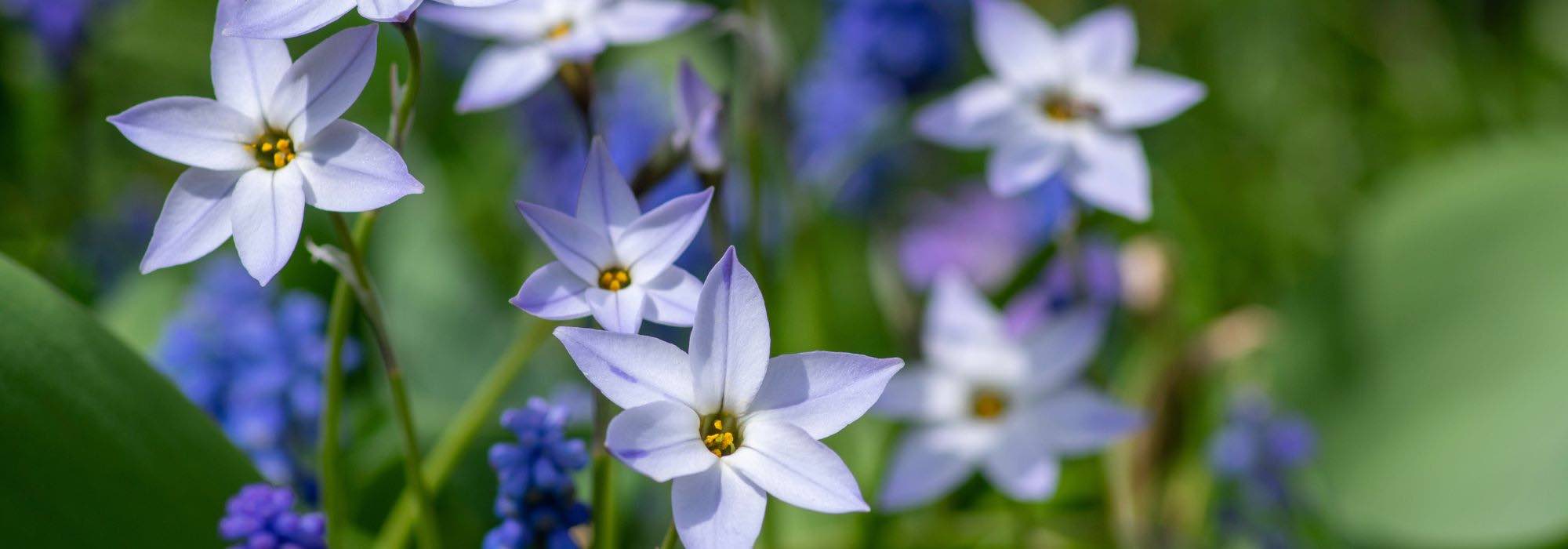
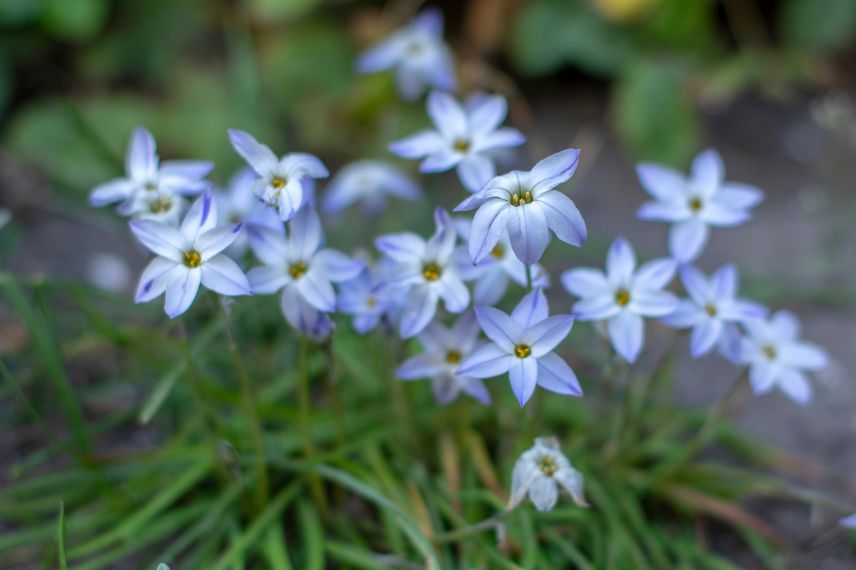
Ipheion, also known as spring starflower, is a charming bulb that is easy to naturalise in gardens. This plant, native to South America, is distinguished by its star-shaped, single flowers in shades of blue, white or violet, emerging among narrow, elongated leaves. Among the most appreciated varieties, Ipheion uniflorum stands out with its pale blue, delicately scented flowers, while the Ipheion ‘Wisley Blue’ offers a more intense blue hue and the Ipheion ‘Charlotte Bishop’ a pink shade.
Ipheion grows in light, well-drained soil, even somewhat dry, in hot, sunny positions or in light shade. Protect with a light mulch to keep the soil cool. Bulb planting takes place in autumn at a shallow depth, allowing flowering in spring.
Ipheion pairs perfectly with other mid-spring bulbs such as narcissi and botanical tulips. It is also interesting to pair them with low-growing perennials or groundcover plants to create texture and colour contrasts, particularly in borders, rockeries or along paths, where they can thrive and increase in number over time.
Read also
5 late-spring flowering bulbsChionodoxas
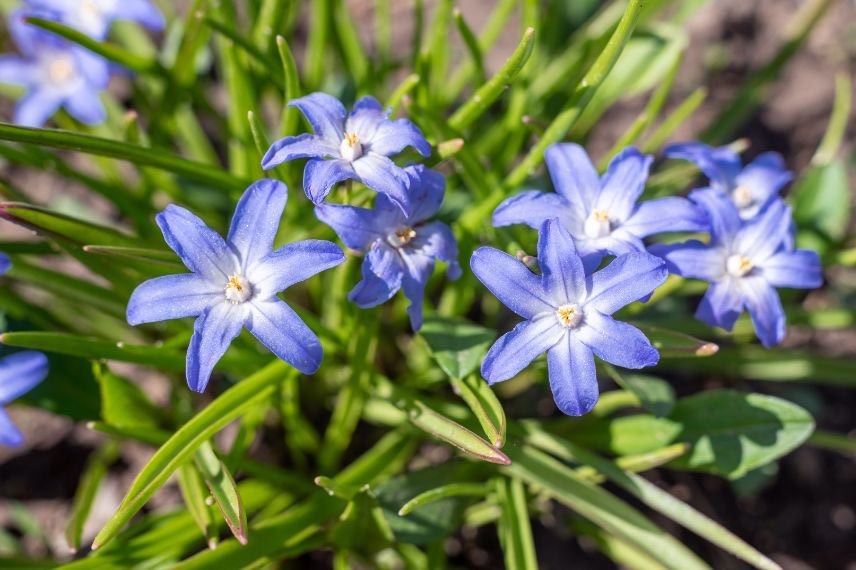
Another little bulb, the Chionodoxa, nicknamed glory-of-the-snow, is a bulb that lights up gardens at the first signs of spring. Originating from the mountainous regions of Turkey and Crete, the Chionodoxas are characterised by clusters of star-shaped flowers in bright blue, or sometimes white or pink. The Chionodoxa luciliae, with its pale blue flowers, and the Chionodoxa forbesii, with deeper blue flowers, are iconic species. The Chionodoxa forbesii ‘Pink Giant’ offers large pink flowers, and the Chionodoxa luciliae ‘Alba’ is a brilliant white.
Chionodoxas prefer well-drained, loose soil, not too rich, in partial shade or light sun. Keep their cultivation to the north of the Loire, as they do not thrive in hot, dry climates. As with other bulbs, they are planted in autumn at a depth three times the bulb’s height. And like others, they require little maintenance and naturalise easily to form splendid carpets of flowers.
Chionodoxas pair well with other spring bulbs of low height, such as crocuses, snowdrops and scillas, in borders, in rock gardens, in beds, woodland edges, slopes and pots.
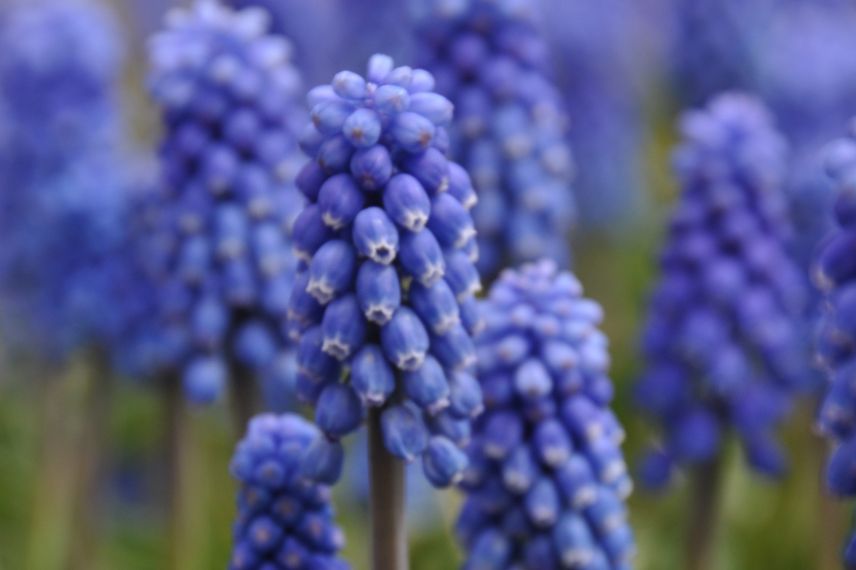
Grape hyacinths
Cyclamen coum
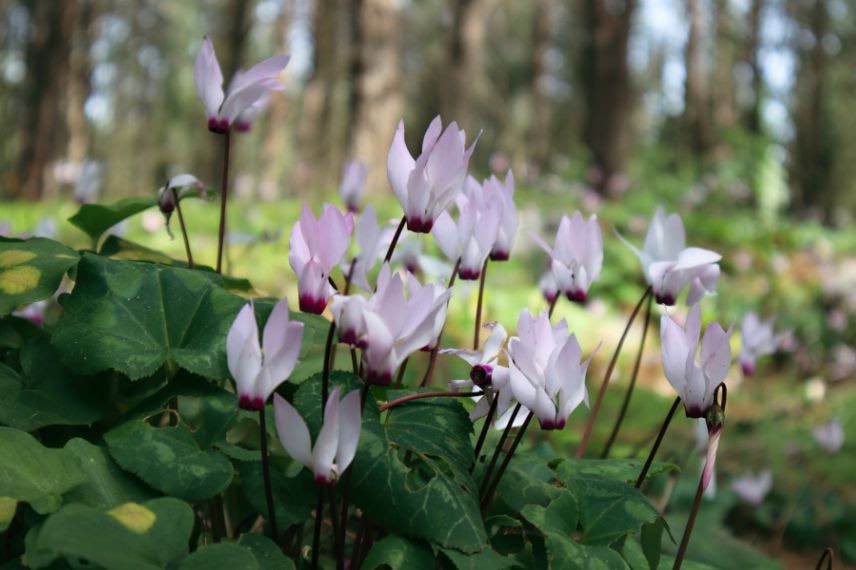
Other spring flowers, Cyclamen coum are tuberous perennial plants that bloom from February to April. They develop delicate and colourful flowers, like little butterflies, and attractive decorative foliage. They flower in white or pink. Also consider the Cyclamen persicum and the Cyclamen pseudibericum, both blooming in late winter, or even from January to March.
Cyclamen coum are native to the mountains of Bulgaria, Turkey and Lebanon. They prefer rich, well-drained soils, even calcareous and rocky soils, and a partially shaded exposure. Tubers should be planted in autumn. These plants appreciate cool, sheltered spots and require moderate watering, avoiding waterlogging.
Cyclamens establish themselves at the base of other woodland plants such as ferns, hostas and hellebores. They are also valued for their ability to naturalise in gardens, gradually forming pretty flowering carpets.
Anemone blanda
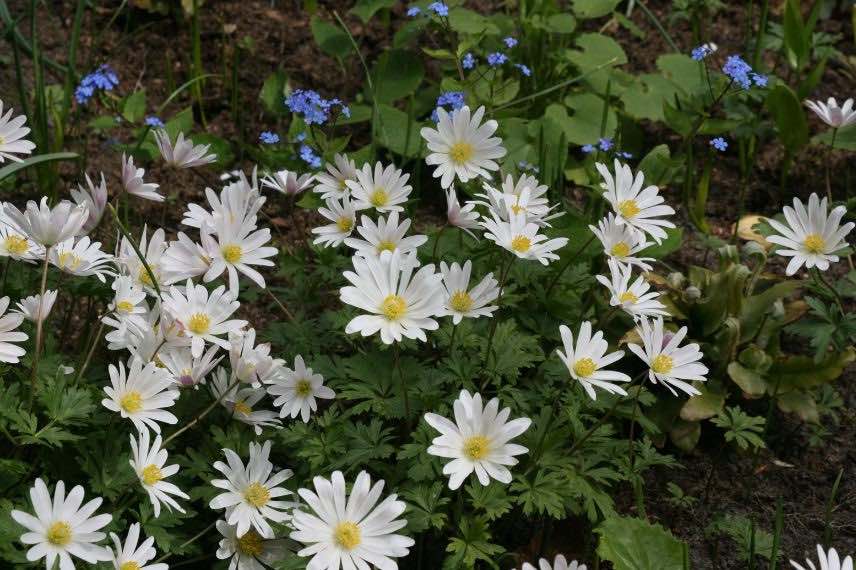
Anemone blanda, also known as the Greek anemone, is a charming bulbous plant, with abundant, colourful spring flowering. Native to the wooded and mountainous regions of south-eastern Europe, this plant is distinguished by its delicate daisy-like flowers, usually blue, white or pink, which open in March and April. Among the best known varieties are the Anemone blanda ‘Blue Shades’ with lavender-blue flowers and the Anemone blanda ‘White Splendour’ with bright white flowers. In pink, we include the Anemone blanda ‘Pink Star’.
Anemone blanda prefers well-drained soils and a sunny position in the north or partial shade in the south. Indeed, it enjoys sun in early spring and in the north of our country, but likes a little shade in summer in hot climates, where it tolerates dry soil well. Tubers are planted in autumn.
This small plant eventually forms large colonies through self-sowing.
In terms of companions, Anemone blanda naturalises beneath trees and spring-flowering shrubs, for example under apple trees, flowering cherries and magnolias. It is also superb in borders or in rock gardens. In beds or pots, it can thrive and multiply year after year.
- Subscribe!
- Contents
Comments