





























Pairing ideas with orange flowers
Our tips to successfully pair orange flowerings
Contents
Orange flowers are beautiful, sunny, and radiant, but we often don’t know how to pair them well. This strong colour, much like red, can sometimes make us hesitate to use it, as it tends to overshadow others with the energy and warmth it radiates. From deep orange flowers to apricot or salmon blooms, the variations are such that colour combinations will differ depending on the beds or atmospheres created.
Whether it’s orange-flowering perennials, orange-flowering shrubs, or even roses and bulbs, let’s explore how to pair them effectively in a garden or on a terrace, in various configurations.
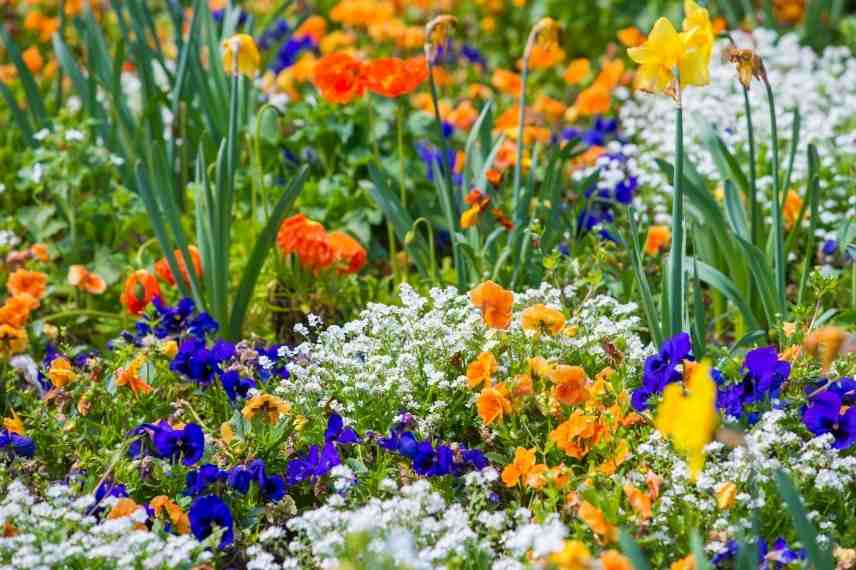
Orange is a strong colour that is often best lightened with softer or cooler shades.

Orange flowers in the garden
- Orange is a secondary colour, resulting from the mixture of red and yellow, two warm colours. Orange flowers attract the eye with this hue reminiscent of fire, stimulating, evoking warmth and light. It’s an energising colour for joyful gardens!
- Orange comes in shades ranging from very pale orange to salmon oranges, as well as reds tinged with orange… the combinations will differ depending on whether you use peach orange flowers or bright orange flowers.
- Scattered touches of orange flowers bring an irreplaceable light to beds lacking in relief.
- Its solar presence deserves to be expressed over large areas, as orange is one of the strongest colours, especially in its darker shades.
- Orange flowerings are sun flowerings, so it will not be possible to associate them in areas of dense shade where they are almost non-existent…
The essential orange flowers
Before you start with associations, a small selection of the most beautiful orange flowerings is essential:
- perennials: this is the most represented range of flowers, often featuring summer flowerings: daylilies, echinaceas and heleniums, poppies (Papaver nudicale), Kniphofias, achilleas, Geum (avens), Agastache, Digiplexis, Delospermas, Aloes, Strelitzia and Hedychiums, along with many tulips and fritillaries among the bulbous plants, as well as florist’s ranunculus, Leonitis, Cannas, Alstroemerias, Lilies and Crocosmias…
- shrubs: roses, some azaleas and rhododendrons, a few Witch Hazels and Chaenomeles (Japanese quinces), Osmanthus fragrans ‘Aurantiacus’, some Cytisus scoparius (broom), Berberis (Barberry), some beautiful cinquefoils and among the orange berries, Pyracantha, and Sea Buckthorn…
- climbers: roses, trumpet vines and honeysuckles, some Bougainvilleas, Pyrostegia venusta and Black-eyed Susan.
- annuals: eschscholzia (California poppy), marigold, lantana, nasturtium, gazanias, marigolds and zinnias.
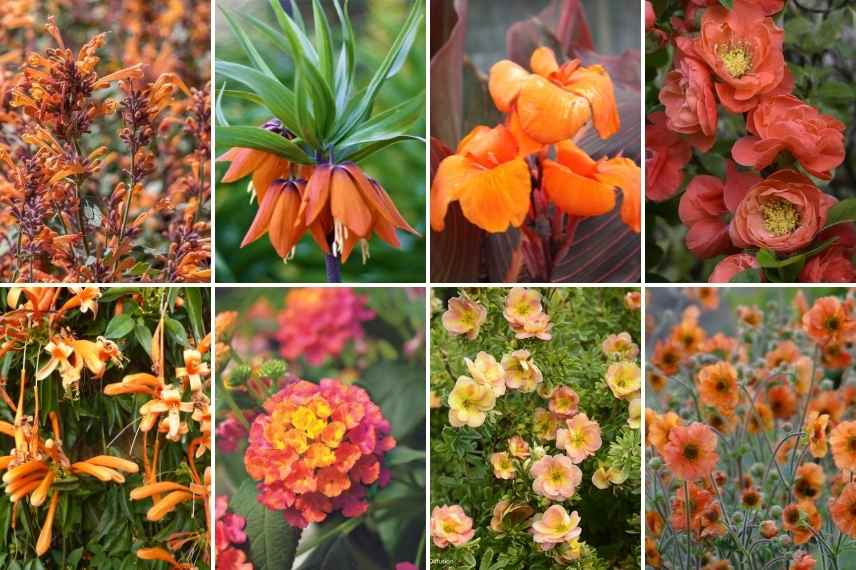
Agastache ‘Kudos Mandarin’, Imperial Fritillary, Canna, Chaenomeles speciosa ‘Mango Storm’, Pyrostegia venusta, Lantana ‘Calippo Tutti Frutti’, Potentilla fruticosa ‘Double Punch Peach’, Geum ‘Totally Tangerine’
Discover other Orange flowering perennials
View all →
Available in 1 sizes
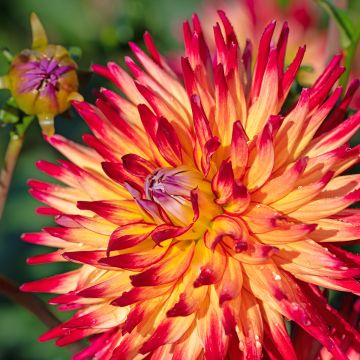
Available in 1 sizes
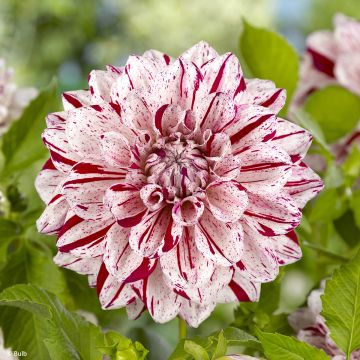
Available in 1 sizes
Available in 1 sizes
Available in 1 sizes
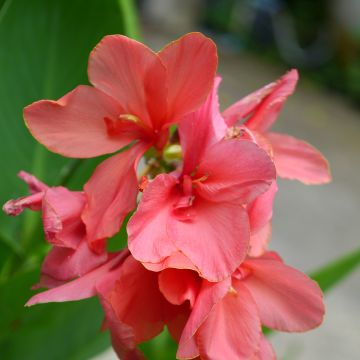
Available in 1 sizes
Available in 1 sizes
Available in 1 sizes
Available in 1 sizes
Available in 1 sizes
Pairing orange flowers with other colours
In an orange hue
The shades of orange are beautiful and varied: coral orange tinged with deep pink, bright orange, mandarin, apricot orange, or softer peach… Mixing these different shades in a gradient is the easiest option, allowing for a visually pleasing composition, with the softer tones tempering the invigorating effect. Very beautiful results are often achieved by combining flowers of different varieties, such as carpets of tulips in spring, or by preferring to marry varied species.
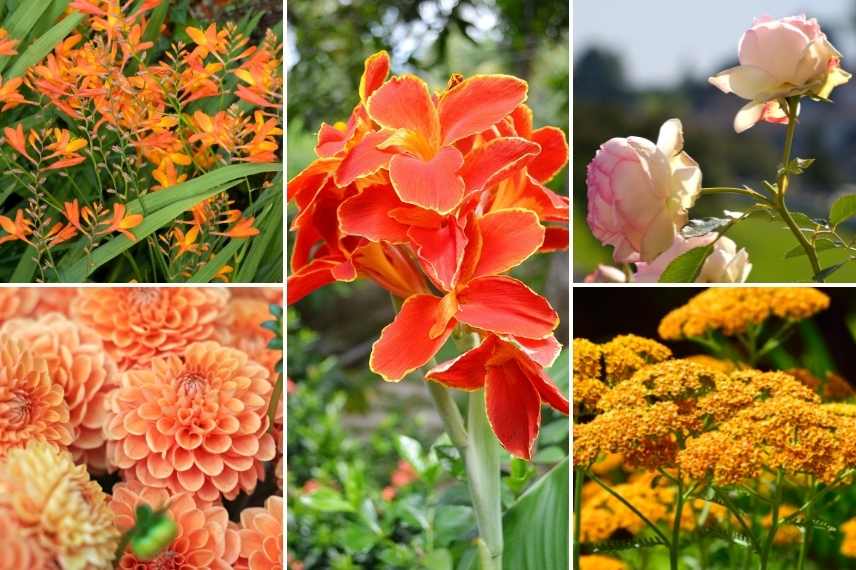
Gradients of orange flowers will always be successful and harmonious if you hesitate to undertake contrasting combinations: here Crocosmias, Dahlias, Cannas, roses, and Achilleas
In a contrasting duet of orange and blue
This is the perfect combination, using two opposing and therefore complementary colours on the colour wheel. This happy marriage is full of relief and contrast, with the relaxing blue balancing the dynamic aspect of orange. It is quite powerful, so limit yourself to a few chosen beds, or repeat this duo in the garden in small touches, varying the shades from bright to muted. This duo particularly highlights graphic flowers.
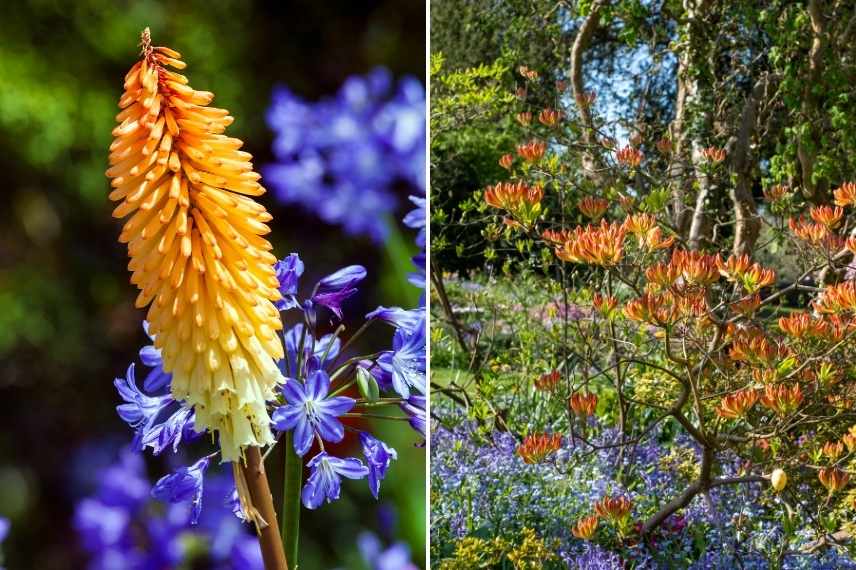
Kniphofia and Agapanthus, a graphic and vibrant duo. On the right, an azalea on a carpet of forget-me-nots in a more rustic setting.
With soft colours
Orange flowers in large numbers are certainly energising, but they will be much more beautiful when associated with pastel shades, in equal proportions. One then chooses soft oranges, apricot or coral, like many avens or alstroemerias for example. Mauve and powder pink flowers, very pale yellow or lavender blue will appreciate this joyful company and gain in charm, especially in spring beds.
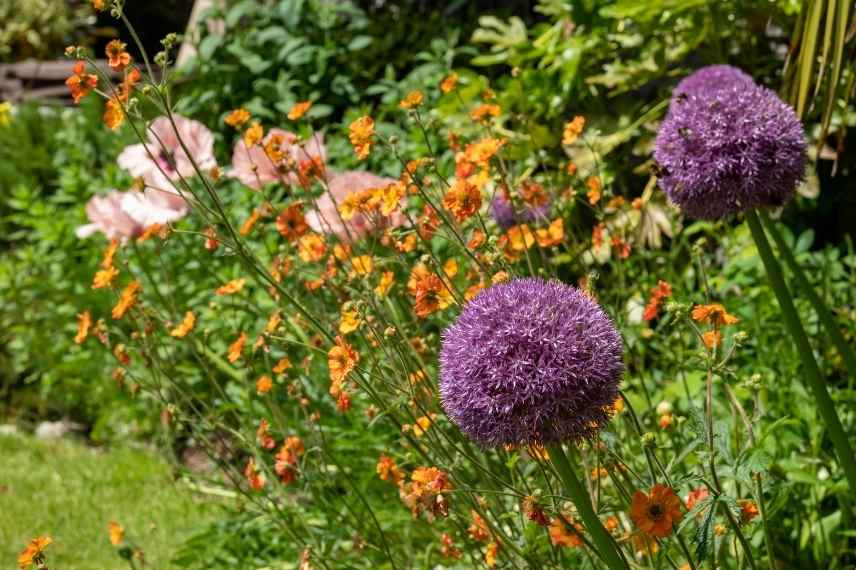
A lovely scene combining poppies, orange Geums, and Alliums
With nearby colours: yellow and red
For a vibrant effect, bring orange flowers close to nearby and equally vibrant colours, yellow and red. This is a nearly foolproof combination, provided you use bright saffron yellows and reds tinged with orange like vermilion. This striking trio is welcome in summer, radiant under the heat and well-suited to full sun flowers like Monardas, Phlox, Dahlias, Crocosmias, Penstemons, Kniphofias, etc.
A bed composed of these vibrant colours will however be reserved for specific areas or only in a large garden, lest it overshadow surrounding flowers… or you may choose to soften the edges of large beds like mixed borders, but this is a bit more technical. Another way to achieve a slightly less intense rhythm in the garden is to juxtapose some white blooms that will serve as a link.
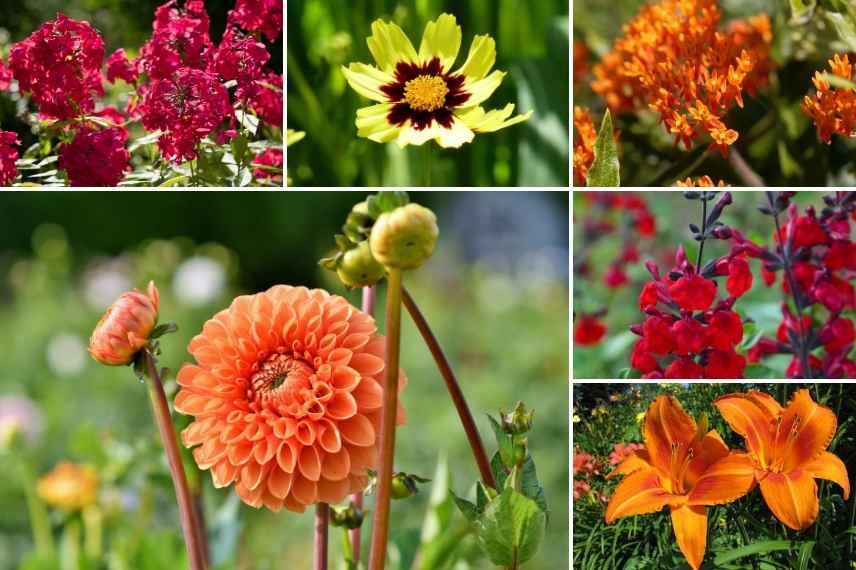
Salvia macrophilla, Coreopsis ‘Cosmic Eye’, Asclepias tuberosa, orange Dahlia, Salvia microphylla ‘Rêve Rouge’, and Hemerocallis ‘Burning Daylight’
With pink
This is a somewhat daring bet for the adventurous gardener… or one who loves exotic atmospheres! But it works really well when choosing apricot or papaya oranges and warm Indian pinks (banish “cool” pinks tinged with blue). However, this combination should be handled with care as it is quite powerful. It is especially suitable for lush tropical gardens and works particularly well in summer. Alternatively, you can opt for pastel oranges and pinks, as in the example above. Some bluish inflorescences can even elegantly mingle with this duo.
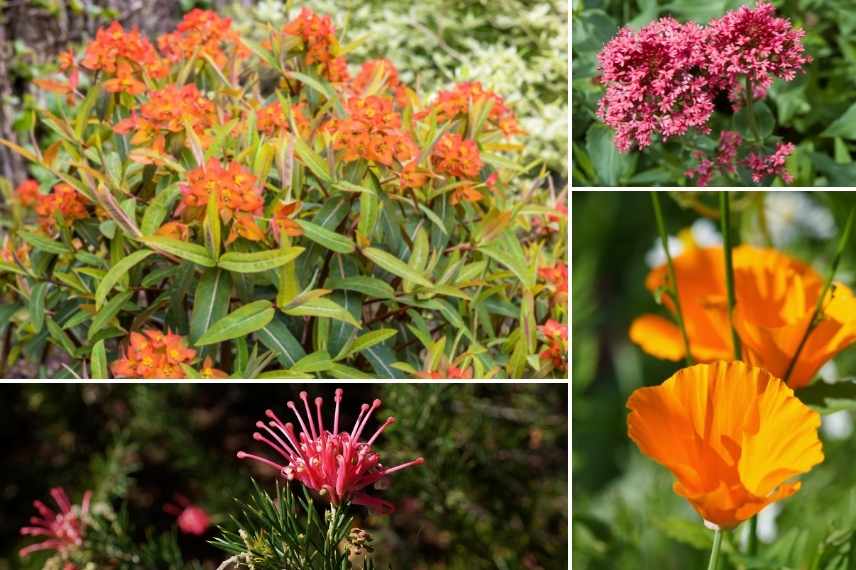
Euphorbia griffithii, Valerian, Grevillea juniperinus, and California poppy
With purple tones
Orange and purple, as well as bronze shades, harmonise beautifully. These are two warm colours that will support each other. To avoid overly dark scenes, use light oranges and insert some bright green foliage tinged with yellow. Creamy, very light inflorescences like those of white Thalictrums, Filipendulas, or Tiarellas often lighten the whole. Also consider the spikelets of certain grasses.
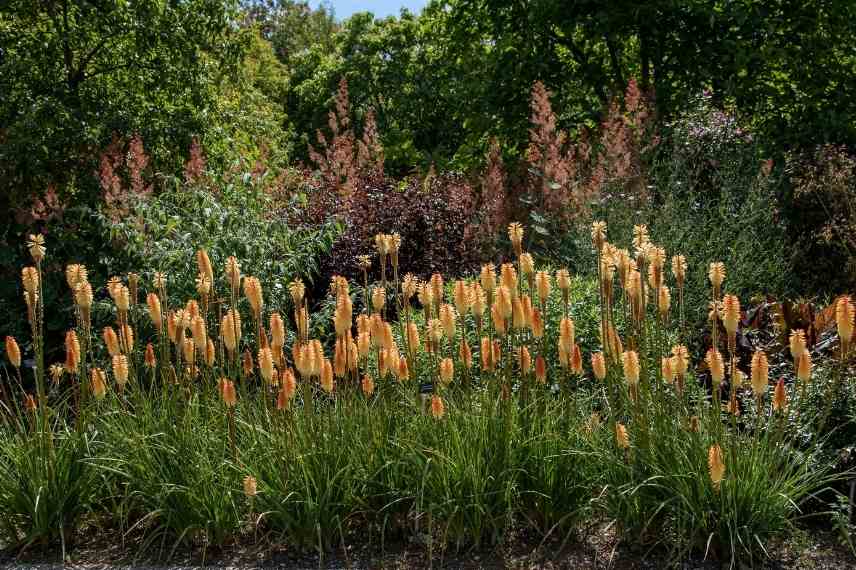 Masses of Kniphofias are stunning against purple foliage[/caption>
With white
This is one of the easiest combinations, as the neutrality of white allows for a happy blend. It will be particularly successful with bicoloured white flowers, whose flower centre is yellow or orange, to avoid suffering from too great a contrast when the orange flowers used are very bright.
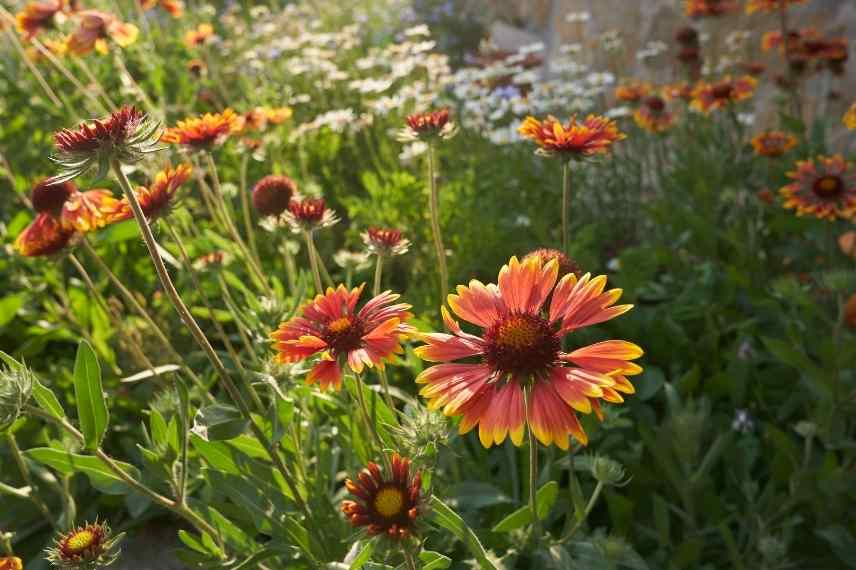 Helenium and Leucanthemums
Pairing orange flowers with foliage
As always, foliage turns out to be the essential adornment for your flowering plants. To temper the vibrancy of orange flowers, it is interesting to focus on purple or bronze foliage, as they create a very harmonious ensemble. Ideally, place them in the background to add depth and extra brightness to the orange hues of your flower beds.
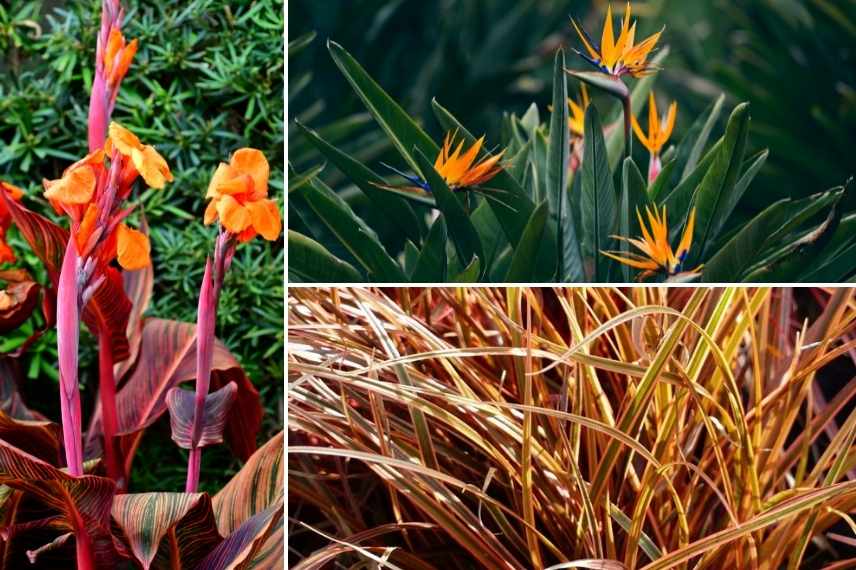
Cannas, Strelitzias, and Uncinia rubra
Grey-green or silver foliage is also gorgeous when positioned next to orange flowers, as it tempers their vibrancy. Finally, diffuse foliage (fine and slender) or textured foliage (such as downy) will further support the fiery temperament of your lovely perennials, highlighting them particularly well.
Also consider incorporating bark in shades of gold, mahogany, white, or grey: they truly enhance the orange blooms.
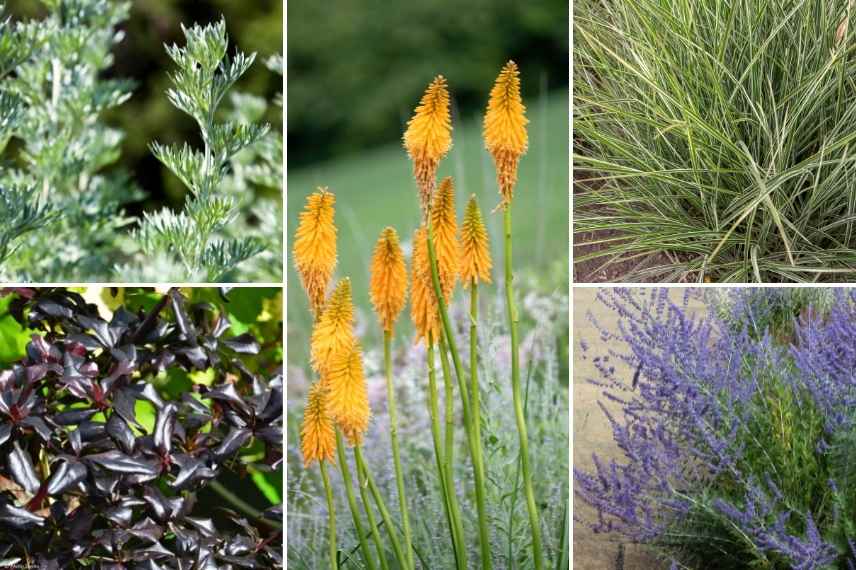
Kniphofias surrounded by Artemisia absinthium, Berberis thunderbolt, Miscanthus sinensis ‘Variegatus’, and Perovskias
Pairing orange flowers to match your garden style
Orange flowers will find the ideal context to fully express themselves in these few types of gardens:
In a romantic garden
Orange can certainly find its place in a romantic garden, or an English garden, as long as it is paired with soft shades, fluffy flowers, creamy and pale yellow tones to soothe it. You can even insert a few flowers in soft pink or coral and violet blooms. It’s all about balance to maintain a dreamy and poetic atmosphere. Primarily, colour harmonies are used.
Flowers will be chosen for their lightness and airy effect, such as gaura, lady’s mantle, gypsophila, or heuchera to soften the brightest orange flowers.
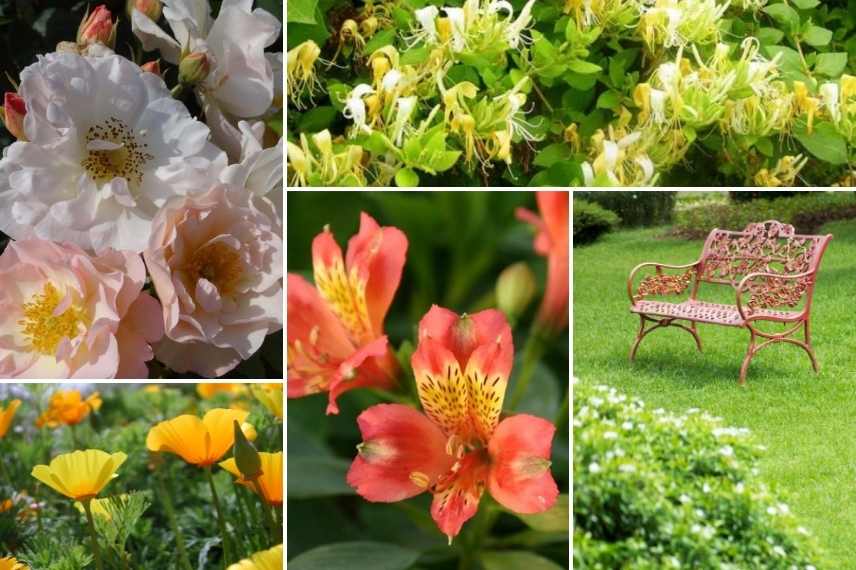
Old rose ‘Penelope’, Honeysuckle ‘Hall’s Prolific’, California poppies, and Alstroemeria ‘Duchesse Anne’
In an exotic garden
The exotic garden is undoubtedly the garden most eager for bold colours. Orange flowers find the perfect setting to thrive, whether in a dry exotic garden or a lush tropical garden. You can create vibrant flower beds composed of Hedychiums, Strelitzias (bird of paradise), Aloes, Daylilies, and Kniphofias, as well as Cannas, Hibiscus, and other tropical beauties… In this type of garden, you will play with colour contrasts.
All these plants elegantly combine with lush, dark, purple, or variegated foliage, such as that of banana plants, Tetrapanax, tree ferns, and palms, or fine yet exotic-looking plants like melliferous Euphorbia. For inflorescences, prefer yellow, white, even pink or salmon flowers (found in some Proteas like ‘Pink Crown’, Cannas, or Alstroemerias), as long as you stick to atypical flower styles like Arums, Roscoeas, or Strelitzias. Dare to include purplish notes in combination with the stunning Tibouchina, for example!
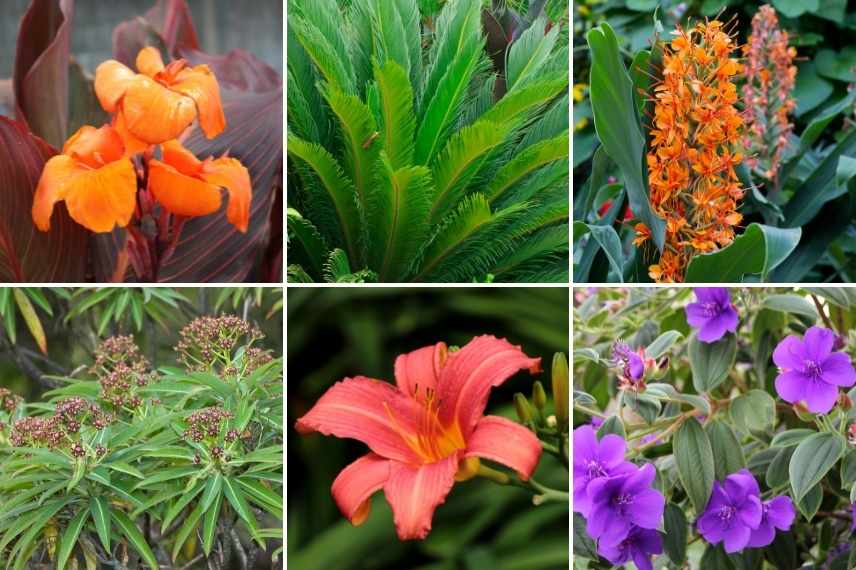 Canna ‘Durban’, Cycas revoluta, Hedychium coccinea ‘Tara’, Euphorbia mellifera, daylily, and Tibouchina urvilleana[/caption>
In a countryside garden
Here, you can experiment a bit more with polychrome mixes, as this garden’s apparent chaos is less affected by mismatched pairings. The spontaneity and charm of the place allow for a juxtaposition of orange touches, supported by blues, pinks, and whites. Again, especially because you are using more than three colours, emphasise a certain roundness and lightness in the shapes of the inflorescences.
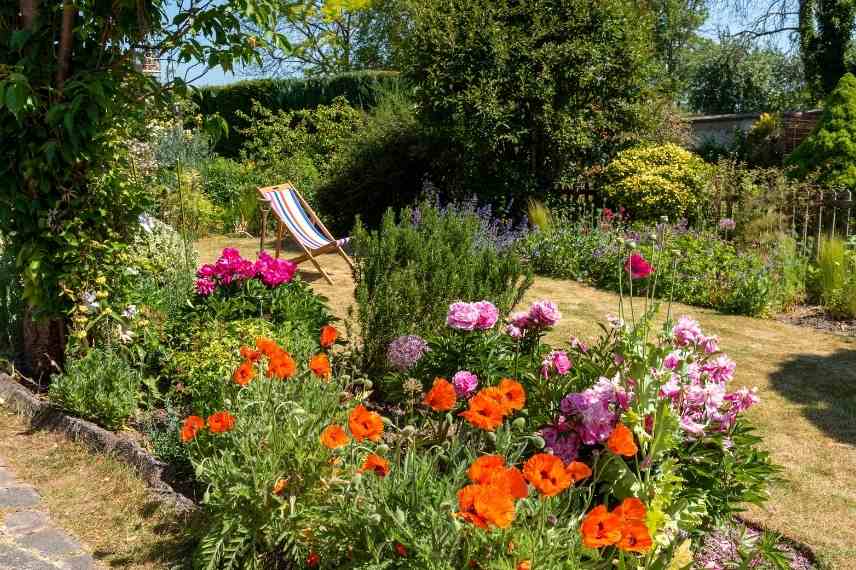 Orange poppies add a sunny touch to this rural corner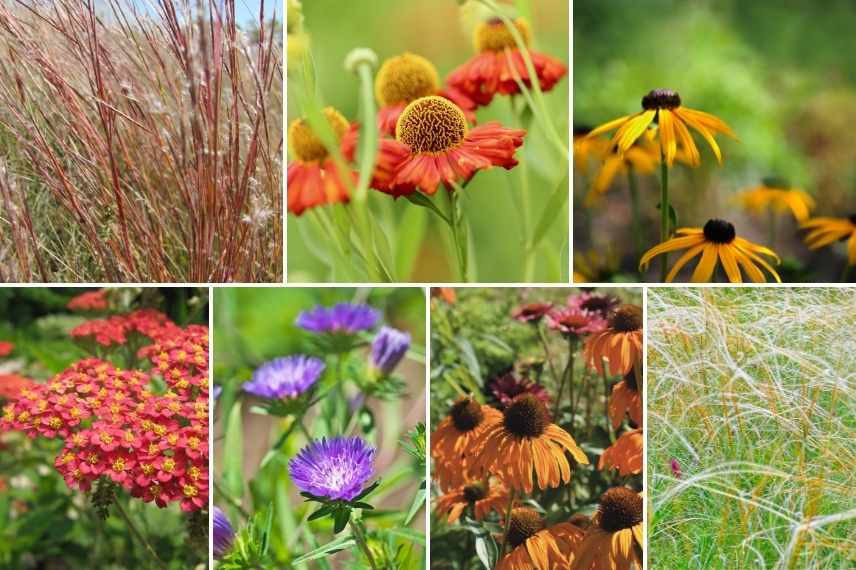 Schizachyrium scoparium ‘Prairie Blues’, Helenium, Rudbeckia, Achillea millefolium ‘Paprika’, Stokesia, Echinacea ‘Tangerine Dream’, and Stipa pennata[/caption>
In the vegetable garden
Finally, in the vegetable garden, orange flowers easily associate, as many orange blooms are melliferous and therefore very useful, such as Agastaches, Erysimums cheiri (wallflowers), autumn heleniums, and hyssop. Others are companion plants like nasturtium or marigolds that act as insecticidal, even nematicidal, natural solutions!
Alongside hyssop and blue borage, purple fennel, Helychrisum italicum (curry plant), and Dahlias, orange blooms will blend with vegetables in a very natural abundance. In the herb garden, favour oregano, mint, marjoram, and hyssop as companion plants.
Also, read our recommendations with Flowers to Attract Bees and The Best Melliferous Plants by Season.
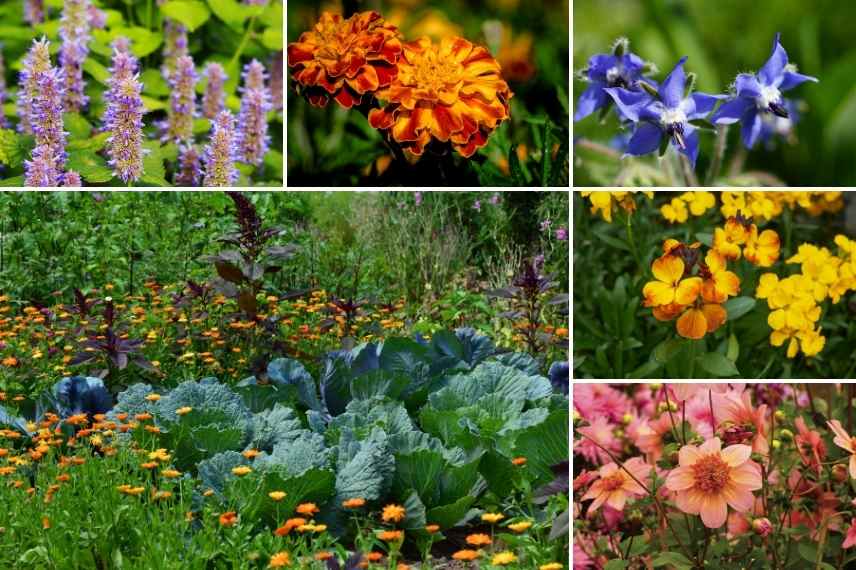 Agastache foeniculum, marigold, borage, wallflower, Dahlia ‘Totally Tangerine'[/caption>
Associating orange flowers with different seasons
On can find plenty of orange flowers in all seasons to create a four-season garden bursting with colour, where orange will be the star… except in winter, when we will rely mainly on scarlet berries and bark.
In spring
This is a season where you can easily combine a number of orange flowers, primarily found in bulbous plants, but also in beautiful perennials like poppies and wallflowers. You can choose either a soft atmosphere by combining subtle, apricot, white, and yellow flowers to create lovely bucolic scenes, or gather the brightest bulbous and perennial plants in a bold orange and blue, or even orange and pink, combination for vibrant beds that stand out after winter. Orange and purple flowers will be beautifully showcased in pots and contemporary gardens for a touch of whimsy!
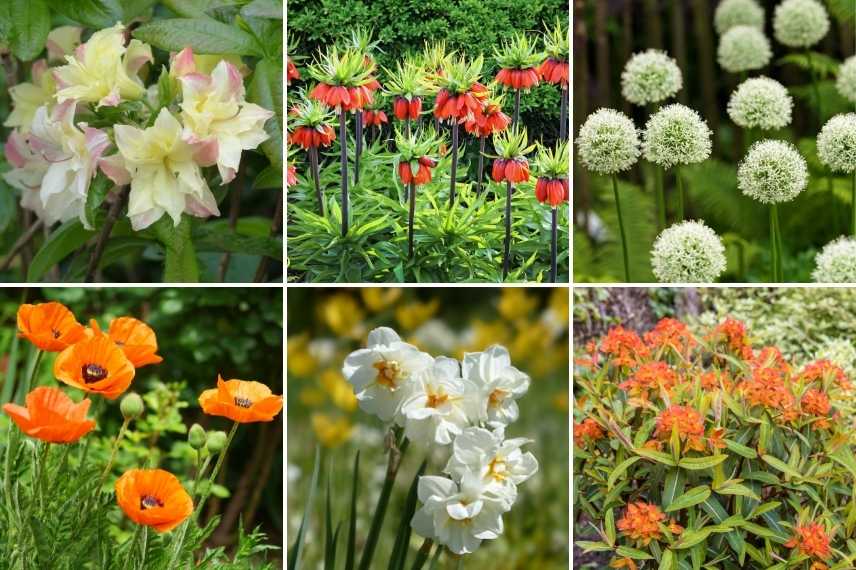
Chinese Azalea ‘Cannon’s Double’, Imperial Fritillaries, Allium ‘Mont Blanc’, Oriental Poppies, Daffodils, and Euphorbia ‘Dixter’
In summer
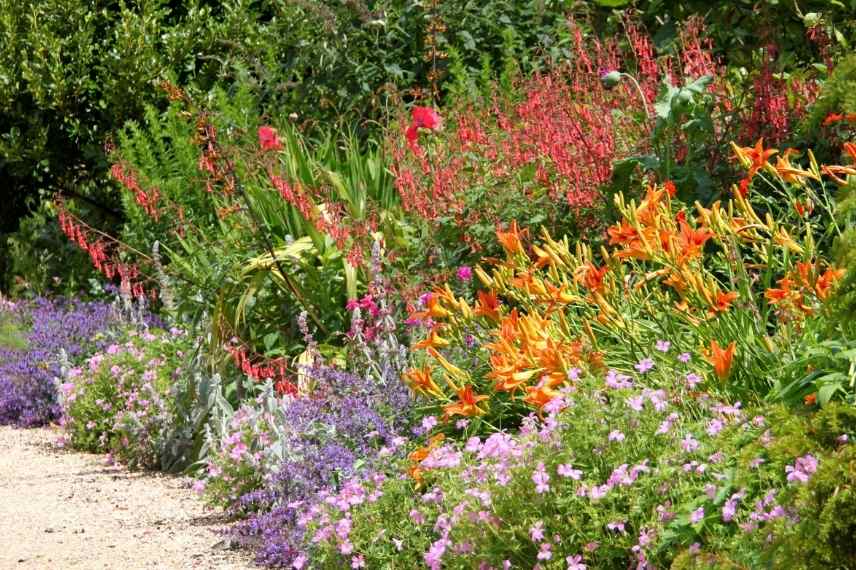
Throughout summer, at the height of long, warm days, numerous orange blooms succeed one another, perfectly in tune with this sunny season. You can afford to be bolder by creating spicy beds in vivid, warm tones, combining all shades of red up to purple, yellows, and burnt sienna and paprika hues, as well as rich pinks, while always keeping in mind to compose these scenes in limited areas due to the intensity of these flower colours, or on larger, lighter country scenes.
To avoid a too garish effect, stick to 3 main colours, which you can combine with contrasting green foliage (aniseed or purple), or the golden culms of grasses: for example, orange-yellow-red, orange-pink-purple, or orange-red and purple flowers. White is always useful, inserted in small touches. The orange and yellow or orange and blue duos are more subdued and truly magnificent.
In autumn
Although orange flowers begin to dwindle, there are still enough to set the garden ablaze one last time before the frost… The result will be beautifully amber, with a staging playing on rust and purple tones, adding touches of white, blue, or mauve, and a bit of red to enhance the autumnal fire. To highlight roses, Dahlias, Kniphofias, Crocosmias, Cannas, Gazanias, and other still-vibrant Heleniums, consider the reddened foliage of Cercidiphyllums and Parrotias persica, as well as the structural Phormiums, many cultivars of which are superbly variegated in red or bronze. Salmon-coloured salvias like ‘California Sunset’ or ‘Ribambelle’ will also feel at home as they do in summer. If you desire a more golden note, rely on Heleniums, Rudbeckias, and certain orange Delospermas, along with the stunning Ajania Pacifica as groundcover.
Grasses should not be overlooked for creating beautiful touches of tawny and straw light, nor should Physalis, whose lanterns still brighten the beds.
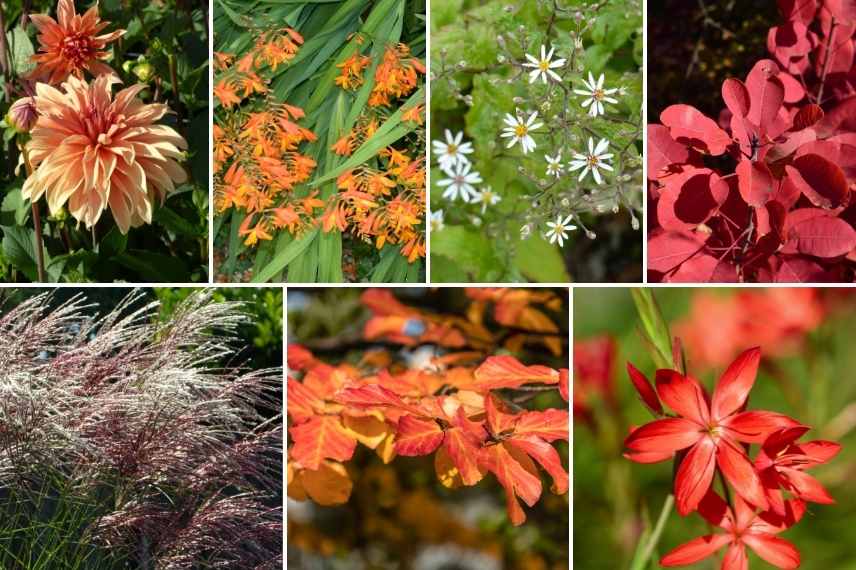
Dahlia ‘Babylon’, Crocosmias, Asters divaricatus, Cotinus coggygria, Miscanthus sinensis ‘Grosse Fontane’, Parrotia persica, Schizostylis
In winter
This is the season when we find ourselves a bit short on vitamin-rich orange, apart from certain shrubs like Hamamelis and the sublime Edgeworthia chrysantha ‘Red Dragon Akebono’. These shrubs bloom in mid-winter, allowing you to recreate a flamboyant scene alongside the mahogany bark of a Prunus serrula or the exfoliating orange of a Paperbark Maple (Acer griseum), and the coppery woods of golden willows, those reddened of Cornus alba ‘Kesselringii’ or yellow of Cornus stolonifera ‘Flaviramea’. Consider also highlighting sea buckthorns whose orange berries often persist in winter. The options are therefore numerous, including the cream catkins of a goat willow, and for even more softness, the powdery tones of hellebore and heather blooms planted en masse at the base, which will beautifully tie the whole together.
Also, check out our advice sheets: Hamamelis, 7 ideas for successful combinations, and 6 ideas for pairing Edgeworthia.
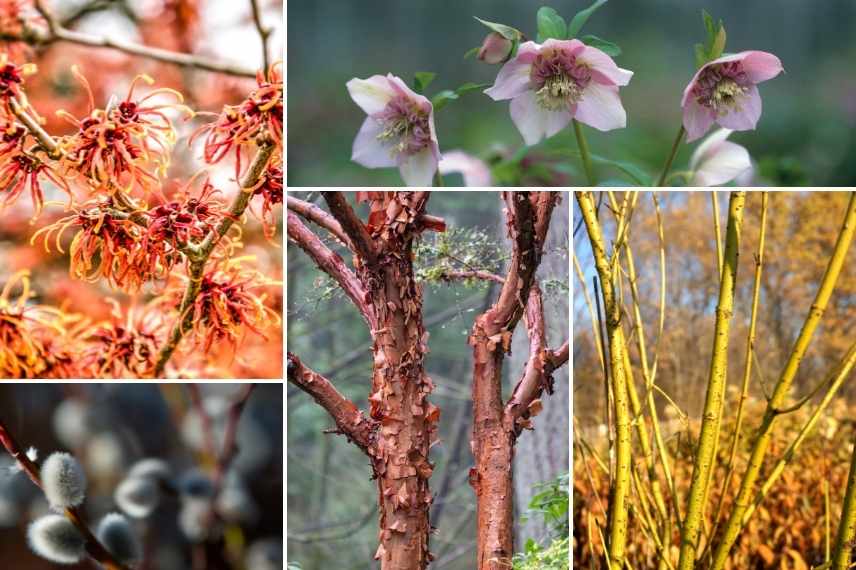
Hamamelis ‘Jelena’, Helleborus orientale, Salix caprea, Acer griseum, Cornus sericea ‘Flavimera’
- Subscribe!
- Contents
Comments