





























How to create a forest garden?
Permaculture, food autonomy and biodiversity
Contents
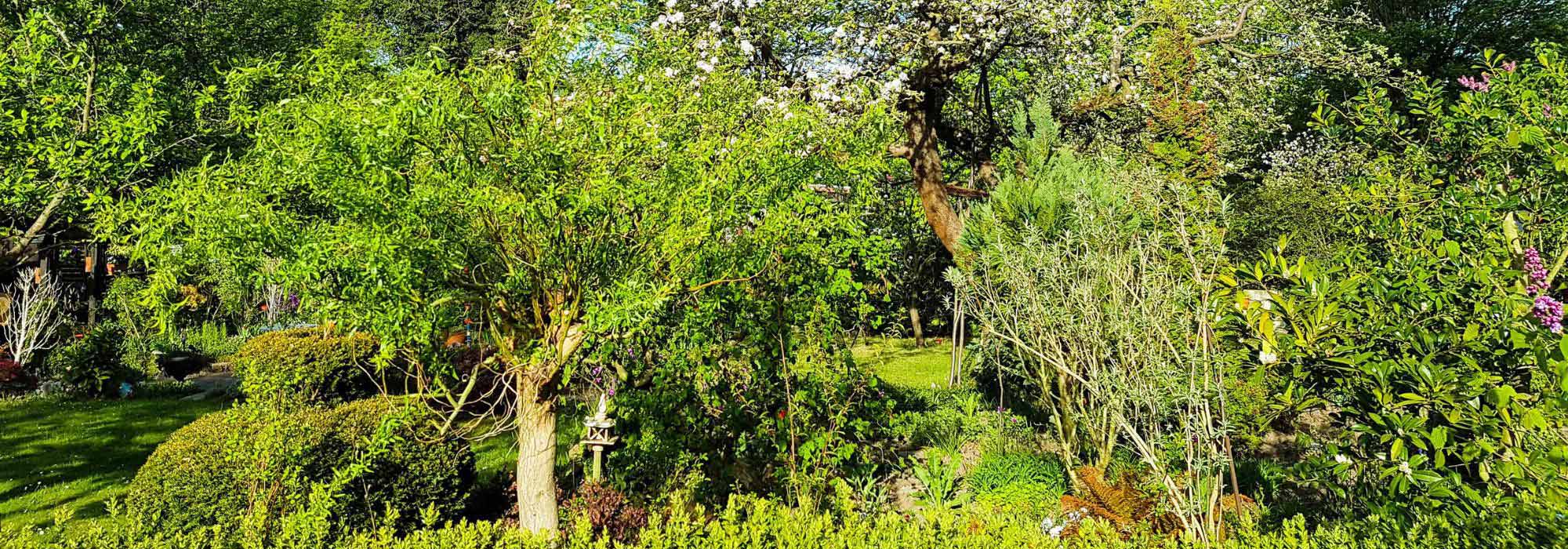
Also known as an edible forest, the forest garden harnesses the natural principles of forest ecosystems and their dynamics to create a nourishing space in the garden that is naturally intensive and requires little maintenance. This permaculture concept is particularly relevant in times of climate upheaval, where autonomy and resilience become invaluable, but it also simply offers a new aesthetic for your garden.
Discover how to create a nourishing garden in the form of a forest garden rich in biodiversity.

What is a forest garden?
In a forest, plants naturally develop across different layers, creating a beneficial medium for all. There is no richer and more fertile environment than these ecosystems where the largest plants, trees, and large bushes shade the smaller ones while protecting them from the harshness of the elements, where moisture is preserved and humus accumulates, continuously enriching the soil.
In permaculture, the forest garden or edible forest simply mimics this functioning: plants are arranged in different strata to achieve varied harvests that require very little work from the gardener: watering, pruning, and weeding are reduced to a strict minimum in the early years, aiming for a nearly self-sufficient garden.
Plants are organised into different layers where everything is edible or has a use for the community of plants created:
- the tree layer, composed of standard trees. This is a sunny area.
- the bush layer, containing the largest bushes. This is a sunny or semi-shaded area.
- the shrub layer, which includes smaller bushes. This is a semi-shaded area.
- the herbaceous layer, which consists of groundcover plants. This is a rather shaded area, but the exposure variations allow for the creation of sufficiently exposed zones for plants that need light and sun.
A forest garden is designed to provide food, but it also shares this space with other forms of life, such as birds, insects, and some mammals. In addition to avoiding carbon emissions related to transport since we consume what we grow, trees capture CO2 as they grow and help combat climate change.
→ Watch a video example of setting up a forest garden from a grassy plot and explanations on the different layers of the forest garden.
How to create an edible forest at home?
First, take the time to get to know your garden, its soil, its exposure, and the prevailing winds it is subjected to. Then think about your desires and needs, what you wish to harvest and consume, and in what quantity. If you have a small area, it is still possible to create this type of garden, prioritising self-fertile plants like the almond tree, which only requires one plant to provide yields and smaller-growing varieties.
If you are starting from a cleared area such as a patch of garden or an existing vegetable plot, begin by planting the trees of the upper stratum, taking into account their growth at ripeness, but spacing them closer than in a traditional orchard, with the idea of creating shade. The complete planting of the garden can be done gradually, stratum by stratum or zone by zone, depending on the time and budget you have available. Consider trees and bushes offered as bare roots, which are less expensive to purchase.
Research beneficial plant associations, known as guilds in permaculture. These are plant associations that interact and support each other, creating stable and sustainable ecosystems. They are generally organised around a main plant that is taller than the others, accompanied by other plants within what is called a plant ensemble. You should choose plants that have the same needs in terms of water and soil, with different sizes, as well as root systems that are more or less deep and spreading, so they do not compete with each other.
For these associations to be effective, you should group plants that fulfil at least three of the following criteria:
- air-structuring plants: for shade, protection against wind, and serving as natural supports
- nitrogen-fixing plants
- plants that bring up mineral elements
- soil-structuring plants, which decompact the soil with their roots
- attractive plants, such as melliferous and pollinator plants or those attracting predators to protect their neighbours
- repellent plants, against harmful and unwanted insects
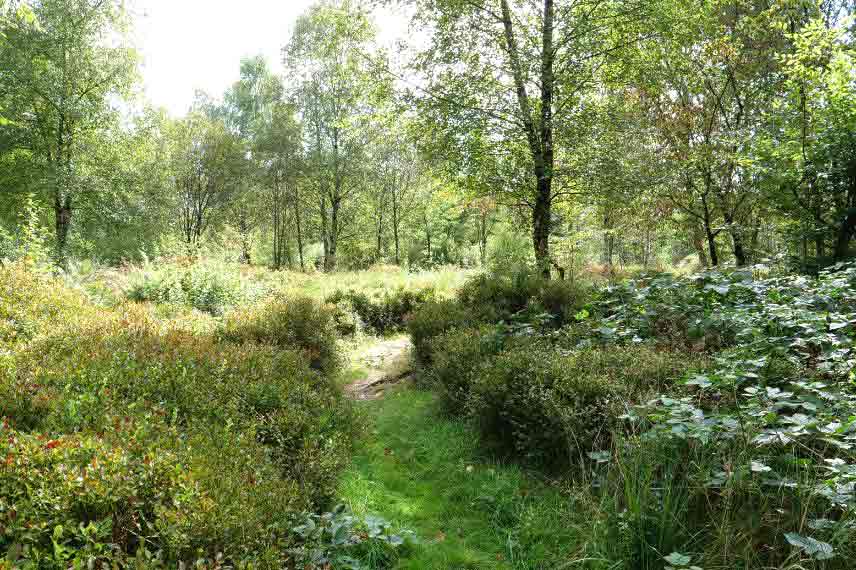 Creating a forest garden is not something to be improvised; it is a project that requires careful thought and is truly exciting!
The tree stratum of the garden forest
Trees provide their shade, protect the lower nival zones from prevailing winds and attenuate thin, frost, snow, and heavy rains. The decomposition of tree leaves enriches the soil with a fertile and living humus.
Aiming for food autonomy, we prioritise fruiting species with, if possible, ancient and local varieties that are more resilient and better adapted to the climate of each region. For this nival zone, focus your choice on your preferred fruit trees that are suited to your region and soil: pear trees, apple trees, cherry trees, plum trees, mulberries (Morus), fig trees, etc. Plant trees that produce shell fruits, edible berries like the Hackberry, and valuable lindens for herbal teas. In addition to having edible, medicinal leaves, being nectariferous, and polliniferous, and fertilising the wooded garden, trees will create plays of light and shadow and serve as supports for lianas and climbing plants.
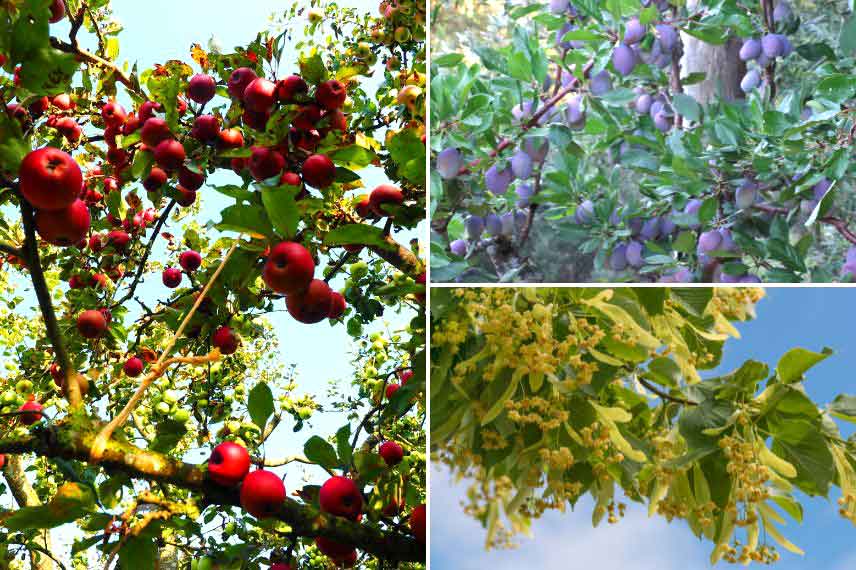
Apple tree, plum tree, and linden
Read also
Permaculture: the technique of swalesThe shrub stratum of the garden forest
This second stratum is adorned with bushes that thrive in semi-shade. They produce edible and tasty berries, often overlooked such as amelanchier, the male Cornel (Cornus mas), the autumn Chalef (Elaeagnus umbellata), the Blackthorn (Prunus spinosa), and Sea Buckthorn (Hippophae rhamnoides), but also intended for birds like the Ornamental Apple Tree (Malus ‘Golden Hornet‘) whose miniature apples are highly appreciated by birds.
This stratum can also include Hazels, black Elderberries (Sambucus nigra), Aronias, and Strawberry Trees. The Chalef (Eleagnus), gorse, and broom are also nitrogen fixers, well-suited to poor soils that they help to enrich naturally: insert them among your edible plantings.
→ Read also 7 essential bushes for forest gardens.
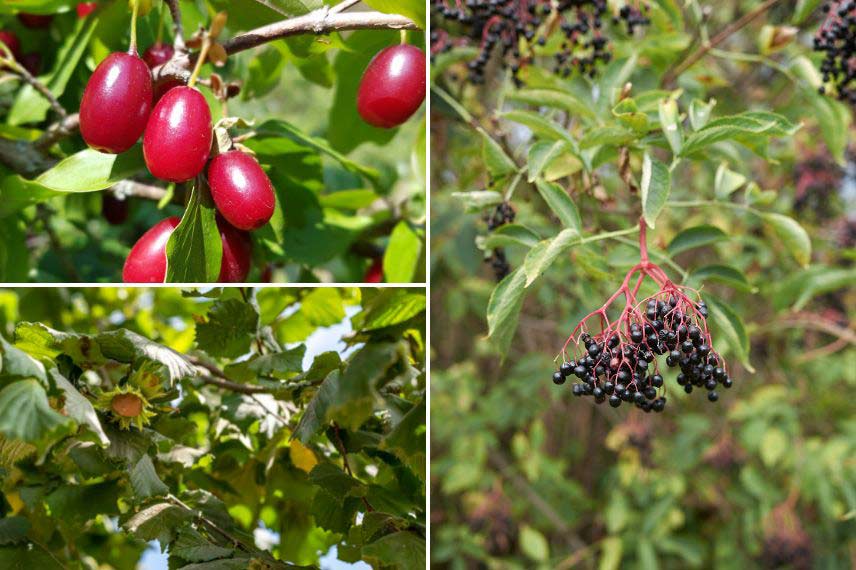 Cornus mas, hazel, and Sambucus nigra
The shrub stratum of the forest garden
This level includes small bushes and shrubs with small fruits such as currant bushes, gooseberry bushes, blackcurrant bushes, raspberry plants, blackberry bushes and Honeyberries (Lonicera caerulea ssp. kamtchatica).
We insert between these plants some edible climbers (Kiwi, grapevines, Chayote, Schisandra…) that will climb on supports or ascend the trees.
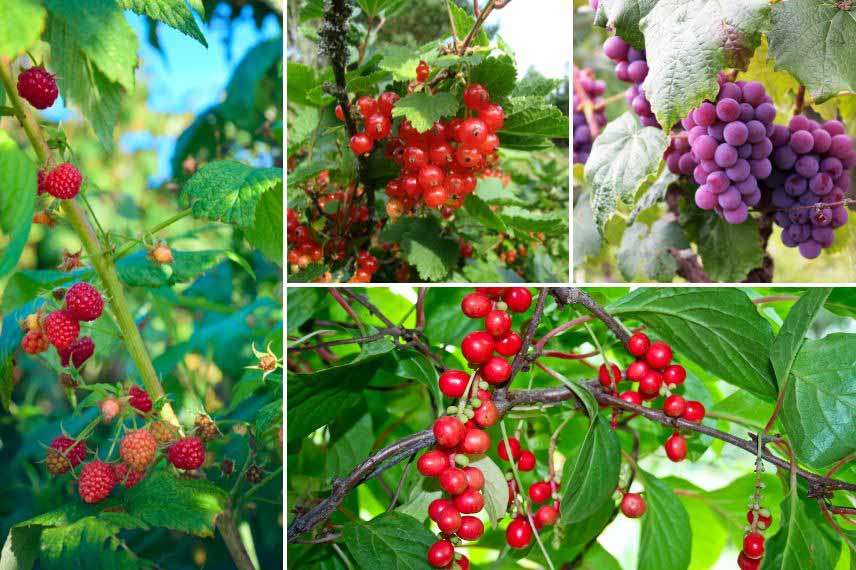
Raspberry, currant, vine and Schisandra sinensis
The herbaceous stratum of the forest garden
As in a dense forest, the soil is never bare in this type of edible garden. Here, mulching and the accumulation of humus are of utmost importance, but the idea is also to grow small fruits and edible herbaceous plants. Of course, we think of strawberries, with the famous wild strawberries or other varieties, such as the Capron Strawberry (Fragaria moschata), which is a small wild strawberry particularly suited to cold climates and shaded areas.
Other edible plants will also have a prominent place, such as root vegetables, aromatic or medicinal plants, and edible mushrooms, to be placed according to their needs and the exposure of your forest garden. Rhubarb or perennial vegetables like Daubenton Cabbage, onion, or Rocambole garlic, perpetual leek, sorrel and artichoke are also welcome. Wild Garlic (Allium ursinum), a woodland perennial, will easily naturalise here, just like Sweet Cicely (Myrrhis odorata), Wild Angelica, and agrimony for herbal teas. Edible flowering plants (Daylilies, Tulbaghias, Borage) will beautifully complement your food forest.
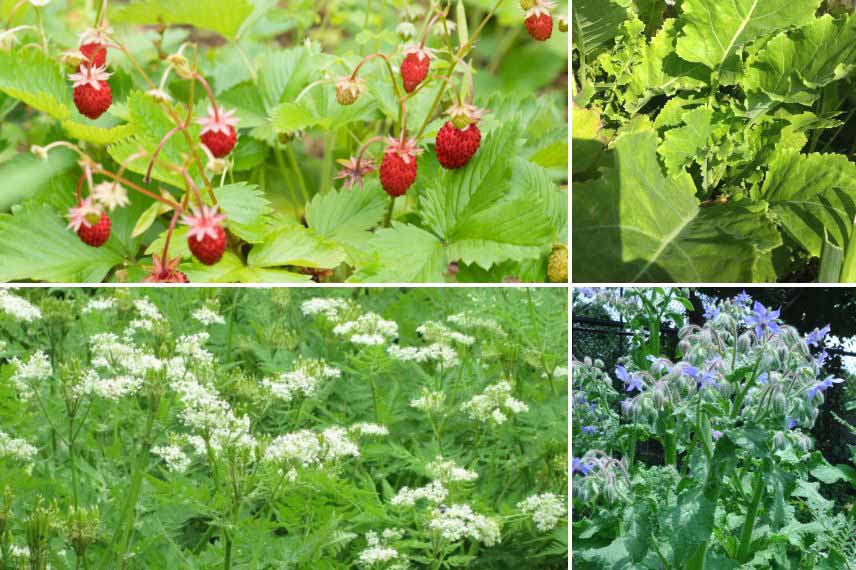
Wild strawberries, Daubenton cabbages, Myrrhis odorata, and Borage
How to maintain an edible forest?
At planting, this recreated true ecosystem is by definition immature. There will therefore be interventions to plan for in the first two or three years: watering, weeding, pruning, etc. After that, the plants and their entire community will become autonomous, and in case of issues (climatic, pest attacks, diseases…), the resilience of the system will come into play. Choose resistant species to pests, as well as to drought for example, and you will have much fewer interventions to plan for.
The advantage of this type of garden is the time saved: once established, after a few years, it will require very little maintenance… leaving you with the immense pleasure of enjoying your harvests!
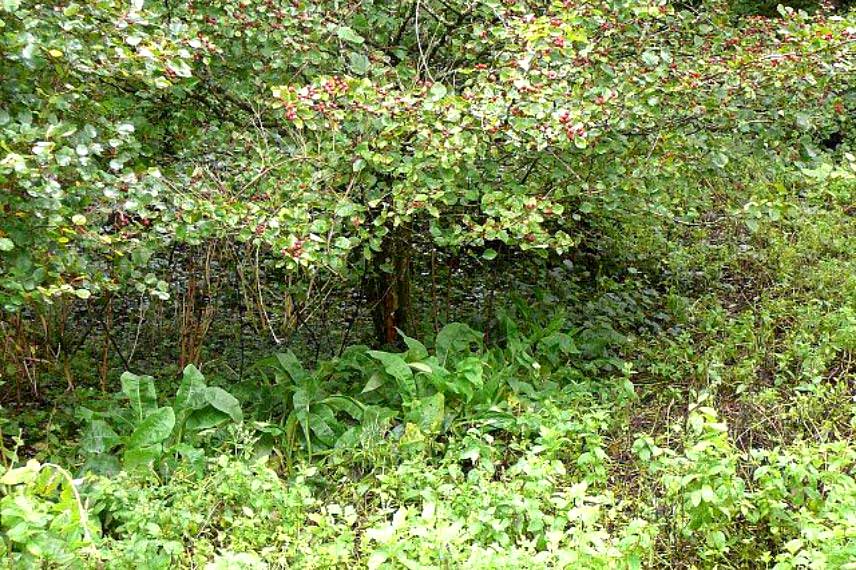
Once the plants are installed in good harmony, the gardener’s interventions are almost exclusively limited to harvesting!
For further reading...
The book “The Forest Garden” by Martin CRAWFORD (director of the Agroforestry Research Trust) published by Ulmer editions provides all the keys to creating a forest garden, regardless of the project’s size.

- Subscribe!
- Contents

Comments