





























Chionodoxa: our favourite varieties
Explore the Chionodoxa family, these little-known bulbs.
Contents
Very close to Scillas, Chionodoxas are lovely little bulbs with flowers in shades ranging from white to blue or pink. Also known as Glory of the Snow, a name that evokes their flowering period, they symbolise the awakening of spring, just like other early bulbs that bloom as early as February or March, such as Daffodils, Grape Hyacinths, Crocuses, and Snowdrops, with which they blend beautifully to create stunning floral carpets beneath perennials and bushes with budding shoots.
Perfectly hardy, Chionodoxas naturalise easily, forming, year after year, luminous colonies in gentle sun or partial shade. Their deciduous foliage disappears in summer, re-emerging in late winter. They thrive in light, permeable, and cool soil. They also do well in pots or window boxes, allowing you to enjoy them up close in delightful combinations with other bulbs or small perennials.
Discover our collection of Chionodoxas, featuring some uncommon species and varieties, in blue, pink, and white.

Chionodoxa luciliae
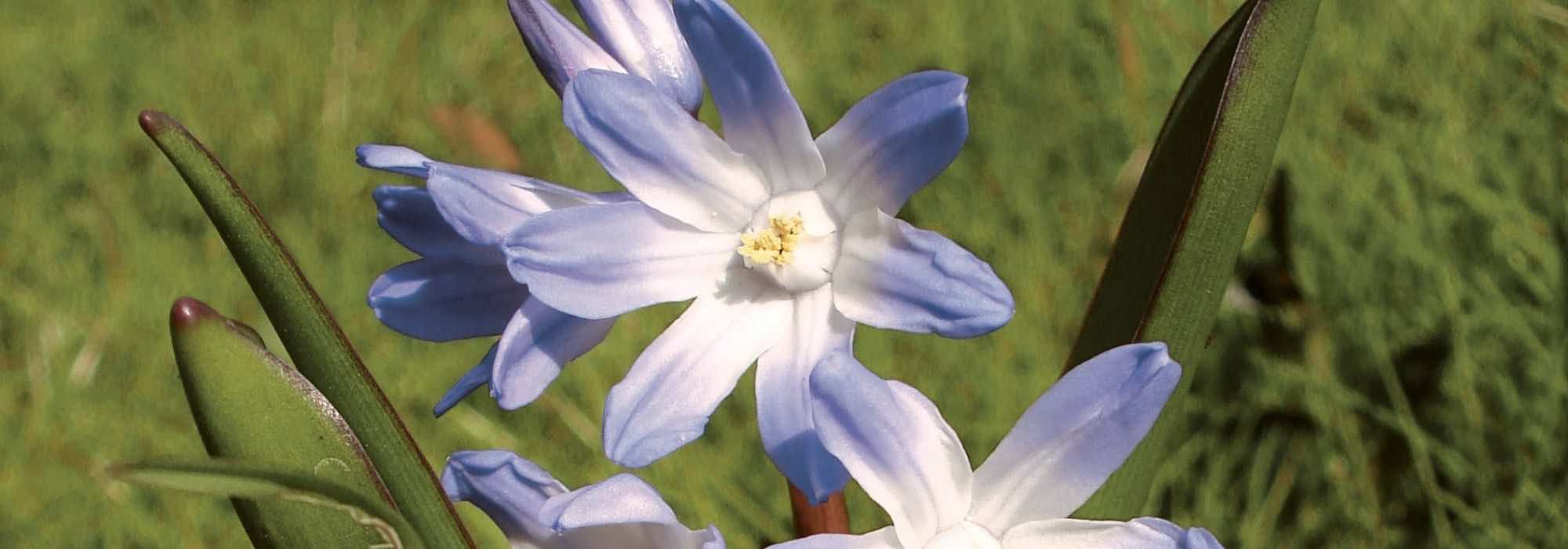
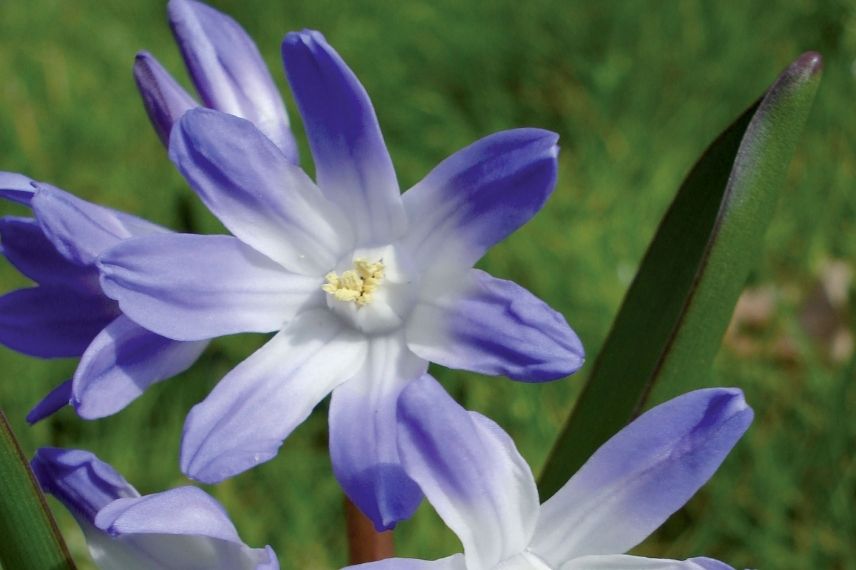
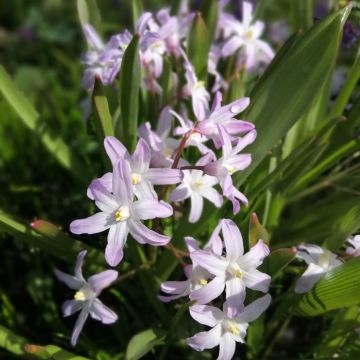
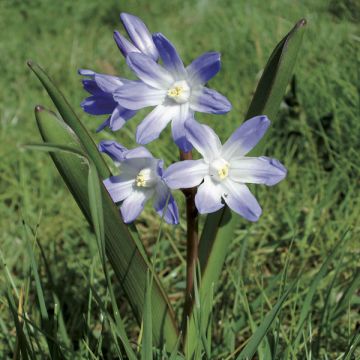
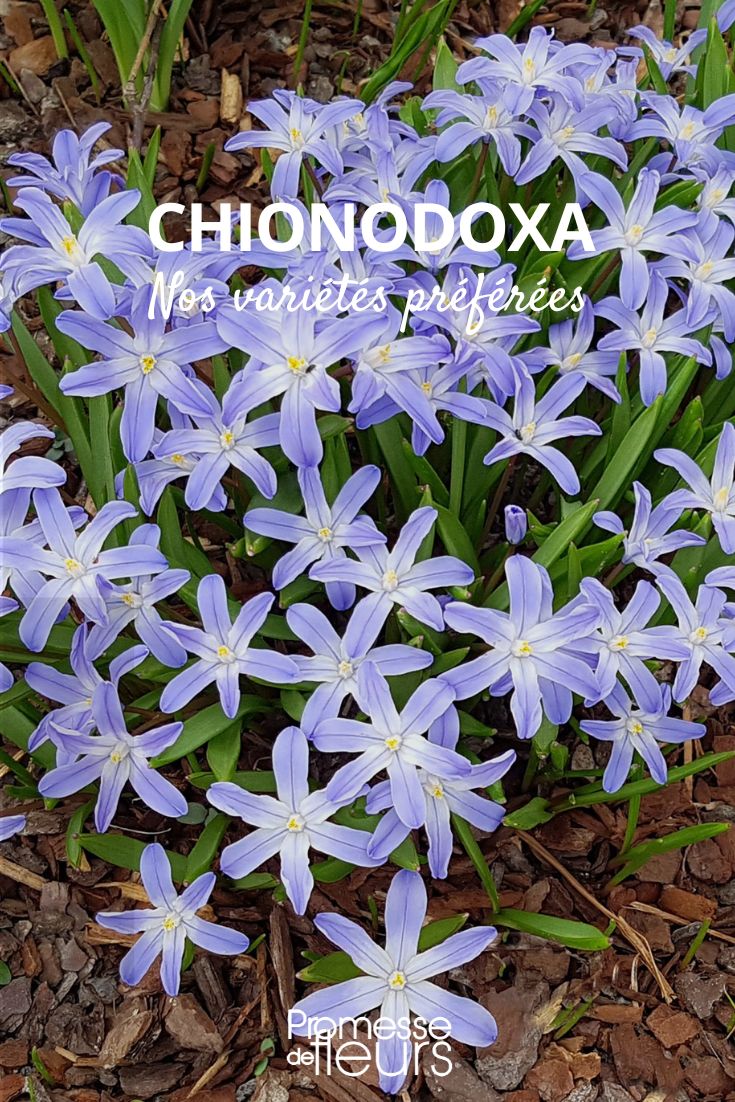
The most widespread form of Chionodoxas, the botanical species Chionodoxa luciliae is a reliable choice. It features very pretty pale blue flowers with white, almost gradient-like hues. On fine medium green and purple-tipped hyacinth foliage, these bright blue stars with white centres and soft yellow stamens emerge. From a single bulb, several reddish stems can appear, each bearing 3 to 6 flowers. Small in size, the very bright colours of Chionodoxa make it visible from afar as early as February or March, depending on the regions.
Awarded an Award of Garden Merit by the Royal Horticultural Society (RHS), it reliably returns each year, gradually increasing its multiple bulbs in the soil. It forms clumps 15 cm high in flower with limitless spreading, ultimately creating beautiful carpets. Its 3 cm diameter flowers generously bloom for two weeks alongside the first more well-known late winter bulbs.
Combine it all in blue with Anemone blanda ‘Blue Shades’ and Muscari azureum.
Chionodoxa lucilae
Read also
Chionodoxas: planting, growing and careChionodoxa forbesii 'Pink Giant'
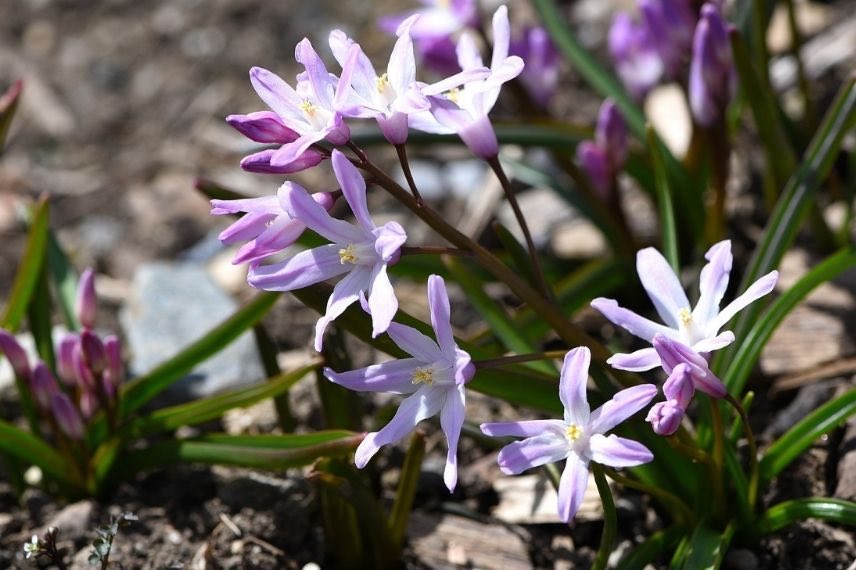
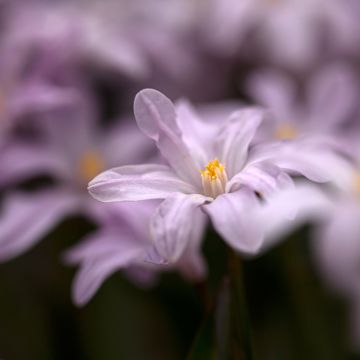
The Chionodoxa forbesii ‘Pink Giant‘ stands out with lilac-pink flowers, featuring a white centre similar to Chionodoxa lucilae. Its foliage is slightly darker, which enhances its flowering. This Chionodoxa is a bit taller, reaching 20 cm in height with flowers measuring 3 cm. Its very delicate hue is truly appreciated!
It will be perfect to accompany snowflakes, crocuses, and botanical tulips.
Chionodoxa forbesii ‘Pink Giant’
Discover other Chionodoxa
View all →
Available in 1 sizes
Available in 2 sizes
Available in 2 sizes
Available in 1 sizes
Available in 1 sizes
Available in 1 sizes
Available in 1 sizes
Available in 1 sizes
Available in 1 sizes
Chionodoxa forbesii 'Violet Beauty'
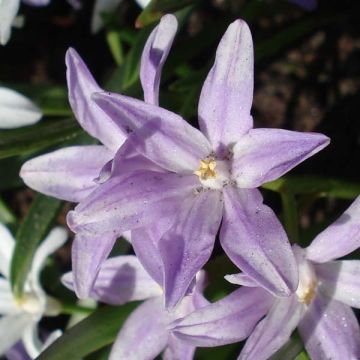
The Chionodoxa forbesii ‘Violet Beauty’ unfurls under the sun with small, sparkling star-shaped flowers, in a mauve violet colour lightly washed with white on the petals, featuring tiny yellow stamens. It is particularly floriferous. Growing to a height of 10 to 15 cm, its stems bear 3 to 10 small flowers grouped in clusters of 2 to 3 cm. Create a beautiful combination of soft and delicate shades by pairing it with anemones blanda ‘Charmer’, Ipheion uniflorum, and Erythroniums ‘White Beauty’.
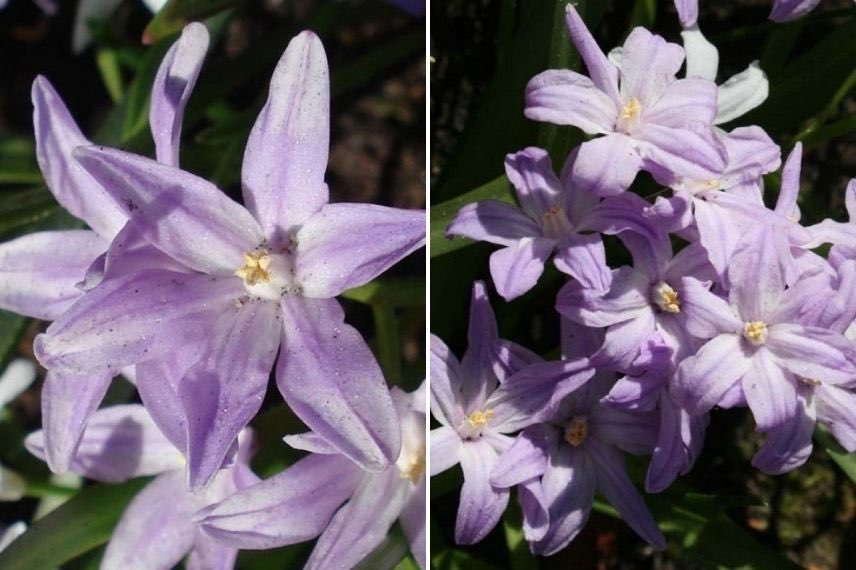
Chionodoxa forbesii ‘Violet Beauty’
Chionodoxa sardensis
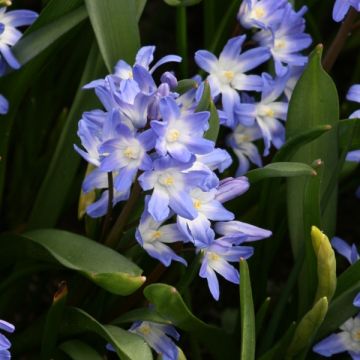
Here is now the Chionodoxa sardensis, botanical species with intensely bright blue flowers. This species has also been awarded an Award of Garden Merit by the Royal Horticultural Society (RHS). Its name originates from the city of Sardes, the capital of the ancient region of Lydia in western Turkey. It grows at the edge of woodlands or in rocky lawns.
In early spring, clusters of 10 to 12 flowers with 6 petals of bright cobalt blue, marked with white at the centre, bloom on short stems. However, its white eye remains close to the stamens and does not spread out like in other varieties. In the garden, create a beautiful harmony in shades of blue by planting Chionodoxa sardensis alongside Muscari ‘Early Magic’, Puschkinia scilloides, and Ipheion ‘Jessie’. Also consider the stunning Anemone blanda ‘Blue Shades’.
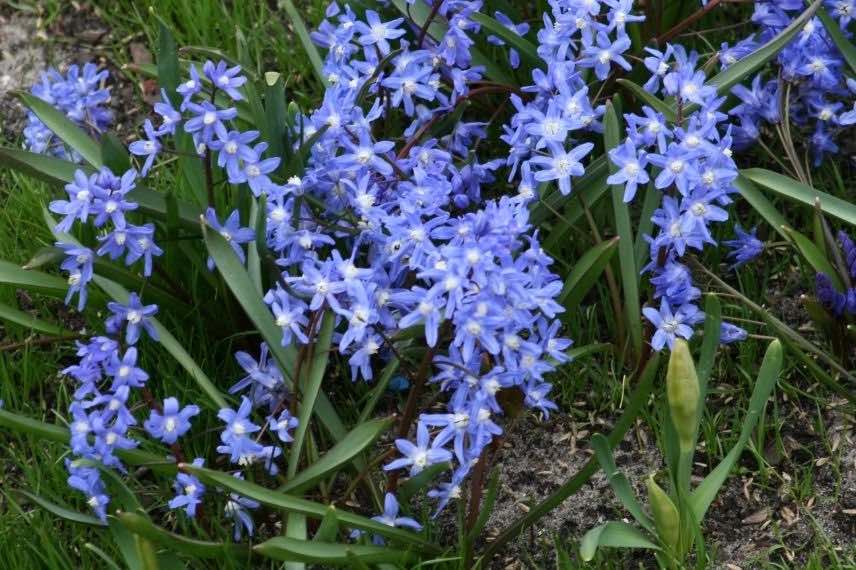
Chionodoxa sardensis
Chionodoxa forbesii 'Blue Giant'
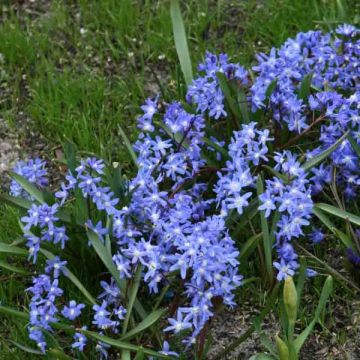
Another blue Chionodoxa for our greatest pleasure! Like Chionodoxa forbesii ‘Pink Giant’, ‘Blue Giant’ is slightly taller than other species and varieties. It is a rare form. With its azure blue, the star-shaped flowers have a very bright white centre. As for its foliage, it is a slightly darker green. It forms clumps about 20 cm high with numerous 3 cm flowers clustered on purplish stems. The blue and white flowers of Chionodoxa ‘Blue Giant’ will beautifully accompany the flowering of Siberian squills, ‘Dreamlight’ daffodils, and muscari.
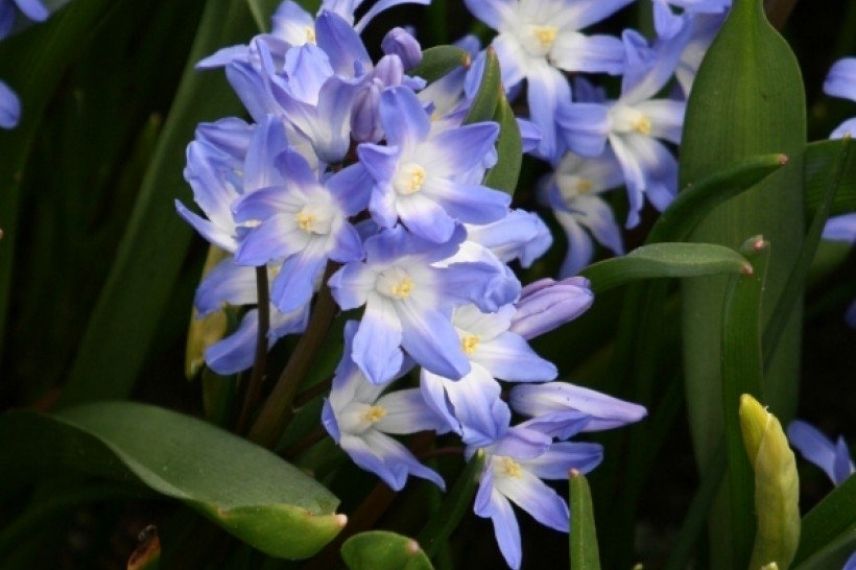
Chionodoxa forbesii ‘Blue Giant’
Chionodoxa lucilae 'Alba'
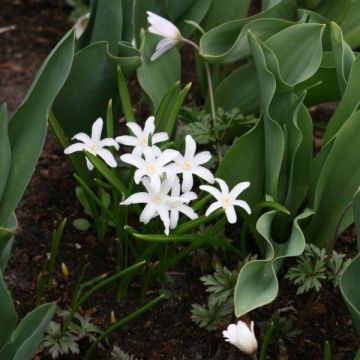
Unlike other Chionodoxas that feature multiple colours blended in a single flower, the Chionodoxa lucilae ‘Alba’ is a pure white, only enhanced by tiny stamens of a soft yellow. On the same hyacinth-like foliage as its counterparts, iridescent white stars appear in spring, rising from a clump 15 cm tall. This is a rare form.
Pair it with a Muscari armeniacum ‘White Pearl’ and a Narcissus ‘Petrel’.
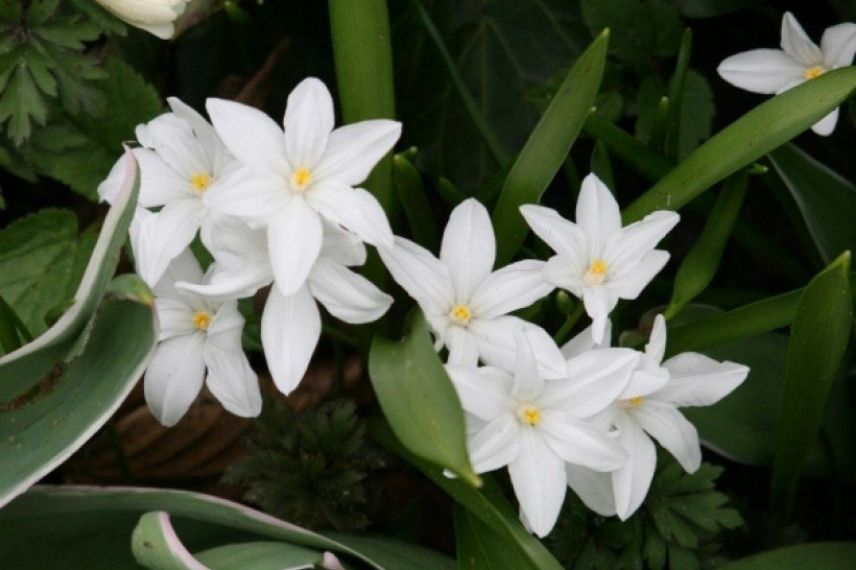
Chionodoxa lucilae ‘Alba’
A carpet of chionodoxas
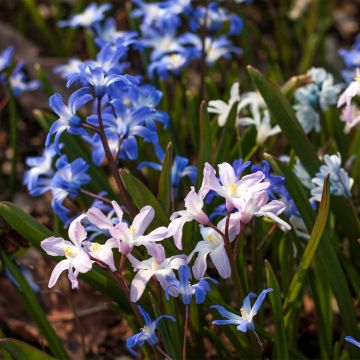
Chionodoxas are very pretty in a mix, creating delightful carpets in pastel colours. You can find them in combinations of blue, pink, and white:
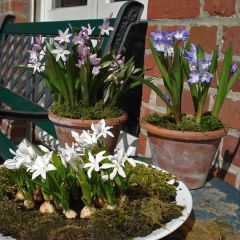
Chionodoxa Collection
- Flowering time April, May
- Height at maturity 10 cm
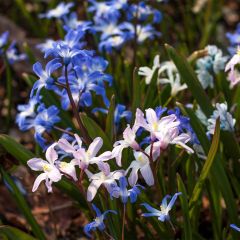
Chionodoxa forbesii Mix
- Flowering time April, May
- Height at maturity 10 cm
Plant them in quantity to achieve a beautiful effect.
Discover on our blog Pierre’s article to learn more about the creation of naturalising bulb carpets. Also, read Ingrid’s article on planting spring bulbs.
Also, check out our collection of spring bulbs.
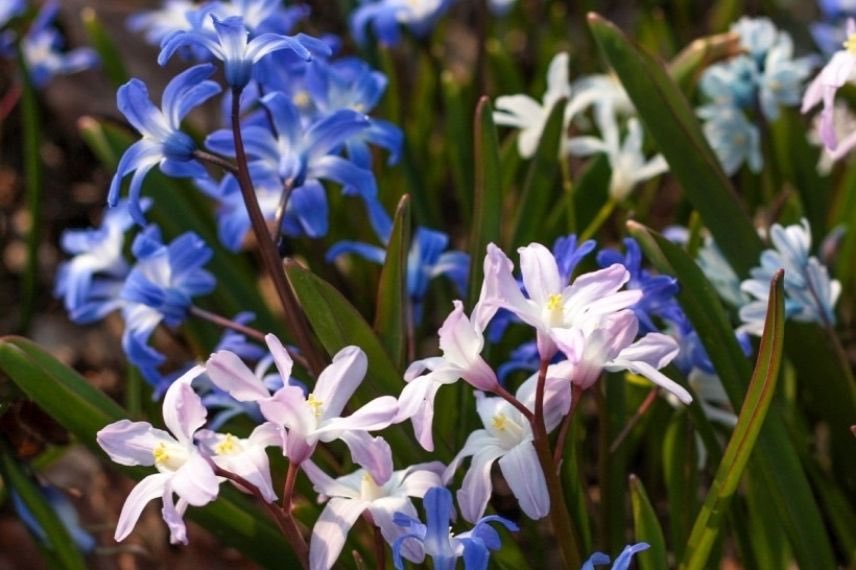
Glory of the Snow in mix
- Subscribe!
- Contents
Comments