





























8 multicoloured primroses
to awaken your garden
Contents
Primroses are spring flowers commonly found in gardens. Perennial, hardy, and easy to grow, their flowering is always appreciated as it heralds the arrival of spring. Colourful, they brighten up borders, beds, or pots with their varied hues. Some even offer multicoloured flowers, adding a unique and original touch. Discover our selection of multicoloured primroses to insert into your garden or on your balcony.
The Garden Auricula, a plant for collectors
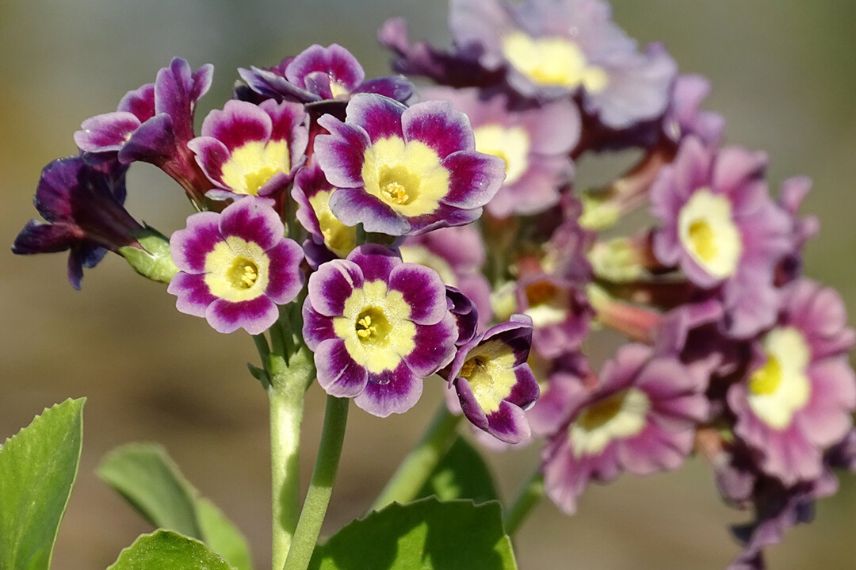
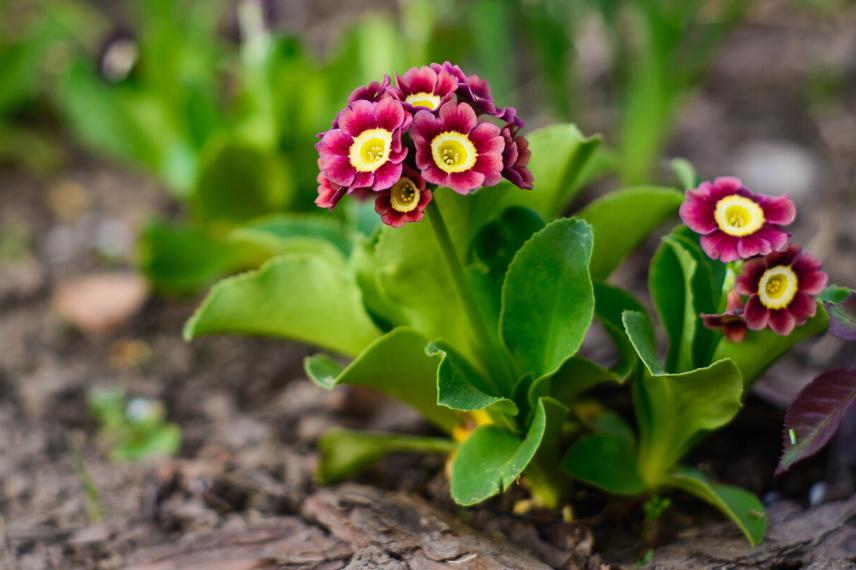
The Garden Auricula or Primula x pubescens is a collector’s plant, still relatively rare in gardens. However, it adds an original touch with its contrasting flower colours and its leathery, thick leaves, green to grey-green with a more or less powdery effect. In April and May, it blooms to offer small bouquets of dark pink to almost black flowers, highlighted by a yellow centre. Standing at 17 cm tall, the flower stems display velvety tones. Hardy down to – 40°C, it can be planted in partial shade or full sun in cool to moderately dry, fertile soil.
Derived from a mutation of Primula auricula, a primrose from the Alps nicknamed “bear’s ear” due to its fleshy leaves, it pairs beautifully with other alpine-origin plants. Plant it alongside Alyssum, Aubrieta, Astilbe, or even Alchemilla mollis in a stone trough, a rock garden, or to brighten up a garden border.
The primrose 'Elizabeth Killelay', the elegance of rare colours
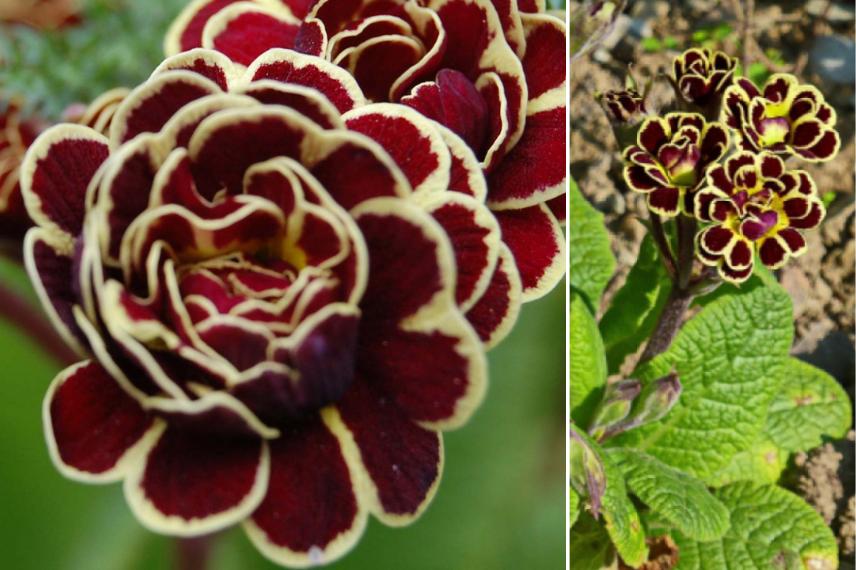
The Primula ‘Elizabeth Killelay’ offers, from March to May, umbels of very double flowers in rare and contrasting colours of deep brown-red. They are edged with cream-white and house a golden-yellow centre. These beautiful tones are enhanced by the tender green of the plant’s crinkled leaves. The foliage rosettes are well-branched and form a persistent groundcover carpet. At a height of 15 cm, this small primula with slightly fragrant flowers and frilled petals adorns borders, damp rockeries, and the edges of a small waterfall, planted in gentle sun or partial shade. Hardy down to -20°C, the Primula ‘Elizabeth Killelay’ thrives in cool, humus-bearing, well-drained soils.
To highlight this duo of rare and elegant colours, you can create contrast by pairing it with white flowers, such as forget-me-nots, pansies and violas, or even peonies.
Discover other Primula - Primroses
View all →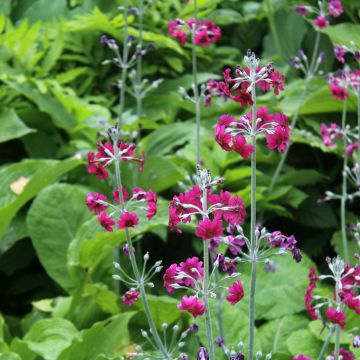
Available in 1 sizes
Available in 0 sizes
Available in 2 sizes
Available in 1 sizes
Available in 1 sizes
Available in 1 sizes
Available in 2 sizes
Available in 1 sizes
Available in 1 sizes
Available in 0 sizes
The Bear's Ear Primrose mix, a whole range of colours.
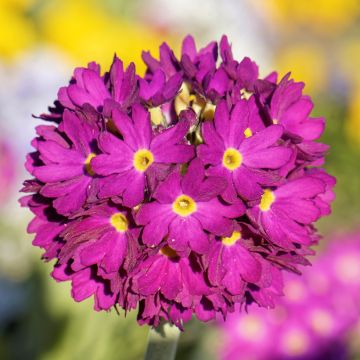
The bear’s ear primrose or Primula auricula produces an umbel of flowers with a yellow and bicoloured heart from April to June, available in various velvety colours: pink, carmine red, brown, black, purple, orange, and coral. Growing to a height of 20 to 25 cm, the flower stem rises above a rosette of pale green or grey evergreen leaves, sometimes covered with a white bloom. The flowers are grouped in small bouquets of 10 to 30 blooms and emit a light, sweet, and sugary fragrance. To thrive, this primrose requires fresh, humus-bearing, well-drained soil and prefers a semi-shaded location.
In a semi-shaded rockery, you can pair the bear’s ear primrose with other multicoloured primroses that enjoy partial shade, such as the ‘Elizabeth Killelay’ primrose, or white primroses to bring in some light, like Primula denticula ‘Alba’.
Read also
Primroses: 7 ideas for garden companionsThe 'Tie Dye' primrose, the brilliance of white, blue, and yellow.
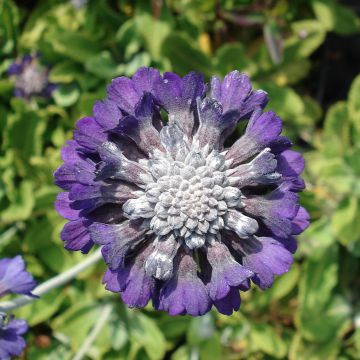
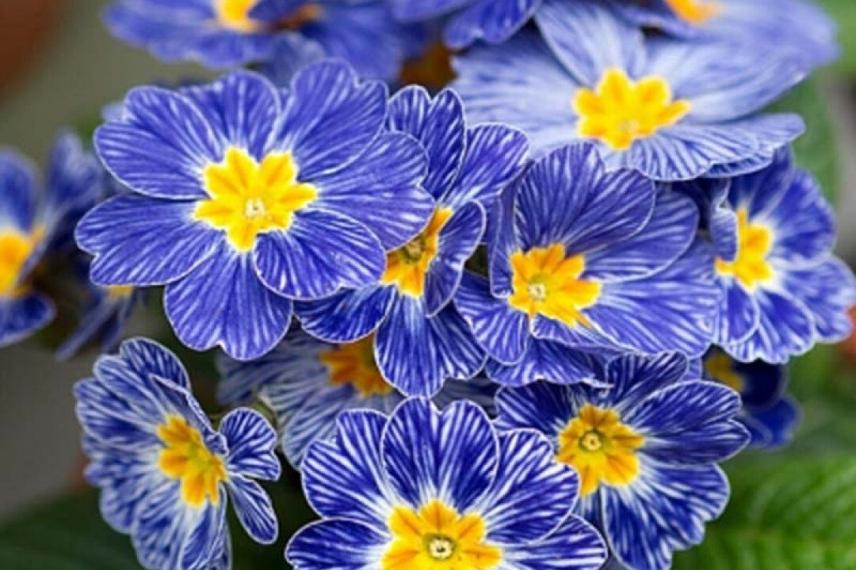
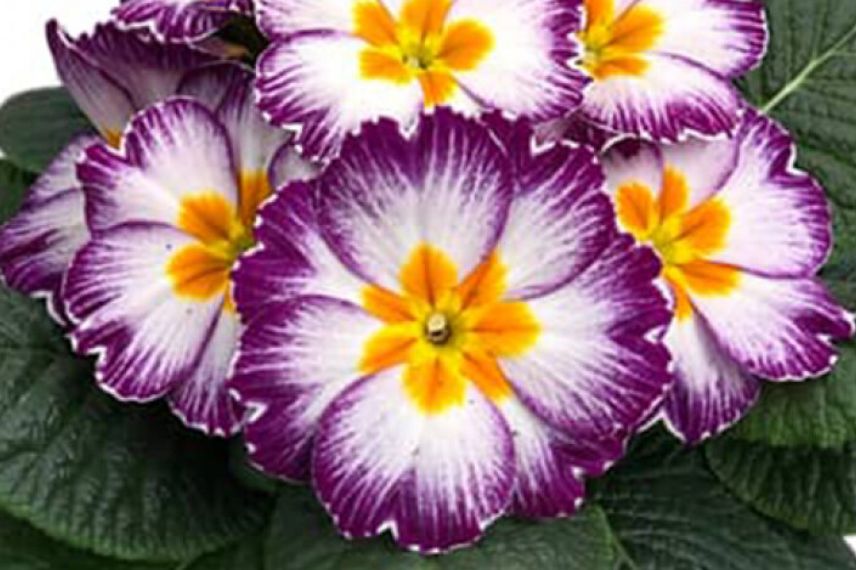
The primrose – Primula polyantha ‘Tie Dye’ adds a touch of freshness to a flowerbed or pot. It blooms for several months, from February to May, producing large, white flowers intensely striated with violet-blue and a bright yellow centre, set against dark green rosette foliage. At a height of 20 cm, it is easy to grow and enjoys cool, fertile soil, as well as a partially shaded location.
The ‘Tie Dye’ primrose pairs easily with spring bulbs in similar colours, such as Siberian squills in blue, woodland daffodils in yellow, or snowdrops in white. In a border or rockery, play with the variations of blue and yellow, and combine the ‘Tie Dye’ primrose with the delicate Viola ‘Blue Moon’, which also enjoys cool, humus-bearing soils and a partially shaded exposure.
Primula double 'Rubens Antique Rose F1', harmony in pink and yellow
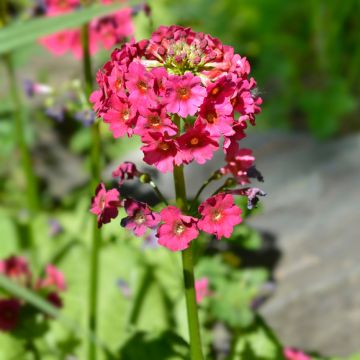
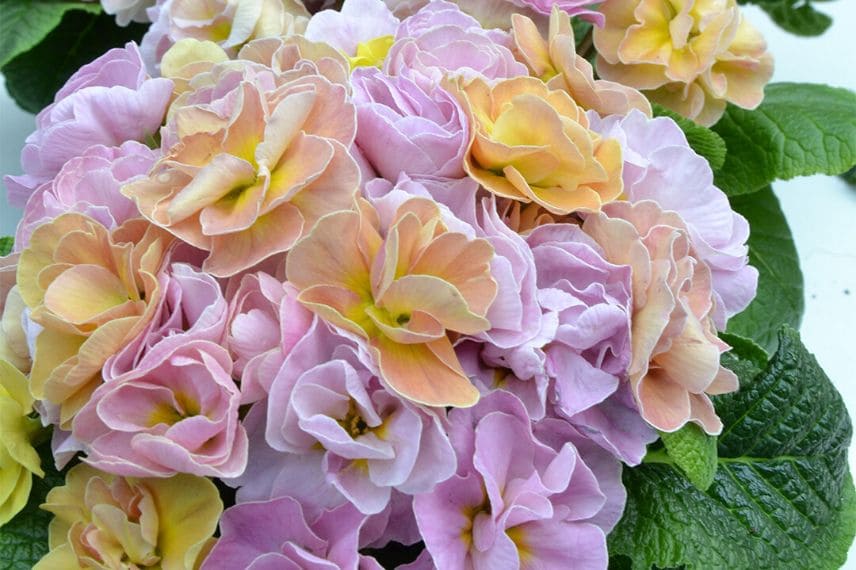
The double primrose ‘Rubens Antique Rose F1’ brings a unique and romantic atmosphere. In February and March, it blooms in bouquets of double flowers, coloured in old rose and yellow against a backdrop of dark green, crinkled foliage. The numerous petals are also fringed, adding to its charm, and the flowers are fragrant. Another advantage is that it can be grown both in the garden and in pots indoors. Reaching a height of 20 cm, it is vigorous and boasts many qualities, which earned it a gold medal at the Belgian professional ornamental plants and nursery products fair (Florall) in 2022. Hardy down to -20°C, it prefers cool, well-drained soils that are neutral to slightly acidic and rich in humus. It thrives in partial shade or full shade.
In the garden, create lovely floral and bucolic displays in the shade by pairing the double primrose ‘Rubens Antique Rose F1’ with daffodils, aquilegias, or hellebores in similar pastel or dark tones.
The hybrid primrose 'Ambie Violet Flame F1', the cheerful trio of white, violet, and orange.
The hybrid primrose ‘Ambie Violet Flame F1’ is a compact plant, 15 cm tall, with early flowering. In January and February, it showcases white flowers marginate with violet and an orange centre, atop dark green semi-evergreen foliage. The contrast of its colours gives it elegance and brilliance, adding a cheerful touch to the garden or a pot. It thrives in shade or partial shade, as well as in cool, humus-bearing, non-calcareous, well-draining soil. Hardy, it withstands temperatures down to -20°C.
With its attractive colours, the hybrid primrose ‘Ambie Violet Flame F1’ enlivens and brightens winter borders. You can pair it with other winter flowers, such as hellebore and white Cyclamen Coum to create charming woodland scenes.
The hybrid primrose 'Chameleon F1', a gradient of pink, salmon, and yellow.
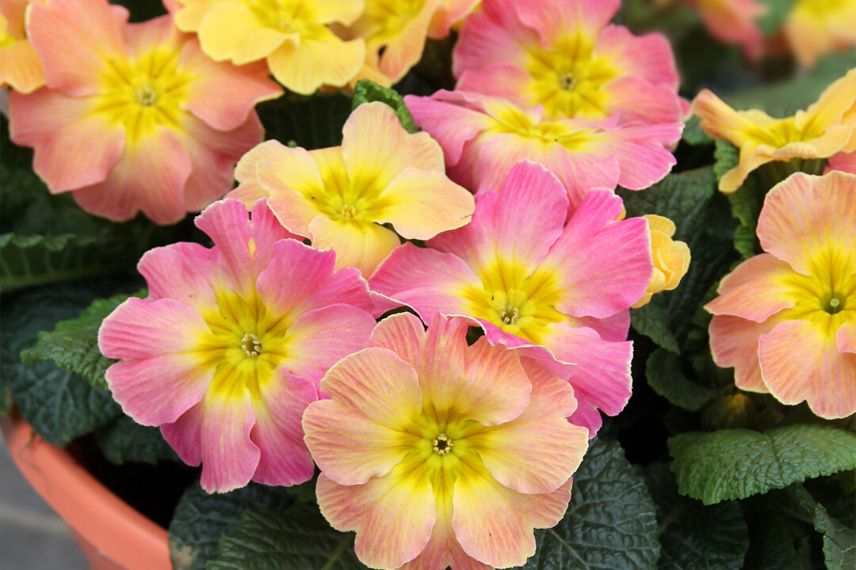
The hybrid primrose ‘Chameleon F1’ is a perennial flower with original and changing colours. This small plant, 15 cm tall, produces flowers tinted in a range of pink, salmon, and yellow tones, full of poetry and charm. They appear from February to May, above dark green, crinkled leaves that are semi-evergreen. Plant this little gem in a pot, a window box, or your garden, in cool, humus-bearing soil and partial shade.
If you love soft, floral scenes, highlight the pastel tones of the hybrid primrose ‘Chameleon F1’ by pairing it with white bulbs, such as crocuses, daffodils, and snowdrops.
The Primula 'Gold Lace Black', with unexpected colours
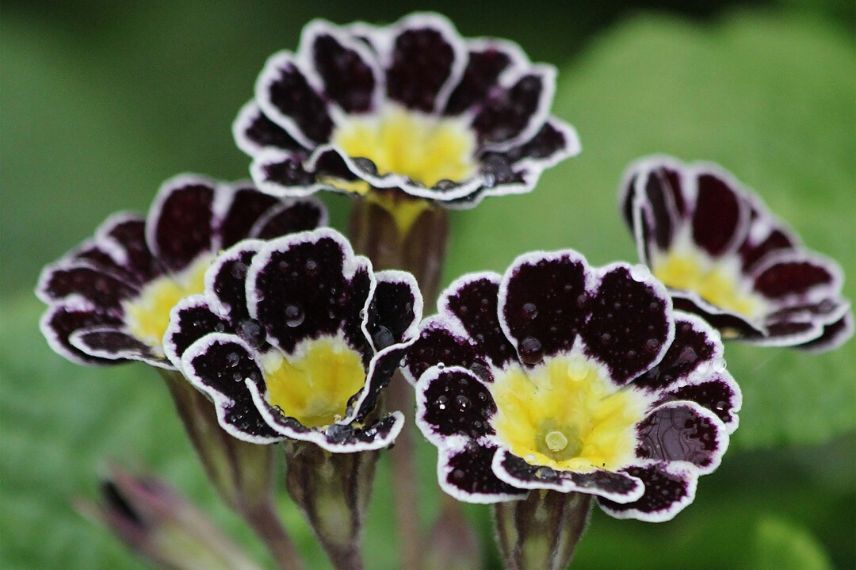
The Primrose – Primula eliator ‘Gold Lace Black’ is an elegant and stunning primrose that reaches a height of 20 cm, producing flowers in unexpected colours. The petals are adorned with black and edged in yellow, with a touch of golden yellow at their centre. It blooms from April to June, revealing surprising tones and adds a very graphic element to a garden. It is also slightly fragrant. Another advantage is its dark green, crinkled, evergreen foliage.
In a pot or in a border, in shade or partial shade, pair the ‘Gold Lace Black’ Primrose with pansies or hostas with immaculate white flowers, which will contrast beautifully with the rare colours of our lovely primrose.
- Subscribe!
- Contents

Comments