FLASH SALES: discover new varieties on offer every week!
Share your pictures?
New arrival

Nerium oleander Petite White

Nerium oleander Petite White
Oleander, Rose Laurel, Rose Bay

Be the first to leave a review

Why not try an alternative variety in stock?

21
From €28.50 3L/4L pot

Available in 2 sizes

7
From €9.50 12cm pot
6
From €9.90 1.5L/2L pot
9
From €5.50 Packet
17
From €6.90 Packet
1
From €9.90 1.5L/2L pot
11
From €4.90 mini plant
12
From €2.90 mini plant
7
€44.50 Bare root

This plant carries a 24 months recovery warranty

More information

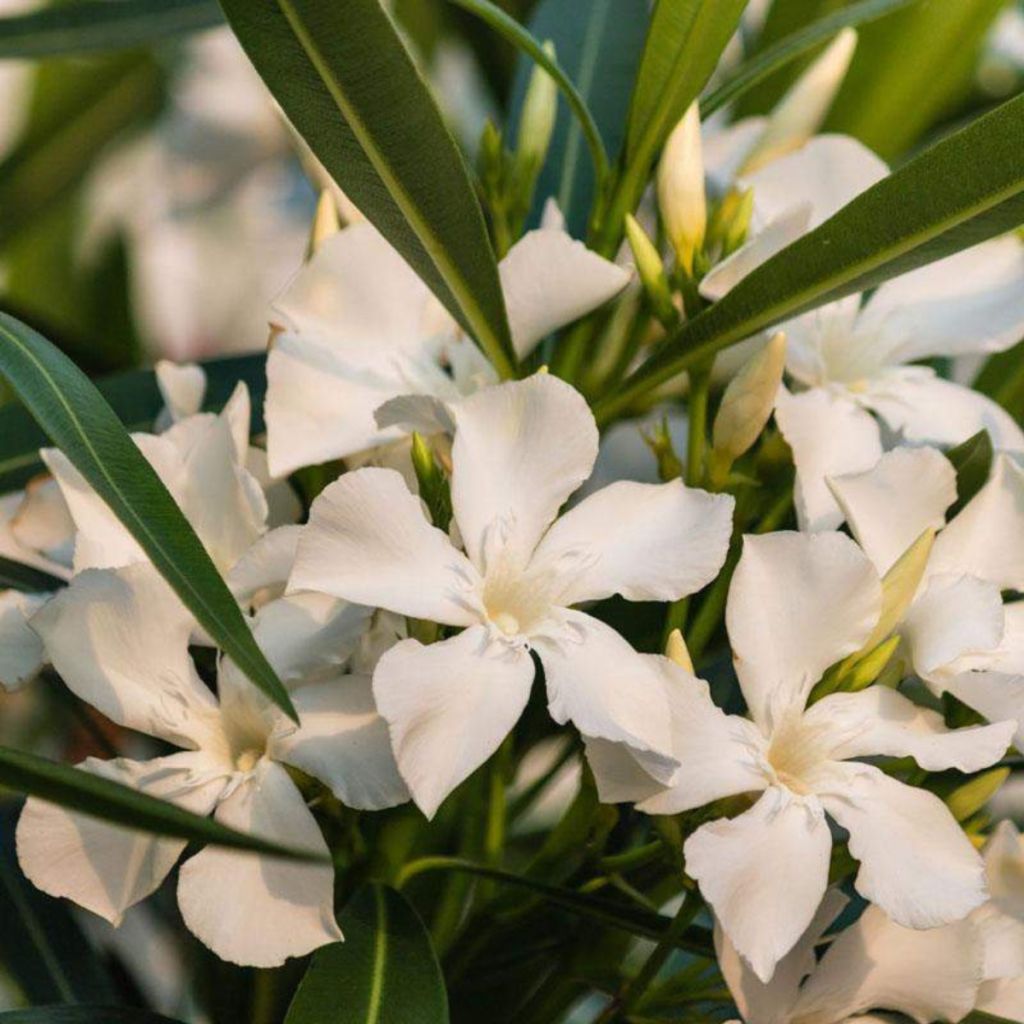
This dwarf selection forms a small, rounded, very dense shrub with dark green evergreen foliage, reaching 1.20 m to 1.50 m in all directions. It offers a remarkably abundant flowering, in the form of clusters of single, white flowers with a subtle pale yellow centre. The plant is capable of flowering throughout the summer and into autumn. With a rather rapid growth, this oleander tolerates summer drought well once established. A mature young plant in open ground will withstand short frosts of around -6/-8°C.
Flower size
4 cm
Height at maturity
1.30 m
Spread at maturity
1.20 m
Exposure
Sun
Hardiness
Hardy down to -6.5°C
Soil moisture
Dry soil, Moist soil
plantfit-full

Does this plant fit my garden?

Set up your Plantfit profile →

Best planting time April to May
Recommended planting time February to May, September to October
J
F
M
A
M
J
J
A
S
O
N
D
Flowering time June to September
J
F
M
A
M
J
J
A
S
O
N
D

Description

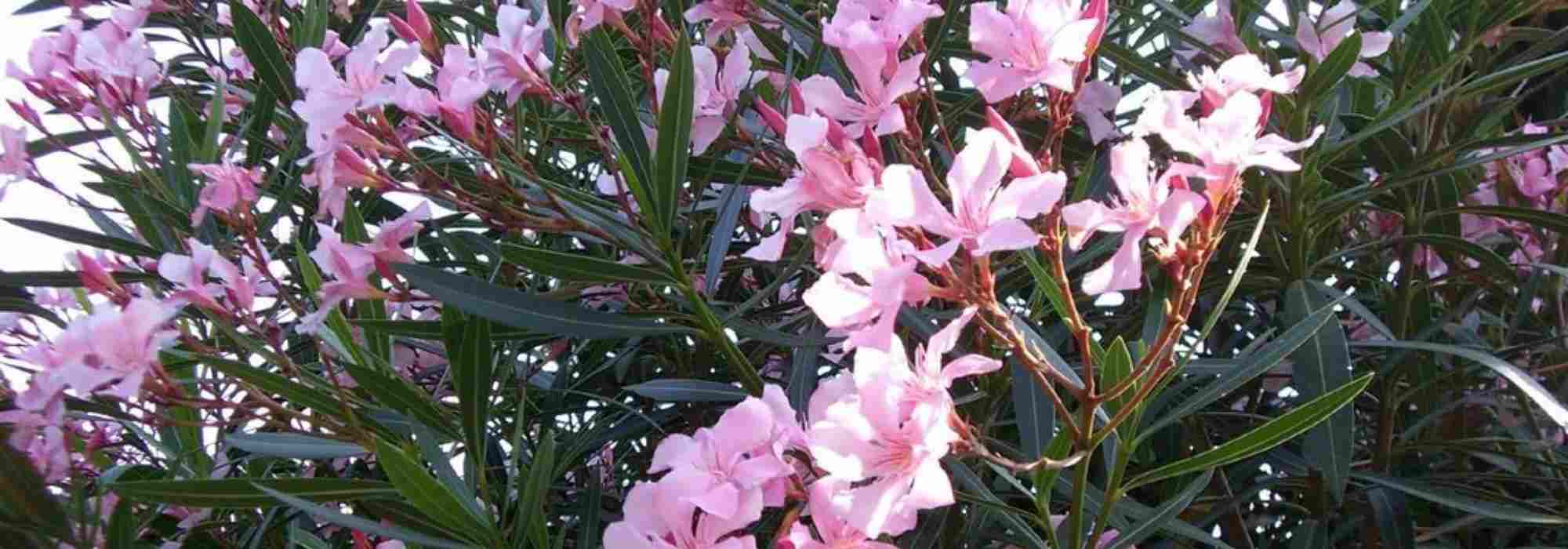
Nerium oleander ‘Petite White’ is a very floriferous dwarf oleander, well-suited to container growing and small gardens in a mild climate. During its flowering period, its rounded, dense foliage almost disappears beneath clusters of single, pure white flowers. Flowering begins in late spring and can continue until the onset of autumn if the soil remains slightly moist in summer. Perfect in a container for decorating a terrace or in a low hedge, this variety concentrates all the Mediterranean charm of the oleander into a small format.

Oleander ‘Petite White’ belongs to the Apocynaceae family and derives from the botanical species Nerium oleander. This cultivar is sometimes sold under the names Nerium oleander ‘Petite White’, Nerium oleander ‘Dwarf White’ or Nerium oleander ‘Little White’. Some nurseries offer varieties 'Isabelle', 'Isabelle Petite White'. Lacking a distinct description, these last two names are generally considered to refer to the same cultivar.
The botanical species is native to a vast area stretching from the Mediterranean basin and North Africa to the Near East, the Arabian Peninsula, the Indian subcontinent and southern China; in the wild, it is found mainly along wadis, riverbeds and alluvial valleys, where it tolerates both long periods of drought and winter floods.
The horticultural group "Petite" corresponds to particularly gloriferous oleanders with reduced growth; the cultivars ‘Petite Pink’ and ‘Petite Salmon’ are well-documented: they are genetic dwarfs originating from plants collected in Kenya in the late 1960s, then introduced and distributed by the Los Angeles State and County Arboretum under the names ‘Dwarf Pink’ and ‘Dwarf Salmon’, before taking the name "Petite" in commerce. ‘Petite White’ is generally included in this series, even though its history has not been published as precisely.
‘Petite White’ forms a bushy, rounded shrub, branched from the base. In the ground, it reaches 1.20 m to 1.50 m in height, with a comparable spread, after a few years. In a mild climate and rich soil, it can become taller (1.80 m to 2 m), without ever reaching the size of large classic oleanders. In a container, the plant remains more compact, around 0.80 to 1.20 m, if regularly pruned.
The foliage is evergreen in winter. The leaves, smaller than those of large cultivars, are narrow, lanceolate, thick and leathery, arranged in pairs or threes around the twigs. They measure 6 to 8 cm long by 1 to 1.5 cm wide. They are dark green, slightly glossy on the upper side, lighter on the reverse, with a well-marked central vein.
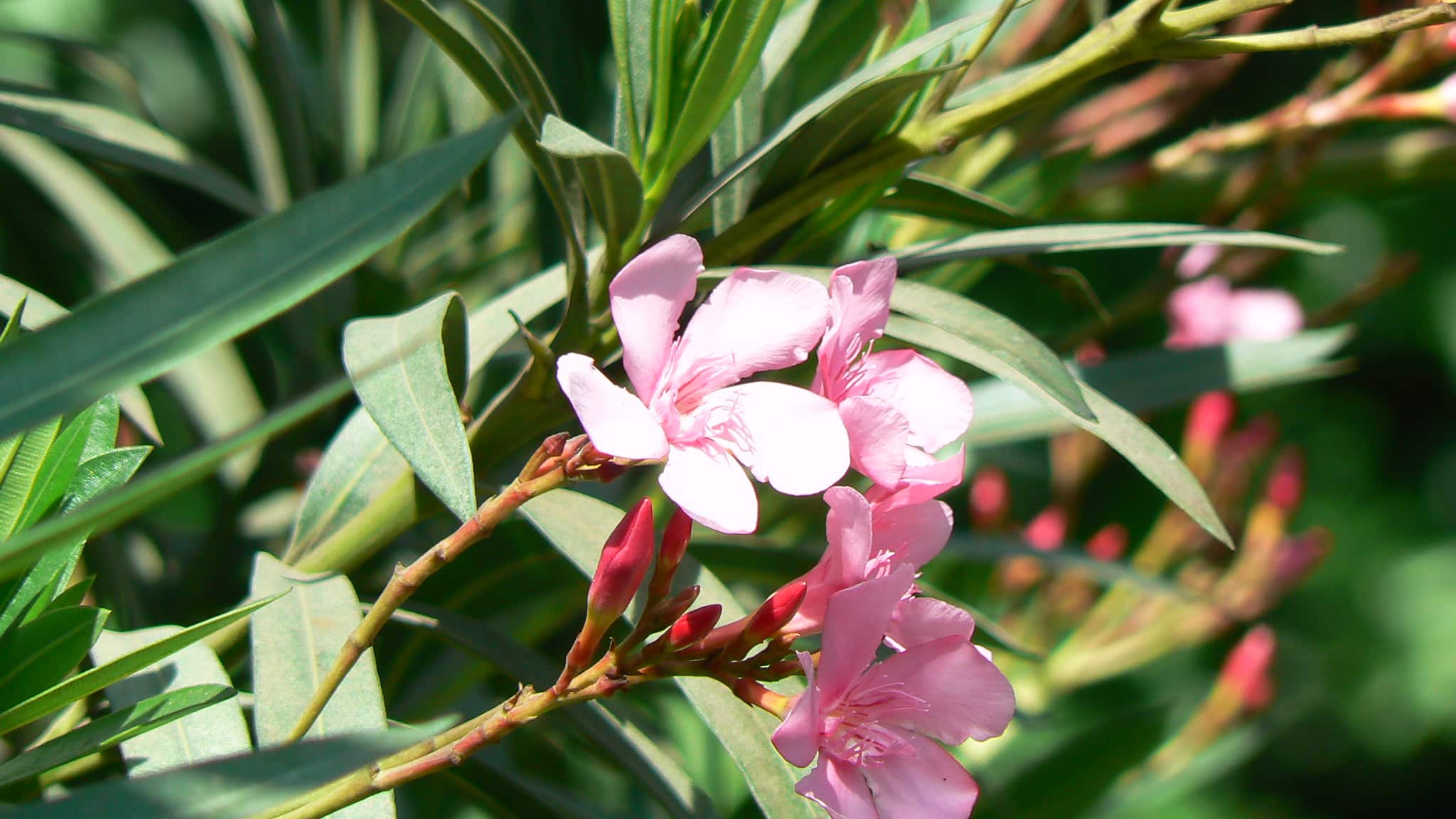
The flowering is the main asset of Nerium ‘Petite White’. From May-June until September-October, the shrub is covered with clusters of single flowers borne at the ends of the current year's twigs. Each flower consists of a funnel-shaped tube opening into a corolla with five rounded lobes, about 3 to 4 cm in diameter; at the heart of the corolla, a small fringed crown surrounds the floral organs. In ‘Petite White’, the petals are pure white, the throat a very pale yellow. When the soil is too dry in summer, flowering ceases. The fruits are long, narrow pods (follicles) 10 to 20 cm long, which open when ripe in summer or autumn to release numerous small seeds equipped with a tuft of silky hairs, allowing wind dispersal. The stems are initially green, thick and smooth, then become covered with a greyish bark with age.
The entire plant is toxic if ingested. If damaged, the branches exude a latex which can be irritating.

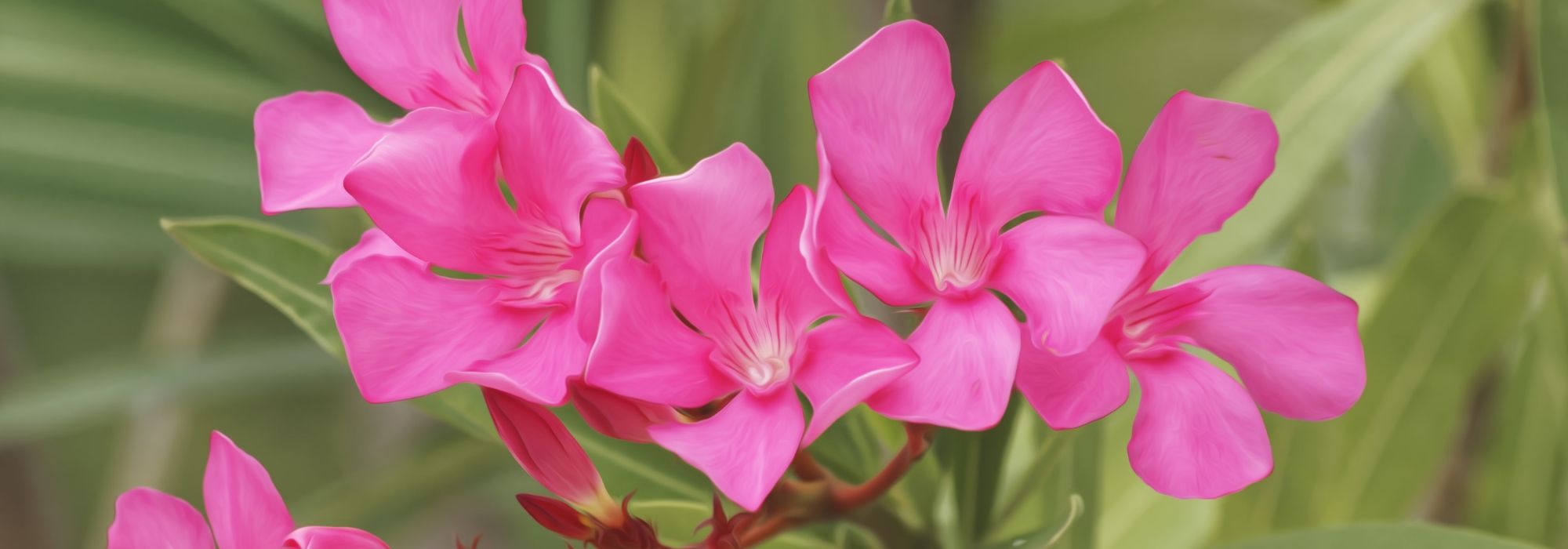
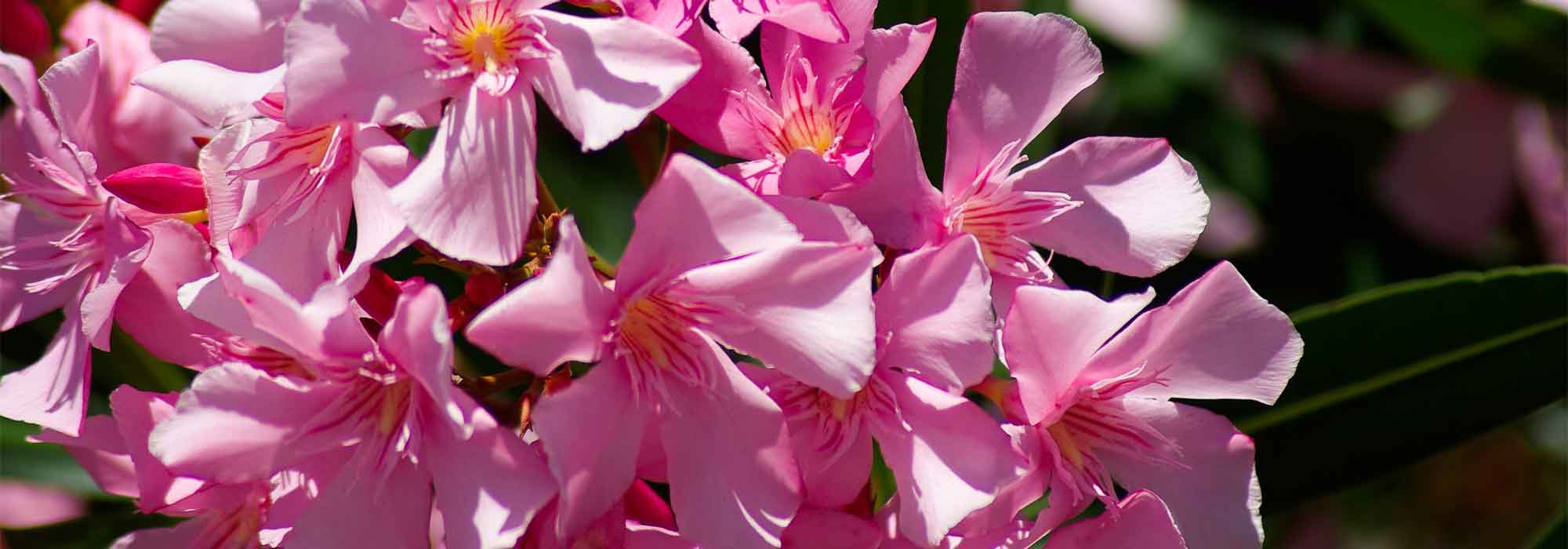
Nerium ‘Petite White’ can be used in low hedges, in shrub borders or in a large pot on a sunny terrace, to be overwintered like a citrus tree in cold regions. Its cultivation in the ground is only possible in mild climates. You can associate it with Oleander ‘Angiolo Pucci’, ivory yellow, and 'Soleil Levant' of a bright salmon pink. Nearby, a Callistemon rigidus will raise its silhouette topped with bright red bottlebrushes and ceanothus ‘Burkwoodii’ will evoke an all-blue cloud in summer. Mexican orange blossom (Choisya ternata), with its glossy foliage and fragrant white flowers, naturally finds its place in this Mediterranean atmosphere, near a passageway where one can enjoy both the scents and the staggered flowering from spring to summer. On the terrace, it forms a beautiful association with blue agapanthus such as Blue Velvet’.

Oleander carries a strong symbolic charge: it was chosen as the emblematic flower of the city of Hiroshima, Japan, because it was the first plant to reflower on the scorched earth after the atomic bomb explosion in 1945, becoming a symbol of resistance and rebirth.
Report an error about the product description

Oleander: planting, pruning and maintaining
Family sheet
by Eva 15 min.
Oleander: planting, pruning and maintaining
Read article

Plant habit

Height at maturity 1.30 m
Spread at maturity 1.20 m
Habit irregular, bushy
Growth rate normal

Flowering

Flower colour white
Flowering time June to September
Inflorescence Corymb
Flower size 4 cm
Fruit colour green

Foliage

Foliage persistence Evergreen
Foliage colour dark green

Safety measures

Potential risks Plant may be toxic if swallowed

Botanical data

Genus

Nerium

Species

oleander

Cultivar

Petite White

Family

Apocynaceae

Other common names

Oleander, Rose Laurel, Rose Bay

Botanical synonyms

Nerium oleander 'Dwarf White', Nerium oleander 'Little White', Nerium oleander 'Isabelle'

Origin

Cultivar or hybrid

Product reference25837

Planting and care

We recommend planting the 'Petite White' oleander in spring in cooler regions, once the risk of frost has passed, but preferably in early autumn in hot, dry climates. Position it in a sunny, sheltered spot, in any deep, well-drained soil, even calcareous, and even where there is brackish water rising. While it will also grow in shade in a Mediterranean climate, it will be much less floriferous there, and its habit will become more leggy and less bushy. Although it is very drought-tolerant and accommodates arid situations, it will only reach its full potential and flower abundantly in soil that remains sufficiently moist at depth. It is very resistant to salt spray. Monitor watering in summer for the first two years. It will appreciate an application of compost and a thick layer of dead leaves, especially for the first two winters in areas at the limit of its hardiness. Water at the base of the plant, never on the foliage.


Nerium is often prey to scale insects, leading to the appearance of sooty mould on the foliage. Thin out and aerate the branches. You may treat with copper (Bordeaux mixture) in spring. If the scale insect infestation is truly severe, cut your oleander back to 10-20 cm from the ground: its capacity to regenerate from the stump is significant, and the shrub will regain its beautiful appearance in a short time. Aphids can also settle on the flower buds: treat in the evening with an insecticide based on pyrethrins.

Oleander is also famous for the toxicity of its sap; however, the latter has a violent, bitter and acrid taste, which discourages ingestion. Most accidents come from confusion between oleander and bay laurel in cooking (the aroma of bay laurel is, however, recognisable above all others), or from using the branches as skewers...

Planting period

Best planting time April to May
Recommended planting time February to May, September to October

Intended location

Suitable for Meadow
Type of use Border, Small gardens, Container, Hedge, Greenhouse
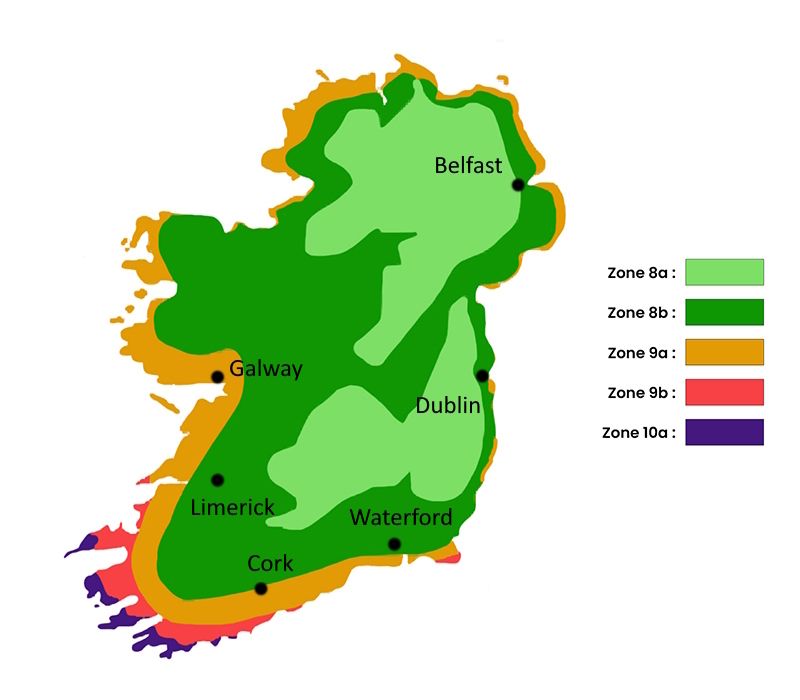
Hardiness Hardy down to -6.5°C (USDA zone 9a) Show map
Ease of cultivation Amateur
Planting spacing Every 100 cm
Exposure Sun
Soil pH Any
Soil type Chalky (poor, alkaline and well-drained), Clayey-chalky (heavy and alkaline), Silty-loamy (rich and light), Stony (poor and well-drained)
Soil moisture Dry soil, Moist soil well-drained, deep

Care

Pruning instructions Pruning oleander requires some precautions: as the shrub only flowers on young branches that have reached a certain length (typically stems less than 1 year old, not too short), it is essential not to cut back all the branches in the same year, otherwise you risk having no flowers for the entire season. When necessary, pruning should be carried out in early spring. To train Nerium as a standard, select the most attractive stem on the young plant, stake it, and remove all others at ground level. During the first few years, systematically remove any secondary branchlets that emerge on this 'trunk' below 1m or 1.50m from the ground. The crown can then be treated according to the method described above.
Pruning Pruning recommended once a year
Pruning time March
Soil moisture Dry soil, Moist soil
Disease resistance Good
Overwinter Can be left in the ground

This item has not been reviewed yet - be the first to leave a review about it.

Leave a review →

Similar products

9
From €14.30 2L/3L pot

Available in 2 sizes

56
From €3.90 8/9 cm pot

Available in 4 sizes

2
€69.00 2L/3L pot
39
From €14.90 -% 1.5L/2L pot

Available in 3 sizes

9
€32.50 2L/3L pot
6
From €34.50 4L/5L pot
6
From €39.50 4L/5L pot
2
From €24.50 4L/5L pot
50
From €8.90 12cm pot

Available in 2 sizes

140
From €3.70 8/9 cm pot

Available in 4 sizes

Haven't found what you were looking for?