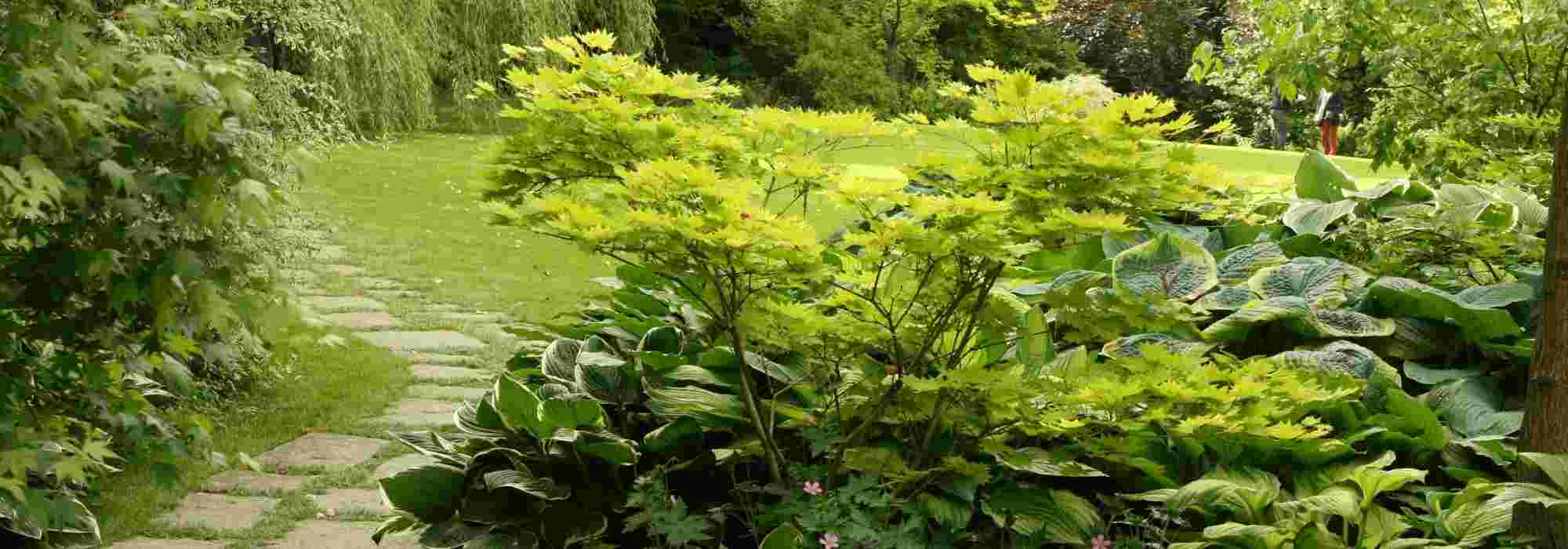
Shade shrubs: which ones to choose?
10 perfect shrubs and ideas for pairing them
Contents
Shade in gardens is not synonymous with sadness and boredom! If many perennials find ideal conditions there to develop, a wide range of shrubs also enjoy being sheltered from the sun’s scorching rays, especially in midsummer. Gardeners can find, under tree cover or in the shade cast by a building, a coolness they also enjoy when temperatures soar. It’s an opportunity to create a welcoming space where foliage, colour and scent accompany naps as much as the seasons.
Here is a selection of 10 must-have shrubs for shade!

Aucuba japonica, a champion under trees
Aucuba is a shrub perfect in shade, particularly for difficult planting spots such as under trees. It displays evergreen, thick, glossy foliage, green or variegated with yellow, which is especially valuable in shade. It tolerates almost anything and will even cope with deep shade. Can be planted in borders or as a hedge and its rounded habit provides attractive presence all year round. Its flowering is fairly insignificant but in female plants is followed by numerous red then black berries, decorative throughout winter.
Cultivation :
- soil: ordinary, not too alkaline, rather fresh but well-drained.
- Can be grown in a large pot on a shady terrace.
- Hardiness: -20 °C
Some interesting varieties :
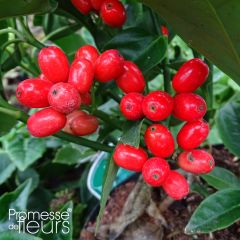
Aucuba Japonica Rozannie- Spotted Laurel
- Flowering time May, June
- Height at maturity 1,10 m
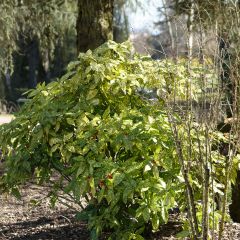
Aucuba japonica Crotonifolia- Spotted Laurel
- Flowering time May, June
- Height at maturity 1,80 m
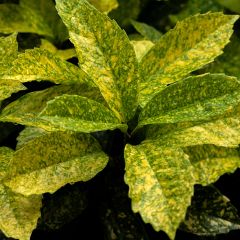
Aucuba japonica Golden King- Spotted Laurel
- Flowering time May, June
- Height at maturity 1,80 m
Our ideas for pairing Aucuba :
Aucuba pairs well, in borders or as a hedge, with Aralia elata, azaleas and rhododendrons, Mexican orange blossom or Enkianthus. In fresh soil you can also pair it with bamboos for an exotic feel, or with camellias for a more classic style. The scene will benefit from being completed with perennial plants. In dry shade, choose tough perennials such as Asaret, Acanthus or hardy geraniums. In fresher soil opt for Japanese anemones, ferns, hostas or bleeding hearts.
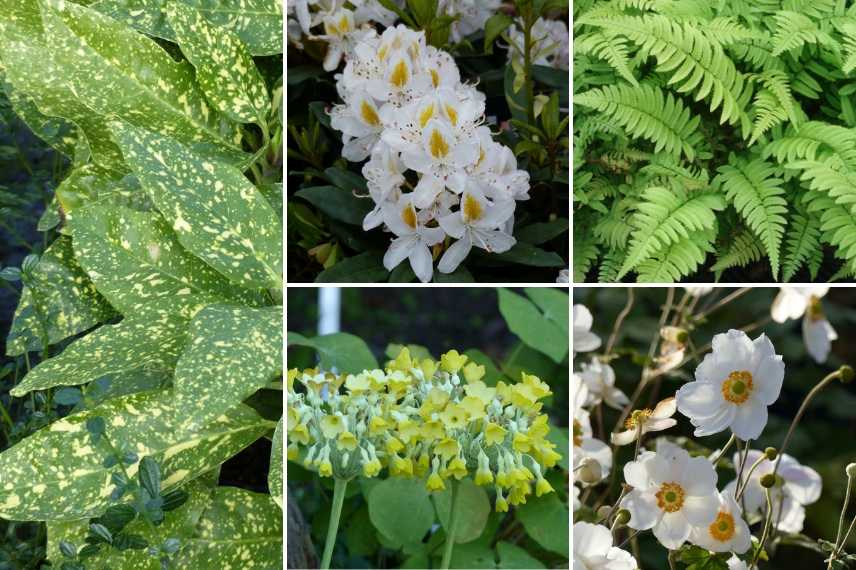
An example planting in acidic, fresh soil: Aucuba japonica ‘Variegata’, Rhododendron ‘Madame Masson’ to flower in spring, Dryopteris cycadina, Primula florindae to add colour in summer and Japanese anemone ‘Honorine Jobert’ to brighten autumn
→ For everything about Aucuba, see our plant page “Aucuba: planting, pruning and care”
Hydrangea, between tradition and modernity
Hydrangeas are a classic choice for shaded borders. The traditional Hydrangea macrophylla is well known, but there are very contemporary species and varieties with refined flowering. This is the case for Hydrangea aspera and serrata, which display small fertile flowers grouped in flattened umbels, surrounded by sterile pseudo-flowers. Hydrangea foliage is generally green, but there are cultivars with purple, bronze and even golden leaves. There are also climbing species that can ascend their supports to over 10 metres!
Cultivation :
- acidic, light, humus-bearing and cool soil
- Container growing on a shaded terrace is possible.
- hardiness: variable, down to -10 °C for least hardy types.
Some interesting varieties :
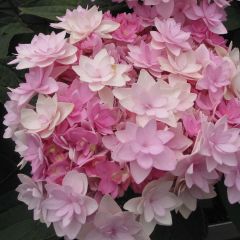
Hydrangea macrophylla You and Me Romance
- Flowering time August to October
- Height at maturity 1,20 m
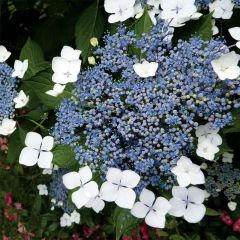
Hydrangea serrata Blue Bird - Mountain Hydrangea
- Flowering time August to October
- Height at maturity 1,20 m
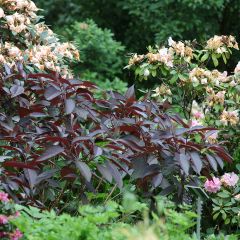
→ also discover, “Hydrangeas: 7 remarkable introductions in 2019”
Ideas for combining hydrangeas :
Make your hydrangea the centrepiece of your border by pairing it with Holodiscus, potentillas, astilbes (in cool soil) or Hostas. Introduce lightness with the delicate foliage of ornamental grasses that tolerate low light, or reinforce the ‘woodland’ effect with ferns. In not-too-dense shade and on a well-sized specimen, why not train a Clematis viticella to climb. Consider festooning the trunks of neighbouring trees with a Climbing hydrangea or a Schizophragma, both of which echo hydrangea inflorescences.
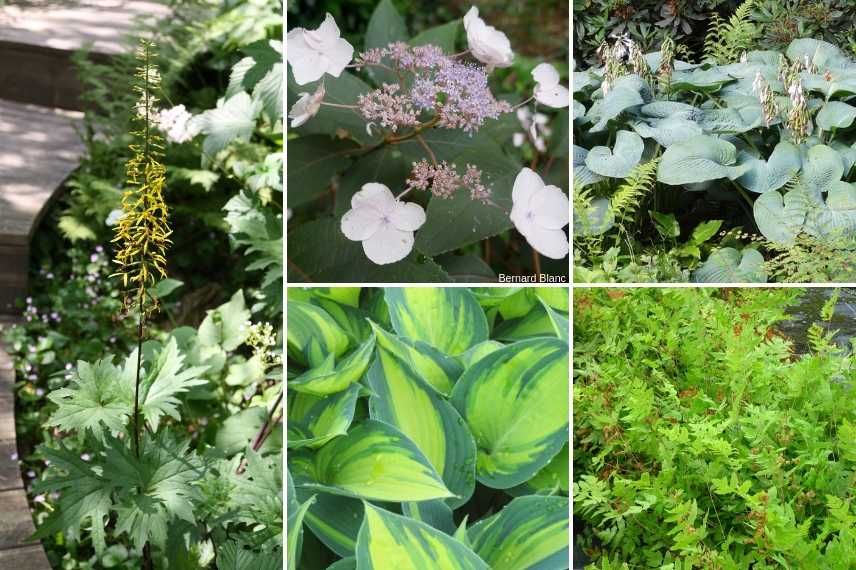
An idea for a pairing in cool shade: Ligularia przewalskii, Hydrangea aspera ‘Hot Chocolate’, Hosta ‘Big Daddy’, Hosta ‘June’ and Osmunda regalis ‘Purpurascens’
→ To learn more, discover all the care sheets devoted to hydrangeas
Mahonia, a shrub resplendent in winter
Mahonia shows an original look with its upright habit and strongly divided evergreen leaves. In shade it shines with yellow, sometimes orange, flowering that usually occurs in winter. The flowers, with a lily-of-the-valley scent, are followed by bluish berries that extend its ornamental interest.
It is an architectural plant, very easy to grow, offering many varieties, including ‘Soft Caress’, with long narrow leaves, which will appeal to those who dislike the prickly foliage of classic varieties.
Cultivation :
- Light soil, even poor, neutral to slightly acidic. Mahonia aquifolium (and its cultivar ‘Apollo’ with dark foliage) tolerate some lime.
- Compact varieties grow very well in pots
- Hardiness : generally down to -20°C.
Some interesting varieties :
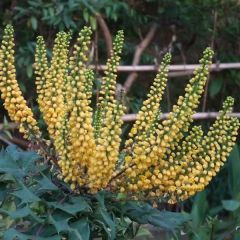
Mahonia x media Charity
- Height at maturity 3,50 m
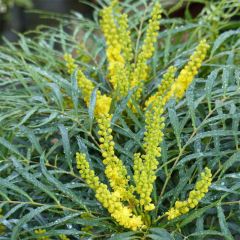
Mahonia Soft Caress - Mahonia hybrid
- Flowering time October to December
- Height at maturity 1,30 m
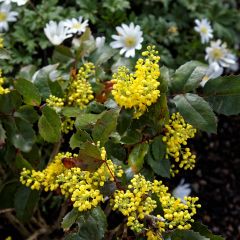
Mahonia aquifolium Apollo
- Flowering time March, April
- Height at maturity 80 cm
Our ideas for pairing Mahonias :
Plant these Mahonias on a carpet of ivy or periwinkle, and pair them with ferns, sacred bamboos, alongside Carex with a fountain habit. Clumps of hellebores complete the scene in mid-winter, and a few spring bulbs then take over.
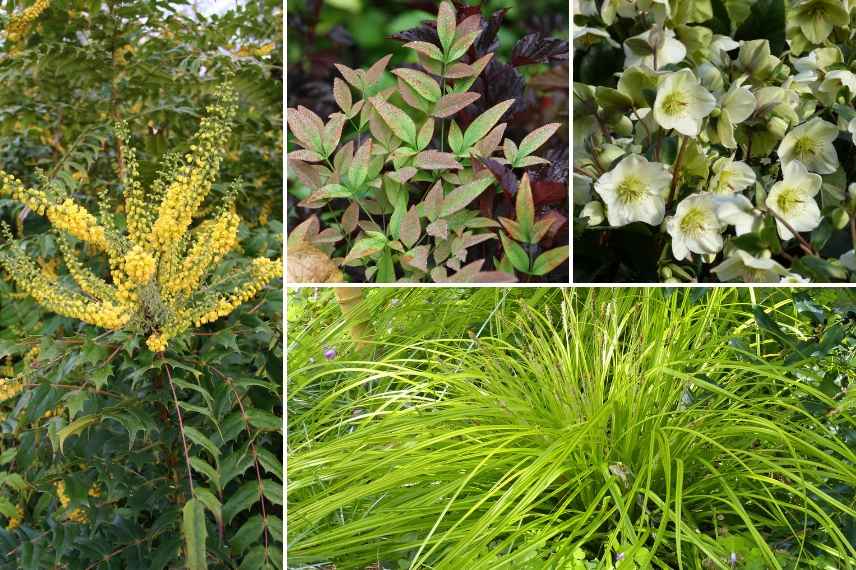
A bright planting idea: Mahonia media ‘Charity’, Nandina ‘Obsessed Seika’, Helleborus ‘Ice n’ Roses White’ and Carex oshimensis ‘Everillo’
→ Find everything you need to know and our tips for growing these beautiful shrubs in our guide: “Mahonia : planter, tailler et entretenir”
Read also
Hydrangeas: planting, pruning and careLeucothoé, chameleon foliage
Leucothoe is a must for shaded beds in acid soil. It is a shrub known as a heather-soil plant with a compact habit and generally evergreen foliage, lustrous and glossy. Its colours evolve through the seasons to display a more or less deep purple in winter. In spring it bears a slightly scented display of small bell-shaped, cream to pink-tinged flowers reminiscent of lily of the valley or Pieris.
Cultivation:
- neutral to acid soil, humus-bearing, light but remaining cool and well drained
- easy to grow in pots
- Hardiness: -20°C but fairly sensitive to spring freeze–thaw episodes and cold winds
Some interesting varieties:
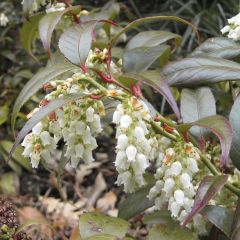
Leucothoe fontanesiana Scarletta
- Flowering time June, July
- Height at maturity 1,20 m
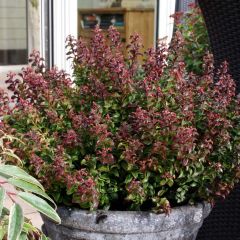
Leucothoe axillaris Twisting Red - Dog hobble
- Flowering time May, June
- Height at maturity 40 cm
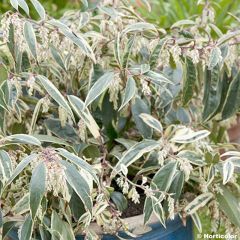
Leucothoe fontanesiana Whitewater
- Flowering time May, June
- Height at maturity 1,20 m
Our ideas for pairing Leucothoe:
Preferring heather soil, Leucothoe pairs well with many other heather-soil shrubs such as Rhododendrons and Azaleas, Hydrangeas, Camellias, Sarcococcas and Maples of Japan. Complete the scene with carpets of heathers and play on the graphic foliage of ferns or Hostas. Add groups of spring bulbs such as crocus, snowdrops, narcissi and don’t forget autumn-flowering ones such as Colchicums (plant in summer!) if your bed is in light shade.
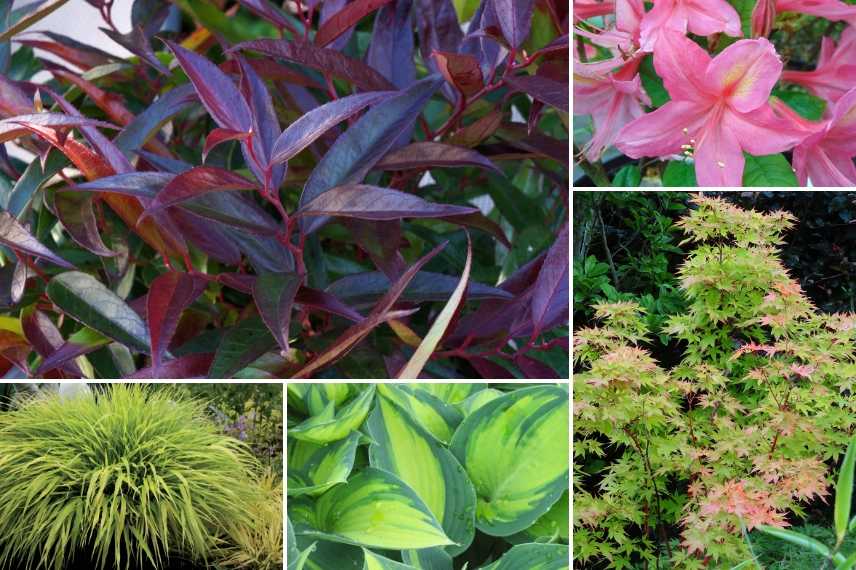
An idea for a combination in heather soil: Leucothoe keiskei ‘Burning Love’, Chinese Azalea ‘Jolie Madame’, Acer palmatum ‘Sangokaku’ (syn. ‘Senkaki’), Hosta ‘June’ and Hakonechloa macra ‘All Gold’
→ To learn more and successfully grow this shade shrub: “Leucothoe: planting, cultivation, pruning and maintenance”
Fatsia, tropical ambience in the garden
Hardy and undemanding, the Fatsia or Aralia is a handsome shade shrub. Its evergreen, deeply palmate leaves give it a truly exotic appearance. Foliage may be glossy green or splashed with cream, brightening even the darkest spots of garden or terrace. Its white spherical pompom flowers appear between July and September and are reminiscent of ivy. These are followed by fruiting in small black berries much favoured by birds.
Cultivation:
- Good garden soil not lime-rich, cool in summer and not waterlogged in winter.
- Can be grown in a large container
- Hardiness: −15 °C in sheltered position, protected from draughts and winds that can damage its foliage
Some interesting varieties:
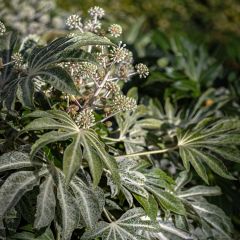
Fatsia japonica Spiders Web - Variegated False Aralia
- Flowering time August to October
- Height at maturity 2 m
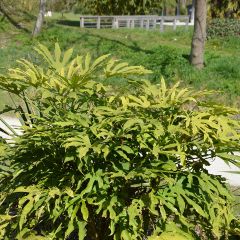
Fatsia polycarpa Green Fingers
- Flowering time November, December
- Height at maturity 2 m
Our ideas for pairing Fatsia:
To emphasise the tropical effect, pair Fatsia with other exotic foliage such as Tetrapanax, Acanthus, or Aspidistra, planted over a groundcover such as Asarum. In regions with milder winters, try Wheel tree, with its unusual flowering. The Japanese feel of Aralia can be enhanced by pairing it with bamboos (cespitose bamboos do not spread and do not require a rhizome barrier), Japanese maples, Hostas, and Hakonechloas. At their feet, choose Chloranthus with scented spring flowering, or Helxine with a mossy appearance.
→ Also read: 7 ideas for pairing Fatsia
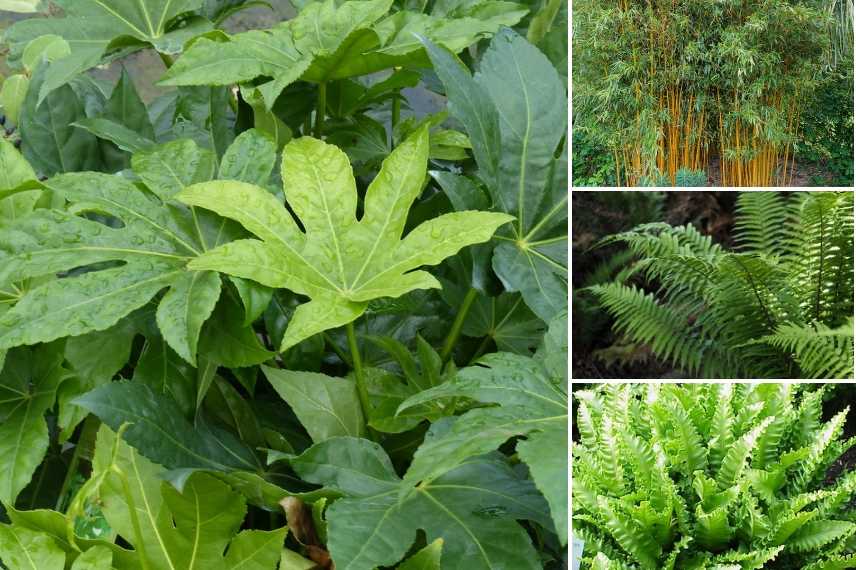
A tropical-inspired planting idea: Fatsia japonica, Phyllostachys aureosulcata ‘Aureocaulis’ (with rhizome barrier), Dryopteris wallichiana and Asplenium scolopendrium ‘Cristatum Group’
→ Read on the blog: “10 exotic and hardy plants for a jungle garden”
Sarcococca, for difficult areas
Shrub with glossy, evergreen foliage and dense habit, whose inconspicuous flowers scent winter with a powerful perfume. They are followed by red then black berries. Slow-growing and of moderate size, this compact shrub fits easily into garden, even in areas where nothing grows, such as among tree roots. It spreads to fill space without becoming invasive. Very versatile, it resists pollution and disease and is even suitable for dry shade. It also requires little maintenance.
Culture :
- Acid to neutral soils, moist but well-drained (accepts difficult, dry soils, among roots)
- Very resistant (diseases, pollution, drought…)
- Hardy from -10°C to -15°C.
Some interesting varieties :
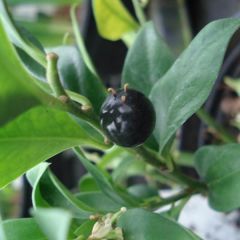
Sarcococca confusa
- Height at maturity 1,50 m
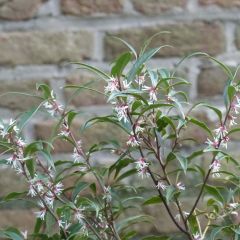
Sarcococca hookeriana var. digyna Purple Stem
- Height at maturity 1,20 m
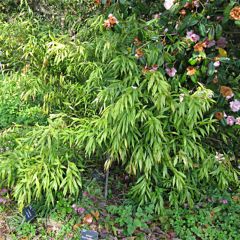
Sarcococca saligna
- Height at maturity 1,40 m
Our ideas for combining sarcococcas :
In the most challenging spots (dry soil, roots…) pair them with sturdy Hardy geraniums, together with Hellebores and Asarum europaeum.
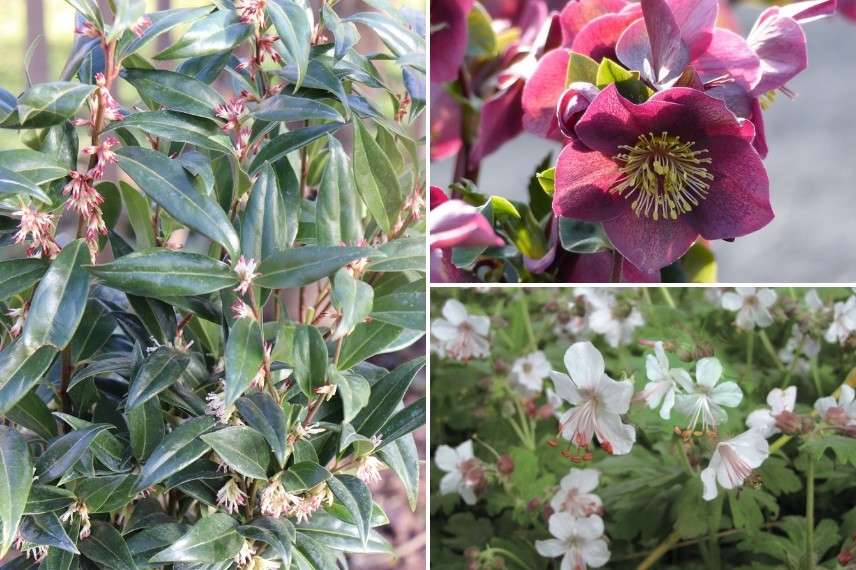
An idea for a combination in a challenging spot: Sarcococca ‘Winter Gem’, Helleborus ‘Ice n’ Roses Red’ and Geranium macrorrhizum ‘Spessart’ which will flower a little later in season
In cooler spots, turn to Japanese maples, Fatsias, accompanied by Hostas and Ferns. Complete with some Cyclamens and spring bulbs.
Daphne, an enchanting fragrance
Daphne is an essential shrub for flowering and perfuming shady spots in the garden, even in midwinter. It is impossible to resist their exceptional fragrances. Daphnes typically have evergreen, variegated foliage, which makes some varieties particularly bright. Flowering in small star-shaped white, pink, purple and even yellow blooms is decorative and literally perfumes the garden.
Culture :
- Soil neutral to acidic, humus-bearing, fresh but well-drained in winter
- Can be grown in pots for the more compact varieties
- Hardiness: down to -15°C, but some can tolerate down to -30°C
Some interesting varieties :
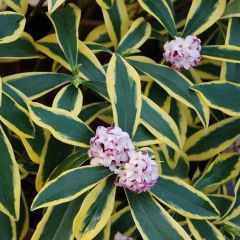
Daphne odora Marianni Rogbret
- Flowering time March, April
- Height at maturity 1,50 m
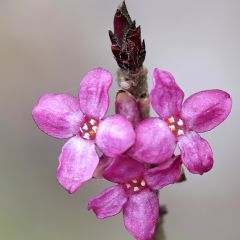
Daphne mezereum var. rubra
- Flowering time March, April
- Height at maturity 1,20 m
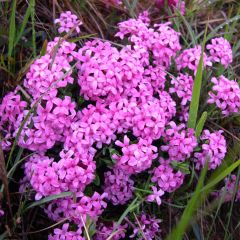
Daphne cneorum
- Flowering time May, June
- Height at maturity 25 cm
Ideas for pairing Daphne :
The ferns (such as the superb Dryopteris erythrosora with coppery foliage), Japanese (forest) grass, Ophiopogon, Heucheras and Rodgersias create a beautiful composition where shapes, textures and foliage colours contrast perfectly. Complete with perennials with showy blooms such as Hellebores, Alchemilla and Japanese anemones. Early-flowering bulbs accompany Daphne flowering perfectly.
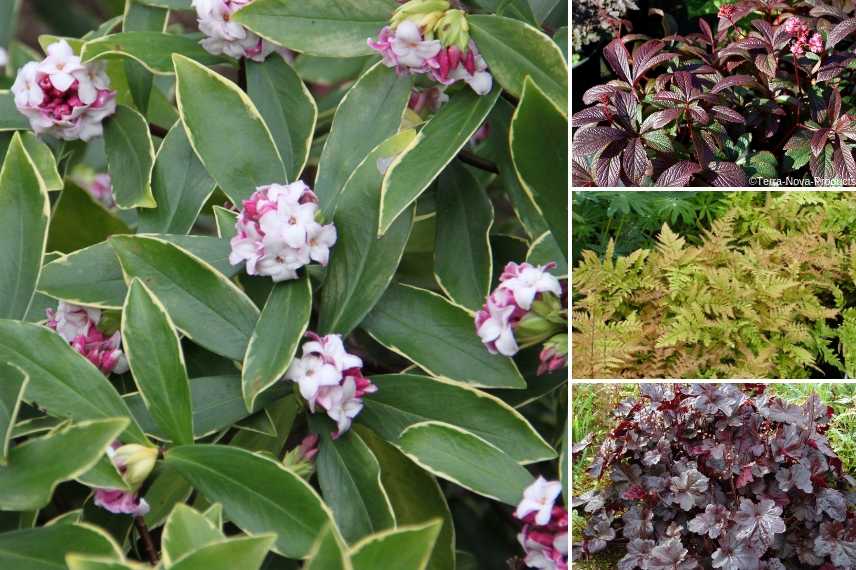
A scented, colourful planting idea: Daphne odora ‘Aureomarginata’, Rodgersia pinnata ‘Bronze Peacock’, Dryopteris erythrososa and Heuchera ‘Obsidian’
→ Want to know more about this highly fragrant shade shrub? Discover our fact sheet: “Daphne: planting, cultivation and care”
Rhododendrons and azaleas, stars of shady gardens!
Under the name Rhododendrons are grouped the ‘true’ rhododendrons as well as azaleas. The genus offers a very wide selection, with shrubs ranging from a few dozen centimetres to several metres. They are true stars of shade and their flowering covers almost the full spectrum of colours: white, blue, mauve, pink, red, yellow and orange. Foliage is no exception: it turns fiery in autumn for deciduous varieties and can be variegated on evergreens. It is therefore impossible not to find a rhododendron to suit your garden or terrace.
Cultivation :
- acid or neutral soil, humus-bearing, cool but well drained
- can be grown in pots for smaller varieties
- Hardiness: -20°C
Some interesting varieties :
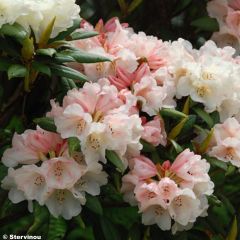
Rhododendron yakushimanum Grumpy
- Flowering time June
- Height at maturity 80 cm
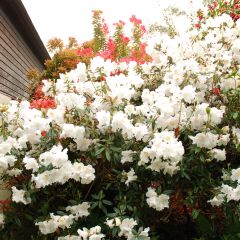
Rhododendron Fragrantissimum
- Flowering time April, May
- Height at maturity 1 m
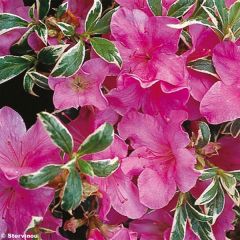
Japanese Azalea Silver Queen
- Flowering time May, June
- Height at maturity 50 cm
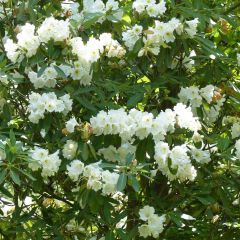
Rhododendron Polar Bear
- Flowering time August, September
- Height at maturity 5 m
Our ideas for combining rhododendrons and azaleas :
Opt for Pieris with superb foliage and decorative flowering, camellias which for some varieties flower when rhododendrons are less showy, or Japanese maples whose graceful foliage takes on sumptuous autumnal colours. Complete with perennials that dress the base of shrubs such as Japanese anemones, Brunneras, Cimicifugas, Bleeding Hearts, Hostas or Heucheras. Fill gaps with bulbs such as the bluebell, wood anemones or Cyclamen coum.
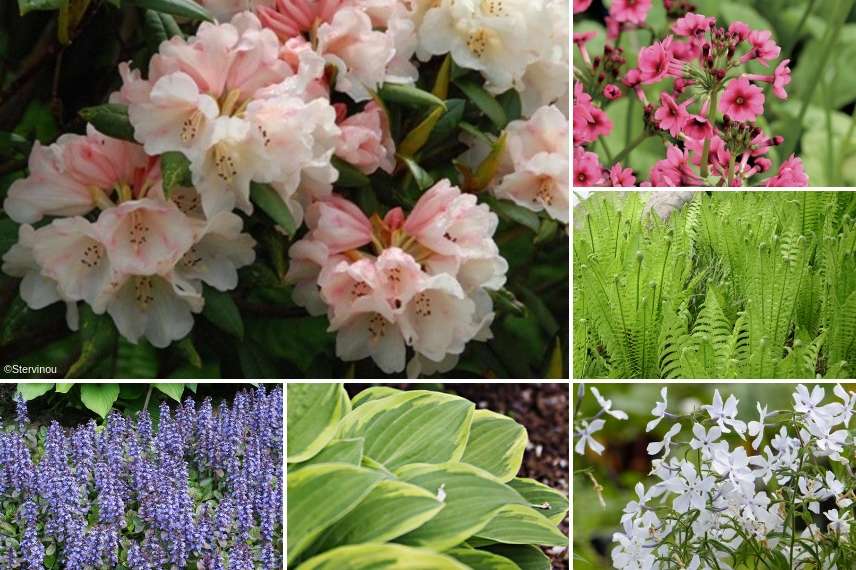
A planting idea: Rhododendron yakushimanum ‘Grumpy’, Primula japonica ‘Miller’s Crimson’, Matteuccia struthiopteris, Phlox divaricata ‘White Perfume’, Hosta ‘Fragrant Dream’ and Ajuga reptans
→ To learn everything and to grow these shrubs for heather soil well, discover our complete guide devoted to rhododendrons and azaleas
Viburnum, simplicity in beauty
While many prefer open, sunny situations, some viburnums perform well in shade. Their foliage can be evergreen or deciduous and take on superb autumn colours. Flowering, whether winter or spring, is white, but some varieties offer refreshing pink hues. Small berries, favoured by birds, follow the flowers.
Culture :
- Humus-bearing, cool, well-drained soil
- Container growing reserved for dwarf varieties
- Hardiness: -10°C to -20°C
Some interesting varieties:
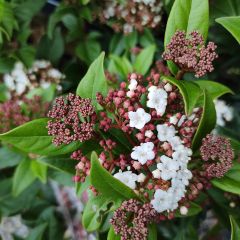
Viburnum tinus SPIRIT® - Laurustinus
- Height at maturity 2,20 m
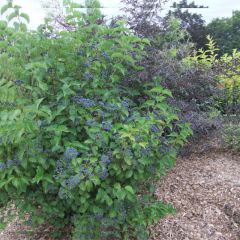
Viburnum dentatum Blue Muffin
- Flowering time June, July
- Height at maturity 2 m
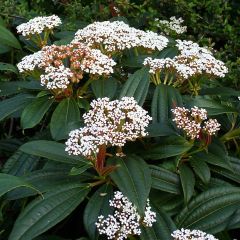
Viburnum davidii - David viburnum
- Flowering time July
- Height at maturity 1 m
Our ideas for pairing these viburnums?
Pair these viburnums with simple-looking shrubs in bold colours such as Euonymus ‘Emerald’n Gold’ or devil’s Walking stick ‘Golden Umbrella’. In acidic soil, brighten your selection with the bell-shaped flowers of Enkianthus campanulatus. Dress the base of your shrubs with ferns with dissected foliage, Hellebores and some spring bulbs.
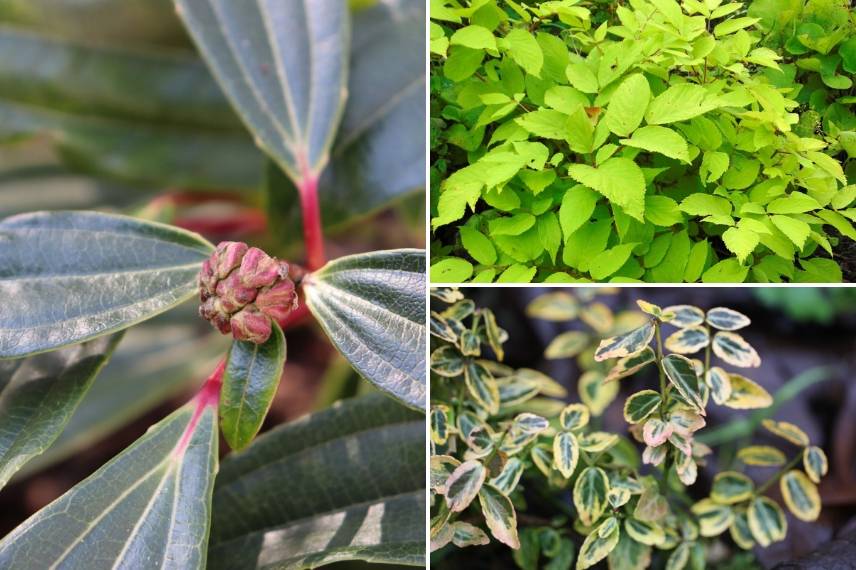
A planting idea: Viburnum davidii, Aralia cordata ‘Sun King’ and Euonymus fortunei ‘Emerald n’ Gold’
→ Find everything you need to know and our tips for growing viburnums in our fact sheet: “Viburnum: planting, pruning and cultivating”
Xanthorhiza simplicissima, sumptuous autumn foliage
Too rarely used, Xanthorhiza, a groundcover shrub that might be described as a restrained conqueror. Suckering, it spreads without ever becoming invasive. It bears small brownish-purple flowers in mid-spring, followed by star-shaped fruits much loved by birds. But it is above all for its remarkable foliage that it is grown. With lobed leaves, it is green through the season, then gradually turns yellow, then purple and violet as autumn advances.
Cultivation :
- Ordinary, fresh, non-calcareous, humus-rich soil. Tolerates clay.
- Hardiness: -15°C
Planting ideas for Xanthorhiza :
Only Xanthorhiza simplicissima is grown in gardens. It performs wonderfully in a shady spot, near water, alongside Kalmia latifolia, rhododendrons or in front of a Clethra with fragrant flowers that also display attractive late-season colours. To perfect autumn palette, pair it with dogwoods such as Cornus like Cornus sericea ‘Cardinal’ which, besides its late-season fiery hues, remains decorative throughout winter with its red-coloured stems. Punctuate the scene with lush foliage of hostas, ferns, hakonechloa (Japanese (forest) grass) or Carex. Introduce colour with flowering of perennials that appreciate cool conditions such as hardy geraniums, Japanese anemones, Siberian bugloss or Campanulas.
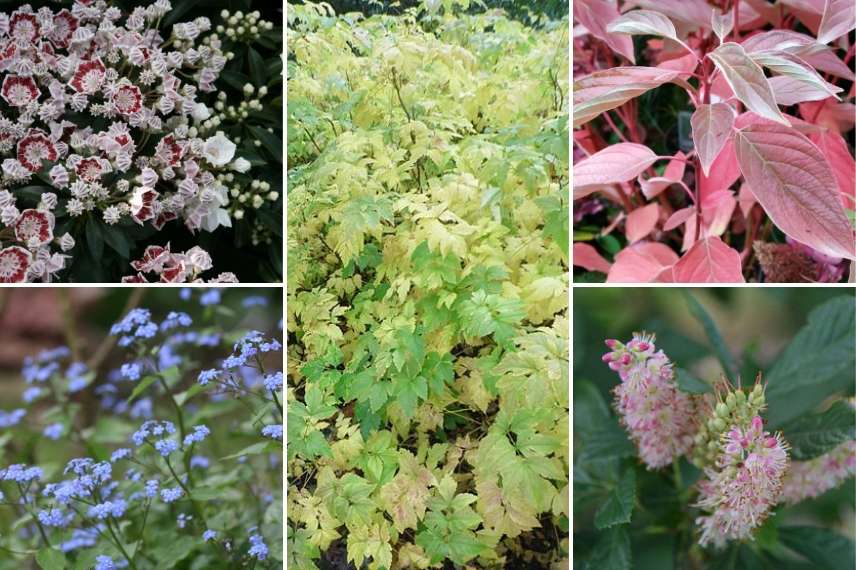
One planting idea: Xanthorhiza simplicissima paired with Kalmia latifolia ‘Minuet’ and Brunnera macrophylla ‘Jack Frost’ in spring, then Cornus sericea ‘Cardinal’ and Clethra alnifolia ‘Ruby Spice’ in autumn
- Subscribe!
- Contents
This form is protected by reCAPTCHA - the Google Privacy Policy and Terms of Service apply.

































Comments