Peonies: planting, pruning and care
Contents
Peony, in a nutshell
- Peonies are divided into two categories: very hardy herbaceous perennials that die back in winter, and shrub peonies with very large, often scented flowers; hardy, but their flowering is sometimes affected by late frosts.
- They are plants that take quite a long time to establish, sometimes temperamental when it comes to flowering, but can live for several decades.
- Over the years, clumps expand without needing division or pruning for shrub peonies, producing up to 60 flowers, sometimes measuring 25–30 cm across, in May–June.
- Peonies prefer deep, rich soils — acidic or lime-bearing, heavy or humus-bearing, but well-drained.
A word from our expert
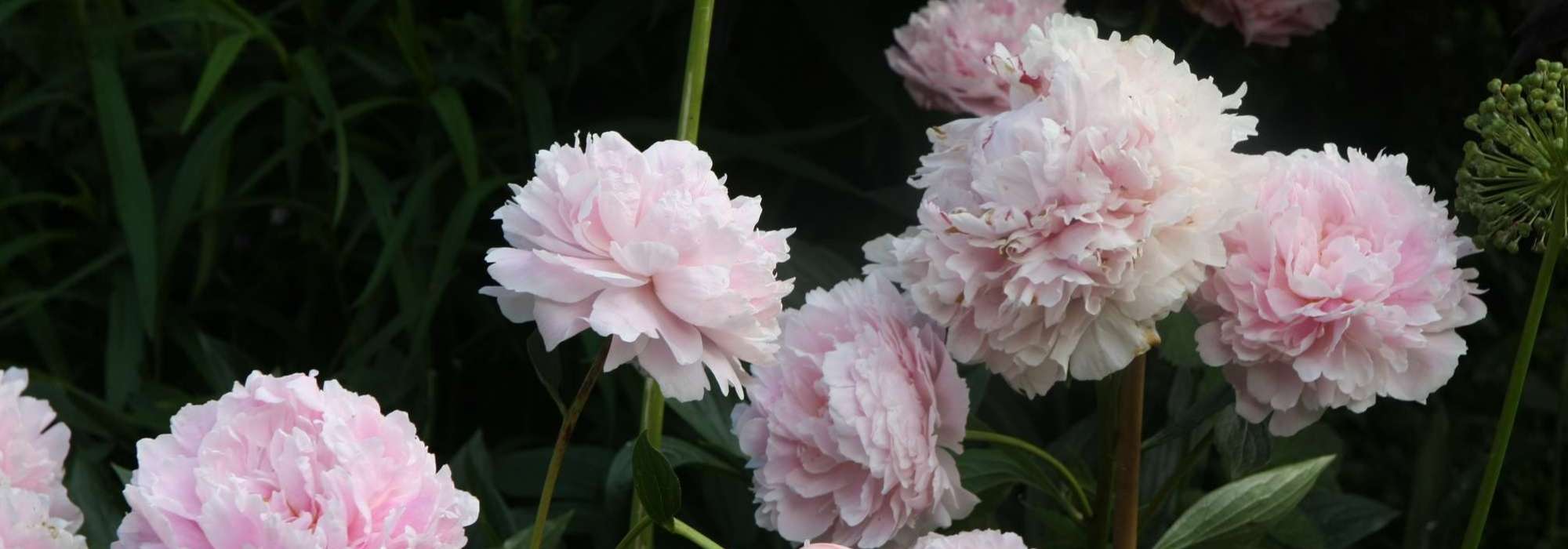
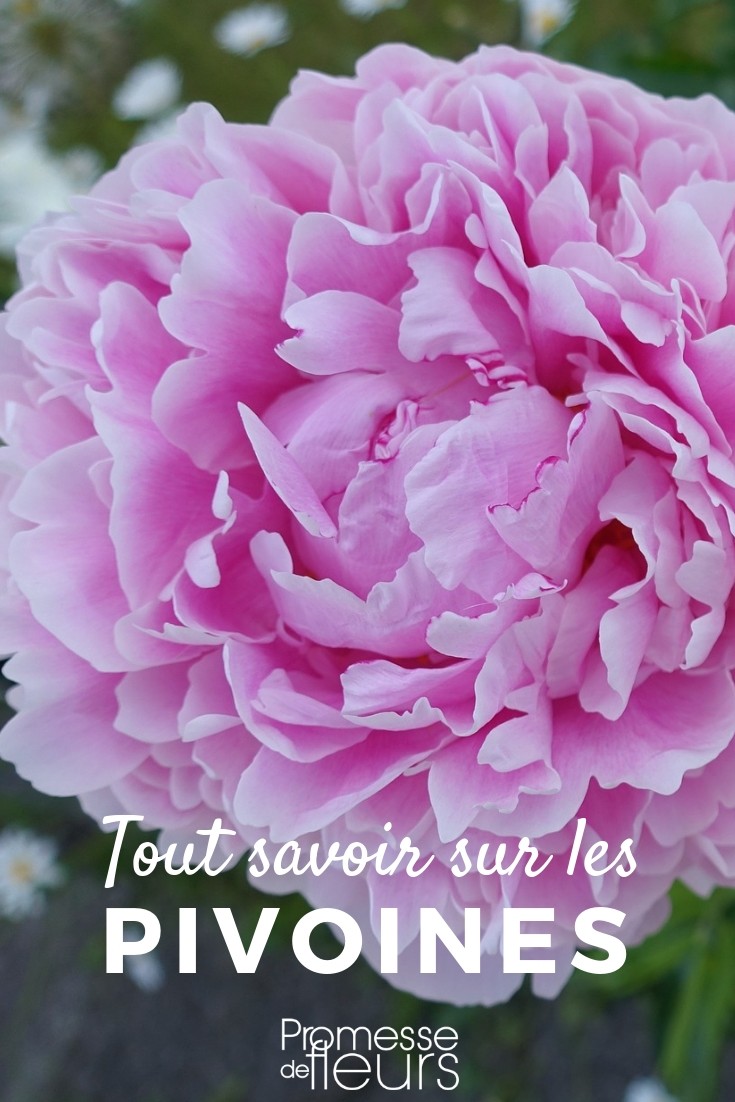
From huge, ruffled flowers to simple, modest corollas lit by a cluster of golden‑yellow stamens, peonies’ charm is undeniable. Even a novice recognises a peony at first glance by its deeply divided foliage and its exceptionally large flowers in shades of pink, white, red or salmon. No wonder it is nicknamed “the queen of the garden”!
The genus is being refreshed with new cultivars featuring sturdier stems, novel hues — brighter, even fluorescent — foliage that lasts longer, an extended flowering period stretching from mid‑April to mid‑June, and greater ease of cultivation.
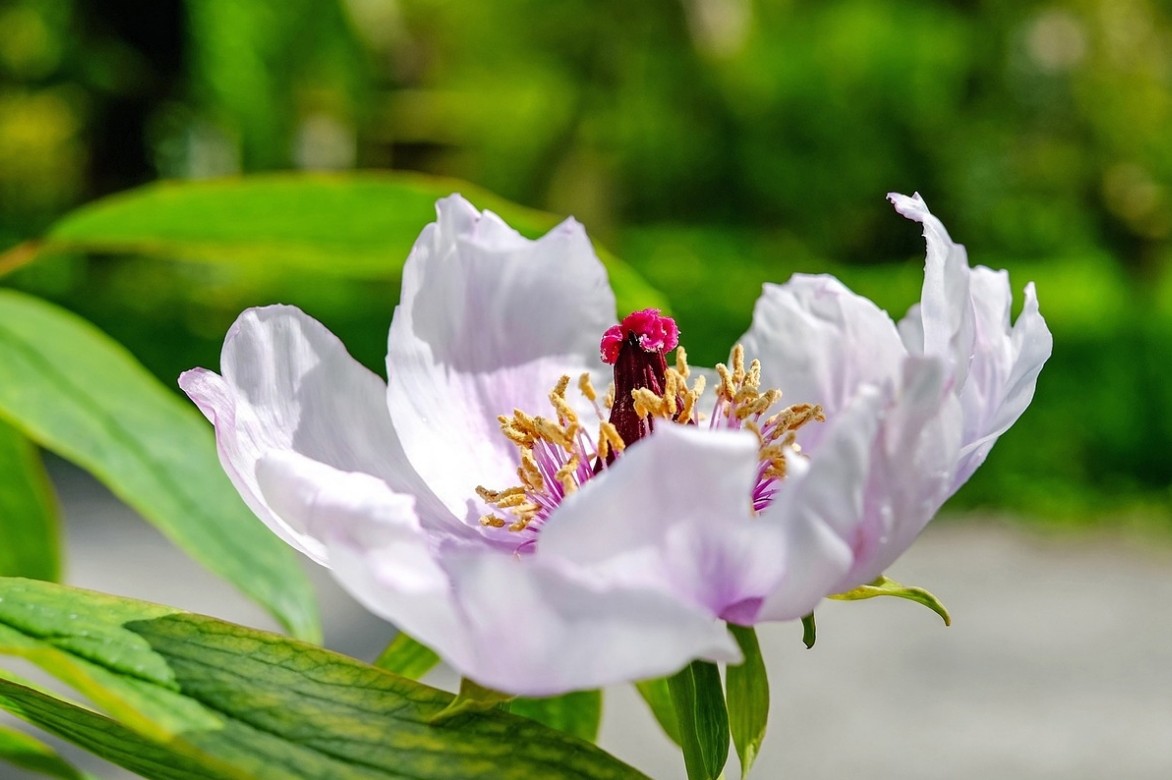
Today three categories of peonies are distinguished:
- very hardy herbaceous peonies, dying back in winter,
- the shrubby type, forming a bush very gradually 1 to 2–3 m high, with large flowers,
- peonies Itoh, hybrids between a herbaceous peony and a shrubby peony. These behave like very hardy perennials, dying back in winter, and, like tree peonies, bear large flowers in rather unprecedented shades of peach, cinnamon, apricot or canary and finely divided leaves carried on rigid stems that do not need staking.
In the garden, peonies prefer open spots that are not too scorching and are extremely hardy, the herbaceous peony in particular can tolerate temperatures below -50°C ! It prefers heavy, rich, cool but well‑drained and slightly alkaline soils while the shrubby peony favours more humus‑bearing, light, rich and cool soils. Itoh hybrids are also very hardy, simply dislike waterlogged soils, appreciate partial shade and have sturdy stems that do not buckle under the weight of the flowers.

Description and botany
Botanical data
- Latin name Paeonia
- Family Paeonaceae
- Common name Shrub peony, herbaceous
- Flowering between April and June depending on variety
- Height between 0.5 and 3 m
- Sun exposure full sun (not too hot) to partial shade
- Soil type any rich, deep and well-drained soil, even calcareous
- Hardiness Excellent (-15 to -50 °C)
Genus Paeonia, comprising 33 deciduous species, is primarily native to temperate Eurasia, with two species native to North America. Peonies, formerly placed with Ranunculaceae — family that includes anemone and buttercup — are now recognised as their own family, Paeonaceae. Among them, Chinese peonies (Paeonia lactiflora) stand out for their major contribution to the diversity of herbaceous cultivars, while suffruticosa, delavayi and lutea varieties have broadened the range of shrub peonies.
These plants are characterised by a woody stump with fleshy, robust roots, ensuring remarkable longevity, sometimes spanning centuries. Deciduous foliage is made up of toothed or lobed leaflets, giving arborecent species a particular elegance, and some, such as Paeonia tenuifolia, bear finely divided leaves. From spring, peonies announce their awakening with the opening of large red buds, emerging from the ground for herbaceous types or on shoots for shrub types, revealing an initially mahogany foliage that opens to a vibrant green.
In autumn, herbaceous peonies can offer a display of purples, ochres and bronzes, especially after a sunny, moderately dry summer. It is nevertheless advisable to accompany these garden queens with other flowers to maintain visual interest until leaf fall in September.
Flower buds, solitary and conspicuous at stem tips, herald a flowering period that scents the surrounding air for around two weeks, and even up to a month for Itoh hybrids. Each flower at full bloom, however, lasts only one to two days, providing a fleeting moment of pure beauty.
Paeonia officinalis, a European species, is notable for its single, vivid red flowers. Highly fragrant, these flowers have more than five rounded petals, evoking the look of large wild-rose blooms with short yellow stamens. In double-flowered varieties, these stamens are replaced by wavy filaments, creating a most captivating visual spectacle. Paeonia officinalis hides between two and five large ovaries which, after fertilisation, give rise to stout, hairy follicles. Note that seeds are toxic and large enough to be noticeable.
Pollination of peonies, essential to reproduction, benefits greatly from bee activity. Many cultivars, notably double- or triple-flowered types, display an impressive mass of transformed stamens — either frilled filaments in varieties such as Paeonia lactiflora ‘Bowl of Beauty’, or extra petals in specimens such as Paeonia officinalis ‘Rubra Plena’ or Paeonia lactiflora ‘Felix Crousse’. These transformations provide a range of colours from delicate gradations to distinctive purplish hues, with flower sizes from 5 to 30 cm in diameter. Some, particularly among shrub peonies, can become so heavy that they lean or even flop to the ground, recalling the morphological diversity of Dahlias.
Flowering often requires patience and time, usually two to three years after planting to allow solid establishment. Once well rooted, peonies can bloom for up to a century, offering up to 60 flowers per plant. Shrub varieties require an even longer period, around seven years, to reveal their full splendour, which explains price increases with plant age. When purchasing, pay attention to rootstock size and number of eyes or branches, which indicate plant age and maturity.
Cut peonies make magnificent additions to bouquets, pairing perfectly with lilacs and campanulas, and should ideally be gathered in the morning at the coloured-bud stage.
Beyond their beauty, Paeonia officinalis possesses medicinal properties, reflecting its Greek name “Paeonia”, meaning “salutary”. The name may also derive from Paeon, a physician of ancient Greece. Pliny the Elder already considered the peony the oldest cultivated flower, testimony to its historical and cultural importance.
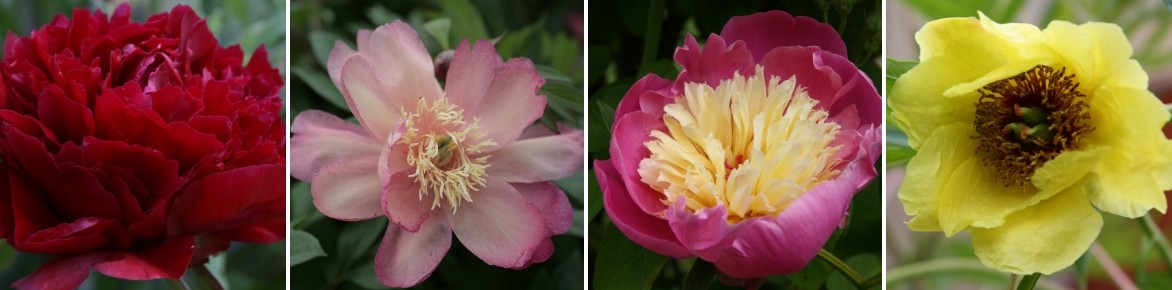
Some peony flowers: Paeonia lactiflora ‘Black Beauty’, Paeonia itoh ‘Julia Rose’, Paeonia lactiflora ‘Bowl of Beauty’ and Paeonia delavayi lutea
Main peony varieties
Herbaceous peonies
Although genus Paeonia includes more than 30 species, the majority of cultivars derive from Paeonia lactiflora. It bears fragrant flowers in May–June with diameters ranging from 7 to 20 cm. Staking stems often becomes necessary to support the large pompon blooms. Over the years you will be surprised by the size of the clump, which returns ever more luxuriant.
Japanese-type peonies are prized for their single corolla flowers crowned with numerous stamens. They form very pretty scenes beneath flowering pruines. Among the best known are ‘Bowl of Beauty’ with pink flowers and a pale yellow centre, and ‘Kimo-Kimo’ with carmine flowers tinged with crimson.
Discover our selection of the most beautiful herbaceous peonies.
Shrub peonies
Paeonia suffruticosa, delavayi, lutea, x lemoinei generally form deciduous shrubs 1 to 2 m high, with a compact, well-branched silhouette as wide as tall, often flared, sometimes spreading. Slow-growing, flowering may not occur until 2 or 3 years after planting but the shrub can live for 50 years. Flowering usually occurs in April–May preceding that of herbaceous peonies. Single, semi-double, double or even globose flowers form cups measuring 15 to 30 cm in diameter.
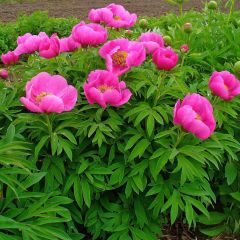
Paeonia lobata Sunshine
- Flowering time May, June
- Height at maturity 85 cm
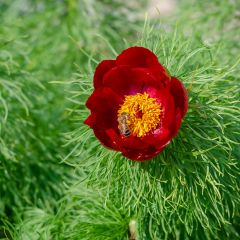
Paeonia officinalis Mollis
- Flowering time July, August
- Height at maturity 45 cm
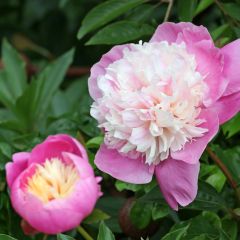
Paeonia tenuifolia
- Flowering time May
- Height at maturity 40 cm
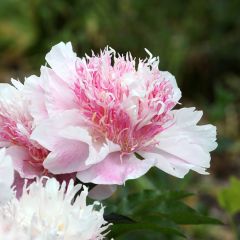
Paeonia lactiflora Bowl of Beauty
- Flowering time June, July
- Height at maturity 90 cm
Paeonia lactiflora Do Tell
- Flowering time June
- Height at maturity 80 cm
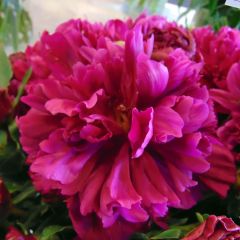
Paeonia lactiflora Inspecteur Lavergne
- Flowering time June, July
- Height at maturity 80 cm
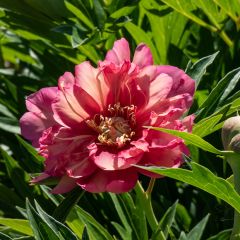
Paeonia Itoh Julia Rose
- Flowering time June, July
- Height at maturity 75 cm
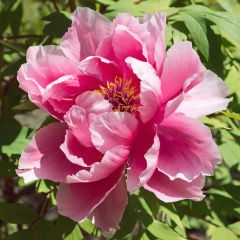
Paeonia suffruticosa Pink - Tree Peony
- Flowering time May, June
- Height at maturity 1,50 m
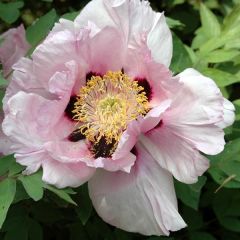
Paeonia suffruticosa Lilac - Tree Peony
- Flowering time June, July
- Height at maturity 1,50 m
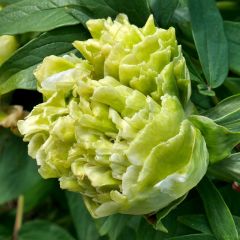
Paeonia suffruticosa Lu Mu Ying Yu - Tree Peony
- Flowering time May, June
- Height at maturity 1,50 m
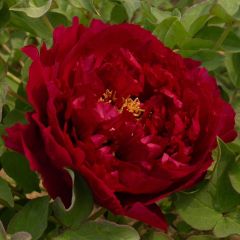
Paeonia suffruticosa Wu Jin Yao Hui - Tree Peony
- Flowering time May
- Height at maturity 1,50 m
Discover other Paeonia - Peonies
View all →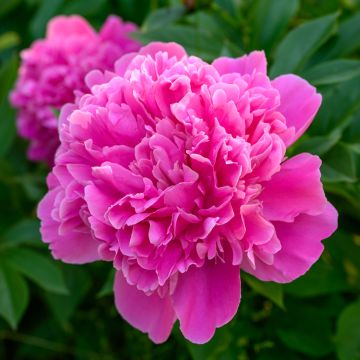
Available in 2 sizes
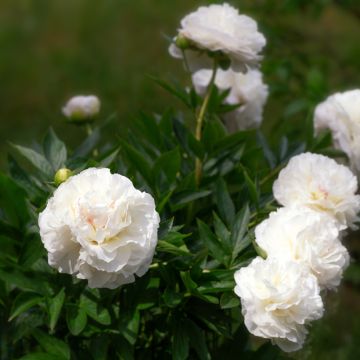
Available in 2 sizes
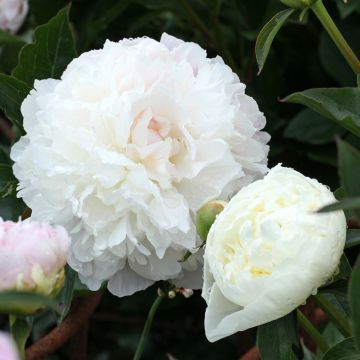
Available in 2 sizes
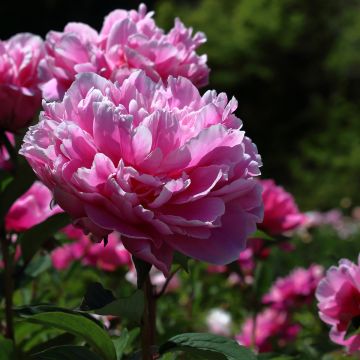
Available in 2 sizes
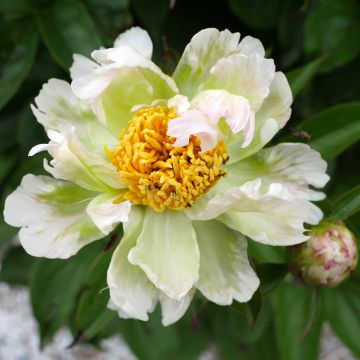
Available in 2 sizes
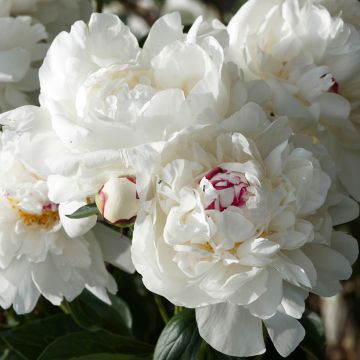
Available in 2 sizes
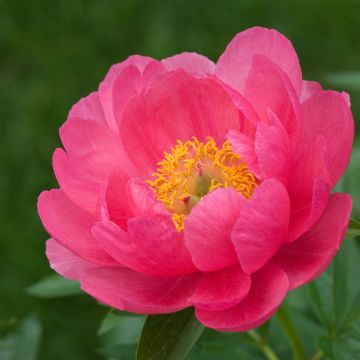
Available in 2 sizes
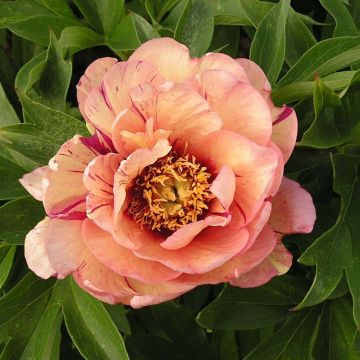
Available in 2 sizes
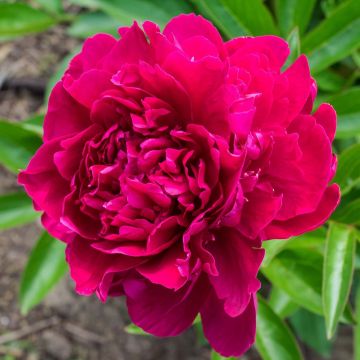
Available in 2 sizes
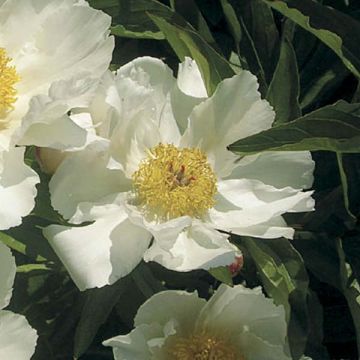
Available in 2 sizes
Planting peonies
Where to plant peonies?
Peonies do not like being moved, so it is important to choose best possible spot so they are showcased and, above all, do not suffer from excess moisture or competition from other plants. Bear in mind you are planting for next two generations!
- Herbaceous peonies require sun or part-shade with heavy (clay) soil, rich, well drained but remaining cool in summer, neutral, slightly acidic or calcareous (ideal pH between 6 and 7). Growth is slow there but flowering is more spectacular than in dry soil. Very sandy, free-draining soil produces abundant foliage with few flowers. You can lighten soils that are too wet in winter by adding some compost or leaf mould or by planting on a raised mound.
- Itoh peonies prefer semi-shaded positions such as woodland edge or shelter of a hedge and also require rich, cool, deep and well-drained soil.
- Plant shrub peonies in a warm, west-facing position sheltered from severe frosts and cold winds. Choose a sunny but not scorching to lightly shaded spot (4–6 hours sun/day). Buds and young leaves are sensitive to late frosts.
Shrub peonies appreciate a rich, humus-bearing, deep, cool and well-drained soil and tolerate lime well. They dislike very heavy, waterlogged ground in winter. Slow-growing during first years, shrub peonies form a powerful, deep root system and produce few branches; it is only after 3–4, sometimes 5 years of cultivation that branching fills out and flowering becomes spectacular. Mature plants do not like being moved.
To learn more read Planting peonies: where, when and how? and How to have beautiful peonies in the garden?
When to plant?
Plant herbaceous peonies preferably in autumn so they have time to establish.
For shrub peonies, spring planting is preferable, especially if winters are severe.
How to plant?
This plant can be rather temperamental and sometimes takes a long time to flower.
- Dig a hole 40–50 cm deep.
To check whether soil drains adequately, dig a hole 30 cm deep and 20 cm wide and fill with water. After one hour, water should have completely drained away.
- Place a 10 cm layer of gravel and lighten soil with coarse sand if necessary.
- Add well-rotted manure or blood meal to planting hole to stimulate flowering.
For herbaceous peony, position the root crown (griffe) less than 3 cm deep and space plants 60 cm to 1 m apart.
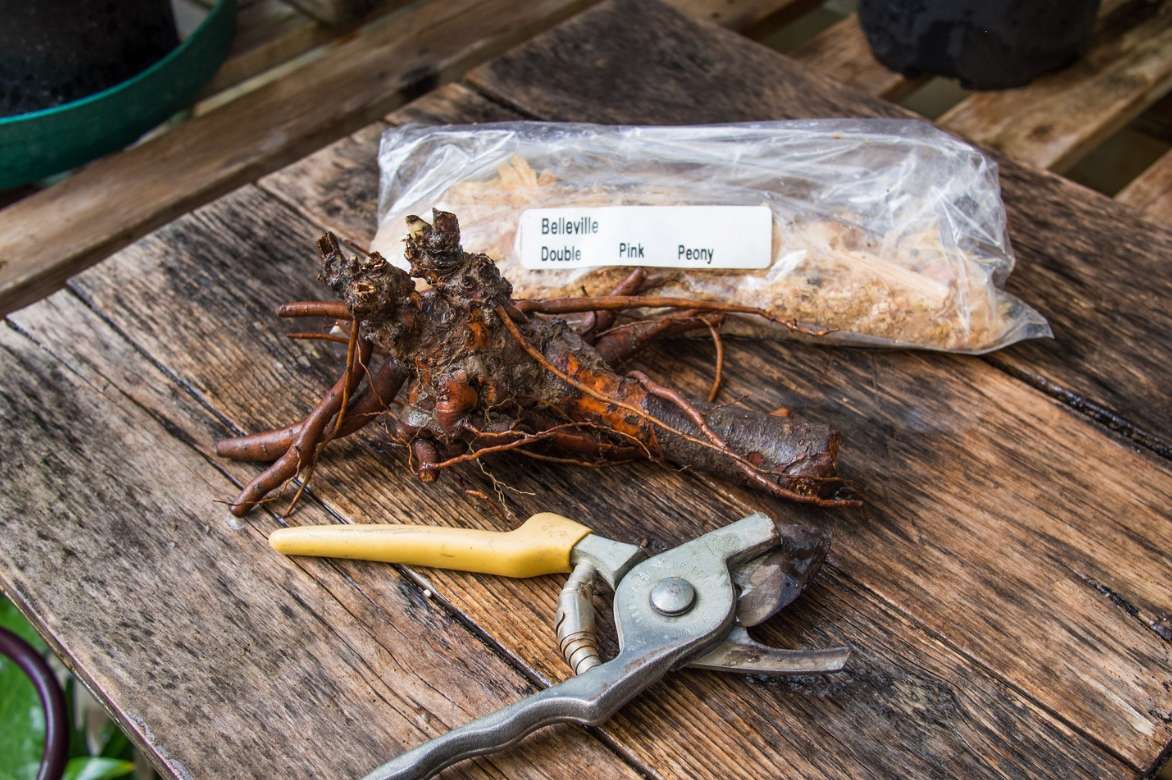
Herbaceous peony roots (photo F. D. Richards – Flickr)
For shrub peony, do not hesitate to bury graft union 10 cm deep so scion can produce its own roots. Indeed, grafting onto herbaceous peony reduces longevity of shrub peony. Moreover, planting too shallowly encourages rootstock to sprout. However, follow same level as substrate if your plant is sold in a container.
- Replace soil and firm gently.
- Insert stakes such as hazel branches to support heavy flowers and mark planting location.
- Water generously.
- Avoid mulching with organic waste to prevent disease transmission. Instead plant low-competition groundcover such as hardy geranium or sedum.
- You can also grow peony in a pot; for this, consult our article: Shrub peonies in pots: how to grow them successfully?
Read also
Peony forever!Care
- Apply well‑rotted manure or blood meal each autumn 15 cm from base. Avoid fresh manure!
- If an exceptional frost damages shoots of tree peony, and if you have buried the graft union, cutting shoots back to ground level in April allows the framework to regrow within one year.
- In first years, water peony during dry spells, especially in spring before flowering.
- Cut off spent flowers to avoid exhausting plant with seed production.
- In general, herbaceous peony does not require clump division, unless flowering declines. Tree peony is not pruned or only very lightly (thin, crossing branches), to learn more, read our article “How to prune tree peonies?”
- Peonies are not very susceptible to disease except in case of excessive soil moisture (white rot) or airborne infection (grey mould, rust), particularly in herbaceous peonies. Cut diseased parts back to healthy tissue, spray Bordeaux mixture at 2% or horsetail decoction as a preventative and do not leave plant debris at base. Rose chafers sometimes eat flowers without serious consequences. Read also our article: Diseases and pests of shrub peonies.
→ Tree peony flowering little or not at all? Read our advice at: My tree peony is not flowering. Why?
Find also our advice in How to care for a tree peony throughout the seasons?
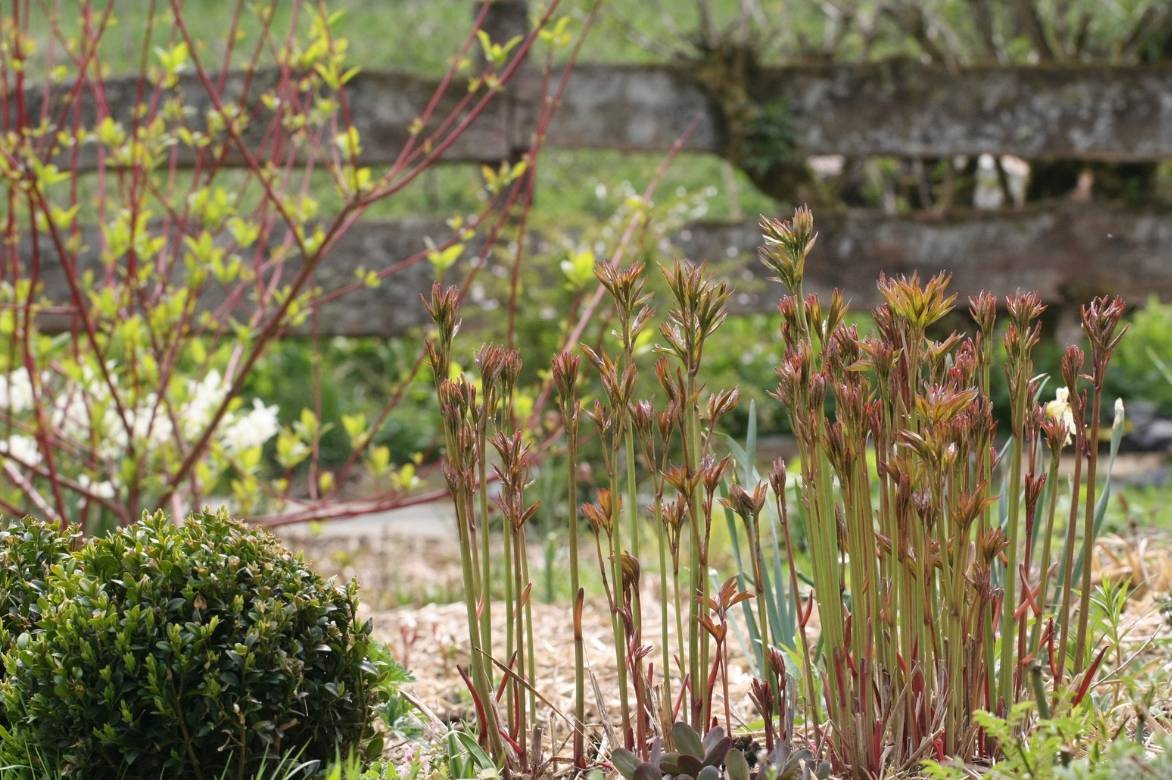
Clump of herbaceous peony in early spring
Propagation: dividing peonies
Tree peonies are generally grafted onto roots of herbaceous peonies because propagation by cuttings is not easy. It is a task for specialists. This propagation requires 2 to 3 years’ cultivation in a nursery, which explains their high cost.
Clump division is possible for herbaceous peonies and must be done if you relocate the plant, otherwise it may not flower again. Carry out in autumn or early spring.
Clump division
- Lift whole clump without damaging roots using a garden fork.
- Divide clump with a sharp knife, ensuring each division retains 3 to 5 roots and 3 to 5 eyes.
- Replant with eyes no more than 3 cm below surface.
→ Learn more in our tutorials : How to divide an herbaceous peony? and How to propagate the tree peony?
Uses and associations
Peonies used to be one of those plants that formed the backbone of a garden. Every garden, from the humblest to the most elaborate, proudly displayed in spring clumps covered in scented blooms that made their way into the house, keeping company in every bouquet with mauve lilac and blue campanulas. Japanese peonies fit perfectly into a mixed-border alongside timeless perennials such as columbines, delphiniums, campanulas, iris, alyssums, carnations, foxgloves, lupins or hellebores, or with ferns where the area is semi-shaded. Simply give them enough space so they do not compete. Only long-term container growing is not recommended, as their needs will not be met. Over time, peonies become majestic, multiply and flower ever more abundantly. They can also be planted at the foot of a shrub trained as a standard. As specimens, plant 3 plants spaced 60 to 100 cm apart for a spectacular effect.
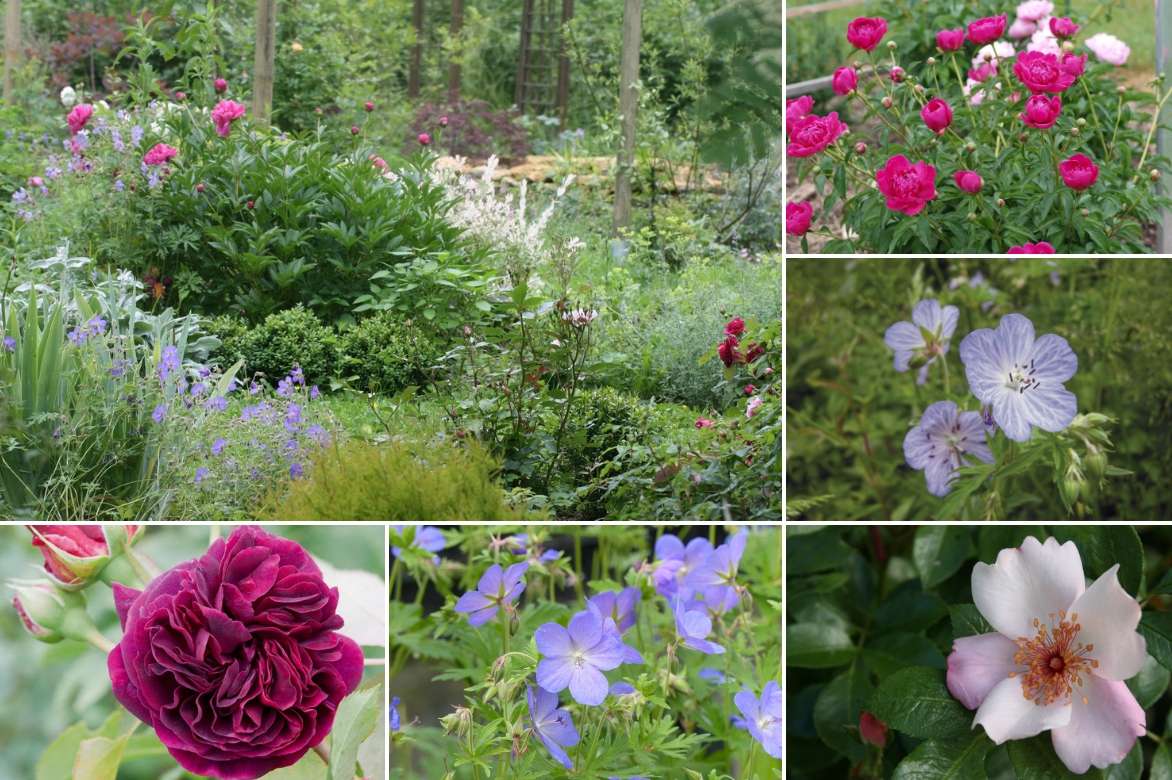
An example of a planting combination: Paeonia lactiflora ‘Félix Crousse’, Geranium pratense ‘Mrs Kendall Clarke’, Shrub ‘Astronomia’, Geranium ‘Johnson’s Blue’ and Shrub ‘Munstead Wood’
The Itoh peony appreciates semi-shaded spots such as the edge of a copse or the shelter of a hedge. It is often planted in groups of three in a shrub or perennial border.
Botanical peonies (officinalis, tenuifolia, etc.) that favour warm situations can be placed on top of a large rockery, even a calcareous one, or else in a border or as specimens.
Place the tree peony as a specimen or framed by other plants depending on aspect, accompanied by ferns, rhododendrons, hydrangeas in semi-shade, or by iris, nepeta, foxgloves, lupins, daisies and shrubs in a sunny spot. Consider pairing plants that will take over flowering through summer such as Phlox paniculata, dahlias or asters.
Gwenaëlle gives other great pairing ideas in: Pairing tree peonies in a border.
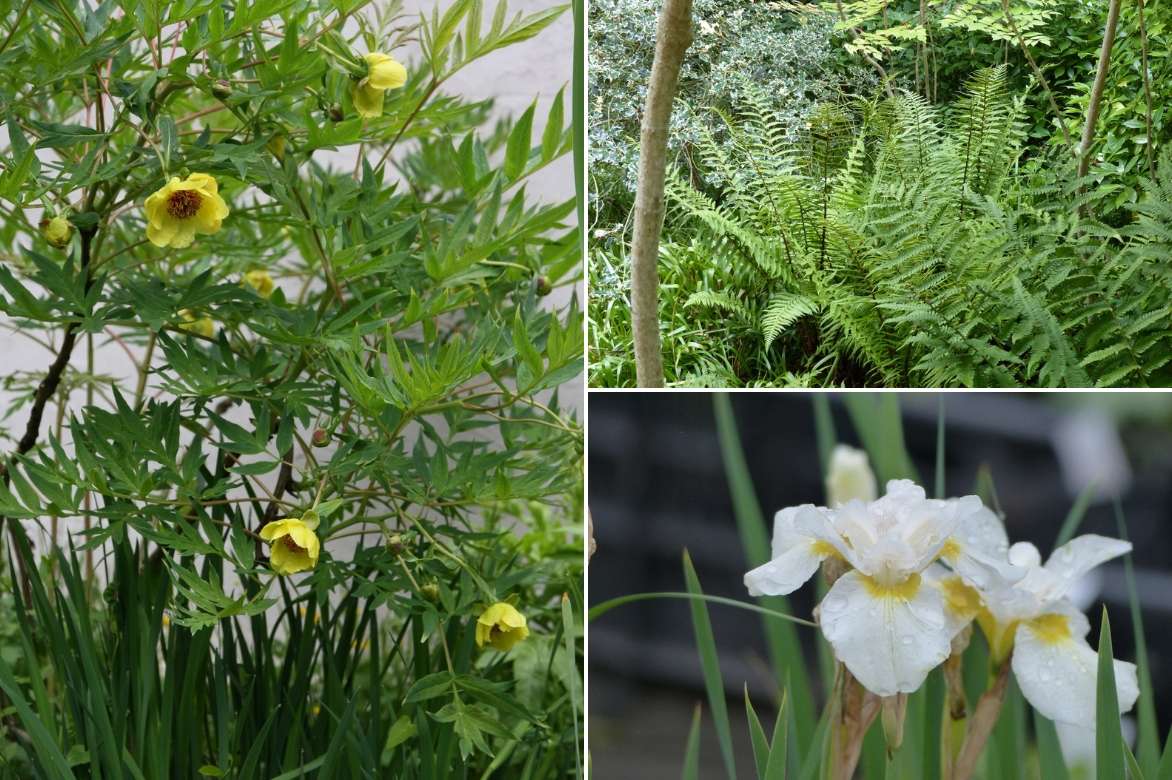
An example of a combination in light shade and moist soil: Paeonia delavayi lutea (or, for a double-flowered variety, ‘Alice Harding’), Dryopteris affinis and Iris sibirica ‘Butter and Sugar’ (or a similar variety such as ‘Snow Queen’)
→ Discover more ideas for pairing peonies in our advice sheet!
Did you know?
Herbaceous peony (Paeonia lactiflora), cultivated for more than 1,000 years in the East, was only known in Europe at the end of the 18th century, following a gift to Joséphine from the Emperor of China. The tree peony, also Asian, was not discovered by the West until a century later. There are also peonies native to the West, such as Paeonia officinalis, which the Greeks described as having great medicinal properties.
Further reading
- Discover our range of peonies.
- Our advice sheet: Planting a peony from bare roots
- Our advice sheet: Choosing the right peonies
- Where is the best place to plant a peony?
- To care for your peonies, read our articles :
- Our tutorial: How to support peonies?
- Follow Gwenaëlle to the Peony Conservatory in Sarthe
- Peonies by colour: 5 pink-flowered peonies, 6 red-flowered peonies
- All about peonies: types, history and colour symbolism with Angélique
- Our advice sheet: 7 dwarf peonies for a border or small garden
- All our tips to grow beautiful peonies in the garden
Frequently asked questions
-
What exposure does my peony need?
Choose a sunny position to ensure good flowering, but in a dry climate, a semi-shaded spot with afternoon sun will suit it better.
-
When to plant peonies?
Planting peonies can take place between September and May, with a preference for autumn.
-
Plusieurs raisons courantes expliquent qu’une pivoine ne fleurisse pas. Voici comment diagnostiquer le problème et les remèdes adaptés. Causes possibles et solutions - Plantation trop profonde (pivoines herbacées) - Problème : les yeux (bourgeons) doivent se trouver à 2–5 cm sous la surface du sol. S’ils sont trop enfouis, la plante fait du feuillage mais pas de fleurs. - Solution : déterrer et replanter plus haut à l’automne ou au printemps suivant. - Jeune plante ou division récente - Problème : les pivoines mettent parfois 2–4 ans à s’installer et fleurir pleinement. Une division récente peut retarder la floraison 1–2 ans. - Solution : patience, laisser la plante s’implanter ; limiter les divisions fréquentes. - Manque de soleil - Problème : une exposition trop ombragée réduit la mise à fleur. - Solution : déplacer vers un emplacement ensoleillé (au moins 4–6 h de soleil direct). - Excès d’azote ou fertilisation inappropriée - Problème : engrais riches en azote favorisent le feuillage au détriment des boutons floraux. - Solution : fertiliser au printemps avec un apport équilibré ou riche en phosphore/potassium ; éviter les apports d’azote élevés après fin avril. - Gel tardif ou gel des bourgeons - Problème : un gel tardif peut brûler les bourgeons floraux invisibles au sol. - Solution : protéger les jeunes bourgeons (voile d’hivernage) si un gel tardif est attendu. - Taille ou élagage inapproprié (pivoines arbustives / tree peonies) - Problème : chez la pivoine arbustive, les boutons floraux se forment sur le bois de l’année précédente ; tailler au mauvais moment supprime la floraison. - Solution : ne pas tailler sévèrement le bois ancien ; tailler seulement le bois mort au bon moment. - Sol mal drainé ou stress racinaire - Problème : sol trop lourd ou racines endommagées empêchent la floraison. - Solution : améliorer le drainage, éviter de remuer les racines, apporter du compost bien décomposé. - Maladies ou ravageurs (ex. botrytis) - Problème : le botrytis peut faire pourrir les tiges et boutons (bourgeons noirs, morts). - Solution : supprimer et détruire les parties malades, améliorer l’aération, nettoyer le sol au pied, éventuellement traiter préventivement au printemps. Comment diagnostiquer rapidement - Regardez la profondeur des yeux (herbacées) ; s’ils sont à plus de 5 cm, c’est probablement la cause. - Vérifiez l’âge de la plante et si elle a été divisée récemment. - Observez l’exposition au soleil et l’état du sol (trop humide, compacté). - Cherchez des boutons au printemps : s’il n’y a pas de bourgeons rougeâtres, il est peu probable qu’elle fleurisse cette année. - Vérifiez signes de maladie (bourgeons noirs, taches sur tiges). Si vous voulez, dites-moi : variété (herbacée, arbustive, Itoh), âge, date de plantation, exposition et symptôme précis (bourgeons absents, tiges qui sortent puis meurent, etc.). Je vous donnerai un diagnostic plus précis et des actions à suivre.
Soil must be well drained and rootstocks should be planted shallowly for herbaceous peonies (maximum 3 cm). Moving an herbaceous peony without dividing it can also stop its flowering.
- Subscribe!
- Contents
This form is protected by reCAPTCHA - the Google Privacy Policy and Terms of Service apply.

































Comments