





























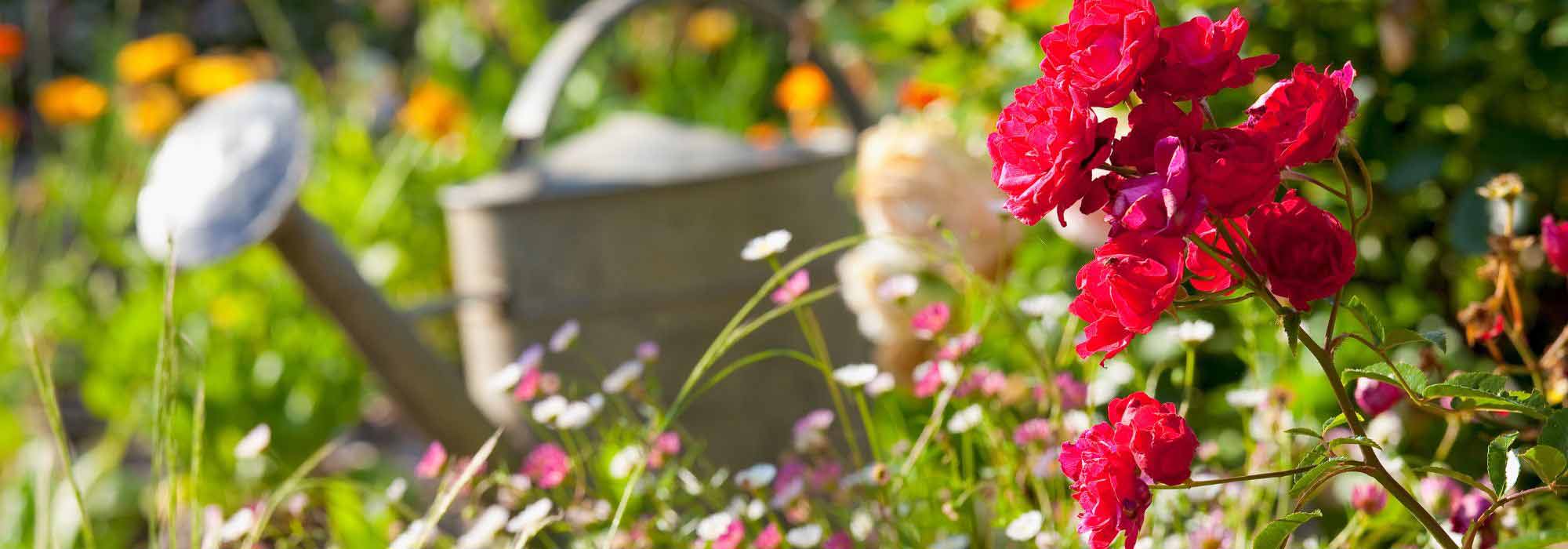
What to do in the garden in June?
when each week brings its share of dazzling flowerings!
Contents
In June, the grand game of spring metamorphosis comes to an end: after hesitant beginnings followed by dazzling debuts, it is now heading towards the climax of summer. As the longest days approach, we reminisce about the highlights of spring and know that summer still holds many surprises and plenty of flowers! Spade and pruning shear are forgotten in favour of the hosepipe, but remember to use mulch, an eco-friendly solution to save water… and your efforts! You can then fully enjoy that deckchair which seems to invite you to relax!
But if your incorrigible gardener’s instinct is stronger and you don’t know what to do in the garden this June… follow our advice, there are plenty of tasks to keep you busy!
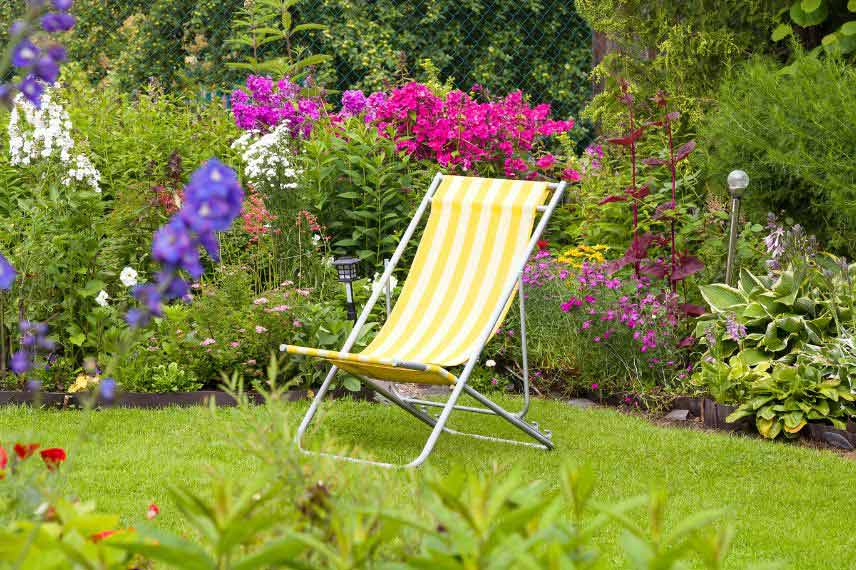
Will you be able to resist a nap among the June blooms?… or will you prefer to garden, always and forever?

On the side of trees, shrubs, and fruit plants
Ornamental Trees and Conifers
- Water newly planted trees and conifers, ensuring to regularly reshape the watering basins at their base.
Fruit Trees and Berries
- Remove suckers forming below the grafting point of young trees.
- Water young trees and recently planted berry bushes.
- Remove</strong without regret all fruits borne by plants planted this winter or spring; they need to devote all their energy to the roots.
- Thin the fruits on older trees, especially on spindly branches that may break, and follow the advice in our sheet, carry out green pruning of fruit trees.
- Support fruiting branches that need it with Y-shaped stakes.
- If you haven’t done so yet, complete the pruning of citrus trees.
- Set up or renew pheromone traps against insects and fruit worms.
- Are the birds being a bit too greedy? Install protection nets to prevent blackbirds and other thieves from attacking your fruits! Remove them as soon as harvesting is complete to preserve their lifespan and use them for several years.
- Prune Kiwis (Actinidia) in green. This is also a good time to layer them following Alexandra’s advice.
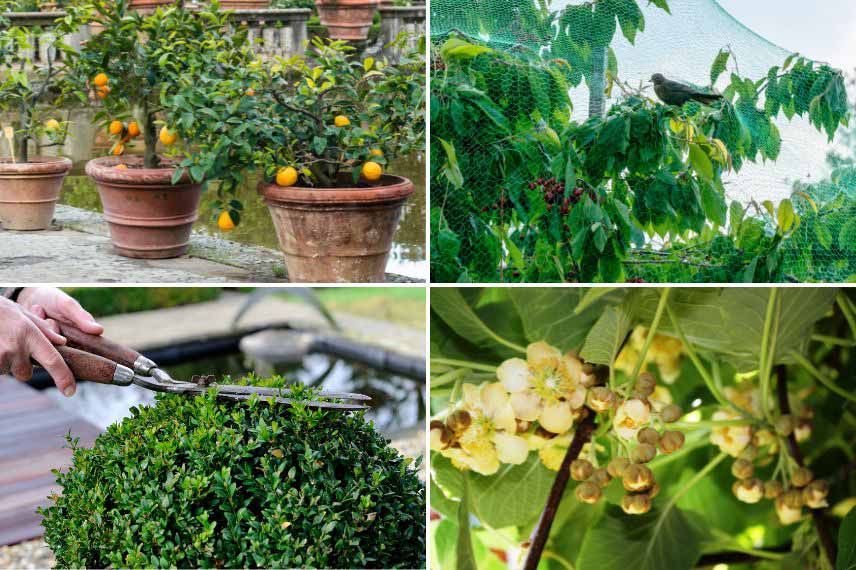
For tasty harvests, prune citrus trees, protect cherries from greedy birds, and prune Kiwis. Topiaries will also need a little refresh to maintain their neat shape.
Shrubs
- Mock Orange (Philadelphus) is a shrub that flowers on last year’s wood. Wait until the end of its flowering to prune it.
- Prune other shrubs that have also finished their flowering: deutzias, flowering viburnums, some spiraeas, or even laburnums.
- Remove the last faded flowers from rhododendrons by cutting above the large bud at the base.
- Prune boxwoods and yews shaped into topiaries.
Hedges
- Water newly planted hedge shrubs.
→ Find out Olivier’s explanations on why not to prune hedges between 15 March and the end of July.
Perennials, bulbs and climbing plants
In this month of rising temperatures, hoe and mulch the flower beds to aerate the soil and maintain a welcome coolness. Flowers are bursting forth everywhere; take advantage of this and create bouquets to brighten your home!
Perennials
- Remove faded flowers from daylilies, lupins, delphiniums, campanulas, and other perennials to keep your beds looking fresh and encourage their renewal.
- Are slugs threatening your hostas? Follow Ingrid’s advice to protect them naturally.
- If it’s hot and dry, mulch between the perennials with grass clippings.
- By following Alexandra’s tips, take herbaceous cuttings from the green, young, and tender stems of your favourite perennials (Asters, Hybrid Verbenas, Clematis, Penstemon, Campanulas, Salvias, etc.).
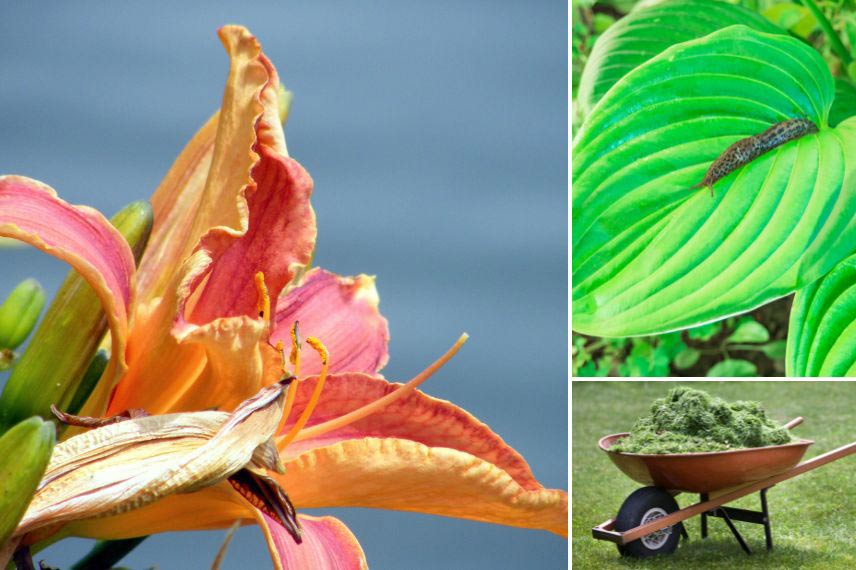
Like daylilies, some perennials benefit from being cleared of their faded flowers as they bloom. Hostas inevitably attract slugs and snails. Use grass clippings to mulch your beds.
Bulbs
- The stems of the Fritillary are dry. You can separate the bulbs and replant them immediately for even more flowers next year.
- Cut the dried leaves of spring bulbs. Store them in a healthy, dry place, noting the names of the varieties.
Climbers
- Continue to tie the climbers to their supports as the shoots grow.
- Prune the wisteria by following Alexandra’s advice on how to train and prune it.
Roses
In June, roses bloom, whether they are repeat flowering or not!
- In case of black spots, regularly spray a horsetail infusion. Find Virginie’s advice on rose diseases.
- Tie climbing roses as they grow.
- If needed, water the roses at the base, avoiding wetting the foliage.
- Layer sarmentous roses by laying a stem on the ground.
- Remove faded flowers by cutting the stem three or four leaves below the faded flower.
- Watch for attacks from aphids.
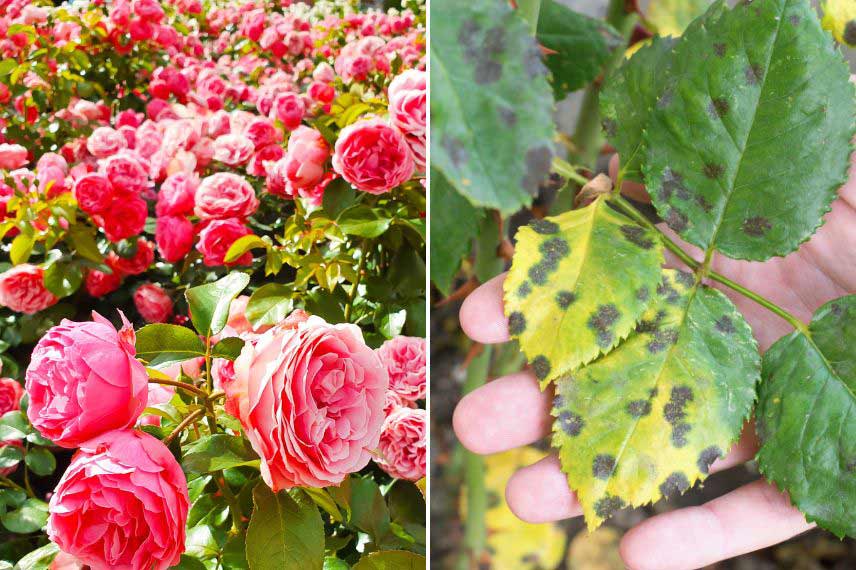
Roses are stunning this June, but beware of black spots and other rose diseases that you can combat naturally.
Read also
Making tomato supportsAnnuals and potted plants
- Shade young plants to protect them from the scorching sun
- Water regularly and provide fertiliser to support seasonal flowering in your pots, containers, hanging baskets, and potted plants
- Clean up spent plants to encourage new blooms
- Harvest seeds from pansies and wallflowers
- Sweet Williams, wallflowers, pansies, or forget-me-nots are biennials. For these plants, the ideal sowing period is from June to July, either directly in the ground or in pots
- Sow annuals such as Cosmos, Scabious, Marigolds, or Mahonias; they will bloom when you return from holiday
- By following Alexandra’s advice, take herbaceous cuttings of Pelargonium
In the vegetable garden
If possible, water in the evening and mulch as much as possible to limit weed growth while retaining moisture. Enjoy your vegetables, the time for the first harvests has arrived!
Vegetables to Plant in June, Sowing and Tasks to Do
- Sow leaf salads and spinach
- Transplant salad plants every 15 days to stagger the harvests
- Sow green beans for a harvest 60 days later. Stagger the sowing at several days’ intervals
- Mulch around the base of tomatoes to reduce the risk of leaf contamination from soil-borne diseases and keep them pleasantly cool. Tie them to stakes as they grow, using Solenne’s tutorial to make tomato supports, unless you prefer to follow Virginie D.’s advice to build a tomato cage
- Transplant leeks and Brussels sprouts
- Weed between the rows
- Hill up potatoes and beans
- Collect any Colorado beetles if they attack your potatoes
- Start harvesting broad beans. Harvest at different stages of ripeness, depending on how you wish to consume them: young pods whole, fresh beans in still green pods, or dried beans at full maturity
- Harvest strawberries and raspberries
- Sow winter-storing vegetables such as carrots or beets
- On St Barnabas Day (11 June), sow turnips
- Rot may develop on overcrowded and overwatered courgette plants (Botrytis cinerea). Simply remove any diseased vegetables as they appear. With the sun’s help, new healthy courgettes will take their place
- Continue watering, as the heat is coming! Avoid wetting the foliage and add nettle manure for a “boost” effect on your vegetables
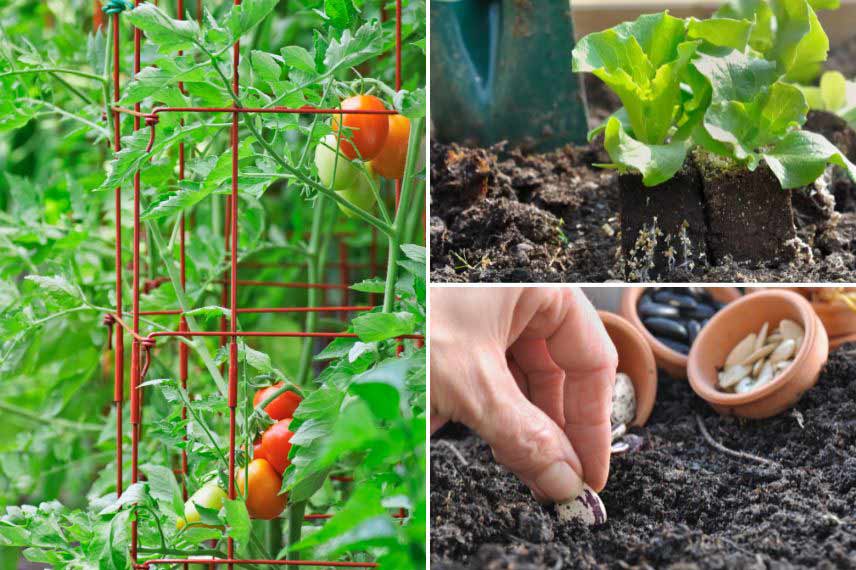 Experiment with tomato cages, regularly transplant salads, and sow beans to stagger your harvests</caption]
Lawn and various works
Lawn and Flower Meadows
- If it’s hot and dry, you can leave the grass clippings on the ground. As they dry, they will add some nitrogen.
- The flower meadow areas are stunning! Enjoy the flowering of wildflowers and observe the insects with the children: ladybirds, grasshoppers, and butterflies are all around.
In the Ornamental Garden
- Watch for the appearance of aphids and other small pests that target your crops this June: in case of an invasion, consider using beneficial insects such as ladybird larvae and relay plants.
- Plant lemon balm in your beds to deter harvest mites.
In the Pond
- The presence of water is invaluable during hot weather. If you don’t have a pond, repurpose a zinc basin or a half-barrel and turn them into a pocket pond. A few aquatic plants (Water Canna or Orontium) placed in pots kept submerged will settle in no time! Add a small ornamental water lily to hide the containers.
- Do not change the water in your pond, as you could destroy its ecosystem.
- In hot weather, oxygenate the water by running the pump.
And Everything Else…
- Create a play area for children: a playhouse, trampoline, swing; find ideas and solutions from Ingrid B. to integrate them into the garden.
- There’s still time to set up structures that will provide some shade this summer: opt for a wooden pergola, which is easy to assemble. A vigorous liana like Ipomoea will quickly cover it and brighten your summer with its countless flowers!
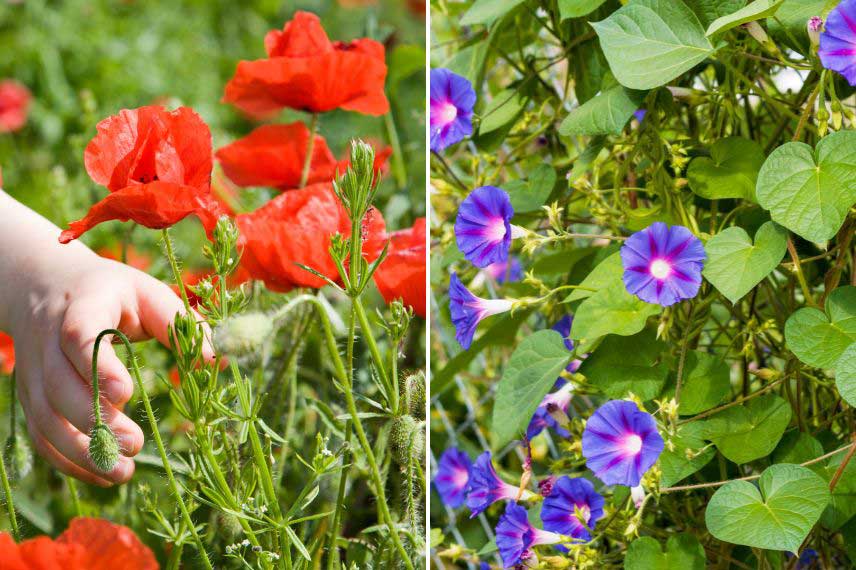
Flower meadows delight young and old alike, not to mention the garden wildlife, and Ipomoeas provide refreshing shade for arbors.

- Subscribe!
- Contents

Comments