





























Plant bulbs to make your own cut flower arrangements at home!
And create affordable floral decorations.
Contents
Creating cut flower arrangements yourself from plants grown in your own garden is a rewarding, creative activity that can save you money. By planting spring bulbs and summer flowering bulbs, you can not only save on buying cut flower arrangements but also enjoy a rewarding creative experience. Which bulbs should you grow to make your cut flower arrangements? How should you select the perfect bulbs? What tips should you know about cutting and preserving your flowers? Discover all our tips for creating your own cut flower arrangements by planting and growing flowering bulbs in your garden.
Why make cut flower arrangements from flowers grown in your own garden?
Growing your own flowers to make cut flower arrangements offers both economic and aesthetic benefits. Growing flowering bulbs is a relatively low initial outlay compared with the regular purchase of cut flower arrangements. Another benefit is that it enables you to yield more and more flowers, year after year. This activity forms also part of those moments of relaxation and creativity that we take pleasure in. It is indeed a great satisfaction to see the flowers you have chosen and grown flourish, and then use them as the material for composing your cut flower arrangements. Another advantage, the flowers from the garden that you’ve just cut do not have to endure transport to reach you and are more likely to last longer in a vase.
Which flower bulbs to grow?
Choose long-flowering bulbs, mixing spring bulbs and summer bulbs to enjoy them for as long as possible throughout the year.
Spring bulbs
Spring bulbs are planted in autumn to flower the following spring and sometimes as early as the end of winter.
Among spring bulbs, tulips are among the most popular. Easy to grow, they offer a wide range of colours and shapes, leaving plenty of room for your imagination to create original bouquets. Red, white, yellow, pink, orange, black… small or large, fringed, double or parrot, tulips will inspire you.
Other spring bulbs, narcissi are flowers with delicate shapes and colours, ranging from white to yellow, via orange. They are also well-known for easy cultivation, vigour and sometimes very fragrant. They last a long time in a vase, which is another notable advantage.
Among hyacinths and their sublime fragrance, as well as the ranunculus, often used in bouquets, are also essential flowers in a cut-flower garden.
Think also of the small muscari and their small blue clusters, which will bring a unique touch to your floral arrangements, or crocuses or snowdrops with their unique charm, which will look stunning when used as a table centrepiece, for example.
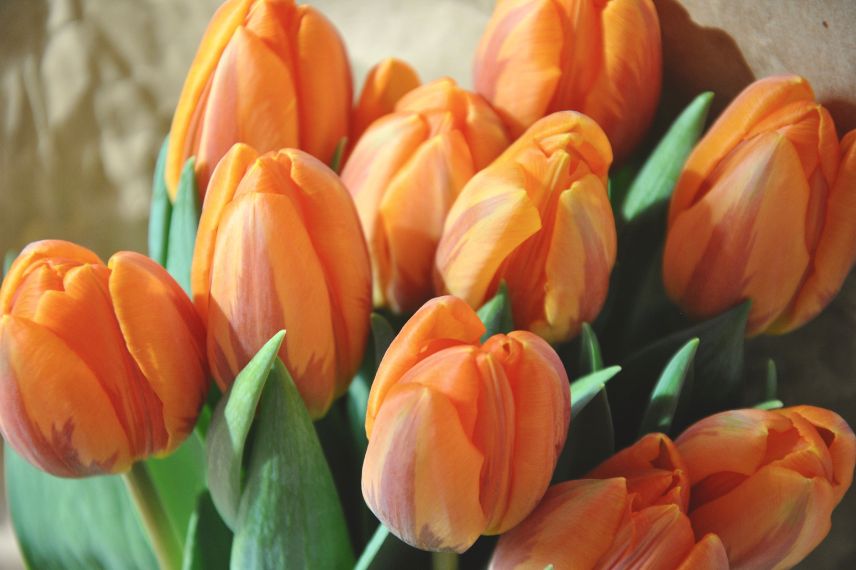
Tulips are certainly the spring bulbs most used in bouquets, as they are long-lasting
Summer flowering bulbs
Summer bulbs offer flowering during the sunniest days. Planting is generally in March, but timing depends on the variety. Bulbs should be planted in well-drained soil.
Among them, the lilies stand out for their elegance and intense fragrance, while the gladioli bring striking verticality to a bouquet, with their large flower spikes and cheerfulness from their bright colours.
Purple, blue or white, the agapanthus lend a strong graphic touch to a floral arrangement. They have a contemporary charm with their large globe-shaped flower heads borne on a sturdy stem.
The dahlias offer a wide range of colours and shapes, and provide a long flowering season. Whether single, double, large or small, pom-pom or cactus-shaped, they are a source of inspiration for lovers of floral art.
The freesia and the crocosmia bring delicate aesthetic touches to a bouquet.
If you love exotic floral arrangements, the cannas, the amaryllis and the arums, accompanied by banana or palm leaves, will enable you to create a lush, colour-rich bouquet.
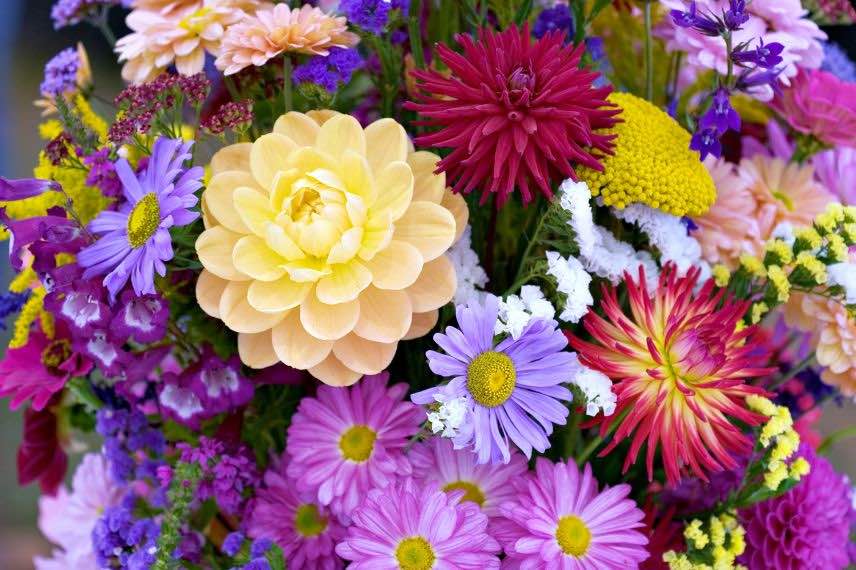
Dahlias are perfect cut flowers, here mixed with other garden blooms
How to select bulbs?
Different criteria can be considered when choosing the bulbs you wish to grow: ease of cultivation, the ability to naturalise and thus to spread over the years, the height of the flowers depending on whether you prefer to produce large or small bouquets, the shapes, colours and fragrances of the flowers.
Before planting bulbs, make sure they are healthy, namely firm and hard to the touch, with no signs of mould, undamaged and not too small in size. This will allow you to obtain the best from your crops. Indeed, bulbs contain the nutrient reserves necessary for the plant to flower. A bulb that is too small, soft or mouldy may not flower.
Then plant the bulbs following guidance on sun exposure and soil type so that the flowers flourish in the best conditions. In addition to choosing a suitable sun exposure and soil that suit them, follow the care guidance needed for the development of each plant.
→ Also read: Bulb sizes: understanding how to choose.
Read also
10 summer bulbs to plant in springHow to cut, prepare and keep flowers in a vase?
Once your flowers begin to open, it’s time to harvest them to create your cut flower arrangements. Follow these tips for cutting and preserving flowers in a vase.
The cutting and preparation of flowers
The ideal moment to cut flowers from your garden is in the morning or in the evening, moments when the plants are best hydrated. Take scissors that you will have previously disinfected with 90% alcohol and cut the stems cleanly and at an angle, this allowing the stem to hydrate better once in the vase.
Place them in a bucket of fresh water, while waiting to finish cutting all the flowers you want to use to create your cut flower arrangements.
Once the harvest is finished, prepare the flowers by removing the leaves from two-thirds of the stem, to avoid leaves bathing in the water of the vase and ending up rotting.
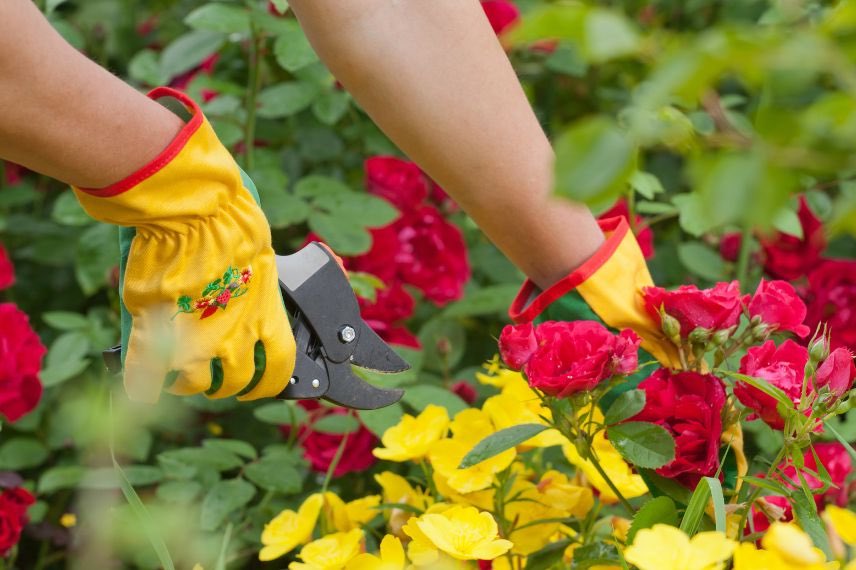
Cut the flowers in the morning or in the evening
Preservation of cut flower arrangements
To extend the life of your cut flower arrangements, place them in a cool place, away from direct sunlight and draughts. Change the water regularly, ideally once a day, and recut the stems every two days, always at an angle.
You can also add a preservative for cut flowers to the water to feed the flowers and prevent the growth of bacteria.
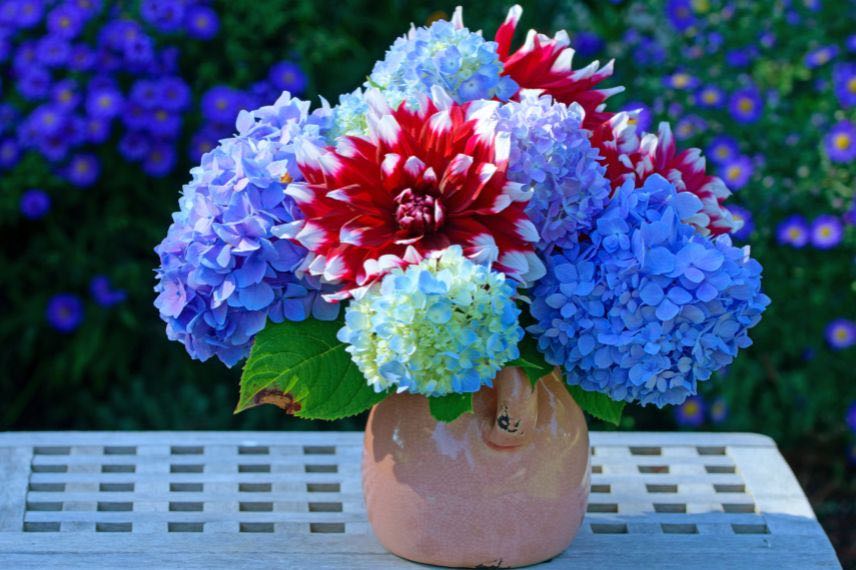
Large dahlias mixed with hydrangeas
- Subscribe!
- Contents
Comments