





























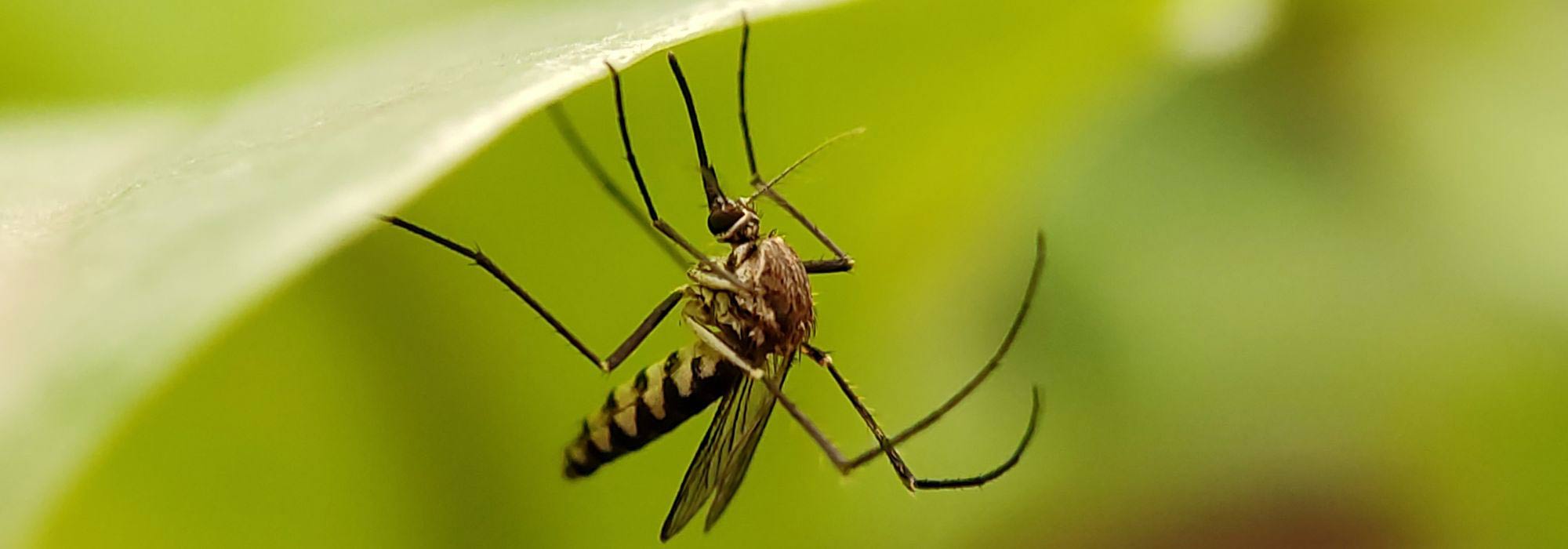
How to prevent mosquito proliferation?
And enjoy the beautiful days in complete peace!
Contents
Ouch! Summer is definitely here, with its flip-flops, sunscreen, and drinks with friends… However, surprise guests tend to spoil your evenings on the terrace, your picnics on the grass, or your fishing trips. Yes, mosquitoes are indeed back, and they are more than happy to feast on the blood of the whole family!
So, how can you protect yourself from these pesky, persistent, and hungry flying creatures? We remind you of a few simple and effective gestures and good habits to prevent their proliferation, which starts in the garden.
What are the species of mosquitoes in France?
To combat an enemy, one must first know a bit more about them. Rarely known, mosquitoes belong to a family of insects called Culicidae, classified in the order Diptera. They are characterised by long, slender antennae, wings covered in scales, and especially females possessing long, rigid piercing-sucking proboscises. Over 3,500 species of mosquitoes are recorded worldwide, but fortunately, a much smaller number bite humans! In France and neighbouring countries, we particularly count:
- The Aedes, which include Aedes caspius or the Camargue mosquito, and Aedes albopictus or the tiger mosquito, which has been present in mainland territory for about fifteen years. Bites from the tiger mosquito are potentially vectors of diseases such as Chikungunya, Dengue, the Zika virus, or yellow fever. Entomologists estimate it will be present throughout the entire hexagon and Europe by 2030. Aedes are particularly notable for being diurnal: females bite during the day.
- The Anopheles, vectors of Malaria. Very widespread, they are found in southern France, Corsica, Camargue, and the Rhône delta. Anopheles thrive in rice paddies and marshes, in stable and clean waters. Female Anopheles are particularly active at night, from dusk to dawn.
- The Culex, the most common species in France. They can be found absolutely everywhere: in cities or the countryside, in tropical or temperate environments. They particularly favour stagnant waters rich in organic matter, such as ponds, tree stumps, effluents from treatment plants, rainwater collectors, basins, and various containers, as well as reed beds. Culex generally bite at night.
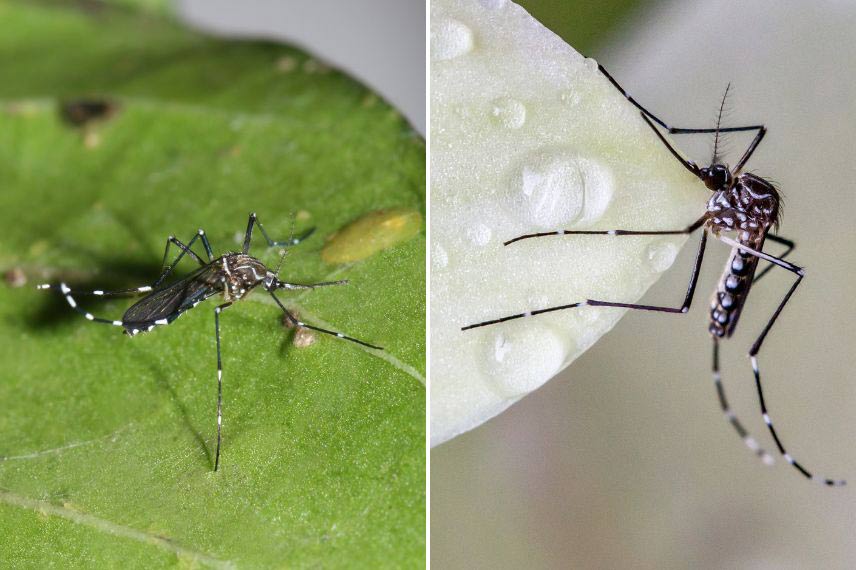
Camargue mosquito and tiger mosquito
As everyone knows, it is the female mosquitoes that bite, and they can consume up to twice their body weight in blood! Males, on the other hand, are harmless. After mating, the life cycle begins with egg-laying. The female then requires a blood meal, the proteins of which are used for the maturation of her eggs. Water is then needed for them to hatch and produce larvae. Some prefer to bite humans, others bite all mammals they encounter, while others still bite birds (they are said to be ornithophilic).
Read also
10 effective mosquito-repellent plantsWhat attracts mosquitoes?
Several factors are likely to attract mosquitoes:
- Light: it is not the light itself that attracts mosquitoes, as they are blind; rather, it is the heat generated, for example, by light bulbs that draws them in. During the day, mosquitoes seek shade to protect themselves from the heat of the sun.
- Odours: females searching for blood are sensitive to smells. They locate their prey through their breathing and sweating. Anthropophilic species (those that bite humans) are particularly sensitive to lactic acid or sebum (skin odours), ammonia (sweat or breath odours), urine, alcohol or perfume vapours, and the scent of individuals who have consumed beer or cheese.
- Vibrations.
- Temperature: mosquitoes are sensitive to heat and will be more attracted to a person with a higher temperature. The thermoreceptors of female mosquitoes also indicate the venules of their prey.
- Scientific studies have shown that pregnant women and individuals with blood type O are also bitten more frequently.
Mosquitoes are associated with summer, as during this time, gardens and green spaces are watered. This inevitably creates stagnant and warm water, particularly attractive to mosquitoes. Therefore, one must be especially cautious of the heat + water cycle (rain or watering) because at temperatures above 20°C for 12 to 20 consecutive days, the eggs can develop. With global warming, the conditions for their development are increasingly met earlier in the year.
How can you effectively prevent the proliferation of mosquitoes in your home?
80% of mosquitoes develop in our gardens. Simple preventive measures can help limit the proliferation of all mosquito families, including the tiger mosquito. To reduce mosquito density, the only sustainable solution is the destruction of larval habitats, as it has been observed that mosquitoes can recolonise an area 10 days after a mosquito control operation.
The best protection against mosquitoes is to remove or empty all places and objects that can hold water (from rain or watering) as soon as the nice weather arrives, to prevent them from laying eggs and proliferating in your garden. Female mosquitoes prefer small amounts of water to lay their eggs: the equivalent of a bottle cap is sufficient for them, and they can lay up to 200 eggs every 15 days. So, from April onwards and with the first spring rains, start the hunt for stagnant water!
- First, empty all containers and artificial reservoirs where water can stagnate: vases, pots and saucers, cans, gutters, buckets, watering cans, as well as items left in the garden such as children’s toys, tyres, construction and gardening equipment, wheelbarrows, etc.
→ Quick tip: You can put sand in the saucers of flower pots: water will be available for the plant, but the mosquito won’t be able to lay eggs there.
- Check rainwater collectors: in more than 50% of cases, larval habitats are found in a water collector. If you have an open tank, cover it with very fine mesh (like pantry mesh).
→ Good to know: even in a closed rainwater collector, mosquitoes can enter and exit through the downspout. Simply stretch a mosquito net or fabric between the downspout and the water surface. Check and remove any established larvae weekly.
- Cover water reservoirs (tanks, ponds, unused pools…) with a cloth or simple fabric to prevent mosquitoes from accessing them.
- Add copper to collectors and water reservoirs: Copper is a natural biocide, so drop a few copper coins of 1, 2, or 5 cents into your saucers. For a larger collector, add about ten coins for approximately 100 litres of water.
- Ensure proper drainage of rainwater: water can stagnate in drains and gutters clogged with piles of leaves or other debris. Seal your drains tightly.
- If you have installed an automatic watering system, ensure that there are no recurring small puddles of water forming on the lawn, in your flower beds, or in any paved areas.
- Check under raised terraces.
- Regularly change the water in animal troughs (for chickens, horses, dogs, etc.) and bird baths if you have installed them in the garden.
- If you have an ornamental pond, consider planting marginal plants to create a small ecosystem that can host dragonflies: they will feast on mosquito larvae.
- Also remember to maintain graves in cemeteries, as these are places conducive to mosquito development.
- Clear tall grasses and hedges and collect fallen fruit.
- Wherever possible, during your nature walks, remove litter (tyres, cans, plastic bags, etc.) that could hold water.
From April to November, check your outdoor space once a week to remove and empty all small accumulations of water. Encourage your neighbours to do the same and spread the word!
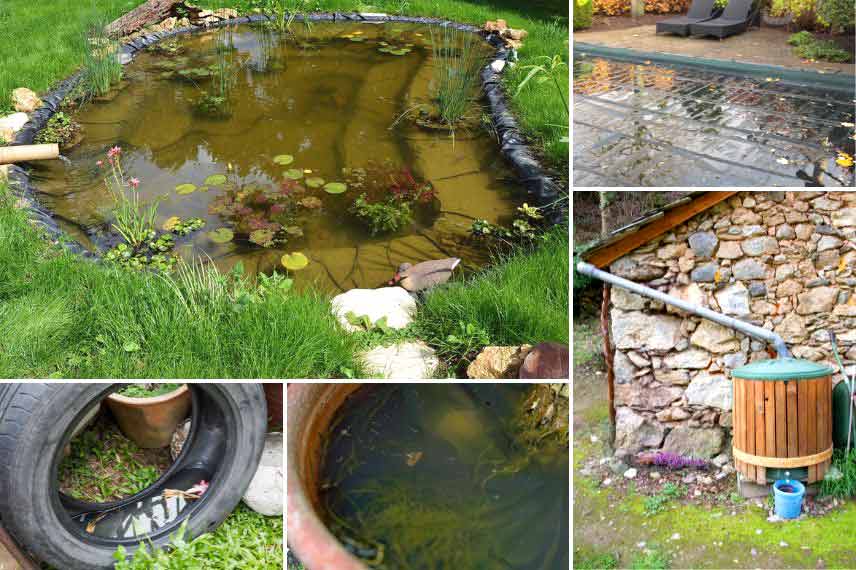
There are numerous places in the garden and around the house where mosquitoes can proliferate
As local authorities are responsible for maintaining hygiene and cleanliness in their territory, contact your local council to find out about actions being taken to combat the proliferation of mosquitoes, particularly the tiger mosquito.
Install repellent plants to keep mosquitoes away from the garden
When composing your planters, hanging baskets, or flower beds, incorporate plants to repel mosquitoes, which are naturally repellent:
- Madagascan lemongrass
- Lemon verbena
- Scented geranium (Pelargonium citriodorum)
- Lemon balm
- Basil
- tomatoes: grow some cherry tomato plants in pots or containers on your terrace, combining the useful with the pleasant!
- Also discover a flower mix to repel mosquitoes (anise, basil, nepeta…)
Follow the advice given in our article: “10 effective mosquito-repelling plants”

Madagascan lemongrass, scented geranium, and lemon verbena
Planting repellent plants is not 100% effective: in infested areas, wear loose-fitting clothing that covers your arms and legs, especially in the evening. Avoid chemical products, as they are just as dangerous for mosquitoes as they are for you and other insects, without eliminating them completely! Moreover, some types of mosquitoes have adapted to the insecticides used to control them.
Encourage natural insectivorous species
Insectivorous reptiles, amphibians, bats… natural insectivores are in sharp decline, simultaneously allowing the progression of mosquitoes. One way to naturally combat mosquitoes is to encourage the establishment of these predators in your garden. So attract lizards, frogs, salamanders, spiders, dragonflies, bats, and insectivorous birds like swallows or martins. They will be your most valuable allies!
Use organic treatments and traps
There are products organic larvicides based on bacterium Bacillus thuringiensis that can treat all breeding sites such as tanks, watering reserves, ponds, pools, inspection chambers, etc. They pose no risk to wildlife and flora and are harmless to humans.
You can also install egg-laying traps to break their reproductive cycle and thus reduce their presence. With these traps, the larvae are caught and cannot escape; they will never become mosquitoes.
The false good ideas
Cutting back bushes in the garden where mosquitoes are found
“I have bushes infested with mosquitoes in my garden. I should cut them back, as they must be full of larvae.” This statement is false; bushes are merely resting areas for mosquitoes. Like us, they enjoy the coolness of vegetation. Cutting them back would not prevent their proliferation, as they will continue to breed in any small container of stagnant water.
A good mosquito control would be enough to solve the mosquito invasion problem
This is also false. Even if one gets fed up with all these mosquitoes, a mosquito control operation would kill the mosquitoes at a given moment, but the respite would only last a few days: new mosquitoes will emerge from the larvae, sheltered in their stagnant water reserves. The problem can only be addressed at the source: eliminating potential breeding sites for mosquitoes and intervening at the larval stage, which is what mosquito control services do. However, mosquito control operations are initiated when there is a health risk of contamination: for example, if someone returns to the mainland with a virus transmissible by the tiger mosquito (Dengue, Chikungunya, or Zika virus), their residential area will be treated to prevent the transmission of the virus.

- Subscribe!
- Contents
Comments