





























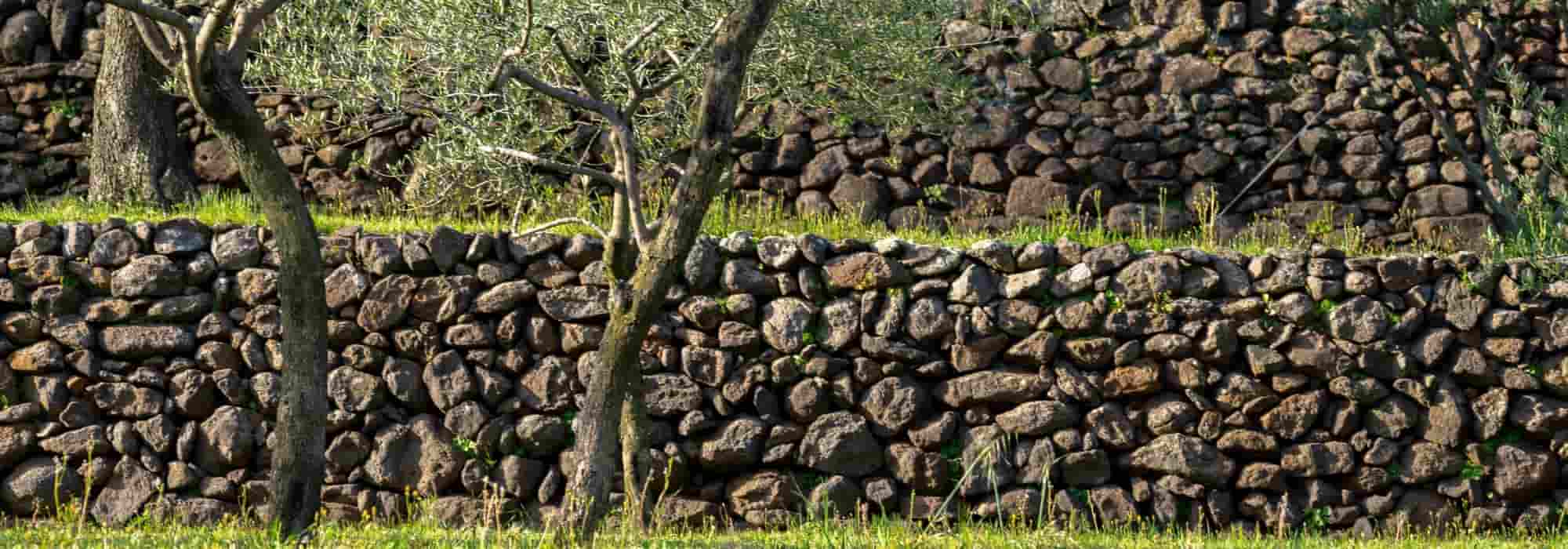
How to dress a retaining wall?
Choosing the right plants to enhance a wall
Contents
When landscaping a sloped garden, retaining walls are often the best solution for creating terraces while holding back the soil. Whether made of dry stone, rubble, dressed stone, or green blocks, retaining walls beautifully define spaces in the garden and can be adorned (or concealed) with leafy plants or floral cascades. Discover our tips and our selection of suitable plants to elegantly dress a retaining wall.
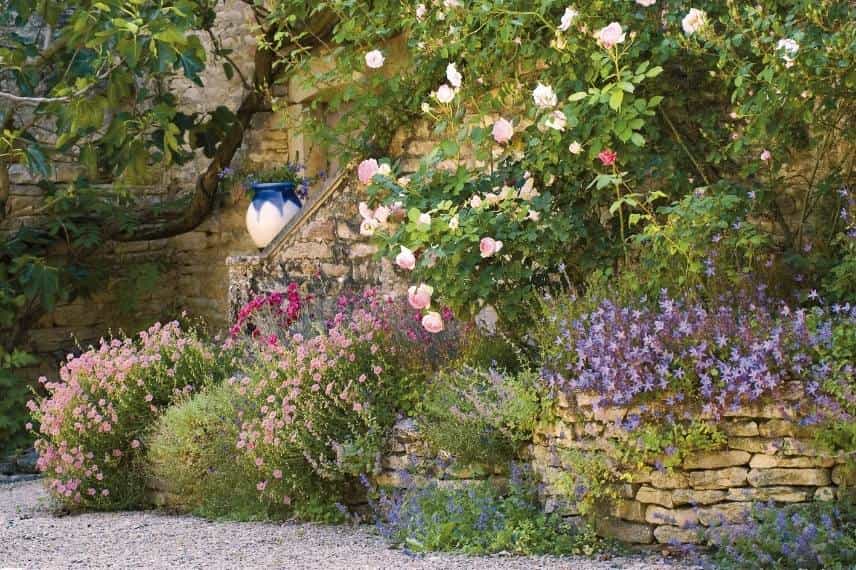

Climbing plants taking over a wall
Thanks to their voluble stems, climbing plants easily ascend walls and retaining walls. These plants should be installed at the base of the structure, either in pots or directly in the soil. Some climbers can attach themselves to walls on their own, thanks to their climbing roots, notably the Virginia creeper with its flamboyant foliage in autumn, the climbing hydrangea that thrives in partial shade or shade, and the trumpet vine which enjoys sun and warmth.
Other climbing plants will need guidance between the stones. Small supports can be placed here and there between the gaps in the stones, or cords or metal cables can be stretched from the bottom to the top of the wall. One can also install larger supports, such as a trellis placed in front of a wall to plant espalier fruit trees.
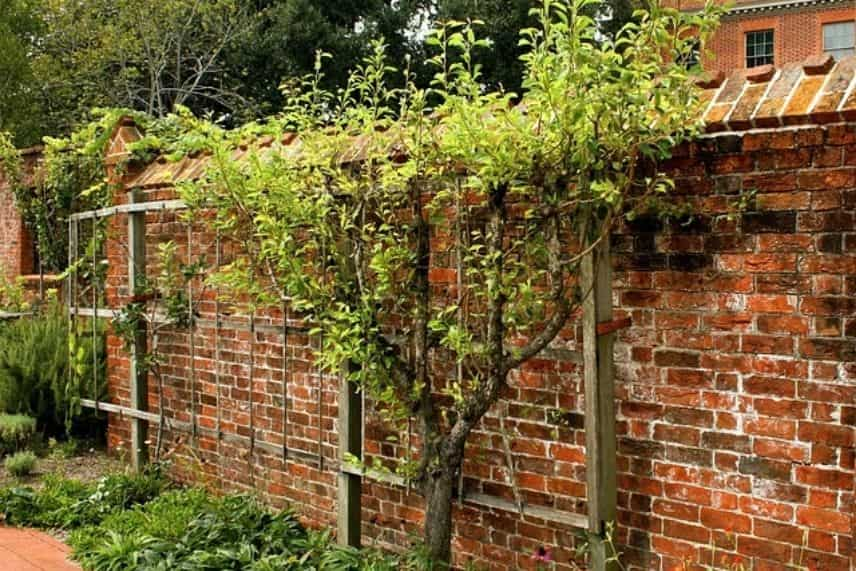
Espalier fruit tree against a wall
In sun or partial shade, consider the climbing roses which will add a touch of elegance with their flexible stems adorned with roses, perfect for an English or romantic garden.
With its cascading clusters of flowers and woody trunk, the wisteria can be planted at the base of the wall and then run over its top for several metres. Similarly, the hops can reach up to 10 metres depending on the variety, adding a rustic touch to the garden. And why not a grapevine?
We will also appreciate clematis for their stunning spring, summer, or even winter blooms. They come in a wide range of colours, from pure white to deep purple, including soft pink and azure blue.
Easy to grow in the sun, the honeysuckles remain a reliable choice! Moreover, they will perfume the garden with their trumpet-shaped flowers and are suitable for sunny, semi-shaded, and even shaded locations for Lonicera Japonica ‘Mint Crisp’.
Not to forget the beautiful annual climbers whose vibrancy allows for the quick creation of a colourful green screen, such as sweet peas, ipomoeas, nasturtiums, and black-eyed Susans.
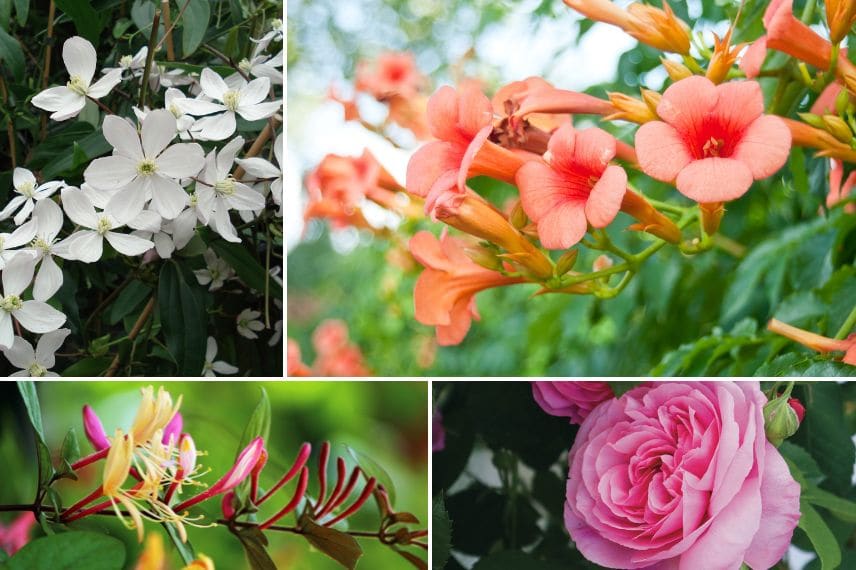
Clematis Armandii ‘Apple Blossom’, Trumpet vine (Campsis Radicans), Japanese honeysuckle ‘Sinensis’, and climbing rose ‘Gertrude Jekyll’
Cascades of flowers from the top of the wall
Some perennials, with a creeping or groundcover tendency, are unmatched for creating beautiful floral cascades from the top of your wall. When selecting your plants, you must consider that the soil at the top of the retaining wall retains very little moisture. Indeed, water tends to run off or seep quickly between the stones or into the soil. You should therefore choose plants that appreciate well-draining substrates and can withstand drought. It is also advisable to select plants with a modest root development. This means avoiding those with running roots that could compromise the structure.
In this context, rockery perennials will be perfectly suited to these growing conditions. For example, the wall campanula (Campanula portenschlagiana) forms a lovely trailing cushion of leaves, even between the gaps in the stones, covered with star-shaped blue-violet flowers from June to September.
Similarly, Iberis and moss phlox (Phlox subulata) will provide you with beautiful floral cascades for several months.
The Mountain Sandwort (Arenaria montana) and Aubrietas also form a wide trailing carpet, covered with small white, pink, or blue flowers from May to July. These plants remain equally interesting in other months thanks to their evergreen foliage.
If you prefer annuals, consider Erigeron karvinskianus, this lovely wall daisy, whose main quality is its long flowering period that lasts several months. Don’t be surprised to see it self-seed spontaneously each year in the free spaces left between the stones. Sweet Alyssum (Lobularia maritima) is also an excellent groundcover, trailing in cascades with a myriad of small, delicately honey-scented flowers. You can also add a touch of brightness by installing Creeping Jenny (Lysimachia nummularia ‘Goldilocks’), whose golden-green foliage and yellow flowers illuminate the darkest corners of the garden.
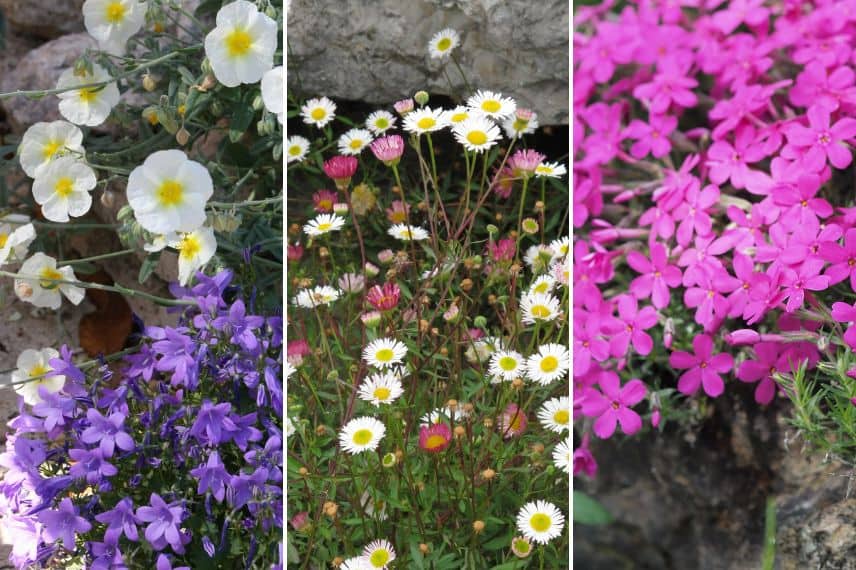
Wall campanula and helianthemum, Erigeron karvinskianus, moss phlox
Planting Between Stones
Thanks to their structures, some low walls provide gaps suitable for the installation of small undemanding plants, accustomed to growing between stones and in dry conditions. Naturally, one might think of small rockery perennials, such as the wall campanula or the Rome’s Ruin (Cymbalaria muralis), a very small evergreen perennial that is unpretentious but known for colonising the tiniest spaces. You could also plant a wall fern (Asplenium ceterach), for its lovely evergreen fronds that are finely divided.
And if the space between your stones is very limited, why not consider “squeezing” in seed bombs? These small balls of earth, containing seeds you have selected, can be placed in the free joints. Here too, it is essential to choose seeds of annuals or perennials suited to very low soil and watering conditions, such as sweet alyssum (Lobularia maritima) for their ease of cultivation. You could also include seeds of dwarf deltoid pink ‘Micro Chips’, aubrietas, Erigeron karvinskianus, and even campanulas.
→ To learn more about seed bombs, check out our tutorial: “how to make seed bombs“.
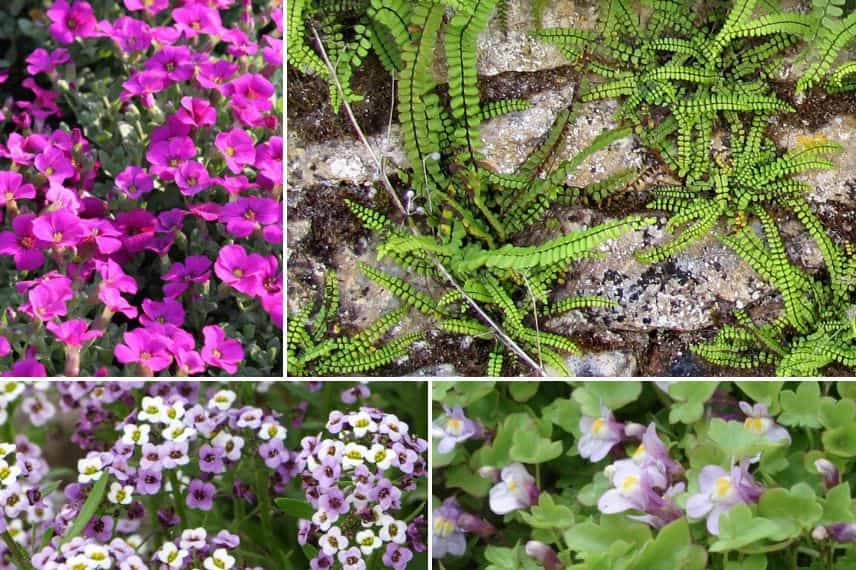
Aubriete Florado ‘Rose-Red’, Asplenium ceterach, Lobularia maritima, and Rome’s Ruin
Also arrange vegetated blocks.
Vegetated blocks not only help retain soil on a sloped garden but also serve as planting spaces, like a multitude of planters. You can, if you wish, install different varieties of plants in alveoli, or let groundcover perennials, such as ivy or lesser periwinkle. It is also advisable to choose low-growing plants, similar to those for pot planting. Therefore, you should favour rock garden perennials, suited to dry conditions, especially if your wall faces south.
In full sun or light shade, you will appreciate Nepetas, Sedums, Euphorbias, Spanish lawn, as well as basket of gold known for their dazzling yellow flowers and good hardiness. You can also plant a mouse ear (Cerastium) for its silver foliage and white flowers. Garden valerian will require little effort to produce beautiful carmine pink flowers. Vary the shapes, colours, and play with heights by also installing Iberis, moss phlox, hardy geraniums for rock gardens, and succulents, such as houseleeks. In southern regions, you can install “camel” plants, such as cacti and succulents, a helianthemum, a lavender, or a creeping rosemary.
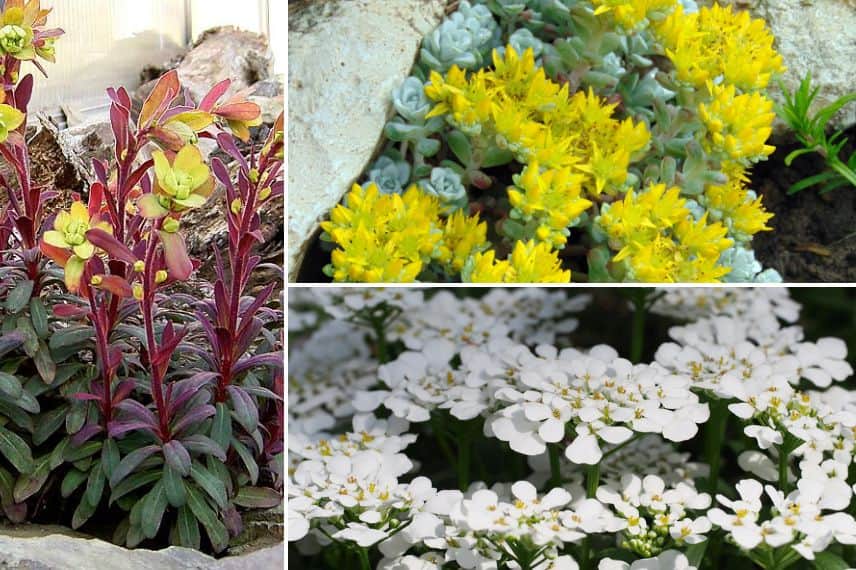
Sedum ‘Cape Blanco’, Euphorbia amygdaloides ‘Purpurea’, and Iberis ‘Masterpiece’
If the wall is shaded, choose from groundcover perennials for dry shade, such as a bergenia, a campanula, a barrenwort with delicate flowers, a Geranium cantabrigiense, and a lovely Saxifraga fortunei ‘Gokka’. And why not indulge in the violet or white spikes of a Liriope? Add some beautiful foliage from a Mexican flowering fern, an Alpine lady’s mantle, or the colourful leaves of a Heuchera. You can also plant some grasses suited to shade, such as Carex.
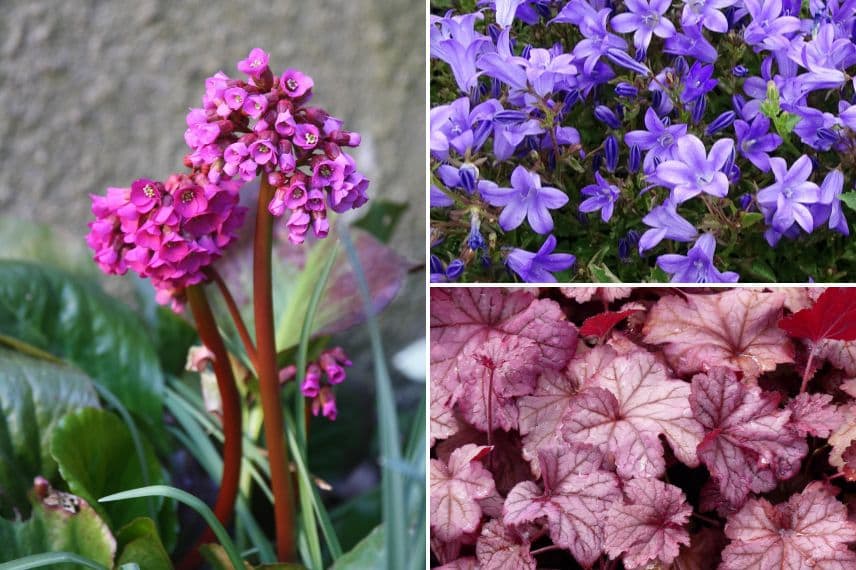
Bergenia, campanula, and Heuchera ‘Berry Smoothie’
- Subscribe!
- Contents
![[plantes_muret type="ornementales" exposition="ensoleillée" sol="drainant" hauteur_max="50 cm" floraison="printemps-été"]
Transforming a Garden Wall with Plants](https://www.promessedefleurs.ie/blogwp/wp-content/uploads/2023/01/Comment-habiller-un-mur-de-soutenement-.png "[plantes_mur_soutenement]
To dress up a retaining wall")
Comments