





























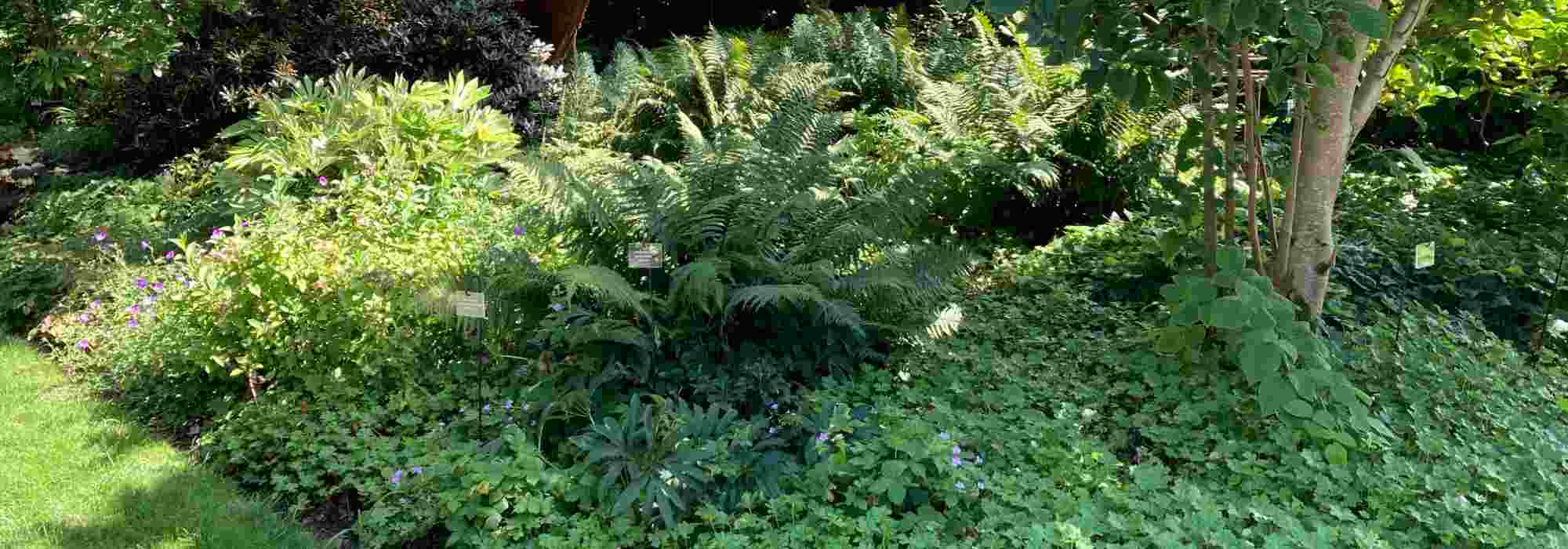
Gardening in dry shade
What to plant under trees?
Contents
Garden areas located at the base and beneath the foliage of trees can be problematic for gardeners: the shade is often dense, the soil tends to be drier, and there is significant root competition. These factors create many constraints for the plants we would like to see thrive there.
However, there are solutions by properly preparing the area and selecting plants that can grow in these challenging conditions.
So, what to plant in dry shade? When and how to plant under trees? Which plants will adapt to these difficult living conditions and not disappoint you? We provide some answers to these questions in this advice sheet.

What is this dry shade we are talking about?
Often in the shade of trees, nothing grows… This is due to the roots that absorb almost all the water… and nutrients. The soil becomes poor and very dry just a few centimetres down. These ungrateful areas are often neglected in favour of easier parts of the garden, and they are frequently gradually overtaken by ivy, which thrives there.
The dry shade created by a hedge of evergreens presents another challenging situation, for example with bushes that dry out the surface soil, such as laurel or thuja hedges, or bay laurel.
The presence of trees or bushes with shallow root systems or voracious roots (birch, ash, eucalyptus, mulberry, Cercidiphyllum…) will also pose an additional obstacle when planning a flower bed.
The last complicated case is the shade of conifers. Their evergreen foliage prevents the soil from receiving adequate rainfall during the interseason, and their often shallow root system literally monopolises the upper stratum of the soil.
However, there is no inevitability, and as we will see, it is possible, with some care given to the area, to effectively green these spaces.
Read also
Planting under treesLet the light... and the water in
To create a dry shade border, it is useful at first to let in a bit more light, and especially rainwater. Trees in this area benefit from being lightly pruned, a process known as thinning: this will lighten the canopy, allow for good air circulation, and simultaneously reduce the cast shadow.
Rainwater will reach the soil more effectively, making it easier to plant more vegetation at the base of the trees and bushes. Adopting a transparency pruning is also a lovely way to enhance this new space you are going to create.
Discover other Dry shade perennials
View all →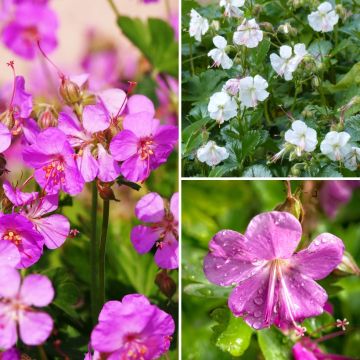
Available in 0 sizes
Available in 2 sizes
Available in 2 sizes
Available in 2 sizes
Available in 1 sizes
Available in 1 sizes
Available in 1 sizes
Available in 1 sizes
Available in 0 sizes
Available in 2 sizes
Nourish and loosen the soil
The soil at the base of trees or a hedge is not welcoming, as we have seen. Therefore, let’s give plants the best chance by enriching it. A mulch of fallen leaves and chippings several centimetres thick in autumn is essential; as it decomposes, it will improve the structure of the soil, make it more permeable and “receptive” to rain, and allow roots to explore the soil more easily. Ideally, one should prepare the ground in this area at least a year in advance of planting.
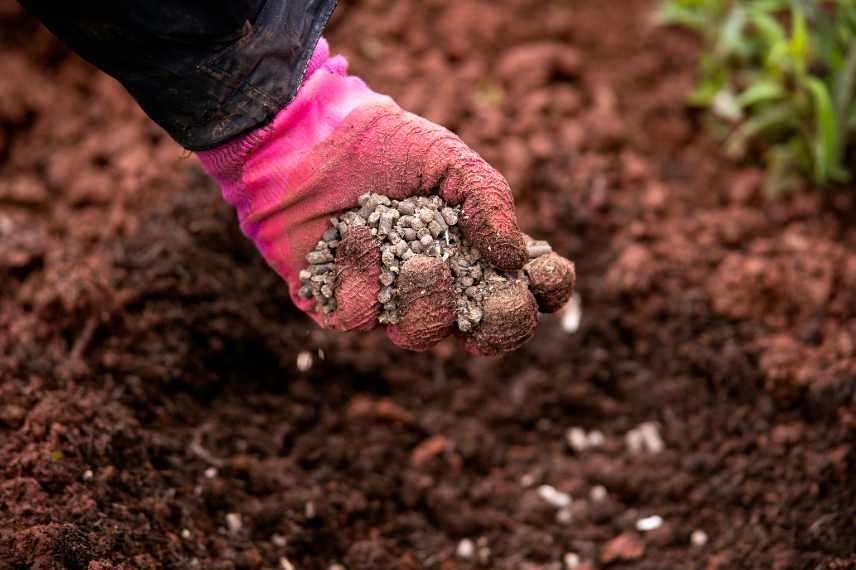
Before planting, a layer of well-decomposed manure, compost, or leaf mould will be necessary to nourish this depleted soil. You can further enrich your soil with one or two handfuls of ground horn, which will act as a base fertiliser over several months.
Read also
Perennials for dry shadeWelcoming plants properly
More than anywhere else in the garden, special care will be taken with planting. In this area under the trees, the existing roots create a barrier whenever you wish to plant even the smallest young plant of a perennial. However, it is essential to find gaps to plant between the roots. Planting as close to the trunk as possible is actually the most favourable area, and less competitive in terms of roots. Don’t hesitate to cut a few existing roots when they are small, to install your plants. However, if your spade hits a medium or large root, move on and plant a little further away. The trees will not suffer from the pruning of a few young roots, and they will produce others, but the main roots must be preserved.
It is especially useful to raise the soil level by adding soil or compost mixed with compost on the surface. This increases the volume of substrate by raising the bed, and on the other hand, enriches the soil which is in great need, especially if it has been colonised by ivy.
Intervene at the very beginning of autumn, ideally between September and October, as the fallen leaves will quickly form a protective and nourishing layer for your plantings. These are also the months when the soil is still warm and the rainfall (normally) ideal.
The plants should be sufficiently mature to compete with well-developed roots in this “hostile” environment, and at the same time be small enough not to require digging a hole that is too large. For this reason, you may sometimes lose a few plants, so it is important to plant in sufficient quantity. The planting hole should also be adapted to root competition: create a hole that is wider than deep so that the plant can begin to spread its roots.
In spring, don’t hesitate to spread a layer of leaf compost at the base of your plantings: it will retain the freshness of seasonal rains.
Finally, the first two years of planting will be crucial for watering your plants. It is essential to monitor them closely in this regard, especially during the first summer. Watering should be generous to ensure deep moisture. Planting in autumn also allows for better establishment and root development of the plants.
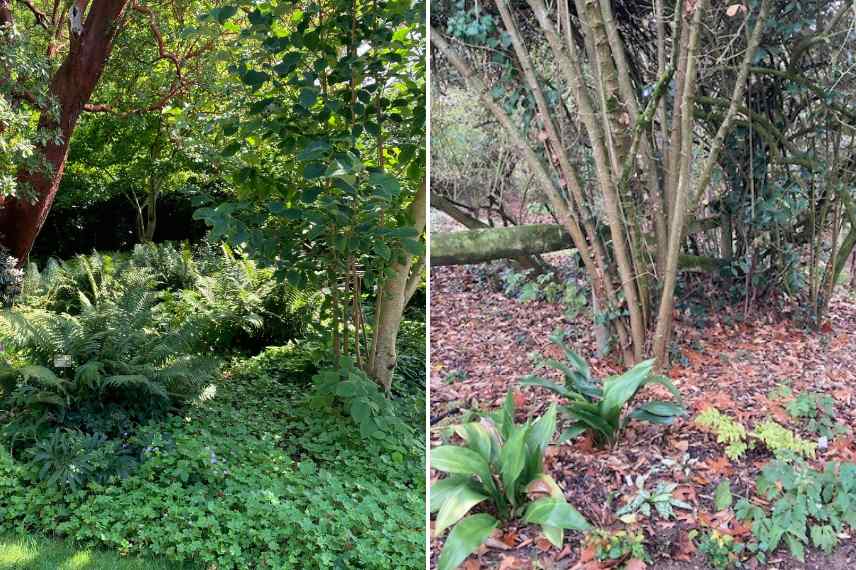
Raise the bed for better establishment, plant in autumn to benefit from good rooting and nourishing fallen leaves (© Gwenaëlle David Authier)
Choosing the right plants
When you take a closer look, you’ll find that many plants, sometimes underused, can thrive in the challenging conditions beneath trees. Some of these are plants that enter dormancy in summer, but the diversity is remarkable, and you can even find a few very adaptable shrubs that are indifferent to a lack of light and coolness. Remember that the choice of plants is crucial, and you should stick to these all-terrain plants that are not afraid of competing with roots.
We will always try to increase brightness with contrasting, variegated foliage for some, and we even indulge in the little luxury of delightful flowers! In a large area, also choose varied plant heights to add volume.
Among the options for greening your spot under the trees, here are some of the most charming:
- spring or winter bulbs, perfect under deciduous trees where sunlight can penetrate. Preferably plant small bulbs, which are easier to plant in this type of soil: Cyclamen coum, Anemone blanda, Chionodoxa, snowdrops and Niveoles, for example. Even daffodils can succeed in dry shade, in well-prepared soil, flowering a little later but for a long time.
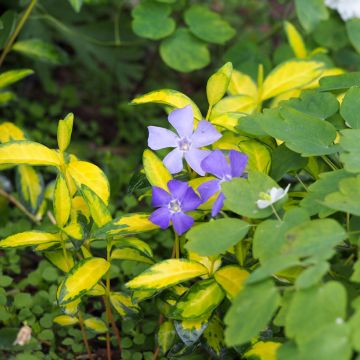
- creeping groundcovers: Galium odoratum and Pachysandra terminalis, Ajuga reptans, Asarum, Vinca major ‘Variegata’; hardy geraniums like Geranium x cantabrigense, creeping spindle and many other dry shade groundcovers
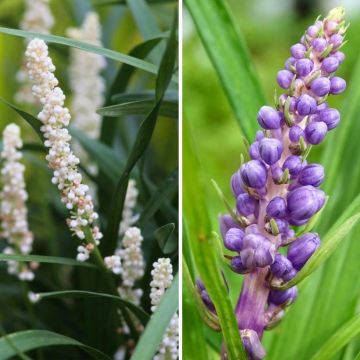
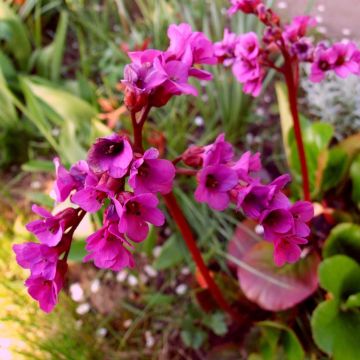
- dry shade perennials with beautiful foliage: there are wonderful undemanding perennials with very ornamental foliage that thrive in dry shade, which should be prioritised. This includes Epimediums, Aspidistra, Trachystemon orientalis, liriopes and Ophiopogons, Brunneras, Bergenias, some Carex and pulmonarias and lamiums. Also count on Euphorbia amygdaloides var robbiae, bamboo fern, Acanthus, and a few other lesser-known plants like Tellima, saxifrages, Arthropodium cirratum, or Omphalodes cappadocica;
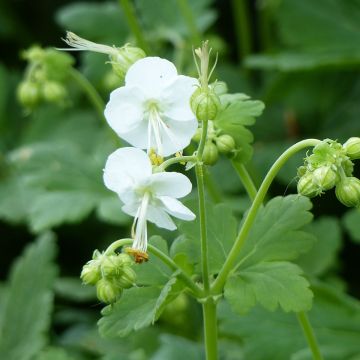
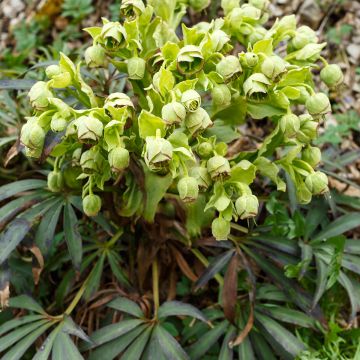
- dry shade perennials with lovely flowers: Stinking hellebore, liriopes, Aster divaricatus, Stinking iris, Euphorbia amygdaloides var. robbiae, Geranium phaeum and Geranium macrorrhizum, Bergenia…
- shrubs: Sarcococca, Diervilla, Kerria japonica, boxwood, Mahonias, Ruscus aculeatus, Skimmia, boxwood, Pieris or Aucuba, laurel tin
→ See also our article: perennials for dry shade.
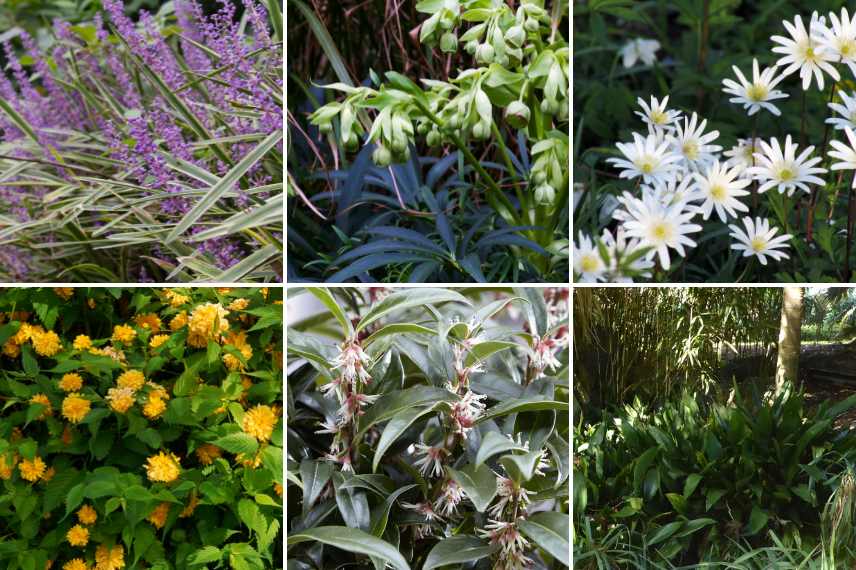
Liriope muscari, Helleborus foetidus, Anemone blanda, Kerria japonica, Sarcococca ‘Winter Gem’ and Aspidistras
- Subscribe!
- Contents
Comments