






























Climate change: rethinking our gardens to adapt!
and initiate resilience
Contents
Warming is underway and its first consequences are already quite tangible. In the face of inevitable changes, we must adapt now, as we cannot fight against nature. However, we must also take care of this nature, and now more than ever, gardeners are concerned and can be proactive. Mindsets are changing, so let’s change our practices, our approach to gardening, and make our gardens “resilient” to use this trendy term.
How can we rethink our gardens to adapt? Here are some suggestions and action ideas.
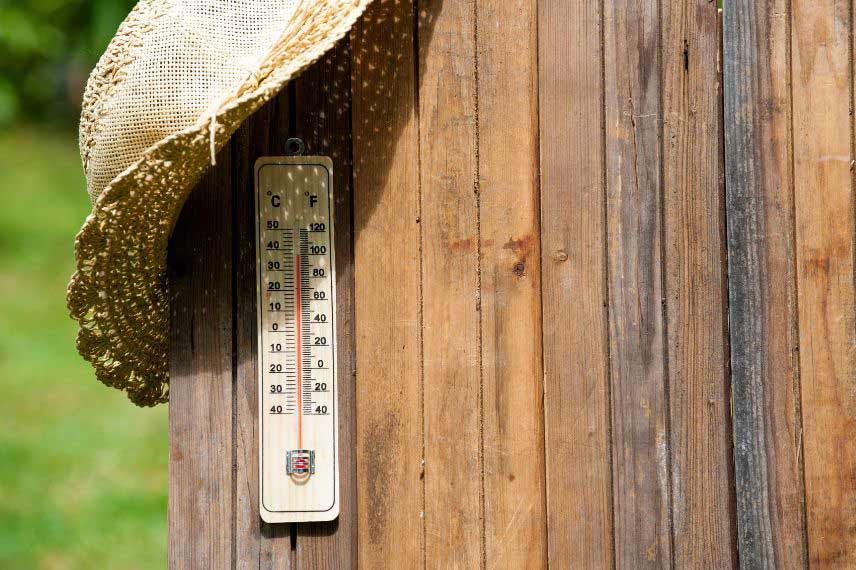
Changes are underway, so let’s act now!

Be aware of the climate changes in your garden
Climate change is not a uniform and homogeneous warming. It causes a general disruption of the global climate and our local climates, with weather forecasts becoming increasingly difficult to establish. In recent years, we have all noticed as gardeners the changes in the climate to which our gardens are subjected:
- a global rise in temperatures and an increase in the frequency of heatwaves (the last 5 years have been the hottest observed since 1850)
- a change in precipitation, varying by region and season, with increasingly marked droughts leading to soil drying out in all seasons
- an increase in the frequency and intensity of severe weather events, such as heavy rainfall, causing local flooding and inundations, storms, or hail showers, and wildfires
- a disruption of the seasons, with winters that are too mild, and springs and autumns that are too dry
- a decrease in the number of frost days in general and in the duration of snow cover for the affected regions
With the changing climate, it is therefore the daily weather that is also changing.
However, at the scale of your garden, one or more micro-climates also influence your plants, with different micro-climates even within it. They depend on:
- exposure
- the shelter provided by buildings and walls
- the tree cover and green screens (hedges) that create shaded areas and act as windbreaks
- slopes
On a daily basis, gardeners’ observations should enable them to understand and integrate the changes their land is undergoing. The following simple and effective solutions can help everyone adapt to this new reality.
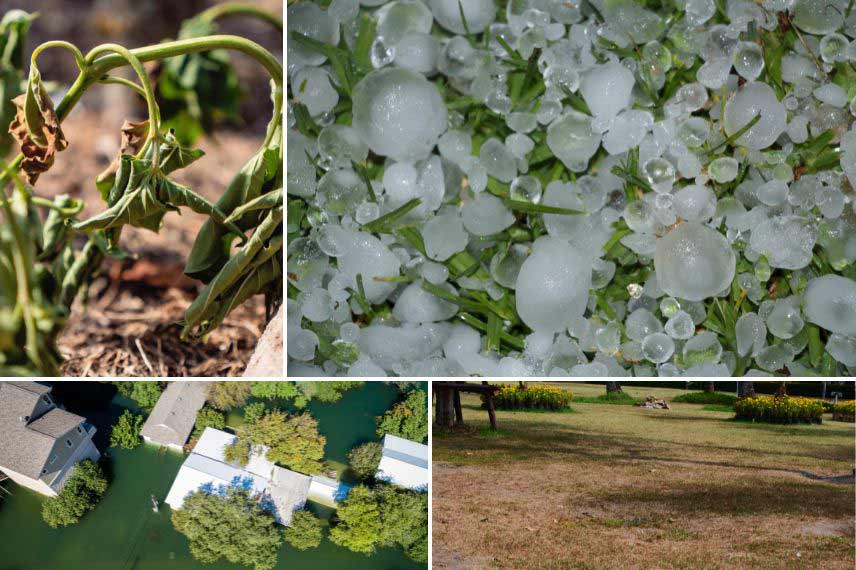
Drought and heatwaves, hail, flooding… the phenomena our gardens are subjected to promise to be increasingly negative, and we must change our practices now
Read also
Watering the vegetable garden: our tipsShade and companion planting
To provide relief from scorching temperatures, nothing beats vegetation. Shading by planting trees, large bushes, and even climbing plants on facades helps to temper the atmosphere your garden is exposed to. You will find many elements on this topic in the article “Greening to cool the ambient air.”
Plants placed under the vegetation cover will thrive better than in full sun, and this great plant diversity will help maintain a certain coolness in the garden during hot periods. These plants will also contribute to absorbing harmful carbon dioxide and releasing oxygen. However, be careful to plan your spaces well, so that overly dense shade or excessive root competition does not compromise the success of the whole.
→ To guide you in your choice of shade trees, check out our selection of 8 umbrella-shaped trees, 10 shade trees, as well as the article offering 10 trees to shade a small garden. Additionally, discover 7 climbing plants for rapid growth and 5 climbers that won’t damage your walls.
In the vegetable garden, there is increasing talk of a “forest garden”, with annual vegetable crops at the foot of trees. Although this concept is interesting, it is not necessarily relevant in all regions. It must be adapted to local soil and climate conditions, as well as to the plants being grown. While trees provide shade and a cooler atmosphere, some vegetables also need sunlight. Therefore, it’s a balance to find and test for each garden. To shade your plot, consider fruit trees, favouring ancient and local varieties that will adapt better.
Thinking in layers is also an option to take advantage of tall crops (climbing beans, sweetcorn, Jerusalem artichokes) and grow under their shade species that are sensitive to heat, such as salads or radishes in summer, setting up a “milpa” where pumpkins grow sheltered by maize and beans, courgettes under kiwis, potatoes under broad beans, squashes at the foot of pomegranates or fig trees, etc. These associations of vegetables where the larger provides shade for the smaller are easier to implement than a forest garden initially, and if the associations do not work, you can easily try something else the following year. You can also shade seedlings with crates or consider setting up shade with removable trellises.
Revegetate and adapt the plant palette
To make plants more resilient to the rapidly changing climate, it will now be necessary to select varieties that are more heat and drought resistant, based on your own observations and suited to your environment (climate, soil). Each year, unhesitatingly stop cultivating those that have not survived (or try to grow them elsewhere in the garden, in more favourable conditions) and test different varieties. This way, you will gradually select those that withstand the conditions best. Share experiences with your neighbours and friends: everyone will benefit from each other’s knowledge!
So-called “Mediterranean” species such as cypresses, olives, holm oaks, or oleanders are moving further north. For trees, consider Mulberries (Morus), Judas trees, Gleditsia, Platanus, Ginkgo, Osage orange (Maclura pomifera), or Sophora, all hardy and drought-resistant. Among the shrubs that excel in low-water conditions, adopt Buddleias, Abelias, Berberis, Ceanothus, or Cotoneasters. For perennials, the must-haves include Gauras, Sedums, Perovskias, Lavenders, or Agastaches, which will provide beautiful blooms with minimal watering. Finally, succulents and cacti, which are extremely low-maintenance, should take on an increasingly important role in our gardens.
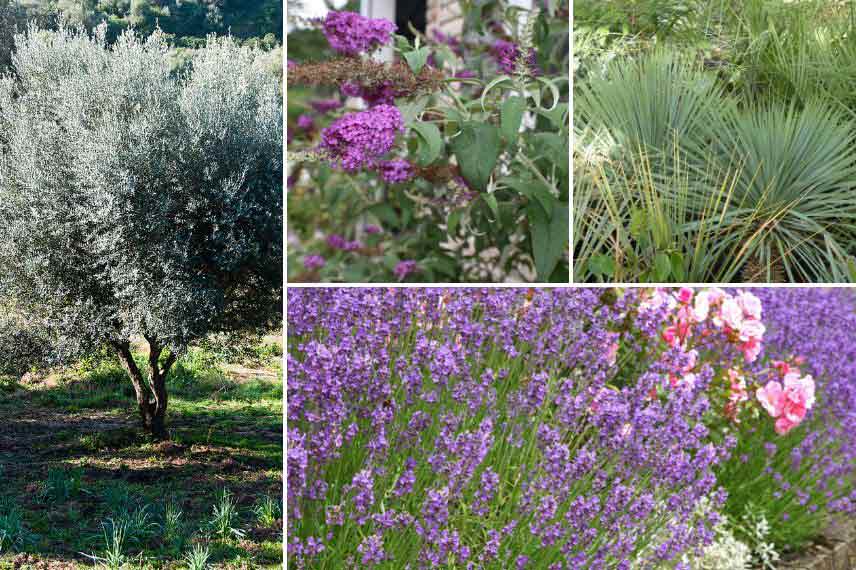
Olives, Buddleias, yuccas, agaves, and lavenders… planting Mediterranean and low-water plants further north allows for the creation of beautiful gardens without exhausting water resources.
Avoid monoculture and favour species diversification: for example, planting a single-species hedge makes it more vulnerable to drought, diseases, and pests. By diversifying your hedge shrubs, you can easily replace a few declining specimens without leaving a whole part of the garden bare, and diseases and pests will not spread as easily.
Adapt your seeds to require less water by reproducing them yourself: the mechanisms of epigenetics allow plants to adapt to growing conditions and pass this information on to their offspring.
Finally, plant small. Plug plants and mini-plugs establish better and are therefore more resilient than those in larger containers.
The importance of water management
Even if you plant drought-tolerant plants, the garden always needs a bit of water: in the vegetable patch, on new crops, for container plants, etc.
Firstly, set up water collection systems (tanks, ponds) in anticipation of summer droughts to avoid drawing from underground aquifers. If possible, use grey water (water from washing machines, showers) on ornamental plants (and not on fruits and vegetables). Every little gesture counts: collecting water from washing vegetables can help water container plants or flower beds.
How many times have I heard this phrase: “I don’t need to save water, I have a well (or borehole)?” Even if it is free for some, water is precious and must be SAVED! Is the solution capillary watering with oyas, those buried clay containers? They may not be suitable for all soils, and their benefits seem limited in clay soils, for example. Implement water-saving, suitable, and thoughtful watering techniques without succumbing to trends, and discover our best tips for saving water in the garden.
Regarding watering in general, it is essential to save water by choosing more drought-tolerant species, increasing mulching, and watering at the right stages for each plant. During restrictions, it is also important to choose which vegetables to save, prioritising winter vegetables during summer heatwaves, at the expense of some summer vegetables like tomatoes or green beans, for example.
Container plants are less autonomous in the face of water shortages, as their root system cannot reach resources deep in the soil; multiplying pots and planters may not be a good idea these days, unless planting ultra-drought-tolerant species, such as succulents or cacti. If these plants are likely to struggle with the winters in your area, you can bring them indoors. Larger containers allow for better management of watering and plant development than small pots, and clay retains more moisture than plastic containers. Don’t forget to mulch container plants as well, to retain maximum moisture, and place them in the shade during the afternoon in summer.
To make your crops less dependent on watering and more resilient, space out watering over time. In spring, or on cool days, water early in the morning, and during hot periods, water in the evening, always at the base of the plants. And remember that overhead watering leads to significant water waste and simultaneously encourages fungal diseases. Prefer drip irrigation or porous hoses, which are more economical.
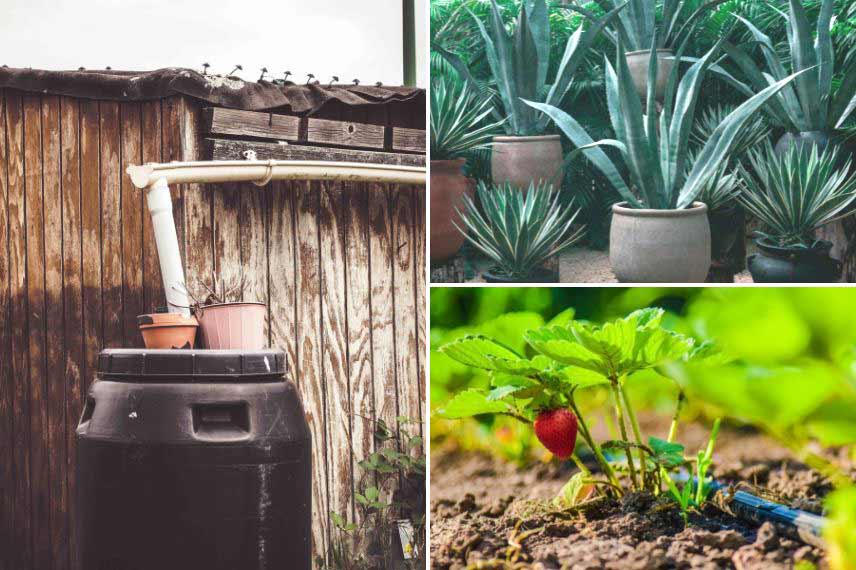
Let’s collect rainwater, replace thirsty pots with drought-tolerant ones, and water with the awareness that every litre of water is precious.
Gone is the lush lawn!
Nowadays, it is relevant and useful to transform all or part of your lawn into a natural meadow. Restrictions will anyway prevent you from maintaining a perfectly green surface during the summer heatwave, so why strive to mow it frantically? A spontaneous meadow does not need watering and is ultra-rich in biodiversity! The benefits include savings on water, time, and money, less pollution, and the preservation of your soil and groundwater.
For a few years now, we have been practising differentiated mowing in our garden in the South: small mown areas around the house, while the rest grows into a flowering meadow with charming sinuous mown paths allowing you to wander among the flowers. A great wealth of fauna quickly establishes itself: insects, butterflies, birds, reptiles… to everyone’s delight!
To convince you, read our article “Mower Breakdown: The Benefits of Letting the Grass Grow“.
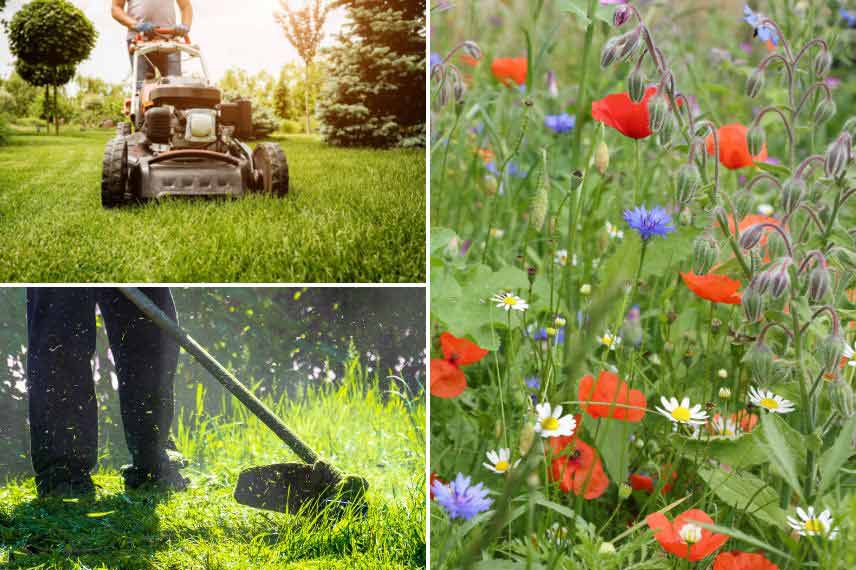
Take the plunge: abandon your mower and brush cutter to let a spontaneous meadow grow. It’s possible even in small spaces!
Planting and sowing differently... and adapting!
It will increasingly be interesting to revisit the seasonal calendar by adapting to changes. Gardeners will need to be more flexible, more responsive, and accept the inevitable mistakes to progress in this context of climate change.
In ornamental gardens, autumn plantings, made after beneficial rains, allow plants to take advantage of the entire vegetative rest period to establish their roots and thus be more resilient to the drought of the following beautiful season.
In the vegetable garden, it will be necessary to sow and plant less, but more frequently, to increase the chances of harvests in case of capricious weather. During early and warm springs, mild temperatures encourage the bud burst of vegetation, which emerges earlier from its winter dormancy and begins to bud. The arrival of a late frost can destroy this early vegetation at a time when it is particularly vulnerable. For fruit trees, it is now preferable to favour late species, which will be better able to withstand these late frosts if flowering has not yet occurred. Climate changes also lead to a shortening of the cycle of plants between sowing or flowering and harvest; it is up to us to adapt.
We can also consider cultivating more in autumn/winter and relying less on summer harvests, which will need to be planted earlier in the season, with protections ready to be put in place in case of late frosts (tunnels, winter covers…). In continental and Mediterranean regions, vegetables are likely to suffer increasingly from heatwaves and water shortages. Favouring autumn/winter vegetables such as carrots, parsnips, cabbages, black radishes, turnips, leeks, chicories, or lamb’s lettuce helps avoid working and wasting water only to see one’s harvests destroyed. However, faced with soil that remains too dry in autumn, it may sometimes be necessary to abandon these sowings and plantings or to delay them to take advantage of any potential rains. We can also rely on spring crops, to be sown and established earlier in the season (carrots, radishes, salads, strawberries, broad beans, etc.).
Perpetual fruits and vegetables (such as perpetual leeks, rocambole onions, cardoons, Pepino melon, chervil, Chinese artichokes, rhubarb, Asian spinach…) are also very interesting: in addition to requiring less work, these edible perennial plants have a deep root system, allowing them to be more self-sufficient in water than most other crops. Find our tips to discover how to create a perpetual vegetable garden.
Invite plant and animal biodiversity
Agricultural practices, anthropization, and climate disturbances have led to the disappearance of a large part of insect populations, a significant number of birds, amphibians, bats, moles, and more over the past thirty years. However, all this wildlife performed incredibly useful work in complete ignorance of humans. We have at our disposal a simple and effective course of action to help our garden adapt better to climate change: let nature reclaim its rights!
This means letting go, doing less to “manage” your garden, and almost doing nothing! All of this is simpler and less energy-consuming, easy and quick to implement. We need this biodiversity, and to increase it, we simply need to do much less! It is enough to disregard the conformist standards of a “maintained” garden, and by allowing nature to breathe, you will be able to engage in much more enriching activities than mowing the lawn, trimming bushes into balls, and destroying the little herbs that grow everywhere.
After a few months, you will see butterflies, pollinating insects, and birds invade this previously empty space. Moreover, you will discover new plants that will ensure continuous improvement of your soil, reduce the CO2 emitted into the atmosphere by your mowers and brush cutters, and restore a sense of calm.
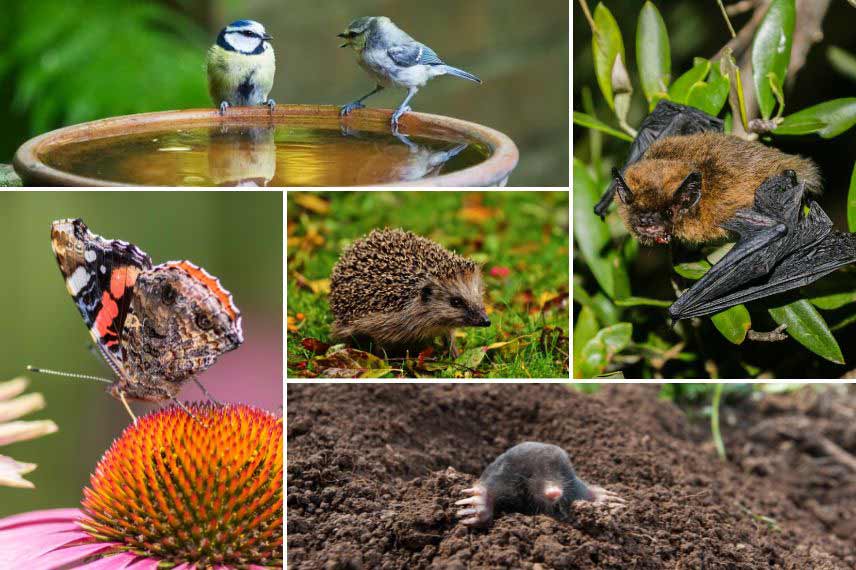 By inviting small wildlife into the garden, it becomes alive and more resilient[/caption>
Restore the soil and de-artificialise
A well-structured soil, rich in organic matter, that makes nutrients available for crops and retains water: the dream for any gardener, especially during times of climate upheaval. Thanks to mulching and composting, you can improve it year after year. Spontaneous plants and green fertilisers also help enhance the characteristics of soils and make them less compact. These solutions are not instantaneous, but they allow our gardens to become stronger and adapt season after season.
Another source of problems in the face of climate change and unpredictability is concrete surfaces. Water runs off, no longer infiltrates, and these surfaces heat up in the sun. Wherever possible, it is essential to remove these mineral surfaces now and avoid creating new ones. It is tempting to have “clean” surfaces around the house, but this is counterproductive. Limit mineral surfaces to the strict minimum and green the surroundings. You will inevitably suffer from heat on these concrete, asphalt, tiled, paved, and synthetic lawn surfaces, and your entire garden will also suffer as a result.
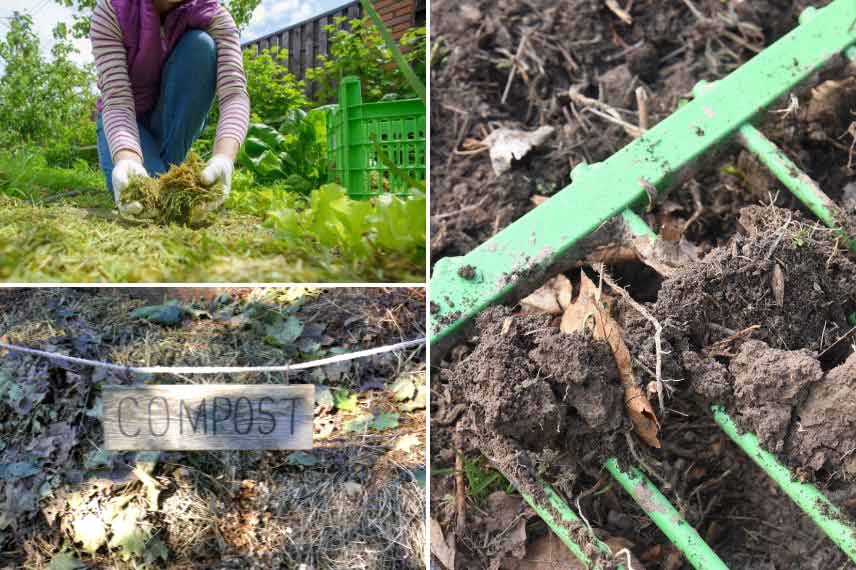 Mulching, composting, and respectful soil work make it easy to care for your garden’s soil.
Set an example and think of future generations!
We plant trees for future generations; everyone knows that… so let’s think of those who will come after us and at least take pride in leaving them some beautiful, vibrant specimens as a legacy, rather than artificial and suffocating spaces. The wild garden and forest garden will likely become trendy for a time, but we must go beyond that to make our gardens spaces of nature in the long term and continually preserve the little life and resources that remain.
Good news in this very bleak picture: nature abhors a vacuum and quickly reclaims its rights. This is the time to educate, to talk about the massive extinction of insects and birds, the scarcity of water, even in our “developed” countries. Let’s take cuttings, sow seeds, exchange plants, compost, give our loved ones grelinettes instead of smartphones, and our children packets of seeds rather than packets of chemical sweets. Let’s invite our friends to garden even if they don’t like getting their hands dirty… everyone will be receptive, including the most resistant… let’s hope so!
And for further reading...
To get a quantified and scientifically observed idea of climate changes, the Climat HD tool from Météo France allows you to visualise the evolution of climate in the 21st century at both national and regional levels.
Enter the name of your town or an area of interest, and the platform “Tomorrow, what climate at my doorstep“, published by Agence France Presse (AFP), enables you to compare the climate of the recent past with that of tomorrow (by 2050) according to three scenarios: “optimistic”, “intermediate”, and “pessimistic”.
Find the advice from our article: Water restrictions and watering, how to manage the crisis in the garden?

- Subscribe!
- Contents
Comments