

























Choosing a cabbage
OUR BUYING GUIDE TO FIND THE IDEAL VARIETY
Contents
Are there cabbages for every taste! From Cauliflower, Kohlrabi, Broccoli, Romanesco, White cabbage, Curly kale, Chinese cabbage, and the tiny Brussels sprouts, how do you know which one to choose? There is such a diversity that you can select them based on their size, shape, colour, harvest season, and flavour, as well as how to cook them. Discover all the facets of cabbages through our guide, to choose those you will love to plant, harvest, and then cook.

According to its size and shape
Did you know there are no fewer than 250 varieties of cabbage? Some have fleshy inflorescences, while others are round and weigh nearly a kilogram, and still others are as large as walnuts. Here’s a brief summary of the main species cultivated in the vegetable garden according to their shape and size:
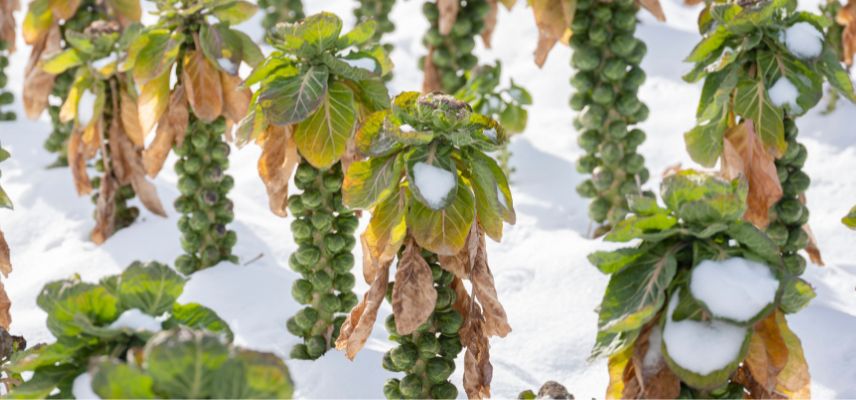
- The Brussels sprout is a variety grown for its small auxiliary buds. These little heads are often referred to as “buttons” and typically measure between 1 and 3 cm. Each plant can bear 20 to 75 of these little cabbages on its stem.
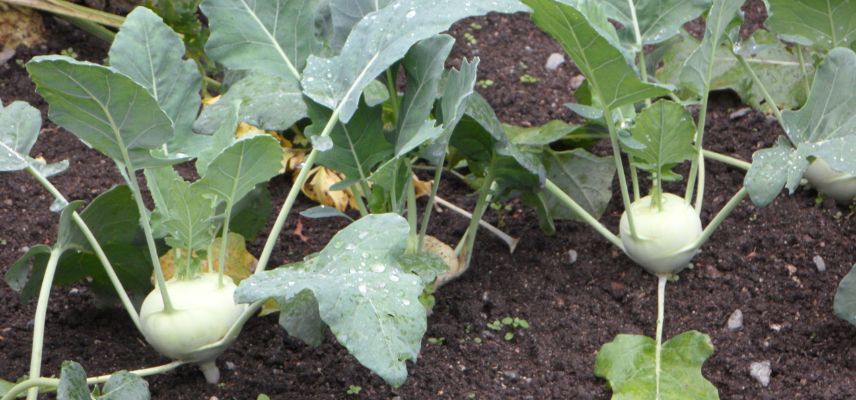
- The kohlrabi features a fleshy, rounded, slightly flattened stem, resembling a ball simply resting above the soil and somewhat resembling a root. Depending on the variety, this bulb measures between 6 and 20 cm in diameter. This curious vegetable is topped with large leaves arranged in rosettes.
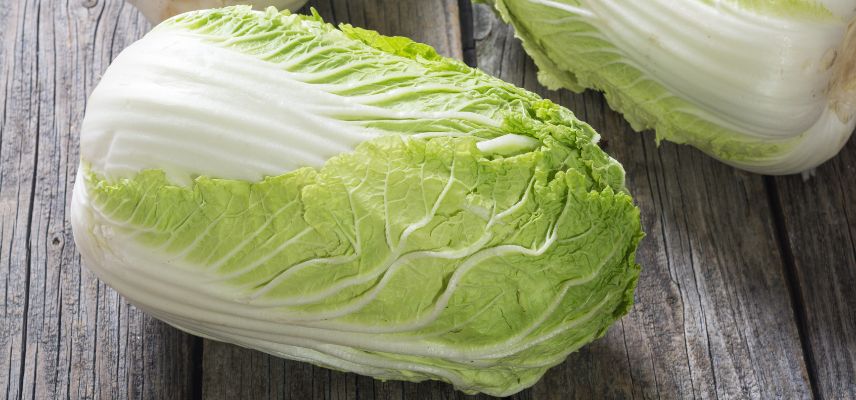
- Originating from Asia, the Chinese cabbage, also known as Pak Choi or Pé Tsaï, produces a head that initially resembles an elongated lettuce. As with some salads, the outer green leaves encase a heart that gradually turns yellow.
- Among the headed cabbages, there are 2 main families:
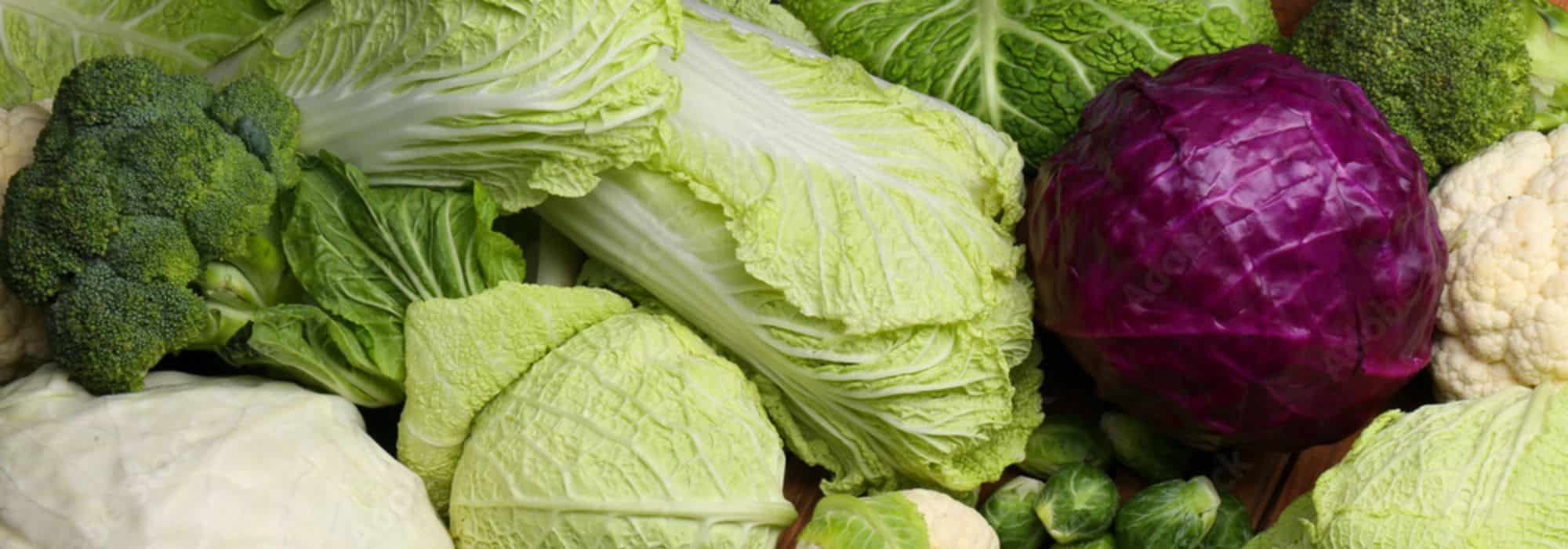
- The smooth cabbages are recognised by their large heads, which can be round, flattened, or pointed. Depending on the variety, their leaves can be purple in red cabbages (Large Red Cabbage) or light green in white cabbages. The foliage is smooth, more or less tightly packed depending on the cultivar.
- The frisée cabbages, also known as Milan cabbage, have heads that are also round, flattened, or pointed, but are distinguished by their highly crinkled leaves, as seen in the Milan Cabbage ‘Gros des Vertus’.
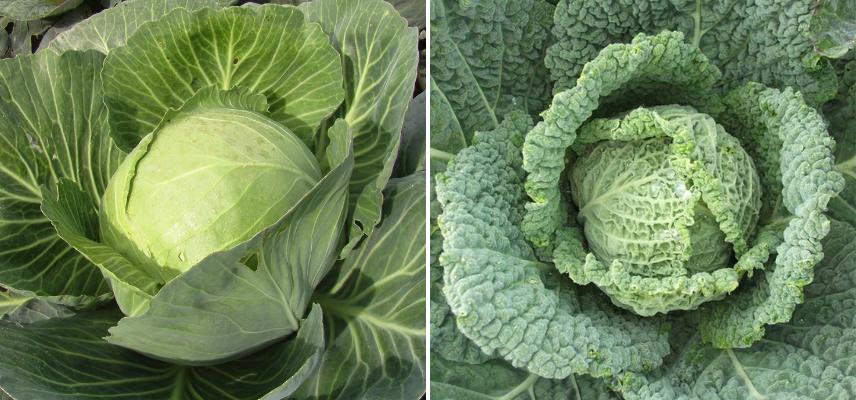
smooth cabbage and frisée cabbage (Milan cabbage)
- Cauliflowers also encompass 3 main families:
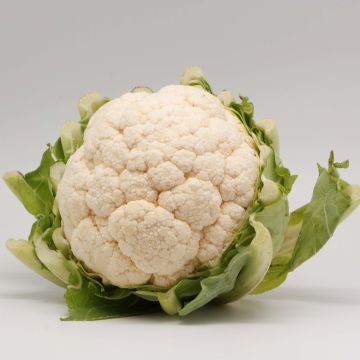
- The cauliflowers, also known as Cyprus cabbage, have a central fleshy head (a meristem), usually white, as seen in the Snowball Cauliflower.
- The broccoli is grown for its green or purple inflorescence, which is harvested before flowering.
- The Romanesco cabbage is a vegetable whose inflorescence is a unique pyramid shape, lying somewhere between broccoli and cauliflower.
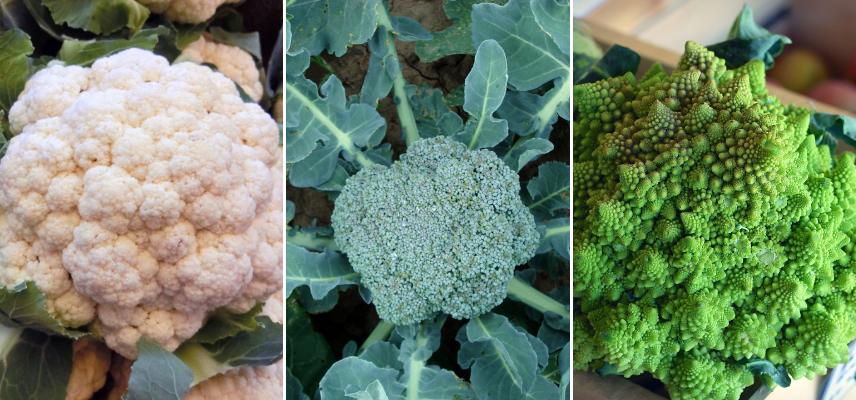
Cauliflower, broccoli, and Romanesco cabbage
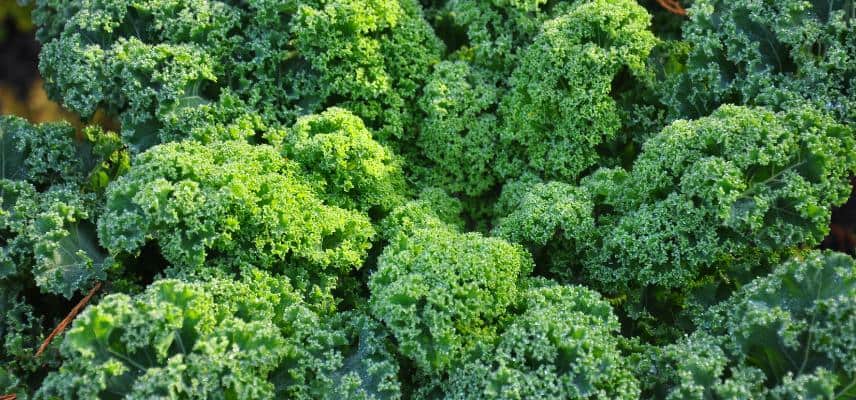
- Unlike the previously mentioned cabbages, the curly kale does not form a head, but offers large, very frilly green leaves.
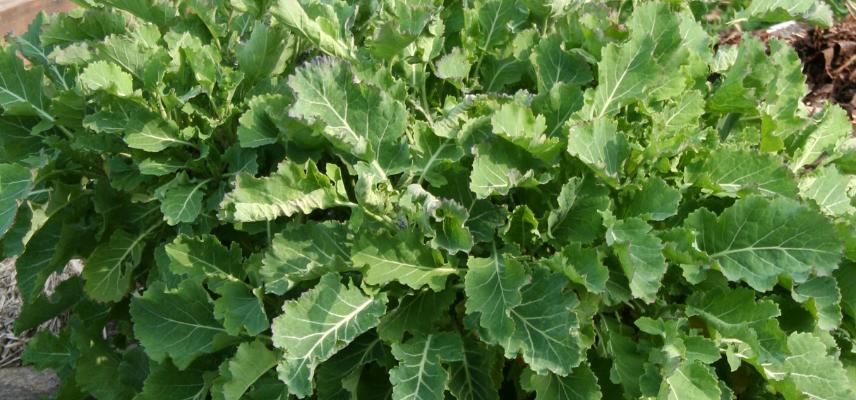
- The perpetual cabbage of Daubenton is a perennial vegetable that does not produce a head but rather young green shoots, with a taste similar to that of broccoli. Easy to grow, it remains in place in the vegetable garden for several years.
Read also
Growing Daubenton perpetual cabbageAccording to its colour
Green, Green and More Green
Green is undoubtedly the emblematic colour of cabbages, and it is also the predominant shade across all families of this vegetable, from broccoli to headed cabbage. However, there are nuances, ranging from the tender green of the Milan cabbage from Pontoise, the deep green of the Half-Dwarf Curly Kale or broccoli, not to mention the bright yellow-green unique to the Romanesco Broccoli.
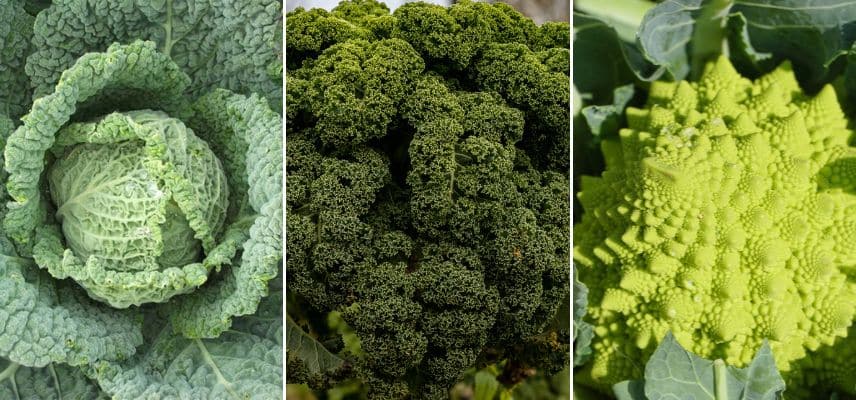 Milan cabbage, curly kale, and Romanesco cabbage
A Touch of White in a Green World
When thinking of white in cabbage, one often first thinks of cauliflower and its white heart, crunchy raw or melting when cooked. This immaculate white shade can be found, for example, in the Cauliflower ‘Merveille de Toutes Saisons’.
At first glance, when observing the White Cabbages in the vegetable garden, one first sees their tender green outer leaves. But if you remove the outer leaves of the head, you discover a heart leaning towards white, highly prized for sauerkraut recipes.
Under its deep green foliage that casts shade, kohlrabi hides the base of its prominent stem, which is generally white, barely tinged with tender green, as seen in the Early White Vienna Kohlrabi. However, kohlrabi can also be purple! Like the ‘Azur Star’ kohlrabi, which has a surprising purple colour but hides a delicate white flesh.
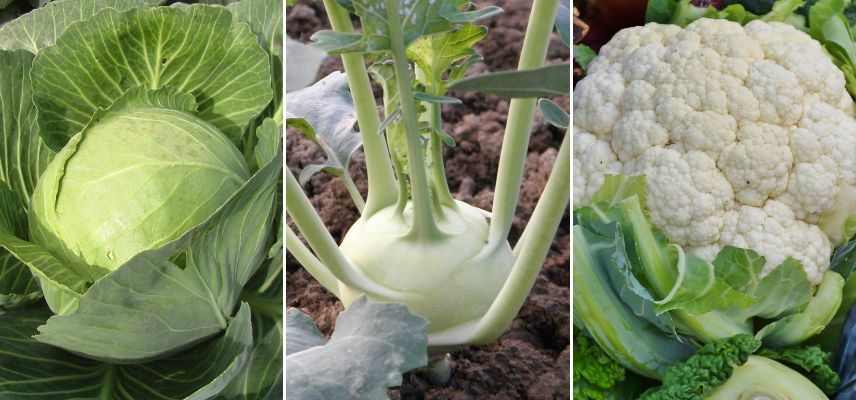 Quintal d’Alsace cabbage, kohlrabi, and cauliflower
Purple to Violet for Originality
What if to change from green, we added a bit of purple to our plate? For a subtle touch, one can choose Milan cabbage from Pontoise, which stands out with its large heads whose green leaves are beautifully tinged with purple. The ‘Santee Purple’ broccoli also offers beautiful shades of purple and violet, mixed with green and sometimes white.
The ‘Large Red Cabbage’ is distinguished by its large round heads with beautiful dark red leaves and a slightly sweeter flavour than its green or white counterparts. There is even a darker shade, purple, almost black in the ‘Tête Noire Red Cabbage’.
The small ‘Rubine’ Brussels sprouts will add a lovely purplish hue to the vegetable garden and brighten our dishes from October to December.
There are also purple cauliflowers with a heart that is more nuanced, between white and mauve. However, this beautiful colour does not appreciate boiling. To preserve this original hue, it is best enjoyed raw or roasted in the oven or pan.
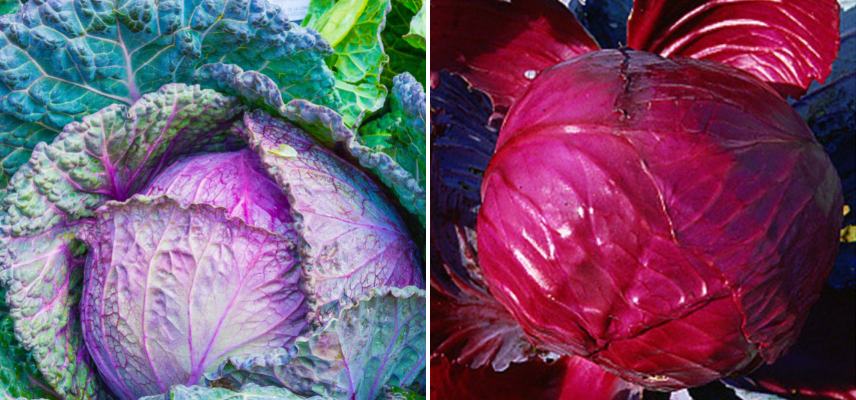 Milan cabbage from Pontoise and ‘Large Red Cabbage’
Colourful Cauliflowers
For originality, there are now varieties of cauliflower with white, mauve, yellow, and even orange hearts, such as the surprising ‘Orange Sunset F1’ cauliflower. As with the purple varieties, avoid boiling to preserve their beautiful colourful shades.
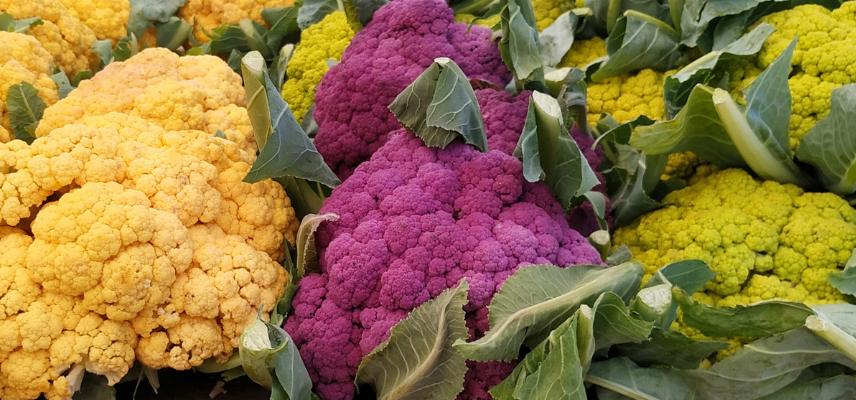 Colourful cauliflowers
Discover other Cabbage plants
View all →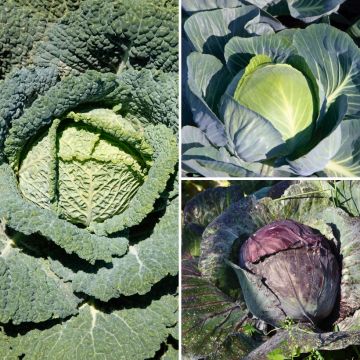
Available in 0 sizes
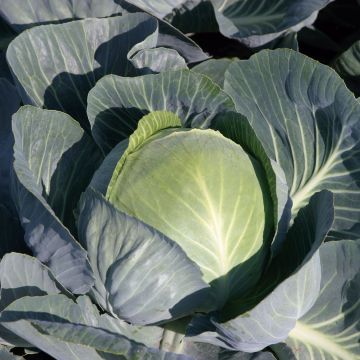
Available in 2 sizes
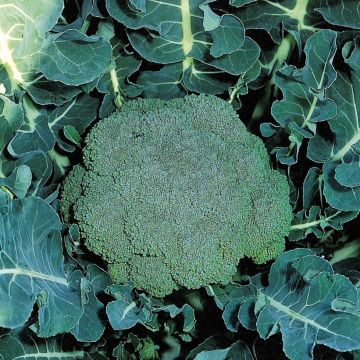
Available in 3 sizes
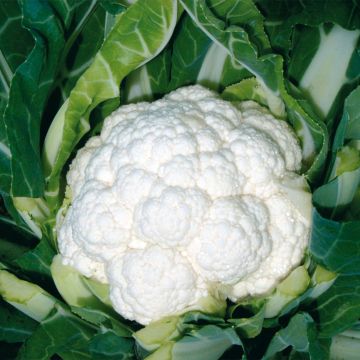
Available in 1 sizes
Available in 1 sizes
Available in 1 sizes
Available in 1 sizes
Available in 1 sizes
Available in 1 sizes

Available in 1 sizes
According to its harvest period
There is a wide variety of cabbages, such as winter, summer, and autumn cabbages, allowing you to enjoy their qualities throughout the year. Each of them has different sowing, planting, and harvesting periods. This makes for a lovely visit to the vegetable garden in any season. Here’s a brief summary:
Winter Cabbages
In winter, the vegetable garden requires little care from its gardener, but that doesn’t mean there’s nothing to harvest. You will still find the Milan Cabbage from Pontoise, the Curly Kale ‘Halbhoher Vert’, and the Brussels sprouts that withstand the cold remarkably well. You can also pick one of the latest arrivals, the ‘Flower Sprout’ Cabbage, a cross between Brussels sprouts and curly kale, very frost-resistant and well-preserved. These cabbages are generally sown in spring for a harvest from October to March, depending on the cultivar.
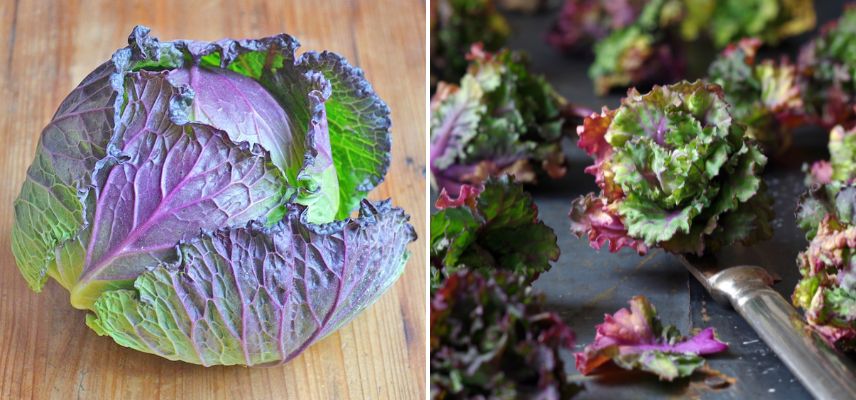
Milan Cabbage from Pontoise and ‘Flower Sprout’ Cabbage
Spring Cabbages
Spring is the season for harvesting the first cabbages that were sown at the very beginning of the previous spring. For example, you can find the ‘Tête de Pierre’ Cabbage, the ‘Cœur de Bœuf Moyen de la Halle’ Cabbage, and ‘Spring Hero’ Cabbage.
→ Check out our article on “Spring Cabbage or Early Cabbage: How to Grow It?”
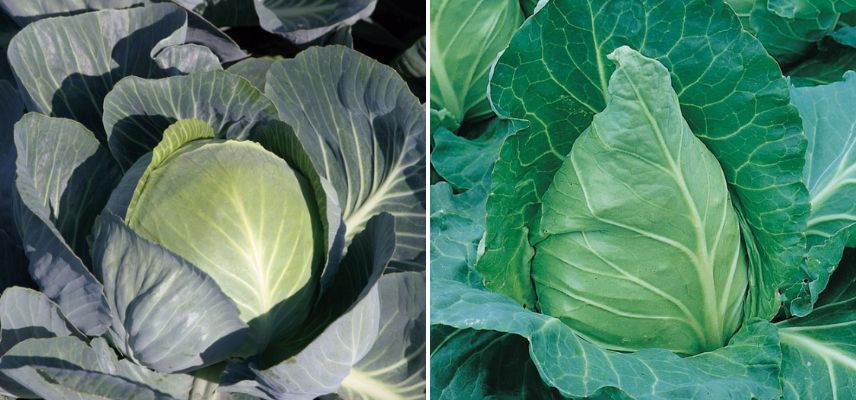
‘Tête de Pierre’ Cabbage and ‘Cœur de Bœuf’ Cabbage
Summer Cabbages
The harvest of cabbages begins tentatively in June for those planted in the previous spring or autumn. Thus, the beautiful season starts with the first broccolis (‘Marathon’ Broccoli), kohlrabis (Early White Vienna Kohlrabi), cabbages (‘Copenhagen Market’ Cabbage), cauliflowers (‘Merveille de Toutes Saisons’ Cauliflower) and Milan cabbages (Milan Cabbage from Saint-Jean). By late summer, around August, September, and even October, the cabbage season is in full swing ! The vegetable garden, like the stalls at the markets, then overflows with a wide variety of different cabbages that were sown in the previous autumn or spring, along with Chinese cabbages, Kale, and Romanesco.
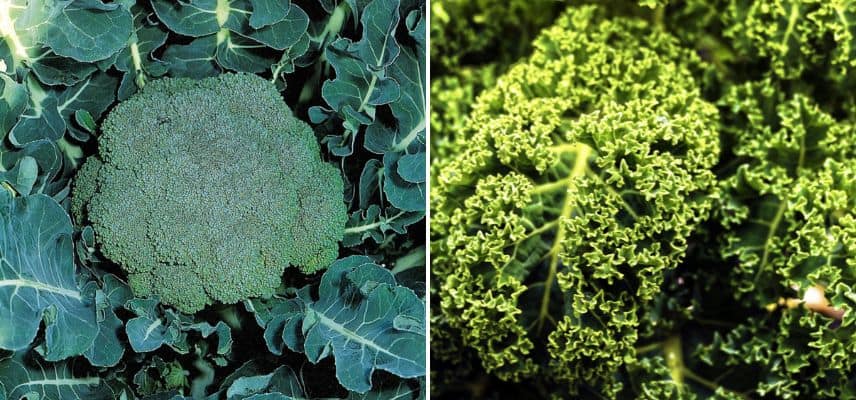
‘Marathon’ Broccoli and Curly Kale
Autumn Cabbages
In autumn, particularly in October, the cabbage harvest season reaches its peak. Broccolis, Chinese cabbages, cabbages, cauliflowers, curly cabbages, Milan cabbages, Romanesco cabbages, and also the first Brussels sprouts. A great way to vary pleasures, flavours, and recipes.
Some Champion Cabbages for (Almost) All Seasons
Some cabbages can be sown from spring to autumn and harvested over a long period. This is the case, for example, with the ‘Santee Purple’ Broccoli which can be harvested from spring to early summer, but also in winter. Some Milan cabbages withstand the cold very well and can be harvested from September until March, or even May for some. Similarly, the perpetual kale of Daubenton settles in for several years in the vegetable garden and can be harvested from September to May.
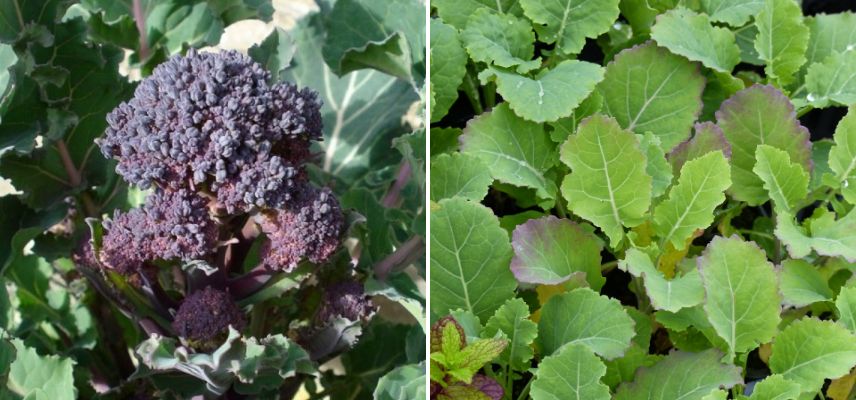
‘Santee Purple’ Broccoli and Daubenton’s Perpetual Kale
According to its flavour
Cabbages can be used in a variety of recipes, whether raw or cooked, in soups, stews, gratins, braised dishes, and even lacto-fermented to make sauerkraut. Each variety has its own flavour and use. Here are some ideas:
- Brussels sprouts offer a sweeter and milder flavour than other cabbage varieties. They can be enjoyed boiled or steamed, roasted, or braised to accompany smoked bacon, salted meats or in a salad with vinaigrette. Their taste pairs perfectly with that of chestnuts.
- Kohlrabi, when eaten raw in salads or carpaccio, has a fine taste that lies between chestnut, hazelnut, and radish. When cooked, its delicate flavour resembles that of turnip. It is perfect for making gratins or glazed with honey. Do not discard its leaves or peels, as they can be used to create a surprising kohlrabi leaf velouté.
- Milan cabbage, raw and cut into julienne, easily enhances composed salads. It is also suitable for stir-frying, in soups, braised, in tarts, or stuffed with minced meat, fish, or sausages. It can also be fermented.
- Curly kale can be eaten raw in julienne in salads or cooked by steaming or stir-frying for original Asian recipes or simply with a knob of butter. It can also be fermented to make sauerkraut, but its flavour is stronger and its fermentation produces a strong odour. Its crunchy texture is better suited for gratins, soups like pot-au-feu, but also in smoothies, quiches, purées, and even fritters.
- Cauliflowers are known for being crunchy when raw and are gladly enjoyed as a snack or in salads with a small dipping sauce. When cooked, cauliflower takes on a melting texture, perfect for making béchamel gratins, purées, roasted patties, or fritters.
- Broccoli is mainly consumed cooked or lightly sautéed in a wok to retain its crunch. Its subtle flavour enhances Asian stir-fries, rustic sautés, risottos, and gratins.
- Perpetual cabbage of Daubenton can be prepared both raw in salads and cooked in a wok, in soups, gratins, or stuffed like Milan cabbage.
- With a satisfying crunch, Chinese cabbage has a milder flavour than other cabbage varieties. Cut into julienne, it is perfect for creating Asian dishes, stuffed cabbage, or the famous Chinese cabbage salad.
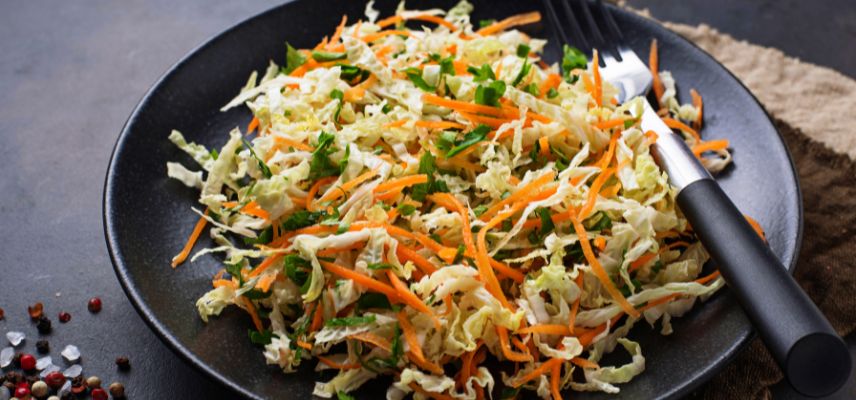
Cabbage and raw carrot salad
- Subscribe!
- Contents
Comments