





























9 mediterranean shrubs
Our selection of shrubs for warm and dry climate
Contents
Inhabitants of the scrub vegetation, maquis, or forested massifs of the south, Mediterranean bushes share a great sobriety and an adaptation to poor, thin, and stony soils.
Evergreen and mostly floriferous, fruit-bearing for some, they have a rightful place in the garden, given their elegance and ease of care. Discover our selection of 9 Mediterranean shrubs, each with its ideal growing conditions and a note on its hardiness to help acclimatise them beyond the shores of the Mediterranean Sea.

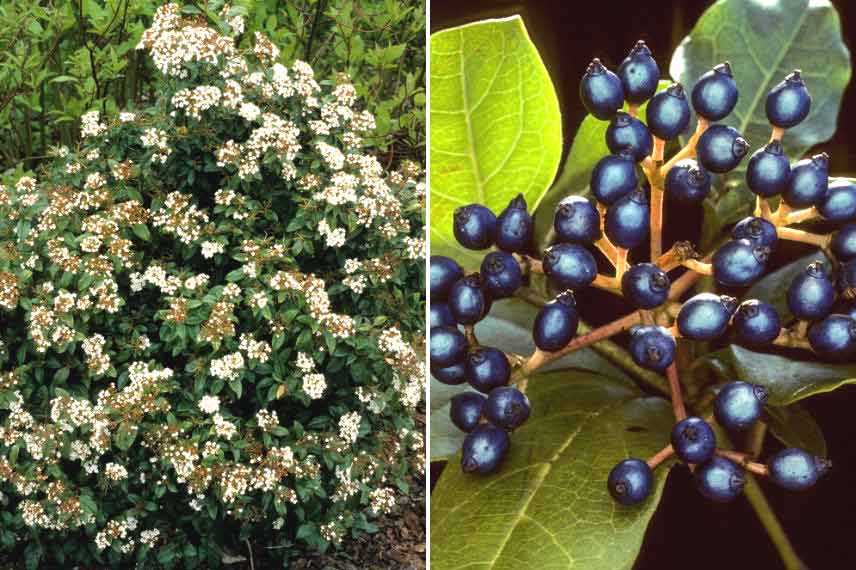
Laurustinus - Viburnum tinus
Excellent Mediterranean undergrowth shrub where it thrives spontaneously despite the root competition from trees, Laurel Tin – Viburnum tinus has many advantages for joining our gardens. Whether planted in a bed alongside other shrubs and perennials, as a hedge, or as a standalone, it always looks splendid as a persistent structure in the garden and withstands difficult living conditions without showing signs of weakness. Indeed, it is not demanding regarding the nature of the soil, tolerating both dry and stony as well as calcareous types, and regarding exposure, whether in full sun, partial shade, or shade. Growing naturally in the Mediterranean region, it fears neither heat nor drought. The Laurel Tin forms a dense bushy shrub that reaches between 2 m and 2.5 m in all directions, with a rather slow growth, especially in the first few years.
The abundant white flowers of the Laurel Tin (tinged with pink for the varieties ‘Lisarose’ and ‘Spirit’) bloom from January to March, sometimes as early as November if the winter is mild, helping us to wait for spring by bringing their delicate flowering to the garden when it is so much needed! They are followed by clusters of small blue-black fruits that delight the birds… while helping to disperse its seeds. The evergreen foliage of Viburnum tinus is very elegant, dark green with a lighter underside.
→ This robust and easy-to-cultivate Mediterranean shrub fears neither wind nor sea spray. However, in cold regions, it is best to plant it in a sheltered spot, its hardiness allowing it to tolerate temperatures down to -15 °C for short periods for an adult specimen in well-drained soil. It is possible to plant the more compact variety ‘Gwenlian’ in a pot or container to be able to shelter it in winter in the coldest regions.
Discover the qualities of the Laurel Tin in video:
Pomegranate - Punica granatum
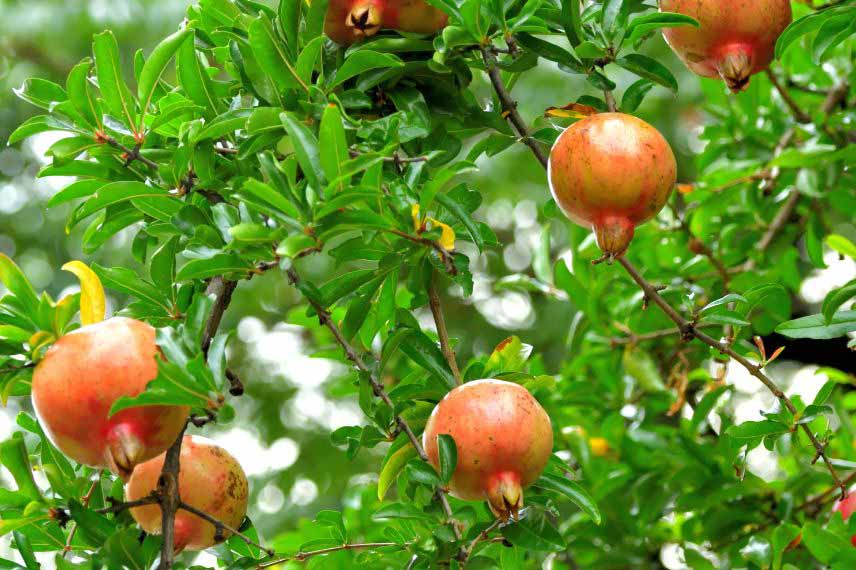
Fruit tree typical of the Mediterranean region since ancient times, pomegranate – Punica granatum – was introduced to Spain by the Moors, who planted it alongside roses and myrtles in the gardens of the Alhambra in Granada, a city that owes its name to this fruit.
It is a deciduous shrub with intertwined and slightly thorny branches that bear abundant orange-red flowers in June and July and more sporadically until late summer. In autumn, the pomegranates ripen, taking on pink and red hues, sometimes even purple as seen in the variety ‘Black Fruit’. The Pomegranate reaches about 5 m in height and 3 m in width. It tolerates limestone well and is not demanding regarding soil type. It withstands drought admirably, but produces more abundantly if its roots find some moisture at depth.
→ Pomegranate is a hardy shrub down to -15 °C that requires a lot of heat to bear fruit and therefore thrives particularly in Mediterranean areas or along the Atlantic coast. It can be planted in a flowering or fruiting hedge, as well as in a border in other regions, but yields may not be as abundant… or may simply be non-existent if the climate is too cold for it.
Discover other Shrubs for Mediterranean climates
View all →
Available in 1 sizes
Available in 1 sizes
Available in 1 sizes
Available in 1 sizes
Available in 1 sizes
Available in 1 sizes
Available in 1 sizes
Available in 1 sizes
Available in 1 sizes
Available in 1 sizes
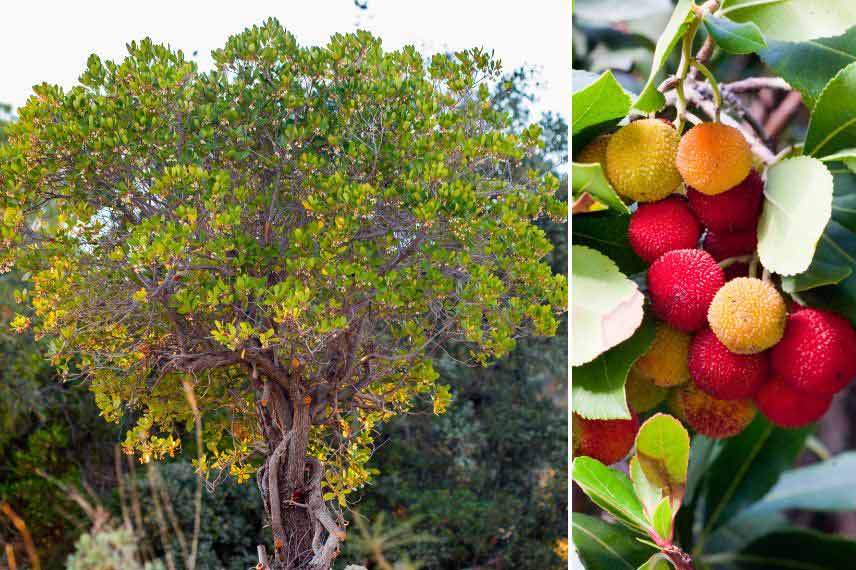
Strawberry Tree - Arbutus unedo
Nicknamed the “Strawberry Tree” due to its edible red fruits, the Strawberry Tree – Arbutus unedo is a small evergreen tree native to southern Europe and the Mediterranean. At maturity, it reaches up to 5 m in height and nearly the same in width; there are also smaller varieties, such as Arbutus unedo ‘Compacta’, ideal for small gardens where this moderate growth can be accommodated without issue.
The strawberry tree has a lovely dense and somewhat twisted silhouette, often with multiple trunks, and beautiful dark green foliage with a light green underside that remains evergreen throughout the winter. Its leathery leaves are simple and sometimes dentate at the edges. It produces a large quantity of white flowers in autumn that appear at the same time as the fruits from the previous year ripen. These are small round, edible fruits with a rough skin covered in tiny spikes, turning scarlet red at maturity. They are highly appreciated by birds that feast on them, and they can be consumed raw or cooked in compotes, jellies, or jams.
Strawberry trees are well adapted to well-drained, dry soils. They thrive in coastal gardens and tolerate salt as long as they are not exposed to direct sea spray.
→ The Strawberry Tree is a small tree typical of mild climates, which prefers regions with mild winters and fears severe frosts. In a sheltered position from cold winds, it will withstand temperatures close to -15 °C for a short period. Therefore, it can be considered for planting along the Mediterranean coasts, as well as the Atlantic coastline.
Cistus
You could talk about Cistus in the plural rather than the singular, as the genus is varied. From low, compact varieties suitable for use as groundcover in the garden, like Cistus obtusifolius, to those that are distinctly shrubby and over 1.20 m tall, such as Cistus argenteus ‘Peggy Sammons’, Cistus offer a true diversity of uses for creating dry gardens. Mediterranean shrubs par excellence, they grow spontaneously around the Mediterranean, brightening the garrigue landscapes with their flowering as the fine weather returns. Appearing fragile with their simple flowers that seem made of silk, Cistus are ultra-resistant and low-maintenance shrubs and sub-shrubs, perfectly adapted to the harsh conditions of the south. Forming dense bushes ranging from 40 cm to over 1 m in height depending on the variety, they bear evergreen foliage, often leathery, dark green or greyish, sometimes covered with small “insulating” hairs like the cottony cistus. To successfully cultivate them, it is essential to provide what they love: poor, well-drained soil, dry in summer, and a sheltered position from cold winds.
From April to June-July, depending on the climate and varieties, Cistus adorn themselves with a profusion of silky flowers, with well-opened corollas measuring 2 to 10 cm in diameter, mainly white or pink. The floral buds are countless, and each flower is replaced the following morning by others throughout the flowering period. Melliferous, they particularly attract bees and other pollinating insects.
→ Capable of withstanding temperatures down to -15 °C in well-drained soil for the hardiest like the Cistus of the Corbières (Cistus corbariensis), these Mediterranean sub-shrubs can be cultivated inland beyond their native range. They do, however, require warmth, sunlight, and dry soil in summer to thrive.
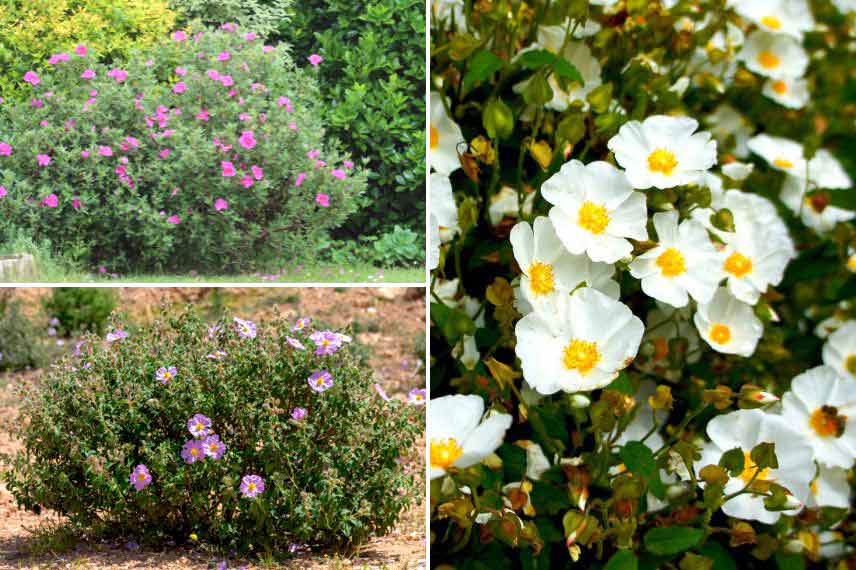
Cistus crispus, Cistus albidus, and Cistus hybridus
Glaucous Coronilla - Coronilla valentina 'Glauca'
Bright shrub among all, the Glaucous Coronilla – Coronilla valentina ‘Glauca’ is a pioneering species native to the Mediterranean basin. Forming dense bushes about 1 m in height and width, with evergreen blue-green leaves, it is covered from late January to early April with delightfully fragrant flowers of a beautiful golden yellow colour. Well-suited to calcareous soils, it thrives in stony, poor, and well-drained soils. Heat and drought do not faze it, and if the latter becomes too intense, it will limit its water loss by shedding some of its foliage. The Coronilla self-seeds easily and can help green difficult spaces such as slopes or wild corners of the garden. Its ever-green presence in the garden allows it to be happily used in beds reminiscent of garrigue, alongside other Mediterranean plants that require little care and watering.
→ Hardy down to -12 / -15 °C, the Coronilla can be planted in full sun or partial shade, even in more marked shade in warmer regions. Mulch it in winter in the coldest areas to insulate it as much as possible from the cold and place it in a warm spot in the garden, in full sun or against a south-facing wall, in soil that does not retain moisture, which would be fatal for it in winter.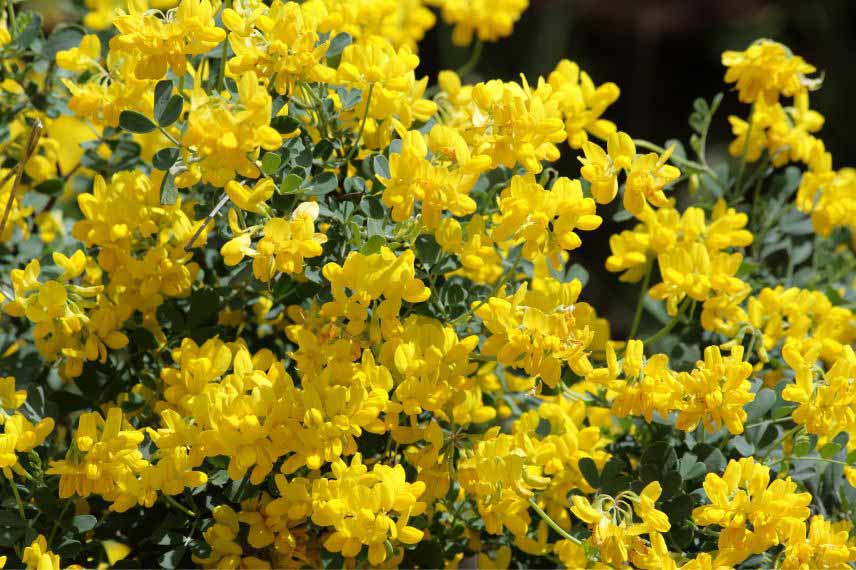
Bohemian Olive - Elaeagnus angustifolia
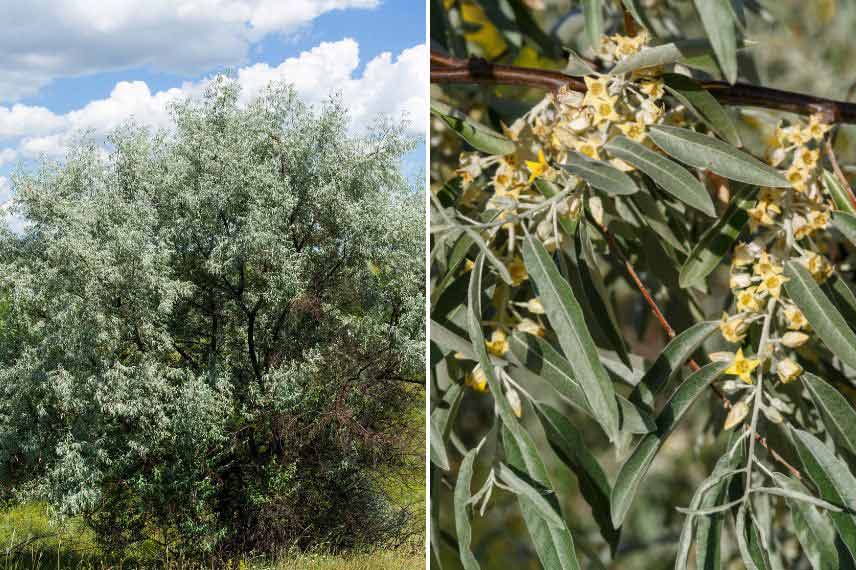
Also known as Bohemian Olive, the Elaeagnus angustifolia is a deciduous shrub native to southern Europe. Reaching a height of 5 m and a spread of 4 m through rapid growth, it forms a ramified bush with a wide and flexible habit. The leaves of the Bohemian Olive are a lovely greyish colour; they resemble those of the Olive tree, hence its common name. Beware of the strong thorns that adorn its branches! They can create true defensive hedges alongside equally thorny shrubs like Sea Buckthorns (Hippophae rhamnoides). Its small yellow flowers, delightfully fragrant, appear in May and can perfume an entire corner of the garden! In autumn, they are followed by small edible fruits that are a delight for birds.
A robust and extremely easy-to-cultivate shrub, the Bohemian Olive is indifferent to soil type, very drought-resistant, and will thrive in partial shade in warm climates or in full sun.
→ Capable of withstanding strong winds and salt spray, the Elaeagnus angustifolia is also very hardy, down to -25 °C; making it a prime candidate for many gardens across the country!
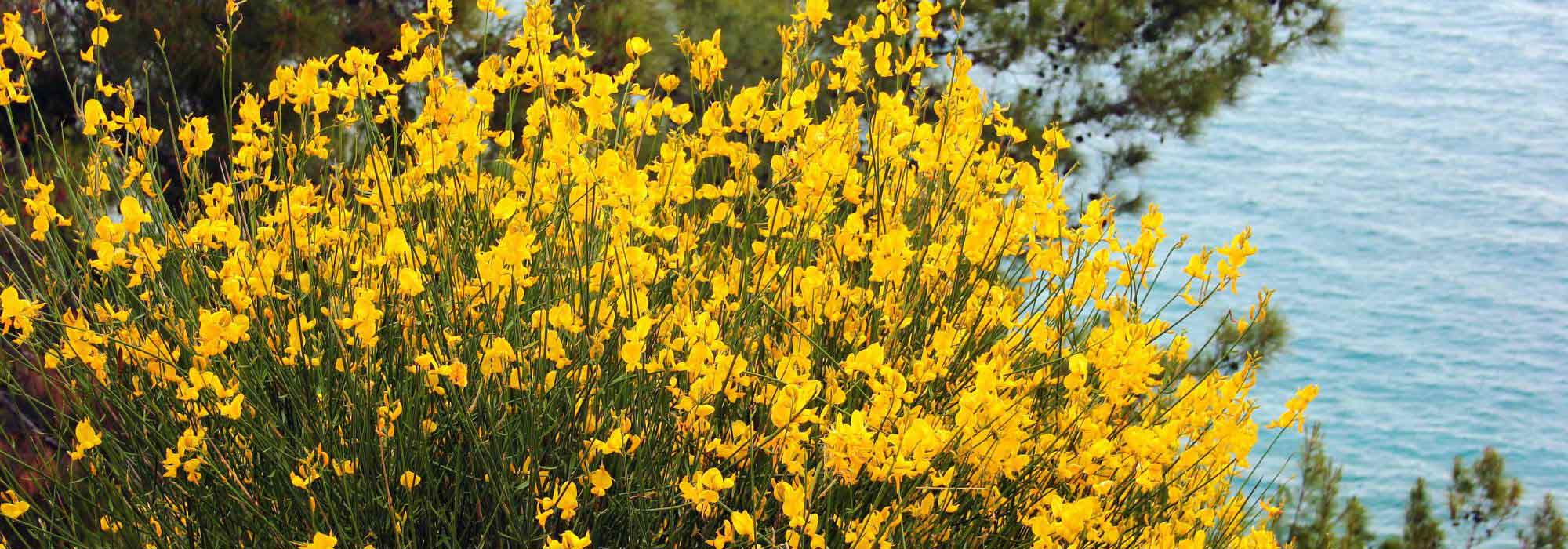
Spanish broom - Spartium junceum
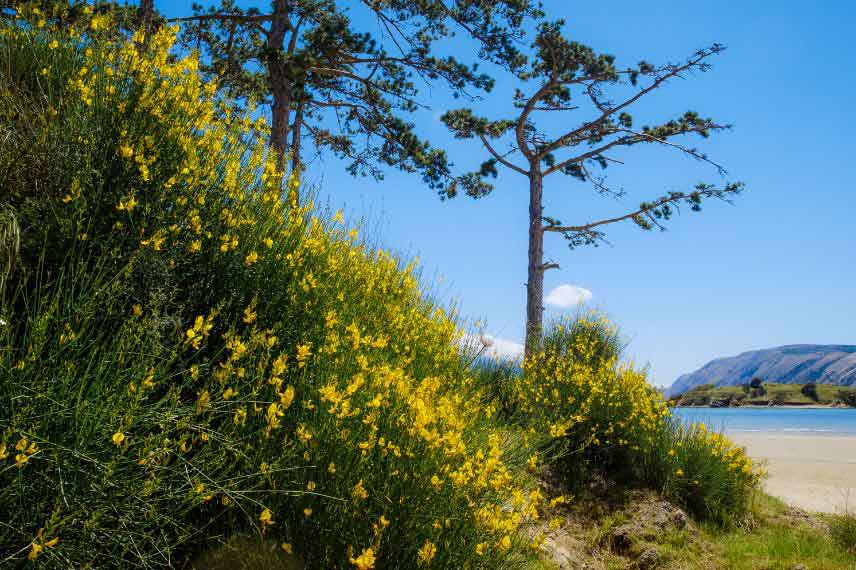
Almost indestructible once established and wonderfully drought-resistant, Spanish Broom – Spartium junceum – is also a shrub native to the Mediterranean region. Forming dense bushes that can exceed 2 m in height and 1.50 m in spread, Spanish Brooms consist of cylindrical branches bearing sparse deciduous leaves. These shrubs have the unique characteristic of carrying out photosynthesis primarily through their stems. Robust and flexible, they have long been used to make ropes and sturdy fabrics. In May-June, the Spanish Broom adorns itself with countless clusters of characteristic yellow flowers that are intensely fragrant.
Indifferent to the nature of the soil, which can be calcareous, poor, dry, and stony, Spartium junceum is typical of Mediterranean landscapes and rocky hills. It is very tolerant of soil pH, which can be acidic or even very calcareous.
→ Not fearing frost as it withstands negative temperatures of around -15 °C, the Spanish Broom can be planted in large rockeries or maintenance-free beds in many regions, provided that the soil where it is placed does not retain excess moisture in winter.
If you wish to invite them to your garden, discover 6 ideas for pairing broom plants.
Oleander - Nerium oleander
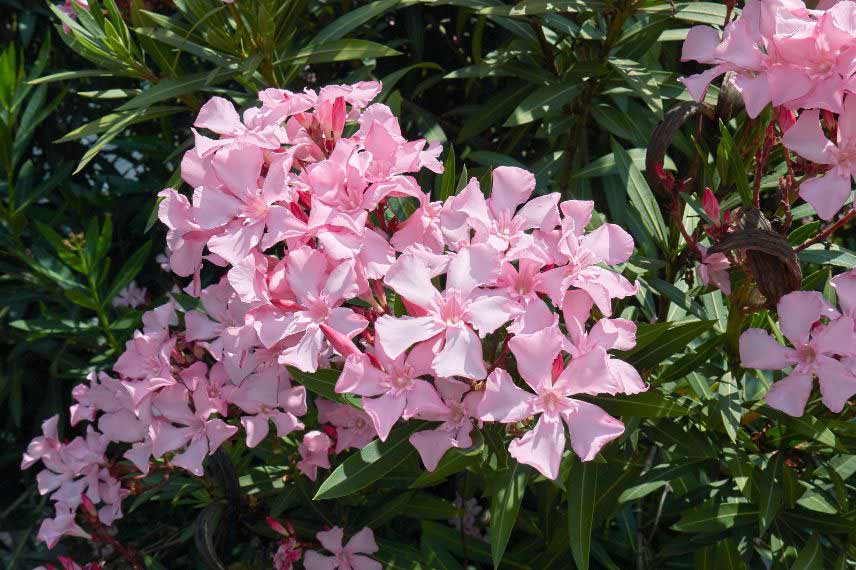
For many gardeners, the Oleander – Nerium oleander – is the iconic shrub of sunny holidays spent by the Mediterranean. Native to the banks of rivers that are generally dry in summer around the Mediterranean, Oleander can be found spontaneously in the landscapes of the Maghreb, Crete, and even Israel, as its natural range is extensive. Forming ultra-floriferous, evergreen shrubs that are easy to care for, they are, of course, popular in the gardens of the south and the Atlantic coast of our country, creating flowering hedges and enlivening flowerbeds with their cheerful colours: red, pink, yellow, salmon, or white. Their flowers are single or double depending on the variety and bloom from June to October.
With a beautiful vigour and a lovely bushy habit, resistant to drought and very accommodating, Nerium reaches an average height of 3.50 m and a spread of 3 m at maturity through rapid growth. Some compact varieties, not exceeding 1.50 m in height at maturity, are also well-suited for container cultivation. They require deep, well-drained soil, even calcareous.
→ Oleander naturally thrives in mild climates and coastal gardens. Sensitive to cold during its early years, it can, when well established, withstand short frosts of around -8/-10 °C.
Discover the 10 mistakes to avoid to ensure a beautiful flowering of your Oleander!
Common Myrtle - Myrtus communis
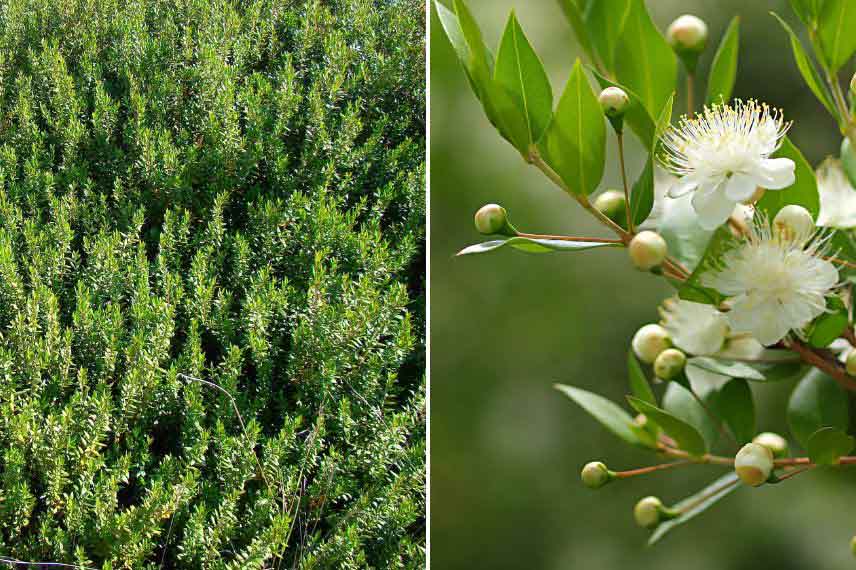
With its remarkably aromatic small leaves, the Myrtle – Myrtus communis – inevitably evokes the scrub vegetation of Corsica and Mediterranean undergrowth, from which it originates. This evergreen shrub has a truly elegant presence, with its dense, well-ramified silhouette and vibrant green colour. Depending on the growing conditions, this very bushy shrub will reach heights of 2 to 3 m, with a spread of 2 m.
From July to September, it produces beautiful white flowers with large clusters of stamens, followed by numerous almost black berries that were once used to flavour dishes and liqueurs.
This shrub deserves a prominent place in our gardens as it is both hardy and easy to cultivate: it adapts to all exposures, tolerates dry soils very well, withstands salt spray, and requires no special care once well established.
→ the Myrtle is hardy down to -10°/-12 °C; in the coldest regions, plant it in full sun against a south-facing wall, in well-draining soil, as excess moisture would be fatal in winter. Mulch it in winter, and if severe frosts are forecast, cover it with a protective fleece to insulate it from the cold as much as possible.
For further reading
→ Discover 7 tips for designing and succeeding in a Mediterranean garden and 10 iconic plants to landscape it

- Subscribe!
- Contents
Comments