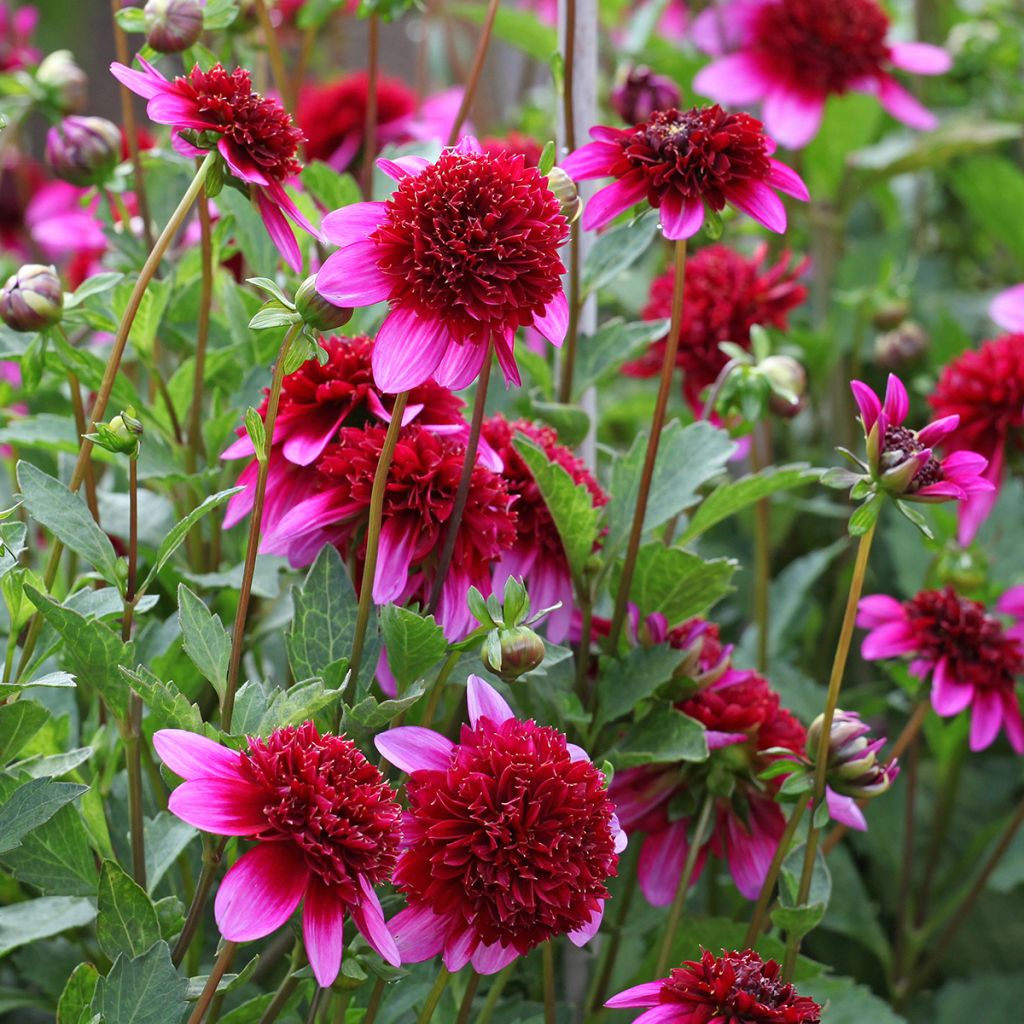
Dahlia Poodle Skirt
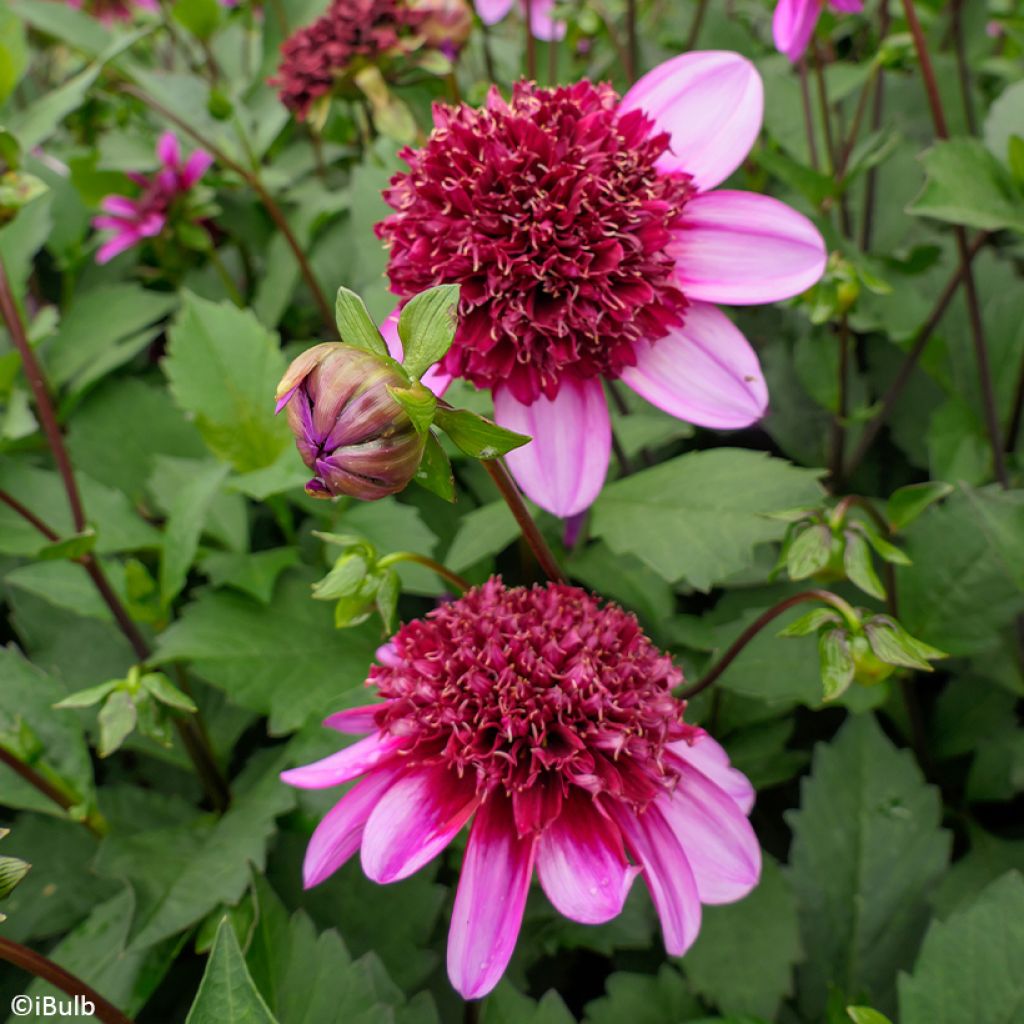
Dahlia Poodle Skirt
Dahlia Poodle Skirt
Dahlia Poodle Skirt
Anemone dahlia
Back-to-school special offer!
Get €10 off for every €50 you spend! And get up to €40 off on a single order.
How does it work?
1. Shop your favourites
Add your favourite plants to your basket. For every €50 you spend (excluding delivery charges, store credit and the plastic-free option), you’ll receive a €10 voucher.
€50 spent = €10 voucher
€100 spent = €20 voucher
€150 spent = €30 voucher
€200 spent = €40 voucher
2. Place your order
Once your basket reaches one of the spending thresholds, place your order. You can even choose your delivery date!
3. Receive your voucher
As soon as your order has been shipped, you’ll receive an email containing your personal voucher code and its value.
4. Use it on your next order
Your voucher is valid for 90 days from the date you receive it. It can be used once only, on a new order worth at least the value of the voucher, excluding delivery charges.
Please note: Vouchers can be combined with other offers, but cannot be split or refunded.
This plant carries a 6 months recovery warranty
More information
We guarantee the quality of our plants for a full growing cycle, and will replace at our expense any plant that fails to recover under normal climatic and planting conditions.
Does this plant fit my garden?
Set up your Plantfit profile →
Description
Dahlia 'Poodle Skirt' is a fairly low-growing anemone-flowered dahlia that produces highly original flowers, with a burgundy pompom-shaped centre, set upon a 'skirt' of bright pink to mauve petals, strongly curved backwards. The bush flowers continuously all summer long and until the first frosts. Its stems show excellent keeping qualities in a vase, in the garden and in pots. It will take pride of place at the front of a border or on a terrace. Its cut flowers, with a style that is both retro and very modern, add dynamism to bohemian cut flower arrangements and to more sophisticated displays.
Belonging to the Asteraceae family, Dahlia 'Poodle Skirt' is a tuberous perennial plant which distant ancestors are Mexican and Central American species. It is an anemone-flowered dahlia (Group 2), characterised by one or more ranks of flat ligules (or "petals"), here wide and violet-pink, surrounding a domed centre of densely packed tubular florets, in a deep burgundy red. The flower heads, 7 to 9 cm in diameter, are produced continuously from July until October-November. They are borne on sturdy, upright, well-ramified stems, which are less susceptible to rain and wind. To encourage further flushes of flowers, be sure to deadhead spent blooms.
The aerial growth is deciduous: the medium green foliage, divided into ovate leaflets with finely dentate edges, disappears after the first frosts, while the tubers remain in dormancy. In regions with cold winters, these tubers are dug up to be overwintered dry and frost-free.
This variety, bred in the United States in the early 2010s by Swan Island Dahlias, is now among the new introductions that have quickly won over gardeners and florists alike.
Dahlia 'Poodle Skirt' truly has a jewel-like quality. Its flower resembles a large baroque brooch, with its burgundy centre like a gold-dusted cabochon set with bright pink petals… Totally bohemian, a bit rock and roll, not at all demure! It deserves carefully chosen companions. Try pairing it with the anemone-flowered dahlia 'Blue Bayou', in mauve shades, or with 'Totally Tangerine', which warms its burgundy reflections with apricot tones. In a vase, it pairs perfectly with the pastel pompoms of dahlia 'Wizard of Oz' and with the light corollas of cosmos 'Apricot Lemonade' to maintain a very 'cut flower garden' spirit. To further accentuate its baroque side, add a few plumes of Amaranthus caudatus 'Fat Spike' : the whole then takes on the appearance of a luxurious and somewhat cheeky piece of jewellery that you want to look at closely.
The genus Dahlia has a long history: originating in Mexico, where it was cultivated by pre-Columbian peoples for its edible and medicinal tubers, it became the national flower of the country in the 20th century and one of the stars of ornamental gardens.

Dahlia Poodle Skirt in pictures
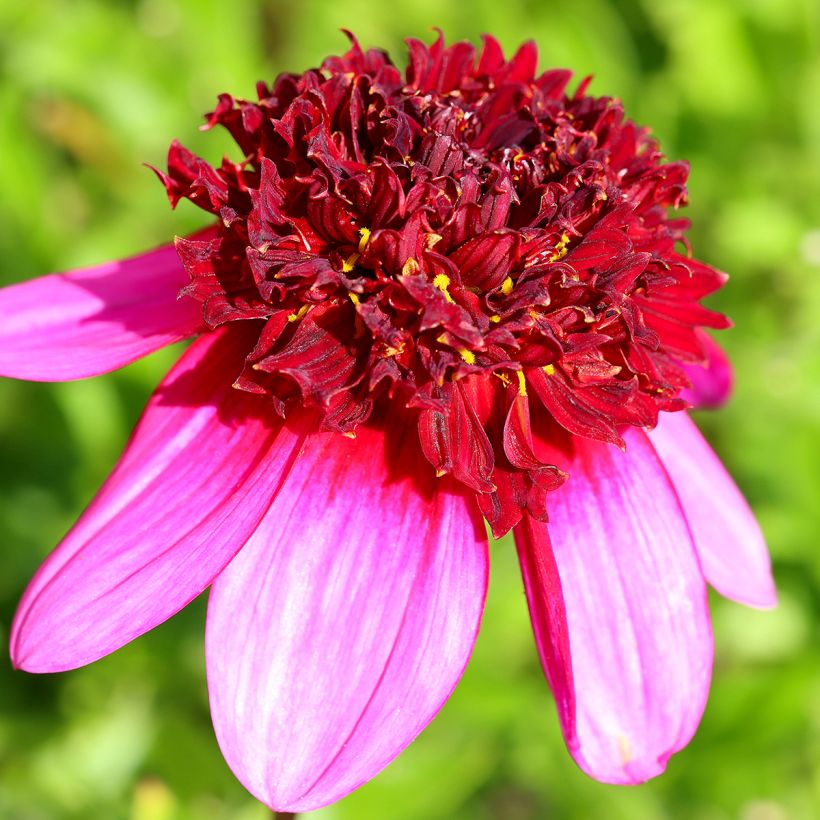
Plant habit
Flowering
Foliage
Botanical data
Dahlia
Poodle Skirt
Asteraceae
Anemone dahlia
Cultivar or hybrid
Planting and care
The Dahlia 'Poodle Skirt' is easy to to grow in all regions. For generous flowering, it is good to follow a few simple rules: plant the tubercles in a full sun position after the last frosts; rich, cool, and well-drained soils are perfect. However, stagnant moisture would encourage the tubercles to rot. Do not hesitate to amend the soil with compost and sand if needed. Work the soil deeply and enrich it, for example, with ground horn or dried blood. Place your tubercle and crumble the soil well to backfill without air pockets. Your dahlia should be covered with about 6 cm of soil. At the end of planting, water thoroughly once and then repeat this watering regularly for the first 6 weeks to help with root establishment.
Dahlias are sensitive to cold and need to be overwintered. In November, the first frosts will blacken the leaf, which is the time to lift them. Dig up the tubercles carefully. Remove as much soil as possible. Allow the leaf to dry so the tubercles can replenish their reserves. Then cut the stems to 10 cm. Spread your bulbs in a crate on newspaper. Store in a frost-free place in a dry, cool, and dark location, such as a frost-free garage or an attic.
In southern regions, close to the coast, experiencing only a few frosty days per year, it is possible to leave them in place. In this case, simply cover the soil with a carpet of leaves or straw as protection.
Planting period
Intended location
Care
Planting & care advice








This item has not been reviewed yet - be the first to leave a review about it.
Recently viewed products
Haven't found what you were looking for?
Hardiness is the lowest winter temperature a plant can endure without suffering serious damage or even dying. However, hardiness is affected by location (a sheltered area, such as a patio), protection (winter cover) and soil type (hardiness is improved by well-drained soil).
In temperate climates, pruning of spring-flowering shrubs (forsythia, spireas, etc.) should be done just after flowering.
Pruning of summer-flowering shrubs (Indian Lilac, Perovskia, etc.) can be done in winter or spring.
In cold regions as well as with frost-sensitive plants, avoid pruning too early when severe frosts may still occur.
The harvesting period indicated on our website applies to countries and regions in USDA zone 8 (France, England, Ireland, the Netherlands).
In colder areas (Scandinavia, Poland, Austria...) fruit and vegetable harvests are likely to be delayed by 3-4 weeks.
In warmer areas (Italy, Spain, Greece, etc.), harvesting will probably take place earlier, depending on weather conditions.
The sowing periods indicated on our website apply to countries and regions within USDA Zone 8 (France, UK, Ireland, Netherlands).
In colder areas (Scandinavia, Poland, Austria...), delay any outdoor sowing by 3-4 weeks, or sow under glass.
In warmer climes (Italy, Spain, Greece, etc.), bring outdoor sowing forward by a few weeks.
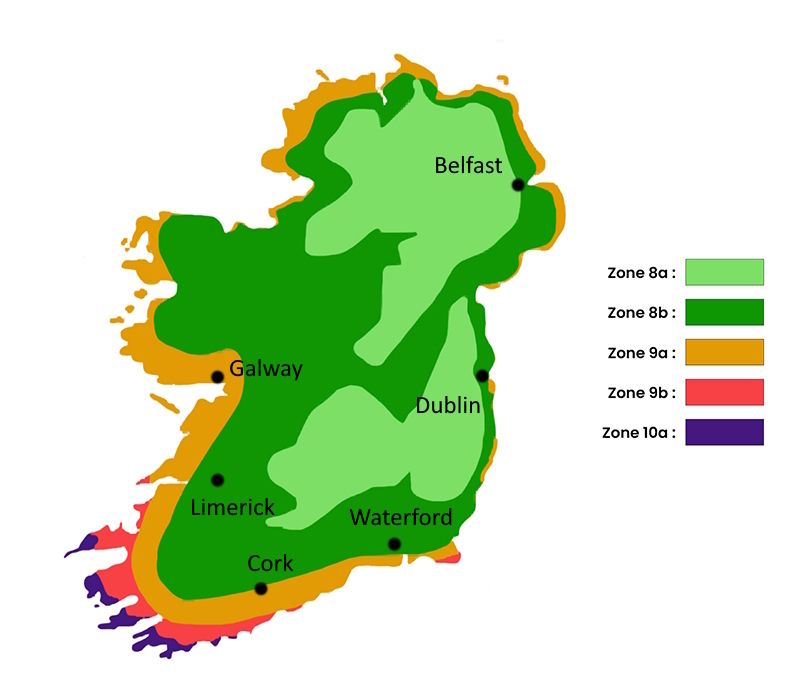
The planting period indicated on our website applies to regions in USDA Zone 9a (East Coast and Midlands: Dublin, Wexford, Waterford, Kilkenny, Portlaoise). It will vary depending on where you live:
- On the west coast and in the north-west (Galway, Limerick, Sligo, Donegal, Westport), delay planting by 1 to 2 weeks in spring and bring it forward by 1 to 2 weeks in autumn compared to the dates given, preferably choosing periods without strong winds.
- In the inland hills and plateaus (Wicklow Mountains, Macgillycuddy’s Reeks, Connemara, Killarney), it is best to plant in spring (April–May) or autumn (September–October), avoiding periods of waterlogged soil in winter and strong winds, which pose the main risk to newly planted trees in these areas.
The flowering period indicated on our website applies to regions in USDA Zone 9a, such as the East Coast and Midlands, including Dublin, Wexford, Waterford, Kilkenny and Portlaoise.
This will vary depending on where you live:
- On the west coast and in the northwest (Galway, Limerick, Sligo, Donegal and Westport), it will be delayed by one to two weeks compared to the given dates, due to stronger Atlantic winds and less spring sunshine.
- In the inland hills and plateaus (the Wicklow Mountains, the Macgillycuddy's Reeks, Connemara and Killarney), flowering will be delayed by two to three weeks. Flowering mainly occurs between May and July, with the limiting factors being less frost and more of the excessive humidity, strong winds and lack of sunshine that are characteristic of these areas.
Shipping country and language
Your country of residence may be:
Your country of residence is:
For a better user experience on our website, you can select:
Your shipping country:
-
 Austria
-
 Belgium
-
 Bosnia & Herzegovina
-
 Bulgaria
-
 Croatia
-
 Cyprus
-
 Czechia
-
 Denmark
-
 Estonia
-
 Finland
-
 France
-
 Germany
-
 Greece
-
 Hungary
-
 Iceland
-
 Ireland
-
 Italy
Italy
-
 Latvia
-
 Liechtenstein
-
 Lithuania
-
 Luxembourg
-
 Malta
Malta
-
 Netherlands
-
 Poland
-
 Portugal
-
 Romania
-
 Serbia
-
 Slovakia
-
 Slovenia
-
 Spain
Spain
-
 Sweden
-
 Switzerland
Language:
-
French
-
 English
-
Spanish
-
Italian
-
German
-
Portuguese
-
Dutch
-
Finnish
My Account
Hello
My wish lists
My cart
Log in / Register
Existing customer?
This form is protected by reCAPTCHA - the Google Privacy Policy and Terms of Service apply.
New customer?
Create an account to track your orders, access our customer service and, if you wish, make the most of our upcoming offers.