Punica granatum Black Fruit - Pomegranate
Punica granatum Black Fruit - Pomegranate
Punica granatum Black Fruit - Pomegranate
Punica granatum Black Fruit
Pomegranate
Very beautiful tree, well-formed. Received very well packaged. Placed near another classic pomegranate plant, already well-established. Thanks to Promesse de fleurs for the selection, the quality of the young plants, and the responsiveness in case of any concerns.
Edwige, 07/08/2020
Back-to-school special offer!
Get €10 off for every €50 you spend! And get up to €40 off on a single order.
How does it work?
1. Shop your favourites
Add your favourite plants to your basket. For every €50 you spend (excluding delivery charges, store credit and the plastic-free option), you’ll receive a €10 voucher.
€50 spent = €10 voucher
€100 spent = €20 voucher
€150 spent = €30 voucher
€200 spent = €40 voucher
2. Place your order
Once your basket reaches one of the spending thresholds, place your order. You can even choose your delivery date!
3. Receive your voucher
As soon as your order has been shipped, you’ll receive an email containing your personal voucher code and its value.
4. Use it on your next order
Your voucher is valid for 90 days from the date you receive it. It can be used once only, on a new order worth at least the value of the voucher, excluding delivery charges.
Please note: Vouchers can be combined with other offers, but cannot be split or refunded.
Why not try an alternative variety in stock?
View all →
Available in 2 sizes
Available in 2 sizes
Available in 1 sizes
Available in 1 sizes
Available in 2 sizes
Available in 1 sizes

Available in 1 sizes
Available in 1 sizes
Available in 1 sizes
Available in 1 sizes
This plant carries a 12 months recovery warranty
More information
We guarantee the quality of our plants for a full growing cycle, and will replace at our expense any plant that fails to recover under normal climatic and planting conditions.

Description
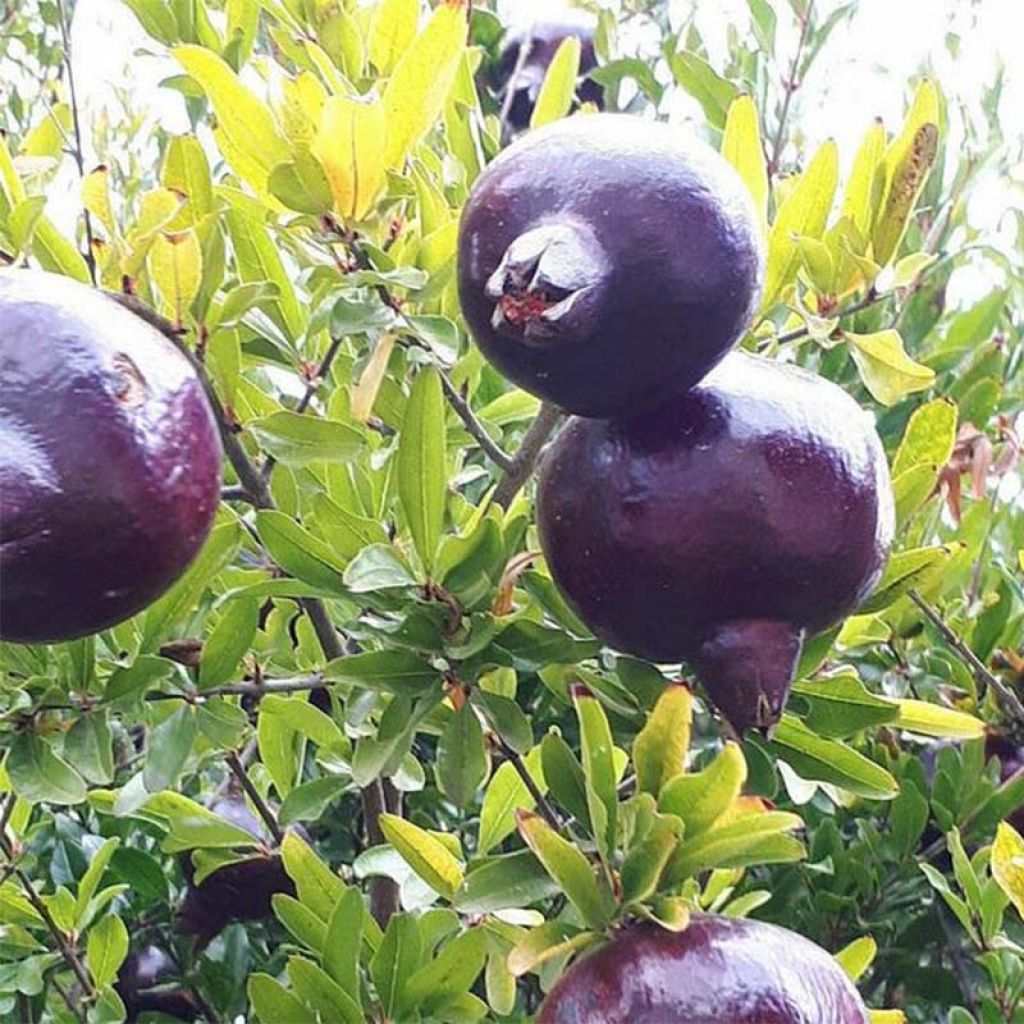
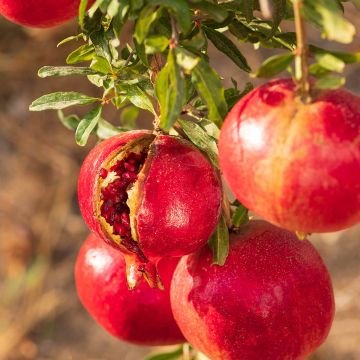
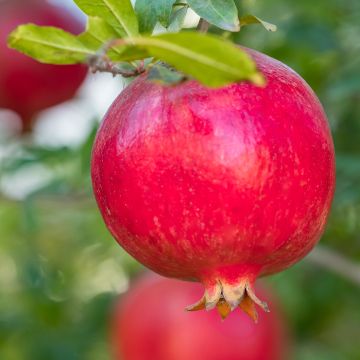
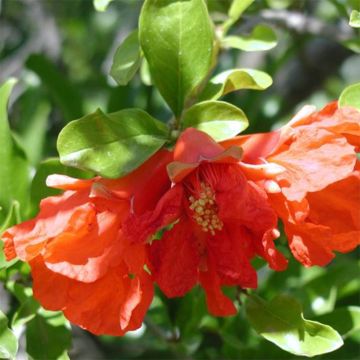
Punica granatum 'Black Fruit' is a variety of pomegranate rare in cultivation, distinguished by the almost black colour of its fruits. They contain juicy, red grains of balanced flavour, both acidic and sweet, pleasant in the mouth. The crumpled, bright orange flowers of this small tree, are also very decorative in summer, as is its golden foliage in autumn. It is a cultivar relatively resistant to cold, but requires a summer that is both long and hot to ripen its fruits, in late October or early November in warmer regions. This fruit tree can be planted all year round (except during frost), but preferably in autumn, in any deep and well-draining soil, even relatively dry.
The Black Fruits pomegranate is a self-fertile cultivar of uncertain origin, possibly Italian or Portuguese. Its ancestor, the Punica granatum, is a small tree or large shrub belonging to the Lythraceae family, related to the purple loosestrife (Lythrum salicaria) widespread near watercourses. It is native to a vast region that covers southeastern Europe and extends eastward to the Himalayas. It is a long-lived species, capable of living up to 200 years.
'Black Fruits' first forms a clump of thorny and tangled branches in its youth, showing fairly rapid growth until maturity, which does not occur before the age of 5-6 years. The adult plant develops at a much slower pace, forming after a few years a small tree about 3-4 m (9 ft 10 in-13 ft 1 in) tall and at least 2.50 m (8 ft 2 in) wide, with a spreading and rounded habit. From a clump it can become a tree supported by a trunk with twisted appearance, reminiscent of olive trees, if pruned.
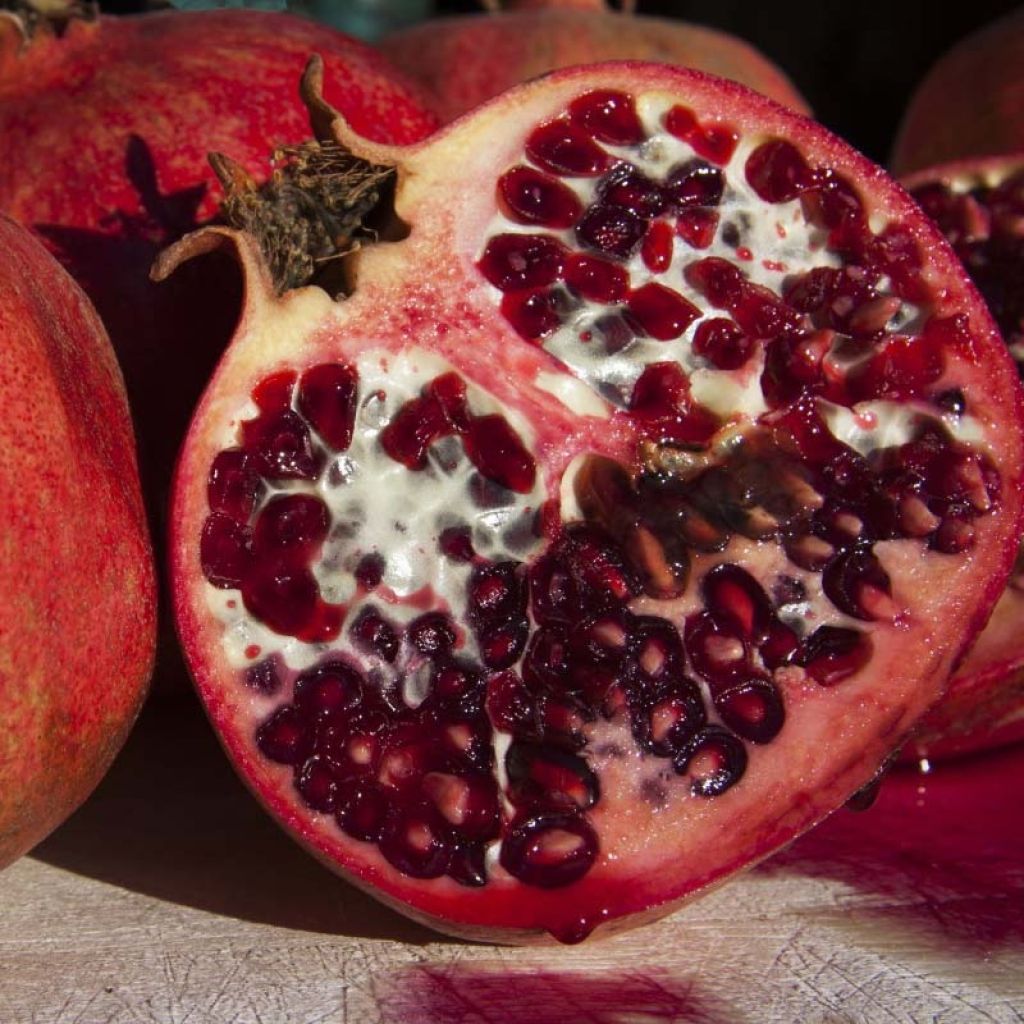
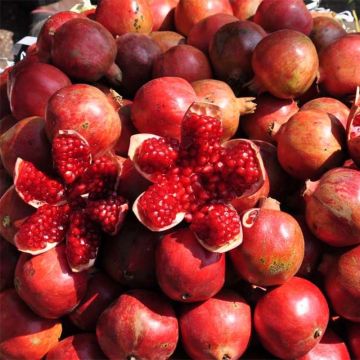
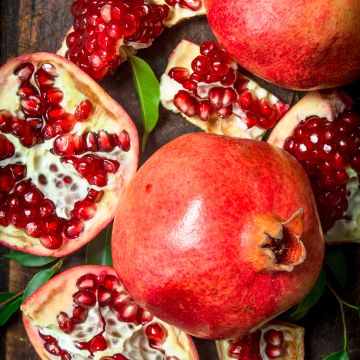
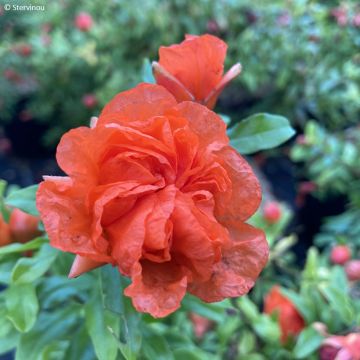
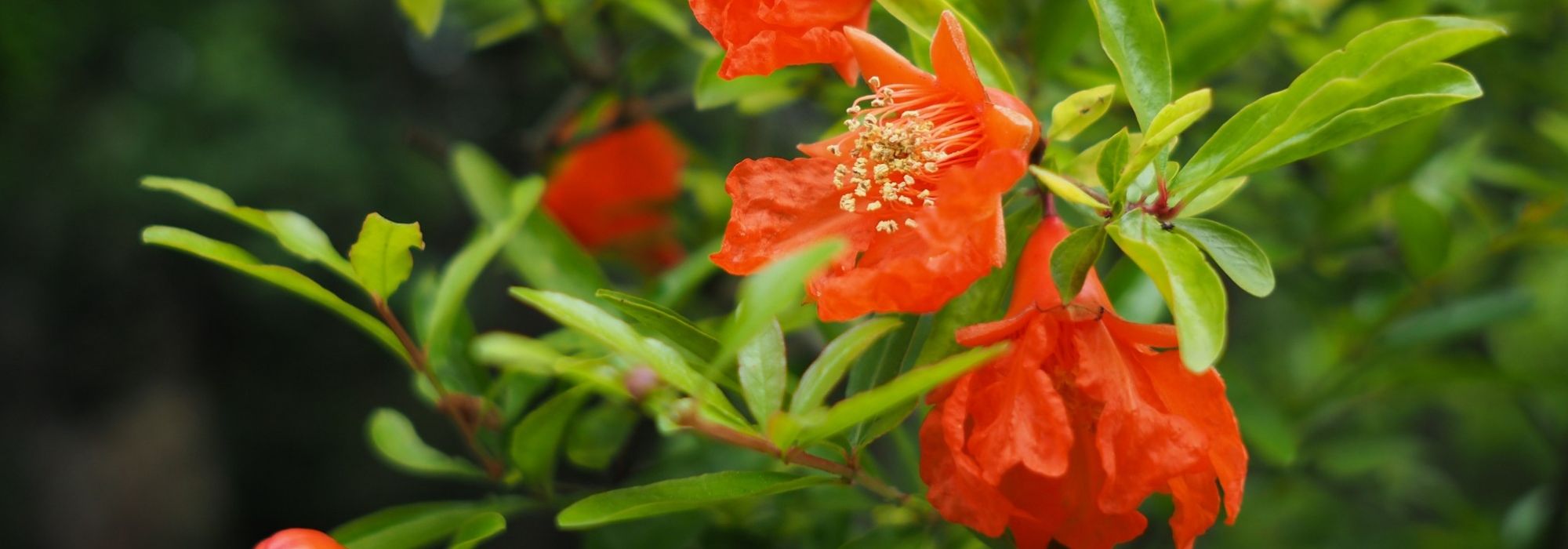
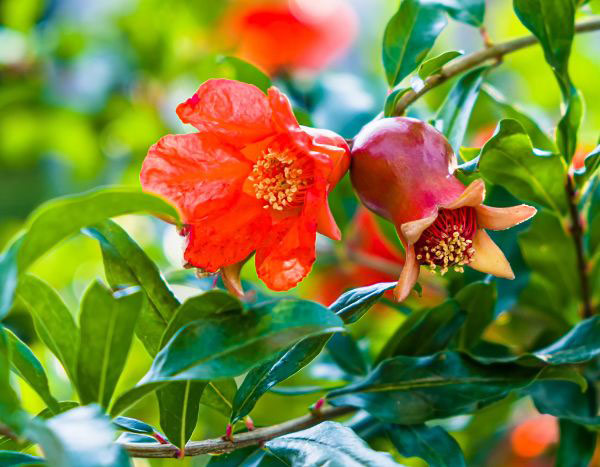
Flowering occurs abundantly in June-July, and then more sporadically throughout the summer. The flowers measure about 4 cm (1.6 in) in diameter. They are composed of crumpled, orange petals tinged with red, emerging from a thick waxy-textured calyx that already evokes the future pomegranate. The pomegranates produced by this variety are curiously coloured black when ripe. These are round fruits, about the size of an apple. The interior consists of thick white membranes, containing multiple seeds surrounded by a very juicy red pulp. It is these fleshy grains, called arils, that are consumed. Pomegranates are used to make the famous grenadine syrup, but they can also be consumed as juice, sorbet, in pastries, fruit salads, mixed salads, or as an accompaniment to poultry. Rich in antioxidants and vitamins, pomegranate is a refreshing fruit with a slightly sour and sweet flavour. It is harvested in autumn, about 4 to 5 months after flowering. Pick the fruits when the skin becomes very dark and just begins to crack. Pomegranates do not ripen further after harvest but can be stored for several months in a cool and dry place. The first fruits appear on the pomegranate from the fourth or fifth year of cultivation.
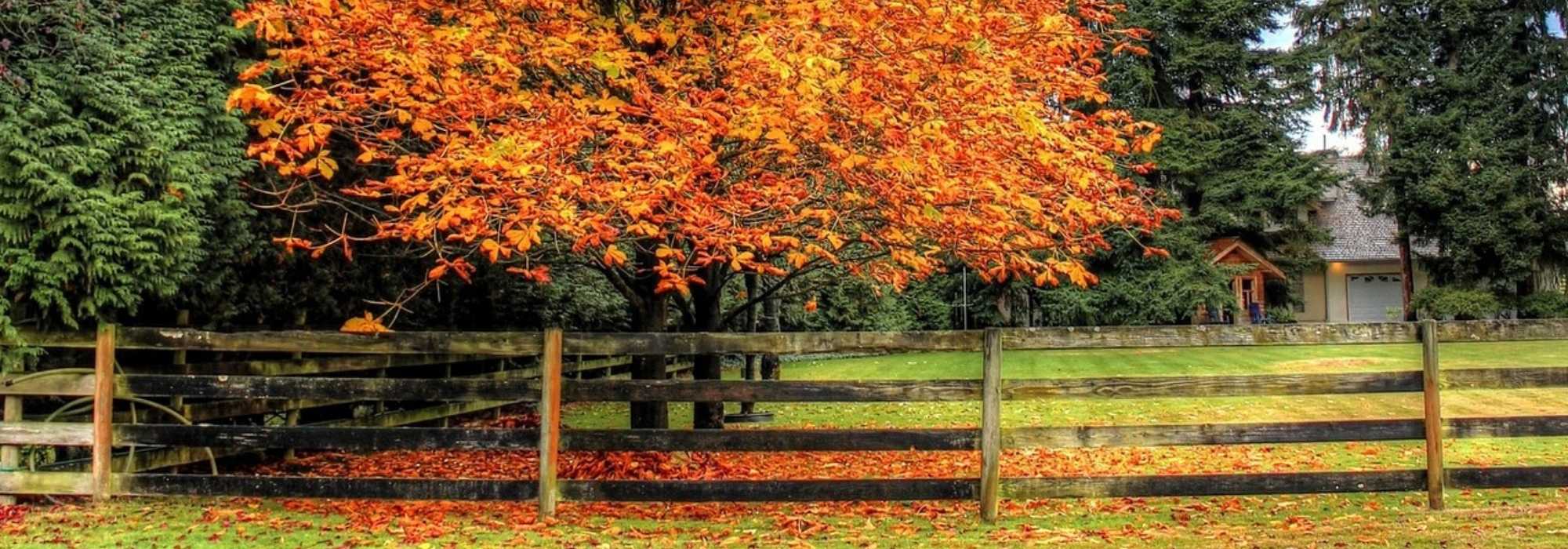
The deciduous foliage is composed of small, thick, shiny, and very vibrant green oval leaves. They emerge bronze to purple in spring and turn golden yellow before falling in autumn.
Symbol of abundance like its emblematic ancestor of ancient civilizations, the Black Fruit pomegranate is a magnificent subject to be planted in an isolated position in a warm location. Hardy down to -13/-15°C (8.6/5 °F), it will grow without any problems wherever olive trees and fig trees manage to survive. However, its magnificent fruits generally only ripen in the southernmost regions. It can also be used in a large Mediterranean fruit hedge, associated with Osage orange, bitter orange, a small fig tree (Dalmatia, Golden), Japanese medlar, etc.
The city of Granada, a crossroads of Arab and Andalusian civilizations located in southern Spain, owes its name to the presence of the pomegranate, brought by the Moors and widely planted in the mythical gardens of the Alhambra palace. This tree also adorned the Hanging Gardens of Babylon, and the Romans discovered it in Carthage, naming it the Carthaginian Apple.
Plant habit
Fruit
Flowering
Foliage
Botanical data
Punica
granatum
Black Fruit
Punicaceae
Pomegranate
Cultivar or hybrid
Planting and care
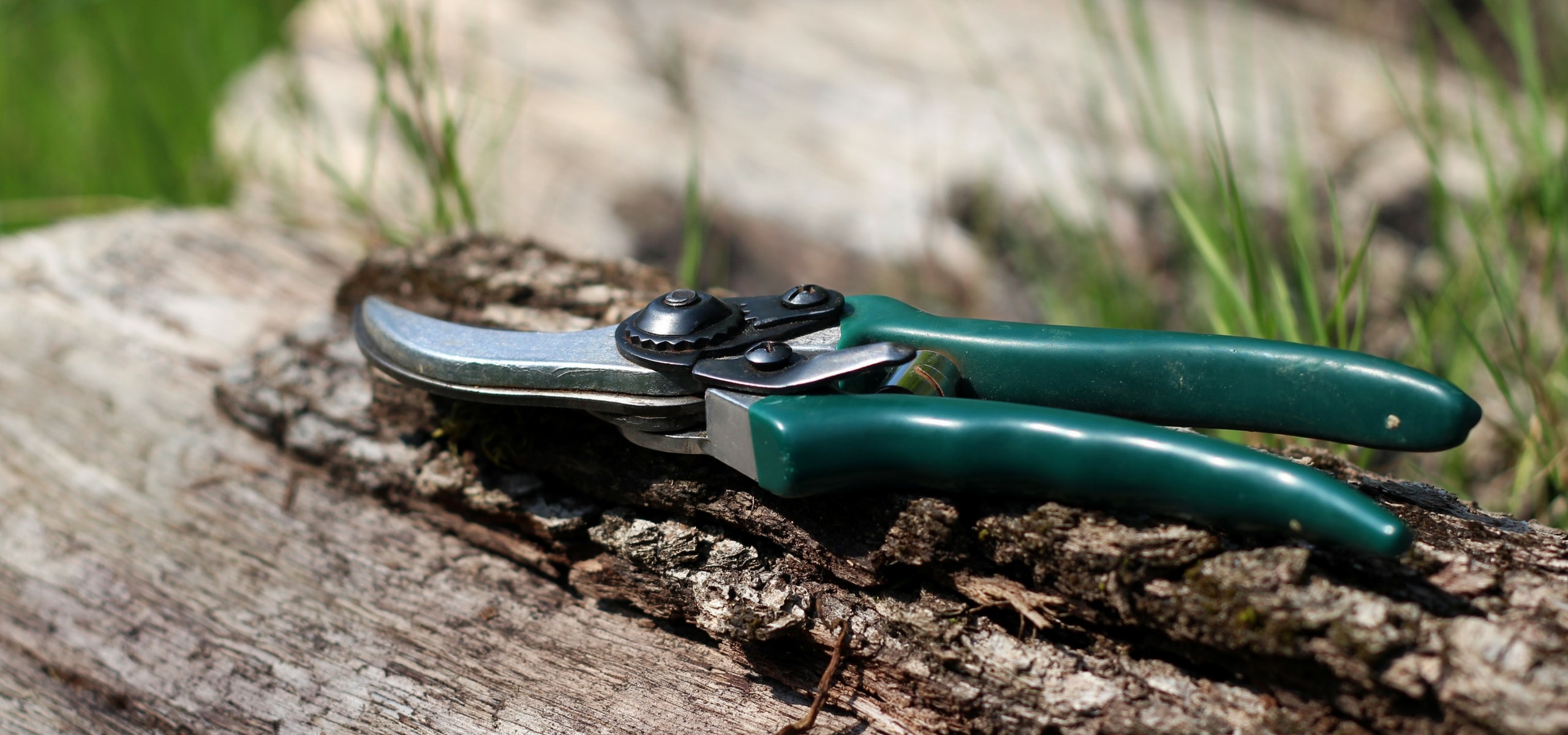
We recommend planting the Punica granatum Black Fruit in spring when there is no longer a risk of frost, in cool regions, autumn in hot and dry climates. Install it in a very sunny and sheltered location, or in partial shade in hot climates, in deep, loose, even limestone soil. While it can withstand drought once established and can tolerate arid conditions, it will only reach its full potential and bear abundant fruit in soil that is sufficiently moist and deep. It also tolerates sea spray well. Monitor watering during the first two summers. It will benefit from the addition of compost and a thick layer of dead leaves, especially during the first two winters in slightly colder regions. Pruning in early spring can help shape the tree into a single-trunked or beautifully multi-trunked tree more quickly: keep the most vigorous stem(s) and remove the others from a young plant. In the following years, systematically remove any new branches that emerge from the main stem(s) until the desired height is reached. Note: only branches that are 3 years or older will flower and bear fruit, typically on the outer part of the crown.
The pomegranate tree doesn't have any specific enemies; it is a very robust species. Some scale insects may settle on it, but they don't cause significant damage to the tree.
Propagation can be done through cuttings of dry wood in winter or herbaceous cuttings in spring.
Planting period
Intended location
Care
Planting & care advice
-
-

-
-
-
-
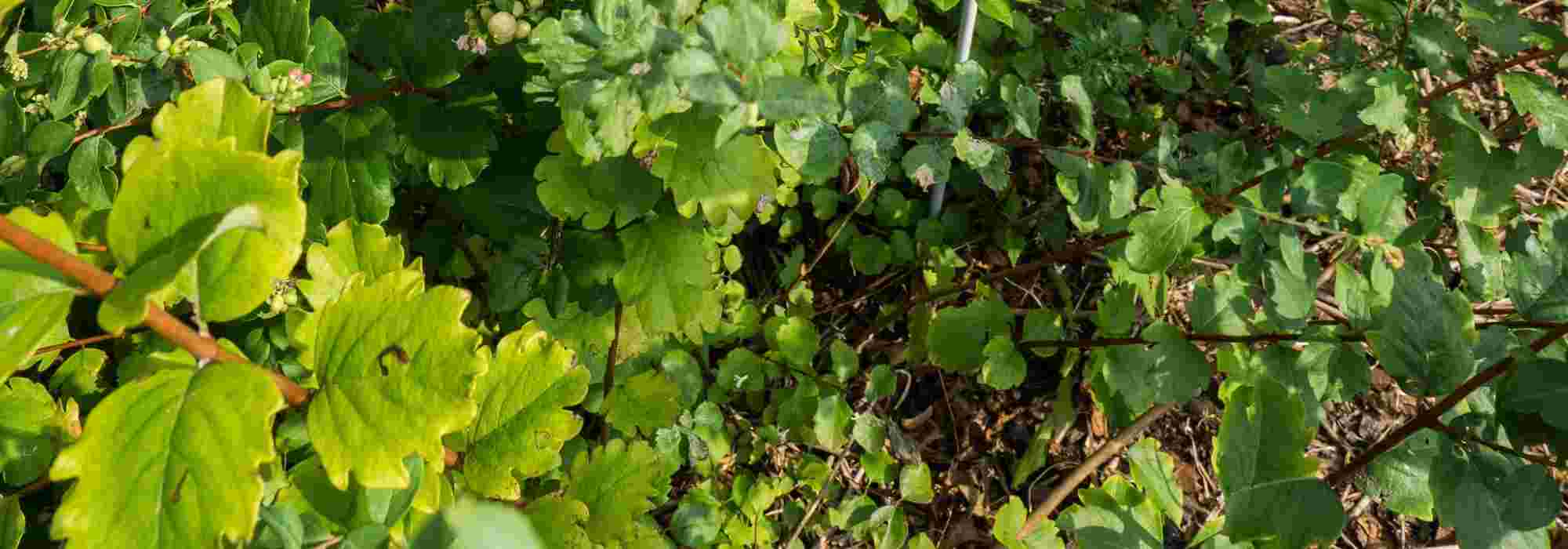
-
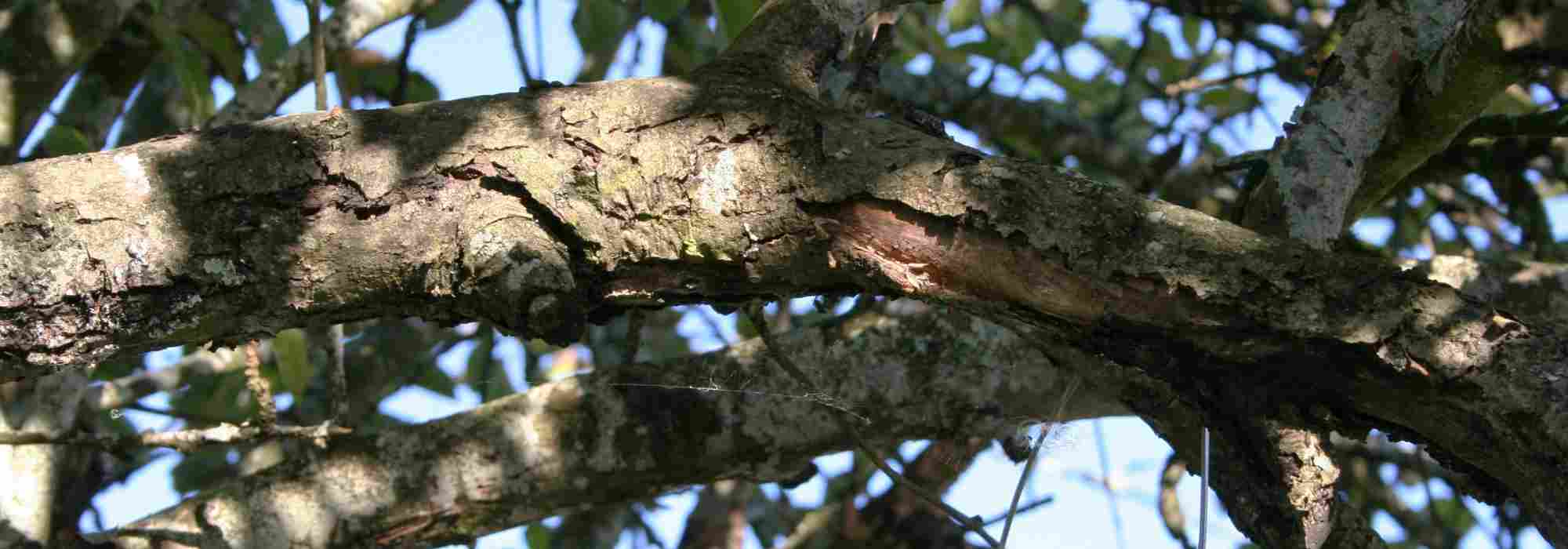
-

-
, onOrder confirmed
Reply from on Promesse de fleurs
Recently viewed products
Haven't found what you were looking for?
Hardiness is the lowest winter temperature a plant can endure without suffering serious damage or even dying. However, hardiness is affected by location (a sheltered area, such as a patio), protection (winter cover) and soil type (hardiness is improved by well-drained soil).
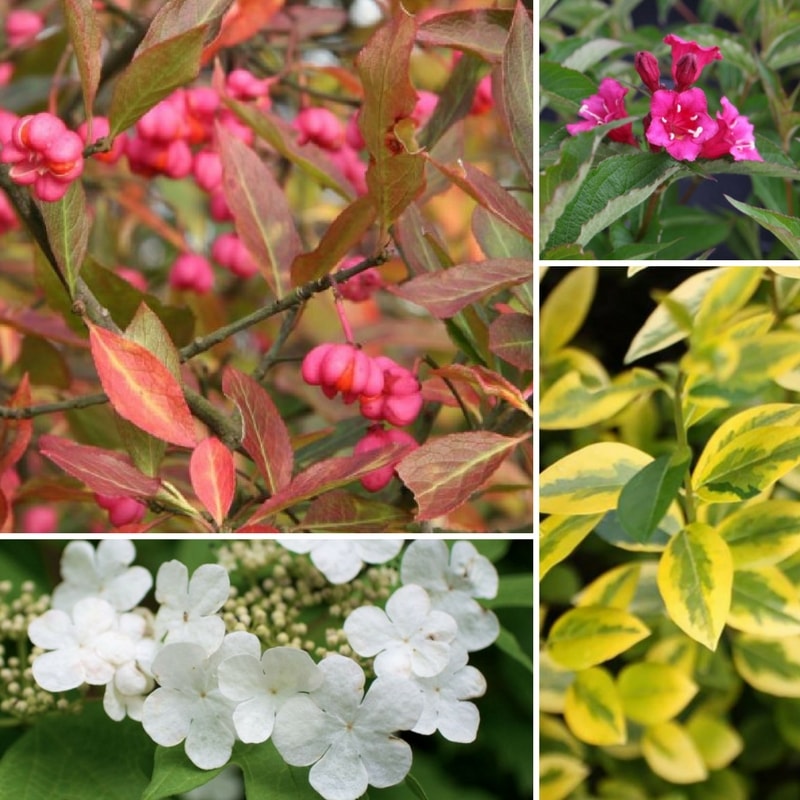
In temperate climates, pruning of spring-flowering shrubs (forsythia, spireas, etc.) should be done just after flowering.
Pruning of summer-flowering shrubs (Indian Lilac, Perovskia, etc.) can be done in winter or spring.
In cold regions as well as with frost-sensitive plants, avoid pruning too early when severe frosts may still occur.
The harvesting period indicated on our website applies to countries and regions in USDA zone 8 (France, England, Ireland, the Netherlands).
In colder areas (Scandinavia, Poland, Austria...) fruit and vegetable harvests are likely to be delayed by 3-4 weeks.
In warmer areas (Italy, Spain, Greece, etc.), harvesting will probably take place earlier, depending on weather conditions.
The sowing periods indicated on our website apply to countries and regions within USDA Zone 8 (France, UK, Ireland, Netherlands).
In colder areas (Scandinavia, Poland, Austria...), delay any outdoor sowing by 3-4 weeks, or sow under glass.
In warmer climes (Italy, Spain, Greece, etc.), bring outdoor sowing forward by a few weeks.
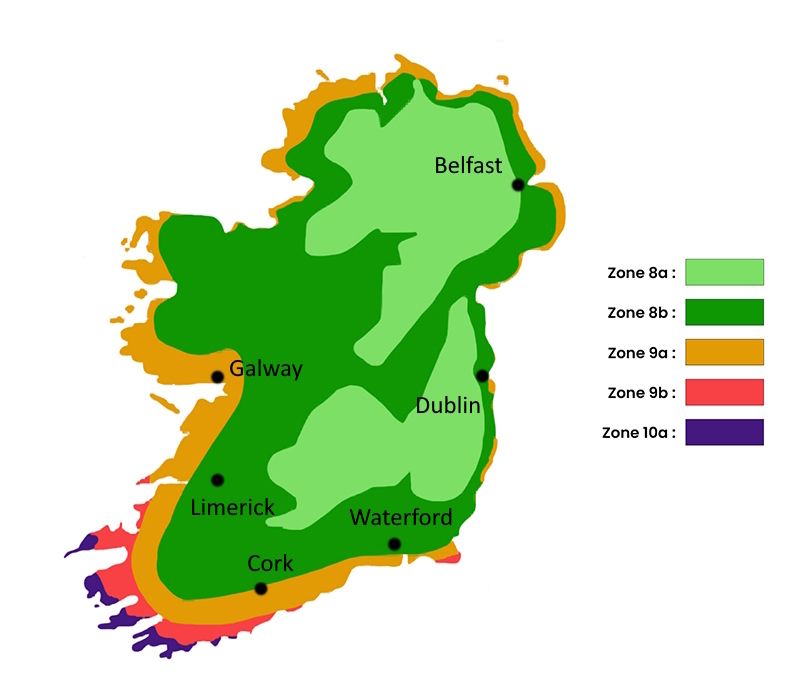
The planting period indicated on our website applies to regions in USDA Zone 9a (East Coast and Midlands: Dublin, Wexford, Waterford, Kilkenny, Portlaoise). It will vary depending on where you live:
- On the west coast and in the north-west (Galway, Limerick, Sligo, Donegal, Westport), delay planting by 1 to 2 weeks in spring and bring it forward by 1 to 2 weeks in autumn compared to the dates given, preferably choosing periods without strong winds.
- In the inland hills and plateaus (Wicklow Mountains, Macgillycuddy’s Reeks, Connemara, Killarney), it is best to plant in spring (April–May) or autumn (September–October), avoiding periods of waterlogged soil in winter and strong winds, which pose the main risk to newly planted trees in these areas.
The flowering period indicated on our website applies to regions in USDA Zone 9a, such as the East Coast and Midlands, including Dublin, Wexford, Waterford, Kilkenny and Portlaoise.
This will vary depending on where you live:
- On the west coast and in the northwest (Galway, Limerick, Sligo, Donegal and Westport), it will be delayed by one to two weeks compared to the given dates, due to stronger Atlantic winds and less spring sunshine.
- In the inland hills and plateaus (the Wicklow Mountains, the Macgillycuddy's Reeks, Connemara and Killarney), flowering will be delayed by two to three weeks. Flowering mainly occurs between May and July, with the limiting factors being less frost and more of the excessive humidity, strong winds and lack of sunshine that are characteristic of these areas.
Shipping country and language
Your country of residence may be:
Your country of residence is:
For a better user experience on our website, you can select:
Your shipping country:
-
 Austria
-
 Belgium
-
 Bosnia & Herzegovina
-
 Bulgaria
-
 Croatia
-
 Cyprus
-
 Czechia
-
 Denmark
-
 Estonia
-
 Finland
-
 France
-
 Germany
-
 Greece
-
 Hungary
-
 Iceland
-
 Ireland
-
 Italy
Italy
-
 Latvia
-
 Liechtenstein
-
 Lithuania
-
 Luxembourg
-
 Malta
Malta
-
 Netherlands
-
 Poland
-
 Portugal
-
 Romania
-
 Serbia
-
 Slovakia
-
 Slovenia
-
 Spain
Spain
-
 Sweden
-
 Switzerland
Language:
-
French
-
 English
-
Spanish
-
Italian
-
German
-
Portuguese
-
Dutch
-
Finnish
My Account
Hello
My wish lists
My cart
Log in / Register
Existing customer?
This form is protected by reCAPTCHA - the Google Privacy Policy and Terms of Service apply.
New customer?
Create an account to track your orders, access our customer service and, if you wish, make the most of our upcoming offers.