





























8 myths about roses
to set the record straight about roses
Contents
Even though the rose is the undisputed symbol of love and romance, it must be admitted that the bush does not have only enthusiasts, due to the misconceptions surrounding this beautiful plant. Often regarded as a difficult plant to maintain or prune, the bush is, in fact, one of the most cultivated plants in our gardens. It’s not so hard when you know the right techniques! And you? Do you really know everything about bushes? Discover with us the truth behind the misconceptions surrounding the bush.

Roses should be pruned regularly to produce more flowers
Pruning roses is no more difficult than pruning other shrubs in the garden. You can even let it grow freely without giving it a single cut with pruning shears, but it will then be less floriferous and produce dead wood. So, to enjoy its beautiful flowers and a healthy rose bush, you need to make a small effort: prune it at least once a year. Conversely, excessive pruning can be detrimental to some roses. Except for modern hybrids, which are pruned quite short, others should be pruned little, by one-third or even half of each branch.
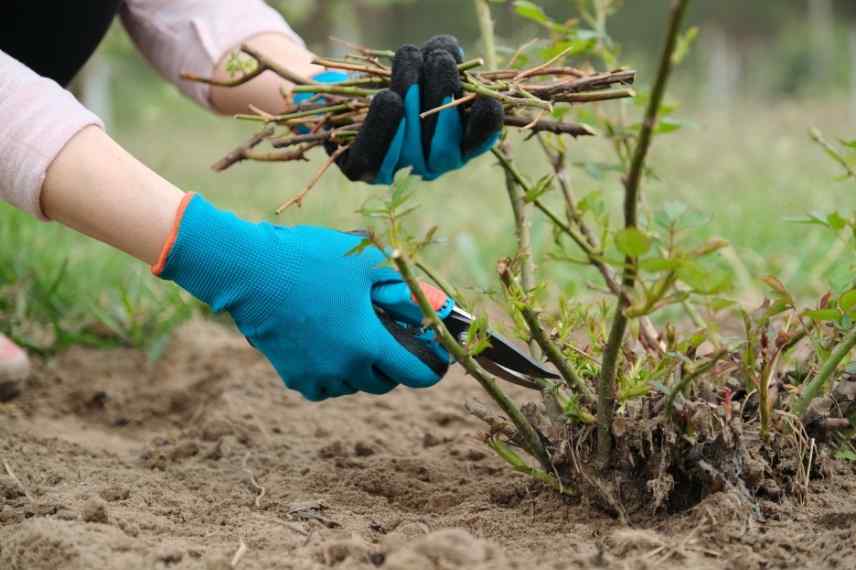
You need to start by distinguishing whether your rose belongs to the repeat-flowering varieties (that is, those that bloom twice a year) or the non-repeat-flowering varieties (which have a single bloom in spring). Repeat-flowering roses should be pruned at the end of winter, between February and April depending on your region. Non-repeat-flowering roses should be pruned after flowering, around July-August.
Then arm yourself with a good pruning shear and a lopper that have been disinfected before use. Also equip yourself with thick gloves to protect your hands from thorns. Simply cut away dead, diseased, unsightly branches and those that hinder good air circulation within the bush. If it becomes too large, shorten it by cutting each branch at an angle, 5 mm above a bud. And rest assured, as the rose is not resentful; even if poorly pruned, it will produce new flowering branches. Don’t be afraid, even if you are a beginner, as it is through practice that one learns.
Read also
6 highly fragrant white rosesRoses are often diseased
Which gardener, in their early days, hasn’t thrown their hands up in despair, exclaiming, “Help, my roses are sick!” upon seeing small spots on the beautiful foliage? Indeed, roses can catch a few diseases in the garden, notably powdery mildew or the infamous black spot. These diseases are generally not serious for the survival of the rose, but they are rather unsightly and can lead to a decrease in flowering. They are usually caused by heat, linked to heavy rainfall. When symptoms are spotted in time, treating these diseases is straightforward.
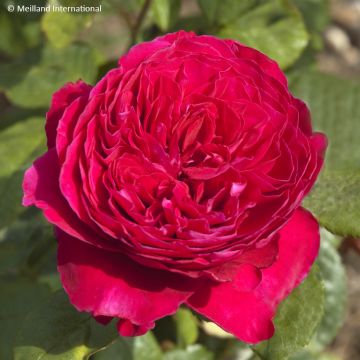
There are also disease-resistant and vigorous rose varieties, particularly the ADR-certified roses (Anerkannte Deutsche Rose). Over 100 varieties have received this demanding certification based on criteria such as disease resistance, abundant flowering, good flower longevity, and fragrance. Among them is the excellent groundcover rose ‘Mirato’, with healthy foliage and fuchsia pink flowers. Among the many bush roses, we highlight the famous cluster-flowered rose ‘Red Leonardo da Vinci’, known for its excellent resistance to rain. Not to forget the climbing rose ‘Jasmina’ for its repeat flowering.
→Feel free to explore our ADR-certified roses and our articles: “Diseases of Roses” and “Help, there are spots on my roses!“.
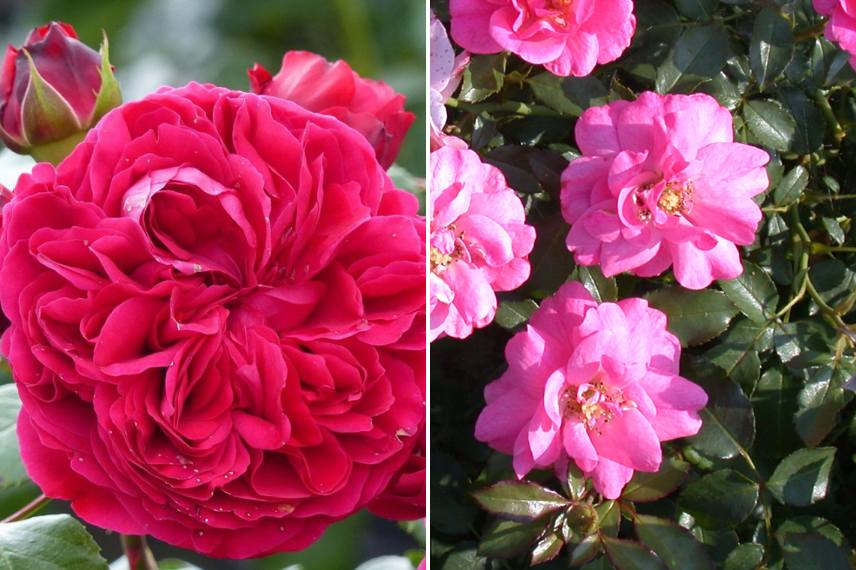
ADR roses are resistant to diseases (here: rose ‘Red Leonardo da Vinci’ and rose ‘Mirato’)
Discover other Roses
View all →
Available in 2 sizes
Available in 2 sizes
Available in 2 sizes
Available in 2 sizes
Available in 2 sizes

Available in 2 sizes
Available in 0 sizes
Available in 3 sizes
Available in 2 sizes
Available in 2 sizes
Roses need to be watered frequently
Like most shrubs and perennials, roses need to be watered during dry spells, especially in the first two or three years after planting. However, established roses planted in the ground develop deep roots and cope very well with drought. During very dry summers, they will simply stop flowering to conserve energy. Nature is well designed!
However, a potted rose will require more frequent watering, as its substrate tends to dry out quickly. You just need to stick your finger into the top few centimetres of soil to check the moisture level. If the soil is dry at a depth of 2-3 cm, it means it’s time to water your roses, taking care not to wet their foliage.
It’s worth noting that some varieties of rose adapt and thrive better than others in hot, dry climates, such as the Banks’ rambling rose or the rugosa rose ‘Hansa’ with its beautiful double fuchsia flowers.
→ Discover our selection of the best roses for Mediterranean climates in our article.
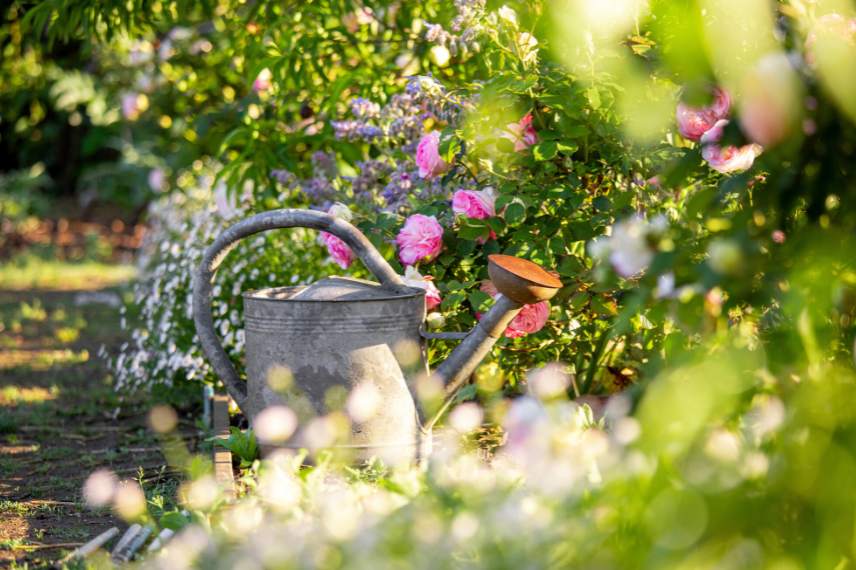
Roses only flower once a year
In reality, although some roses only bloom once a year, in spring or early summer, many varieties of roses repeat flower later in the season. These roses, known as repeat flowering, first bloom in spring, around May to June, and then again from August until the frost. They mainly consist of modern roses, resulting from cross-breeding between old roses and Asian roses (Rosa Chinensis). Some cultivars even flower continuously, in successive waves throughout the summer, when good growing conditions are met. For example, the clustered flower rose ‘Anny Duperey’ adds a touch of sunshine with its long yellow flowering, from May until the first chills of autumn.
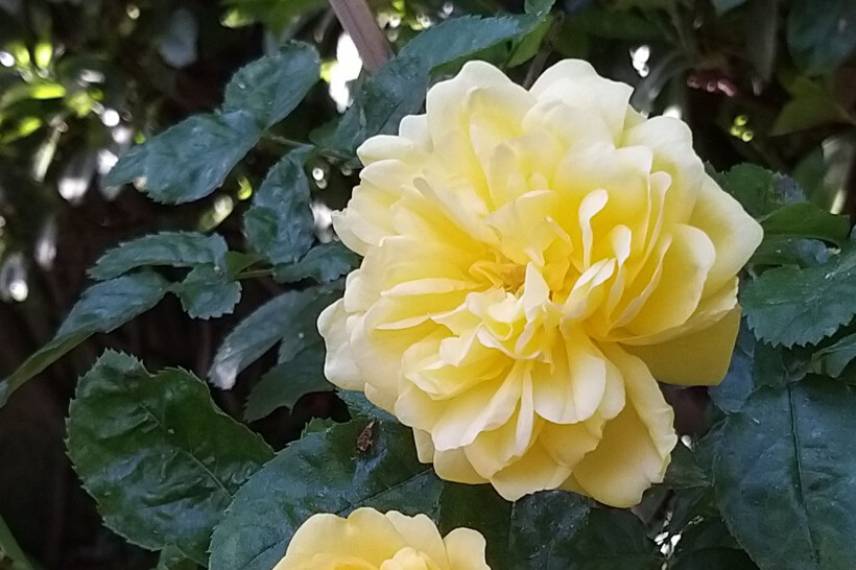
The clustered flower rose ‘Anny Duperey’
Roses cannot be grown in pots
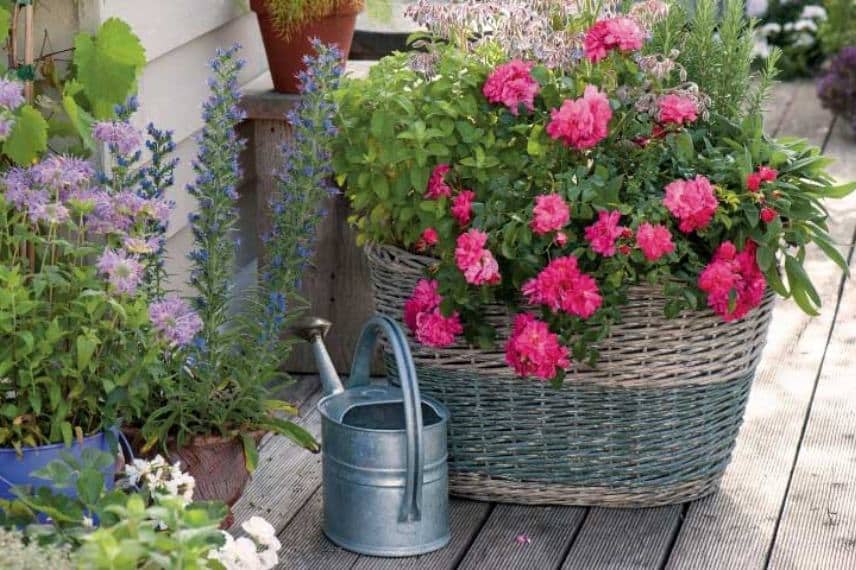
When thinking of roses, one primarily envisions beautiful flowering varieties grown in the ground. However, the smaller cultivars, which are much more compact, are perfectly suited for pot cultivation to enhance small gardens, terraces, or balconies. Therefore, one should favour small-sized roses with a dense habit and slow growth, such as miniature roses, bush roses, or lovely groundcover roses. To thrive and provide abundant flowering, a rose grown in a pot will require some additional care compared to its counterpart in the ground. Choose a large pot, at least 50 cm in all dimensions. It will be necessary to be more diligent with watering and fertilising its substrate, using a special rose fertiliser from March to September.
→ To learn more, read our ar:icle “Growing a Rose bush in a pot”.
Roses always have thorns
Certainly, many roses with incredible flowering possess thorny stems, the ultimate defensive weapons that are not lacking in prickliness. However, there are varieties devoid of prickles or very low in thorns, such as the climbing rose ‘Madame Alfred Carrière’, Banks roses, or the David Austin rose ‘Kew Gardens’. These beautiful specimens can easily be planted near passageways, along paths or terraces, in pots or in the ground, with little risk of getting pricked. Moreover, their almost naked stems will be easy to prune and maintain.
→ Discover our selection of 12 thornless or nearly thornless roses.
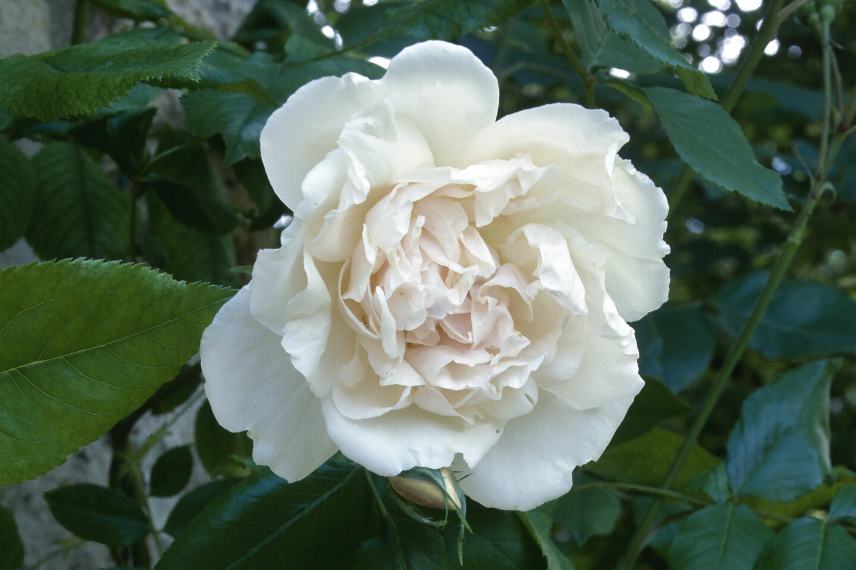
The climbing rose ‘Madame Alfred Carrière’
Roses should only be planted in the sun
One often mistakenly thinks that to have beautiful roses, one must necessarily have a garden facing south and in full sun. However, many varieties of roses also appreciate a semi-shaded position, and some cultivars can even adapt to light shade, especially in warm climates. This is the case, for example, with the ‘Blush Noisette’ rose or the climbing rose ‘Narrow Water’. These varieties thus add a touch of romance to the shadier corners of the garden and even bring brightness with the white-flowered cultivars. Perfect for enhancing terraces, balconies, and gardens, regardless of exposure.
→ Discover our selection of 7 roses for shaded gardens.
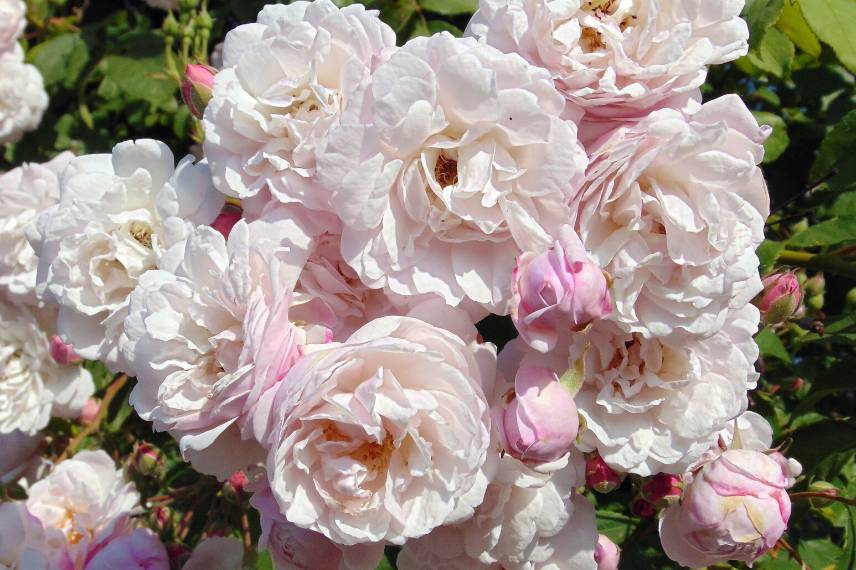
The ‘Blush Noisette’ rose
Roses need to be fed regularly with fertilisers
It is true that some roses prefer fertile soil, but there are also low-maintenance roses that offer incredible flowering even in poor soil and can therefore do without fertiliser. Among them, the first to come to mind are the old roses, which are often more robust, disease-resistant, and much less demanding. For example, the old rose ‘Jacques Cartier’ is renowned for its excellent floribundity, disease resistance, and ease of cultivation.
Some climbing or rambling roses are also known for their vigour and easy cultivation, such as the rambling rose ‘Albéric Barbier’, Banks’ rose (‘Alba Plena‘ or ‘Rosea‘ or ‘Lutea‘) and the essential climbing rose ‘Madame Alfred Carrière’.
Similarly, the botanical roses are old wild cultivars, robust and sturdy, that require very little maintenance. Like the old rose ‘Complicata’, these varieties will adapt easily to poor, dry soils, including in Mediterranean climates.
→ Discover other low-maintenance varieties in our article: the best roses for Mediterranean climates.
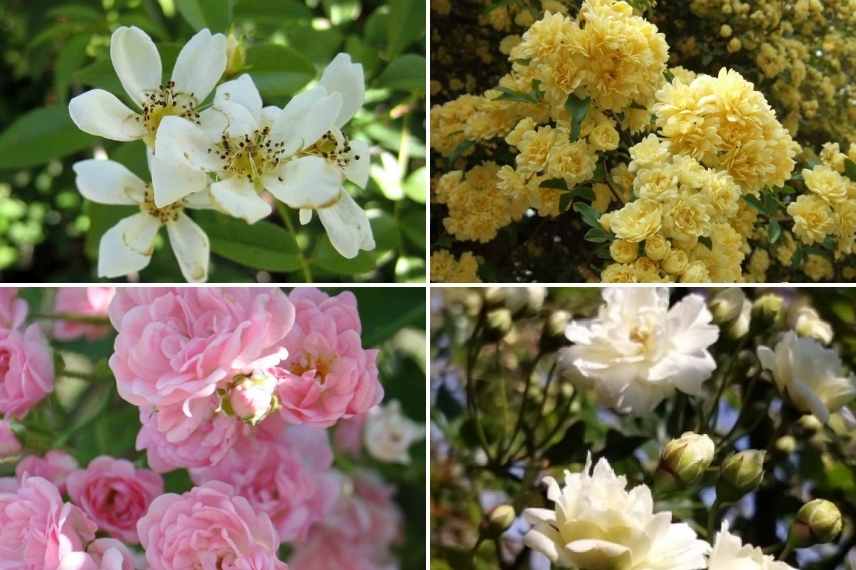
The different cultivars of the Banks rose; ‘Alba’, ‘Lutea’, ‘Rosea’ and ‘Alba Plena’
For further reading
- Discover our wide range of roses.
- To find out everything, browse our comprehensive sheet on roses: the best varieties and how to grow them.
- Subscribe!
- Contents

Comments