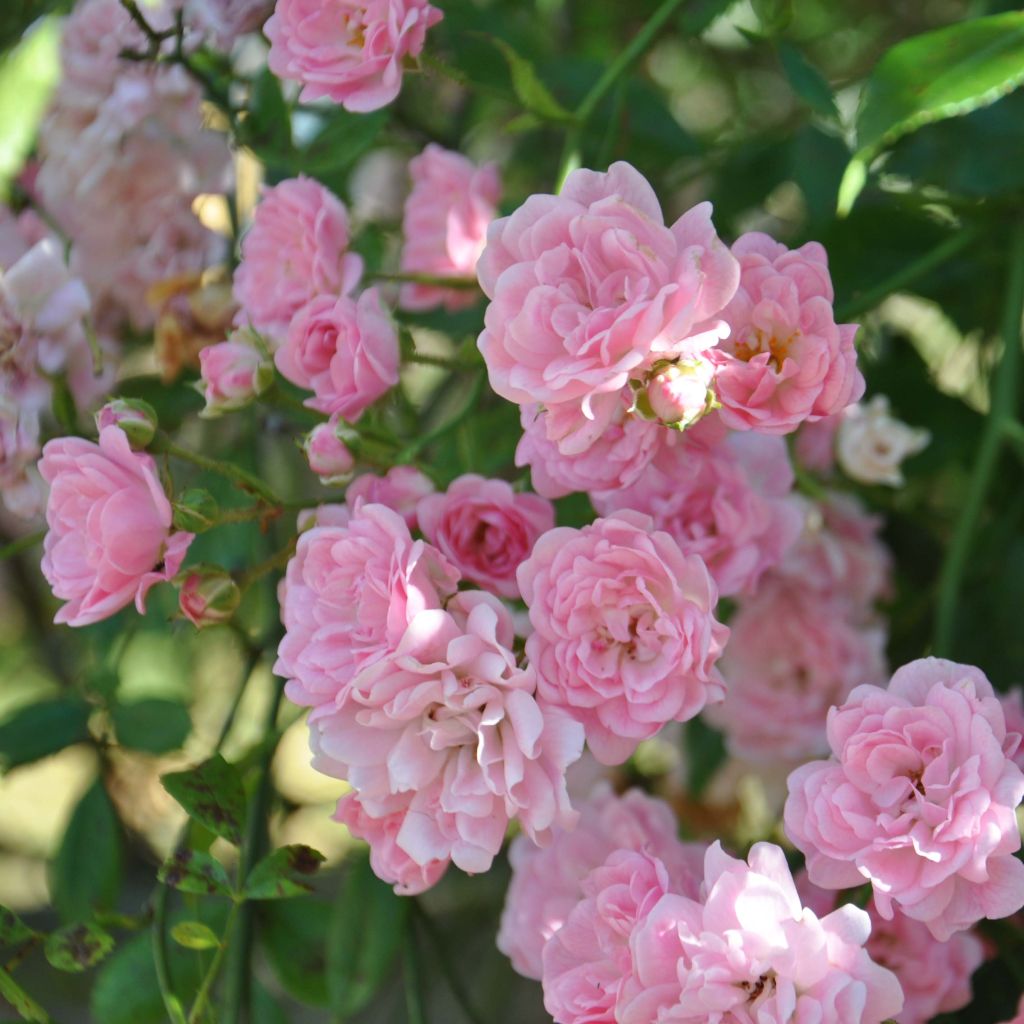
Rosa banksiae Rosea - Rambling Rose
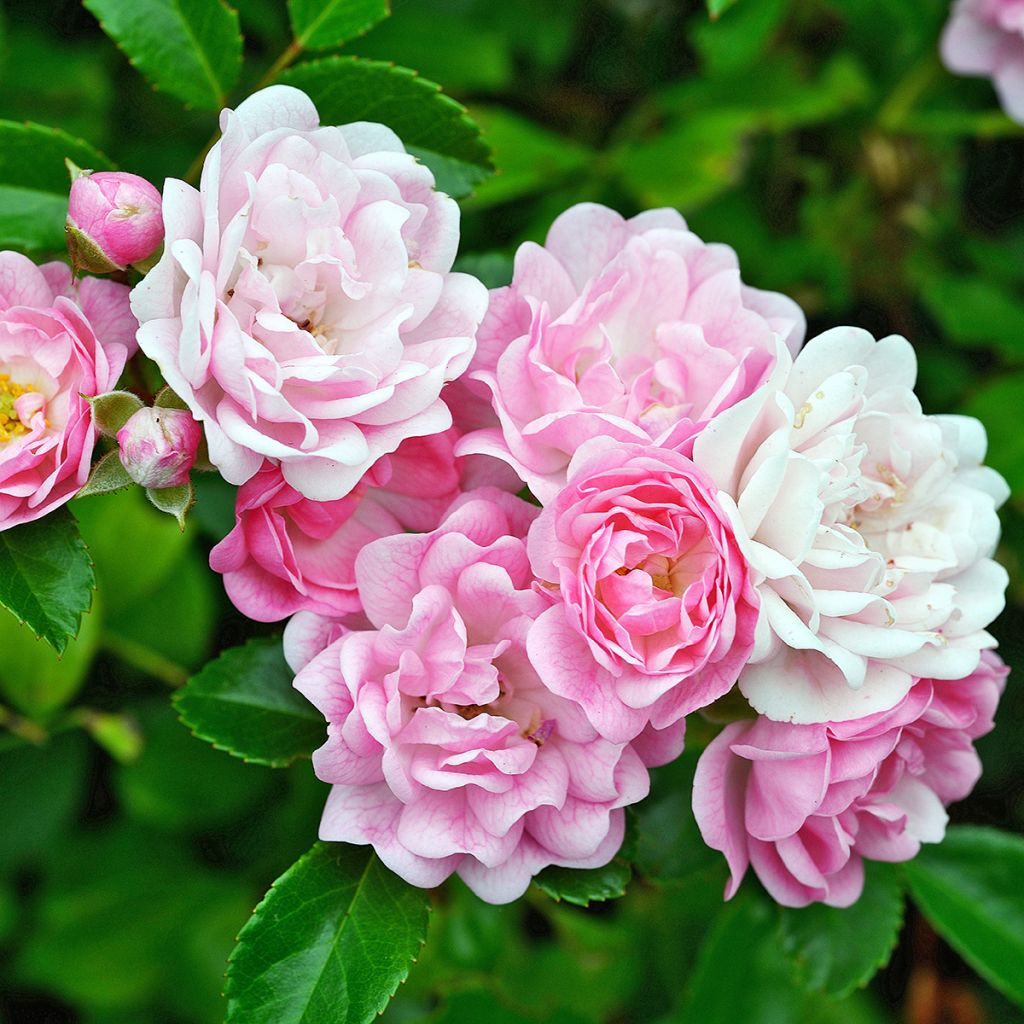
Rosa banksiae Rosea - Rambling Rose
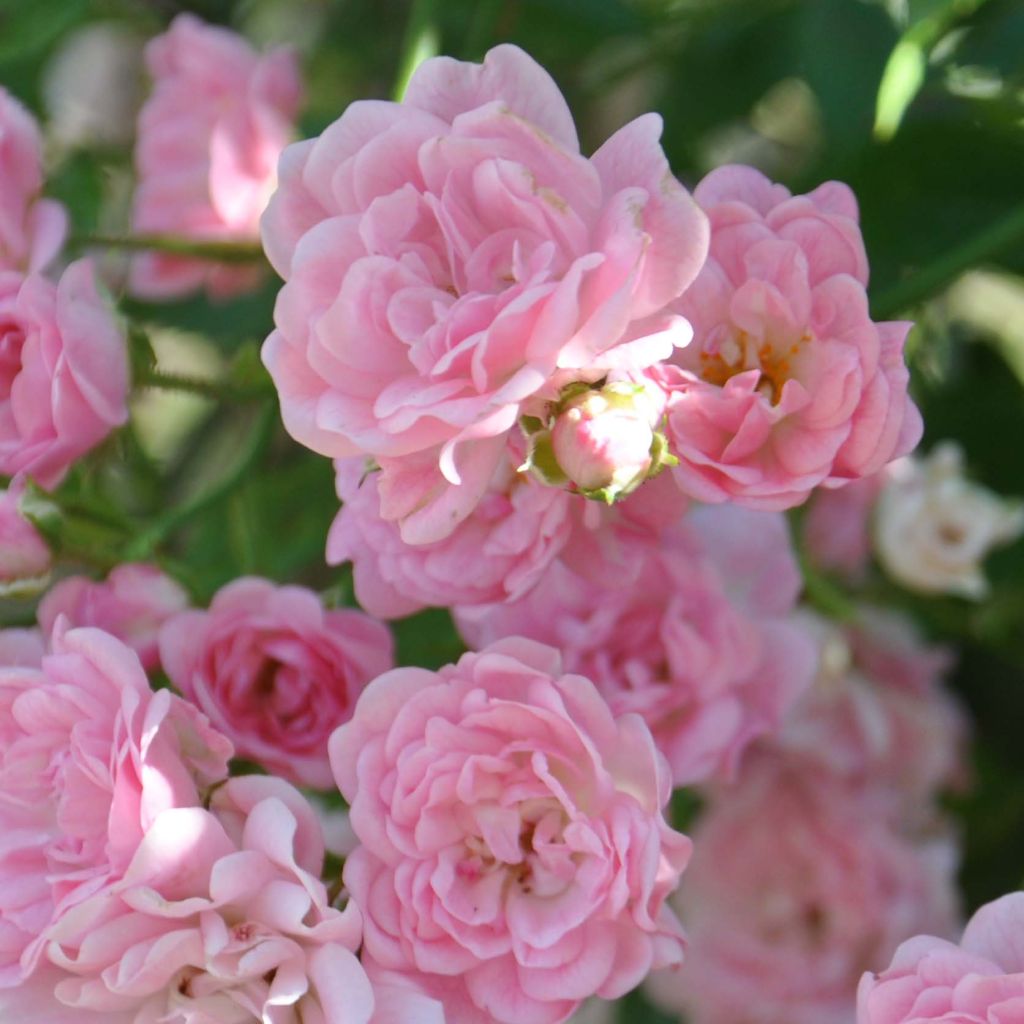
Rosa banksiae Rosea - Rambling Rose
Rosa banksiae Rosea - Rambling Rose
Rosa banksiae Rosea
Banksian rose
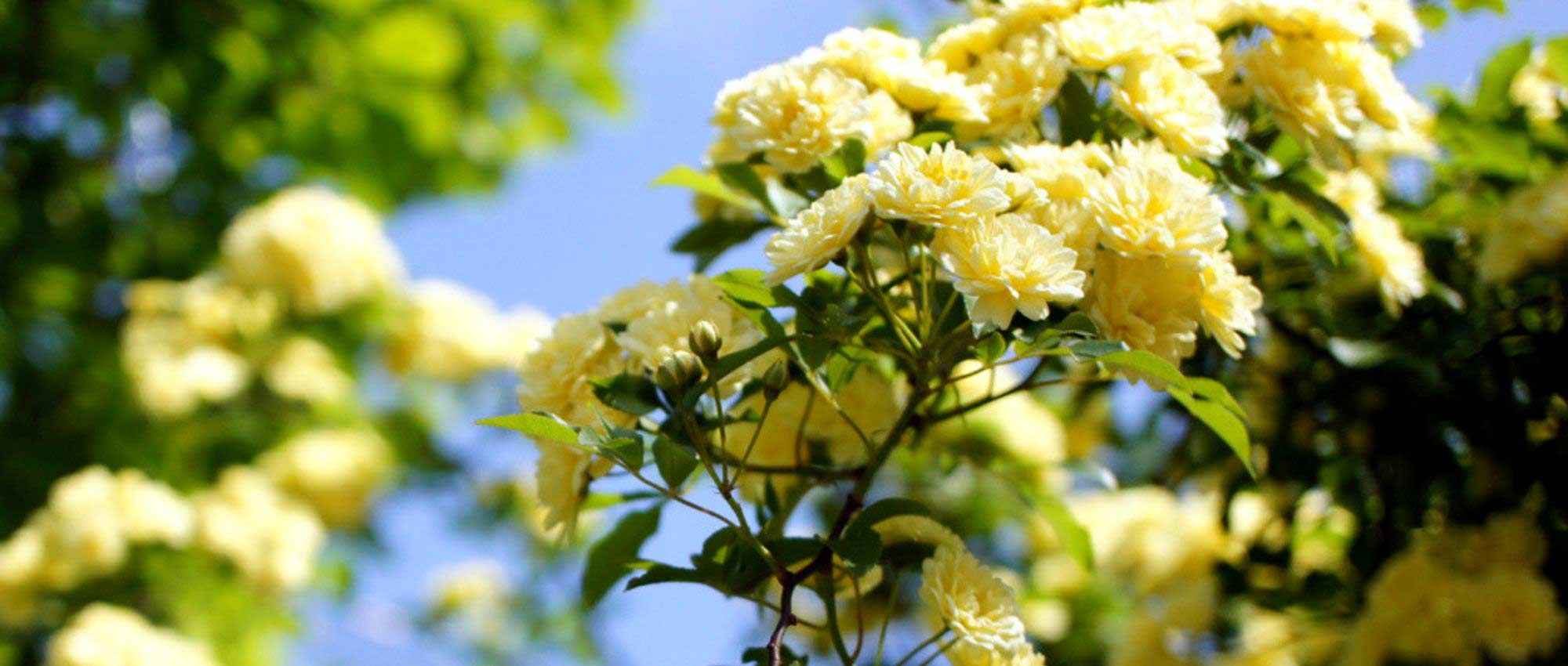
Disappointed, I believe I ordered a Banks rose and received a yellow one. I am very disappointed.
Patricia , 20/12/2025
Back-to-school special offer!
Get €10 off for every €50 you spend! And get up to €40 off on a single order.
How does it work?
1. Shop your favourites
Add your favourite plants to your basket. For every €50 you spend (excluding delivery charges, store credit and the plastic-free option), you’ll receive a €10 voucher.
€50 spent = €10 voucher
€100 spent = €20 voucher
€150 spent = €30 voucher
€200 spent = €40 voucher
2. Place your order
Once your basket reaches one of the spending thresholds, place your order. You can even choose your delivery date!
3. Receive your voucher
As soon as your order has been shipped, you’ll receive an email containing your personal voucher code and its value.
4. Use it on your next order
Your voucher is valid for 90 days from the date you receive it. It can be used once only, on a new order worth at least the value of the voucher, excluding delivery charges.
Please note: Vouchers can be combined with other offers, but cannot be split or refunded.
Home or relay delivery (depending on size and destination)
Important: You may be charged customs duties by your country’s customs authorities upon delivery.
Schedule delivery date,
and select date in basket
This plant carries a 6 months recovery warranty
More information
We guarantee the quality of our plants for a full growing cycle, and will replace at our expense any plant that fails to recover under normal climatic and planting conditions.
Description
The Banksiae Rosea, also known as Rosa Banksiae Rosea, is a vigorous, rambling rose with long, flexible stems and almost no thorns, often retaining its foliage in winter. It blooms very early, in April-May, and abundantly, in clusters of small double flowers ranging from bright to pale pink, very colourful. Its only weakness is its lack of hardiness in cold climates. However, it can be grown in cooler climates if sheltered by a wall in a sunny position. It will withstand dry summers without flinching in warmer conditions and can reach impressive dimensions, even in limestone soil.
Due to its obscure origins, the Rosier de Banks Rosea has sparked many controversies among rose enthusiasts, collectors, botanists, and probably hybrids. Rosa banksia is a botanical species native to dry, mountainous subtropical regions in central and western China, where it grows at altitudes between 500 and 2200 meters (1640 and 7218 feet). This vigorous climbing rose, therefore, thrives in hot climates, even dry ones in summer. Its species name, banksiae, is dedicated to Lady Banks, the wife of the famous botanist Sir Joseph Banks, who brought it back from his expeditions in China, along with new chrysanthemums and many other plants still unknown in Europe. There are only two subspecies of this rose and very few hybrids, as the plant is quite resistant to cross-breeding. Our 'Rosea' rose probably belongs among these rarities.
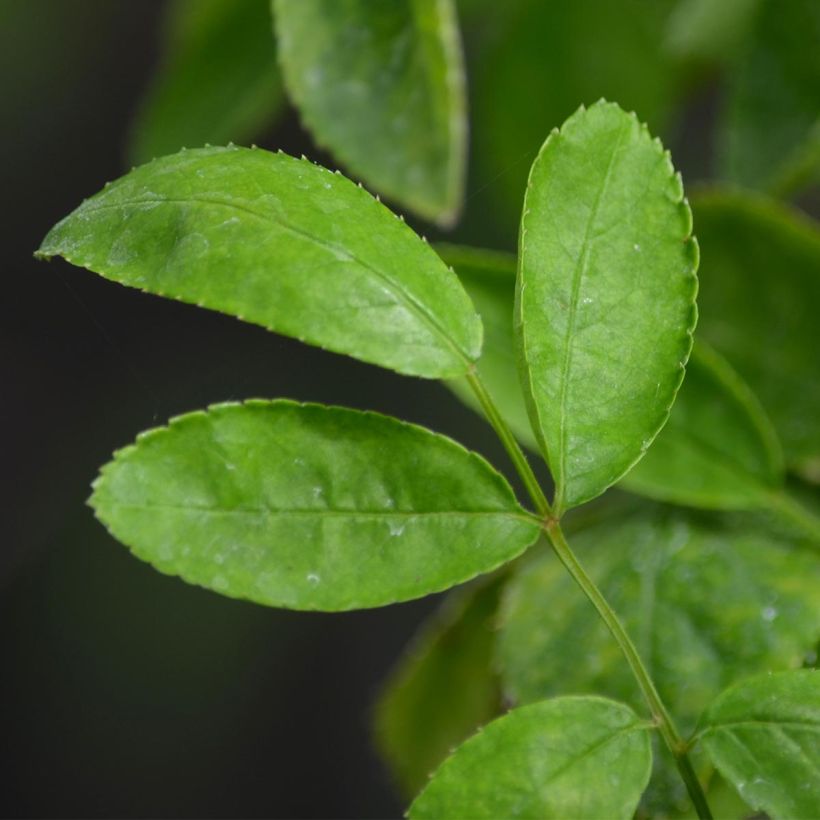
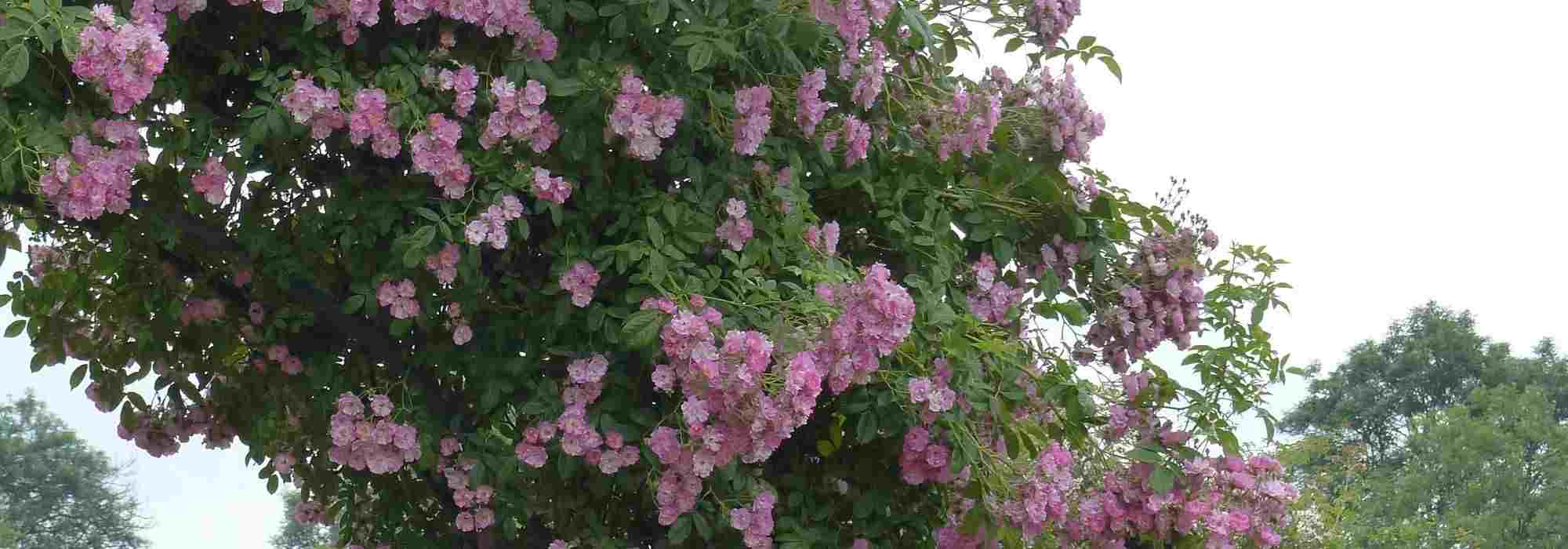
It is slightly smaller than the 'Lutea' Banks rose, with its long stems rarely exceeding 10m (33ft) in height. Its spread on the ground reaches about 3m (10ft). The new shoots have a few prickles on the rachis, the extension of the petiole on which the rose leaflets attach. The leaves, divided into three to five, rarely seven leaflets with finely toothed edges, are glossy and medium green. They measure 4 to 6cm (2in) long and often turn red in autumn. The foliage can be susceptible to rose diseases, varying in intensity depending on the growing conditions and humidity. Aphids, on the other hand, ignore it.
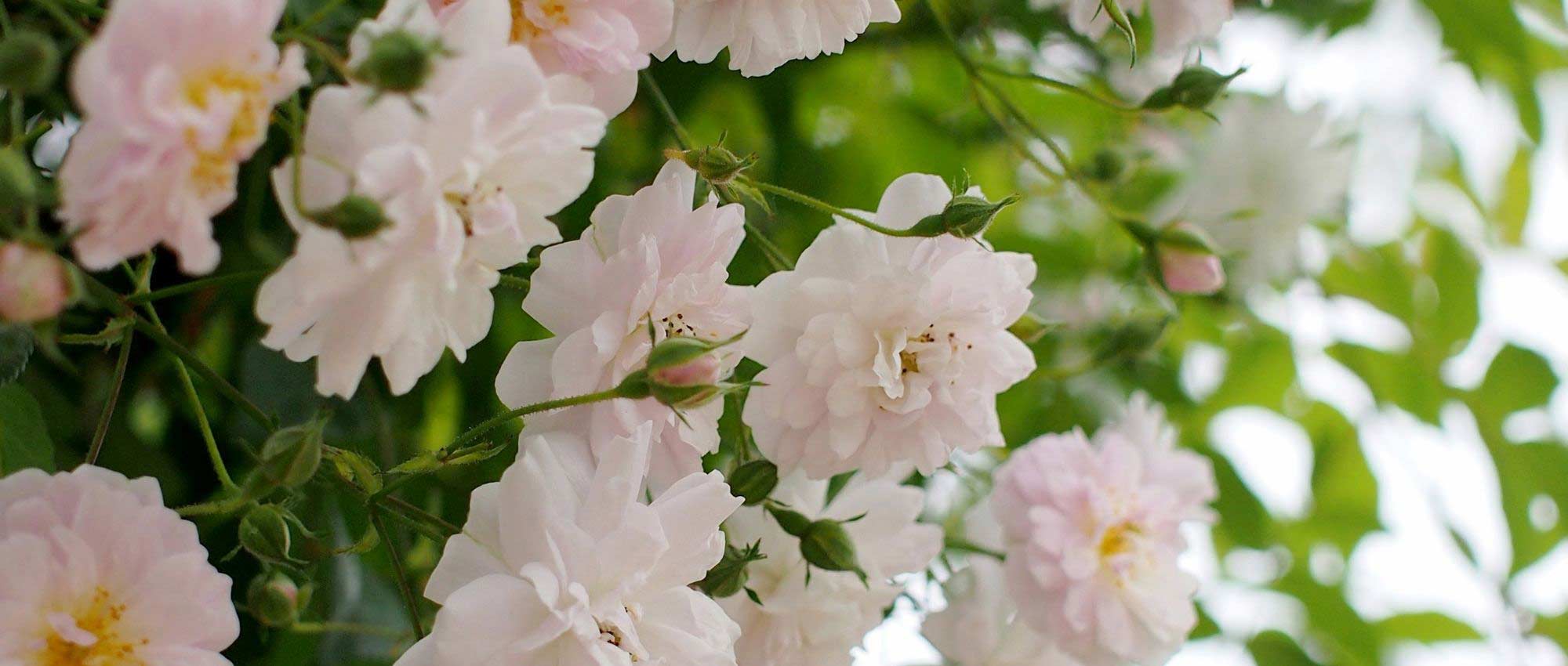
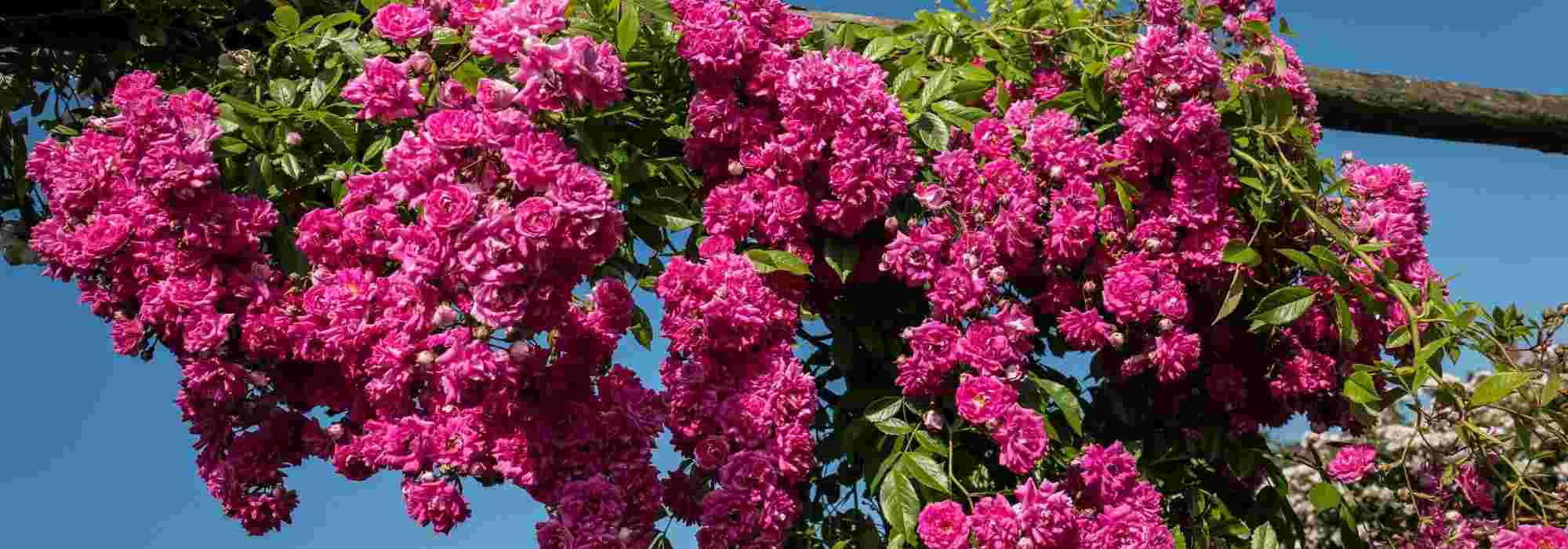
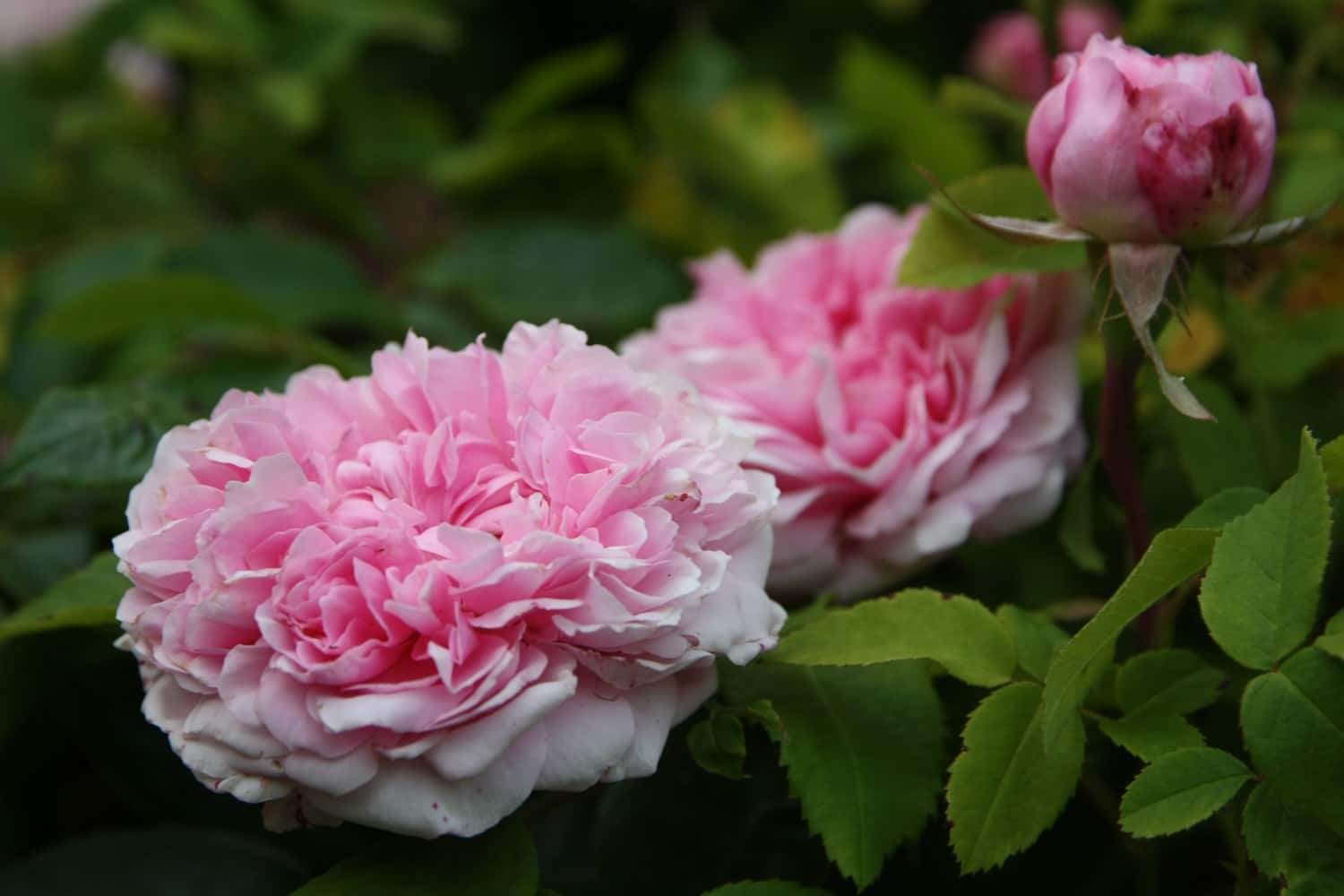
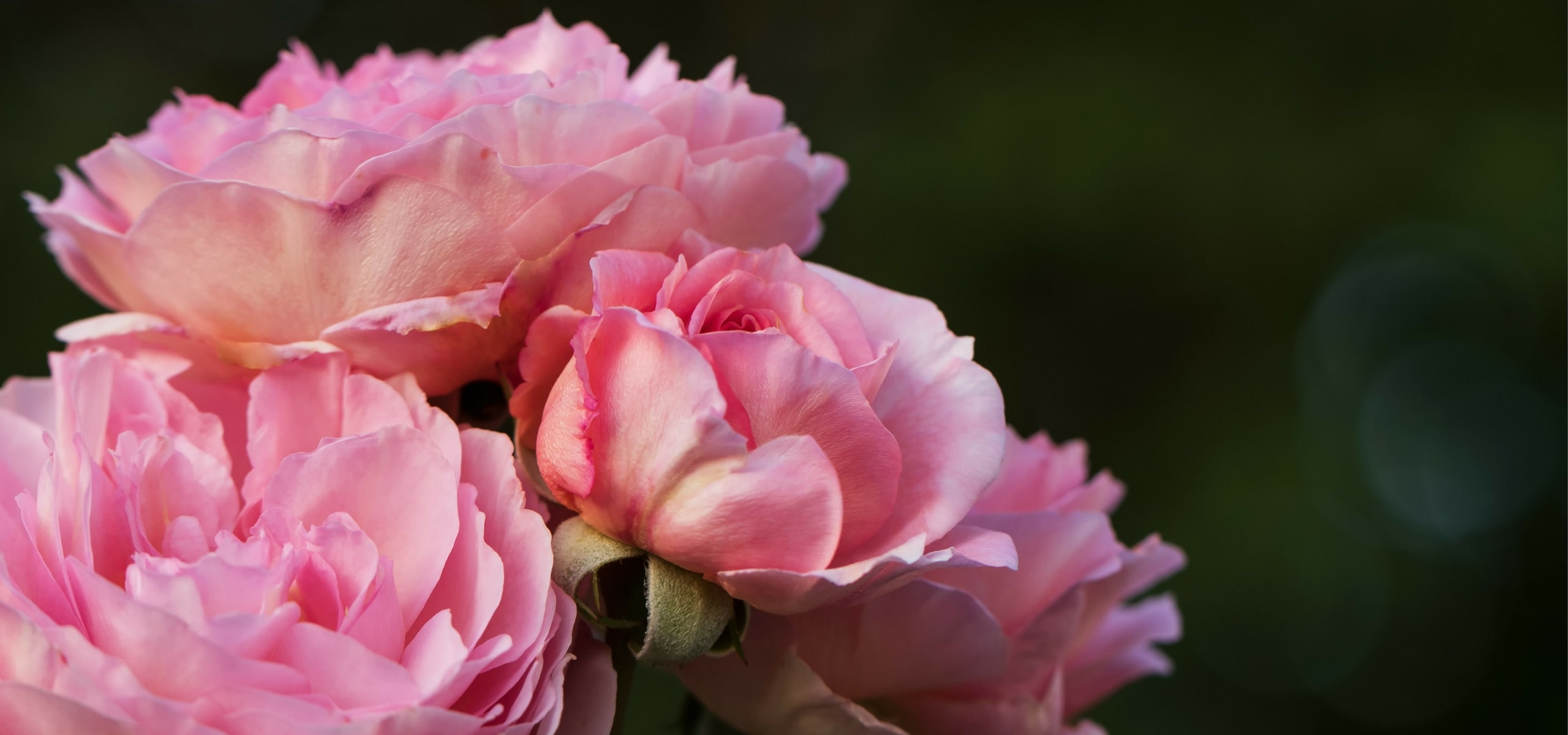
Flowering occurs from April to May, lasting 3 to 5 weeks, depending on the climate, on the current year's stems and shoots. The 3cm (1in) wide double flowers are densely clustered. Their colour is a mix of shades of pink, from candy pink to pale pink, veined with white pink, and their very light fragrance somewhat resembles that of violets. When fully open, they reveal a heart of yellow stamens. Flowering lasts 3 to 5 weeks, depending on weather conditions. The formation of small red fruits follows it. This rose, which grows on its roots, tolerates the presence of limestone in the soil and is perfectly drought-tolerant once well-established. As it ages, its trunk takes on a fibrous appearance, with caramel to reddish-brown shades and peels off. Its lifespan is remarkable: many specimens exceed 100 years in old gardens.
A well-established Rosier de Banks Rosea is hardy down to -10/-12 °C (14/10.4°F) in healthy, well-drained soil, which still allows it to be grown in many regions. Like 'Lutea' and 'Alba Plena', it likes to surprise, invade trees, and creep between cypress hedges, demonstrating its formidable conquering vigour. Its luxuriant growth metamorphoses and elegantly dresses a fence or a large wall from January to December in sheltered locations or mild climates. In the south, it will provide perfect shade on a large south-facing arbour. Low-maintenance, the plant requires no watering once well established. Although it is remarkably frugal and modest, it should be sheltered by a wall outside the olive tree zone and receive maximum sunlight to induce its fabulous flowering. We know of a 120-year-old specimen still faithfully blooms (sometimes as early as February) in a neglected garden near Montpellier. The Banks can be paired with a summer-flowering clematis with a flowering wall all summer. Its base can also be adorned with bulbs, ground-cover roses like The Fairy, perennials, or small shrubs with variegated grey foliage to enhance periods without roses.
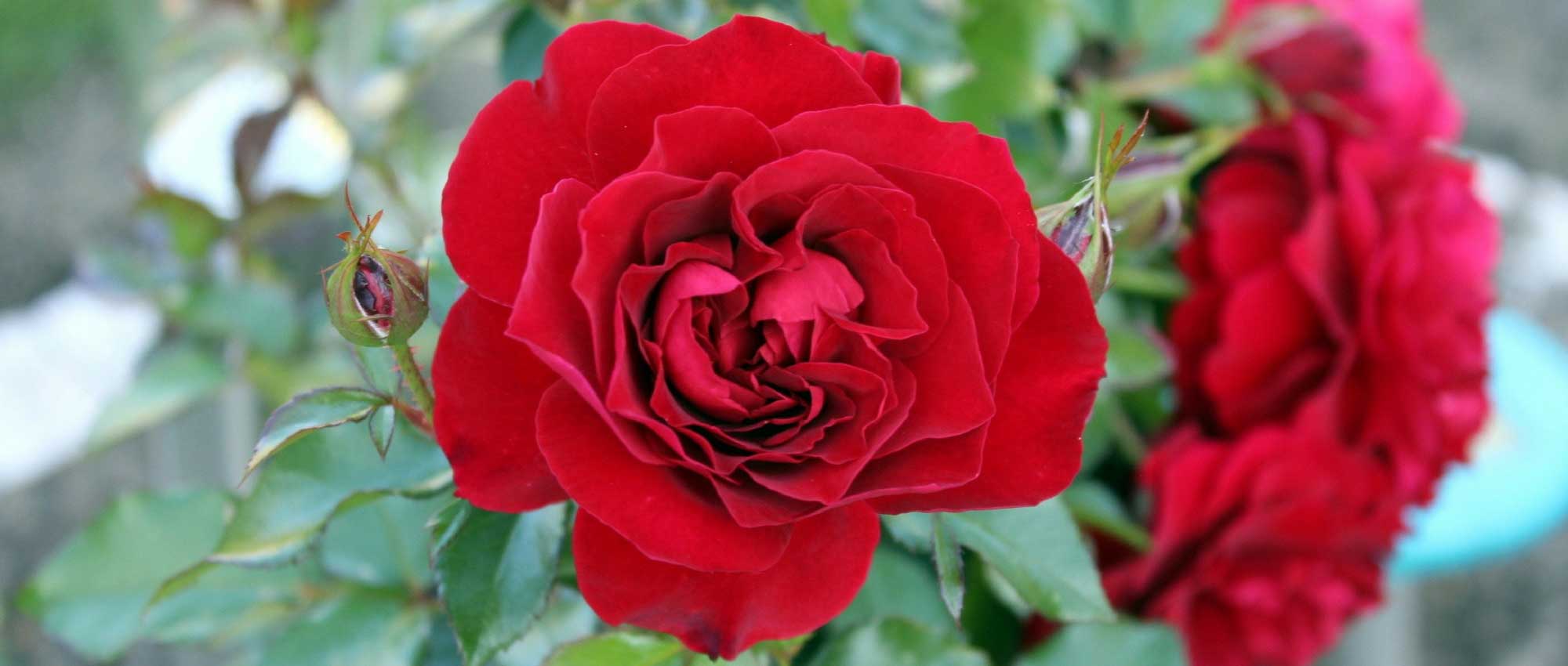
Rosa banksiae Rosea - Rambling Rose in pictures
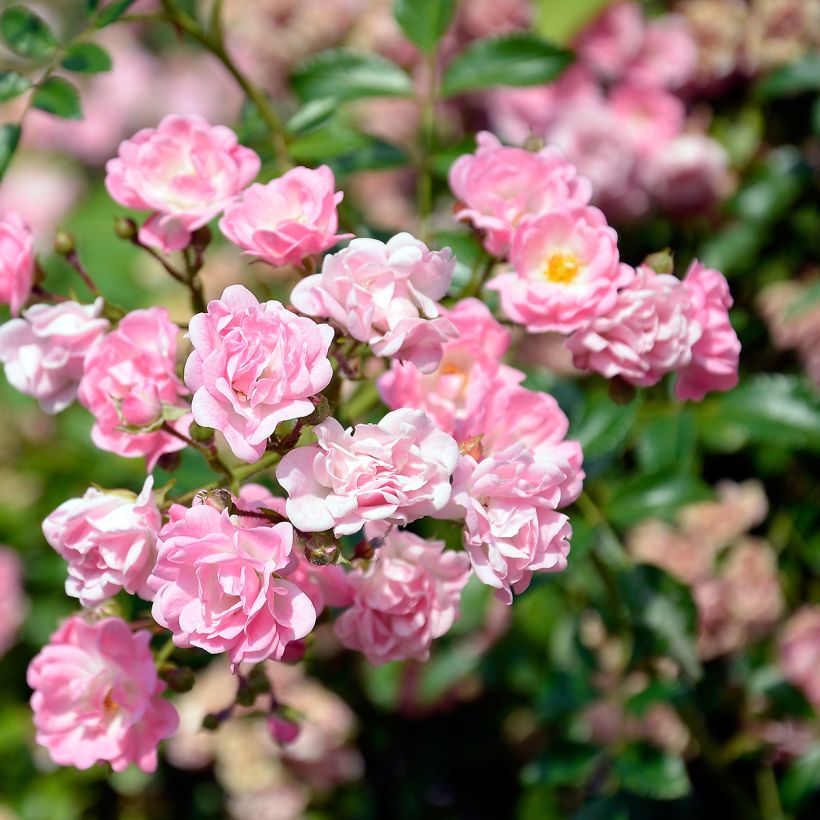
Plant habit
Flowering
Foliage
Botanical data
Rosa
banksiae
Rosea
Rosaceae
Banksian rose
Cultivar or hybrid
Rosa canina Laxa (2L/3L pot)
Planting and care
The Banks rose is a plant that grows well in mild, warm, and dry climates, but it can also thrive in cooler regions if planted in a sunny location protected from cold winds, such as against a south-facing wall. The plant is not very particular about the type of soil it grows in as long as it is deep enough to accommodate its root system, which seeks moisture even at great depths during dry summers. It can tolerate the presence of limestone in the soil and prefers fertile, well-drained soils, even if they are clayey. This rose blooms on the current year's branches, so Pruning should be done just after flowering when the young shoots are developing to control its growth. Removing some older branches may be helpful to rejuvenate the plant. The Banks rose requires plenty of sunlight to display its stunning flowering. It can withstand temperatures down to about -10 °C (14°F) in well-drained soil, but young plants should be covered in the winter for the first 2 or 3 years in cooler climates. The foliage may be marked with white spots, a sign of mildew, or be affected by black spot. If your climate is humid, apply preventive treatment in spring and occasionally in summer. Lastly, ants may stroll along the young stems, but this does not harm the plant's health.
To propagate this rose, use softwood cuttings in summer. The young shoots root most efficiently, while cuttings from sections give more irregular results.
Training and Pruning: Shortening the shoots by 30% once or twice a year during the first few years is necessary. This helps to densify the habit, branch out the base of the plant, and limit annual growth.
Roses may develop unsightly spots at the end of summer, but this is a natural occurrence and doesn't harm the rose's growth.
Planting period
Intended location
Care
Planting & care advice
-
-
-
-
-
-
-
-
-
, onOrder confirmed
Reply from on Promesse de fleurs
Recently viewed products
Haven't found what you were looking for?
Hardiness is the lowest winter temperature a plant can endure without suffering serious damage or even dying. However, hardiness is affected by location (a sheltered area, such as a patio), protection (winter cover) and soil type (hardiness is improved by well-drained soil).
In temperate climates, pruning of spring-flowering shrubs (forsythia, spireas, etc.) should be done just after flowering.
Pruning of summer-flowering shrubs (Indian Lilac, Perovskia, etc.) can be done in winter or spring.
In cold regions as well as with frost-sensitive plants, avoid pruning too early when severe frosts may still occur.
The harvesting period indicated on our website applies to countries and regions in USDA zone 8 (France, England, Ireland, the Netherlands).
In colder areas (Scandinavia, Poland, Austria...) fruit and vegetable harvests are likely to be delayed by 3-4 weeks.
In warmer areas (Italy, Spain, Greece, etc.), harvesting will probably take place earlier, depending on weather conditions.
The sowing periods indicated on our website apply to countries and regions within USDA Zone 8 (France, UK, Ireland, Netherlands).
In colder areas (Scandinavia, Poland, Austria...), delay any outdoor sowing by 3-4 weeks, or sow under glass.
In warmer climes (Italy, Spain, Greece, etc.), bring outdoor sowing forward by a few weeks.
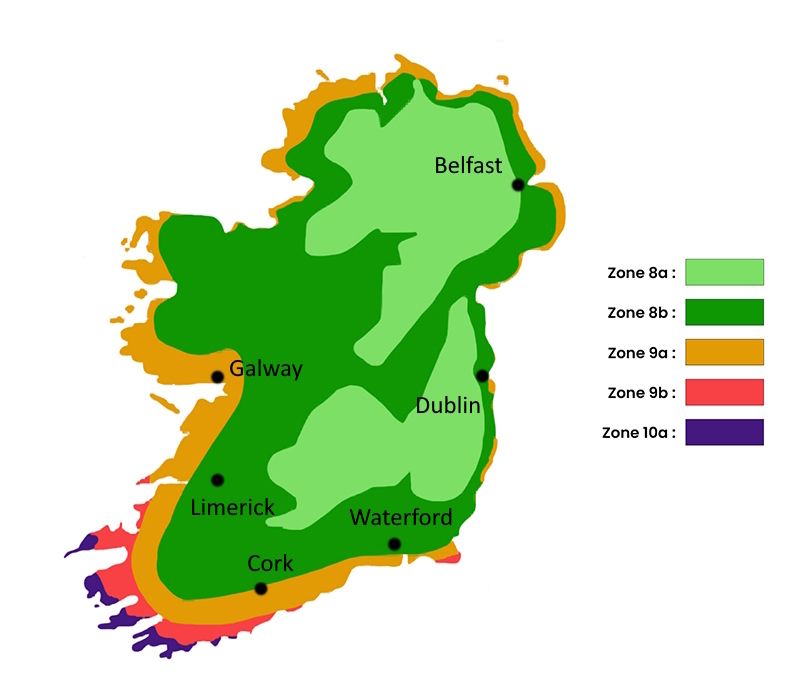
The planting period indicated on our website applies to regions in USDA Zone 9a (East Coast and Midlands: Dublin, Wexford, Waterford, Kilkenny, Portlaoise). It will vary depending on where you live:
- On the west coast and in the north-west (Galway, Limerick, Sligo, Donegal, Westport), delay planting by 1 to 2 weeks in spring and bring it forward by 1 to 2 weeks in autumn compared to the dates given, preferably choosing periods without strong winds.
- In the inland hills and plateaus (Wicklow Mountains, Macgillycuddy’s Reeks, Connemara, Killarney), it is best to plant in spring (April–May) or autumn (September–October), avoiding periods of waterlogged soil in winter and strong winds, which pose the main risk to newly planted trees in these areas.
The flowering period indicated on our website applies to regions in USDA Zone 9a, such as the East Coast and Midlands, including Dublin, Wexford, Waterford, Kilkenny and Portlaoise.
This will vary depending on where you live:
- On the west coast and in the northwest (Galway, Limerick, Sligo, Donegal and Westport), it will be delayed by one to two weeks compared to the given dates, due to stronger Atlantic winds and less spring sunshine.
- In the inland hills and plateaus (the Wicklow Mountains, the Macgillycuddy's Reeks, Connemara and Killarney), flowering will be delayed by two to three weeks. Flowering mainly occurs between May and July, with the limiting factors being less frost and more of the excessive humidity, strong winds and lack of sunshine that are characteristic of these areas.
Shipping country and language
Your country of residence may be:
Your country of residence is:
For a better user experience on our website, you can select:
Your shipping country:
-
 Austria
-
 Belgium
-
 Bosnia & Herzegovina
-
 Bulgaria
-
 Croatia
-
 Cyprus
-
 Czechia
-
 Denmark
-
 Estonia
-
 Finland
-
 France
-
 Germany
-
 Greece
-
 Hungary
-
 Iceland
-
 Ireland
-
 Italy
Italy
-
 Latvia
-
 Liechtenstein
-
 Lithuania
-
 Luxembourg
-
 Malta
Malta
-
 Netherlands
-
 Poland
-
 Portugal
-
 Romania
-
 Serbia
-
 Slovakia
-
 Slovenia
-
 Spain
Spain
-
 Sweden
-
 Switzerland
Language:
-
French
-
 English
-
Spanish
-
Italian
-
German
-
Portuguese
-
Dutch
-
Finnish
My Account
Hello
My wish lists
My cart
Log in / Register
Existing customer?
This form is protected by reCAPTCHA - the Google Privacy Policy and Terms of Service apply.
New customer?
Create an account to track your orders, access our customer service and, if you wish, make the most of our upcoming offers.