




























FLASH SALES: discover new special offers every week!
6 stunning annuals or biennials that bloom in partial shade.

6 stunning annuals or biennials that bloom in partial shade.

Our selection

Contents

Modified the 12 January 2026  by Leïla 6 min.

Semi-shade spaces are precious in the garden: they allow you to grow plants that struggle in too much sun, especially in spring and summer, but still require a few hours of sun per day to flourish. These spaces offer a unique opportunity to grow varieties of annuals or biennials of great beauty. Whether your garden enjoys light shade beneath trees or subdued light between buildings, there is a palette of flowers and foliage capable of bringing colour and vibrancy to these sometimes neglected areas. In this article, we present seven annuals and biennials that thrive in semi-shade, for the garden or balcony.

Difficulty

Pope's Money Plant or Lunaria annua

Honesty or Lunaria annua is well known to dried-flower bouquet enthusiasts for its pearly-white seed capsules, unique in their kind. It is a biennial plant that thrives in partial shade and forms in its first year a rosette of beautiful basal triangular foliage, before flowering a pretty pink-violet bloom the following year, followed by its famous flat, decorative siliquae.
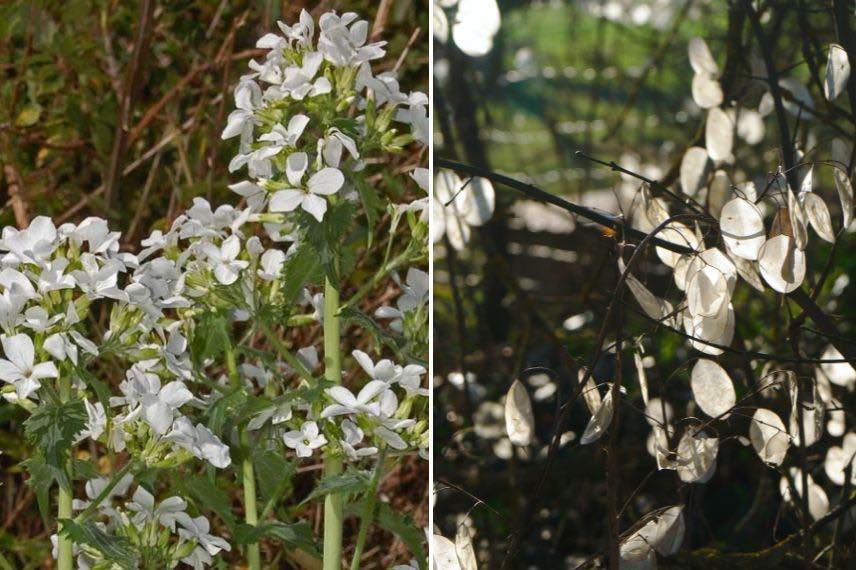
Honesty is easy to grow. It thrives in partial shade in rich, cool, well-drained soil. Ideal beneath large trees or in borders with low light, it blends well with bulbous plants such as the hyacinths, narcissi or muscari. To encourage its annual reappearance, let the plants reseed naturally or scatter the seeds yourself. To prevent it from becoming invasive, simply prune some of the flowering stems, thereby reducing seed dispersal.

Honesty

Lunaria annua ‘Alba’

Forget-me-not

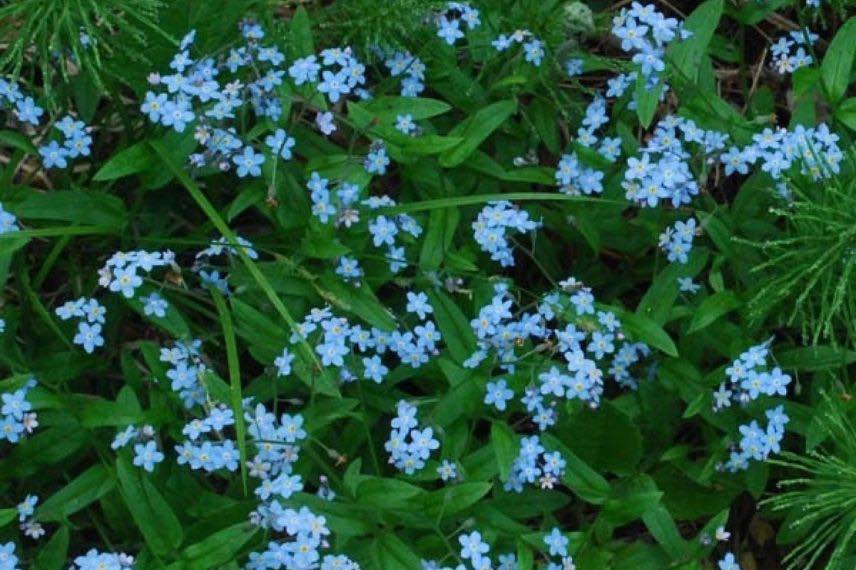
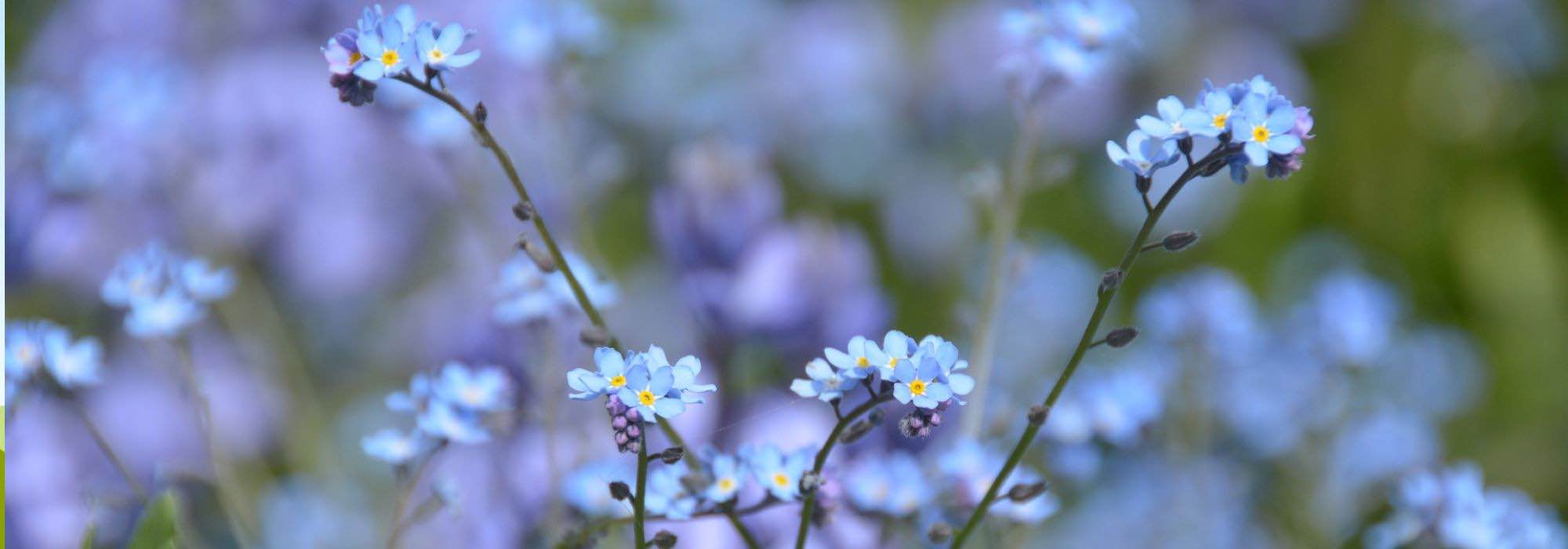
The Myosotis is typically a plant of a light woodland understorey, where its small flowers in the magnificent deep blue form low carpets that catch the eye. For example, consider the cultivar Myosotis sylvatica ‘Blue Sylva’, with its flowers an almost electric blue and their yellow centre, which embodies simplicity and romance in the garden. It delights in spring with its early and lasting flowering, forming a bright carpet at the foot of bulbs, bushes and perennials. This variety, which self-seeds readily, finds its place in gentle sun and partial shade in cool, fertile and well-drained soil. From March to June, its villous stems bear arching inflorescences, reaching up to 20 cm. This plant, though perennial, is often grown as biennial for its ability to self-seed and enrich the garden with its presence.

The forget-me-not pairs perfectly with bulbous plants such as horned violas and spring flowers such as primrose, the Dicentra, creating delicate contrasts in borders and planters. Its delicate flowers are also an elegant choice for spring cut flower arrangements, bringing lightness and colour. This plant generally self-seeds once established, not always reliably, in borders and flowerbeds.

Myosotis

Foxgloves

Foxgloves are considered biennials or short-lived perennials. In well-drained soil rich in organic matter, they tend to self-seed readily. After the appearance of the basal leaf rosette in the first year, they send up a generous flowering spike on long stems and work wonderfully to add verticality to semi-shaded borders.

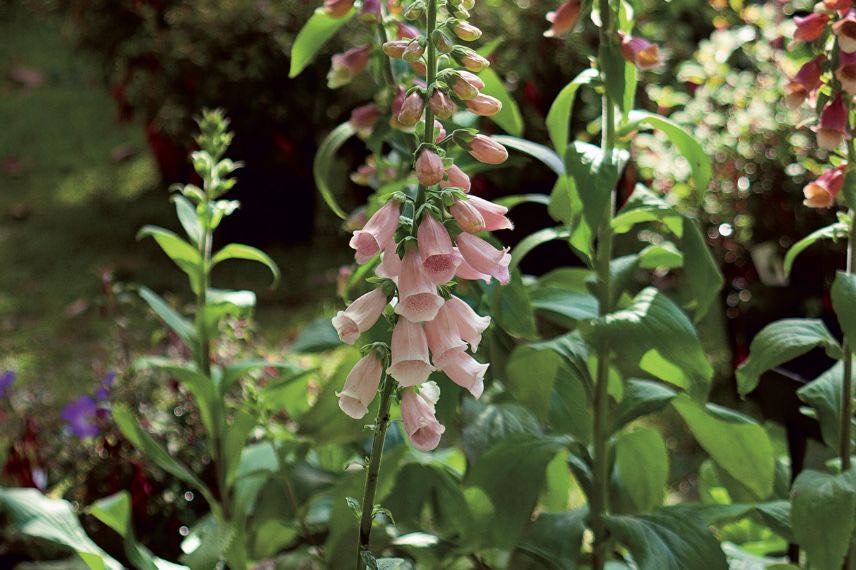
Among them, the Digitalis purpurea ‘Suttons Apricot’ is a variant of the purple foxglove native to our woodland edges. It bears delicate rose-apricot-coloured bell-shaped flowers on tall flowering spikes, perfect for brightening the semi-shaded areas of the garden. Hardy and biennial, it can stay in the garden a little longer with appropriate pruning before seed formation.

Digitalis ‘Suttons Apricot’ thrives in oceanic climates, preferring humus-bearing and cool soils typical of woodland edges. From spring, it develops a rosette of pubescent leaves, dark green, which foreshadows the spectacular flowering of the second year. In May–June, sturdy stems rise to reveal a dense flowering spike over a metre tall, attracting bees and bumblebees.

It harmonises well with hardy geraniums or ferns in light woodland.

Digitalis Suttons Apricot

Non-hardy Fuchsias

Among fuchsias, some tolerate frost down to about -12 to -15°C, notably all the Fuchsia magellanica, while others are not hardy at all. They are then considered annuals here, and can be overwintered indoors to be brought out in the warmer season when grown in pots. Fuchsias are ideal plants for partial shade, enjoying morning sun and shade during the hottest part of the day, and a fertile, cool and well-drained soil.

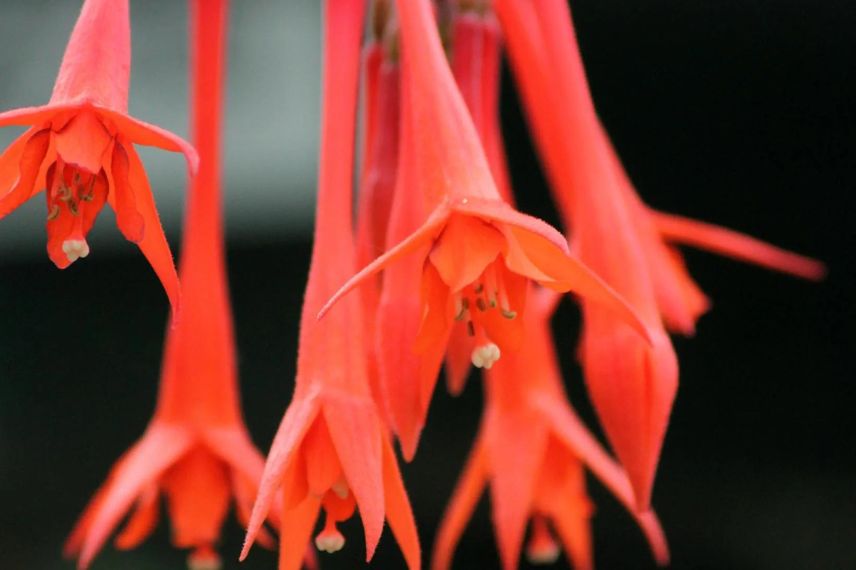
For example, the very beautiful Fuchsia triphylla ‘Thalia’, with small, bright flowers grouped in clusters on dark foliage. From late spring to late summer, this plant bears a multitude of slender and long flowers, in a vibrant coral-red.

‘Thalia’ is distinguished by the length of its flowers, 4 cm long, inherited from Fuchsia triphylla. It forms a compact, ramified shrub, reaching 50–75 cm in height with a width of 40–50 cm. The flowers feature an elongated tube topped by small sepals and a delicate corolla of petals, with the stamens hidden. The foliage, dark olive-green and glossy with dark veins and a purple underside, adds to its decorative appeal. Its hardiness is limited to -1°C.

The Fuchsia ‘Thalia’ can be grown in a large pot to be brought indoors in winter. For colour and texture contrast, pair it with dark-leaved Coleus.

Non-hardy Fuchsia

Fuchsia ‘Thalia’

Coleus

Coleus are plants grown for their attractive colourful foliage. They are frost-tender perennials, closely related to basil and nettle, native to the tropical forests of Africa, the Americas and Asia. Not frost-hardy, they are best planted in outdoor borders or in a conservatory so they can overwinter. Their foliage, with rich, unusual hues, does not tolerate scorching sun, and they perform much better in partial shade.

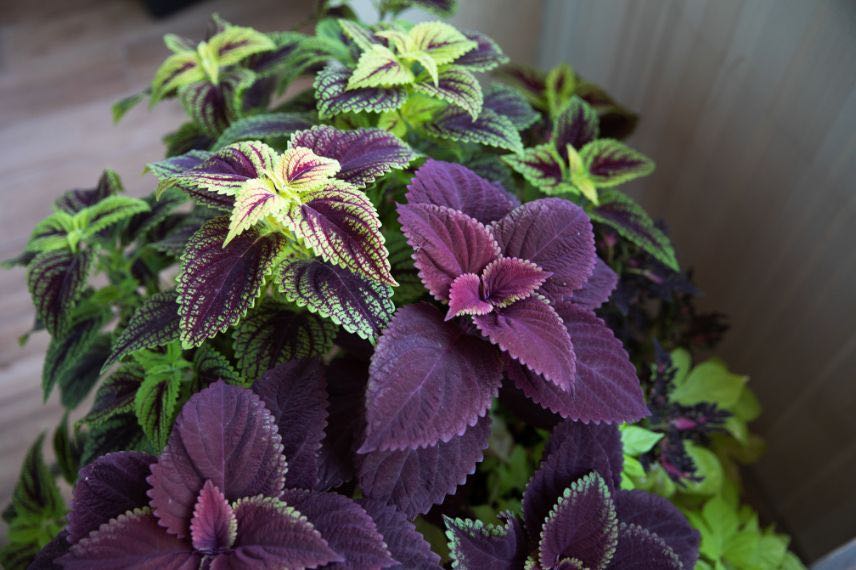
For example, the Coleus Copinto ‘Manhattan’, which stands out for its dark, almost black foliage with purplish-brown or chocolate-purple tones. Suitable for indoors or as an outdoor annual, Coleus ‘Manhattan’ thrives in partial shade in cool soil.

The Coleus ‘Manhattan’ forms a rounded, dense clump, with triangular leaves that are slightly villous and a dentate margin. Its deep colour and embossed texture make it an ideal choice for seasonal displays and contemporary decor. Pair it with other Coleus varieties to create colour mosaics, or for a more restrained display, pair it with plants with more understated foliage, such as ferns.

Coleus

The diversity of Coleus foliage

Begonias

There are over 900 species of begonias, with varied growth habits and needs. In the vast majority, begonias are not hardy or only slightly hardy (to around -5°C). They too need to be brought indoors in winter to last several years. They do not like scorching sun, even though they require a few hours of sun to flower well. Bronze-leaf varieties need a little more sun than green-leaf varieties.

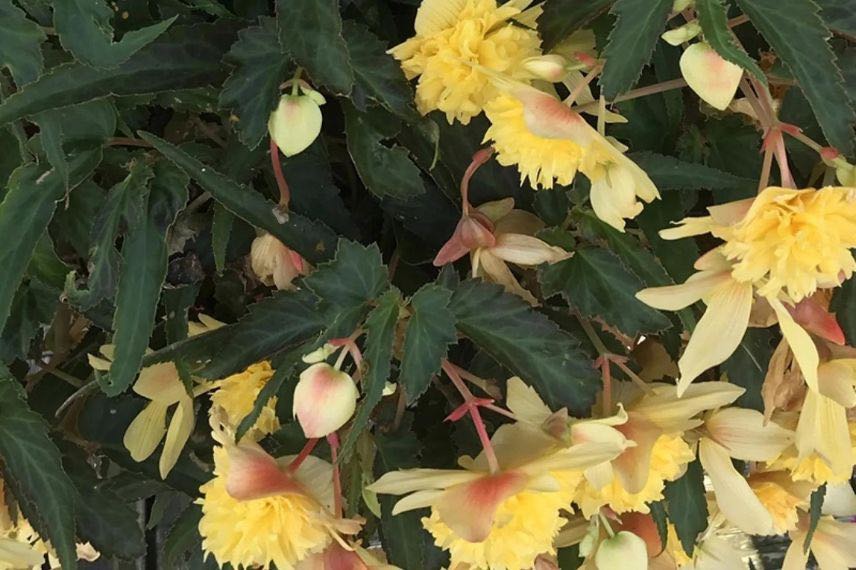
For example, the Begonia Belleconia ‘Citrus’ which is ideally planted in partial shade, where it withstands heat better, in well-drained, fertile, cool soil with no excess. It brightens up gardens and balconies with its large double blooms from cream to lemon yellow, on elegant dark green foliage, with a compact and trailing habit, ideal for hanging baskets. Reaching 30 to 40 cm in height and capable of cascading up to 1 m, its flowering lasts from June to September, unaffected by weather extremes.

The Begonia Belleconia ‘Citrus’ is perfect for creating bright focal points in partial shade, whether in the garden, in pots, tubs, planters or hanging baskets. It can be planted on its own or combined with other varieties for varied displays. It also integrates well into borders, paired with light-flowering plants, such as crocosmias, dahlias, anemones and rudbeckias.

Begonia

Begonia Belleconia ‘Citrus’

Comments

Lunaria annua