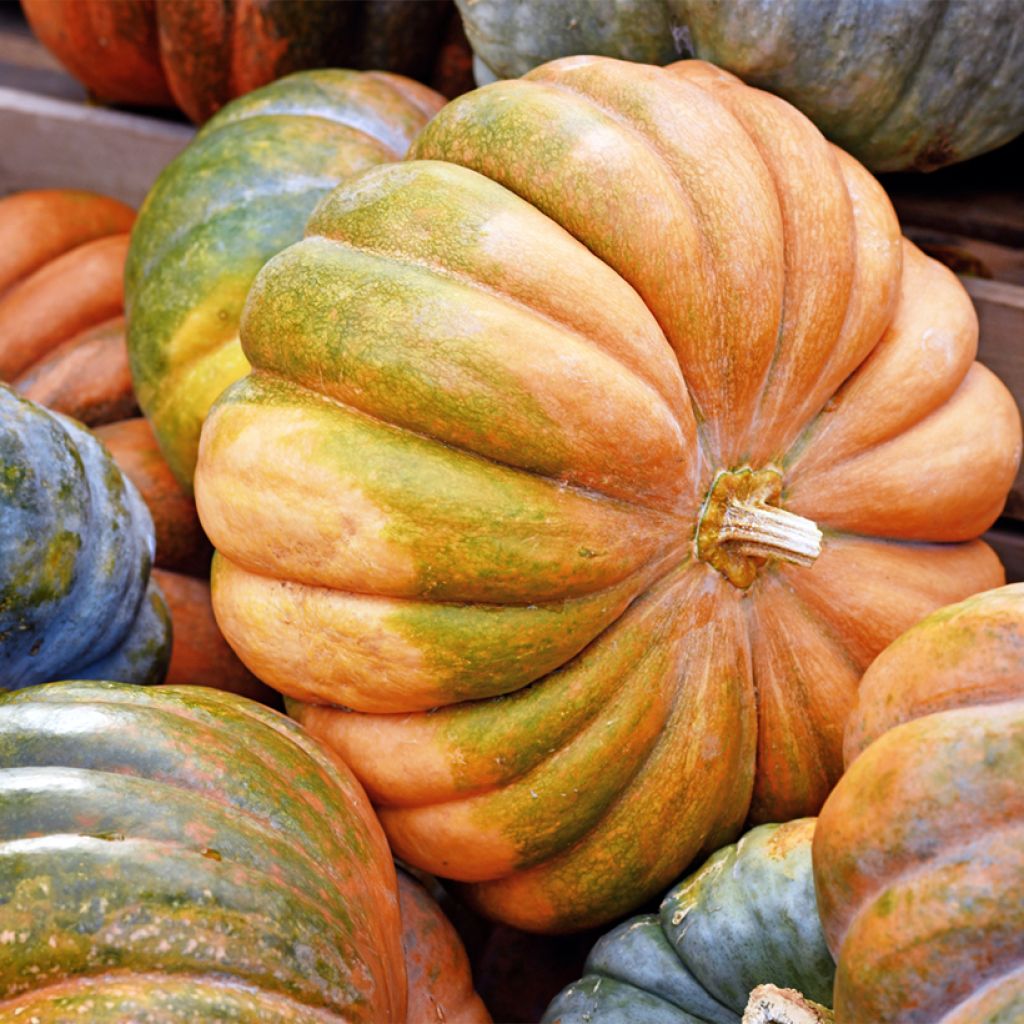
Squash Musquée d'hiver de Provence - Cucurbita moschata
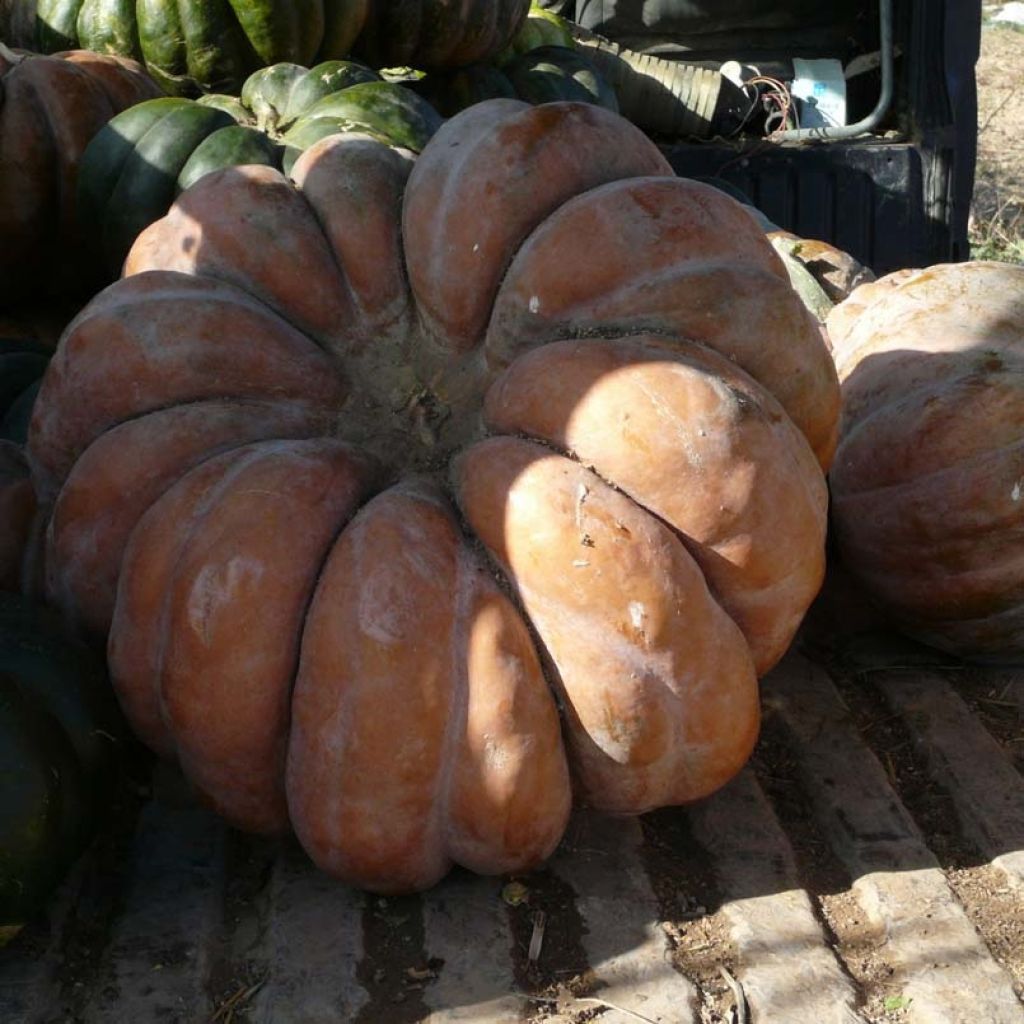
Squash Musquée d'hiver de Provence - Cucurbita moschata
Squash Musquée d'hiver de Provence - Cucurbita moschata
Cucurbita moschata Musquée d'hiver de Provence
Winter Squash
Back-to-school special offer!
Get €10 off for every €50 you spend! And get up to €40 off on a single order.
How does it work?
1. Shop your favourites
Add your favourite plants to your basket. For every €50 you spend (excluding delivery charges, store credit and the plastic-free option), you’ll receive a €10 voucher.
€50 spent = €10 voucher
€100 spent = €20 voucher
€150 spent = €30 voucher
€200 spent = €40 voucher
2. Place your order
Once your basket reaches one of the spending thresholds, place your order. You can even choose your delivery date!
3. Receive your voucher
As soon as your order has been shipped, you’ll receive an email containing your personal voucher code and its value.
4. Use it on your next order
Your voucher is valid for 90 days from the date you receive it. It can be used once only, on a new order worth at least the value of the voucher, excluding delivery charges.
Please note: Vouchers can be combined with other offers, but cannot be split or refunded.
Why not try an alternative variety in stock?
View all →
Available in 3 sizes

Available in 2 sizes

Available in 3 sizes

Available in 2 sizes

Available in 3 sizes

Available in 2 sizes

Available in 1 sizes

Available in 2 sizes

Available in 2 sizes

Available in 1 sizes
This plant carries a 6 months recovery warranty
More information
We guarantee the quality of our plants for a full growing cycle, and will replace at our expense any plant that fails to recover under normal climatic and planting conditions.
Description
The Winter Musquee de Provence Squash or Musquee Squash is a highly vigorous and excellent keeping variety. The plant produces beautiful plump fruits with wide ribs that can be easily stored for over a year under good conditions. The dark green skin evolves to a terracotta orange color when ripe. It protects a bright orange flesh, quite firm, slightly sweet, with a musky flavor and excellent taste. Plant your seedlings from April to June in open ground, after the last frost, for a harvest in September and October.
The musquee squash is an ancient variety originating from the South of France. Its fruits are characterized by their gigantism, nothing less: 50 kg is an almost ordinary weight, on plants that can run up to 6 m (20ft). The squash plants are hungry and thirsty. Given such measurements, it is advisable to layer the stems by covering them with soil. This will generate new roots in that area, which will draw the nutrients the fruits need to be as beautiful and tasty as possible. This herbaceous annual plant has long, vigorous, and even climbing stems with strong tendrils. Each plant has separate male and female flowers, making it monoecious. The female flowers will produce the fruits once fertilized by the pollen from the male flowers.
Squashes, like pumpkins, belong to the Cucurbitaceae family. The term "courge" comes from the Latin word "Cucurbita," which also gave us the word "gourd." Neither pumpkin nor butternut squash, the Winter Musquee de Provence Squash or Musquee Squash is the most famous representative of the Cucurbita moschata species, while most other squashes belong to the Cucurbita pepo species, and pumpkins, hubbards, and other kabochas belong to the Cucurbita maxima species.
All species of the Cucurbita genus come in many shapes and colors, from large ribbed orange or red fruits to oblong or pear-shaped forms. The Cucurbita moschata species is distinguished by its soft leaves and very short calyx. Squashes are rich in minerals and trace elements, as well as being low in calories, but they are also a source of phosphorus, calcium, and potassium. They can be prepared as purees, gratins, soups, savory or sweet pies, and even jams.
Harvest and Storage
The winter musquee squash is harvested in autumn, without risking the first frosts. Keep the stem as large as possible and store them in a temperate room (10 to 15°C (50 to 59°F)). You can then store them for a few months to a year, making sure they do not touch each other.
Gardening Tips
- You can bury the stems at the nodes to encourage rooting.
- Some gardeners do not hesitate to "sow" their squash seeds directly in well-decomposed compost or manure piles: guaranteed success!
- To save space and protect your fruits from rot, you can grow squash on supports such as a trellis or sturdy frames.
- During fruit ripening, you can place a tile or brick between the ground and the fruit to isolate it and limit premature rotting. A thick mulch will also do the trick.
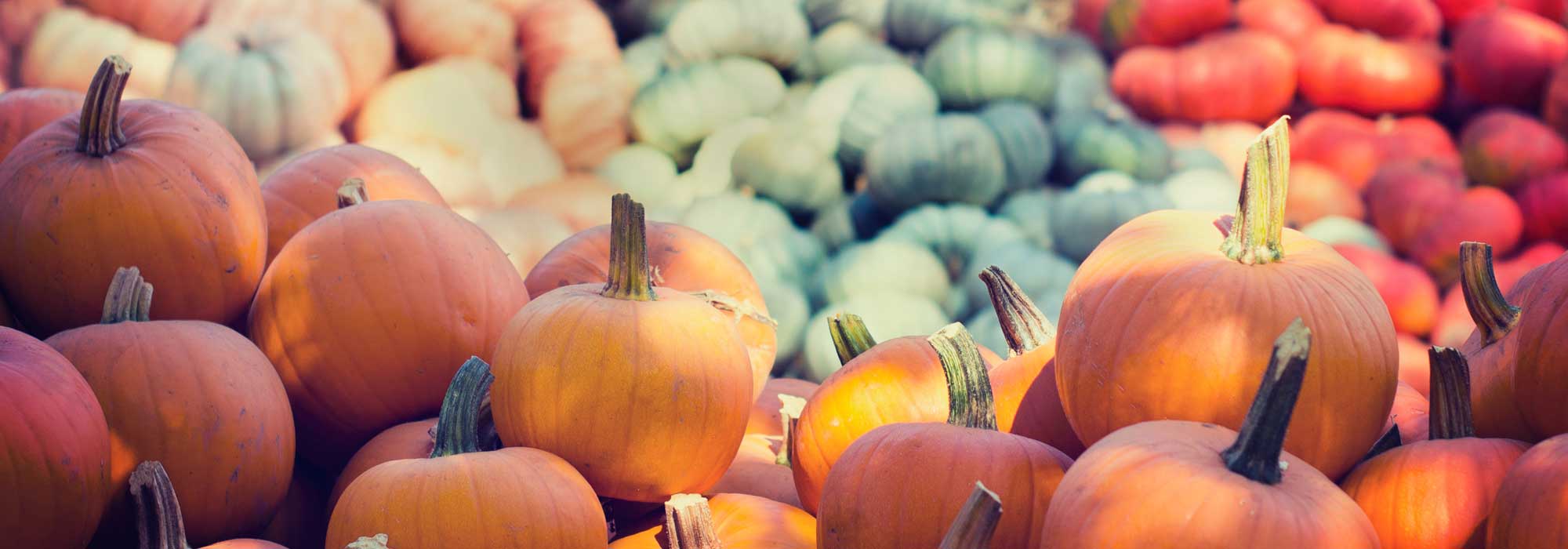
Harvest
Plant habit
Foliage
Planting and care
Preparation:
Cucurbitaceae, like a loose, rich and deep soil that remains moist. Dig a hole at least 40 cm (16in) in all directions and fill it with well-decomposed manure and/or compost. In addition to good fertilization, they will need plenty of water and heat, and plenty of space (at least 1 square meter).
Planting:
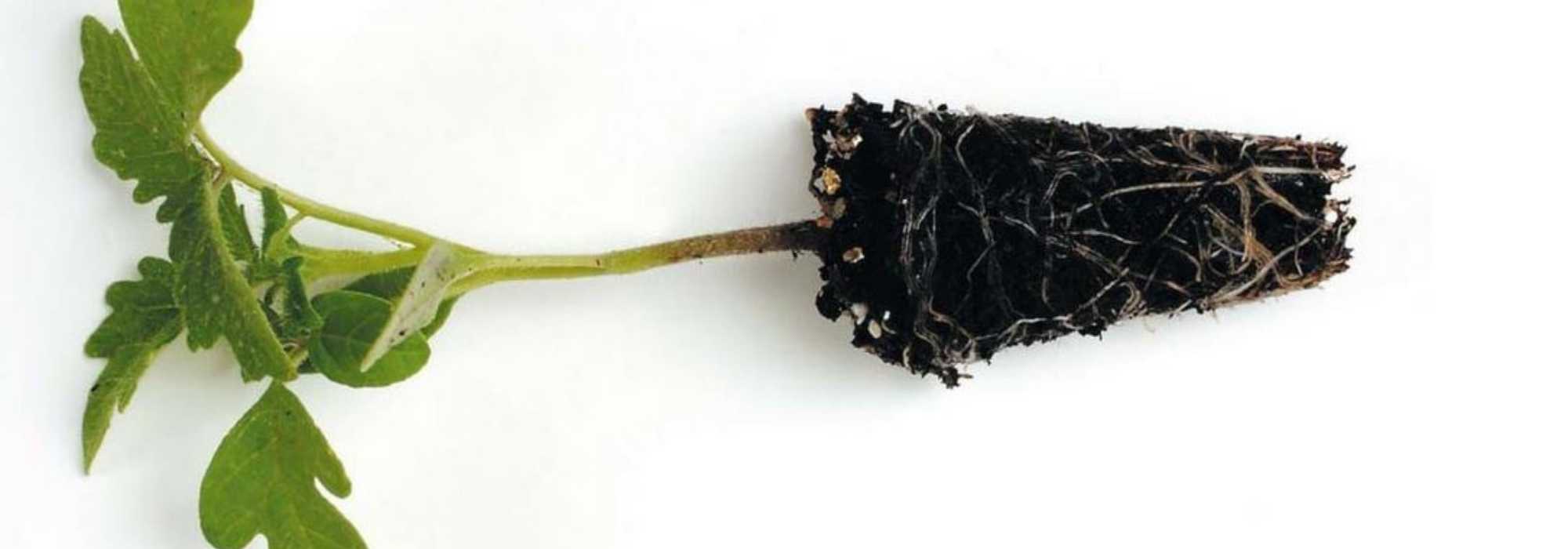
Initially, grow the plug plants by transplanting them into trays or buckets measuring 8 to 13 cm (3 to 5in) in diameter, filled with potting soil. Place them in a warm and bright location. Water regularly.
Planting in the open ground should be done from mid-May to mid-July, when the risk of frost is eliminated and the soil is sufficiently warm. Space the plants one meter apart in all directions. Soak the plants in water for a few moments before planting. Dig a hole 20 cm (8in) in all directions and place compost at the bottom. Plant your young plant with the graft point at ground level, without burying it, and cover with soil. Firmly press down and water.
Maintenance:
Hoe and weed at the beginning of cultivation. We recommend mulching the soil, towards the end of June, with thin successive layers of clippings, mixed if possible with dead leaves. This protection, which keeps the soil moist, also reduces weeding. During cultivation, water regularly and generously (once a week in summer if there is mulching).
Finally, you can protect the young plants from slugs and snails by placing ash or coffee grounds nearby, to be renewed in case of rain.
Trailing varieties need to be pinched. When the plant has 4 or 5 leaves, cut the stem above the first two leaves. Then cut the secondary stems again, after the formation of 3 or 4 fruits.
Cultivation
Care
Intended location
Planting & care advice
-

-
-
-
-
-
-

-
This item has not been reviewed yet - be the first to leave a review about it.
Recently viewed products
Haven't found what you were looking for?
Hardiness is the lowest winter temperature a plant can endure without suffering serious damage or even dying. However, hardiness is affected by location (a sheltered area, such as a patio), protection (winter cover) and soil type (hardiness is improved by well-drained soil).
In temperate climates, pruning of spring-flowering shrubs (forsythia, spireas, etc.) should be done just after flowering.
Pruning of summer-flowering shrubs (Indian Lilac, Perovskia, etc.) can be done in winter or spring.
In cold regions as well as with frost-sensitive plants, avoid pruning too early when severe frosts may still occur.
The harvesting period indicated on our website applies to countries and regions in USDA zone 8 (France, England, Ireland, the Netherlands).
In colder areas (Scandinavia, Poland, Austria...) fruit and vegetable harvests are likely to be delayed by 3-4 weeks.
In warmer areas (Italy, Spain, Greece, etc.), harvesting will probably take place earlier, depending on weather conditions.
The sowing periods indicated on our website apply to countries and regions within USDA Zone 8 (France, UK, Ireland, Netherlands).
In colder areas (Scandinavia, Poland, Austria...), delay any outdoor sowing by 3-4 weeks, or sow under glass.
In warmer climes (Italy, Spain, Greece, etc.), bring outdoor sowing forward by a few weeks.
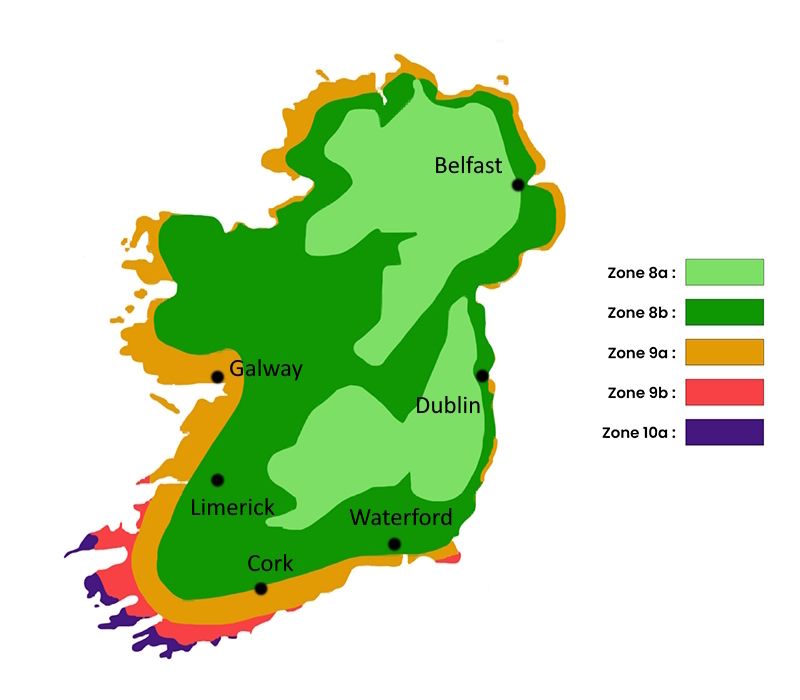
The planting period indicated on our website applies to regions in USDA Zone 9a (East Coast and Midlands: Dublin, Wexford, Waterford, Kilkenny, Portlaoise). It will vary depending on where you live:
- On the west coast and in the north-west (Galway, Limerick, Sligo, Donegal, Westport), delay planting by 1 to 2 weeks in spring and bring it forward by 1 to 2 weeks in autumn compared to the dates given, preferably choosing periods without strong winds.
- In the inland hills and plateaus (Wicklow Mountains, Macgillycuddy’s Reeks, Connemara, Killarney), it is best to plant in spring (April–May) or autumn (September–October), avoiding periods of waterlogged soil in winter and strong winds, which pose the main risk to newly planted trees in these areas.
The flowering period indicated on our website applies to regions in USDA Zone 9a, such as the East Coast and Midlands, including Dublin, Wexford, Waterford, Kilkenny and Portlaoise.
This will vary depending on where you live:
- On the west coast and in the northwest (Galway, Limerick, Sligo, Donegal and Westport), it will be delayed by one to two weeks compared to the given dates, due to stronger Atlantic winds and less spring sunshine.
- In the inland hills and plateaus (the Wicklow Mountains, the Macgillycuddy's Reeks, Connemara and Killarney), flowering will be delayed by two to three weeks. Flowering mainly occurs between May and July, with the limiting factors being less frost and more of the excessive humidity, strong winds and lack of sunshine that are characteristic of these areas.
Shipping country and language
Your country of residence may be:
Your country of residence is:
For a better user experience on our website, you can select:
Your shipping country:
-
 Austria
-
 Belgium
-
 Bosnia & Herzegovina
-
 Bulgaria
-
 Croatia
-
 Cyprus
-
 Czechia
-
 Denmark
-
 Estonia
-
 Finland
-
 France
-
 Germany
-
 Greece
-
 Hungary
-
 Iceland
-
 Ireland
-
 Italy
Italy
-
 Latvia
-
 Liechtenstein
-
 Lithuania
-
 Luxembourg
-
 Malta
Malta
-
 Netherlands
-
 Poland
-
 Portugal
-
 Romania
-
 Serbia
-
 Slovakia
-
 Slovenia
-
 Spain
Spain
-
 Sweden
-
 Switzerland
Language:
-
French
-
 English
-
Spanish
-
Italian
-
German
-
Portuguese
-
Dutch
-
Finnish
My Account
Hello
My wish lists
My cart
Log in / Register
Existing customer?
This form is protected by reCAPTCHA - the Google Privacy Policy and Terms of Service apply.
New customer?
Create an account to track your orders, access our customer service and, if you wish, make the most of our upcoming offers.