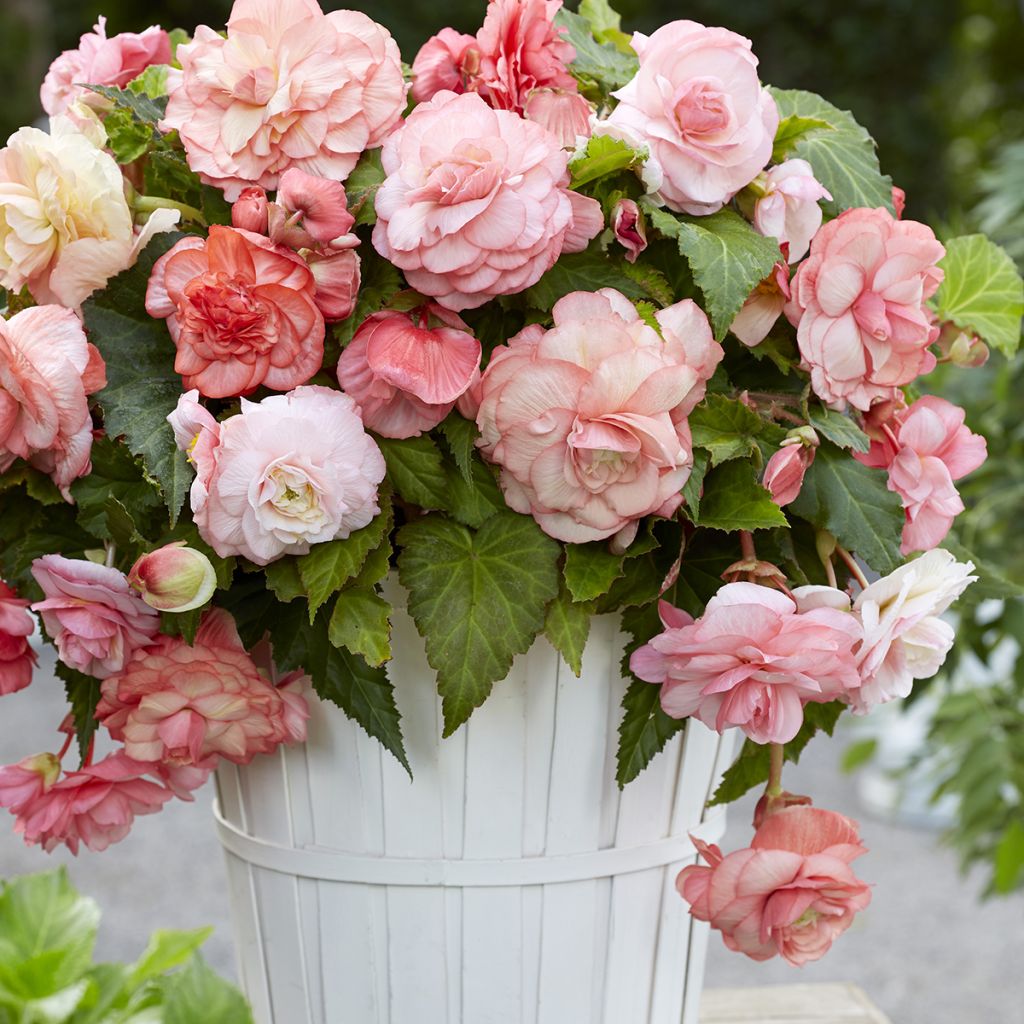
Trailing begonia Splendide Flamenca - Begonia × tuberhybrida
Trailing begonia Splendide Flamenca - Begonia × tuberhybrida
Begonia × tuberhybrida Splendide Flamenca
Trailing begonia
Back-to-school special offer!
Get €10 off for every €50 you spend! And get up to €40 off on a single order.
How does it work?
1. Shop your favourites
Add your favourite plants to your basket. For every €50 you spend (excluding delivery charges, store credit and the plastic-free option), you’ll receive a €10 voucher.
€50 spent = €10 voucher
€100 spent = €20 voucher
€150 spent = €30 voucher
€200 spent = €40 voucher
2. Place your order
Once your basket reaches one of the spending thresholds, place your order. You can even choose your delivery date!
3. Receive your voucher
As soon as your order has been shipped, you’ll receive an email containing your personal voucher code and its value.
4. Use it on your next order
Your voucher is valid for 90 days from the date you receive it. It can be used once only, on a new order worth at least the value of the voucher, excluding delivery charges.
Please note: Vouchers can be combined with other offers, but cannot be split or refunded.
Why not try an alternative variety in stock?
View all →
Available in 1 sizes
This plant carries a 6 months recovery warranty
More information
We guarantee the quality of our plants for a full growing cycle, and will replace at our expense any plant that fails to recover under normal climatic and planting conditions.
Does this plant fit my garden?
Set up your Plantfit profile →
Description
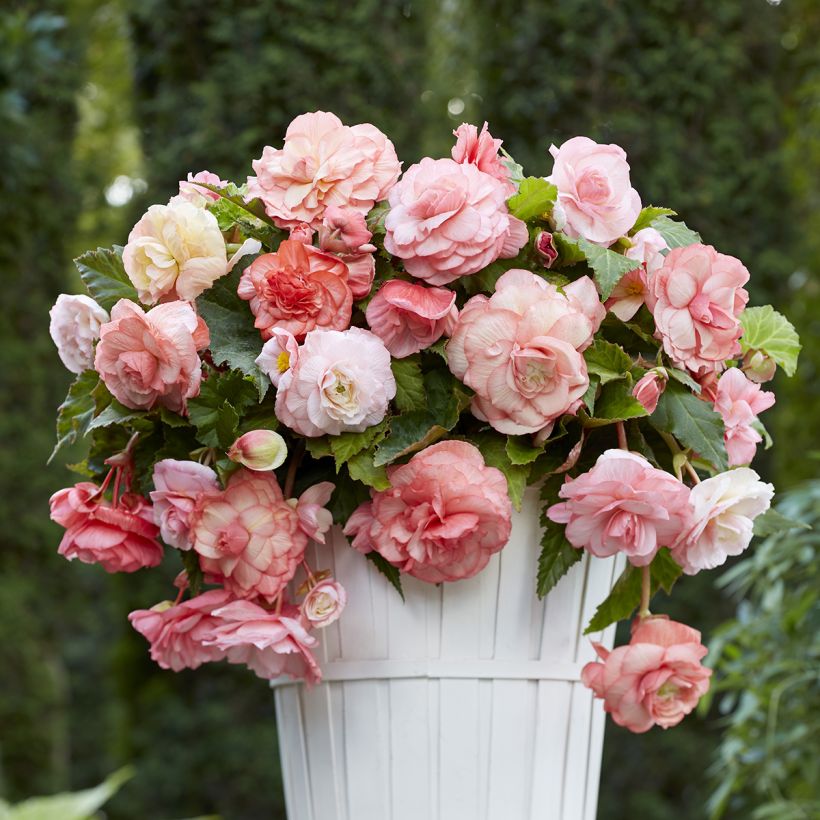
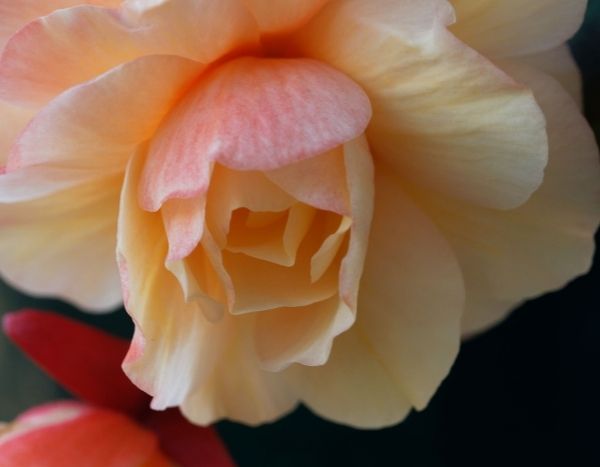
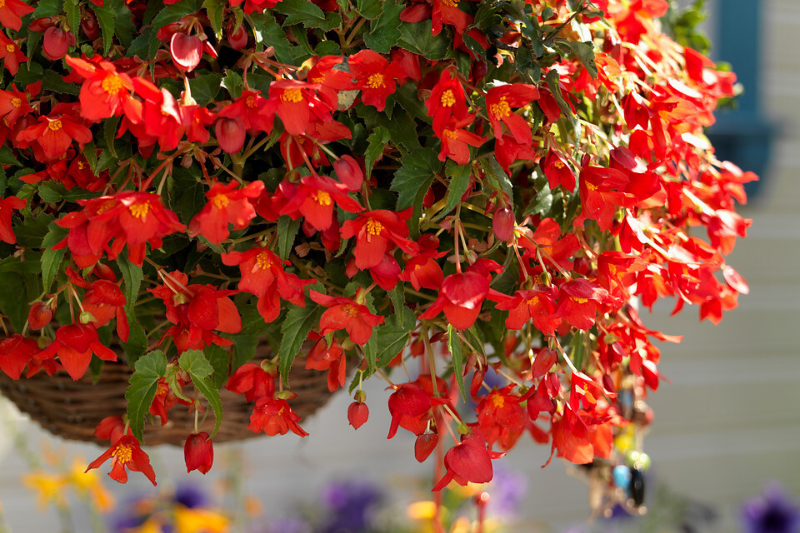
Begonia × tuberhybrida Splendide 'Flamenca’ is an attractive variety known for its large double flowers, which come in pastel pink tones, and its particularly elegant trailing habit. Its flowering is abundant and long-lasting. It blooms for many long months, from early summer until autumn. The light flowers pair beautifully with the bright green foliage and trail elegantly over the sides of the container, be it a pot, planter, or hanging basket, creating a superb display. Perfect for brightening up partially shaded terraces and balconies, this non-hardy plant can flower for several years if its tuber is overwintered frost-free.
Begonia is the main member of the Begoniaceae family, which includes only one other, Hillebrandia, represented by a single species. The Begonia genus, named in honour of Michel Bégon, a great plant collector of the 17th century, is extremely prolific, with no fewer than 2000 wild species counted! To these are added numerous hybrids, including Tuberous Begonias (Begonia x tuberhybrida), whose origins are lost in the multitude of cross-breedings carried out since 1870 between several species (Begonia boliviensis, B. davisii, B. rosaeflora, etc.) and hybrids. The 'Flamenca' cultivar is part of the Splendide horticultural series, itself included in the "Pendula" group, in other words, trailing Begonias.
Each spring, the plant regenerates from its tuber, which is the survival organ and allows it to overwinter in a similar way to Dahlias (kept dry and frost-free). The Begonia then grows rapidly in spring, forming arching, fleshy stems adorned with asymmetrical leaves. The beautiful, bright to dark green leaves with a glossy surface are finely toothed around their edges. In about two months, it will reach around thirty centimetres in height with a spread of 45 to 55 cm. From June onwards, the plant begins to produce floral buds that open into large double flowers, measuring 6 to 10 cm in diameter. They are very sculptural, reminiscent of certain roses or camellias, with their petals overlapping one within another. The beautiful bright to salmon pink flowers, sometimes even subtly tinged with orange, open to reveal their centre at full maturity, while their colour tends to lighten. These variations in shape and colour coexist as new flowers bloom, creating a particularly decorative scene. Regularly fed with fertiliser, this Begonia will offer its lavish flowering until the first frosts of October, provided faded flowers are regularly removed to prevent the plant from tiring. Begonia Splendide 'Flamenca' doesn't like bright sunshine but, has few rivals for illuminating partially shaded spots, in the garden or on a terrace.
Plant your Begonia Flamenca in a hanging basket to achieve a superb display for many long months. Borne on long, flexible peduncles, the flowers will then trail from all sides, giving the plant its originality. Pair it with Fuchsias, which also enjoy partial shade, and whose equally artistic flowers will create a contrast in shape and colour. If you place it in a wide bowl or trough, you will have room to incorporate other plants, such as white compact Impatiens Sunpatiens, which will pair well with it, or even dwarf Hostas, which, in addition to their pastel flowering, will create beautiful foliage contrasts.
Report an error about the product description
Trailing begonia Splendide Flamenca - Begonia × tuberhybrida in pictures
Plant habit
Flowering
Foliage
Botanical data
Begonia
× tuberhybrida
Splendide Flamenca
Begoniaceae
Trailing begonia
Cultivar or hybrid
Planting and care
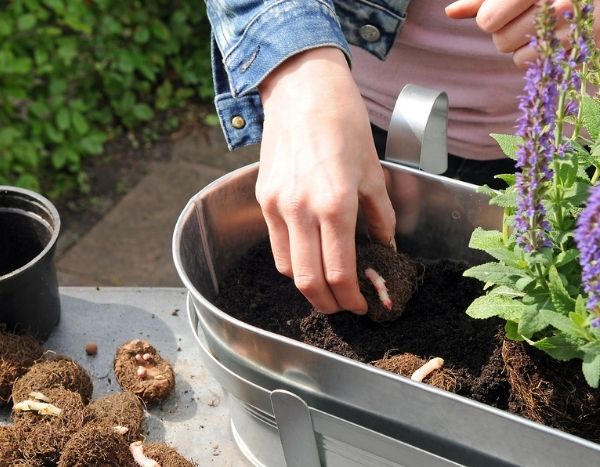
Plant your Begonia Splendide Flamenca in a shaded or lightly sunny position, in light and moist soil, rich in humus. Begonias dislike overly heavy soils; lighten it if necessary with sand. Plant after the last frosts, one per pot of about twenty centimetres, or spaced 25 cm apart in open ground. Position the tuber with the concave (hollow) part facing upwards and then cover with 5 cm of soil. As with Dahlias, you can accelerate their cycle by planting them as early as February, in sheltered pots, moving them outdoors in May.
Water very regularly. Apply begonia fertiliser at planting, then twice a month during the season. Remove faded flowers to encourage new flower buds.
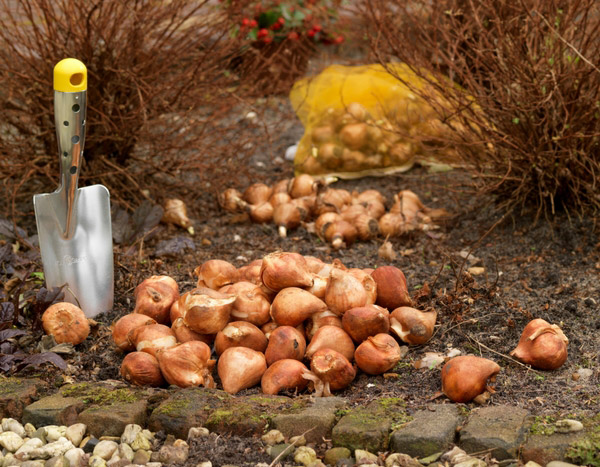
Dig up the bulbs before the first frosts, and store them in a little peat, in a dry and cool place, during the winter. It is a shade plant that will grow better if it receives a few hours of sunlight per day. Additionally, it is quite sensitive to powdery mildew and nematodes and requires regular, but not excessive, watering.
Begonia is a frost-tender plant, so it cannot tolerate sub-zero temperatures. For this reason, it is often grown in containers that are easy to bring into heated greenhouses or conservatories at the first chill. If it is in open ground, it is time to remove them and store them under cover until the following spring.
Planting period
Intended location
Care
Planting & care advice
-

-
-
-
-
-
-

-
This item has not been reviewed yet - be the first to leave a review about it.
Recently viewed products
Haven't found what you were looking for?
Hardiness is the lowest winter temperature a plant can endure without suffering serious damage or even dying. However, hardiness is affected by location (a sheltered area, such as a patio), protection (winter cover) and soil type (hardiness is improved by well-drained soil).
In temperate climates, pruning of spring-flowering shrubs (forsythia, spireas, etc.) should be done just after flowering.
Pruning of summer-flowering shrubs (Indian Lilac, Perovskia, etc.) can be done in winter or spring.
In cold regions as well as with frost-sensitive plants, avoid pruning too early when severe frosts may still occur.
The harvesting period indicated on our website applies to countries and regions in USDA zone 8 (France, England, Ireland, the Netherlands).
In colder areas (Scandinavia, Poland, Austria...) fruit and vegetable harvests are likely to be delayed by 3-4 weeks.
In warmer areas (Italy, Spain, Greece, etc.), harvesting will probably take place earlier, depending on weather conditions.
The sowing periods indicated on our website apply to countries and regions within USDA Zone 8 (France, UK, Ireland, Netherlands).
In colder areas (Scandinavia, Poland, Austria...), delay any outdoor sowing by 3-4 weeks, or sow under glass.
In warmer climes (Italy, Spain, Greece, etc.), bring outdoor sowing forward by a few weeks.
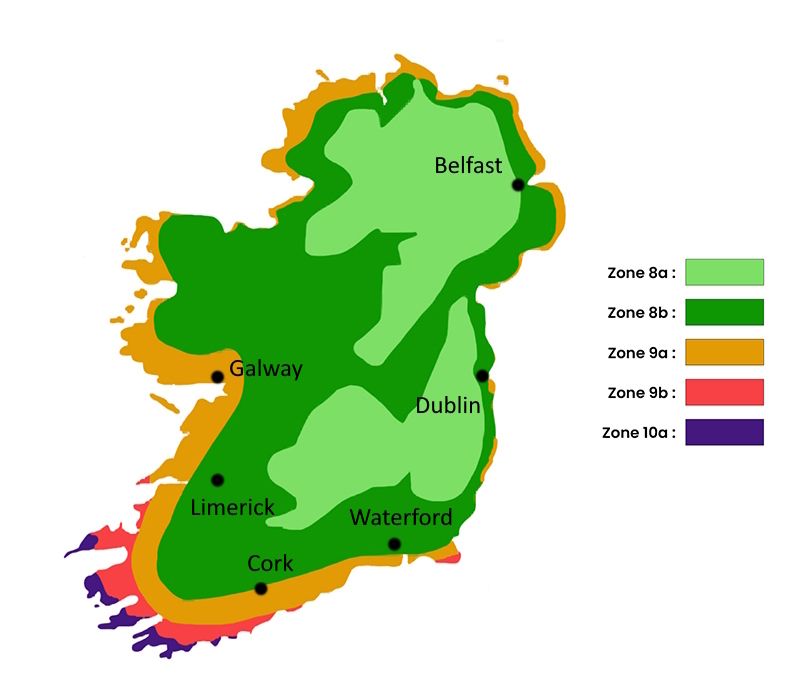
The planting period indicated on our website applies to regions in USDA Zone 9a (East Coast and Midlands: Dublin, Wexford, Waterford, Kilkenny, Portlaoise). It will vary depending on where you live:
- On the west coast and in the north-west (Galway, Limerick, Sligo, Donegal, Westport), delay planting by 1 to 2 weeks in spring and bring it forward by 1 to 2 weeks in autumn compared to the dates given, preferably choosing periods without strong winds.
- In the inland hills and plateaus (Wicklow Mountains, Macgillycuddy’s Reeks, Connemara, Killarney), it is best to plant in spring (April–May) or autumn (September–October), avoiding periods of waterlogged soil in winter and strong winds, which pose the main risk to newly planted trees in these areas.
The flowering period indicated on our website applies to regions in USDA Zone 9a, such as the East Coast and Midlands, including Dublin, Wexford, Waterford, Kilkenny and Portlaoise.
This will vary depending on where you live:
- On the west coast and in the northwest (Galway, Limerick, Sligo, Donegal and Westport), it will be delayed by one to two weeks compared to the given dates, due to stronger Atlantic winds and less spring sunshine.
- In the inland hills and plateaus (the Wicklow Mountains, the Macgillycuddy's Reeks, Connemara and Killarney), flowering will be delayed by two to three weeks. Flowering mainly occurs between May and July, with the limiting factors being less frost and more of the excessive humidity, strong winds and lack of sunshine that are characteristic of these areas.
Shipping country and language
Your country of residence may be:
Your country of residence is:
For a better user experience on our website, you can select:
Your shipping country:
-
 Austria
-
 Belgium
-
 Bosnia & Herzegovina
-
 Bulgaria
-
 Croatia
-
 Cyprus
-
 Czechia
-
 Denmark
-
 Estonia
-
 Finland
-
 France
-
 Germany
-
 Greece
-
 Hungary
-
 Iceland
-
 Ireland
-
 Italy
Italy
-
 Latvia
-
 Liechtenstein
-
 Lithuania
-
 Luxembourg
-
 Malta
Malta
-
 Netherlands
-
 Poland
-
 Portugal
-
 Romania
-
 Serbia
-
 Slovakia
-
 Slovenia
-
 Spain
Spain
-
 Sweden
-
 Switzerland
Language:
-
French
-
 English
-
Spanish
-
Italian
-
German
-
Portuguese
-
Dutch
-
Finnish
My Account
Hello
My wish lists
My cart
Log in / Register
Existing customer?
This form is protected by reCAPTCHA - the Google Privacy Policy and Terms of Service apply.
New customer?
Create an account to track your orders, access our customer service and, if you wish, make the most of our upcoming offers.