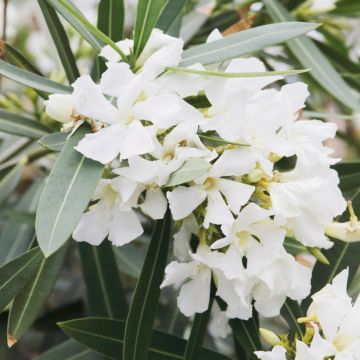

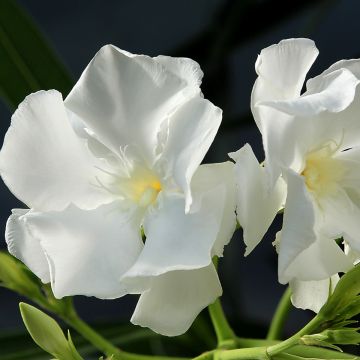

Botanically, Oleander, Nerium oleander, belongs to the Apocynaceae family. It is an evergreen shrub, the sole representative of the genus Nerium. Its natural range extends from the Mediterranean basin to the warm valleys of Western Asia, from southern Europe and North Africa to the Near East, northern India, China and Myanmar. It is found along rivers, in wadi beds and alluvial plains, where the soil remains moist at depth despite scorching summers.
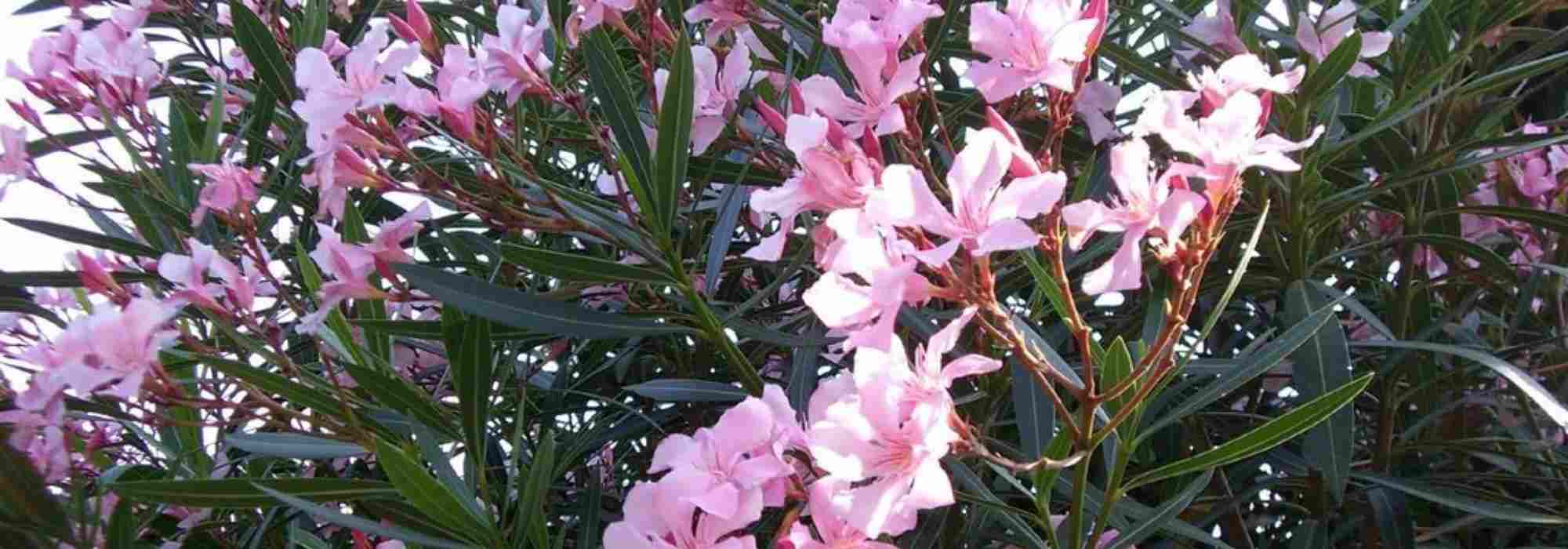
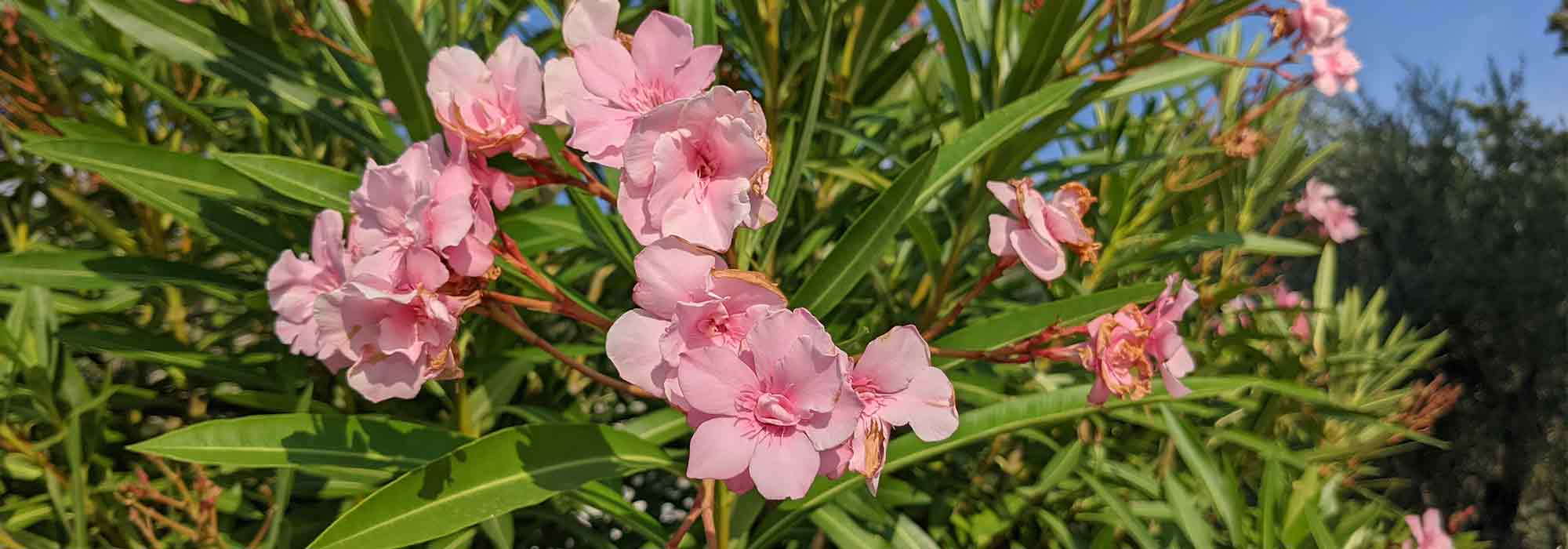
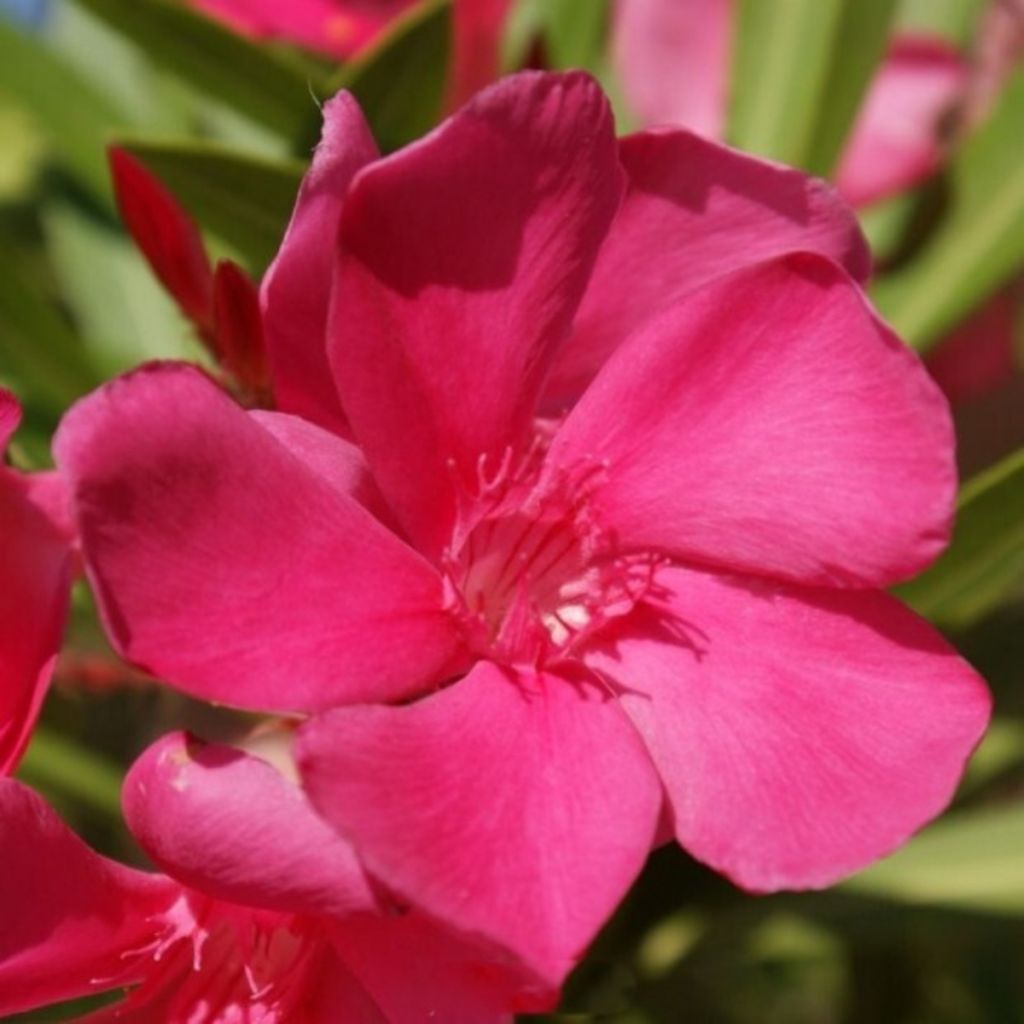
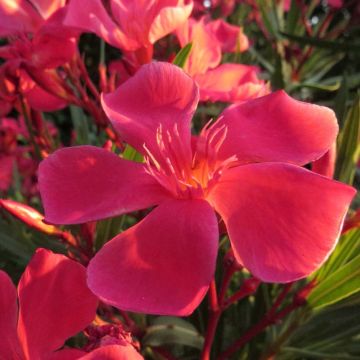
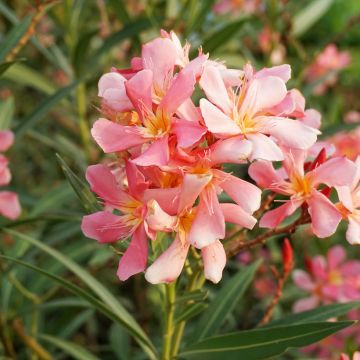
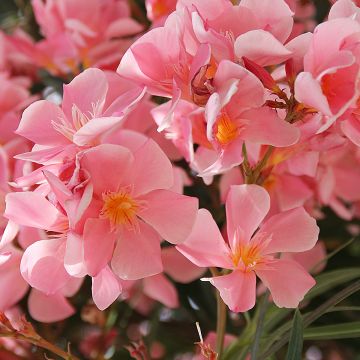
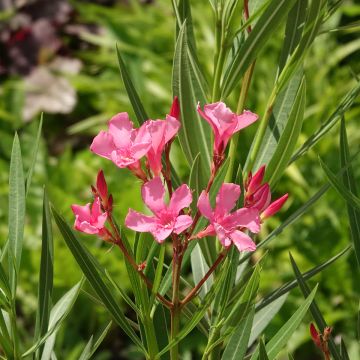
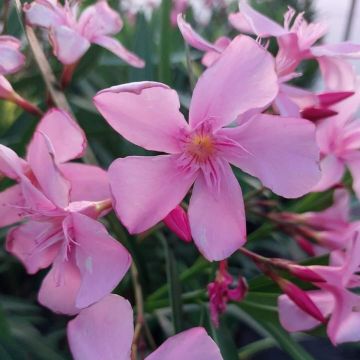
‘Framboise’ is a collection cultivar, with single flowers, capable of flowering from June to September, or even later in warm climates. Compared to the type species, it is distinguished by a more intense flower colour, distinctly raspberry red, increased floriferousness and a well-rounded habit. The shrub forms a dense bush, whose upright branches arch slightly with age. Its growth is rapid: in good garden soil, a young plant reaches 1.50 m in a few years, then 2 to 3 m in height and as much in width at maturity. In a pot, the plant remains more compact. The roots are vigorous, quite deep and very spreading, capable of seeking water at depth; it is therefore prudent to keep a certain distance from pipes.
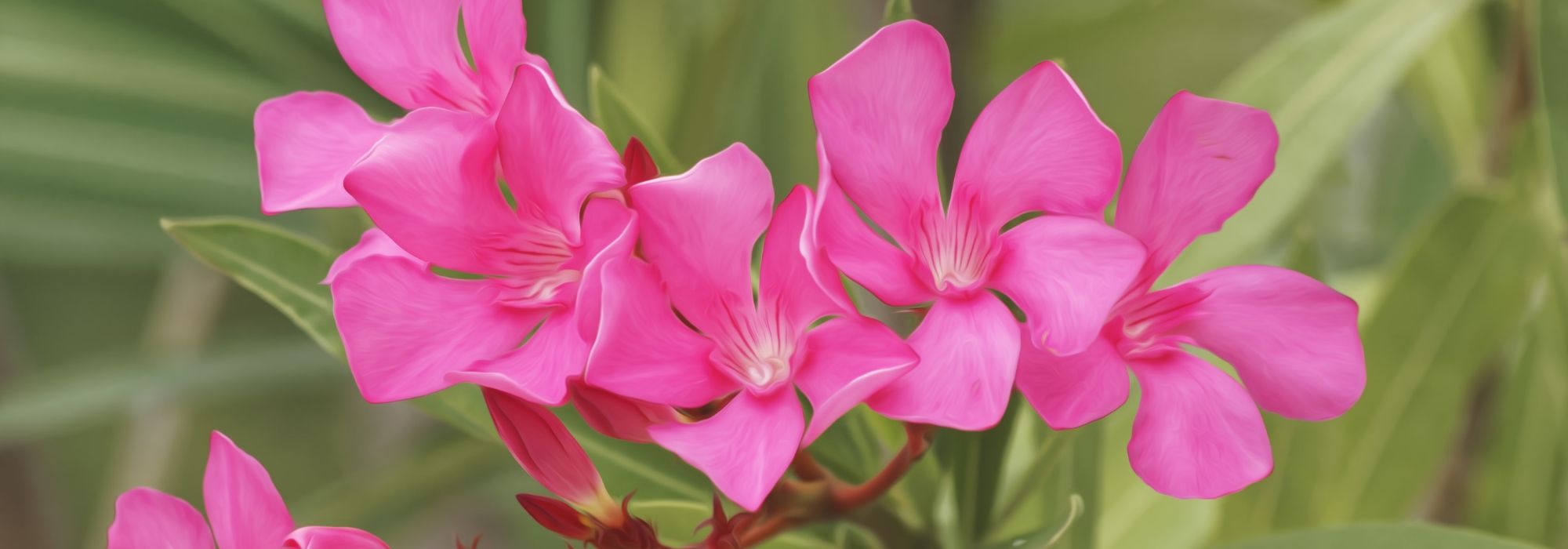
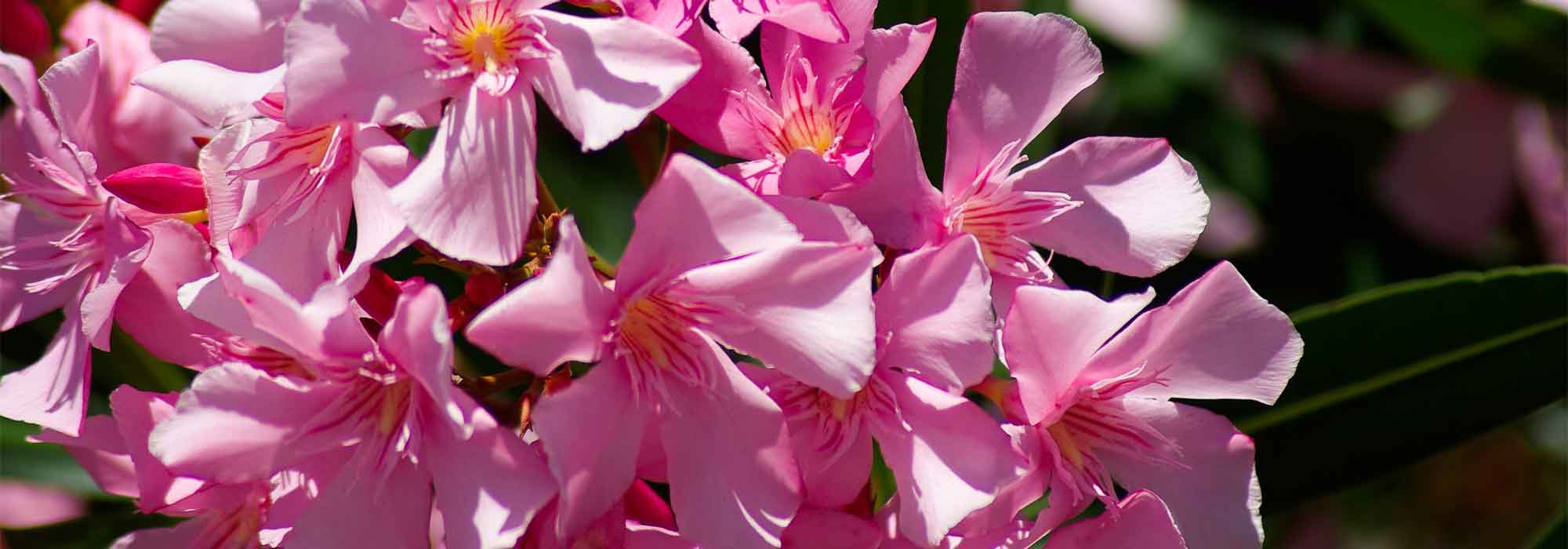
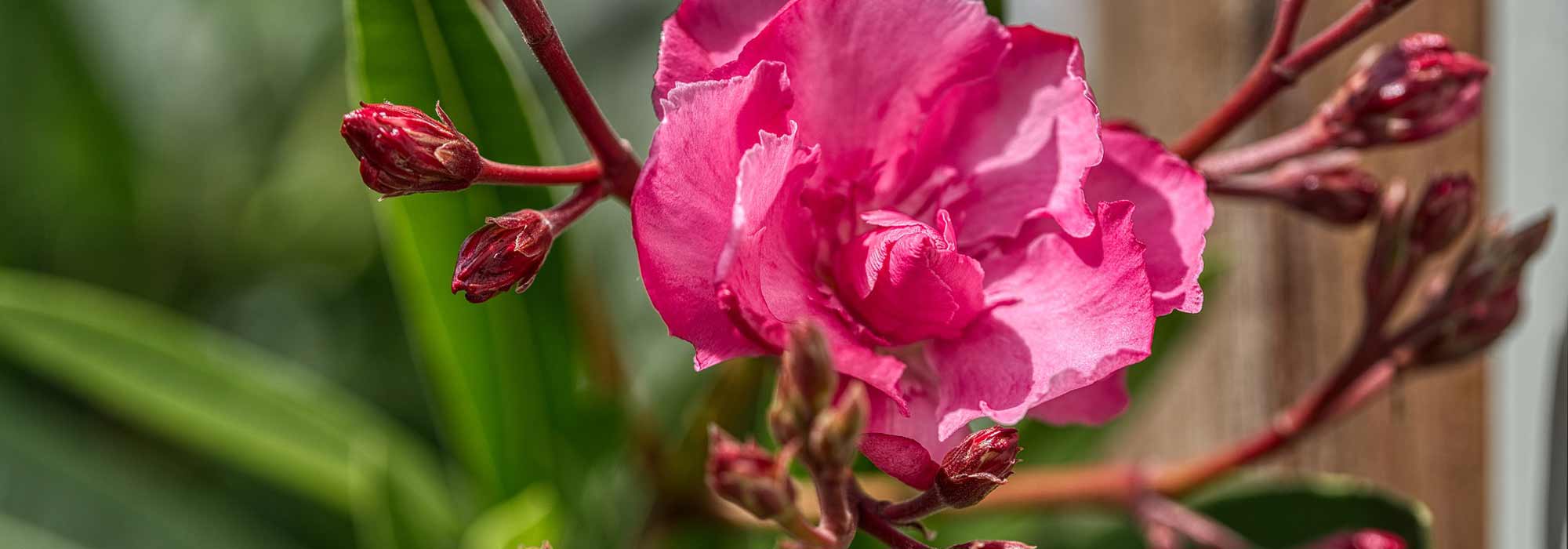
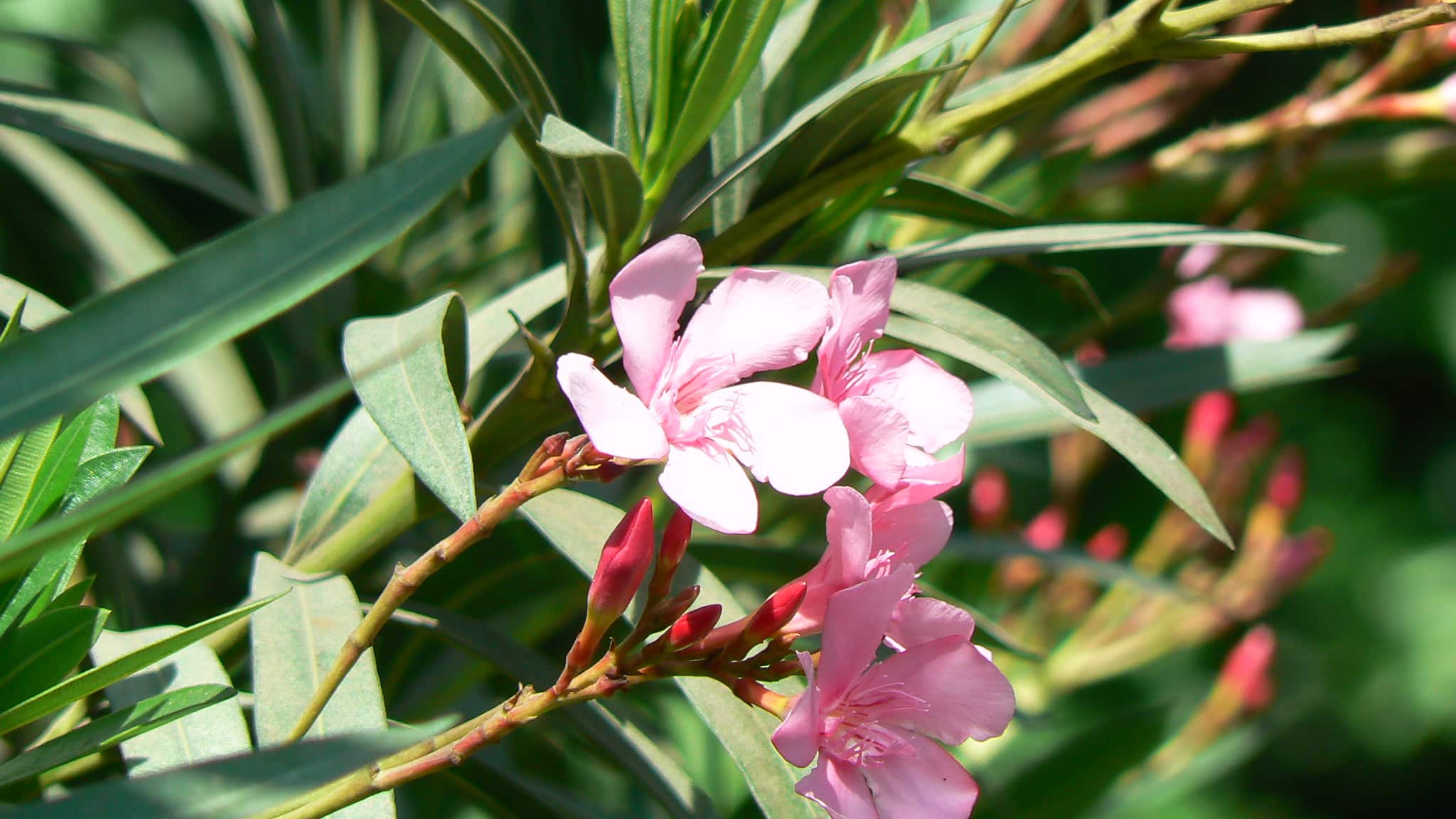
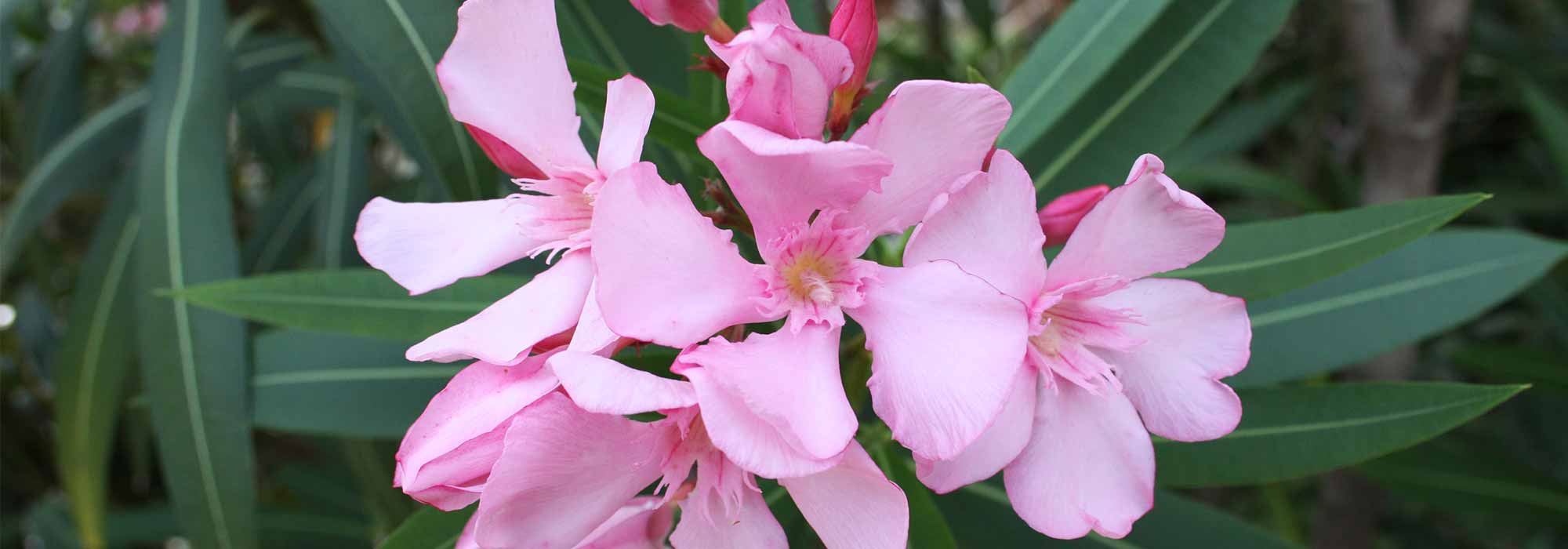
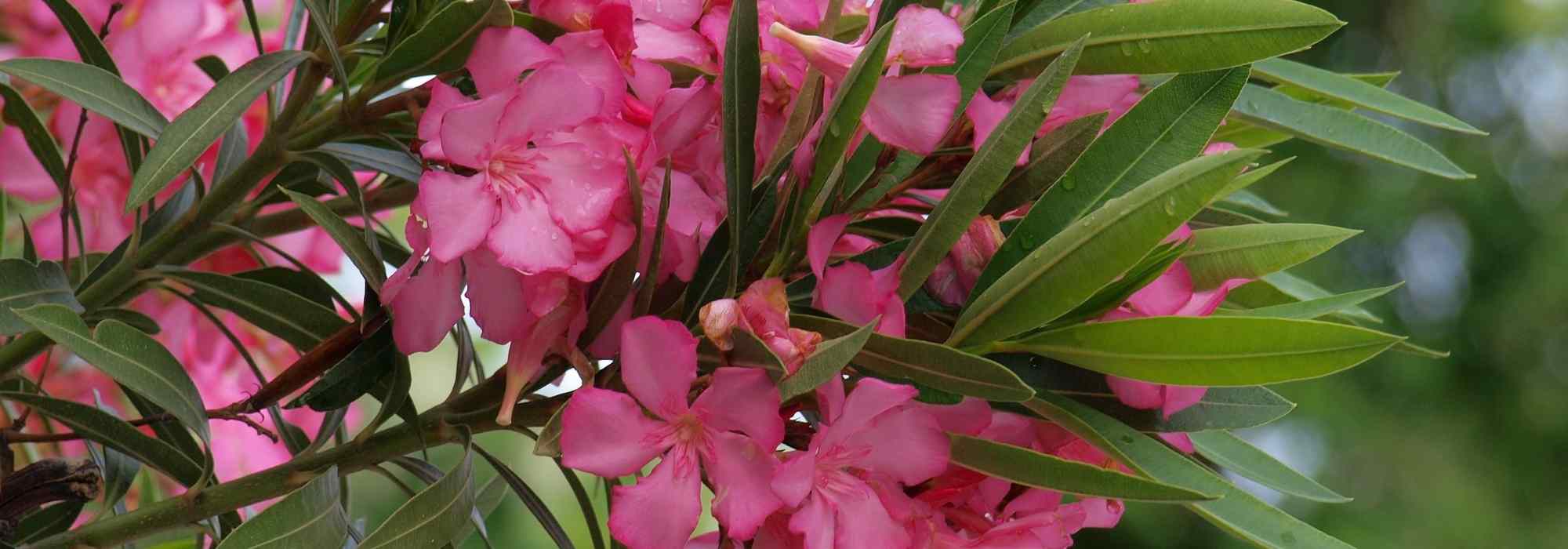
The evergreen leaves are leathery, elongated, grouped in threes or arranged opposite each other on the twigs. They are 8 to 15 cm long, dark green and glossy on top, paler and matt underneath. The stems are initially green, becoming grey-brown with age. The flowering is the great strength of ‘Framboise’: large terminal clusters bear single flowers in the shape of a funnel, 5 to 6 cm in diameter, with five fused petals. Their colour is almost red when open, then a little lighter. In the centre, a small fringed corona repeats the same hues. The fragrance is subtle but pleasant, especially noticeable in warm weather. The flowers attract many insects: bees, bumblebees, butterflies, depending on the region. If the faded inflorescences are left in place, typical fruits of the species form: two long, thin, joined pods, filled with seeds with a tuft of silky hairs, easily carried by the wind.
Like all oleanders, ‘Framboise’ is highly toxic if ingested. The entire plant contains cardiotonic heterosides.
Nerium oleander is a shrub long cultivated in gardens around the Mediterranean. It is found in courtyards, village gardens, along roads and promenades. It is appreciated for its robustness, its summer flowering and its ability to withstand heat, drought, wind and pollution.
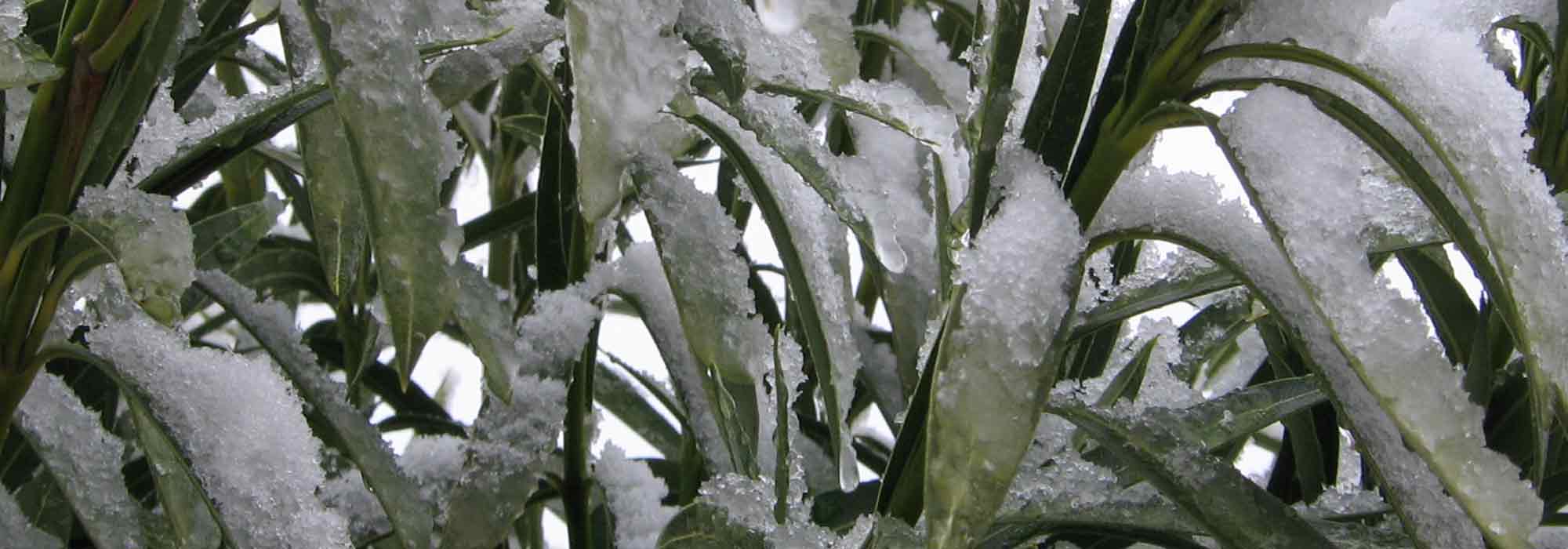
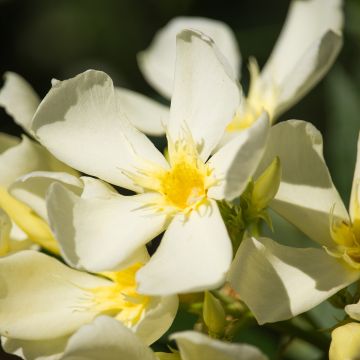
The 'Framboise' Oleander is not very cold hardy (–8/–10 °C in the ground for a mature specimen). In mild climates, it is used as a large structural shrub, in an informal hedge, at the back of a border or as a specimen near a terrace. In the garden, it makes very beautiful mixed hedges with other Nerium oleander. Its raspberry colour harmonises with the deep red of ‘Red Single’, the soft salmon pink of ‘Salmon’ and the pure white of the ‘White’ oleander: you can grow a multicoloured windbreak screen throughout the summer.