





























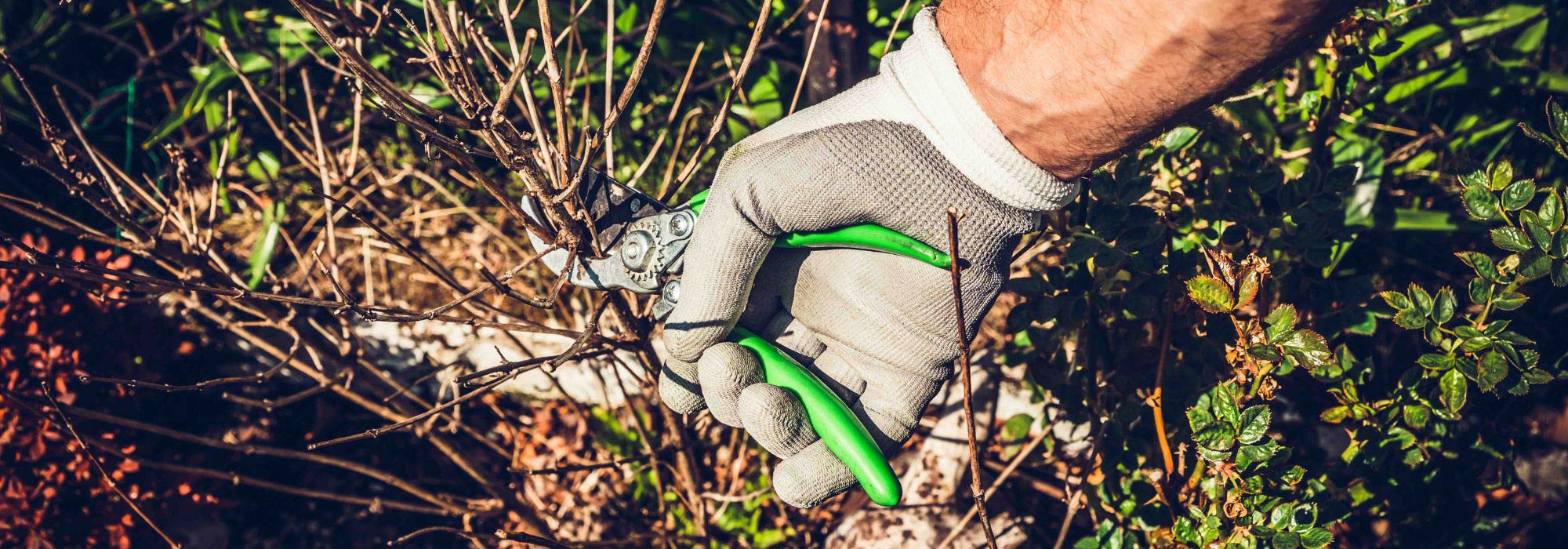
What to prune in autumn?
Pruning tasks to be carried out from September to November
Contents
In meteorology, autumn spans the months of September, October, and November. During this period, the length of the day shortens and sunlight decreases; it is a season of contrasts linked to the transition between the warm season with its summer heat and the cold season with its snowfall. Between the falling of leaves and the first heavy frosts, it is time to carry out some pruning, although, with winter approaching, it is not advisable to perform severe pruning on all plants.
Well-sharpened and disinfected tools are essential, along with appropriate safety equipment to protect you from injuries and falls (gloves, goggles, stable step ladders or ladders, etc.). Also remember to gather the cut branches into bundles on the ground in small corners of the garden. They will provide natural shelters for insects, amphibians, and hedgehogs that will be happy to hibernate there! Here is a brief summary of the pruning tasks to be carried out in autumn.

Ornamental trees and conifers
- On trees, carry out the necessary pruning to restore a balanced shape and remove dead branches. Avoid severe cuts and large pruning that can harm them, and if they have enough space to avoid interference, perform gentle or reasoned pruning.
- To add depth and perspective to the garden, you can initiate a thinning cut on your densest and bushiest subjects, branched from the base or grown in coppice.
- Don’t forget to cover pruning wounds with a healing tree paste.
- Firs (Abies) should not be pruned to maintain their beautiful characteristic conical shape. The same applies to pines (Pinus). However, the lower branches tend to deteriorate due to lack of light, and you can gradually raise the crown (except for ball-shaped, spreading, or bushy forms) starting in October by progressively pruning the lower branches flush with the trunk until reaching the first scaffold branches. You can take this opportunity to rebalance the shape by cutting a few twigs, knowing that the tree does not produce new shoots on its old wood. Remove dead wood and small branches growing inside the crown to clear the main branches and reduce wind resistance.
- The pruning of pollarded trees is carried out from mid-November (until mid-March), during the dormant period. The cut should be clean to allow for a crown regrowth from the section. It is done with a pruning saw or a branch cutter.
- Training and special prunings (cloud pruning or niwaki, for example) can be done during the period between September and April for conifers and evergreen broadleaves. Deciduous species are pruned during the dormant season, that is, between November and the end of March.
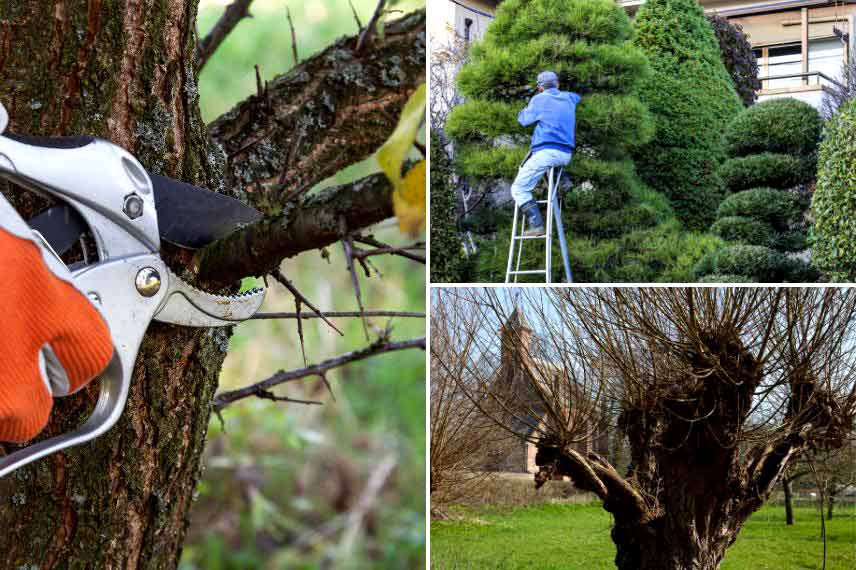
Natural shapes, thinning, cloud forms, or pollards: in autumn, prune the trees!
Read also
What to prune in winter?Fruit trees and soft fruits
- Stone fruit trees should be pruned in early autumn (the pruning of pip fruit trees will take place in December). To proceed correctly, find our tips for properly pruning low-stem fruit trees, standard fruit trees, and young shoot fruit trees.
- The cherry tree is difficult to prune, as this creates wounds that serve as entry points for diseases and encourages gum flow (gummosis: secretion of a “resin” on the wounds), which weakens the tree. However, it is sometimes necessary to prune it to limit its size or when certain branches become too fragile. Pruning of the cherry tree is done every 3 to 4 years in autumn, after leaf fall.
- In southern regions, where the climate is mild, you can prune fig trees just after the harvest, that is, between October and November.
- Also prune hazel trees and walnut trees.
- Discover how to prune medlar trees (Mespilus germanica); intervention should occur after fruiting, which generally takes place from October to December, during a frost-free period. This light pruning will only be done every 5 years.
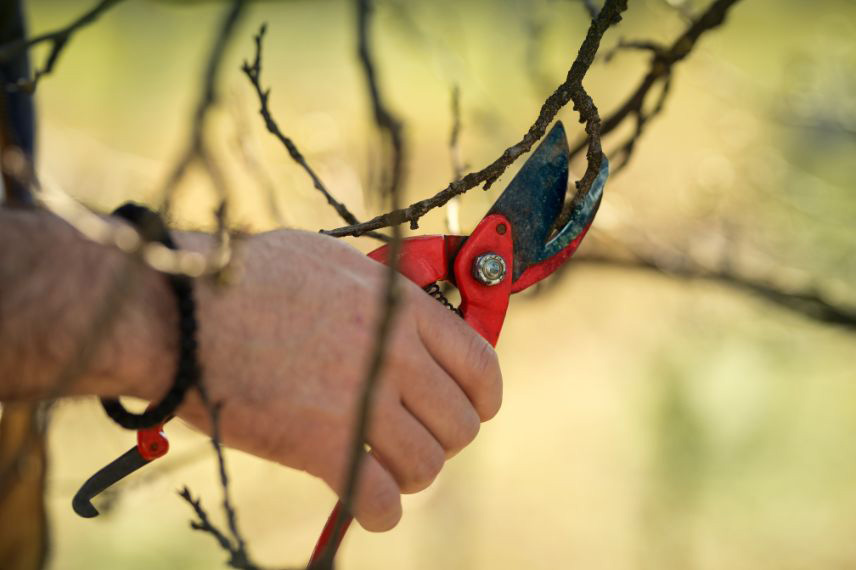 In autumn, prune stone fruit trees.</caption]
Roses
The main pruning of repeat flowering roses is done at the end of winter or the beginning of spring. However, in autumn, you can carry out a pre-pruning for cleaning. While not essential, it will still make your life easier in spring when it comes to more severe pruning. This pruning is not recommended in very cold regions, and areas with mild winters can easily do without it. During this pre-pruning, remove dead wood and broken or damaged branches, which are gateways to diseases.
Count 4 or 5 buds and cut just above at an angle. Remember that cuts should always be a few millimetres above a bud and should be slanted to avoid water pooling on the cuts, angled away from the bud so that water does not run onto it.
→ Discover in detail the technique of pruning roses in autumn and Christmas pruning.
Read also
Pruning fruit trees in palmateOrnamental and hedge bushes
- In autumn, you can carry out maintenance pruning of shrubs that flowered this summer, as they bloom on the wood produced in early spring. Be careful not to prune spring-flowering shrubs at the same time, as this may compromise their next flowering. Remove about twenty centimetres from the tips of the flowering branches. Remember to keep a few branches on species that produce berries favoured by birds. Cut one or two of the oldest branches and thin out the interior of the branches by removing any that are crossing, weak, or dead wood.
- In September-October, prune hedges as well as topiary. Pruning at this time allows enough time for healing and new shoots to develop before winter. You can work on free-standing hedges by trimming or reducing the volume of shrubs that are becoming too large, as well as on evergreen hedges trimmed to shape (Privet, Eleagnus, Cherry laurel, Viburnum, Escallonia…). Use shears or a well-sharpened hedge trimmer.
- In temperate regions, you can prune thujas and chamaecyparis (False cypress) until November.
- If you live in a region with a mild climate, you can prune oleander until the end of September.
- Prune the flower spikes of Phlomis if you do not wish to leave them over winter, despite their decorative aspect. Be cautious of the allergenic properties of this shrub when pruning.
- Once flowering is finished, you can remove the faded flowers from hydrangeas in October and take the opportunity to eliminate dead or damaged branches. This autumn pruning is mainly aesthetic and optional. At this time of year, avoid severe pruning that could weaken the shrub before winter, making it more susceptible to cold. The most significant pruning will take place at the end of winter or early spring, around March.
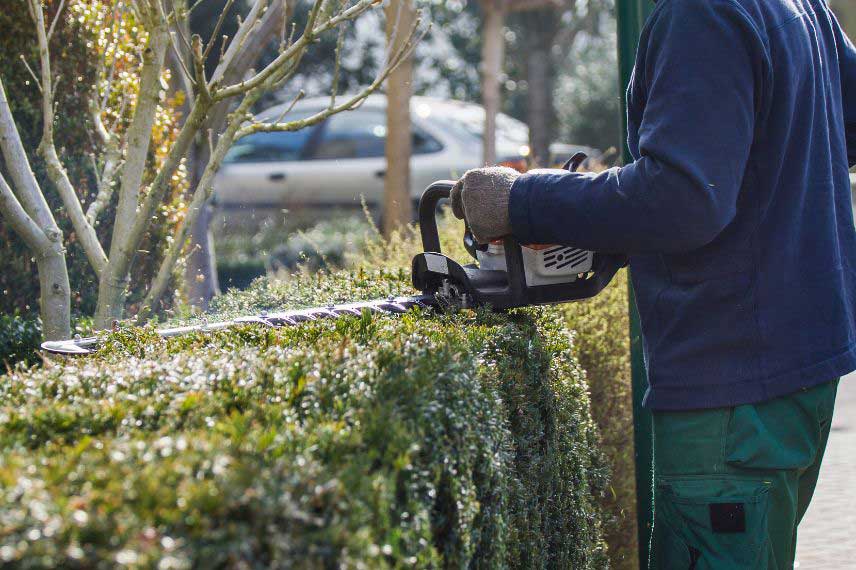
Hedges can be pruned in autumn
Climbing
- In mid-autumn, prune the climbing plants to reduce the volume of branches that may have developed chaotically.
- Just after the harvest, prune the Kiwis between October and December: cut back the branches that bore fruit by a quarter and leave 2 to 3 buds after the last group of harvested fruits. Shorten the other shoots, leaving 3 to 4 buds, and retain a few main branches to form the framework. The fruiting pruning will take place in summer.
- As ivy can quickly become invasive, regular pruning will prevent any overflow by simply pinching back the young branches to encourage ramification. In autumn, you can rejuvenate the base by cutting back old shoots, which will help maintain control. Be cautious, as ivy has formidable allergenic properties. Be sure to wear gloves, cover your body, and possibly wear a mask.
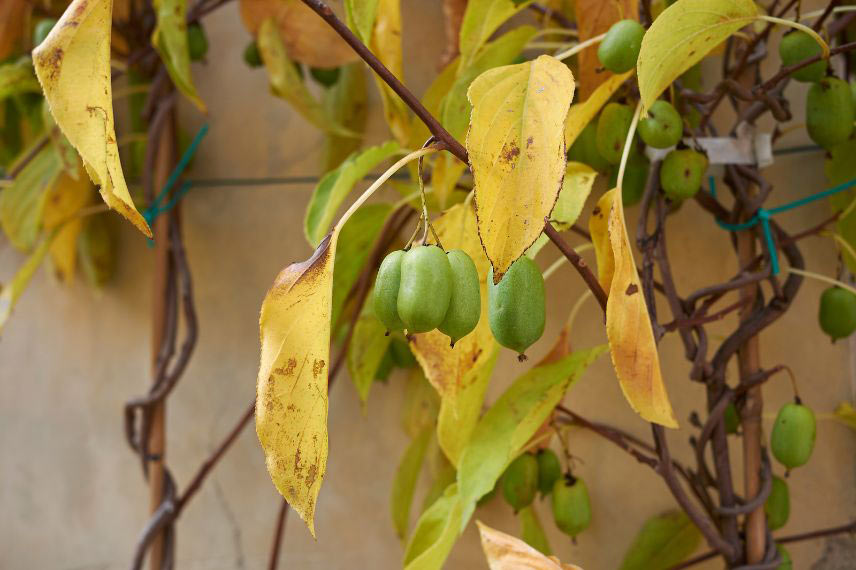 Kiwis are pruned in autumn, after the fruit harvest.
Perennials and grasses
In September, cut back the spent stems of perennial plants. In October, you can cut back the stems of deciduous and spent perennials at the base. However, while this pruning is aesthetic and gives a “clean” look to the garden, it is not necessary to carry out this pruning in autumn. Indeed, not only is it not useful for these plants, but removing their faded leaves can even be detrimental to hardy plants. They serve as natural insulation that helps protect them from the cold in winter.

- Subscribe!
- Contents

Comments