






























What to do in the garden in May?
A bustling activity awaits you, but take the time to enjoy the beautiful days!
Contents
May is a flowering month: everything bursts into life and everything grows, and the lily of the valley with its poetic bells heralds the beautiful days. May is also a month where one finds a balance between the desire to linger and the urge to accomplish all those tasks set for the garden. The Ice Saints – on 11th, 12th, and 13th May – mark the starting signal for planting and sowing outdoors, but remember to protect the most delicate young plants until they harden off and the temperatures truly warm up!
Are you unsure where to start with your gardening tasks and want to know what to do in the garden in May? Follow our tips!

On the side of trees, shrubs, and fruit plants
Container planting can be done all year round, but with the warm season approaching, it’s essential to pay attention to watering. Therefore, monitor the water supply at the base of your recent plantings to ensure their establishment: these plants, having been pampered in the nursery, may experience water stress if neglected!
Ornamental Trees and Conifers
- Continue planting trees and conifers in containers, remembering to stake them properly
- Dig or reshape the watering basins at the base of young trees and conifers to retain water effectively
Fruit Trees and Berries
- Continue planting fruit trees and berries. Discover our selection of easy-to-grow fruit trees across France in Pascale’s article on fruit trees for beginners
- Thin the fruits after their normal physiological drop at this time
- Collect and dispose of fallen young fruits, as they may be infested
- Install pheromone traps against codling moths in apple and pear trees
Shrubs
- You can continue planting shrubs in containers. Remember to soak them for a few minutes to hydrate the root balls
- Remove faded flowers from rhododendrons and azaleas. Be careful, as the buds just below the floral peduncle will bear next year’s flowers: ensure you don’t break them
- After their flowering, complete the pruning of spring-flowering shrubs
- Spread a chlorosis treatment at the base of hydrangeas if they are yellowing
- Finish pruning winter heathers following Virginie T.’s advice
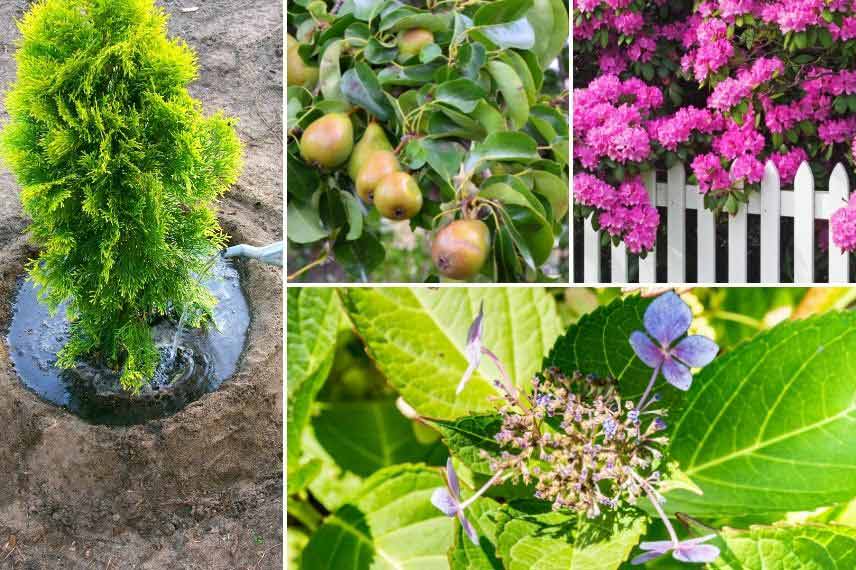
Well-made watering basins allow newly planted vegetation to benefit from every drop of water. In May, thinning fruit trees promises beautiful fruits in the coming months. Azaleas and rhododendrons will benefit from being cleared of their faded flowers, and hydrangeas showing signs of yellowing should be treated with a chlorosis product.
Hedges
- Continue planting hedge shrubs in containers. Encourage a mix of species and choose local plants
→ To promote biodiversity, do not trim hedges between 15 March and the end of July! Find Olivier’s insightful explanations on this topic.
Perennials, grasses, bulbs and climbing plants
In this month of May, a symphony of colours and scents begins in the garden, as perennial plants are increasingly in bloom: Columbines, Campanulas, Bleeding hearts, Foxgloves, Irises, or Lupins, to name just a few…
Perennials and Grasses
- Pick the lily of the valley
- Set up summer-flowering plants, in containers or plug plants
- Pinch back the perennials
- Weed and hoe between the feet of the perennial plants to prevent competition from adventive plants
- Cut back the stems of perennials that have finished flowering, such as Irises, leaving the foliage
- Herbaceous cuttings are made in spring, usually in May-June, from green, young, and tender stems. This way, you can multiply Pelargonium and hardy geraniums, Asters, Clematis, Penstemon, Campanulas, or Sages… Find all Alexandra’s tips in her article on propagation by cuttings.
- Complete the planting of grasses in containers: striking effect guaranteed when combined with perennials!
Bulbs
- Finish planting summer bulbs (Lilies, Alstroemerias, Arums, Tulbaghias, Begonias, Gladioli, or Crocosmias)
Climbers
- Continue planting climbers in containers and attach them to their supports as the shoots grow
- Pinch back the stems of voluble plants that need it
- If you wish to multiply them, layer the climbing plants by laying the flexible shoots on the ground. Alexandra explains everything in her guide on layering
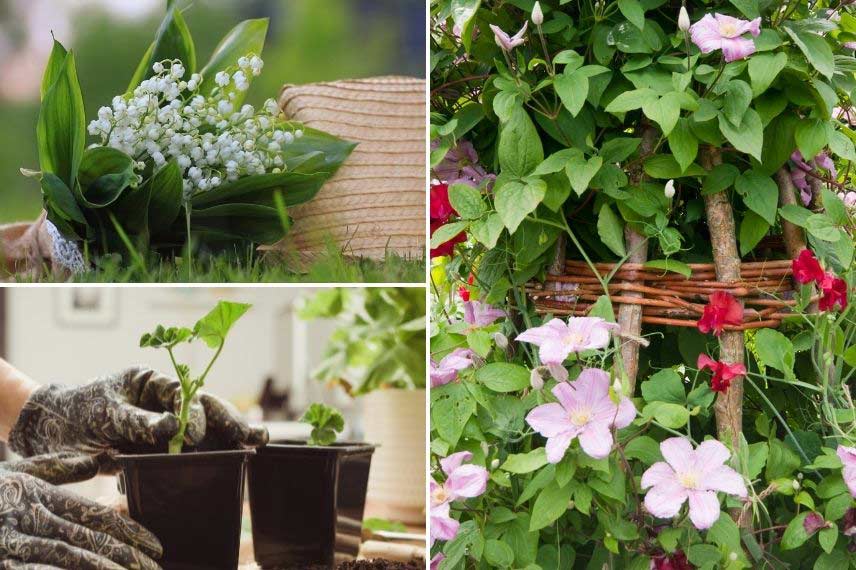
The lovely month of May brings us the long-awaited lily of the valley. Herbaceous cuttings will allow you to easily multiply your favourite perennials, and the climbers, guided on their supports, promise a profusion of flowers!
Roses
- Complete the planting of roses in containers
- If black spots (downy mildew) recur on certain roses, you can regularly spray a horsetail infusion as a preventive measure
- Tie in climbing roses as they grow, using Christine’s advice in her tutorial
- As soon as they appear, remove the suckers that grow below the grafting point
- Remove faded flowers by cutting 2 leaves below the flower to encourage regrowth
- Monitor for aphid attacks and if they occur, respond by following Virginie’s advice
Read also
Lily of the valley: planting and careAnnuals and potted plants
Annuals and potted plants take their place on the terrace or balcony. Think about your upcoming weekends or holidays and take the opportunity to install a drip irrigation system: no more watering chores and enjoy water savings!
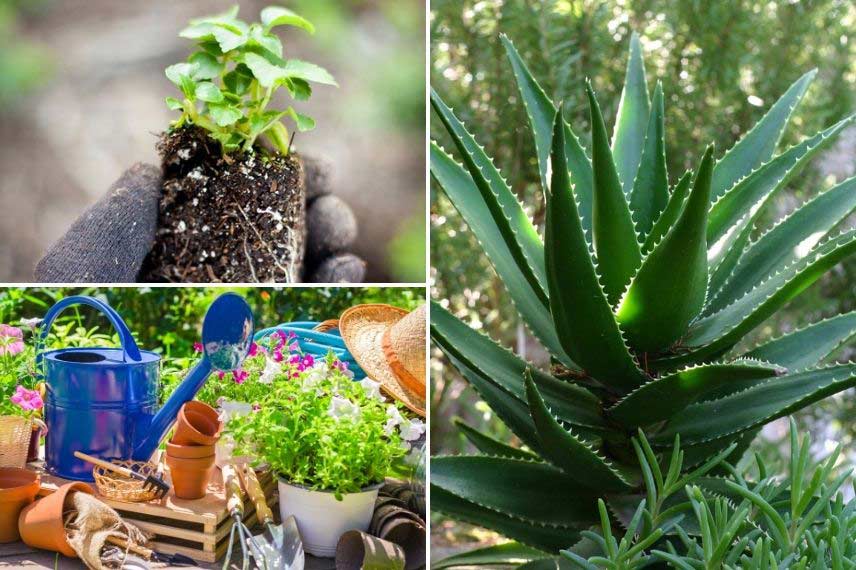 Mini-plants of annuals will allow you to create beautiful flowering pots for the balcony, window sills, and around the house. Gradually expose cacti and succulents to the sun: the return of fine weather will benefit them!
Annuals
- Plant annuals and perennials to create your flowering pots and window boxes. Consider plug plants: they establish well and are very affordable. Also think about decorative foliage; your displays will be attractive even outside flowering periods: Ipomoea Sweet Heart ‘Jet Black’ with purple foliage, Plectranthus coleoides ‘Variegatus’ or Alstroemeria ‘River Valley’ with variegated foliage or Coleus ‘Copinto Daiquiri’ with dark red leaves edged in lime green. These foliage plants are excellent companions for flowers. And remember this principle: no more than two bright colours in a pot, to avoid overcrowding!
- Continue sowing annuals in the garden, thinning out if they are too dense
- Short on inspiration for flowering a shady corner? Consider Impatiens and Fuchsias, classic choices that are always so floriferous
Potted Plants
- After 15 May, bring out the hardiest plants. In the south and along the Atlantic coast, all plants can move to the terrace or balcony, keeping an eye on the weather. To gradually acclimatise them to the light, place your plants in partial shade at first, preferring morning sun
- Expose cacti, succulents, and citrus trees to the sun
- Water your potted plants while considering fertiliser applications. For this, follow Alexandra’s advice in her article: Fertilisers for window boxes and pots: which to choose?
In the vegetable garden
Once the Ice Saints have passed, everything is allowed in the vegetable garden. Your sowing and planting calendar promises to be well filled if you want beautiful harvests throughout the lovely season. Vegetable plants and seeds are waiting for you, roll up your sleeves, grab your tools, and let’s get started!
Planting, sowing, and tasks to do
- Children harvest radishes and salads sown a few weeks ago: teach the little ones to appreciate these perhaps new flavours and observe with them the gradual ripening of strawberries. They will soon be rewarded for their patience!
- Continue planting vegetable plants and sowing vegetables directly in the ground
- Continue planting herbs in the vegetable garden, in pots, or in window boxes
- Plant tomatoes in the ground after the Ice Saints. Place stakes and bury a bit of the base of your plants by adding a handful of nettles to the bottom of the hole to strengthen them. Plant marigolds nearby: they will deter nematodes that attack the roots.
- If not already done, add manure to the strawberry plants
- Plant rhubarb
- Sow endives for next winter. You will transplant them when they have 7 to 8 leaves and harvest them from January to March
- Sow radishes every 10 to 12 days for staggered harvests
- Sow broccoli in pots to transplant to the vegetable garden in July
- Transplant cauliflowers and autumn cabbages
- Weed between the ranks of shallots, onions, and garlic
- In mild regions, harvest the broad beans sown in autumn
- And above all, water all crops generously
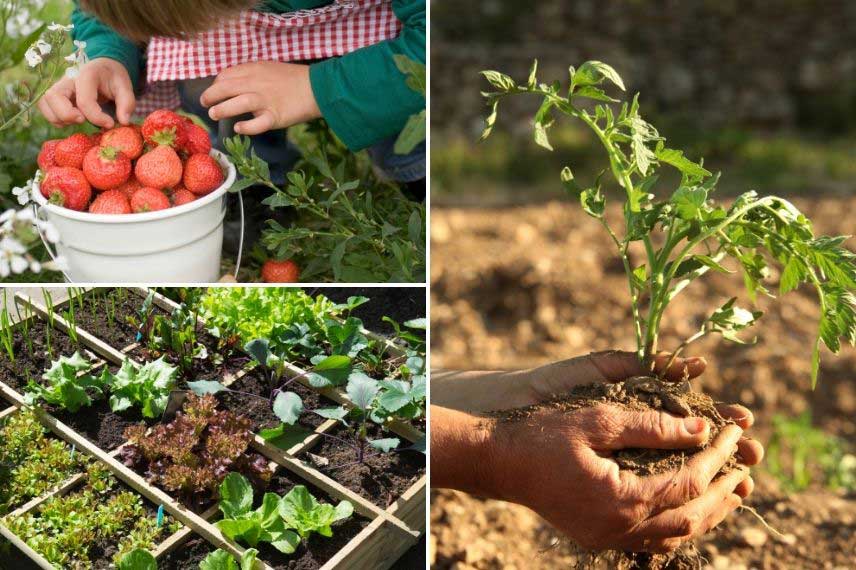 The first strawberries will delight the little ones… and the bigger ones. Once the Ice Saints have passed, sow and plant directly in the ground.
Lawn and various works
The lawn and flowering fallows
- Mowing follows one after the other, unless you had the good idea to let a flowering fallow grow, rich and attractive! If you mow, always do so on a dry lawn and, whenever possible, place the mowing waste on the compost.
- Regularly clean the mower, the spark plug, and the air filter.
- Roll young lawns to encourage their densification.
→ Learn more in How to care for your lawn in spring?
In the ornamental garden
- Weed the beds regularly and mulch any bare soil.
- Prune the edges of the beds following Michael’s advice.
By the pond
- If your garden has a pond or small lake, plant some aquatic species, such as the magnificent Thalia dealbata or the flowering rush Butomus umbellatus.
- Divide overly large clumps of water lilies.
- Be sure to protect the pollarded trees and take the opportunity to observe their development with the children!
→ Gwenaëlle tells you all about caring for a garden pond in spring.
And everything else…
- Watch for the appearance of aphids and other small pests that could attack your crops: in case of an invasion, consider beneficial insects such as ladybird larvae.
- Place dishes filled with water at height, sheltered from predators, in various spots around the garden for the birds.
- Your garden can be an unparalleled refuge for many animals and birds. They appreciate silence to feel safe: make your garden a calm place where they will come to nest this spring.
- A good spring cleaning is essential for the chicken coop! Pascale explains how to proceed.
- Ventilate the greenhouse and conservatory often and provide shade during the hottest hours of the day.
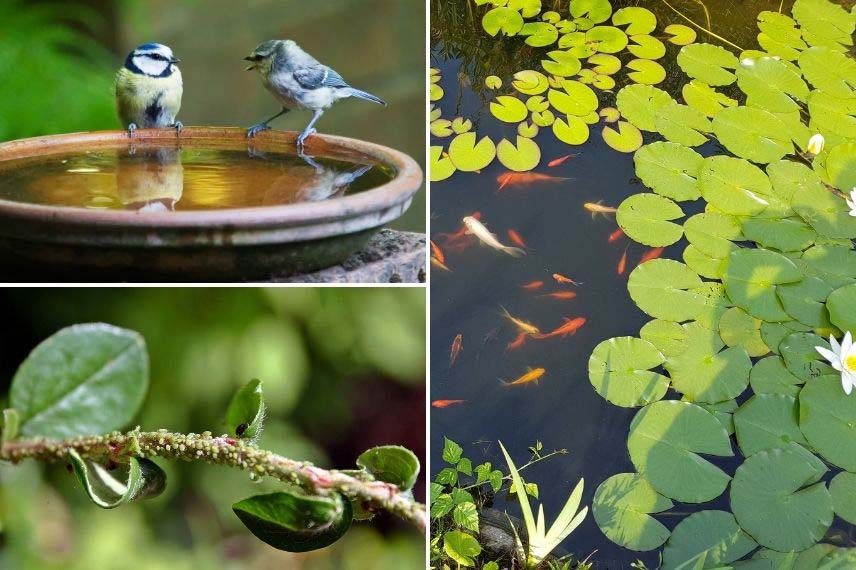
Water is essential for wildlife; provide small drinking stations sheltered from predators. Watch for aphid attacks and promote pond life by planting and dividing aquatic plants.

- Subscribe!
- Contents
![[planting_guide month="May"]](https://www.promessedefleurs.ie/blogwp/wp-content/uploads/2022/05/Que-faire-au-jardin-en-mai.jpg "[planting_guide month=\"May\"]")
Comments