





























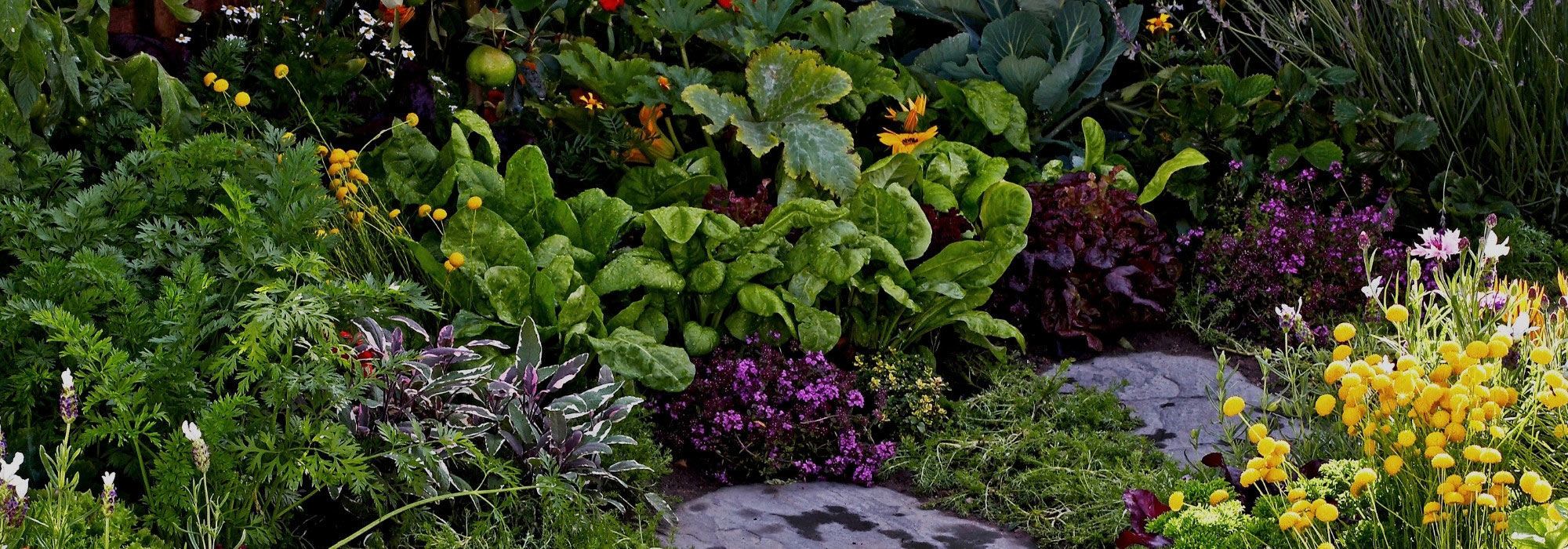
Edimental garden: beautiful and productive at the same time!
Discover the 'edimental' trend or the art of bringing together edible and ornamental plants.
Contents
When edible and ornamental plants coexist happily, the ‘edimental’ trend offers beauty to behold and something to eat. Edimental plants (edimentals in English) are distinguished by their beauty, comparable to ornamental plants, while being edible. It’s beautiful and it’s tasty! Fruits, vegetables, herbs and flowers share the spotlight with ornamental plants to bring an edible garden to life. Let us discover which edimentals they are, and how to incorporate them harmoniously into the garden?

What is the edimental garden?
Edimental is a contraction formed by merging the English words edible and ornamental, designating plants that combine aesthetic appeal with culinary value. An edimental is therefore a plant (a vegetable, a fruit, herbs, flower buds, seeds or leaves) that is both beautiful and edible. The concept is simple: gardens should no longer be merely beautiful; they should also be useful. The aim: to turn every square metre of soil into a nourishing, food-producing patch. In an economy tighter than ever, having a garden that is both beautiful and useful has become a necessity. Our gardens are being rethought in survival and economy mode and are geared toward profitability. The trend is toward a pretty nature-inspired larder.
An edimental garden (‘edimental garden’ for the Anglo-Saxons) is a gardening concept that harmoniously blends a traditional kitchen garden and an ornamental garden. This is not new, since the traditional French kitchen garden, that of our castles or the vicar’s garden, already allowed vegetables, fruits, flowers and herbs to coexist. In an edimental garden, each plant plays a double role: to embellish the space and to provide food. For example, nasturtiums, which offer colourful flowers and edible leaves with a peppery taste, or cabbages, which are visually appealing and whose leaves are also edible, are typical of this type of garden. Moreover, throughout the summer, the melliferous flowers of edimentals attract pollinators and butterflies. A good way to improve biodiversity and to promote the production of fruit and vegetables. The advantages of an edimental garden are many:
- Optimal use of space : In small gardens or urban gardens, where space is limited, having plants that are both decorative and edible maximises the use of every patch of ground.
- Aesthetics and practicality : This enables a garden that is not only pleasing to the eye but also practical.
- Biodiversity : Edimentals encourage greater plant diversity, which can contribute to the garden’s health by attracting pollinators and boosting biodiversity.
- Sustainable eating : Growing your own produce can be a more sustainable and eco-friendly way of eating, reducing reliance on food produced and transported over long distances.
Il semble que « édimentaires » ne soit pas un terme botanique standard en français. Pouvez-vous préciser le contexte ou corriger le mot ? Selon ce que vous vouliez dire, voici des traductions possibles en anglais britannique: - si vous parlez de plantes vivaces: perennial plants (ou perennials) - si vous parlez de plantes décoratives en général: ornamental plants - si vous parlez de plantes d’intérieur: houseplants (ou indoor plants) Donnez-moi le contexte ou le paragraphe exact, et je vous livre une traduction prête à être publiée sur WordPress.
From edible flowers to aromatic herbs, through decorative vegetables and small fruits, the list of edimental plants is long. Some are prized for the beauty of their flowering, as well as for the benefits they provide. Perennial vegetables, productive and disease-resistant vegetable varieties, high value-added crops (that is, as pricey in shops as the small red berries), fruit and aromatic plants feature in sophisticated and gourmet combinations. Whether perennial, annual, or fruiting, they contribute to the aesthetics and flavour palette of your garden. Edimental harvests can be used in cooking in all their forms, in baking, raw in salads or as a garnish, to flavour dishes or brew infusions throughout the year.
Here are some examples of edimental plants easy to establish in an ornamental garden:
Edimental Perennial Plants
The edimental garden puts perennial plants centre stage, with the idea that they reliably return each year without requiring much maintenance and withstand weather fluctuations, drought, cold and heavy rain better.
- Hosta ‘Patriot’ : young shoots with an asparagus flavour can be steamed or eaten raw in salads. Older leaves will flavour soups. And, with its pretty green leaves edged with cream and its small blue-lavender flowers in summer, it is perfect for adding depth to a shady corner of the garden.
- Agastache foeniculum : it charms us with its blue-violet summer bloom and leaves with a minty, aniseed flavour.
- Common lavender : with its fragrant purple flowers and scented foliage, it is ornamental, aromatic and medicinal. Bees will enjoy foraging on its flowers and will produce delicious honey.
- Artichoke : appreciated for both its ornamental qualities and its edible flower buds. This vegetable plant is magnificent with stems reaching 1.5 m, large nicely cut leaves and large blue-to-violet thistles.
- Rhubarb : notable for its large leaves and edible stalks that can be red-tinted depending on the varieties.
- Groundnut vine : an amazing climbing plant which, in addition to offering a very decorative purple flowering and scented display, produces tubers that cook like potatoes.
Mais aussi : toutes les pansies are edible. So don’t hesitate to decorate your plates with one or two flowers, or even to add colour to salads thanks to them. The flowers of the Chrysanthemum are also edible and can elevate a salad or be infused to make chrysanthemum tea. The violets (Viola odorata) with delicate and fragrant flowers perfume desserts or salads when their leaves are eaten raw.
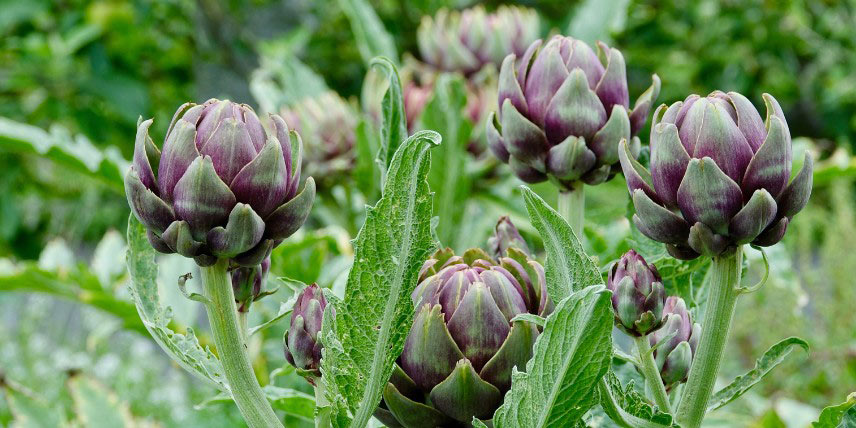
Artichoke is a fine example of an edimental plant
Edimental Annual Plants
Annual or biennial plants cleverly complement a collection of perennials and show their best, often in a single growing season.
- Nasturtium ‘Baby Rose’ : this is a charming dwarf variety whose leaves with a peppery flavour and flowers in a bright pink-red colour are great in salads. The floral buds and young fruits can embellish mayonnaise and be preserved in vinegar, like capers.
- Tagetes filifolia ‘Dropshot’ : a highly aromatic plant valued for its licorice- and anise-flavoured leaves, ideal for flavouring dishes, fruit salads and pastries or infusions and cold drinks. This licorice marigold forms a small clump of about 30 cm in height, with finely cut foliage sprinkled with tiny white flowers in summer.
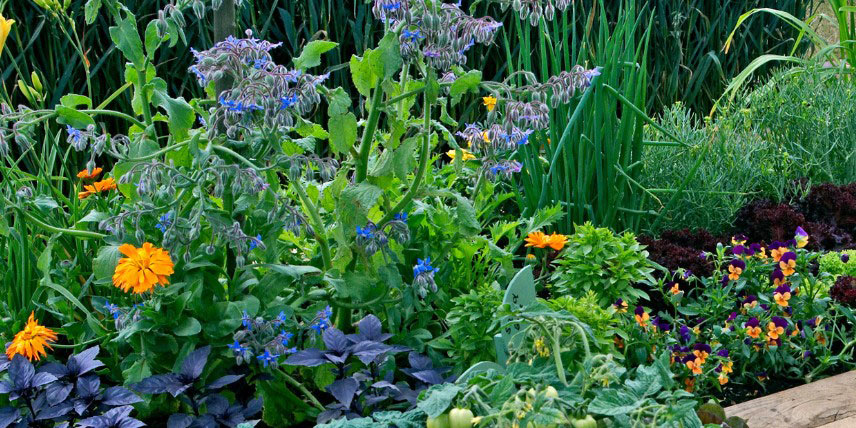
- Common borage: another beautiful and tasty plant! Its blue star-shaped flowers and leaves, with a refreshing cucumber flavour, are edible.
- Red orache, or false spinach: a vegetable plant whose red leaves can be cooked like spinach. Impressive, it can reach up to 2 m in height.
- Kale Frost Byte F1 : with tightly curled leaves and ruffled, white and green, with a sweet, sugary flavour, this kale is as tasty as it is decorative.
- Red amaranth : valued for its edible deep red leaves that are tasty and can be eaten raw or cooked, like spinach. Of tall stature, it can reach 2 m in height, and its nutritious seeds can be eaten as flour or popped like corn.
- Calendula (Calendula officinalis) : unrivalled for brightening a border with its June-to-frost flowering. Calendula flowers are known for culinary and medicinal properties. Their petals add colour and a light peppery note to salads.
- Basil ‘Spice Boys Ararat’ : distinguished by its superb bicolour foliage, green and purple that shifts to violet when it flowers in pink-violet. It emits a pronounced anise fragrance, indispensable with tomatoes, cheeses, fruits and meats.
- Swiss chard : a delicious vegetable in pies, soups or cooked like spinach, and very decorative with its large leaves and stalks in colours from yellow to white through orange, pink and red.
- Sunflower ‘Desire Red F1’ : a magnificent dwarf sunflower, easy to sow and grow, prized for its red flowers especially beautiful for brightening a border. The buds with a flavour close to Jerusalem artichoke, the petals with a hazelnut flavour and the seeds are edible.
- Malabar spinach ‘Select Red’ : this tropical climbing plant, therefore frost-tender in our climates, is highly ornamental with its bright red stems contrasting with the green foliage. Its leaves can be eaten raw in salads or cooked like spinach.
- Climbing runner bean ‘Sunset’ : climbing to over 3 m in height, it rewards with beautiful large salmon-pink pea-like flowers that produce numerous and delicious green pods to eat like green beans. The large seeds contained within can be harvested as dried beans.
Also: All pansies are edible. So don’t hesitate to decorate your plates with one or two flowers, or even to add colour to salads thanks to them. The flowers of the Chrysanthemum are also edible and can elevate a salad or be infused to make chrysanthemum tea. The violets (Viola odorata) with delicate, fragrant flowers perfume desserts or salads when their leaves are eaten raw.
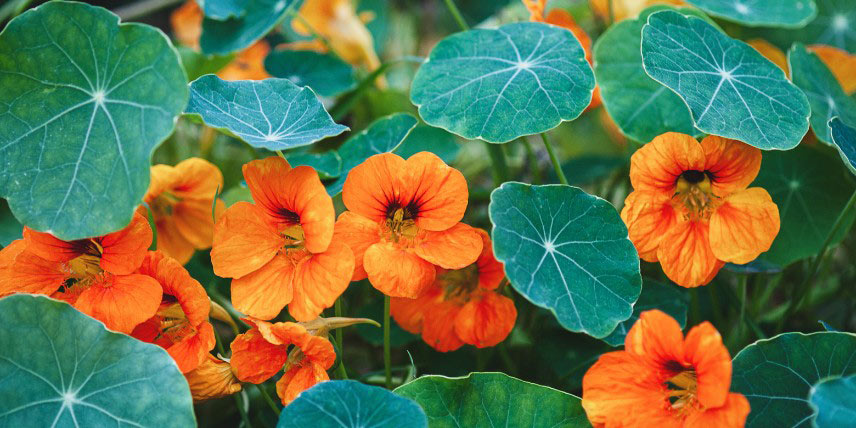
Nasturtium is a very decorative and wholly edible plant!
Edimental Berries
They’re perfect for gardeners who want to combine beauty, indulgence and productivity.
- Strawberry ‘Rainbow Treasure F1’ : a wonderful variety as decorative as it is tasty. It produces numerous flowers ranging from pink to white and pale yellow to deep red strawberries that sit together on the same plant in a multicoloured round. And being remontant, it will fruit from April–May to August.
- Altaj May Berry : this fruiting honeysuckle, very hardy, is decorative with its lush blue-green foliage, while offering a good yield of edible berries reminiscent of blueberries.
- Raspberry ‘Fallgold’ : stands out for its fragrant, especially very sweet, golden-yellow fruit that contrasts with the green of its leaves. It adds an original splash of colour to the ornamental garden.
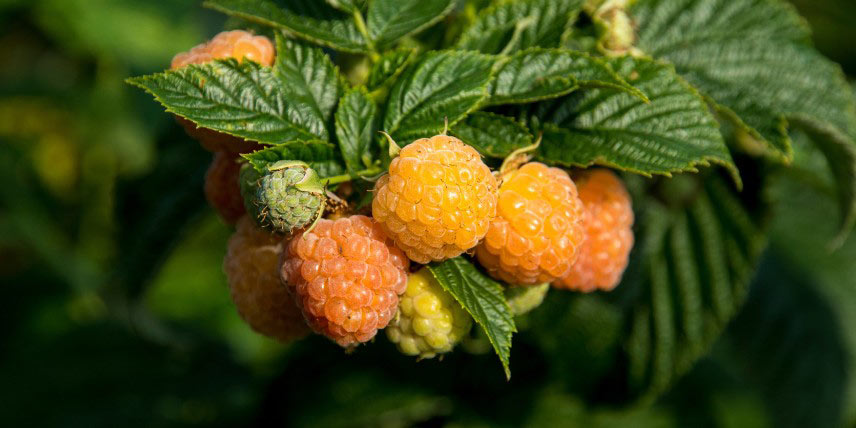
Raspberry bush ‘Fallgold’
How can they be integrated into the garden?
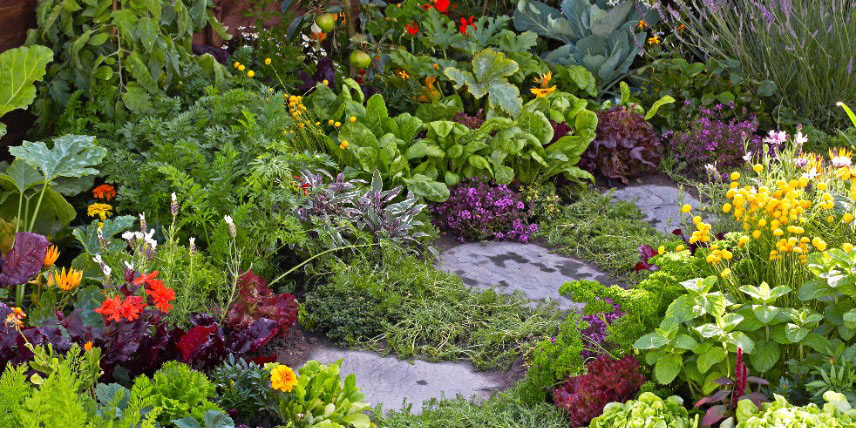
Edible ornamentals mix easily with ornamental plants in flower beds, herbaceous borders and borders, and are not confined to a vegetable plot or a herb bed. That said, incorporating edible ornamentals into a garden requires careful planning of their placement to meet their specific light, water and soil requirements, while considering the overall appearance of the garden. This includes mixed plantings, the use of containers or window boxes for small spaces. Take into account sunlight, shade, soil type and moisture. These factors influence the choice of edible ornamentals suitable for each area of the garden. Here are some tips for combining practicality with aesthetics in a harmonious way:
- Having fun with colours and textures: For example, cabbages and Swiss chard offer a range of colours and large bold leaves with interesting textures.
- Play with heights and shapes: Vary heights and shapes to create a dynamic garden. Artichokes, for example, can dress the back of a border with their large size and impressive structure.
- Mix edible and ornamental: Pair edible ornamentals with strictly ornamental plants. Surround strawberries with marigolds, carnations, summer heathers…
- Use edible perennials: Include perennials such as rhubarb, which come back year after year and provide both visual volume and harvests.
- Create edible borders: think of aromatics such as aromatics like chives, the thyme, sage and rosemary to keep them within easy reach. They perfume the garden as much as dishes in the kitchen and are adorned with melliferous flowers.
Further reading
- Discover the site Je cuisine sauvage
- How to use Tulbaghia in cooking?
- Discover an exceptional recipe by chef Nicole Fagegaltier: Lamb sweetbreads sautéed in agastache oil
- Discover an elegant and refreshing amuse-bouche: razor clams, cucumber, apples and Oxalis
- Delicious edible weeds!
- Subscribe!
- Contents
Comments