





























Pairing Calamagrostis
Discover 6 ideas for garden companions
Contents
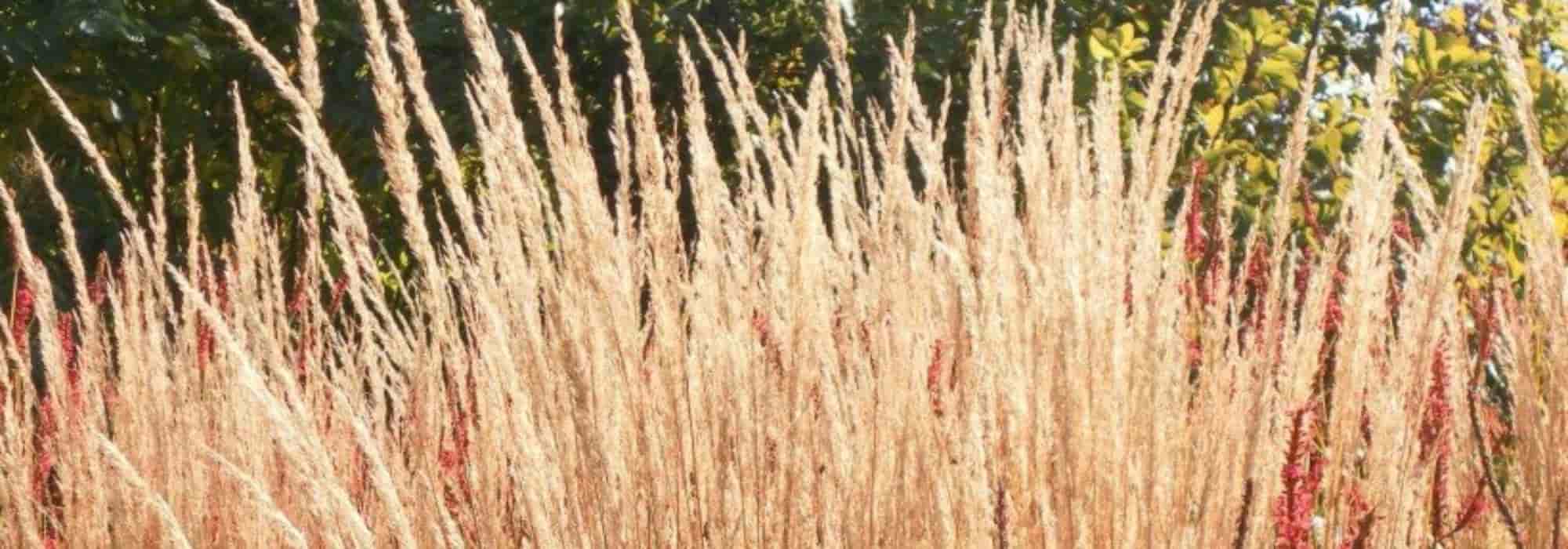
The calamagrostis is a very interesting grass for the garden due to its tall decorative silhouette, providing structure and volume in borders. In the heart of summer, it produces large, feathery, golden inflorescences that are highly ornamental. It remains decorative even in winter, when frost clings to its spikes and its blonde foliage. Almost foolproof, its natural habit fits into nearly all gardens.
Discover 6 ideas for pairing Calamagrostis in the garden.

In a grass garden
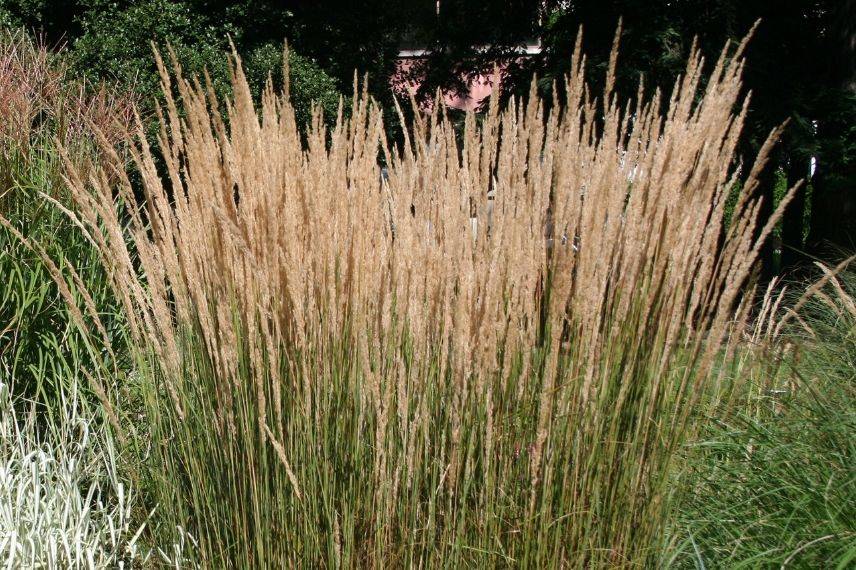
Calamagrostis will naturally find its place in a grass border, such as Calamagrostis acutiflora ‘Karl Foerster’ for its slender habit and height of 1.6 m. Highly valued by landscapers, it should be placed at the back of the border, not far from a magnificent Pampas Grass (Cortaderia selloana) or a Giant Stipa. Between these grasses, some tall flowering perennials with a natural appearance can be installed, such as Eupatorium ‘Phantom’ and Aconitum ‘Spark’s Variety’ for their beautiful blue flowers.
At the front of the border, other smaller grasses will be installed, for example, a Fescue ‘Mairei’ for its fine foliage or a Miscanthus sinensis ‘Adagio’, a Pennisetum orientale for its beautiful feathery spikes, or an Panicum. Colour can be added by planting among them an Autumn Aster for its late flowering, a Sedum, a Perovskia atriplicifolia ‘Blue Spire’ for its light blue flowers, and Echinaceas for a rustic look.
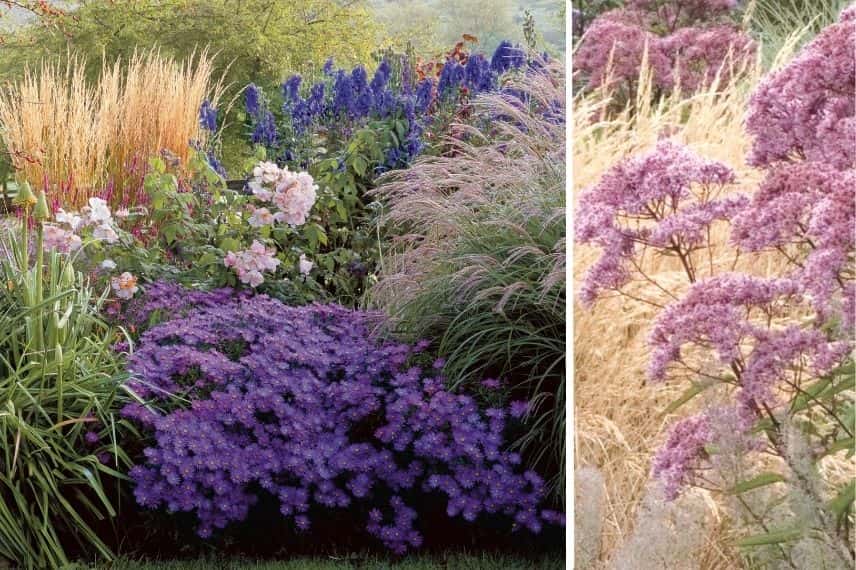
On the left: a border composed of grasses and flowers: Aconitum, Calamagrostis ‘Karl Foerster’, Aster, and Miscanthus (Copyright-MAP). On the right: Calamagrostis and Eupatorium
Read also
Grasses: which variety to choose?In a natural garden
Calamagrostis will fit perfectly into a natural garden or a rustic setting. By the edge of a water feature, you can also plant Calamagrostis brachytricha, which enjoys slightly moist soils. For a wild-looking garden, consider planting Echinacea purpurea with its large purple flowers, scabious, perennial daisies (Leucanthemum), and Buenos Aires Verbena for its cloud-like flowering. Persicarias, Veronicas, and knotweeds will also be very interesting for their floral spikes. For annual flowers, you can create a flowering meadow with seeds of Poppies, Lychnis, Marigold, Cosmos, and Love-in-a-Mist.
To add a wild touch, you can include other grasses of varying heights and shapes, such as Carex, Deschampsia, Stipa, or Miscanthus.
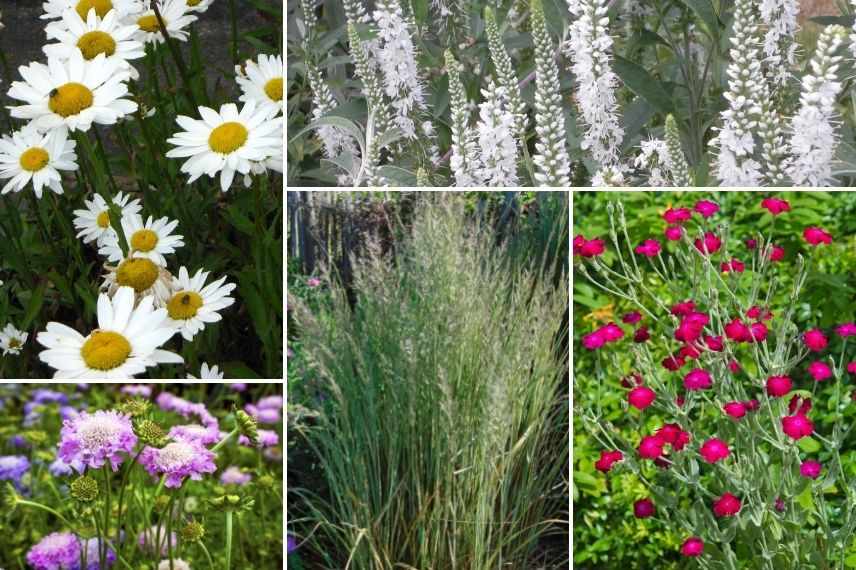
Leucanthemum superbum ‘Gruppenstolz’, Veronica spicata ‘Alba’, Scabiosa columbaria ‘Pink Mist’, Calamagrostis ‘Avalanche’, and Lychnis coronaria
Discover other Calamagrostis
View all →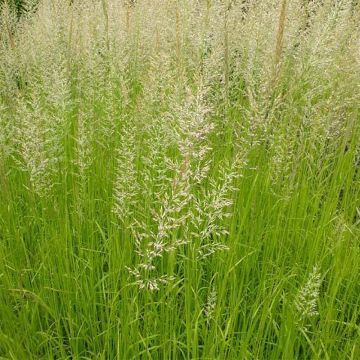
Available in 2 sizes
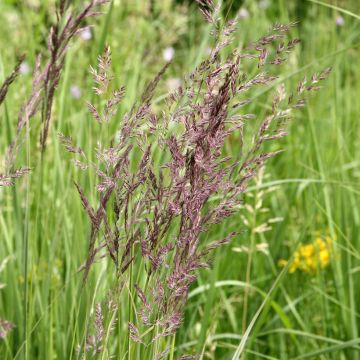
Available in 2 sizes
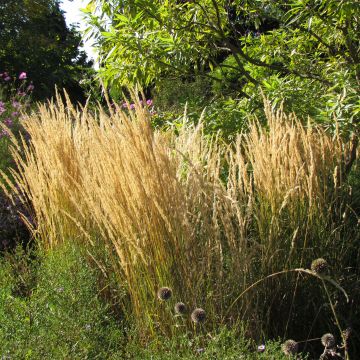
Available in 2 sizes
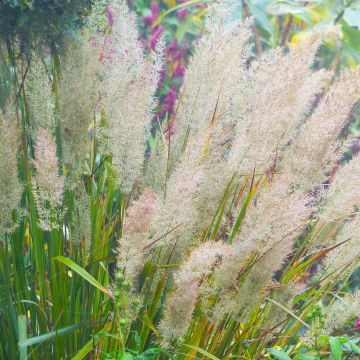
Available in 3 sizes
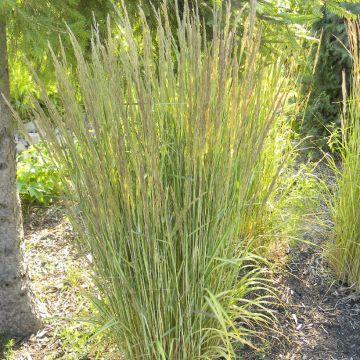
Available in 1 sizes
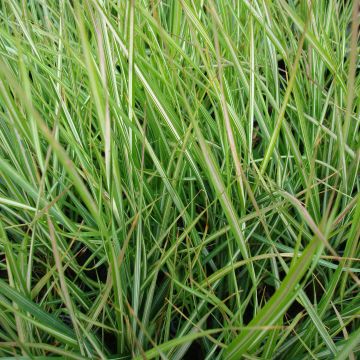
Available in 2 sizes
In a contemporary garden
With their tall, vertical silhouette, Calamagrostis fit perfectly into a modern, graphic garden, where they will add volume to a flowerbed or near a terrace. Their light spikes will soften the strict and rounded lines of boxwoods. Integrate some Foxtail Lilies (Eremurus) or Veronicastrums for vertical flower spikes as a reminder. Plant bulbs of ornamental garlic, an Agapanthus africanus, and a Hydrangea arborescens ‘Annabelle’ for the roundness of their flowers. Other dense grasses will allow you to vary shapes and heights, such as the opulent and dense foliage of Hakonechloa macra, a Stipa tenuifolia, or a Chinese fountain grass for its beautiful fluffy plumes. At the edge of the flowerbed, plant some groundcover perennials, such as Heuchera ‘Black Beauty’, an Alchemilla, a Ajuga reptans, and a bergenia.
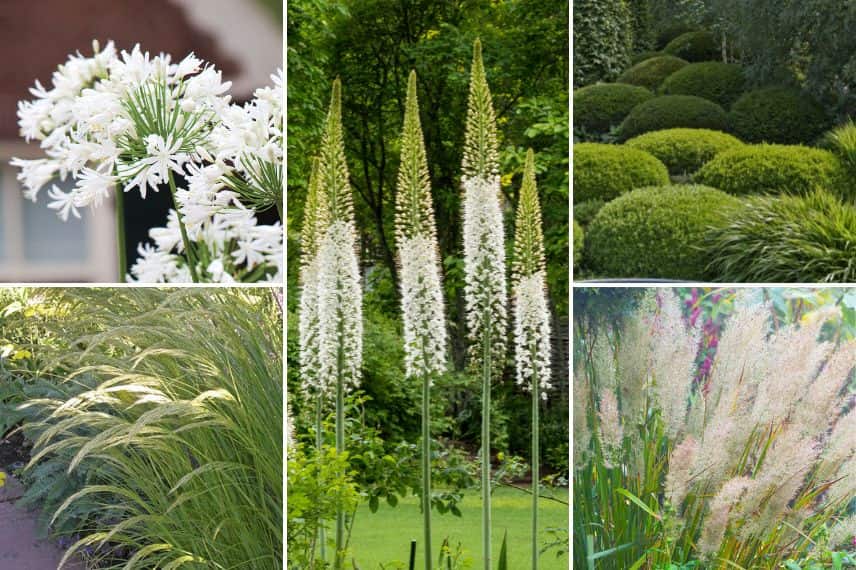
Agapanthus africanus, Stipa calamagrostis, Veronicastrum, boxwood ball, and Hakonechloa macra, Calamagrostis brachytricha
Read also
6 grasses for potsIn an autumn garden
Calamagrostis are among those grasses whose foliage and spikes remain beautiful even in autumn and winter. They take on blonde hues and are elegantly dressed in frost on frosty days. In the same vein, they can be paired with other grasses that look lovely in winter, such as Pennisetums and Miscanthus. Integrate them into the garden to create a stunning autumn scene, alongside some bushes with decorative bark, particularly with a dogwood or an Acer palmatum ‘Sangokaku’ for their colourful wood. A Nandina will also catch the eye with its purplish-orange foliage.
You can also add perennials with late flowering in late summer, which last until the onset of winter, such as autumn Asters, perennial Chrysanthemums, Echinaceas, and large autumn daisies. Still in the realm of late flowering, a Sedum and an Eupatorium ‘Atropurpureum’ will bring a touch of lightness with their cloud-like blooms. Consider also the long flowering of Sages, Perovskias, and Dahlias.
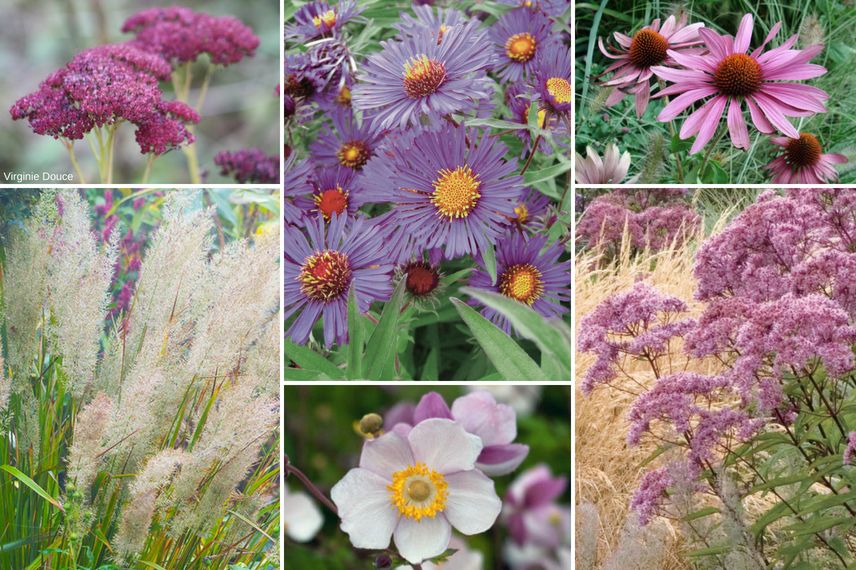
An example of an autumn pairing: Sedum spectabilis ‘Herbstfreude’, Calamagrostis bachytrica, Aster ‘Violetta’, Anemone ‘Hapsden Splendens’, Echinacea purpurea, Eupatorium ‘Atropurpureum’
In a light border
With their tall, airy spikes, Calamagrostis will be perfect for a very light border, alongside other feathery flowerings, such as the fluffy spikes of Pennisetum orientale ‘Tall Tails’. A Stipa tenuifolia, known as “angel’s hair”, will undulate with the slightest breeze. Pair them with the long flowering of Gaura lindheimeri, a Verbena hastata, and Scabious. A Perovskia will form a graceful bush with its light, lavender-blue flowering. Sanguisorbas, Thalictrums, and Gypsophila have airy flower stems that will blend perfectly into this setting. Aquilegias and Dieramas will also delight the gardener with their abundant flowering and lightness.
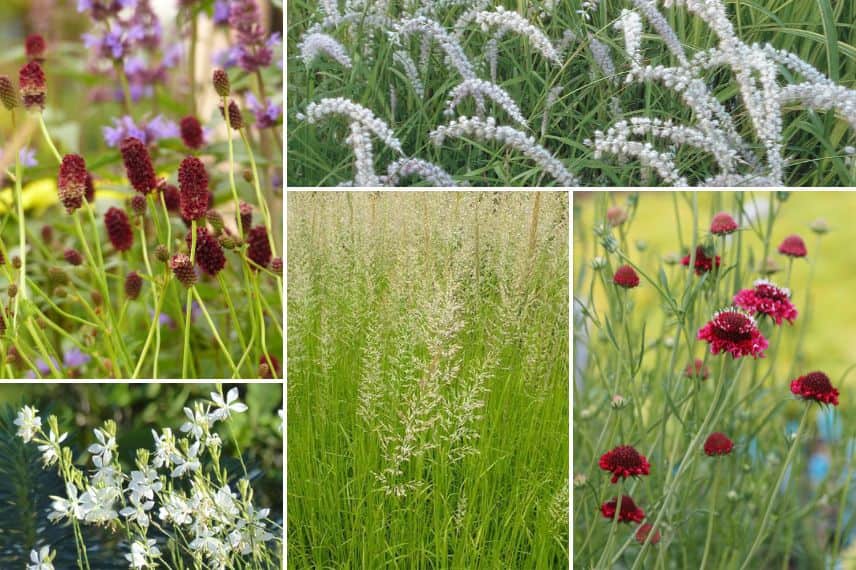
Sanguisorba ‘Red Thunder’, Gaura lindheimeri ‘Snowbird’, Pennisetum orientale ‘Tall Tails’, Calamagrostis acutiflora ‘Waldenbuch’ and scabious atropurpurea ‘Scarlett’
In an English garden
The natural silhouette of Calamagrostis fits perfectly into the mixed border of English gardens, particularly Calamagrostis acutiflora ‘Karl Foerster’ at the back of the bed, due to its height of 1.6 m. Other grasses will also be placed at different levels, such as Miscanthus, Panicums, as well as Carex and Fescues in the foreground. They will add volume to the bed and provide a beautiful display, even in winter, when they become covered in frost. Add vicar’s garden plants and cottage garden plants, such as Phlox, Lupins, Echinaceas, and Heleniums. Vary the shapes with the rounded blooms of Agapanthus, Echinops, and Alliums, paired with the long flower spikes of Aconites, Penstemons, Delphiniums, Nepetas, and Veronicastrums.
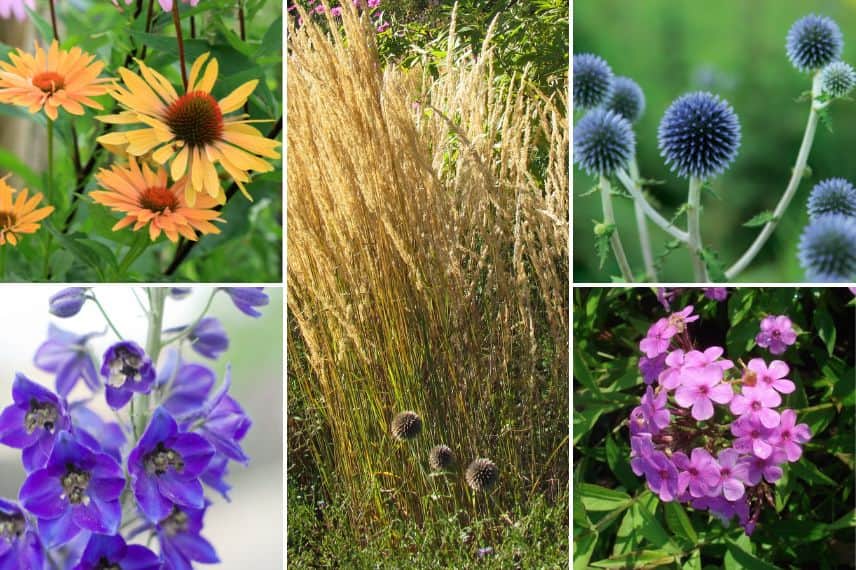
Echinaceas, Delphinium elatum ‘Morning Lights’, Calamagrostis acutiflora ‘Karl Foerster’, Echinops sphaerocephalus, Phlox paniculata ‘Hesperis’
To find out more
- Discover all our varieties of Calamagrostis.
- To find out more, browse our article on Calamagrostis: planting, pruning and caring for.
- Subscribe!
- Contents
![[association plantes="Calamagrostis"] in the garden](https://www.promessedefleurs.ie/blogwp/wp-content/uploads/2022/08/Associer-le-calamagrostis.jpg "[plant1=\"Calamagrostis\"] is a versatile ornamental grass that brings movement and texture to the garden.")
Comments