





























Melica: 6 ideas for pairing them
Natural or refined
Contents
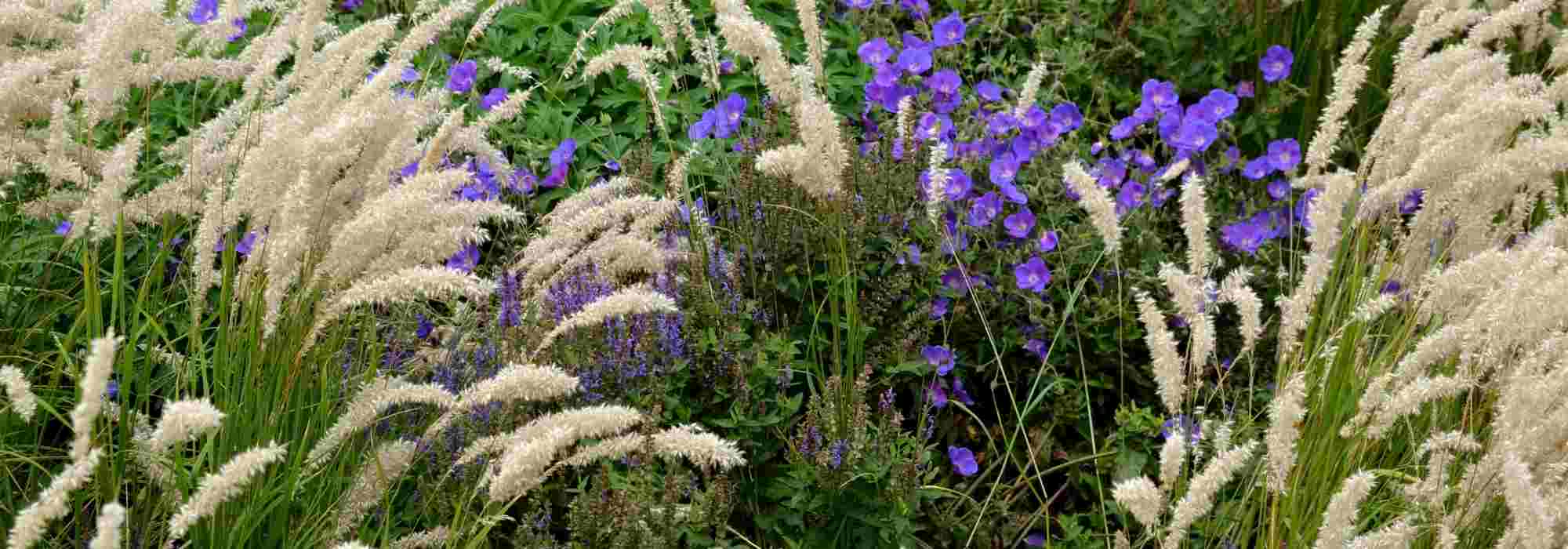
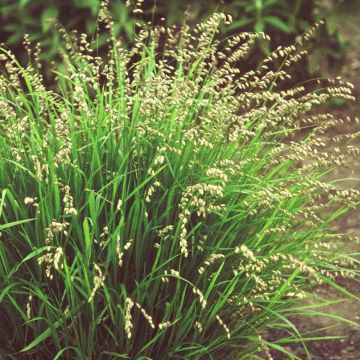
The Melica or melic grass is a lovely grass appreciated for its summer flowering with fine white-cream spikes in Melica ciliata (the ciliate melic), purple in Melica altissima ‘Atropurpurea‘, or pearly like rice in Melica uniflora var. albida. Depending on the species, it enlivens sunny, slightly arid or shaded areas of the garden.
With its light habit and ease of cultivation, melica allows for numerous association possibilities. Like many grasses, it is equally at home in contemporary and natural settings. Surrounded by other summer-flowering perennials, it adds structure and lightness when grouped in borders or pathways, in a wild garden, a contemporary garden, and graphic, or a scree garden.
Discover our easy-to-reproduce association ideas!
→ Discover our complete guide “MELICA: PLANTING, CULTIVATION, MAINTENANCE”

In a naturalistic border
The Melica stands out in a naturalistic or rustic garden, blending seamlessly into lush scenes. Non-invasive, it is particularly interesting in borders where it easily punctuates the planting. It brings lightness and brightness to a large, somewhat wild border alongside other summer-flowering perennials.
The Melica ciliata with its silky cream-white flower spikes will accompany floriferous and fluid perennials such as cosmos, Asters, and the Aster divaricatus ‘Beth Chatto’ for example, which pairs very well with all other border plants, in partial shade or full sun, along with some giant Asters like Aster laevis.
The Melica altissima ‘Atropurpurea’, or tall melica, is equally useful for enhancing a large border, providing more structure.
You can combine them with tall perennials, Buenos Aires Verbenas, Eryngiums, and large foxgloves, whose moving silhouettes will soften the scene. They also help lighten the flowering of heavier perennials with more definite flowers, such as Echinaceas or Oriental Poppies.
Lighten the scene with Gauras with their delicate blooms.
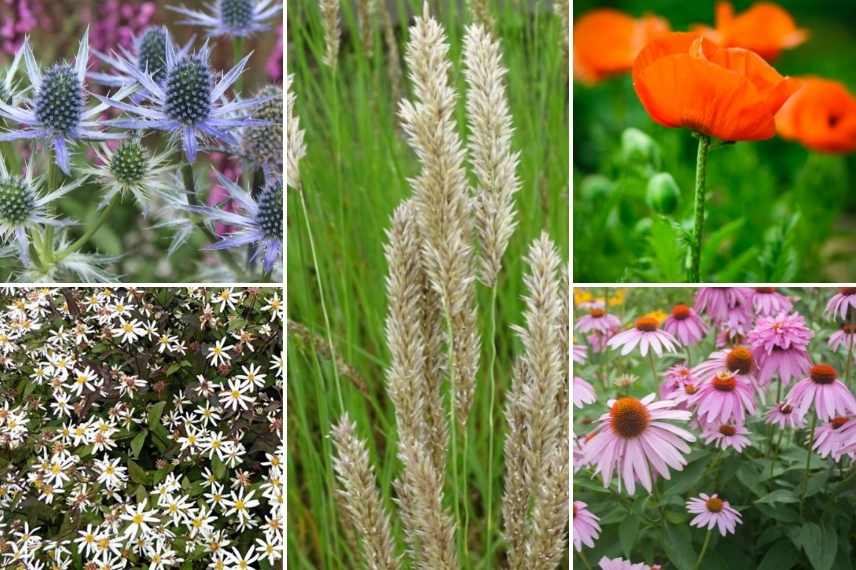
In the centre, Melica ciliata, surrounded by Eryngiums, Asters divaricatus ‘Beth Chatto’, Oriental poppies, and purple Echinaceas.
Read also
Melica: planting, growing and careAt the edge of the path
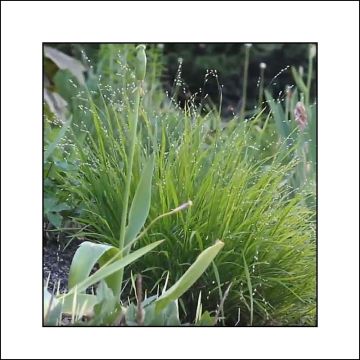
With their small size, Melica make excellent borders to edge a pathway. In line along a path, they bring dynamism to the garden, remaining compact and not spreading. They form small, soft, colourful tufts that add a lot of natural charm. The Melica uniflora var. albida works wonders in the border of a shaded path. This particularly graceful variety, generally not exceeding 50 cm in height, with its flowering reminiscent of a rain of rice, is invaluable for this type of arrangement.
You can mix it with other grasses like Pennisetum alopecuroides ‘Cassian, with hardy geraniums, and with Persicarias (Persicaria amplexicaulis ‘Rosea’) for a wild effect. Also accompany it with heucheras with lime green foliage (the Heuchera ‘Blondie in Lime’), with pulmonarias, or with Epimedium alpinum which tolerates dry shade.
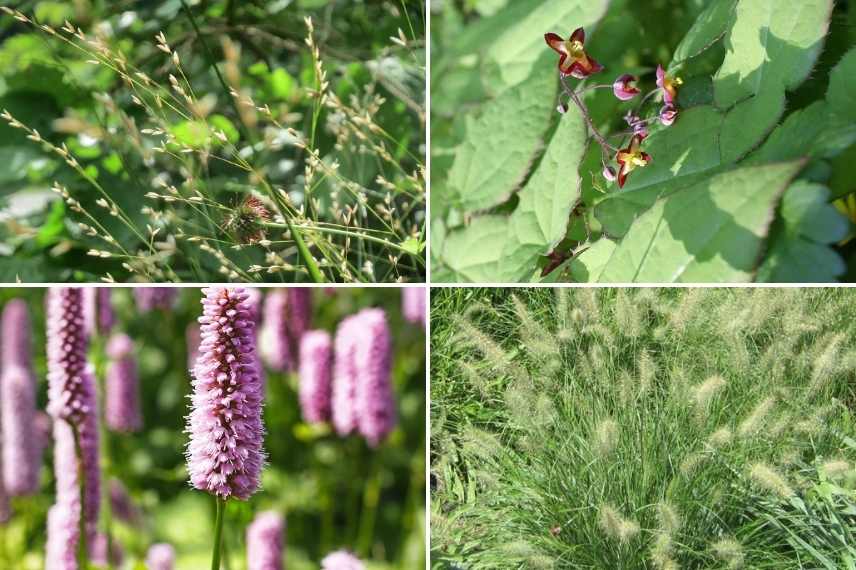
Melica uniflora var. albida, Epimedium alpinum, Persicaria amplexicaulis ‘Rosea’ and Pennisetum alopecuroides ‘Cassian’
Discover other Melica
View all →
Available in 2 sizes

Available in 2 sizes
Available in 1 sizes
Available in 1 sizes
In a flowering meadow
Melica are easy to incorporate into a naturalistic meadow that is not too dry, adding a vibrant lightness. Choose a valuable ciliate melic for enlivening sunny and slightly arid areas of the garden. It has a good tendency to self-seed in somewhat challenging spots, without ever being invasive.
Its silky spikelets will contrast beautifully with the large flat inflorescences of Achillea millefolium and the large field daisies. They will soften the prickly flowers of thistles, such as Echinops ritro and Teasel, for example. You can mix it with easy annual flowers like nigella, cosmos, California poppies, or with robust and adaptable perennials, such as Linum perenne, hollyhocks, or Veronicastrums.
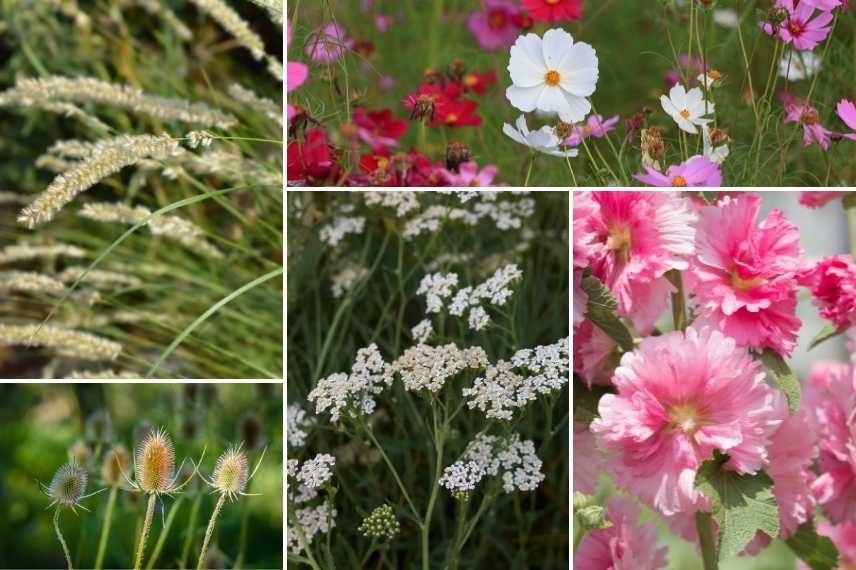
Melica ciliata, cosmos, teasels, Achillea millefolium, and hollyhocks
In a grass garden
In a large naturalistic garden, you can dedicate an area to grasses! Structuring yet light, bright, and poetic, grasses easily combine with one another. Melica integrates very well with other grasses of similar height, whether shorter or taller. Pair them with other grasses that are often spectacular all year round with decorative spikes, such as Miscanthus, Pennisetums (Pennisetum alopecuroides ‘Goldstrich’, and Pennisetum macrourum), which flower very similarly to Melica ciliata. The Stipa tenuifolia or Stipa barbata, which form very flexible, arching tufts of medium height, are also good companions.
When planted in masses, they create a magical and intensely graphic scene. Integrate Deschampsia cespitosa ‘Goldschleier’ for a more ample format.
Add height to this very natural tableau with majestic tufts of Pampas grass.
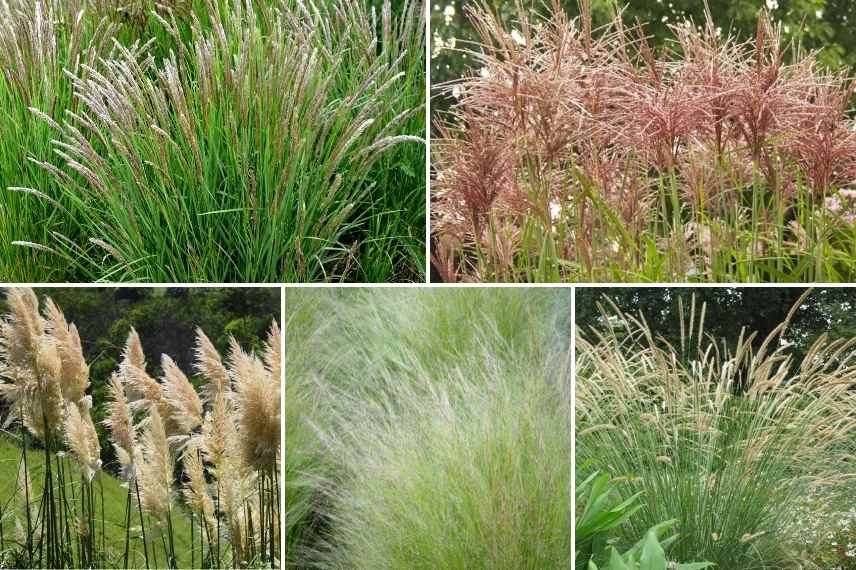
Melica, Miscanthus sinensis ‘Malepartus’, Cortaderia, Stipa tenuissima, and Pennisetum macrourum
In a gravel garden
Like many grasses, some species of Melica thrive in this type of medium. Ciliate melica finds its place more easily in the minimalist decor of a dry or gravel garden than its counterparts, enjoying rocky and sunny spaces, even dry ones. To accompany it on a sea of pebbles or white gravel, consider other grasses, such as Stipa arundinacea or Stipa capillata, Carex comans, or even fountain grass that withstands drought very well. A trio with a low grass like Festuca glauca ‘Golden Toupee’, a small succulent perennial and groundcover like Sedum reflexum ‘Angelina’, offers a very bright contrast of colours and shapes.
To structure this type of decor, focus on perennial plants with upright flowers like ‘Eryngium planum ‘Blue Hobbit’ or Perovskia.
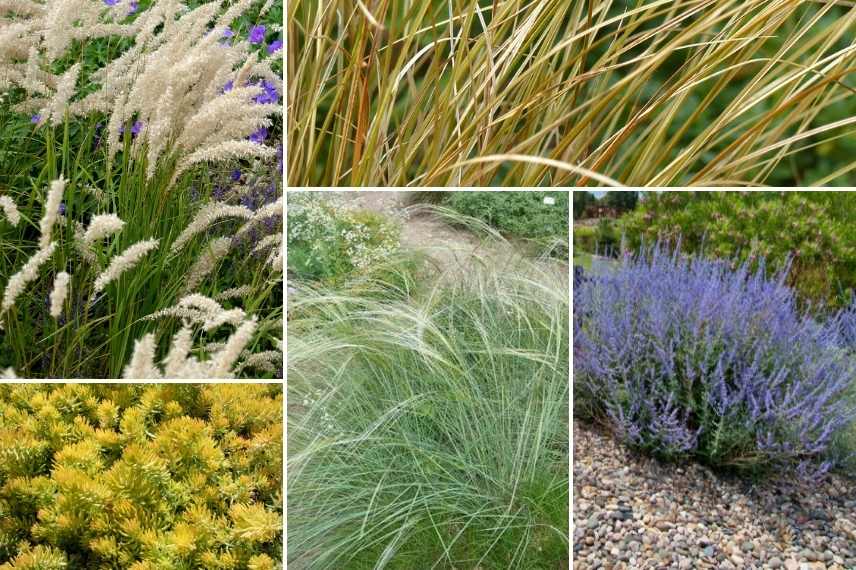
Melica ciliata, Carex comans ‘Milk Chocolate’, Sedum reflexum ‘Angelina’, Stipa capillata, Perovskia
In a contemporary garden
With their graphic foliage and light spikelets, Melica form graceful clumps. In a contemporary-inspired garden, you can create a scene dominated by understated plants, pairing them with the round heads of ornamental alliums or those of Agapanthus.
For an even more minimalist marriage, combine them with ball shapes, such as those of Pittosporum tenuifolium ‘Silver Ball or an Euphorbia pythiusa, a stunning combination in a minimalist or contemporary garden.
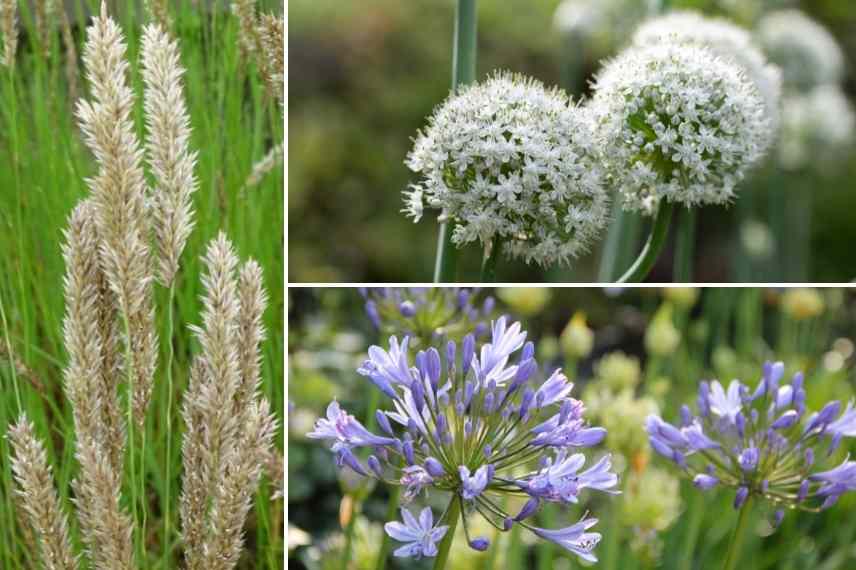
Melica ciliata, white ‘Mount Everest’ Alliums, and Agapanthus for a graphic effect
- Subscribe!
- Contents
Comments