





























Low-maintenance ornamental grasses: allies for a hassle-free garden
Allies for an easy and elegant garden
Contents
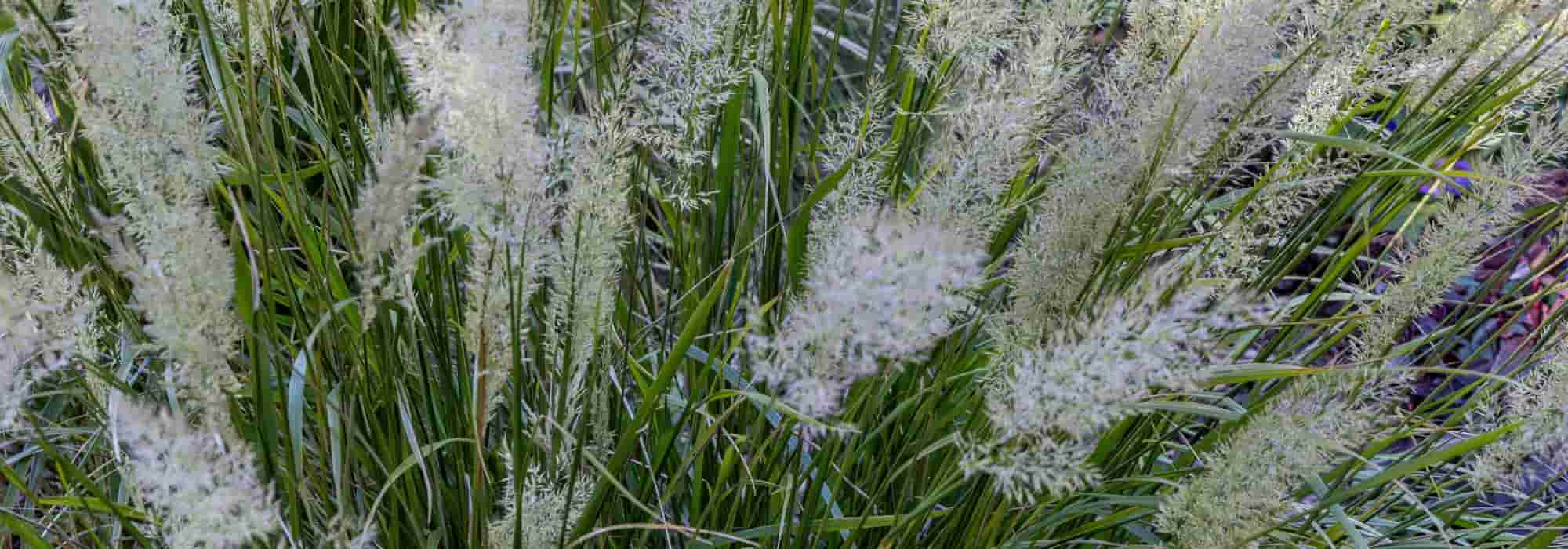
Ornamental grasses are becoming increasingly popular with gardeners, and for good reason: they combine beauty, durability and low maintenance. With their varied forms, their foliage adds movement to the garden and they adapt easily to a wide range of situations. Moreover, these plants bring a natural touch to the beds, while requiring little maintenance. Discover the easiest ornamental grasses to grow, ideal for those wanting a verdant space without too much effort.

Fescues (Festuca), small evergreen grasses
Small and compact, fescues are prized for their evergreen, often coloured foliage. Their palette ranges from silvery-blue to soft green, with slightly purplish hues depending on the variety. These grasses find their place in rockeries, borders, or as groundcover on slopes. Very drought- and cold-tolerant (down to -15°C for the hardiest), they thrive in well-drained soil and sunny positions.
Among the varieties, blue fescue (Festuca glauca) is one of the best-known among gardeners. It forms a small hedgehog of silvery-blue foliage that lights up dry areas of the garden.
Amethyst fescue (Festuca amethystina), for its part, offers soft green foliage that takes on purple reflections in autumn, adding a touch of dynamism to the borders. It produces, in late spring and early summer, spikelets with pretty violet reflections, reminiscent of amethyst.
Fescues pair perfectly with other rockery plants, also liking sun and not fearing drought, such as lavender, the sedums or the euphorbias to create bright, graphic displays.
Maintenance is limited to removing dry leaves in spring, making it ideal for gardeners seeking simplicity.
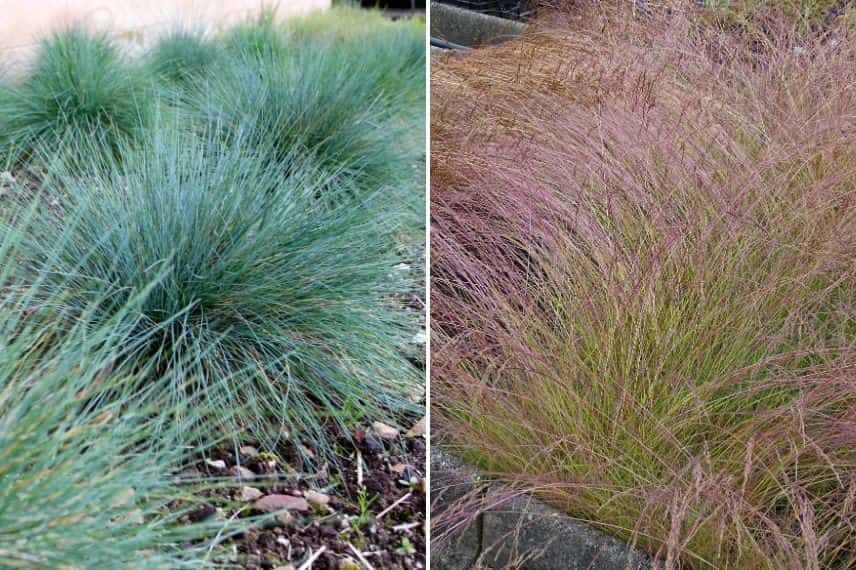
Festuca glauca and Festuca amethystina
Stipa, elegance in motion
The feather grasses are synonymous with lightness and movement thanks to their soft, airy habit which allows them to catch the light and dance with the wind. Depending on the variety, they can reach as little as 40 cm in height for Stipa pennata and up to 2 metres tall for Stipa gigantea. These grasses thrive in poor, well-drained soils, in full sun, making them particularly well suited to Mediterranean gardens or dry climates.
The feather grass Stipa tenuifolia ‘Pony tails’ is one of the most appreciated varieties. Standing at 45 cm tall, its fine golden strands lend a silky texture and a natural look to borders and flower beds.
The giant feather grass, Stipa gigantea, is distinguished by its large golden stems, reaching up to 2 metres high, which dominate borders and create an impressive vertical structure, yet with a light touch.
To highlight their elegance, feather grasses pair beautifully with gauras, with the agapanthus or with rockroses.
Their maintenance is kept to the bare minimum: they thrive in challenging conditions and do not require regular pruning. A light “peigneage” at the end of winter, using a claw, or by hand, to remove dead leaves. With feather grasses, no fertiliser is required either.
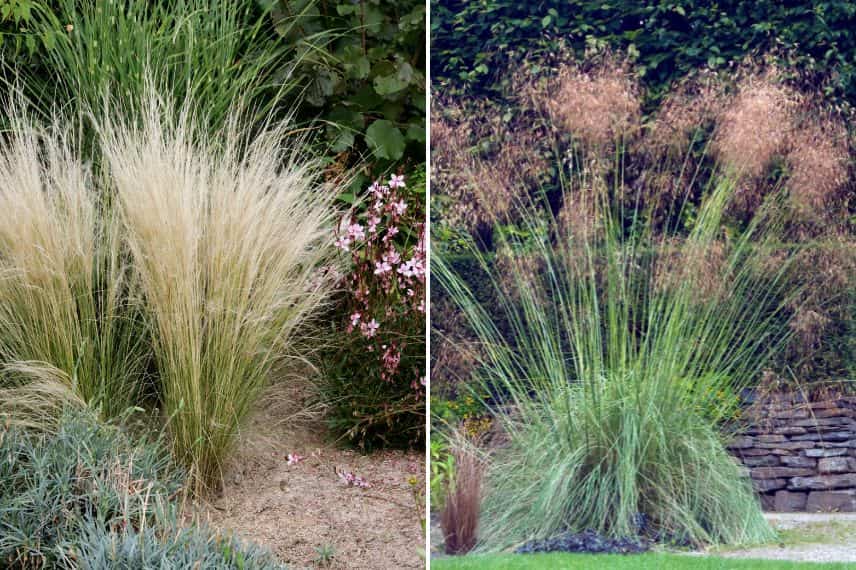
Stipa tenuifolia ‘Pony tails’ and Stipa gigantea
Pennisetums, for their elegant plumes
Chinese fountain grasses, also known as foxtail grasses, are tufted grasses that are distinguished by their feathery spikes, delicate and ornamental. These grasses prefer well-drained, fertile soils and thrive just as well in borders as in pots or containers. The green foliage in summer takes on golden tones in autumn and stays through the winter, giving a presence in the garden during the cold season. Once well established, they tolerate the cold well, generally down to -20°C.
Among the varieties, Pennisetum alopecuroides ‘Hameln’ is a highly prized variety with its cream-toned spikes that brighten gardens in summer, while the Pennisetum ‘Rubrum’ captivates with its purple foliage, perfect for contemporary displays.
They require little maintenance: simply prune the tuft back to 10-20 cm above the soil in late winter, to make room for new shoots and restore their full splendour.
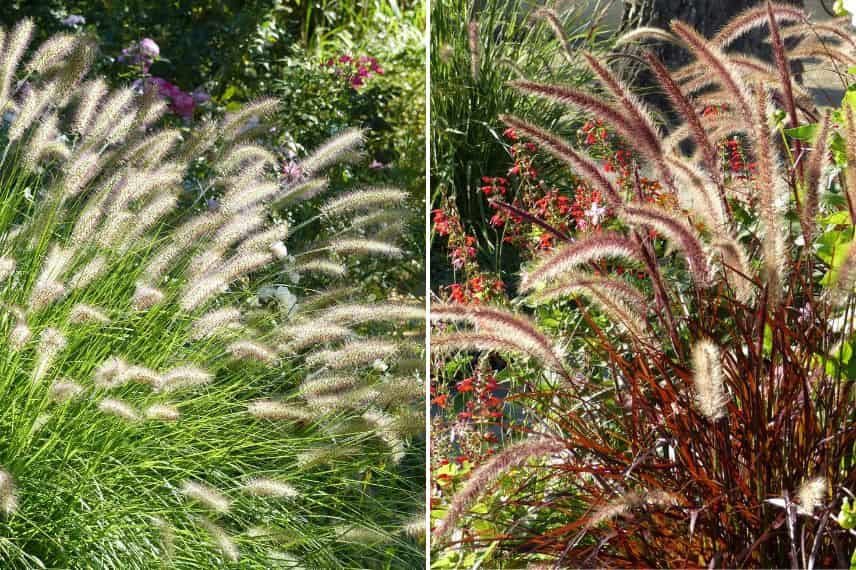
Pennisetum alopecuroides ‘Hameln’ and Pennisetum ‘Rubrum’
Read also
Grasses: which variety to choose?Miscanthus, for added volume
Miscanthus, also known as Chinese reeds, are tall grasses that stand out for their striking habit and spectacular plumes. These hardy plants adapt well to cold climates and can withstand temperatures down to -29°C once well established. They prefer rich, well-drained soils in a sunny position, but will also tolerate clay soils.
We especially value Miscanthus sinensis ‘Gracillimus’ for its fine, trailing foliage, in bright green, then turning bronze in the cold. Not to mention its plume-like flowering, in a beautiful coppery red.
If you prefer foliage delicately variegated with white, Miscanthus sinensis ‘Zebrinus’ will charm you and will lend a soft light to borders.
These majestic grasses are ideal for structuring borders or forming light hedges, concealing the garden from view. They pair well with Phlox paniculata, Gaura, or Persicaria.
As with Pennisetums, Miscanthus require annual pruning, to 10–20 cm above the soil, in late winter. However, if your soil isn’t sufficiently rich, they will also need a fertiliser application one to two times a year to stay vigorous.
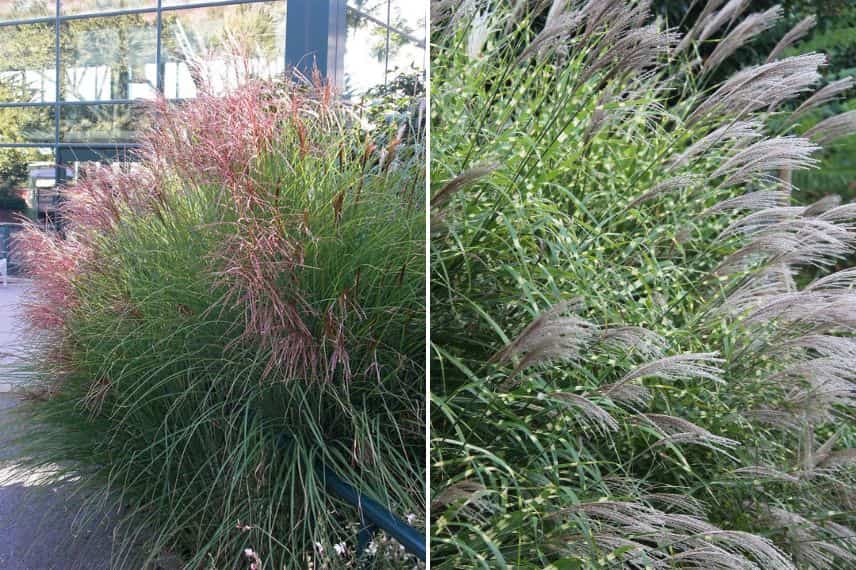 Miscanthus sinensis ‘Gracillimus’ and Miscanthus sinensis ‘Zebrinus’
Switchgrass (Panicum virgatum), to add colour.
The erect panic grass, or Panicum virgatum, is a grass that stands out for its upright foliage, often tinted green, blue, orange or red, depending on the variety. Its flowering, composed of numerous light and feathery panicles, is generally pink or purple. Panicums adapt perfectly to well-drained to slightly moist soils and prefer sunny locations. They also tolerate winter cold (down to -29°C) and summer drought, which makes them ideal for planting in borders in modern, cottage-style or natural prairie gardens.
Among the most interesting varieties, Panicum virgatum ‘Northwind’ offers blue-green, highly architectural foliage, measuring 1.7 metres tall. In autumn, it takes on golden hues and remains in place throughout the winter.
We also admire the variety ‘Shenandoah’, whose leaf tips gradually turn burgundy red from early summer, adding dynamism to the garden.
Panicums pair well with cone flowers, gaura or daisies for light, lively combinations.
Their maintenance simply consists of cutting back the dry stems at the start of spring, which allows their handsome silhouette to be enjoyed throughout the winter.
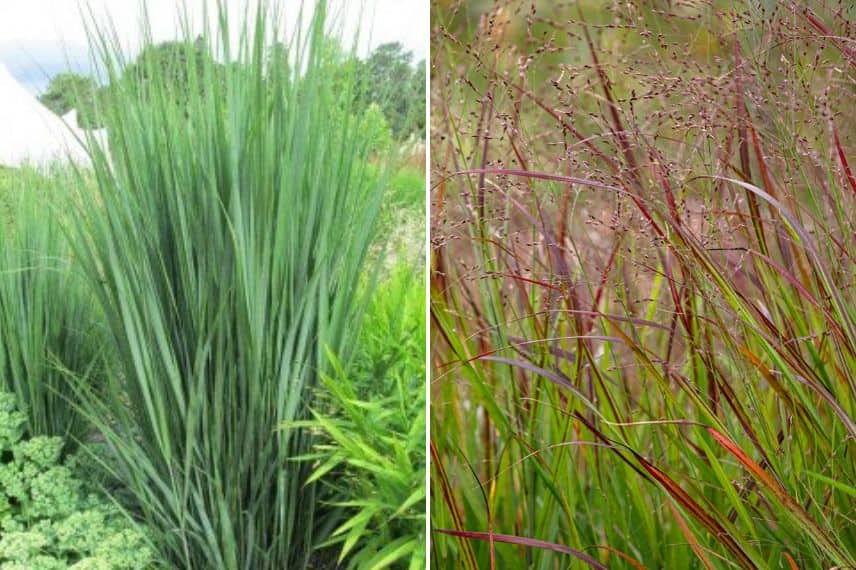
Panicum virgatum ‘Northwind’ and Panicum virgatum ‘Shenandoah’
Calamagrostis, to add verticality
Calamagrostis are slender grasses that provide structure and verticality to the garden. These hardy plants feature deciduous foliage that fades rather late, taking on golden hues in winter, and quickly giving way to new shoots in early spring. They prefer light, well-drained, and sunny soils, but tolerate cooler soils very well, even slightly clayey. They adapt well to hot climates as well as regions where winters are harsher.
A standout variety is Calamagrostis acutiflora ‘Karl Foerster’, known for its long flowering period and slender habit of about 1.60 metres. Its pale green spikes appear from the end of spring and gradually take on golden reflections that last until winter. It is often used in beds or in formal alignments.
Calamagrostis brachytricha offers a more airy alternative with its feathery spikes that bloom in autumn, catching the light to illuminate the garden.
Calamagrostis are perfect for contemporary or natural gardens, where their verticality contrasts with lower perennials such as asters, rudbeckias or persicarias. They are also very effective as light screens or for delimiting spaces.
Low-maintenance, they require only a simple brush-off of the dry parts at the end of winter. Their robustness and adaptability make these grasses a safe bet for any type of garden.
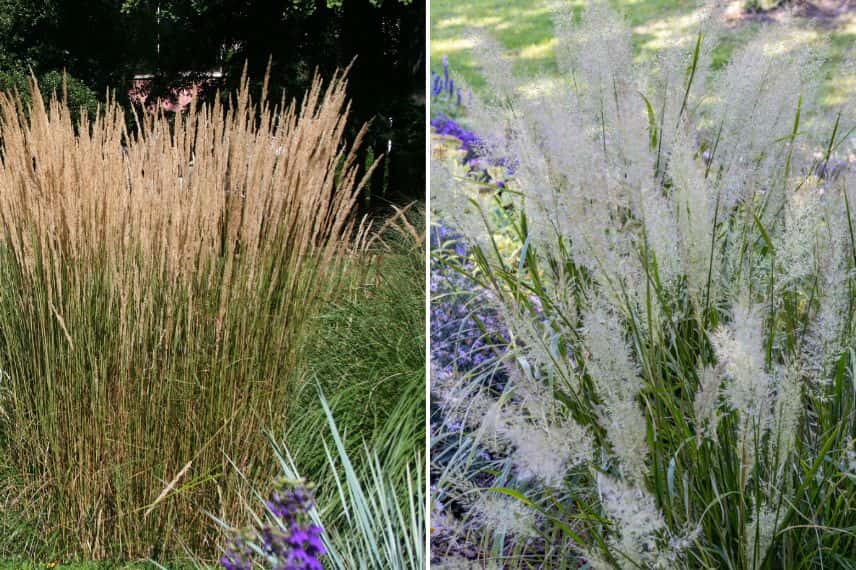
Calamagrostis acutiflora ‘Karl Foerster’ and Calamagrostis brachytricha
- Subscribe!
- Contents
Comments