






























Growing a holly in a pot
and take advantage of its many ornamental qualities
Contents
Holly or Ilex is a genus with numerous species and cultivars, varying in size, leaf type, and growing conditions. As a result, it lends itself to many uses. One of these is pot planting, which is well-suited for the many small holly specimens. Discover how to grow holly in a pot and enjoy its ornamental qualities: the lovely holly leaf, winter fruiting, and evergreen foliage.

What varieties?
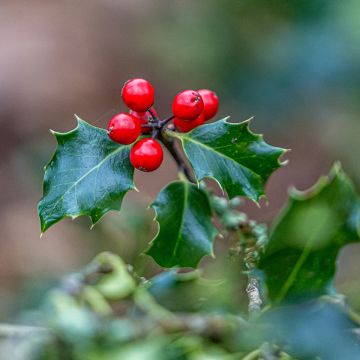
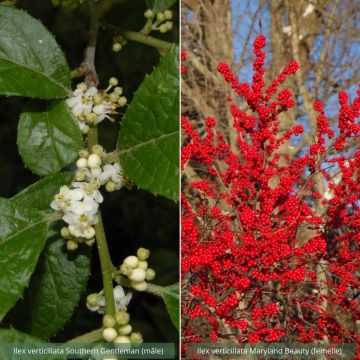
The smallest varieties, under 1.20 m, are all suitable for pot cultivation. Those beyond this, up to 2.5 m to 3 m at maturity, can also be grown in pots, provided you have very large containers. The larger varieties, ranging from 3 m to 15 m in height, are best reserved for planting in the ground. All species of holly grow slowly, which is quite interesting for our intended use. There are significant differences in foliage between the species. Ilex crenata has small, 1 cm, ovate, non-thorny leaves, similar to boxwood, and can effectively replace it, making it suitable for topiary. Its fruits are black. Ilex meserveae features non- or slightly spiny, highly ornamental foliage. Ilex aquifolium is our common holly, the green holly, with spiny leaves. They all respond well to pruning. Before exploring some interesting cultivars for pot planting, it is essential to remember that for your holly to produce fruit, you need both a female and a male plant for pollination, unless you choose a self-fertile female variety, in which case a single holly will yield lovely fruits in autumn.
Dwarf Hollies, up to 1.20 m
- Ilex meserveae ‘Gentle’, dark green foliage tinged with purple, 70 cm tall.
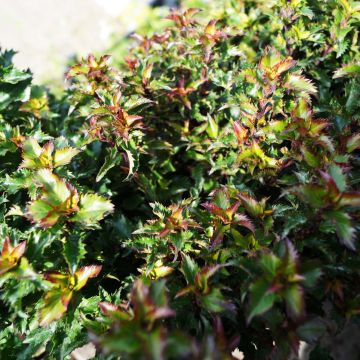
- Ilex meserveae ‘Little Rascal’, dentate, non-spiny foliage with bronze and reddish hues in winter.
- Ilex crenata ‘Green Lustre’, replaces boxwood, dark green foliage, 90 cm tall.
- Ilex crenata ‘Lingold’, measures 1 m in all directions, variegated foliage, green and golden yellow all year round.
- Ilex crenata ‘Convexed Gold’, a small variety 80 cm tall, with rounded, golden foliage.
→ Read also Dwarf Hollies: Varieties to Structure Your Garden and Terrace.
Hollies between 1.5 m and 3 m
You will find many cultivars in this size category; here are just a few, more specific ones.
- Ilex aquifolium ‘Ingramii’, beautiful variegated foliage, nicely speckled in green, cream, and pink, 1.5 m tall.
- Ilex aquifolium ‘Myrtifolia’, very ornamental fine foliage, moderately spiny, 3.5 m tall.
- Ilex aquifolium ‘Silver Queen’, variegated white version of our common holly, 3 m tall.
- Ilex crenata ‘Fastigiata’, columnar habit, 2.5 m tall.
- Ilex rotunda ‘Red Dot’, self-fertile female variety, 3 m tall.

From left to right and top to bottom: Ilex meserveae ‘Little Rascal’, Ilex aquifolium ‘Myrtifolia’, Ilex aquifolium ‘Ingramii’, Ilex meserveae ‘Gentle’, Ilex crenata ‘Convexed Gold’, Ilex crenata ‘Lingold’, Ilex rotunda ‘Red Dot’
Read also
Holly: planting, pruning and careWhat type of pot?
Choose the pot you like, in the shape and material of your choice, as long as it is suitable for the size of the variety. However, the substrate dries out more quickly in porous terracotta pots. As holly prefers cooler conditions, it may be wise to choose a different material that retains moisture for longer. When potted outdoors, there is little chance that the plant will be confined in overly wet substrate. This simply allows you to space out your watering a bit more.
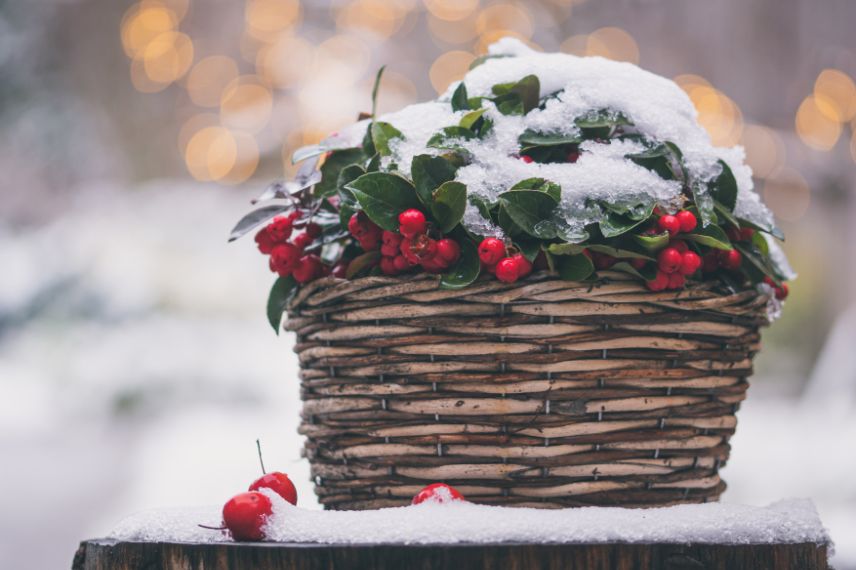
Holly, a symbol of winter
Discover other Ilex - Holly
View all →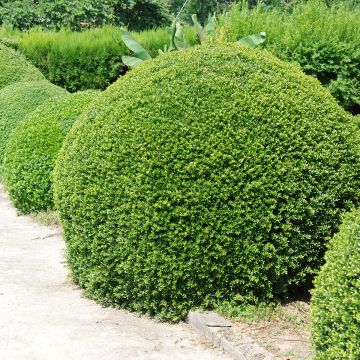
Available in 3 sizes
Available in 4 sizes
Available in 1 sizes
Available in 1 sizes
Available in 0 sizes
Available in 1 sizes
Available in 0 sizes
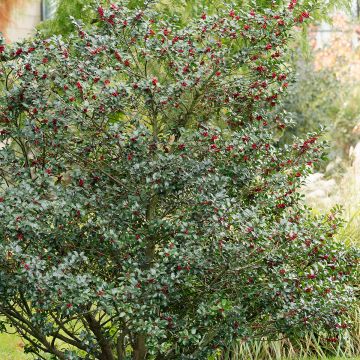
Available in 1 sizes
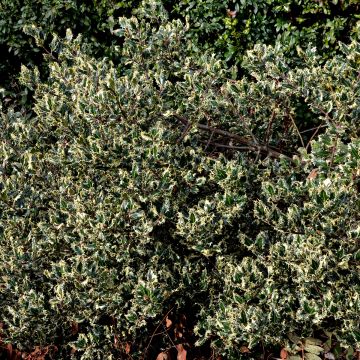
Available in 1 sizes
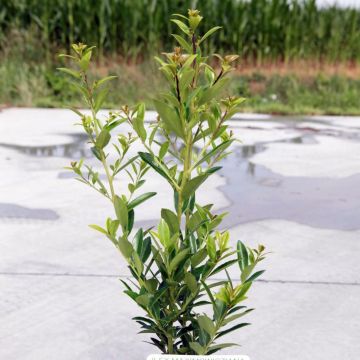
Available in 3 sizes
What pruning?
The height of the pot depends on the chosen variety. For hollies that reach 50 cm in height at 10 years, you can opt for a pot approximately 30 cm deep. For those that reach 1 m in height at ripeness, a pot 50 cm deep will suffice. For taller hollies, choose the deepest pot possible, beyond 50 cm.
Regarding the width, you won’t make the same choice for a fastigiate holly as for a spreading holly with a wide cushion shape. Check the width provided on the descriptive sheet and select a pot at least 50 cm wide, or more if it has a spreading habit. Keep in mind that its growth will be less significant in a pot than in open ground, and it will also adapt to the space you allocate to it. However, be reasonable and do not constrain it to too much reduction.
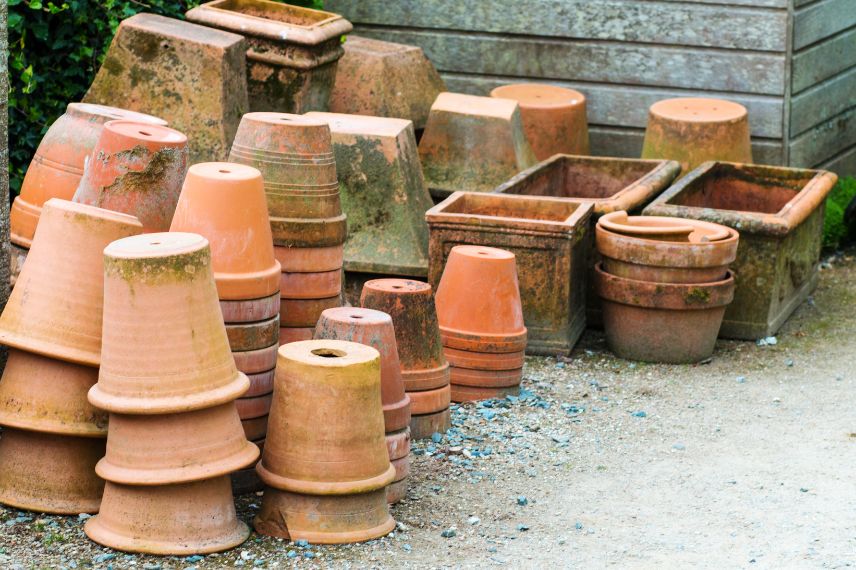
Choose the size of your pot carefully
What substrate?
Hollies in general appreciate a soft, humus-bearing, and light substrate, which you can easily provide with a high-quality bush compost that is well composed. Choose a compost with good moisture retention and add a bit of drainage, at a rate of 10 to 20% of river sand. If you have the option to add compost, it will enrich and further improve the water retention of the substrate. If you wish to use your garden soil, it must be non-calcareous (except for Ilex meserveae which tolerate it). Use it only up to a maximum of 30% and complete with compost, bush compost, and sand.
Also plan for:
- Some clay balls, gravel, or pumice to ensure drainage at the bottom of the pot to preserve the quality of the roots.
- An organic mulch to maintain the freshness of the substrate and limit watering.
- A natural fertiliser like worm compost, which you will add to your substrate at a rate of 10%.

Care for your substrate, it is crucial for the healthy life of a plant in a pot
When and how to plant?
Plant your holly in spring or autumn; hollies are hardy enough to withstand their first winter just after planting. If you plant in spring, ensure regular watering initially.
In any case, plant outside of the warm seasons, in March or April or in October and November.
For planting, proceed as follows:
- Remove the root ball from its nursery container and untangle the roots if necessary.
- Soak it in a basin of water while preparing your pot.
- Add a drainage layer of a few centimetres at the bottom of the pot using clay balls, gravel, or pumice.
- Separately mix the various components of the substrate unless you are planting solely in potting soil.
- Pour your substrate to about 1/3 of the pot.
- Position the root ball of your holly, ensuring that the collar of the bush is level with the surface of the pot.
- Check that the appearance and orientation of the bush are to your liking and that it is standing upright.
- Fill in with substrate, pressing down lightly and evenly.
- Fill to a few centimetres below the rim of the pot and press down once more.
- Water generously.
- When the water has been absorbed, add a bit more substrate if necessary, if any gaps have appeared.
- Apply a mulch layer of a few centimetres.
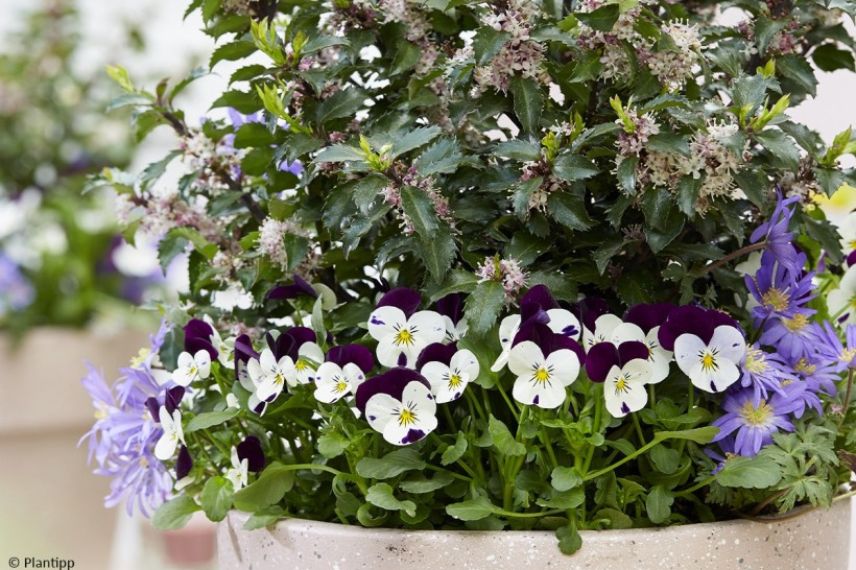
Ilex meserveae ‘Gentle’, in pot, in spring, with pansies
Where to place your holly?
Hollies generally prefer partial shade. However, Meserve hollies, Ilex x meserveae, and hollies with golden or variegated foliage require more sunlight. Be careful not to expose them to scorching sun, but always to dappled sunlight or protected during the hottest hours. In pots, they suffer more quickly than in the ground from intense exposure, so aim for partial shade in any case. Hollies tolerate urban pollution and sea spray well.
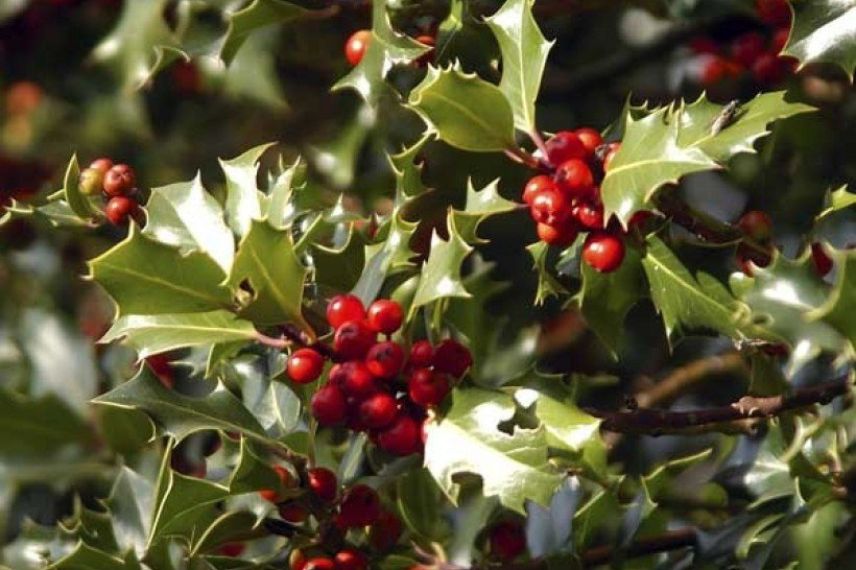
Hollies prefer partial shade
Watering and fertilising
Water generously at planting and follow up with regular watering during the first two springs and summers. The best indicator for when to water is to check the substrate. Allow it to dry briefly between waterings, but not for too long. This means you will likely water 1 to 2 times a week. Ensure that the water is well absorbed and does not stagnate. You can then space out the waterings, but holly prefers a cool substrate, so be careful not to let it dry out too much.
For hollies other than Meserve holly, it is better to water with rainwater, which is non-calcareous.
Holly will appreciate a supply of compost, potting soil, or worm compost each autumn at its base, incorporated by scratching. Take the opportunity to renew the mulch. Check it and top up if necessary in spring, before facing the summer heat.
Maintenance
It is an easy-care plant, low-maintenance. It settles in quietly and is not prone to diseases. Holly can still suffer from some attacks by parasites.
→ See the article: holly diseases and pests.
When you want to shape the holly, it should be pruned twice a year: first in March, then again in June or September-October. However, pruning in autumn may remove any fruits if they are present.
→ Find our tips in our tutorial on how to prune holly?
- Subscribe!
- Contents

Comments