





























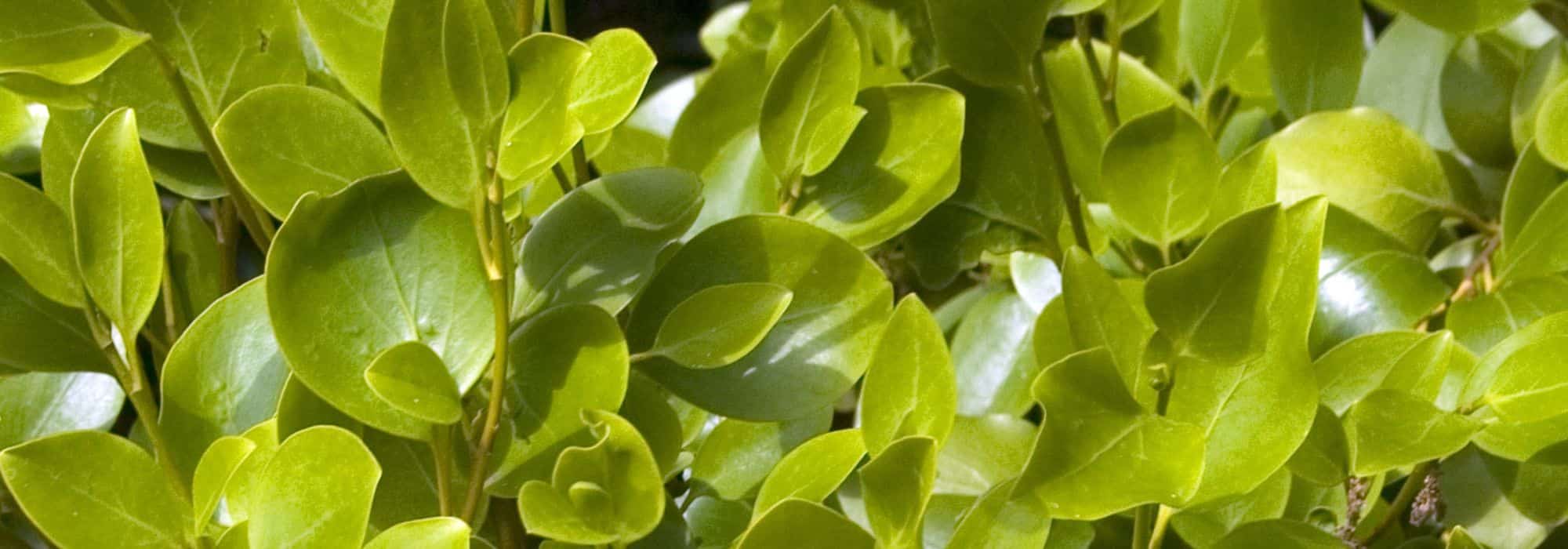
Griselinia: How to Create and Maintain a Hedge?
our tips on when and how to plant
Contents
The Griselinia is a beautiful bush, highly valued for its remarkable evergreen foliage of bright green, almost golden colour. This young plant thrives in mild climates and is often used to create free-standing hedges in the south of France or along the Atlantic coast. Its excellent tolerance to sea spray, as well as to winds, makes it a perfectly suitable bush for seaside gardens. Discover our tips and tricks for planting a Griselinia hedge and maintaining it.
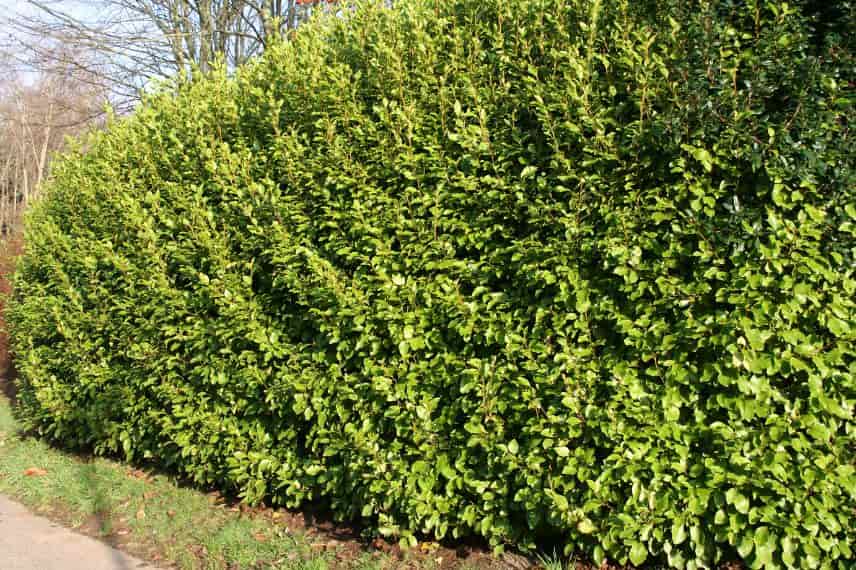
A hedge of Griselinia littoralis

When to plant a Griselinia hedge?
As with most evergreen bushes, the best time to plant a hedge of Griselinia is in early autumn, from September to October. Indeed, during this period, the soil is relatively moist and temperatures are still mild, allowing your bushes to root well. You can also plant in spring, from April to June, before the heat and drought set in. In any case, avoid planting during periods of frost or high temperatures, as this could jeopardise your young plants.
Which variety of Griselinia to choose?
Griselinia littoralis
Native to New Zealand, Griselinia littoralis is the type species, with evergreen leaves of a bright green colour. Its bushy, dense form can reach up to 2.5 m in all directions, creating a beautiful screen for privacy and wind protection. Its flowering is very discreet but remarkably melliferous, much to the delight of pollinators.
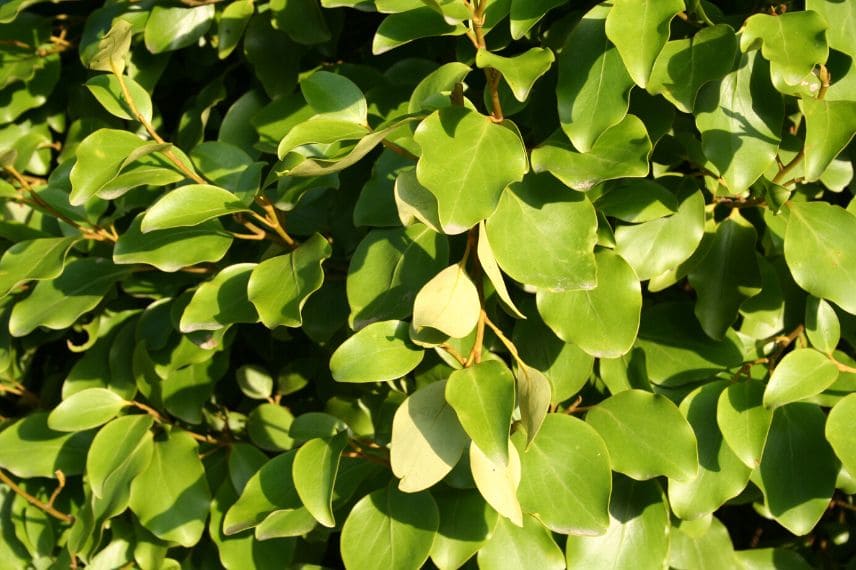
Griselinia littoralis ‘Redge’
Griselinia littoralis ‘Redge’ is a more compact variety, reaching a height of 1.8 m and a spread of 1.2 m. Its bushy habit and highly ramified branches make it an ideal subject for creating a hedge, but its small size also allows for pot cultivation. Its glossy, bright green foliage contrasts beautifully with its dark branches.
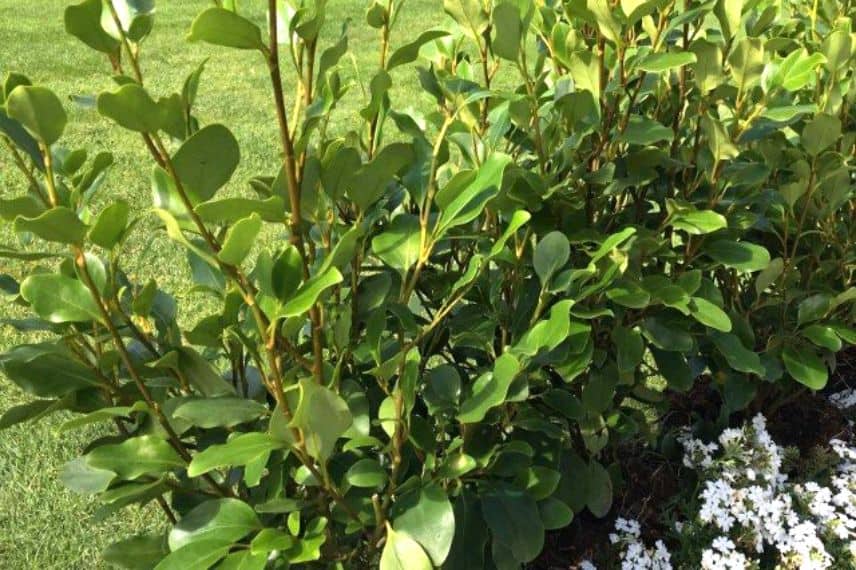
Griselinia littoralis ‘Redge’
Griselinia littoralis ‘Green Jewel’
Griselinia littoralis ‘Green Jewel’ is distinguished by its shiny, emerald green leaves, beautifully marginate and splashed with cream yellow. This lovely bush has a dense, upright habit, reaching 2 m in height and 1.5 m in width.
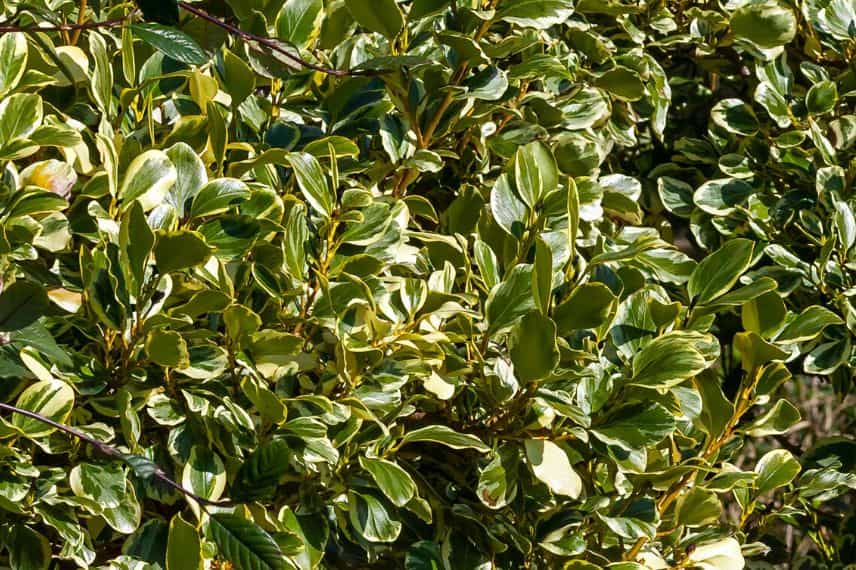
→ Discover all our varieties of Griselinia
Discover other Hedge shrubs
View all →
Available in 1 sizes
Available in 1 sizes
Available in 1 sizes
Available in 1 sizes
Available in 1 sizes
Available in 1 sizes
Available in 1 sizes
Available in 1 sizes
Available in 1 sizes
Available in 1 sizes
How to plant a Griselinia hedge?
Choosing the Right Location
Griselinia thrives when planted in full sun, which allows it to flower abundantly (even if its flowering remains discreet), and this strong light tends to enhance the shine of its foliage. This bush will also do well in partial shade, but it will be less floriferous there. It adapts to all types of soil, even calcareous, and particularly enjoys sandy terrains. To flourish, griselinia requires well-drained soil, without excess water, especially in winter. Its good tolerance to winds and sea spray makes it an excellent choice for a coastal hedge in a mild climate.
Planting Distance
Depending on the chosen variety, the planting distance will vary between 60 to 80 cm between bushes. For a more airy hedge, you can space the plants up to 1 m apart.
Note: In France, there are regulations regarding the legal distance between your hedge and your neighbour’s property. As a reminder, if your hedge reaches less than 2 m in height at maturity, you must plant it at least 50 cm from the boundary line. If your hedge exceeds 2 m in height, it should be planted more than 2 m from the boundary of your property. This rule may vary by municipality, so feel free to check with your local council.
→ For more information, consult our advice sheet: “Hedges, bushes, trees: What are the planting distances?”
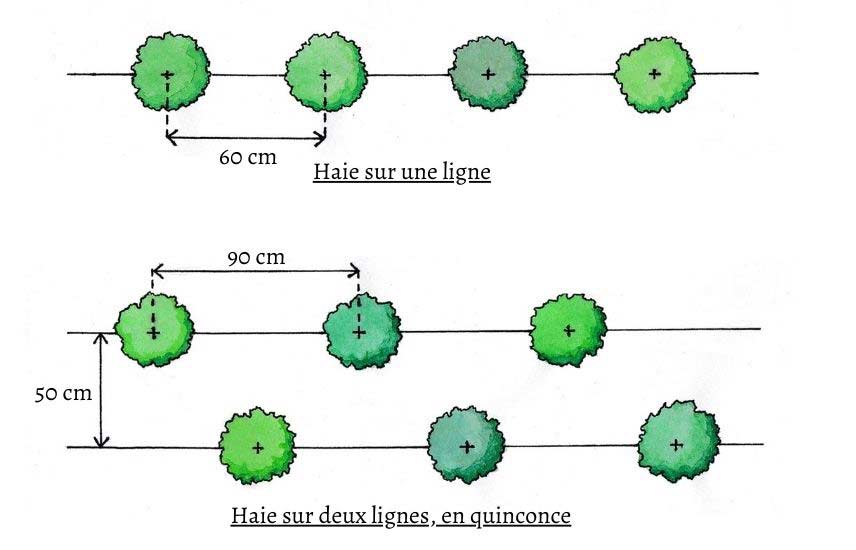 Diagram of usual planting distances for a hedge
Before Planting: Prepare Your Ground
- Determine the location of your hedge: For a straight row, use a line or place a wooden stake at each end, then stretch a string between these two stakes. You can then plant the bushes following this line.
- Prepare your soil: To facilitate the establishment of your bushes, take care to loosen and aerate your soil, not forgetting to weed it. If your soil is too compact, heavy, or tends to retain water in winter, add gravel to the planting holes to improve drainage of excess rainwater and irrigation.
- Enrich your soil: Add well-matured compost or manure to help your plants establish.
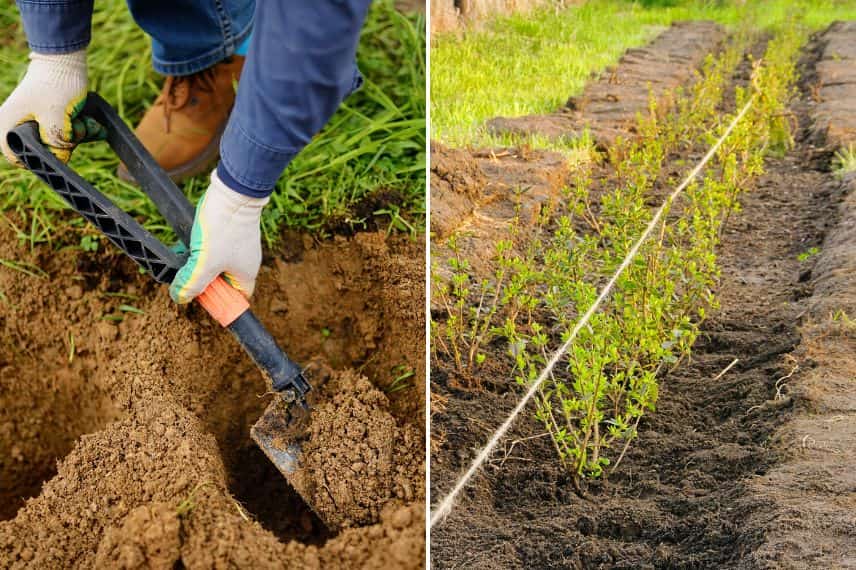 Left: planting hole for a hedge / right: example of planting a hedge using a line
Prepare Your Bushes:
- Soak your bushes: Pour about ten centimetres of rainwater into a bucket, then place the root ball of your griselinia in it for a few minutes.
- Then remove the pot and gently untangle and loosen the root ball.
- Remove any damaged roots with a pruning shear.
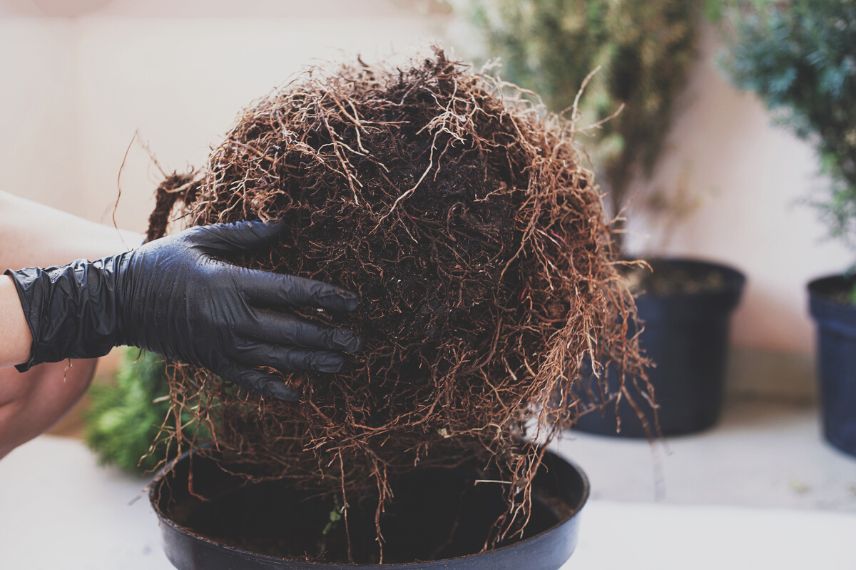 Untangling the root ball
Steps for Planting Griselinias:
- Dig a hole or trench twice as wide as the size of the root ball.
- In case of heavy soil: Pour a layer of gravel at the bottom of the trench and mix your garden soil with potting soil.
- Place your griselinias in the trench while respecting the distances between the bushes. The top of the root ball should be level with the soil.
- Backfill the trench with garden soil, lightly compacting it.
- Water your plantings thoroughly to avoid air pockets forming.
- Ideally, we recommend spreading a layer of mulch at the base of your bushes to limit water evaporation while insulating the roots from heat and cold. Additionally, mulching will reduce weeding.
Necessary Equipment:
- Plants of griselinias.
- A spade, fork, shovel, broadfork, or any other tool to loosen, aerate, and dig the soil.
- A pruning shear for trimming roots.
- A large bucket for soaking the plants.
- Well-matured compost or manure to enrich the soil.
- A watering can and gardening gloves.
- Optional:
- A line for a straight hedge,
- Potting soil and gravel in case of heavy soil,
- Mulch.
How to maintain a Griselinia hedge?
- In case of drought, do not hesitate to water your bushes during the first (or even the second) year of planting, allowing them to establish deep roots. After two summers, the griselinias will manage on their own and will withstand temporary drought.
- You can add well-rotted compost each spring to maintain rich soil and promote the growth of your bushes.
- Maintenance pruning is not obligatory, but it is generally carried out after flowering (which is highly appreciated by insects), from July to September.
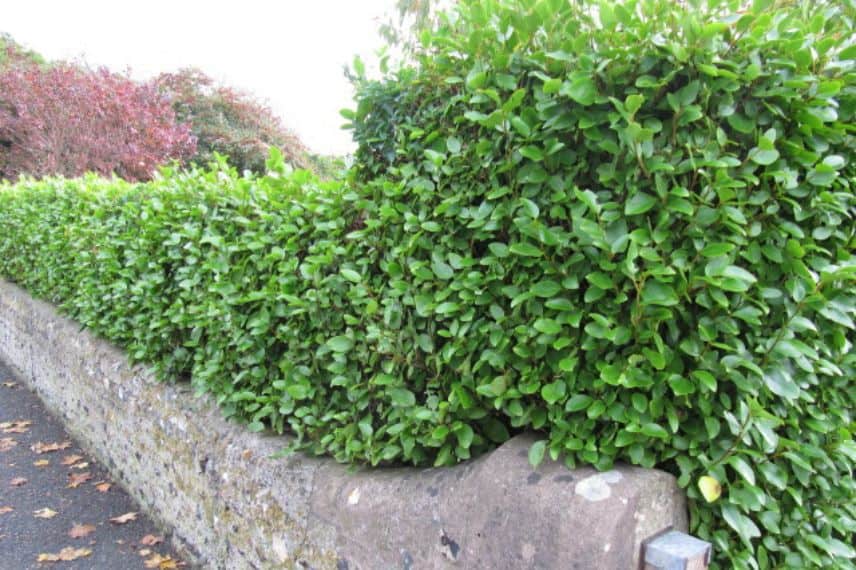
A beautiful hedge of Griselinia
For further reading
- Discover all our Griselinia varieties.
- Find our article to learn everything about Griselinia, grey shrub: planting, pruning, and care.
- Learn how to propagate grey shrub in our tutorial.
- Subscribe!
- Contents

Comments