





























Early flowering bulbs: they herald spring
Hooray for the first bulbs at the end of winter!
Contents
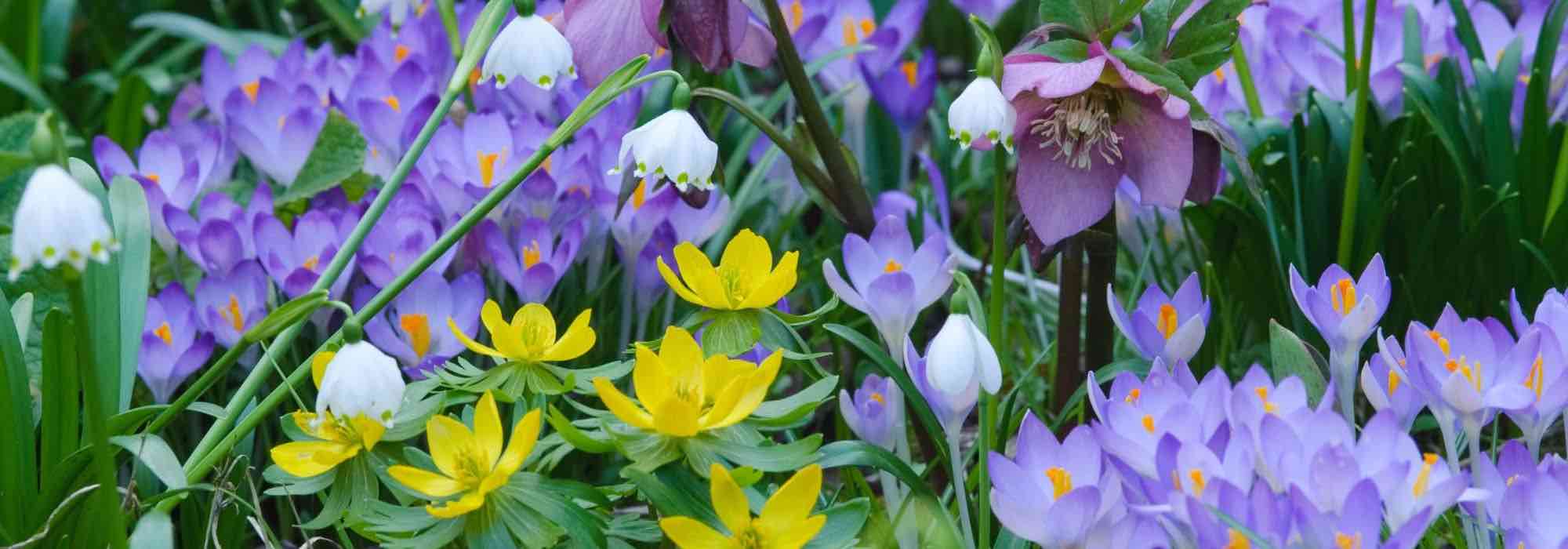
Watching for signs of nature awakening at the end of winter is one of the joys of gardening. The early-flowering bulbs are among the first vibrant plants and flowers. Generally small in size and available in blue, white, yellow, or pink, these winter flowers quickly form cheerful mixed carpets. We are referring here to bulbs that flower from February to March. They are not always the most well-known. Regarding their cultivation, there are three rules applicable to all those discussed in this article: they require well-draining soil, naturalise in place, and should be planted as early as autumn, ideally between September and December, but the earlier they are, the more they benefit from being planted in autumn.
Discover our selection of early-flowering bulbs!

Snowdrop
First on the list, with their evocative name symbolising the transition from winter to spring, the first to bloom between January and March, Snowdrops are lovely white winter flowers delicately tinged with green, varying according to the varieties. They emerge in clumps of linear leaves and bloom just above the foliage, about 20 cm from the ground, with small pendulous bells, simple for Galanthus nivalis, which one could almost hear tinkling as they sway in the breeze. Some varieties have double flowers, such as Galanthus nivalis ‘Flore Pleno’, with its delicate, sophisticated flower, yet shy. Also, Galanthus nivalis pleniflorus ‘Dionysus’, a rare variety that reveals a well-variegated corolla of dark green. Other varieties are valued for their floribundity, height, or light, ribbon-like foliage. All naturalise in cool, well-drained soil, in partial shade, where they can eventually form large carpets.
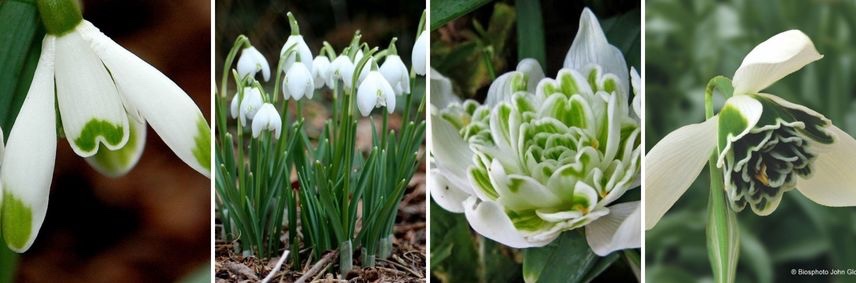
Galanthus nivalis ‘Viridi-Apice’, Galanthus nivalis, Galanthus nivalis ‘Flore Pleno’ and ‘Dionysus’
Crocuses
The Spring Crocuses are also champions of earliness, quickly forming very low carpets of violet, white, golden yellow, or cream flowers, in beautiful single cups with coloured stamens, on narrow foliage. Numerous in varieties, focus on the botanical Crocuses (chrysanthus, ancyrensis, sieberi, angustifolius, tommasinianus) to achieve the earliest flowering, generally in February. A winter and sun bulb, close to the ground, between 8 and a maximum of 15 cm in height, the Crocus naturalises easily and brightens up still cold soils in carpets. Note that Crocus tommasinianus and sieberi also flower in partial shade. Do not hesitate to plant these generous bulbs with their lovely poetic flowers, simple and sometimes intricate petals in various colours. For example, we can mention Crocus chrysanthus ‘Cream Beauty’, cream in colour, or Crocus sieberi ‘Firefly’, dressed in blue and gold, and Crocus chrysanthus ‘Fuscotinctus’ in golden yellow and brown.
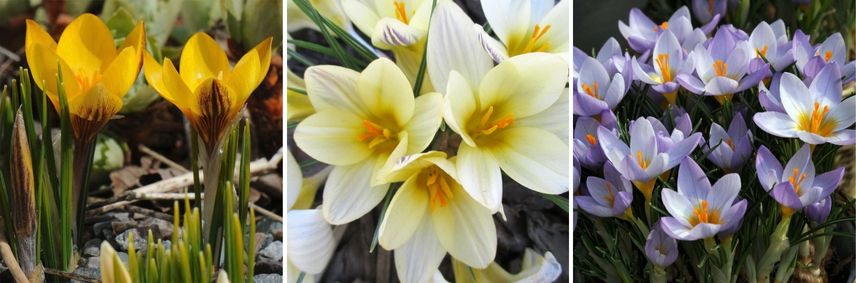
Crocus chrysanthus ‘Fuscotinctus’, Crocus chrysanthus ‘Cream Beauty’, Crocus sieberi ‘Firefly’
Discover other Spring bulbs
View all →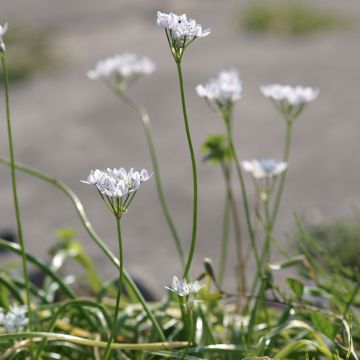
Available in 1 sizes
Available in 1 sizes
Available in 1 sizes
Available in 1 sizes
Available in 1 sizes
Available in 1 sizes
Available in 1 sizes
Available in 0 sizes
Available in 2 sizes
Chionodoxas
Less well-known, the Chionodoxa, or Glory of the Snow, closely related to Scillas, deserve their place among carpets of spring bulbs or alongside lovely winter perennials. They are best suited for gardens in the north of the Loire, to be planted in partial shade or dappled sunlight, in soil that is not too rich. They brighten up a lawn, a woodland, or a rockery with their star-shaped flowers, pink, blue, or white, particularly lovely in a mix. Discover the Chionodoxa forbesii ‘Blue Giant’ or ‘Violet Beauty’ or even the Chionodoxa luciliae.
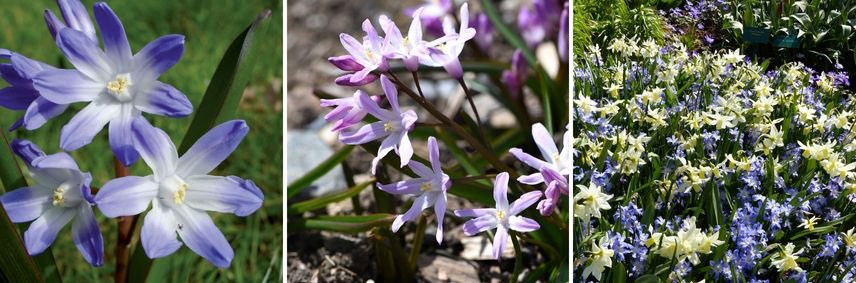
Chionodoxa lucilae, Chionodoxa forbesii ‘Pink Giant’ and Chionodoxa in a mix with Daffodils
Iris reticulata
Ah, the beautiful Iris reticulata! The winter flowering of miniature Irises is a marvel of precision. Beneath their delicate appearance, there is no fragility in this hardy and fragrant bulb. At the edge of a border, in rockeries, or in pots, Iris reticulata thrive in the sun. In the range of blues, they boast magnetic colours: intense violet, midnight blue, and sky blue. The blues are true, not tinged with mauve. Their petals, often maculate with orange-yellow, white, or black, also come in yellow and white. They should be grown in dry soil during summer and well-drained soil all year round. Discover the stunning varieties: Iris ‘Katherine’s Gold’, Iris reticulata ‘Alida’, ‘Katharina Hodgkin’, and ‘Down to Earth’, as well as ‘North Star’. Not to forget the sumptuous ‘Blue Note’. Click to discover the surprise of their stunning colours!
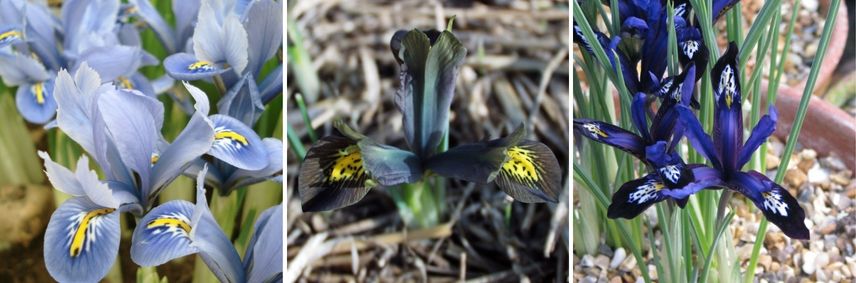
Iris reticulata ‘Blue Planet’, ‘Down to Earth’, and ‘Blue Note’
Early Scillas
Let’s start with the earliest: the Scilla mischtschenkoana ‘Tubergeniana’, a small winter flower in striped pyjamas, as if it were truly the first to wake up. Which it is, as it can bloom as early as January, or otherwise in February-March. In pale bluish-white like porcelain, its flower is marked by a central line of a deeper blue, before the foliage appears. Scillas thrive in partial shade, in light woodland. Next, in February-March, comes Scilla siberica in white or intense blue. Very bright, with pendulous bells, they naturalise easily in the garden and are all very hardy. They reach a height of 15 cm. Feel free to mix them, both with each other and with other winter flowers.
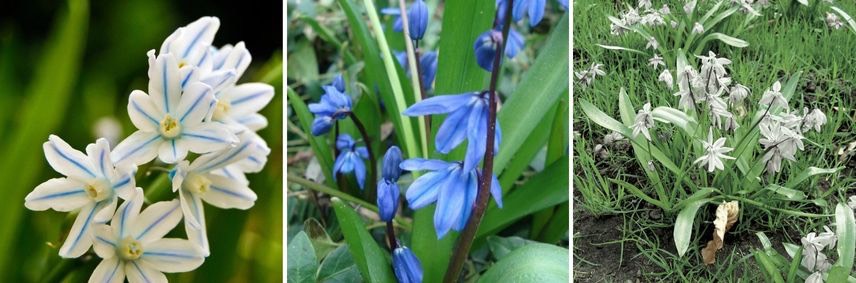
Scilla mischtschenkoana ‘Tubergeniana’, Scilla siberica ‘Spring Beauty’ and ‘Alba’
Two little-known bulbs
Let’s make room for unique bulbs of their species. Let’s start with the very lovely Eranthis hyemalis or Winter Aconite, whose February flower, a golden cup, rests on green petaloid sepals resembling a collar of leaves. The whole arrangement, almost at ground level, is surprising and delightful. The Winter Aconite thrives in cool soil, in a slightly shaded or even shady position. The Leucojum vernum or Spring Snowflake, a cousin of the Snowdrop, is topped with small white corollas with green tips, reaching 20 cm in height. It displays a graceful silhouette in moist to cool areas, in sun or partial shade.
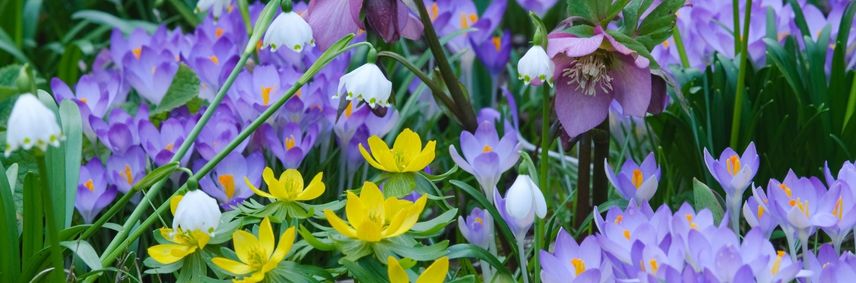
The yellow bulbs of Eranthis hyemalis and the white bells of Leucojum vernum
- Subscribe!
- Contents

Comments