





























Designing a trendy 'thistles and co.' bed
For a composition full of zest!
Contents
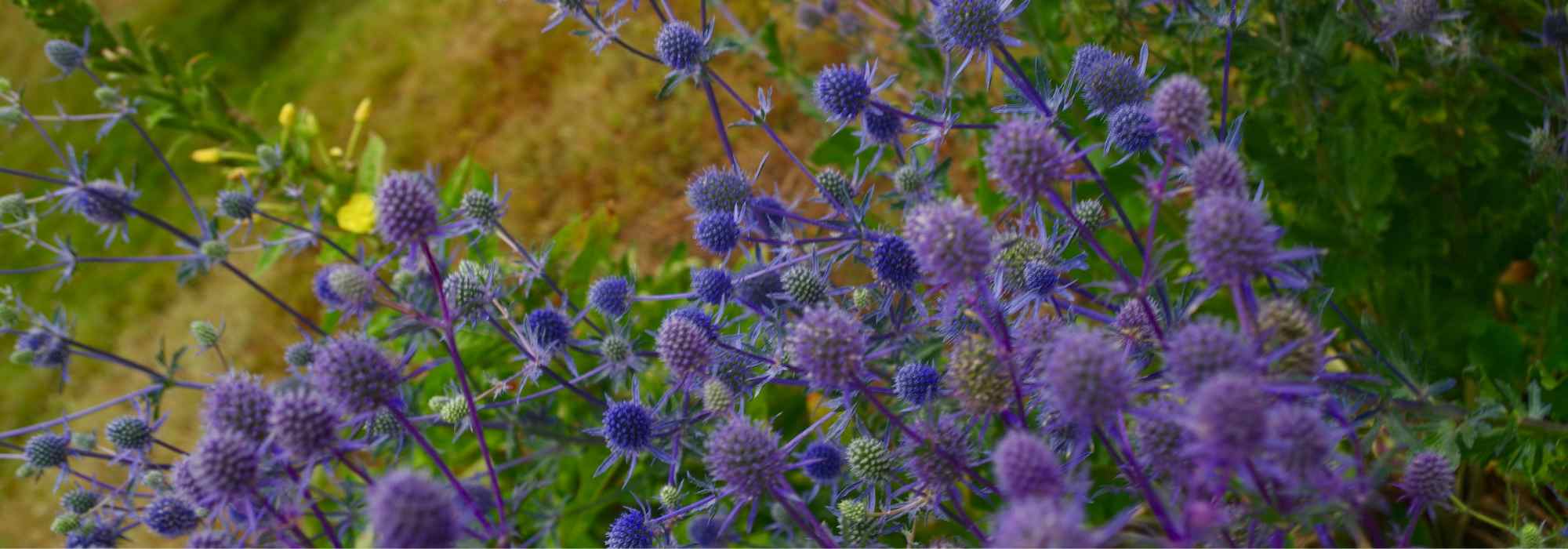
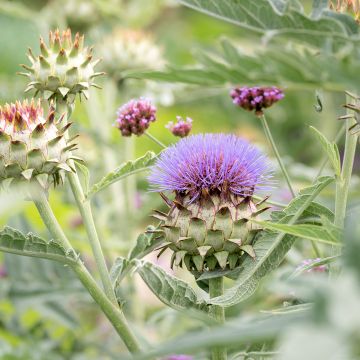
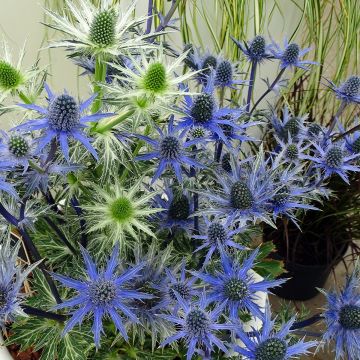
Eryngiums, Echinops, Cynara, with their highly graphic inflorescences in metallic blue, pink, or silver, bristly or perfectly round, ornamental thistles are unmatched for adding a touch of flair to a rather dull flowerbed, even into winter. They bloom in summer but are also stunning when crowned with a white frost. They are all so expressive that it’s hard to have favourites. One can have fun with their sea urchin-like flowers as well as their spiny foliage with interesting patterns. They are suitable for both wild and rustic spaces, as well as for graphic, contemporary, or mineral compositions. Robust and low-maintenance, they grow easily in full sun and well-drained soil.
Here are our tips for creating a thistle bed in a part of the garden!

For what style of garden?
“`html
A dry and mineral garden
As ornamental thistles thrive in stony, well-drained soils, withstand drought, and enjoy full sun, they will naturally find their place in a predominantly mineral garden, alongside other plants that appreciate the same growing conditions. They grow very well in poor, low-fertility, and relatively dry soils. They will thrive in a dry space, such as a scree garden or mineral garden. Take advantage of this to create a sunny rockery. Apply a mineral mulch at the base of the plants (gravel, pumice, etc.) to enhance the decorative aspect and emphasise the mineral quality. The advantage of this type of garden is that it favours water- and fertiliser-efficient plants, resulting in an ecological garden that requires very little maintenance. You can also willingly adopt other perennials that are resilient to drought and stony soils: consider lavenders and santolines, as well as low grasses like Festuca ‘Intense Blue’, and Stipa tenuifolia which will form a persistent base at their feet. Paired with Perovskia atriplicifolia, our thistles will bring real dynamism to your composition.
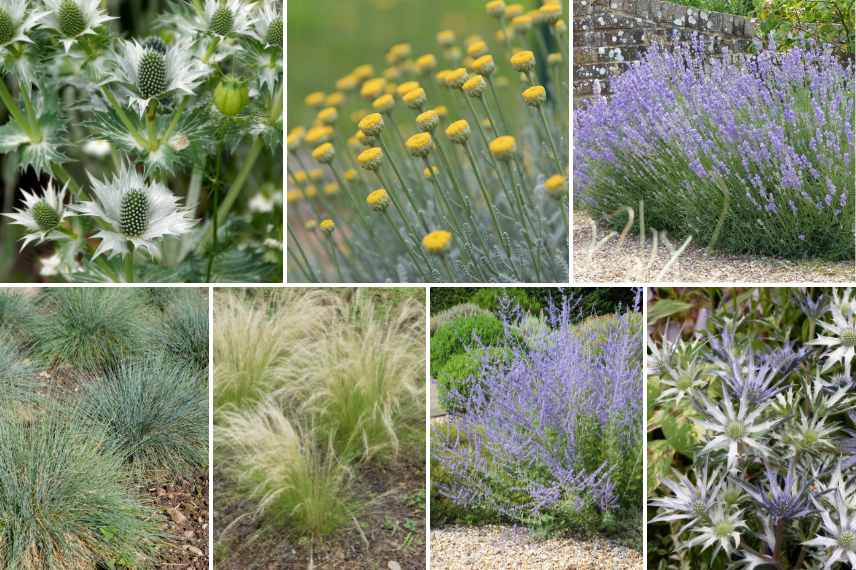
Eryngium giganteum, santoline, Lavandula angustifolia ‘Munstead’, Festuca glauca, Stipa tenuissima, Perovskia atriplicifolia and Eryngium bourgatii[/caption>
A naturalistic garden
With their wild appearance, ornamental thistles add a touch of nature throughout the summer in sunny borders. They thrive in naturalistic and wild gardens, enhancing them with their bristly silhouette. Melliferous, they actively contribute to the garden’s ecosystem by attracting bees, butterflies, and other pollinators. Thanks to their presence, you will create a border that is favourable to biodiversity. You can create a beautiful, harmonious, and natural countryside scene, inspired by their graphic and airy forms and the softness of their hues. Choose a large specimen such as Cynara cardunculus, a thistle that can rise up to 1.5 m or 2 m above the ground, which will bring beautiful verticality to this scene. Opt for other plants with similarly greyish foliage, such as sedums (Sedum spathulifolium ‘Cape Blanco’, for example with small sulphur-yellow flowers), the soft Stachys byzantina and all equally nectariferous plants like Buenos Aires verbenas, knautias and scabious, echinaceas, and achilleas, the choice is vast to evoke a wild meadow.
On their side, an Euphorbia cornigera and Heleniums will provide a complementary touch of colour. The acid-yellow foliage of the euphorbias pairs perfectly with the steel-blue of the thistles. Some tall grasses like Stipa gigantea will complete this charming, very floriferous tableau that requires no maintenance from summer to the first frosts. Consider integrating love-in-a-mist or Nepeta ‘Summer Magic’ with blue flowers. You will organise a clever mix where the plants intertwine, creating a surprisingly contrasting and expressive assembly even in winter.
[caption id="attachment_201661" align="aligncenter" width="856"]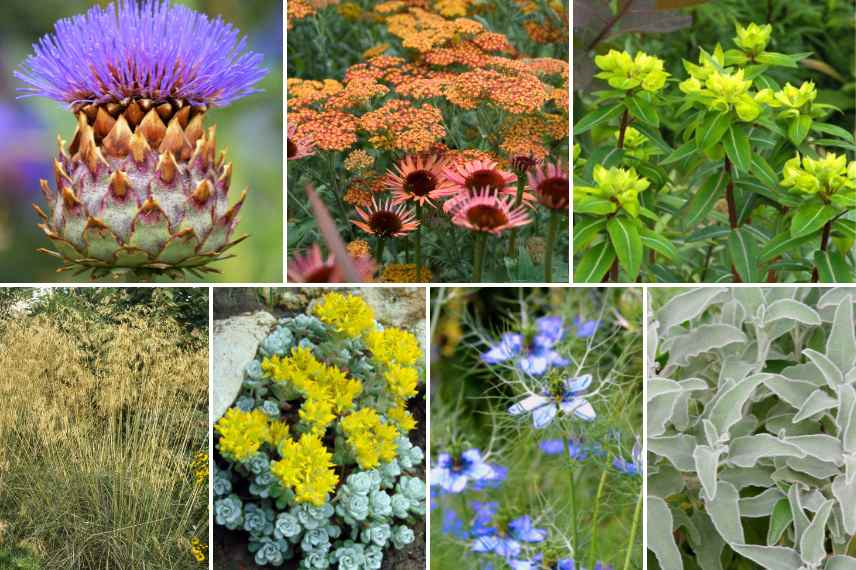 Cynara cardunculus, achilleas and echinaceas, Euphorbia cornigera, Stipa gigantea, Euphorbia ‘Cape Blanco’, love-in-a-mist and Stachys byzantina[/caption>
A contemporary garden
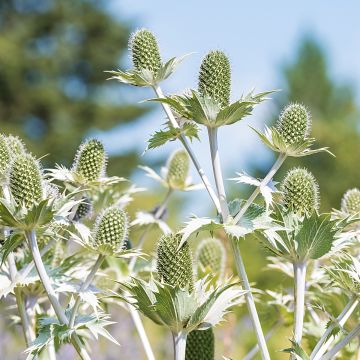
Ornamental thistles have a uniquely graphic quality, a very structured appearance, and metallic blue or silver colours that make them ideal subjects for creating a modern and graphic garden. They allow for the creation of a clean garden with formal, strict lines. In this type of garden, you will favour blooms in subdued tones, without too much mixing: white, black, purple. Surrounding an Eryngium yuccifolium, which offers a spectacular yet delicate bloom with its small white spheres, gather other very graphic plants, such as Alliums, Agapanthuses, and Mulleins (the Verbascum ‘Polarsommer’). This thistle, resembling a Yucca, will blend into this contemporary setting. In contrast, grasses such as Ophiopogon planiscapus ‘Nigrescens’ and Miscanthus sinensis will bring the necessary movement and lightness, counterbalancing the rigidity of the thistle.
[caption id="attachment_201664" align="aligncenter" width="856"]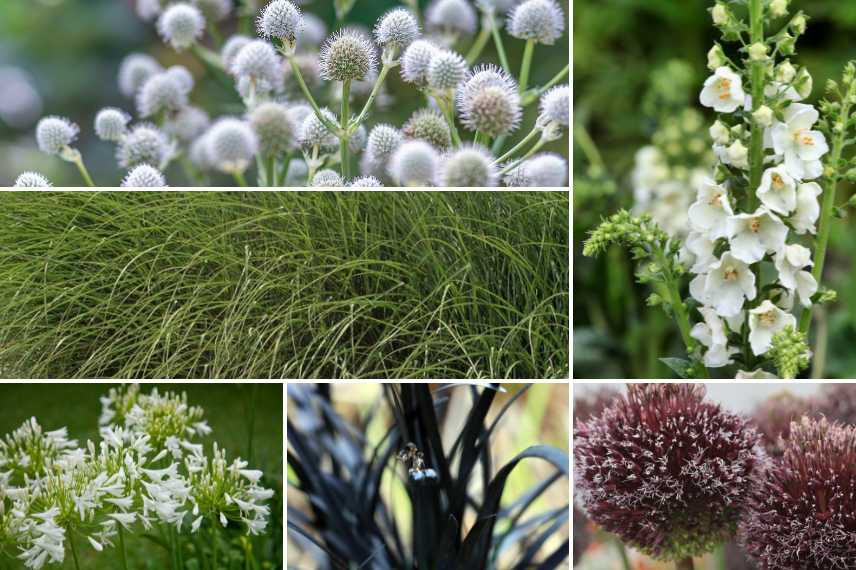 Eryngium yuccifolium, Verbascum ‘Phoniceum Flush of White’, Miscanthus sinensis ‘Gnom’, Agapanthus, Ophiopogon planiscapus ‘Nigrescens’ and Allium ‘Forelock’.
In an exotic garden
Some Eryngiums, such as Eryngium agavifolium, Eryngium horridum and E. pandanifolium have a distinctly exotic foliage style. With their upright umbels on rigid stems and leaves resembling agaves or grasses, they naturally structure an exotic border. They form large, lush, and graphic clumps, ideal for creating a captivating backdrop. Weave a backdrop composed of plants with generous foliage and structuring architecture with agaves, yuccas, phormiums and cordylines in coastal climates. You will accompany them with the incandescent or flamboyant blooms of kniphofias, Crocosmia ‘buttercup’, Watsonias, and daylilies.
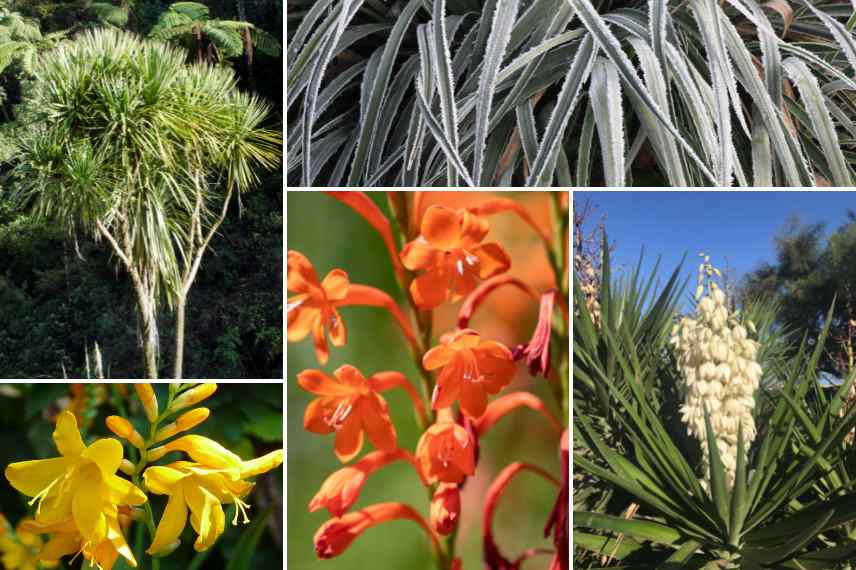
Cordyline australis, Eryngium agavifolium, Crocosmia ‘Buttercup’, Watsonia and Yucca
“`
Which thistles to choose?
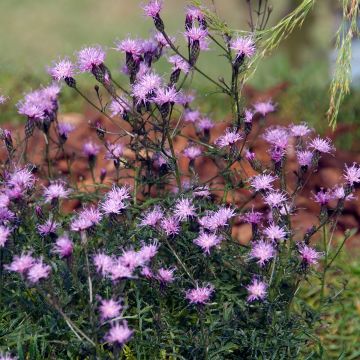
There are many species of ornamental thistles, all very graphic and decorative. This large family mainly includes Eryngiums or Sea Hollies, echinops, and Cirses. All these species are characterised by leaves armed with formidable thorns and flowers that are all bristly. Their flowerings are available in a rather limited colour palette – but no less spectacular – ranging from metallic blue for most to silvery white for the rarer ones, with bright pink in Cirsium japonicum. Here are our favourite thistles to add some spice to your borders!
Blue Thistles
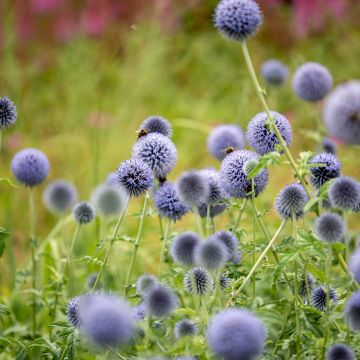
- L’Echinops bannaticus ‘Taplow Blue’, a variety of azure globe with a somewhat stately habit that is sure to attract all eyes in the garden. It boasts round, spiky steel-blue flowers reaching up to 1.5 m in height above very finely cut and spiny foliage.
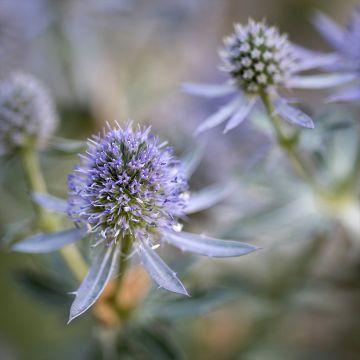
- L’Eryngium x zabelii ‘Big Blue®’, is one of the most beautiful with its conical grey-violet inflorescences crowned with steel-blue spiny bracts.
- L’Eryngium ‘Jos Eijking®’, a magnificent thistle of medium height (70 cm tall and 30 cm wide) that shines with its grey-green conical umbels crowned with cobalt-blue spiny bracts.
- L’Echinops ritro, offers small blue globes that can rise up to 1 m in height.
- L’Eryngium alpinum ‘Blue Star’, is a selection of Alpine Blue Thistle that features a very decorative steel-blue flowering with finely sculpted spiny bracts.
- L’Eryngium planum ‘Jade Frost’, an extraordinary sea holly! It stands out with its surprising variegated blue-green foliage edged in pink and cream on which small bristly violet-blue heads bloom.
- L’Eryngium planum ‘Neptune’s Gold’, is another variety that surprises with its golden spiny leaves serving as a backdrop to blue flowers encircled by yellow bracts.
- L’Eryngium ‘Tiny Jackpot’, is a delightful miniature version that will not exceed 35 cm in height, ideal for rockeries.
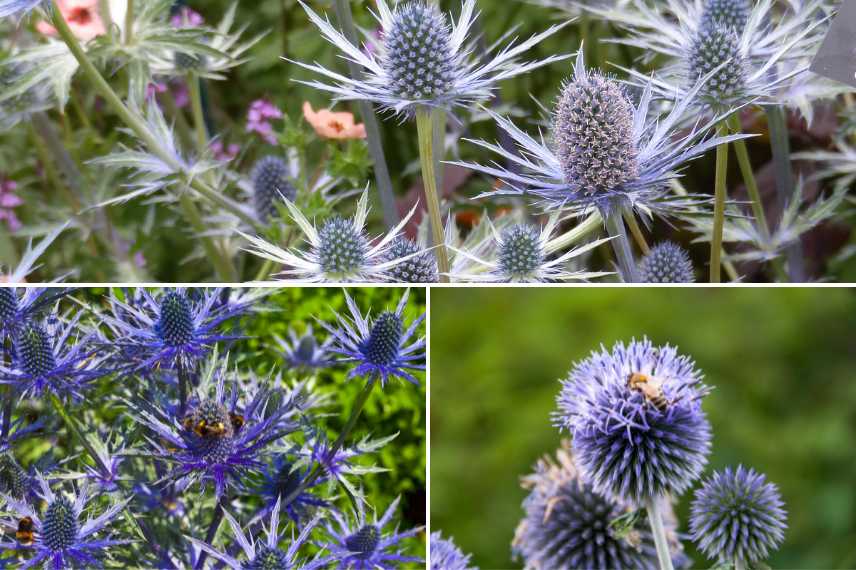
Eryngium ‘Jos Eijking®’, Eryngium alpinum ‘Blue Star’, and Echinops ritro
White Thistles
- L’Echinops sphaerocephalus ‘Arctic Glow’, a unique variety when it displays its spiky ivory-white flower balls, forming large, very graphic clumps 1 m to 1.2 m in height.
- L’Echinops bannaticus ‘Star Frost’, a beautiful variety with silvery-white inflorescences atop stems nearly 1 m tall.
- L’Eryngium giganteum, is a giant thistle forming clumps nearly 1 m tall. It astonishes with its silver-reflective foliage and spiky grey-blue flowers festooned with silvery bracts.
- The Berkheya purpurea, is a rather curious type of thistle with a strong personality… as it displays large daisy-like flowers in pale mauve with a purple centre, reaching 90 cm in height above thick foliage edged with sharp teeth.
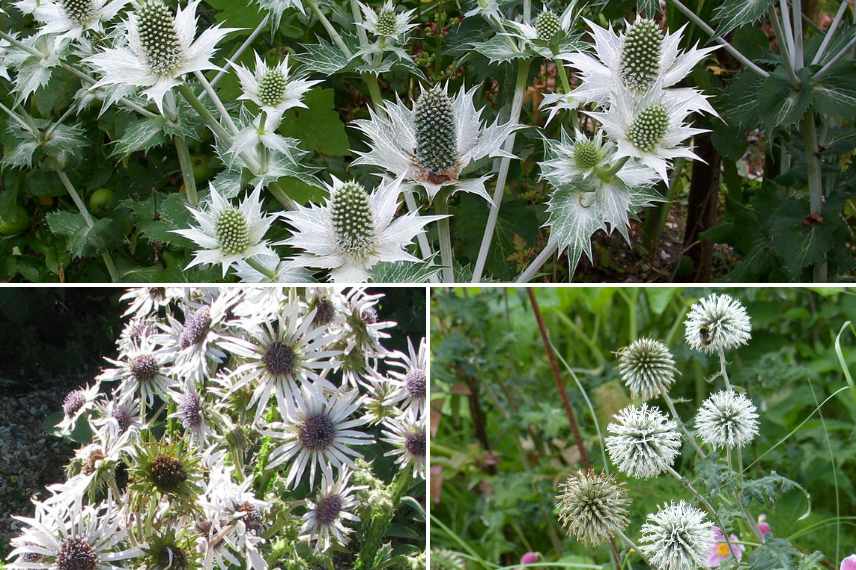
Eryngium giganteum, Berkheya purpurea, Echinops sphaerocephalus ‘Arctic Glow’
Pink or Red Thistles
- The Dipsacus fullonum (synonym sylvestris, known as wild teasel), is a wild thistle that has plenty of character when its small spiky pink-mauve flowers adorned with beautiful bracts rise up to 1.8 m tall.
- L’Eryngium ebracteatum var. poterioides, a very rare wild sea holly to collect! It stands out with its red-brown flowering, reminiscent of burnet flowers. This is a large variety about 1.2 m to 1.4 m tall in bloom, perfect for a wildflower meadow.
- The Cirsium japonicum ‘Rose Beauty’, a very pretty thistle with large magenta flower heads measuring up to 5 cm in diameter.
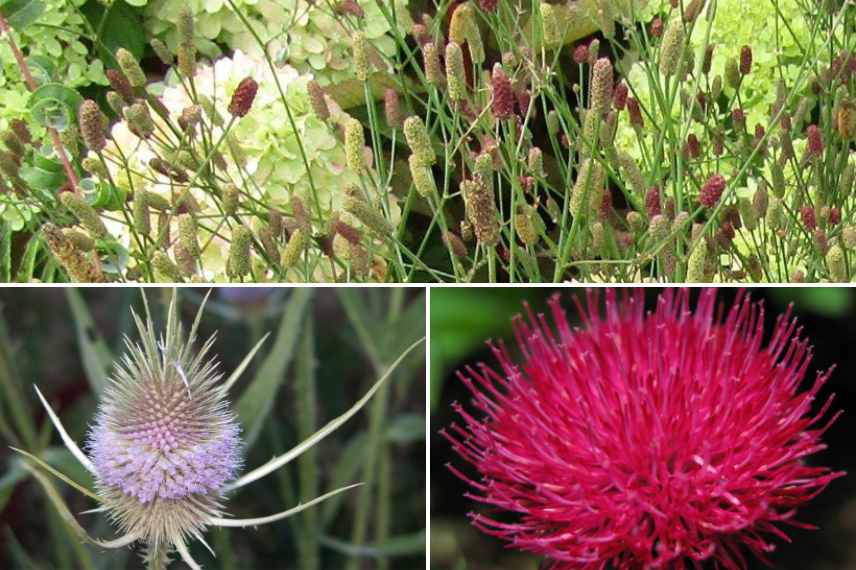
Eryngium ebracteatum var. poterioides, wild teasel and Cirsium japonicum ‘Rose Beauty’
Discover other Ornamental Thistles
View all →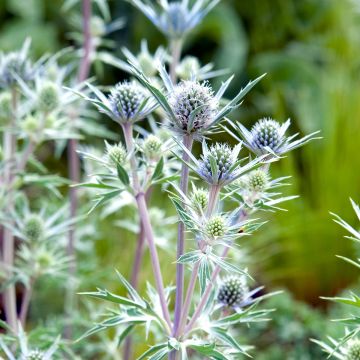
Available in 1 sizes
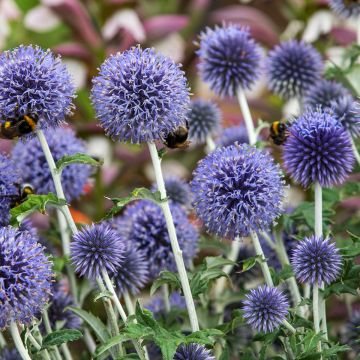
Available in 3 sizes
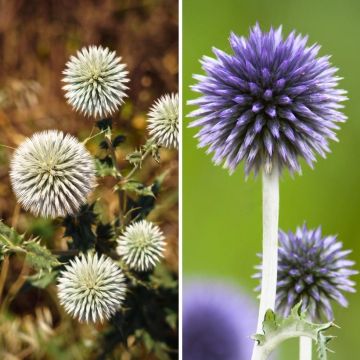
Available in 0 sizes
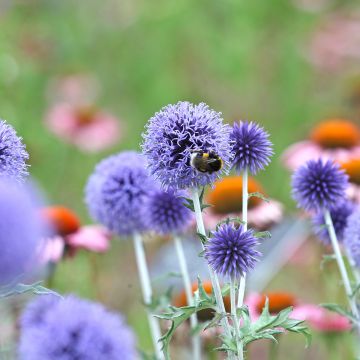
Available in 2 sizes
Available in 1 sizes
Available in 2 sizes
Available in 1 sizes
Available in 2 sizes
Available in 1 sizes
Available in 1 sizes
Which plants to associate them with?
With their strong presence and graphic silhouette, ornamental thistles could easily steal the show from the surrounding plants. Nevertheless, as we have just seen, they manage to blend with other plants without overshadowing other flowers. Their colour palette easily harmonises with all pastel shades, pinks, mauves, and greys. They blend harmoniously with other summer-flowering perennials that love the sun and well-drained soils, such as echinaceas, sedums, and gauras; the list is long! Wormwoods, stachys, and lychnis will echo their silvery hues, while perovskia, Verbena bonariensis, lavenders, rosemaries, or even sages will create azure marriages in the same shades of blue.
The complementary colour to blue, yellow is the perfect hue to create interesting contrasts. Pair the beautiful blue spheres of thistles with the sunny blooms of Eremurus or Achillea millefolium, and you will have plenty of options. Also consider grasses by incorporating beautiful clumps of Stipa tenuissima alongside them, which will bring movement and lightness in contrast to their ramified and rigid stems.
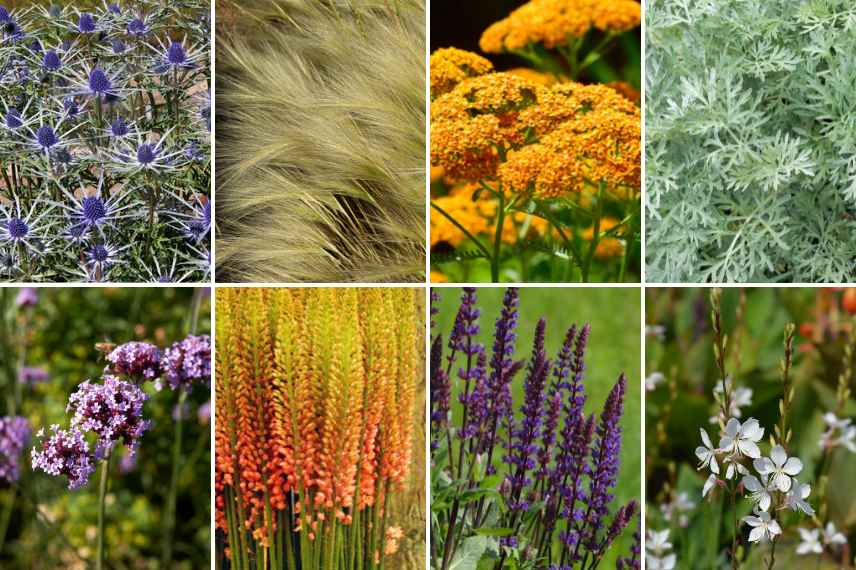
Orange, blue, violet, and grey tones will be perfect companions around spiky thistles: stipas, achilleas, wormwood, Buenos Aires verbena, steppe lilies, sages, and gaura…
Thistles in every season!
Ornamental thistles have a very long flowering period, uninterrupted throughout the summer. Depending on the varieties, flowering occurs between June and October. However, they remain decorative in autumn and winter, once flowering is over, when their faded flower heads are filled with countless seeds. After flowering, in autumn, the flowers retain their characteristic shape, being simply replaced by brown, dry, and graphic fruits that delight birds, particularly goldfinches, which, in the cold season, peck at the seeds in the calyxes of the thistles.
Highly graphic, they are much appreciated for composing cut flower arrangements and continue to provide a spectacle in winter when frost or snow covers their dried inflorescences with a white powder. In the heart of winter, you can enjoy a large mixed border of bushes and perennials that showcase our thistles. Cornus with coloured wood, light grasses retaining frost (Pennisetum alopecuroides), and airy perennials like the Anaphalis margaritacea ‘Neuschnee’ or silver everlasting will surround, for example, an Echinops bannaticus ‘Taplow Blue’, and offer a very soft plant palette for an enchanting display in the winter garden.
And discover the “winter garden” in our advice sheet!
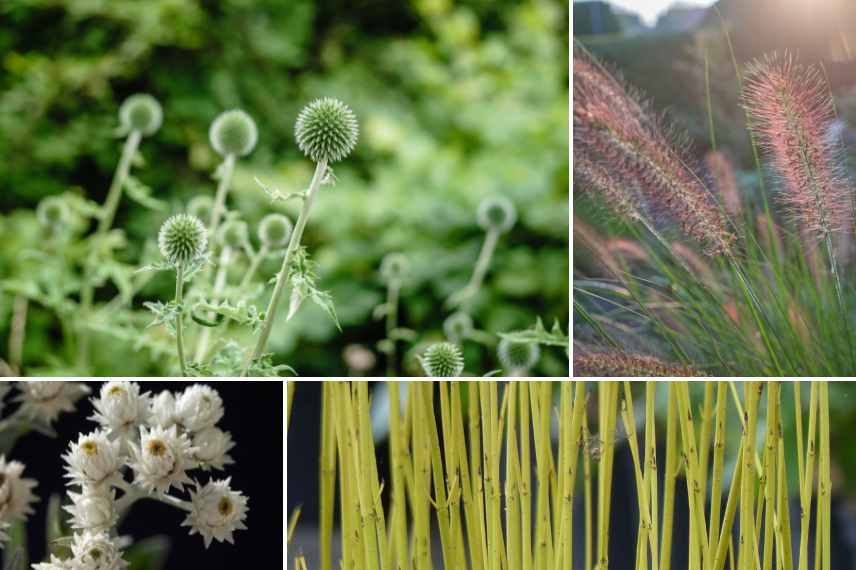
Thistles, Pennisetum alopecuroides, Anaphalis triplinervis, and Cornus stonolifera ‘Flaviramea’
- Subscribe!
- Contents

Comments