

























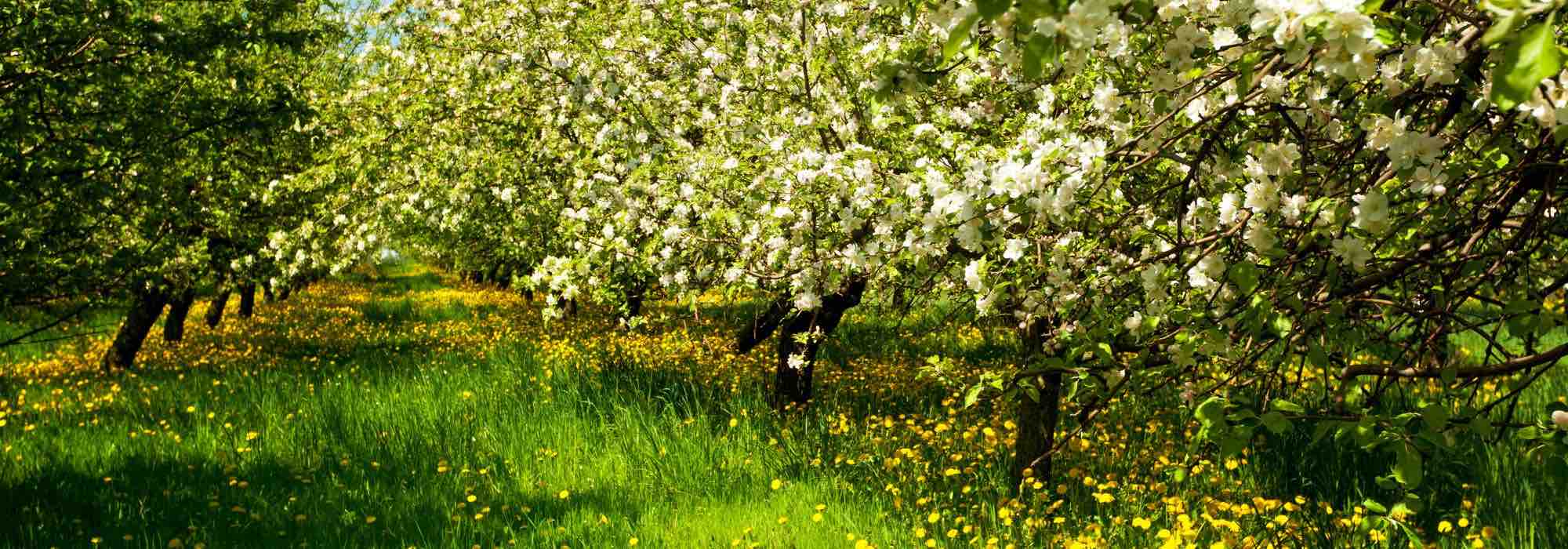
Choosing a local heritage variety of fruit tree.
The advantages of these varieties and our advice on how to choose them
Contents
If you want to grow fruit trees in the garden, you will have many options. The heritage and local varieties, which had been largely neglected in favour of modern or exotic varieties, are gradually regaining popularity. And for good reason: they offer many advantages.
Let’s look at why you should favour these heritage and local fruit trees and how to make your choice based on different criteria.

Why favour local fruit trees?
Local fruit tree varieties have qualities that modern or exotic hybrid varieties do not always have. Admittedly, they do not produce the “perfect” and very homogeneous fruits demanded by major retailers, which is why they are rarely chosen by industrial farms. But they are worth adopting for many other reasons.
Natural resistance
As they are adapted to specific growing conditions of climate and soil, these varieties require less care: wintering, sanitary treatments (fungicides, antiparasitic treatments…), pruning, watering, etc. This saves time and money, but also avoids the use of substances harmful to the environment.
Over time, selections occurred naturally, so that only the varieties best adapted to the local specific growing conditions could survive. In the warm regions of southern France, these varieties will be more tolerant of water shortages and drought. In mountainous regions, they will withstand severe frosts. In wetter areas, they will be less susceptible to disease.
Choosing a local variety therefore favours a fruit tree naturally adapted to its terroir.
Optimised potential
The flowering and fruiting of these varieties are adapted to achieve good productivity. In regions with long winters, fruit trees will have later flowering and fruiting, so as not to risk being destroyed by frosts that can still occur in spring. Conversely, flowering may be earlier in areas with short winters.
Local fruit trees most often ensure good pollination, also beneficial for other plants grown nearby.
Enhanced biodiversity
By choosing local species, you also contribute to the preservation of biodiversity. Insects, reptiles, small mammals, birds… so many species that depend on native plants for food, shelter and therefore survival.
Read also
Fruit trees for beginnersThe benefits of choosing heirloom varieties
Favouring heirloom varieties is not just a whim for a few nostalgic people. This choice contributes to the conservation of rare or endangered species. Preserving the genetic heritage of these species that are part of our history is to prevent certain flavours, shapes or textures from disappearing.
This choice is also an alternative to the standardised, low-diversity fruit sold in supermarkets. The safeguarding of these species allows the rediscovery of forgotten fruit trees, their flavours and their uses.
Finally, these trees are also useful for creating new species that respond to our current climate challenges. They help enrich the available genetic resources of plants and thereby represent a solution for the future.
Where can I find local and heritage fruit trees?
You can find heirloom varieties online, for example on our website. At nurseries, at markets or from local producers, you can also find native and heirloom varieties. Also consider contacting conservation orchards or associations in your area.
Choose a variety based on the flavour and use of the fruit
It’s obviously the number one factor when choosing a fruit tree: its fruits! According to their flavour, but also their texture, shape or even their colour… You’ll have a bewildering choice among heritage and local varieties.
Choose your fruit tree according to your tastes, of course, but also depending on how you plan to use it.
Fruits to eat as they are
For table fruits that will be eaten raw, there is a wide selection of varieties. Do you prefer crisp, tart fruits to eat as they are, picked straight from the tree? In that case, choose the apple tree ‘Reinette du Mans’ or the apple tree ‘Belle Fille de Salins’, a rare variety from the Jura.
Prefer fruits with juicy, sweet flesh? In that case, turn to the grapevine ‘Muscat de Hambourg’ or the fig tree ‘Brown Turkey’.
Looking for “superfruits”, reputed to be high in vitamins and antioxidants good for your health? Try the blackcurrant bush ‘Noir de Bourgogne’, with its tart black berries.
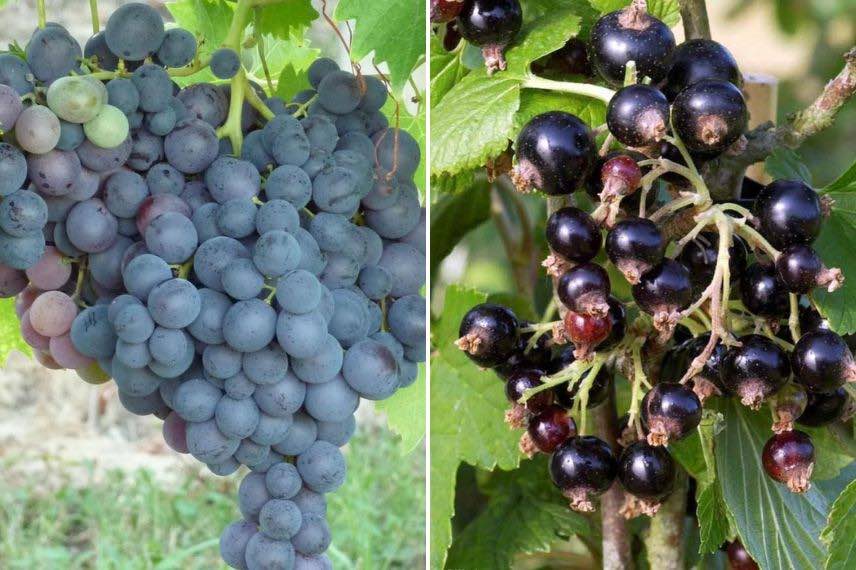
The famous ‘Muscat de Hambourg’ and blackcurrant ‘Noir de Bourgogne’, heritage varieties to enjoy as table fruits
Fruits for cooking
Fruits also allow for many culinary transformations. They can be used to make jams, jellies, chutneys, desserts or various beverages.
Are you looking for melting, sweet fruits to make jam? Turn to the black elder or the plum tree ‘Mirabelle de Nancy’. For your pastries, choose the yellow-vine peach tree or the apricot tree ‘Royal’.
Fancy making your own cider? Try the apple trees ‘Petit Jaune’ or ‘Marie Ménard’.
Fruits for storing
If you want to be able to store your fruits for several months, turn to late apple trees, such as ‘Belle de Boskoop’. The harvest takes place in October–November for storage until March.
Also consider the pear tree ‘Doyenné du Comice’, whose fruits harvested from early autumn are good candidates for storage.
The flowering period and the harvest period
Beyond fruiting, flowering can also have ornamental value. You can choose to stagger them so you can enjoy them for several months in the garden or orchard. But the flowering period mainly determines especially the fruiting and harvest period. If you want fruit pickings to be spread out over the months, do not choose only varieties that ripen in late summer or autumn.
For early harvests from mid-June, turn to the ‘Anglaise Hâtive’ cherry trees or ‘Griotte de Montmorency’. Also choose the ‘Red Robin’ peach and the ‘St Jean’ pear.
The ‘Mr Hâtif’ plum lives up to its name, offering early fruit that can be picked from late July. As for the ‘Goutte d’Or’ fig, it is biferous: it bears fruit first in July, then again in mid-August.
For late harvests in October-November, favour apple trees such as ‘Calville Rouge d’Hiver’ or pear trees such as ‘Duchesse d’Angoulême’.
Also be sure to take alternate bearing in fruit trees into account. This natural phenomenon results in a smaller harvest every other year in certain species with pips or stones (apple trees, pear trees, cherry trees, citrus trees…). To learn more: What is alternate bearing in fruit trees?
Self-fertile or self-sterile fruit trees?
Among plants, there are species capable of bearing fruit by themselves, as they have their own pollen. These self-fertile varieties have the advantage of not needing another variety to set fruit. This is the case, for example, for the apricot tree ‘Tardif de Tain’, the peach tree ‘Sanguine vineuse’, the fig tree ‘Portogallo’ or the plum tree ‘Reine Claude d’Oullins’.
By contrast, others will require complementary varieties in order to bear fruit. It is important to choose the right varieties for these, so that the trees flower in synchronisation. For example, the cherry tree ‘Bigarreau Hedelfingen’ should be paired with a cherry tree ‘Bigarreau Summit’ or ‘Bigarreau Van’ within a radius of no more than 30 metres. Similarly, the cider apple tree ‘Douce Coët Ligné’ requires the presence of other apple varieties.
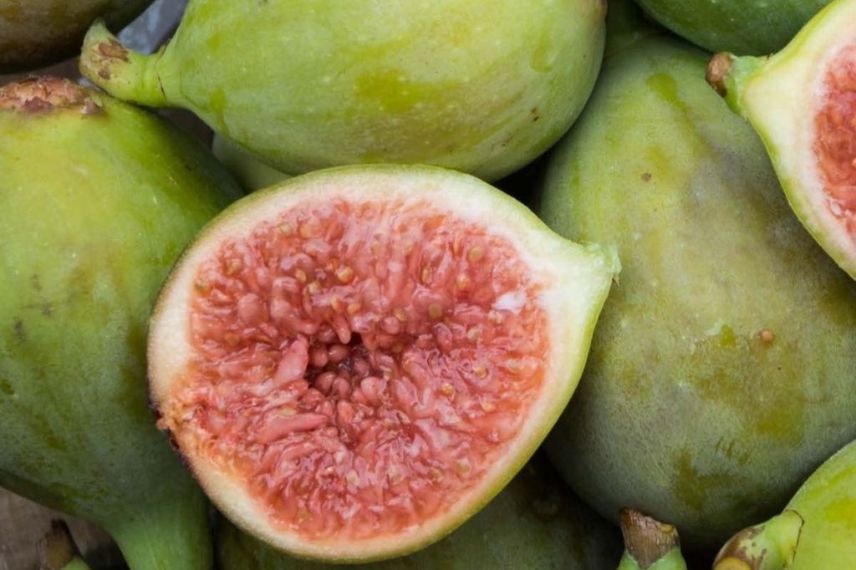
The fig tree ‘Portogallo’, an old self-fertile variety
Choosing a fruit tree variety based on its size
The choice of a local or heritage fruit tree should also be made according to the available space and your landscaping preferences.
In small gardens, favour varieties with modest growth. This is the case with the fig tree ‘Rouge de Bordeaux’, an early variety that is a perfect candidate for cultivation in confined spaces (2.5 metres in height and 3.5 metres in spread). Also consider the cluster redcurrant bush ‘Versaillaise blanche’ (1.5 metres high and 1 metre in spread). Some old fruit trees can even be grown in a pot, such as the cluster redcurrant bush ‘Gloire des Sablons rose’ (1.3 metres in all directions).
In large spaces and orchards, you can choose more imposing trees. Make your selection from the quetzsche plum ‘Altesse single’ (6 metres high and 4 metres in spread), the common walnut ‘Corne du Périgord’ (7 metres high and 6 metres in spread) or the common chestnut (20 metres high and 15 metres in spread). High-stem fruit trees are generally reserved for large gardens, since their trunk measures between 1.8 metres and 2 metres in height.
If you are looking for a multifunctional fruit tree, which for example should also provide shade, opt for a vine, perfect for dressing a pergola. The vine Vitis vinifera ‘Altesse’ is, for example, an old variety planted in the 1930s and 1940s in the upper Rhône valley. It is used to produce white wine.
Also think about how you want to carry out the harvest of the fruit. Do you want to be able to do it by hand, at standing height? Do you want children to be able to take part in the harvest too? In that case, favour small fruit trees, such as the cluster redcurrant bush ‘Jonkheer van Tets’ (1.5 metres overall). If using a ladder during the harvest is not a constraint for you, feel free to adopt the largest fruit trees!
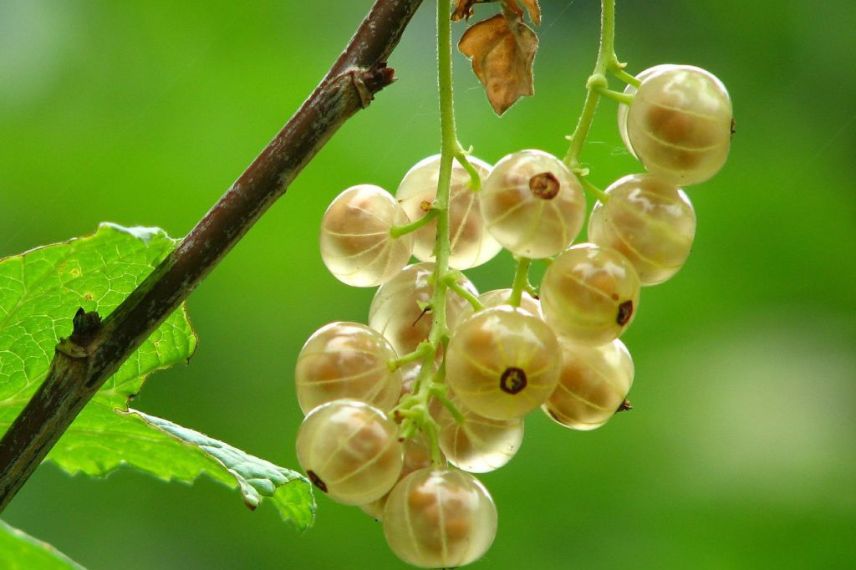
The beautiful redcurrant bush ‘Versaillaise blanche’, ideal for a small garden
- Subscribe!
- Contents
Comments