
































Ribes rubrum Jonkheer van Tets - Redcurrant
Ribes rubrum Jonkheer van Tets - Redcurrant
Ribes rubrum Jonkheer van Tets
Redcurrant
no or very few roots
jean marc, 01/03/2026
Special offer!
Receive a €20 voucher for any order over €90 (excluding delivery costs, credit notes, and plastic-free options)!
1- Add your favorite plants to your cart.
2- Once you have reached €90, confirm your order (you can even choose the delivery date!).
3- As soon as your order is shipped, you will receive an email containing your voucher code, valid for 3 months (90 days).
Your voucher is unique and can only be used once, for any order with a minimum value of €20, excluding delivery costs.
Can be combined with other current offers, non-divisible and non-refundable.
Home or relay delivery (depending on size and destination)
Important : des droits de douane sont susceptibles de vous être facturés par la douane de votre pays lors de la livraison.
Schedule delivery date,
and select date in basket
This plant carries a 12 months recovery warranty
More information
We guarantee the quality of our plants for a full growing cycle, and will replace at our expense any plant that fails to recover under normal climatic and planting conditions.


Description
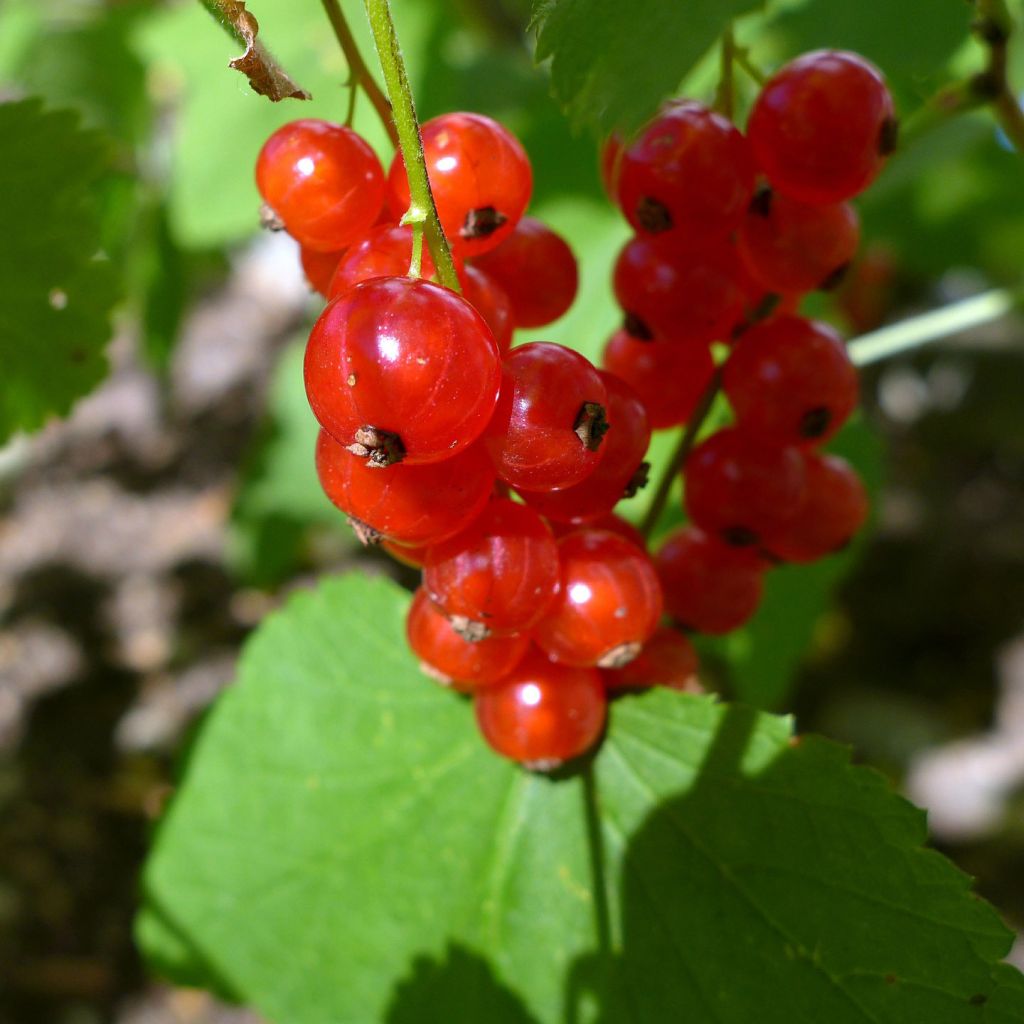
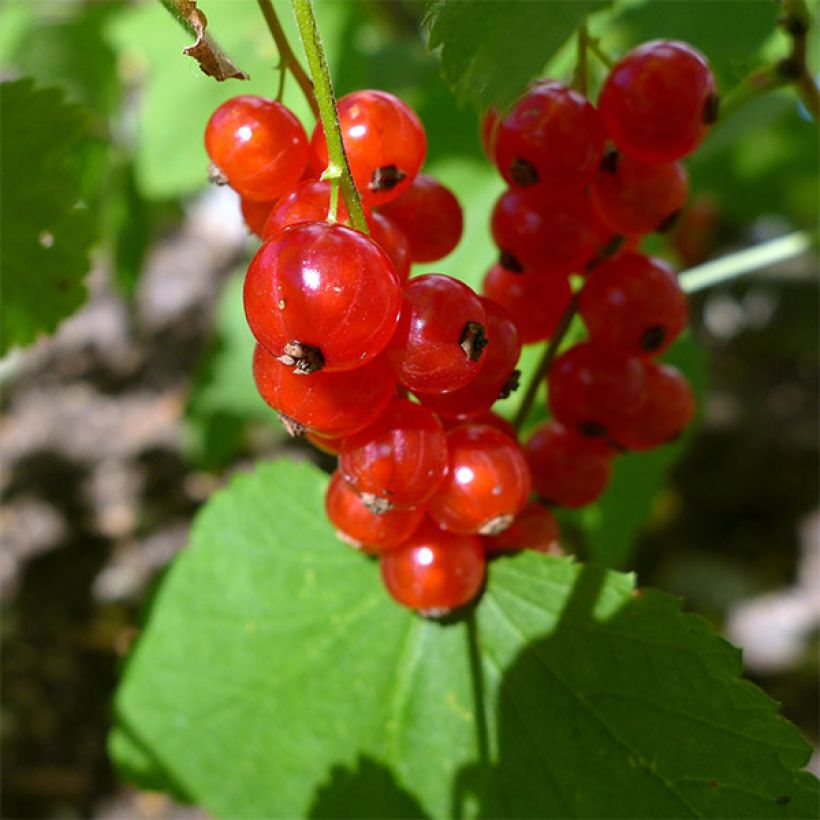
The 'Jonkheer van Tets' Redcurrant Bush is an early and highly productive variety, recommended for regions with cold winters. Self-fertile, it produces long clusters of slightly acidic, large-sized red fruits. This vigorous variety shows good resistance to diseases. Easy to grow in non-scorching sun and well-drained or even poor soil, requiring support. Plant from October to March for a harvest starting from late June. The 'Jonkheer van Tets' Redcurrant variety originates from the Netherlands.
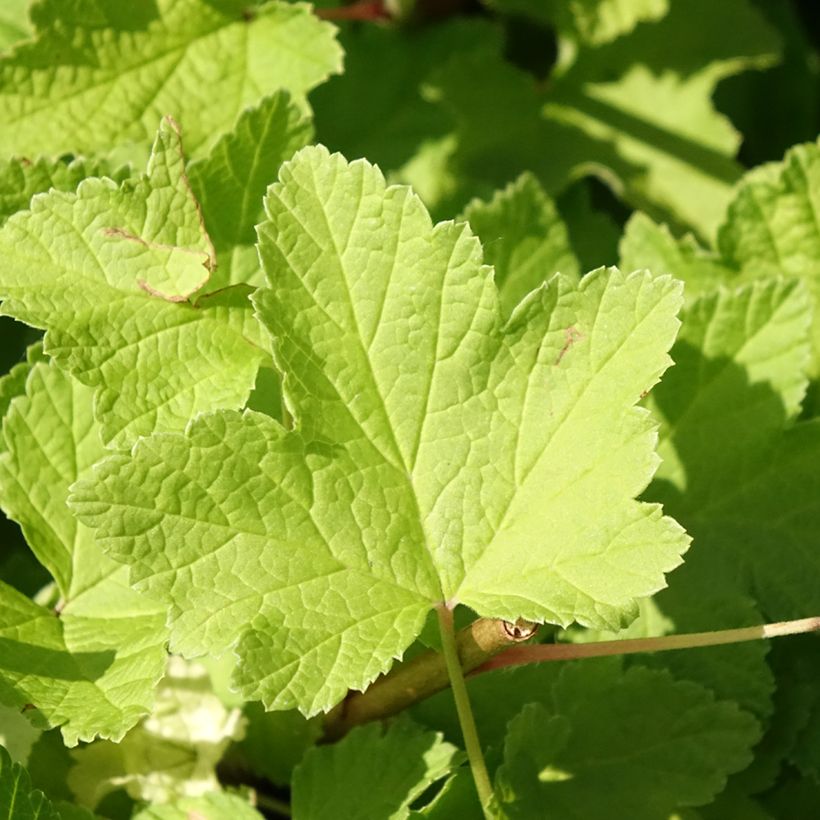
The Redcurrant Bush, also known as Ribes rubrum, belongs to the Grossulariaceae family, like the Gooseberry Bush. It is a plant that has been cultivated for a long time and grows spontaneously in many temperate regions of the Northern Hemisphere, from Europe to Siberia and to Manchuria. The Redcurrant is a bushy, non-thorny shrub with a clump-like habit of slightly stiff, sparse branches, whose wood is soft. This very hardy bush will reach 1.50m (4.9ft) in all directions. The foliage is deciduous, composed of palmate, lobed, and aromatic leaves of a medium green.
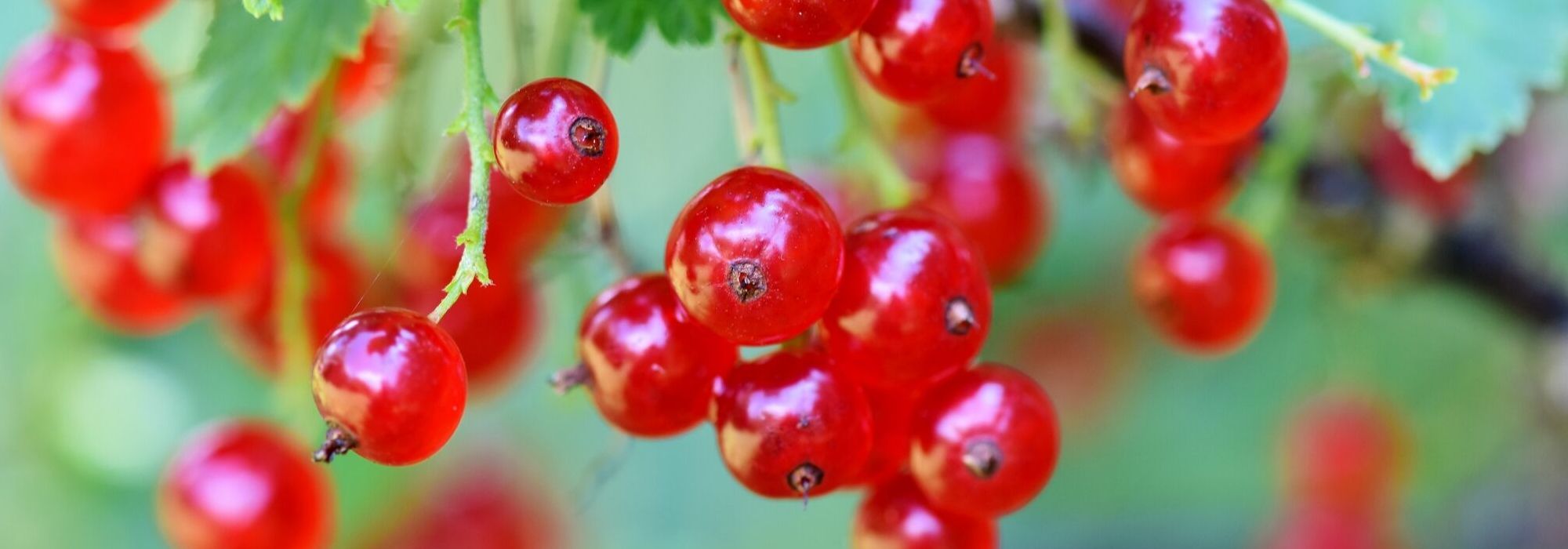
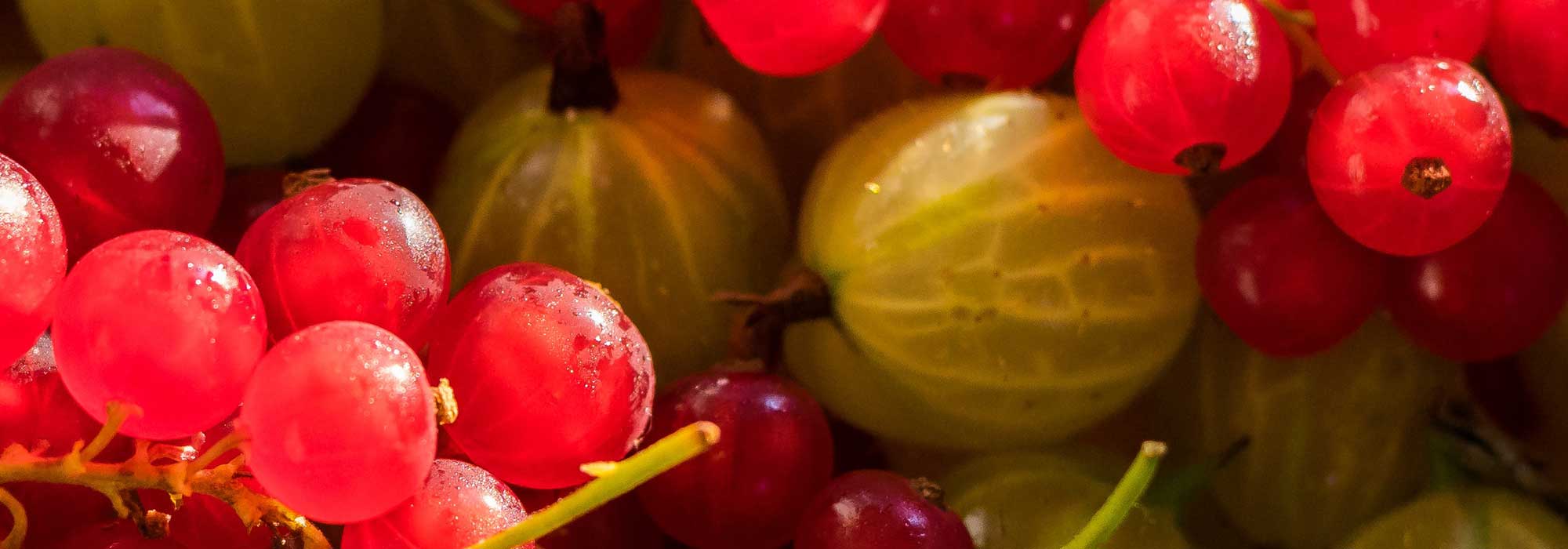
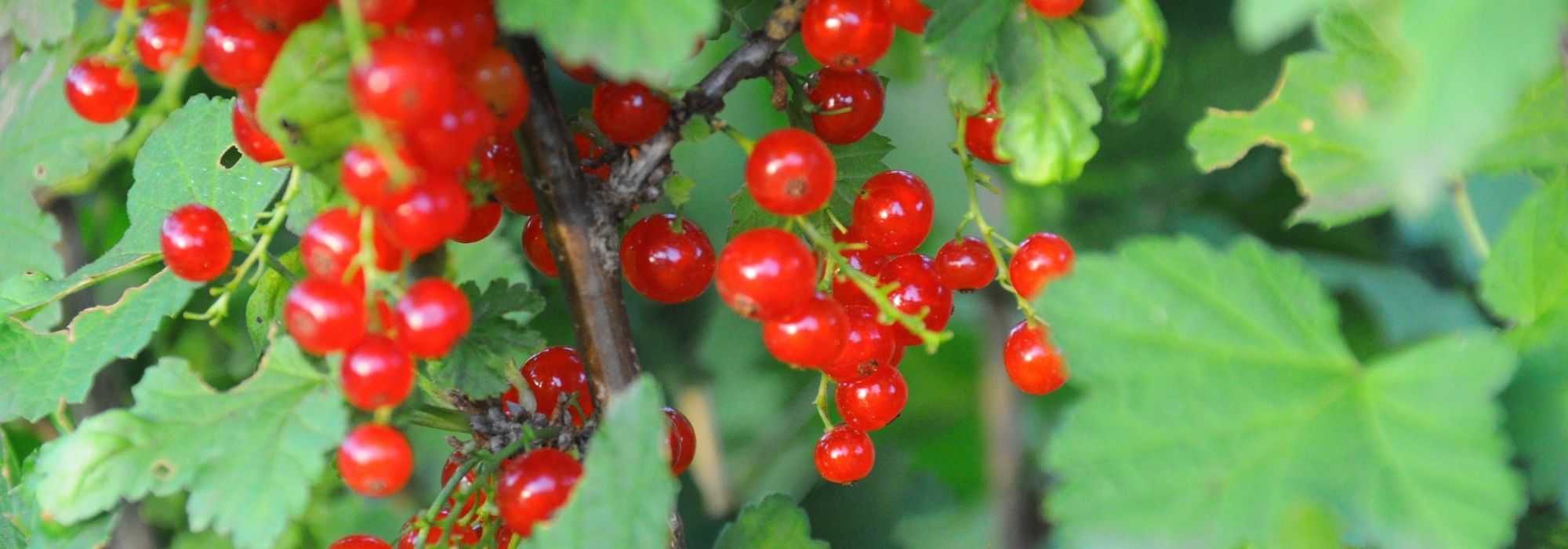
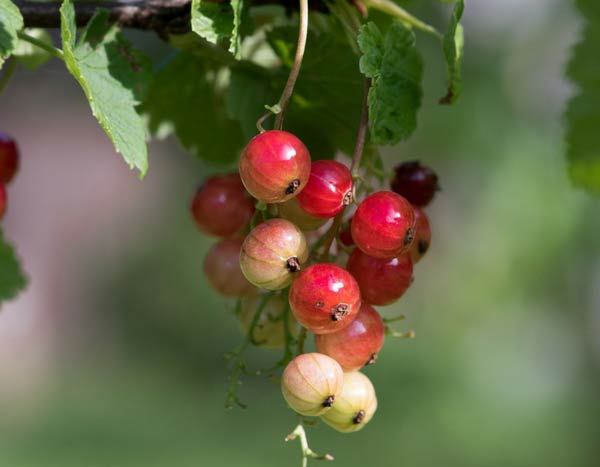
Flowering occurs in spring (in April for this variety), in the form of clusters of small, inconspicuous green to brownish, bee-friendly flowers. Fruiting occurs mainly on one and two year old branches. The bush is then covered with numerous clusters of small, round, translucent berries, containing small seeds. Harvesting takes place as the fruits ripen. The Jonkheer van Tets variety produces long clusters of red fruits, to be picked from late June. Its large-sized fruits have a juicy, slightly acidic, red flesh. Whether white or red, the currant is a low-calorie fruit, rich in minerals and trace elements as well as potassium, calcium, and phosphorus. It also provides a good source of vitamin C and fibre.
Use fresh currants in jelly or pastries, for tart fillings or sorbet making. In the garden, this modest bush becomes attractive when it is laden with its long clusters that play in the summer light. The pleasure is threefold, visual and gastronomic and also olfactory when its warm foliage perfumes the garden. It pairs well with white currant varieties, gooseberry bushes, as well as shrubs that offer beautiful (inedible) fruits, such as Leycesteria formosa, beautyberries, Nandina domestica and its varieties, Japanese quinces, small-leaved Cotoneaster, St. John's Wort Magical Beauty, symphorines... For small gardens or to save space, it is wise to train this currant bush against a wall or grow it as a standard. Note that the currant bush can be included in an orchard on the terrace, as it performs quite well in large pots, with a depth of about forty centimetres (1.3ft), taking care, however, not to water it with too-hard water.
Ribes rubrum Jonkheer van Tets - Redcurrant in pictures
Plant habit
Fruit
Flowering
Foliage
Botanical data
Ribes
rubrum
Jonkheer van Tets
Grossulariaceae
Redcurrant
Cultivar or hybrid
Planting and care
Plant from October to March. It thrives in ordinary soils, even poor ones, without too much lime. The currant bush prefers well-drained soil, not constantly wet. The currant bush dislikes heat and drought, so plant it in full sun in the north or in partial shade in the south. Choose a location sheltered from strong winds.
When planting, space the young plants 1.20m (3.9ft) apart in all directions. Soak the root ball in water for a few moments before planting. Dig a hole, incorporate well-rotted manure or compost into the soil, place the plant and backfill with soil. Water generously. Then mulch the soil to retain moisture in the summer.
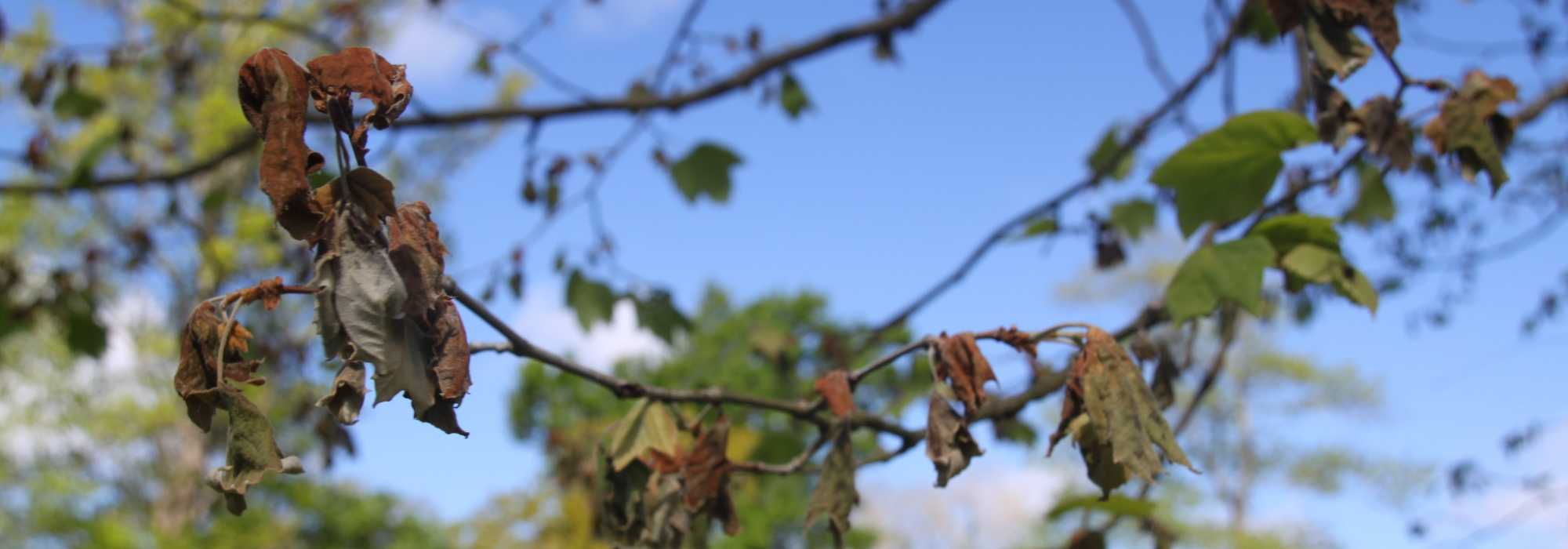
An application of organic fertilizer at the start of growth will support fruit production and plant health. It is an accommodating bush, not very susceptible to diseases. It does have a few pests, such as aphids, which can be eliminated by spraying with soapy water or a garlic decoction. In case of powdery mildew attack, spray with Bordeaux mixture. In June-July, protect the harvest with nets to deter birds. To get rid of raspberry worms, which can sometimes be found on currants, you can sow forget-me-nots along the planting; they have a reputation for driving them away.
In a currant plantation, as in any plantation, it is important to alternate varieties and species, when space allows: pollination will be favoured, and the spread of epidemics or diseases will be limited.
Planting period
Intended location
Care
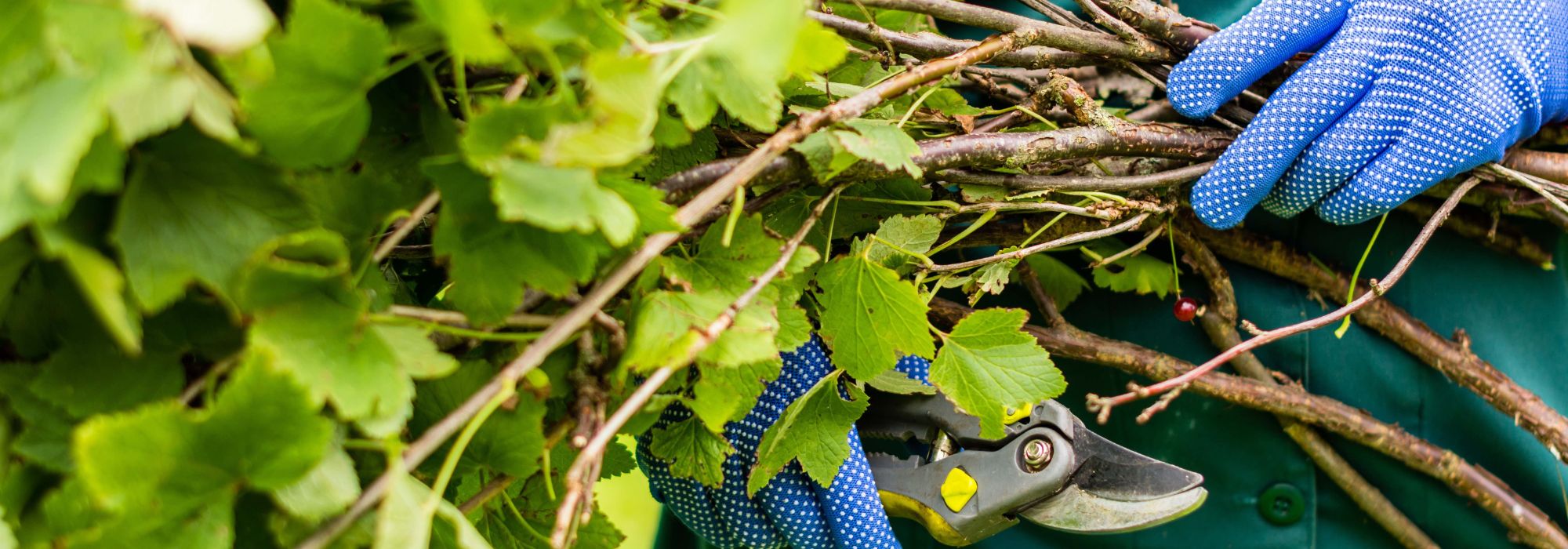
Planting & care advice
-
-
-
-
-
-
-
-
-
, onOrder confirmed
Reply from on Promesse de fleurs
Recently viewed products
Haven't found what you were looking for?
Hardiness is the lowest winter temperature a plant can endure without suffering serious damage or even dying. However, hardiness is affected by location (a sheltered area, such as a patio), protection (winter cover) and soil type (hardiness is improved by well-drained soil).
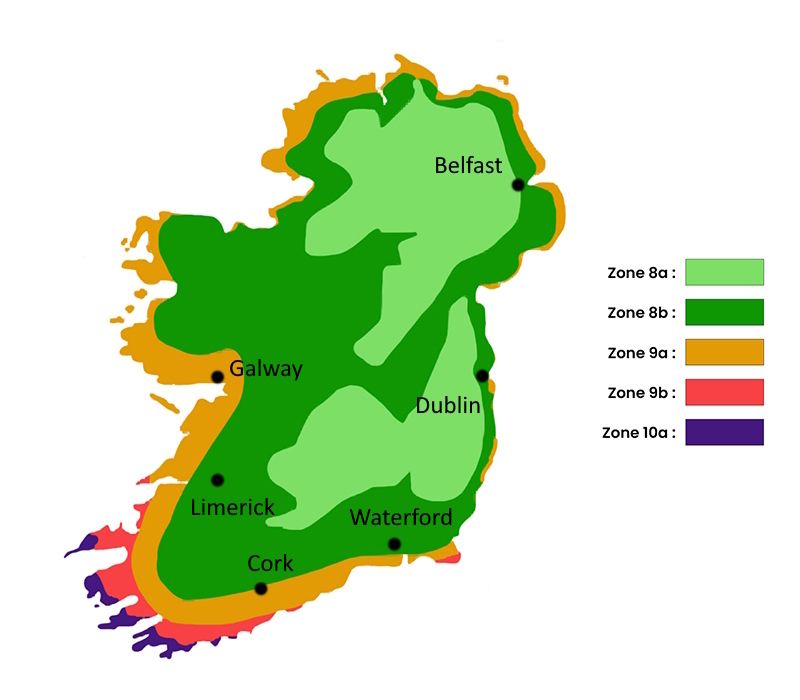
Photo Sharing Terms & Conditions
In order to encourage gardeners to interact and share their experiences, Promesse de fleurs offers various media enabling content to be uploaded onto its Site - in particular via the ‘Photo sharing’ module.
The User agrees to refrain from:
- Posting any content that is illegal, prejudicial, insulting, racist, inciteful to hatred, revisionist, contrary to public decency, that infringes on privacy or on the privacy rights of third parties, in particular the publicity rights of persons and goods, intellectual property rights, or the right to privacy.
- Submitting content on behalf of a third party;
- Impersonate the identity of a third party and/or publish any personal information about a third party;
In general, the User undertakes to refrain from any unethical behaviour.
All Content (in particular text, comments, files, images, photos, videos, creative works, etc.), which may be subject to property or intellectual property rights, image or other private rights, shall remain the property of the User, subject to the limited rights granted by the terms of the licence granted by Promesse de fleurs as stated below. Users are at liberty to publish or not to publish such Content on the Site, notably via the ‘Photo Sharing’ facility, and accept that this Content shall be made public and freely accessible, notably on the Internet.
Users further acknowledge, undertake to have ,and guarantee that they hold all necessary rights and permissions to publish such material on the Site, in particular with regard to the legislation in force pertaining to any privacy, property, intellectual property, image, or contractual rights, or rights of any other nature. By publishing such Content on the Site, Users acknowledge accepting full liability as publishers of the Content within the meaning of the law, and grant Promesse de fleurs, free of charge, an inclusive, worldwide licence for the said Content for the entire duration of its publication, including all reproduction, representation, up/downloading, displaying, performing, transmission, and storage rights.
Users also grant permission for their name to be linked to the Content and accept that this link may not always be made available.
By engaging in posting material, Users consent to their Content becoming automatically accessible on the Internet, in particular on other sites and/or blogs and/or web pages of the Promesse de fleurs site, including in particular social pages and the Promesse de fleurs catalogue.
Users may secure the removal of entrusted content free of charge by issuing a simple request via our contact form.
In temperate climates, pruning of spring-flowering shrubs (forsythia, spireas, etc.) should be done just after flowering.
Pruning of summer-flowering shrubs (Indian Lilac, Perovskia, etc.) can be done in winter or spring.
In cold regions as well as with frost-sensitive plants, avoid pruning too early when severe frosts may still occur.
The harvesting period indicated on our website applies to countries and regions in USDA zone 8 (France, England, Ireland, the Netherlands).
In colder areas (Scandinavia, Poland, Austria...) fruit and vegetable harvests are likely to be delayed by 3-4 weeks.
In warmer areas (Italy, Spain, Greece, etc.), harvesting will probably take place earlier, depending on weather conditions.
The sowing periods indicated on our website apply to countries and regions within USDA Zone 8 (France, UK, Ireland, Netherlands).
In colder areas (Scandinavia, Poland, Austria...), delay any outdoor sowing by 3-4 weeks, or sow under glass.
In warmer climes (Italy, Spain, Greece, etc.), bring outdoor sowing forward by a few weeks.
The planting period indicated on our website applies to regions in USDA Zone 9a (East Coast and Midlands: Dublin, Wexford, Waterford, Kilkenny, Portlaoise). It will vary depending on where you live:
- On the west coast and in the north-west (Galway, Limerick, Sligo, Donegal, Westport), delay planting by 1 to 2 weeks in spring and bring it forward by 1 to 2 weeks in autumn compared to the dates given, preferably choosing periods without strong winds.
- In the inland hills and plateaus (Wicklow Mountains, Macgillycuddy’s Reeks, Connemara, Killarney), it is best to plant in spring (April–May) or autumn (September–October), avoiding periods of waterlogged soil in winter and strong winds, which pose the main risk to newly planted trees in these areas.
The flowering period indicated on our website applies to regions in USDA Zone 9a, such as the East Coast and Midlands, including Dublin, Wexford, Waterford, Kilkenny and Portlaoise.
This will vary depending on where you live:
- On the west coast and in the northwest (Galway, Limerick, Sligo, Donegal and Westport), it will be delayed by one to two weeks compared to the given dates, due to stronger Atlantic winds and less spring sunshine.
- In the inland hills and plateaus (the Wicklow Mountains, the Macgillycuddy's Reeks, Connemara and Killarney), flowering will be delayed by two to three weeks. Flowering mainly occurs between May and July, with the limiting factors being less frost and more of the excessive humidity, strong winds and lack of sunshine that are characteristic of these areas.