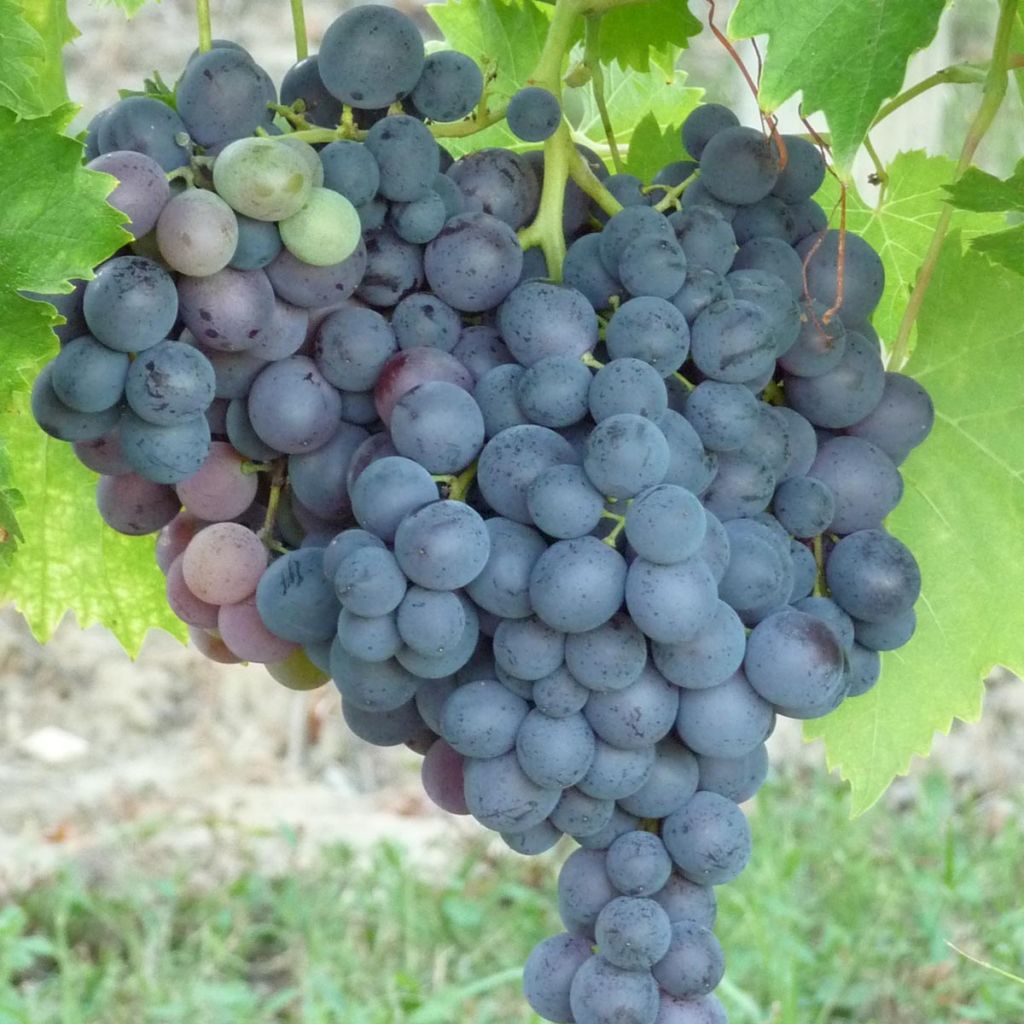
Vitis vinifera Muscat de Hambourg - Grape vine
Vitis vinifera Muscat de Hambourg - Grape vine
Vitis vinifera Muscat de Hambourg
Common Grape Vine, European Grape, Wine Grape
The plant was broken and almost non-existent. It shouldn't have been sold in the first place. I didn't request anything but went to buy a proper one elsewhere.
Anne, 29/10/2025
Back-to-school special offer!
Get €10 off for every €50 you spend! And get up to €40 off on a single order.
How does it work?
1. Shop your favourites
Add your favourite plants to your basket. For every €50 you spend (excluding delivery charges, store credit and the plastic-free option), you’ll receive a €10 voucher.
€50 spent = €10 voucher
€100 spent = €20 voucher
€150 spent = €30 voucher
€200 spent = €40 voucher
2. Place your order
Once your basket reaches one of the spending thresholds, place your order. You can even choose your delivery date!
3. Receive your voucher
As soon as your order has been shipped, you’ll receive an email containing your personal voucher code and its value.
4. Use it on your next order
Your voucher is valid for 90 days from the date you receive it. It can be used once only, on a new order worth at least the value of the voucher, excluding delivery charges.
Please note: Vouchers can be combined with other offers, but cannot be split or refunded.
Home or relay delivery (depending on size and destination)
Important: You may be charged customs duties by your country’s customs authorities upon delivery.
Schedule delivery date
and select date in basket
This plant carries a 12 months recovery warranty
More information
We guarantee the quality of our plants for a full growing cycle, and will replace at our expense any plant that fails to recover under normal climatic and planting conditions.
Description
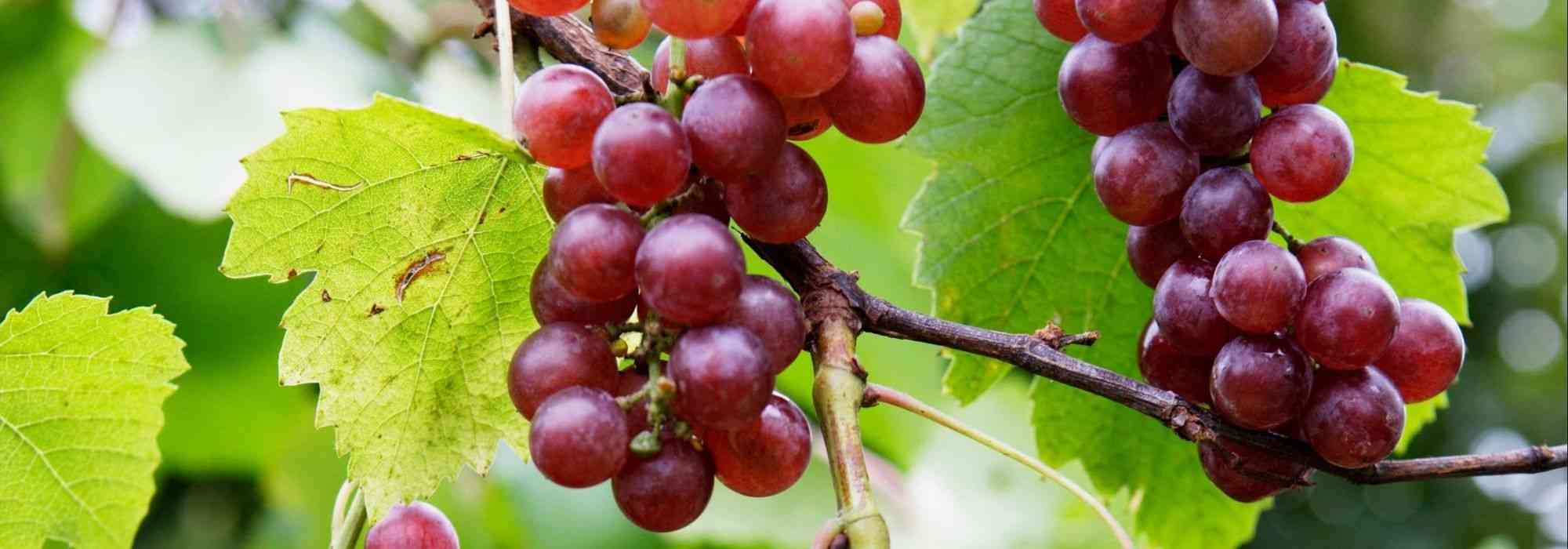
The 'Muscat de Hambourg' Vine is an ancient variety, well-known, forming a vigorous and fertile climbing bush, not very susceptible to diseases. The flowering, early, takes place in March, which makes it fragile in the north due to frosts. The clusters are ripe in early September. They are pyramidal, elongated, not very tight, formed of large ovoid grapes, protected by a thick blackish-purple skin, very pruinose. Under this robe, the flesh is juicy and melting, sweet and pleasantly musky. It is a remarkable variety, whose fruits keep well. Its foliage turns to a shimmering golden amber in autumn. This vine with a strong character will please for two reasons: its twisted trunk and its emblematic foliage make it both an ornamental and fruit-bearing plant. To be planted in well-drained, deep, even poor, arid and chalky soil, in a very warm exposure.
The Vitis vinifera 'Muscat de Hambourg' belongs to the Vitaceae family. It is one of the many cultivars obtained from Vitis vinifera, native to warm regions of Europe and the Mediterranean basin, cultivated since ancient times. 'Muscat de Hambourg' was obtained in Germany (in Hamburg), around 1860, after cross-breeding between the varieties 'Muscat d'Alexandrie' and 'Frankenthal'. It is a climbing plant, which clings to its support with tendrils equipped with climbing roots. The plant is voluble, its woody climbing stems can measure up to 7 m (23ft) in length, and the bush can occupy a diameter of 3 m (10ft). It forms a trunk from which its long stems emerge with deciduous, palmate and dissected foliage, matte green and downy on the underside, turn to amber yellow in October. The flowering takes place very early, in March, in the form of irregular clusters of numerous small greenish flowers gathered in thyrses. The fruits ripen from early to late September, depending on the region. They are distinguished by their ovoid shape, their black and matte colour, bluish under the bloom that covers them, and their exceptionally sweet and musky flesh. The bark of the plant is fibrous, dark, it flakes with age, covering the twisted trunk with a very original appearance. The yield is very good, depending on the form chosen to train the bush, from 5 kg in a goblet shape to 20 kg per plant for a long trellis. Grapes are particularly sweet and nutritious fruit. They are rich in sugar (15 to 18%), contain potassium, magnesium, phosphorus, fibre and tannins (anthocyanins). They are enjoyed fresh or as juice. To keep clusters until the heart of winter, they will be picked with their petiole and a long portion of the branch, which will be immersed in a container containing water that will be regularly changed. This operation will be carried out in a cool place, protected from direct sunlight.
Growing in all regions, resistant to - 20°C (68°F), this vine will only bear fruit if the buds have escaped severe frosts and the summer is hot, unless it is trained against a warm wall. In the absence of fruit, it will provide a delightful shade above a terrace, and let the light through in winter. The 'Muscat de Hambourg' vine can be used on a trellis or a pergola. This table grape will also find its place on the edge of a vegetable garden or orchard. In a large pot (minimum 35L), a venerable twisted vine-plant will bring a touch of wisdom and sunshine to the terrace.

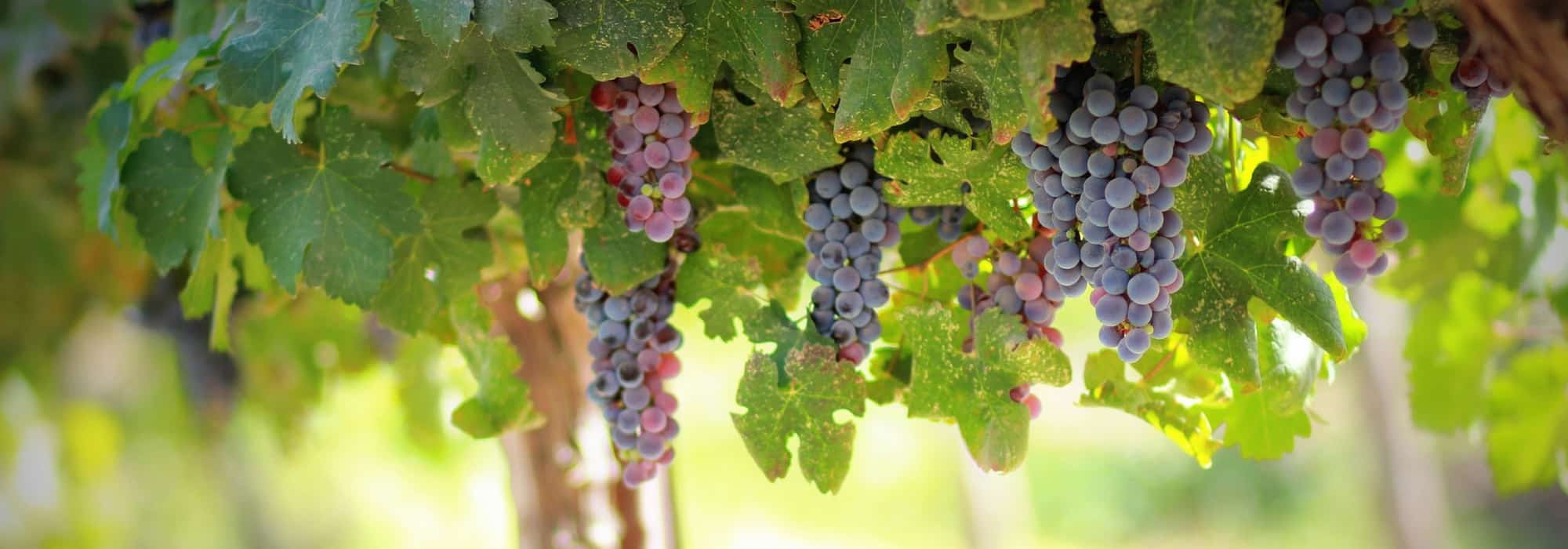
Vitis vinifera Muscat de Hambourg - Grape vine in pictures
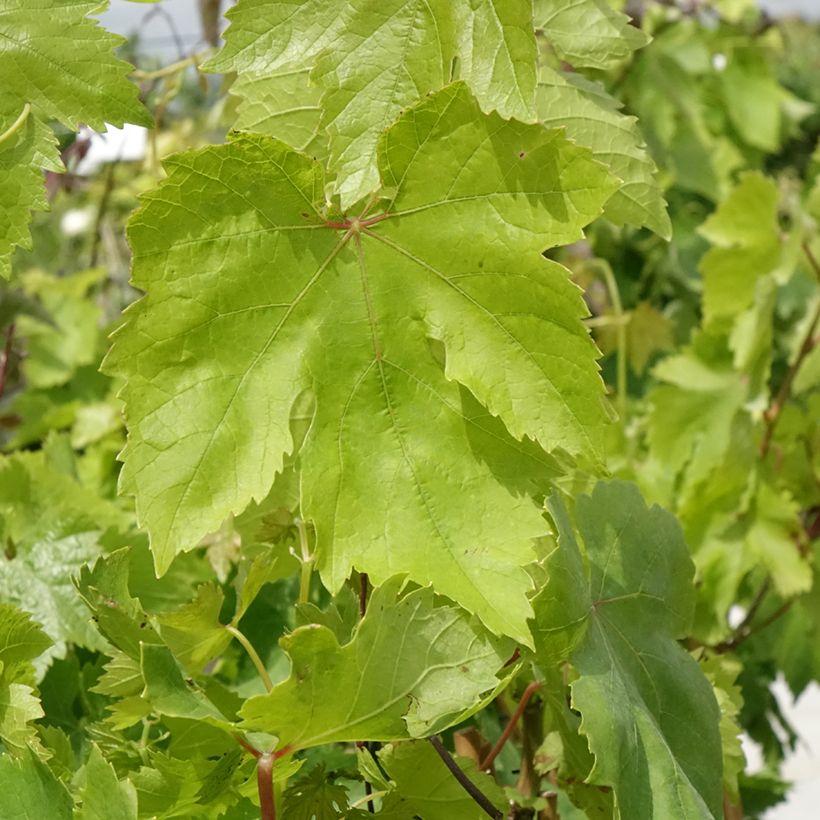
Plant habit
Fruit
Flowering
Foliage
Botanical data
Vitis
vinifera
Muscat de Hambourg
Vitaceae
Common Grape Vine, European Grape, Wine Grape
Cultivar or hybrid
Planting and care
Since the ravages of phylloxera in the late 19th century, the vine has been obligatorily grafted onto different resistant rootstocks adapted to different types of soil. These rootstocks come from American varieties. Plant the 'Muscat de Hambourg' vine in autumn, in a deep, well-drained, even rocky, arid, poor and chalky soil, in a sunny location sheltered from strong winds. Bury the young plant so that the graft point (characterised by a swelling of the trunk) is 3-4cm (1-2in) above the ground. If you create a row of vines, space the plants 1 to 1.20m (3 to 4ft) apart. Against a facade or a wall, separate them by 2 to 3m (7 to 10ft). Incorporate 3 or 4 handfuls of fertiliser for fruit trees and 2 kg of composted manure for each vine into the planting soil. The roots should not come into contact with the manure. After planting, prune above 2 large buds to obtain the growth of two branches. Keep the most vigorous one and tie it to a stake. The vine does not require regular fertiliser application. However, it appreciates potash slag, crushed horn or iron chelate every 2-3 years to replenish the soil reserves with nutrients (nitrogen for leaves, potassium for flowers and fruits).
Treatments: limited for 'Muscat de Hambourg'. In January and February, spray a winter treatment to eliminate overwintering forms of all insects (scale insects, etc.). At the start of vegetation, treat 3 or 4 times, at 8-day intervals, with a general treatment for insects and diseases. Repeat the operation at the end of flowering, before the berries change colour.
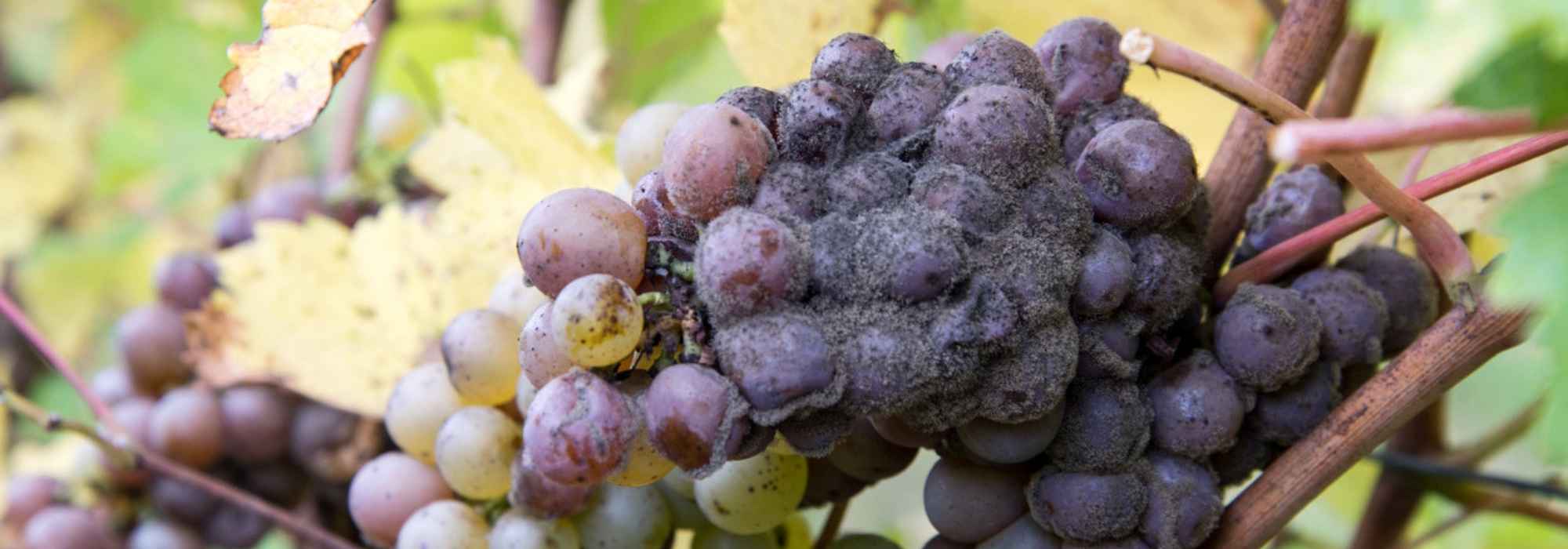
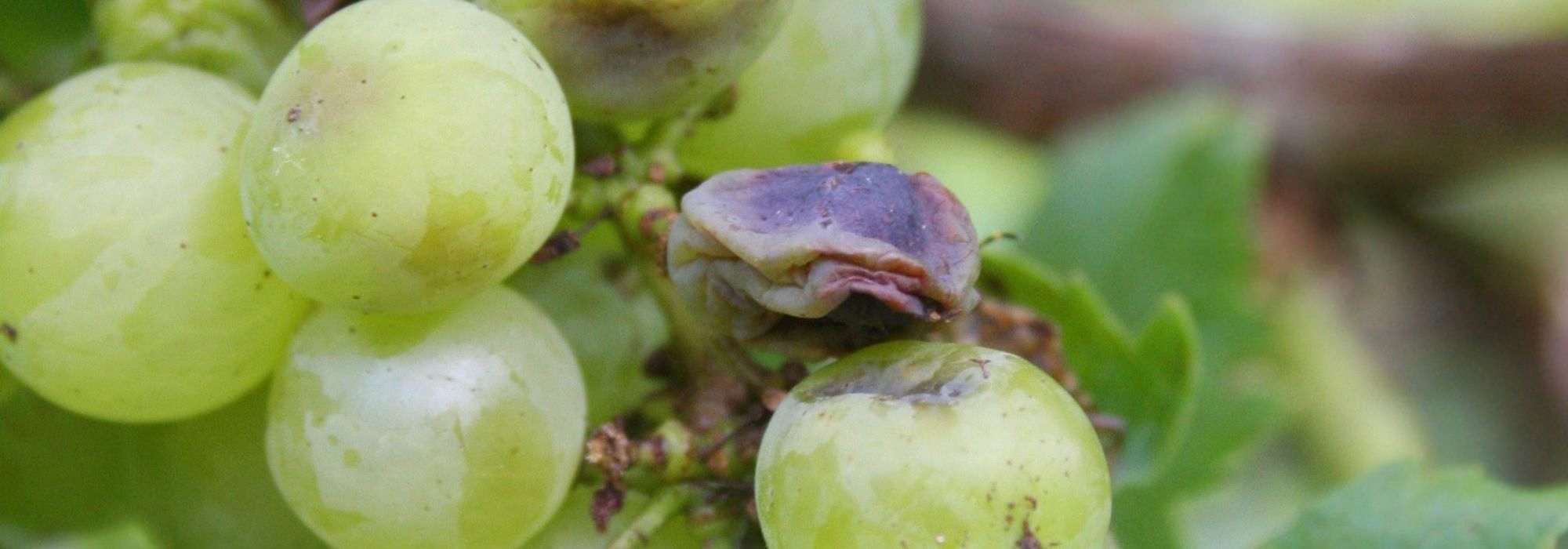
The most commonly encountered enemies of the vine are grapevine moths (Cochylis), Eudemis (grape berry moth), which will be treated with an insecticide during the growing season, twice at fifteen-day intervals. Two fungal diseases: downy mildew (oil spots on the leaves, undersides with a white down) and grey rot Botrytis (mould on the berries in humid weather), use Bordeaux mixture at the first symptoms. Treat alternately with sulfur against powdery mildew (white-grey felting on the upper side of the leaves), in good weather, not too hot.
Planting period
Intended location
Care
Planting & care advice



-
, onOrder confirmed
Reply from on Promesse de fleurs
Recently viewed products
Haven't found what you were looking for?
Hardiness is the lowest winter temperature a plant can endure without suffering serious damage or even dying. However, hardiness is affected by location (a sheltered area, such as a patio), protection (winter cover) and soil type (hardiness is improved by well-drained soil).
In temperate climates, pruning of spring-flowering shrubs (forsythia, spireas, etc.) should be done just after flowering.
Pruning of summer-flowering shrubs (Indian Lilac, Perovskia, etc.) can be done in winter or spring.
In cold regions as well as with frost-sensitive plants, avoid pruning too early when severe frosts may still occur.
The harvesting period indicated on our website applies to countries and regions in USDA zone 8 (France, England, Ireland, the Netherlands).
In colder areas (Scandinavia, Poland, Austria...) fruit and vegetable harvests are likely to be delayed by 3-4 weeks.
In warmer areas (Italy, Spain, Greece, etc.), harvesting will probably take place earlier, depending on weather conditions.
The sowing periods indicated on our website apply to countries and regions within USDA Zone 8 (France, UK, Ireland, Netherlands).
In colder areas (Scandinavia, Poland, Austria...), delay any outdoor sowing by 3-4 weeks, or sow under glass.
In warmer climes (Italy, Spain, Greece, etc.), bring outdoor sowing forward by a few weeks.
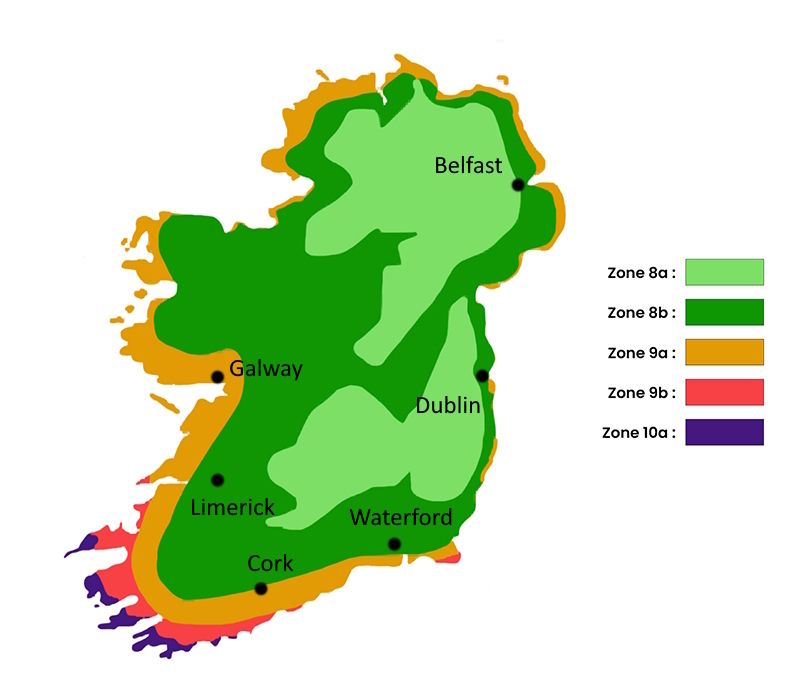
The planting period indicated on our website applies to regions in USDA Zone 9a (East Coast and Midlands: Dublin, Wexford, Waterford, Kilkenny, Portlaoise). It will vary depending on where you live:
- On the west coast and in the north-west (Galway, Limerick, Sligo, Donegal, Westport), delay planting by 1 to 2 weeks in spring and bring it forward by 1 to 2 weeks in autumn compared to the dates given, preferably choosing periods without strong winds.
- In the inland hills and plateaus (Wicklow Mountains, Macgillycuddy’s Reeks, Connemara, Killarney), it is best to plant in spring (April–May) or autumn (September–October), avoiding periods of waterlogged soil in winter and strong winds, which pose the main risk to newly planted trees in these areas.
The flowering period indicated on our website applies to regions in USDA Zone 9a, such as the East Coast and Midlands, including Dublin, Wexford, Waterford, Kilkenny and Portlaoise.
This will vary depending on where you live:
- On the west coast and in the northwest (Galway, Limerick, Sligo, Donegal and Westport), it will be delayed by one to two weeks compared to the given dates, due to stronger Atlantic winds and less spring sunshine.
- In the inland hills and plateaus (the Wicklow Mountains, the Macgillycuddy's Reeks, Connemara and Killarney), flowering will be delayed by two to three weeks. Flowering mainly occurs between May and July, with the limiting factors being less frost and more of the excessive humidity, strong winds and lack of sunshine that are characteristic of these areas.
Shipping country and language
Your country of residence may be:
Your country of residence is:
For a better user experience on our website, you can select:
Your shipping country:
-
 Austria
-
 Belgium
-
 Bosnia & Herzegovina
-
 Bulgaria
-
 Croatia
-
 Cyprus
-
 Czechia
-
 Denmark
-
 Estonia
-
 Finland
-
 France
-
 Germany
-
 Greece
-
 Hungary
-
 Iceland
-
 Ireland
-
 Italy
Italy
-
 Latvia
-
 Liechtenstein
-
 Lithuania
-
 Luxembourg
-
 Malta
Malta
-
 Netherlands
-
 Poland
-
 Portugal
-
 Romania
-
 Serbia
-
 Slovakia
-
 Slovenia
-
 Spain
Spain
-
 Sweden
-
 Switzerland
Language:
-
French
-
 English
-
Spanish
-
Italian
-
German
-
Portuguese
-
Dutch
-
Finnish
My Account
Hello
My wish lists
My cart
Log in / Register
Existing customer?
This form is protected by reCAPTCHA - the Google Privacy Policy and Terms of Service apply.
New customer?
Create an account to track your orders, access our customer service and, if you wish, make the most of our upcoming offers.