





























Pairing ideas with Aucuba or Japanese Laurel
Our 5 inspiring ideas for the garden or in pots
Contents
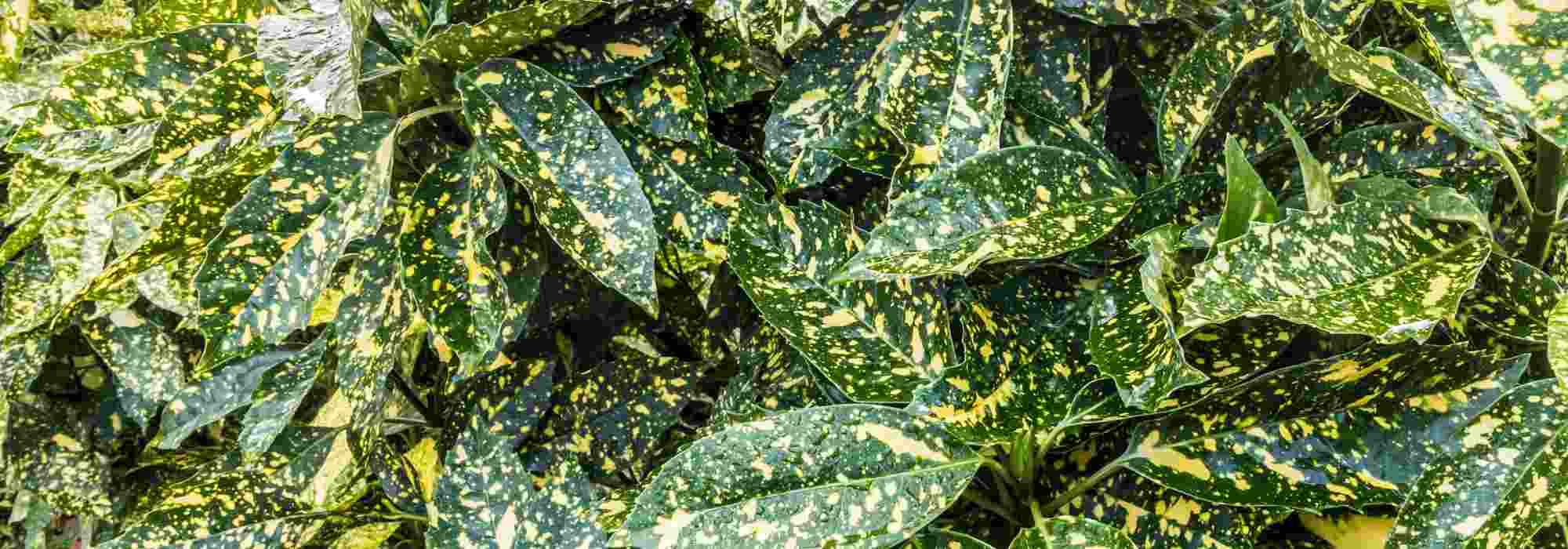
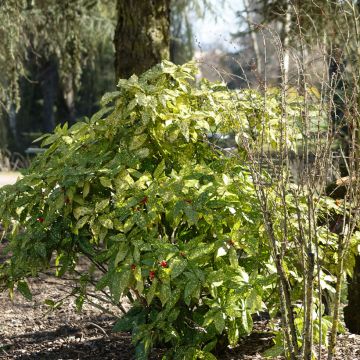
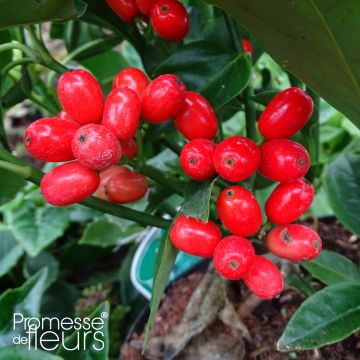
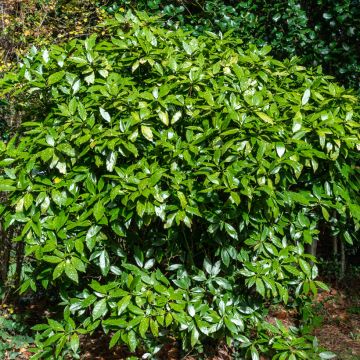
Aucuba, or Japanese Laurel, is an essential bush widely planted in urban parks and city gardens. It is valued for its evergreen foliage, which can be green or variegated, and its small, bright red decorative berries throughout the winter. With a modest stature, it rarely exceeds 3 m in height and has a spread of about 2 m. Sometimes considered too common, it remains a reliable choice for creating hedges.
It can be grown anywhere in France in ordinary, well-drained soil, in partial shade or even in dense shade. Very hardy, never diseased, and tolerant of pollution, sea spray, high temperatures, and pruning, it beautifully decorates shady and semi-shady gardens or north/north-east facing facades. Versatile, it can fit into many garden scenes, at the back of a shrub border, along the edge for low varieties, or even in a pot on a terrace or balcony.
Discover our 5 ideas for pairing your Aucuba!
And for everything you need to know about its cultivation, feel free to check our complete guide “Aucuba: planting, pruning, and maintenance.”

In a free hedge
With its bushy habit and thick evergreen foliage, the Aucuba is perfect for creating a free-standing hedge in the dark corners of the garden. It is an excellent hedge plant that responds well to pruning. Choose from the taller varieties, such as Aucuba japonica or the Aucuba japonica ‘Golden King’ with particularly bright variegated foliage. They are ideal for adding a touch of whimsy to an evergreen hedge.
They harmoniously combine with Cherry Laurel (Prunus laurocerasus ‘Rotundifolia’), Portuguese Laurel, Japanese False Cypress, or Photinia. Very comfortable in free-standing hedges, you can alternate them with other evergreen bushes such as laurustinus, a Elaeagnus ebbingei ‘Limelight’ with green foliage variegated with yellow, or Rhamnus alaternus, depending on your region and climate. For subjects in a hedge, pruning can be regular, carried out at the end of winter.
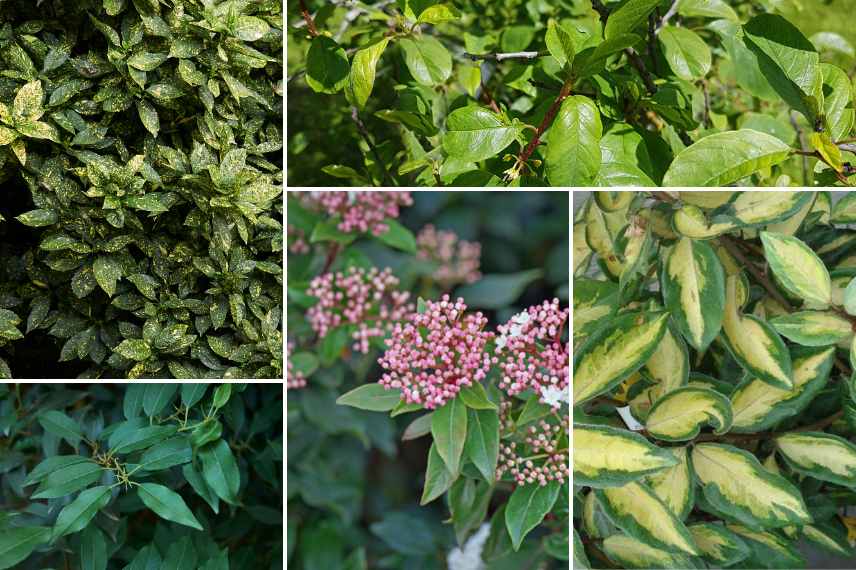
Aucuba japonica, Rhamnus alaternus, Prunus lusitanica, Viburnum tinus, and Elaeagnus ebbingei ‘Limelight’
Read also
Aucuba: planting, pruning and careIn a bush bed
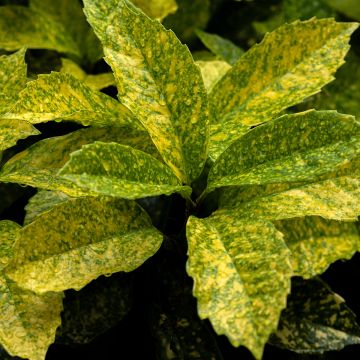
The Aucuba makes an excellent subject when left free in the background of a shaded shrubbery. The Aucuba japonica ‘Variegata’ is a beautiful variety that forms a tall, wide bush of 1.75 m with green leaves speckled with cream-yellow. It will bring colour and light to a dark display. Pair it with a Viburnum tinus ‘Variegatum’, a variety with imperial variegated foliage in the background, and a Euonymus japonicus ‘Aureomarginatus’. Position them near other evergreen shrubs that complement each other in their shapes and foliage, such as a Thuja occidentalis for example. A little lower in the display, in a mild climate or by the sea, place a Escallonia hybrid ‘Glowing Embers’, a magnificent small evergreen shrub adorned with young red-orange leaves; elsewhere, prefer a Mahonia or a Euonymus fortunei ‘Emerald Gaiety’, an excellent groundcover that is very hardy with decorative variegated foliage. A Ruscus aculeatus with its persistent scarlet berries throughout winter will be perfect under this sparse display of shrubs to dress the base. Also consider the Cornus sanguinea ‘Midwinter Fire’ to enliven the display in winter. Complete the scene with some barberries, such as Berberis thunbergii ‘Limoncello’ with chartreuse green and red hues, or even bush or groundcover roses to play on contrasts.
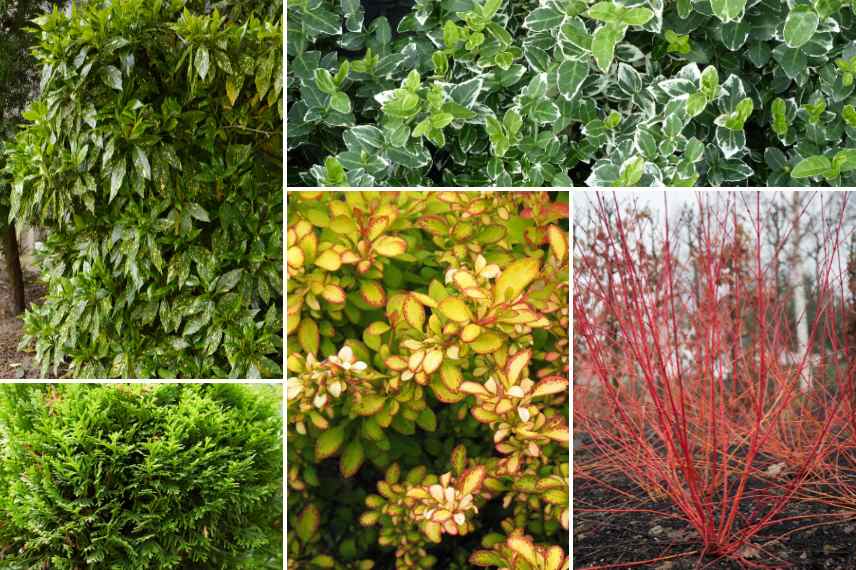
Aucuba japonica ‘Variegata’, Euonymus fortunei ‘Emerald Gaiety’, Thuja occidentalis, Berberis thunbergii ‘Limoncello’ and Cornus sanguinea
Discover other Aucuba
View all →
Available in 2 sizes
Available in 3 sizes
Available in 1 sizes
Available in 1 sizes
Available in 1 sizes
In a patio or a small shaded garden
Japanese Laurel is valuable for brightening dark spaces. With its dense foliage, it provides a bit of privacy in the shade of porches, small urban gardens, courtyards, and patios. If you have a slightly shaded area that receives little light, it can accommodate a beautiful aucuba that will ensure a permanent decor even in winter. Low-maintenance, it adapts well to low light, ordinary well-drained soil, and tolerates urban pollution, making it an excellent choice for mini green spaces in the city. To brighten this area, focus on evergreen and variegated foliage and reasonably sized bushes. They can be grown in sufficiently large pots (minimum 60 cm in diameter) or in the ground. Choose a particularly bright variety like Aucuba japonica ‘Crotonifolia’ or the Aucuba japonica ‘Golden King’, which stands out for its striking dark green foliage splashed with yellow. Surround your Japanese laurels with bushes that perform well in pots, such as a Choisya and a hydrangea, for example.
In the shade, you can pair them with perennials like Japanese Anemones, Heucheras, a Dicentra spectabilis ‘Goldheart’®, a Polystichum rigens, a lovely little bright and refined fern, and a few hostas like Hosta ‘Shade Fanfare’ with its bright light green leaves edged in creamy yellow.
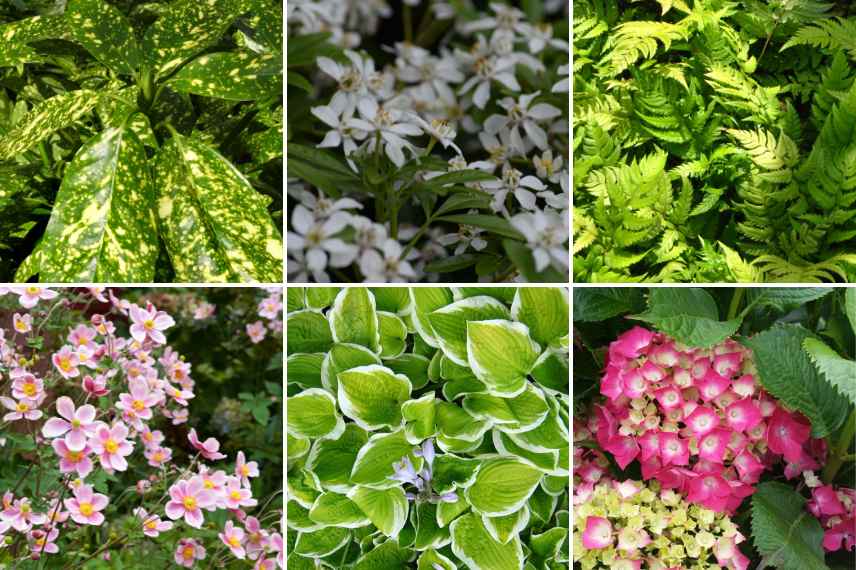
Aucuba japonica ‘Crotonifolia’, Choisya ternata, Polystichum rigens, Anemone hupehensis, Hosta ‘Shade Fanfare’, and Hydrangea macrophylla ‘Red Baron’
Read also
6 shrubs for a north-facing hedgeIn a Japanese garden
In Japan, the aucuba is frequently planted in tea gardens reserved for the tea ceremony. To create a Japanese-inspired atmosphere in your garden, around an Aucuba japonica ‘Crotonifolia’, install some bamboo nearby, such as Pseudosasa japonica, Ophiopogons, a Hakonechloa or Japanese grass, and a Japanese white pine, in a very “zen” spirit. Complete this exotic scene (in non-calcareous soil) with a Japanese maple, this shrub so emblematic of zen gardens, the Acer palmatum ‘Sangokaku’ (Senkaki) is interesting all year round, as it dons a coral red bark in winter, just like the Acer ‘Inaba Shidare’ with its very fine foliage taking on different shades of red. The Pieris, rhododendrons and azaleas will be excellent companions.
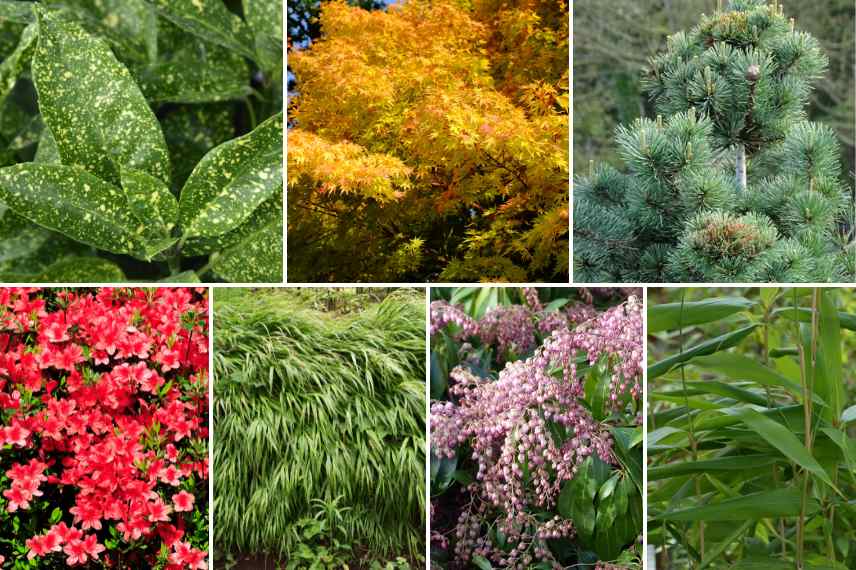
Aucuba japonica ‘Crotonifolia’, Acer palmatum ‘Sangokaku’ in autumn, Japanese white pine, azalea, Hakonechloa macra, Pieris ‘Katsura’ and Pseudosasa japonica
In a large container on the terrace or balcony
Small varieties of Aucuba enhance a terrace or balcony with a slightly shaded area or exposed to the east or north-east, thanks to their evergreen and bright foliage. Growing an Aucuba in a pot is possible, provided you use a container large enough to ensure its proper development. Choose an Aucuba japonica ‘Rozannie’, a highly fruit-bearing variety of Japanese laurel with a compact and bushy habit, particularly well-suited for small spaces and pot cultivation, as it will not exceed 1 m to 1.20 m. As a bonus, unlike other Aucuba varieties, it is capable of producing fruit without the presence of another Aucuba nearby. Laden with fruit, it will provide a permanent decoration even in a small space. Surround it with a few other large evergreen pots filled with Pinus mugo ‘Green Column’, which thrives in all exposures, including shade, an Elaeagnus pungens ‘Maculata’, and an Skimmia reevesiana with spectacular cherry-red fruit that will echo that of the Aucuba.
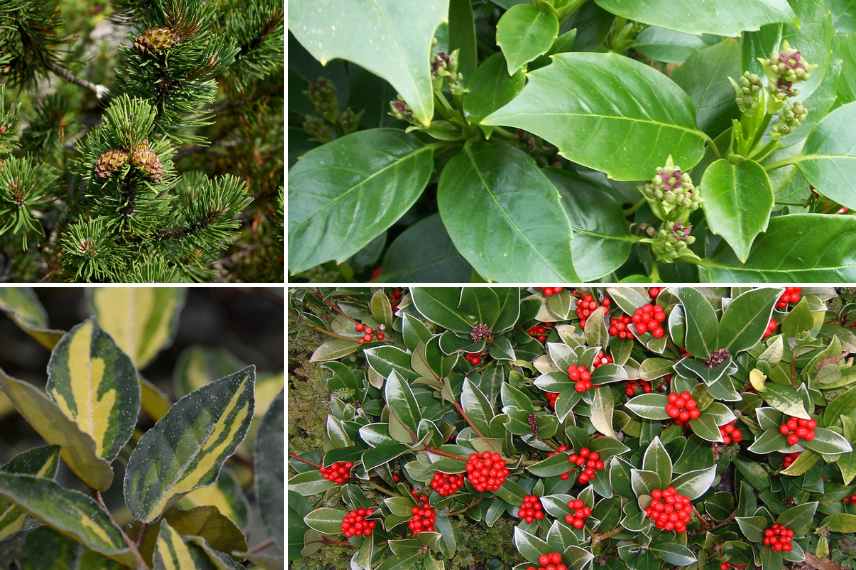
Pinus mugo, Aucuba japonica ‘Rozannie’, Elaeagnus pungens ‘Maculata’ and Skimmia reevesiana
- Subscribe!
- Contents
Comments