





























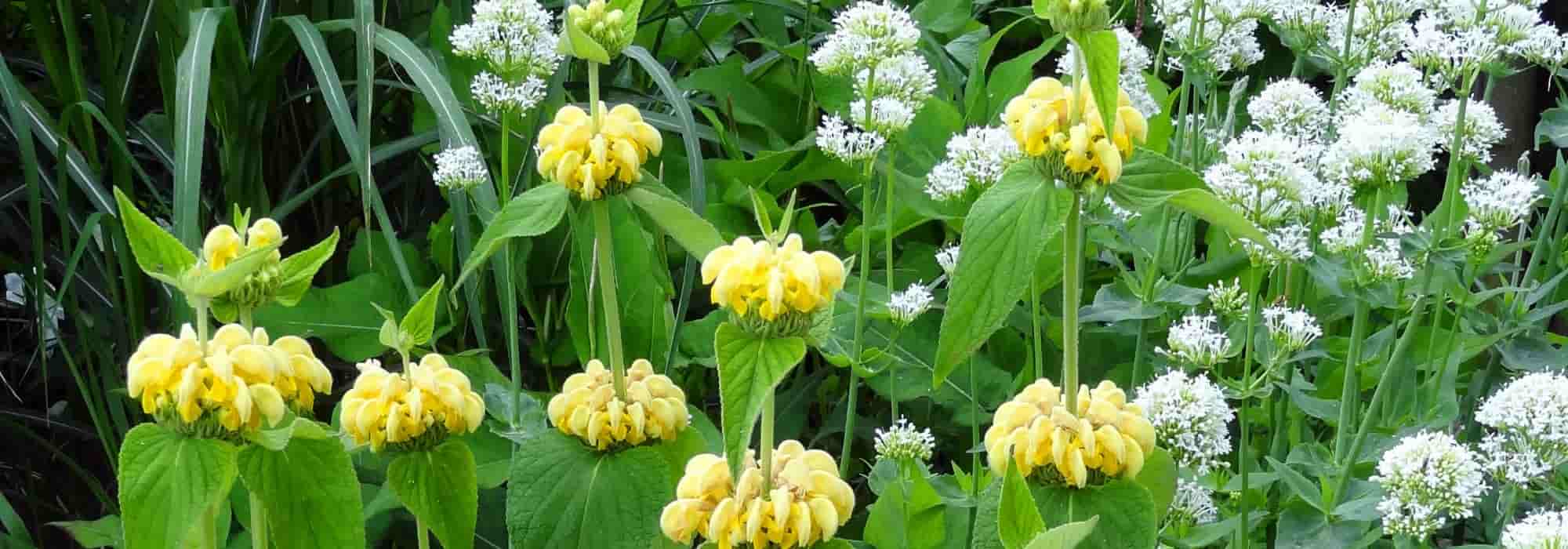
Pairing ideas with Jerusalem sage or Phlomis
6 successful pairing ideas
Contents
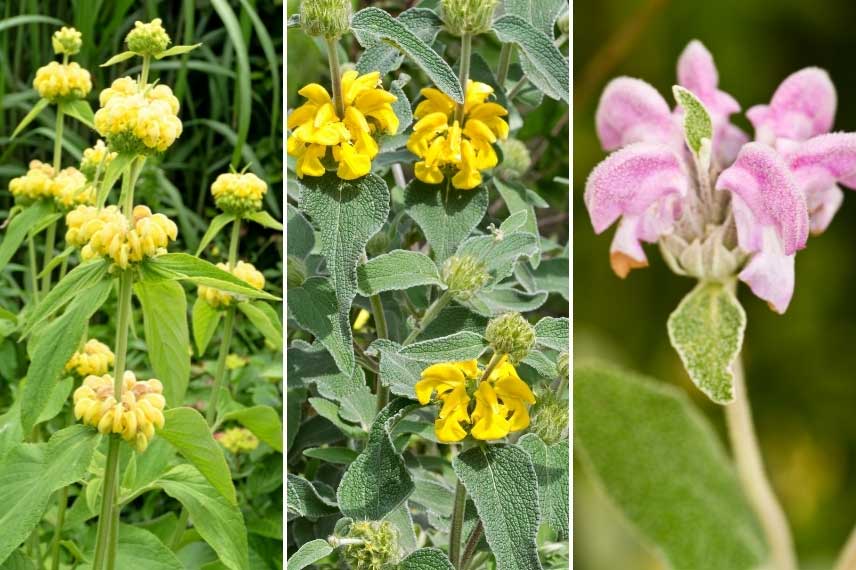
The Phlomis, or Jerusalem sages, are highly valued for their bright summer flowering, in shades of white, yellow, pink, or mauve depending on the variety. Their upright, tiered flower stems add a beautiful graphic element to the garden, even when faded in winter. The generally evergreen foliage is also decorative, in almond green hues with a slight silver sheen. Perennial or bushy, these vigorous plants have another great advantage: they tolerate drought very well! A true sun plant, the Jerusalem sage is perfectly suited to a dry, Mediterranean garden, in rockeries and borders.
Discover 6 ideas for combining Phlomis in the garden.

In a Mediterranean garden
With its resistance to summer drought, phlomis is perfect for Mediterranean or coastal gardens. It can be planted alongside perennials for dry gardens, such as Stachys byzantina for its beautiful velvety silver foliage. For a (nearly) irrigation-free garden, consider planting a Euphorbia characias and a Helianthemum as groundcover. A Catananche caerulea, known as “cigalou” in the south, will bloom generously throughout the summer, bringing freshness with its small flowers in a lovely shade of blue.
Verticality can be added with the flower spikes of a Mullein (Verbascum) or an Acanthus. Don’t forget the aromatic plants, such as the essential Lavender, Rosemary, Santolina, and Italian Everlasting (Helichrysum italicum) with its silver foliage. Among shrubs, consider Cistus, Ceanothus, Agaves for their impressive rosettes of pointed leaves, and Oleander for its generous summer flowering.
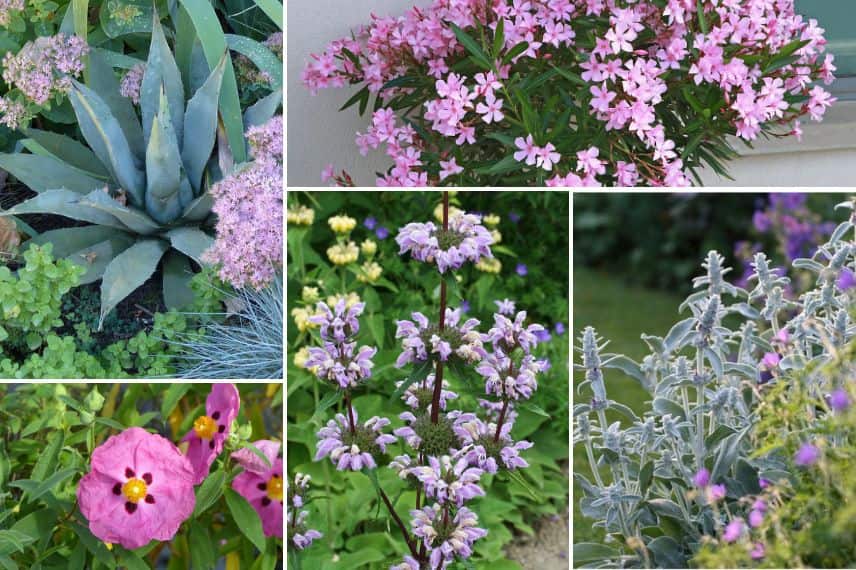
Agave havardiana, Cistus, Oleander, Phlomis, and Stachys byzantina
In a blue and yellow garden
In the garden, azure blue and yellow come together to create vibrant, colourful summer beds. For example, you can plant Phlomis fruticosa for its abundant golden-yellow spring flowering.
In this sun-kissed hue, it can be paired with the bright yellow of a Potentilla fruticosa ‘Citrus Tart’ with its small double flowers, or with an Achillea ‘Little Moonshine’. For a low-maintenance garden, consider a Sedum, a Euphorbia, or Rudbeckias for their beautiful yellow flowers, resembling little suns. You can also incorporate some bulbs of Iris germanica ‘Grand Canari’ or a Day Lily for its exotic flowering.
On the blue side, pair the Phlomis with hardy geraniums, a sage with blue flowers, or a Nepeta. Add some lightness with the slender form of a Perovskia and verticality with a Delphinium. Also, include some ornamental grasses for a perfect and harmonious scene.
If you prefer to create a shrub bed, you can plant a St. John’s Wort or a blue or yellow flowering Buddleia (Buddleia weyeriana ‘Sungold’) for their naturally wild silhouettes. A Weigela middendorffiana will add a touch of softness with its delicate pale yellow bells. A Caryopteris will offer a misty flowering, with endless azure shades and silver foliage. Low-maintenance, Ceanothus ‘Blue Diamond’, with its stunning deep blue flowers, will thrive in any ordinary soil.
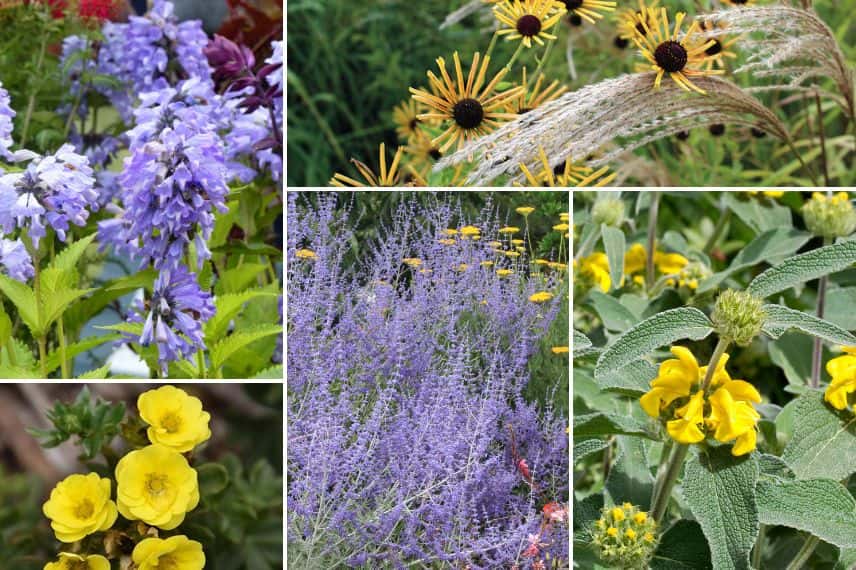
Nepeta, Potentilla, Rudbeckia and grass, Perovskia, Phlomis fruticosa
Discover other Phlomis - Hardy Jerusalem sage
View all →
Available in 2 sizes

Available in 1 sizes
Available in 0 sizes
Available in 0 sizes
Available in 2 sizes
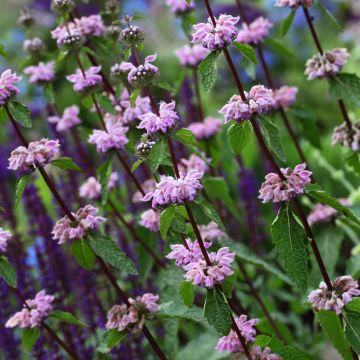
Available in 1 sizes
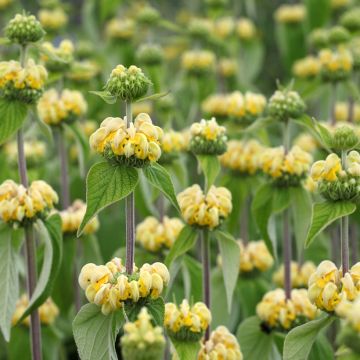
Available in 1 sizes
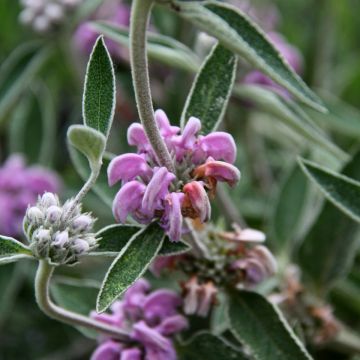
Available in 1 sizes
In an autumn garden
Jerusalem sages are among those plants whose flowering remains very attractive even when faded. Their floral spikes will stay perfectly upright and take on beautiful brown hues in the autumn chill, lasting until late winter. In this autumn setting, they can be paired with lovely ornamental grasses, such as the stunning Calamagrostis acutiflora ‘Karl Foerster’ with its beautiful light golden yellow colour this season, or a Chionochloa rubra. The yellow and white flowering of a Bidens ‘Lemon Moon’ will bring brightness and a lovely contrast to the blue, slightly violet flowers of an Aster novae angliae ‘Barrs Blue’. A Sedum Herbstfreude will delight you with its beautiful bluish-green foliage in spring, turning orange-yellow in autumn, and its abundant dark red flowering. Also consider Rudbeckias, whose golden yellow flowering extends into October, even November.
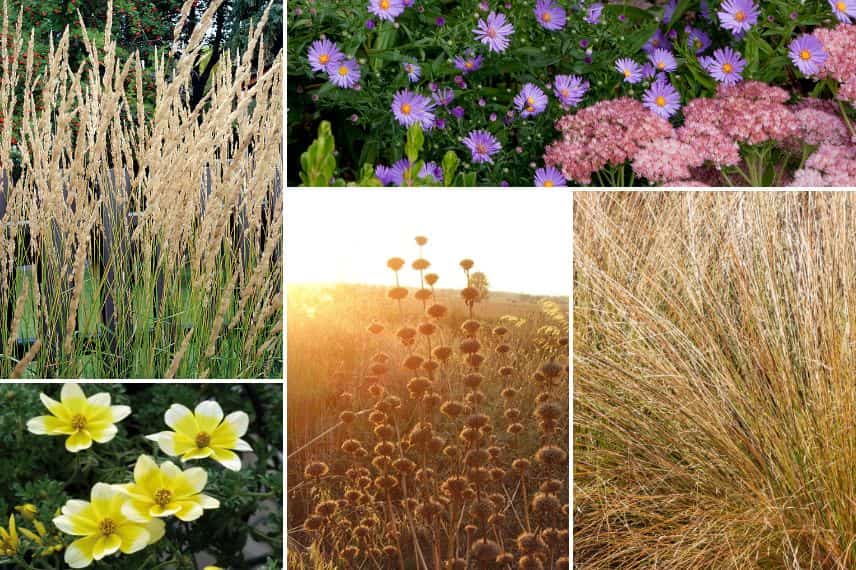
Calamagrostis acutiflora ‘Karl Foerster’, Bidens ‘Lemon Moon’, autumn Aster and Sedum, Phlomis, Chionochloa rubra
Read also
Sages: which varieties to choose?In a winter garden
Certainly, Jerusalem Sage provides a beautiful flowering display in summer, but its upright stems of whorled flowers remain very decorative in autumn and winter when they are dried. This gives the impression of a ghostly flowering, as they are beautifully covered in frost in the early morning. Additionally, the silver-green foliage of Phlomis is generally evergreen, making it attractive during the cold season. It can be paired with the silver-blue hues of a Blue Fescue ‘Elijah Blue’ or a lovely small Blue Spruce. Add some colour by incorporating a Nandina domestica ‘firepower’ with its surprising purple foliage in winter or a Cornus for its red, yellow, or orange stems depending on the variety. Install some ornamental grasses (including the majestic Stipa gigantea) for their golden foliage, illuminating sleepy gardens and borders. Finish off with the pink or white blooms of winter heathers.
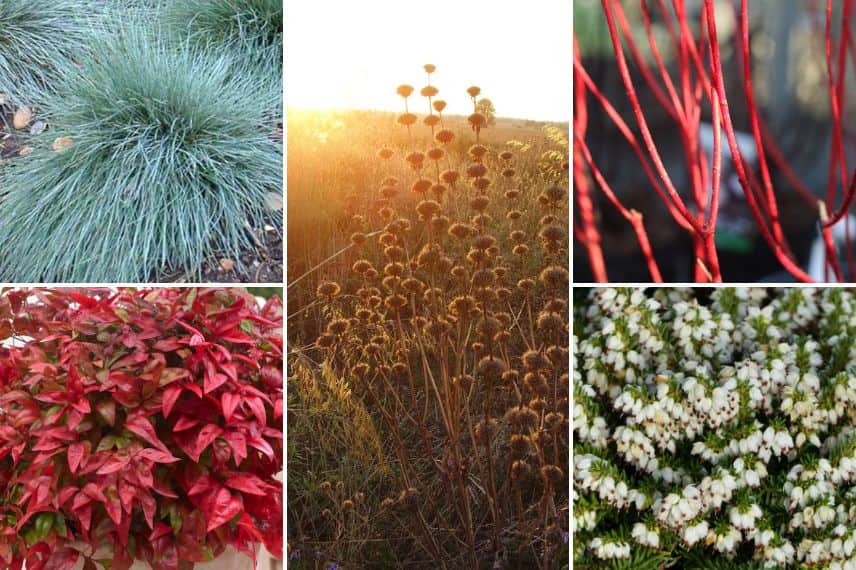
Blue Fescue ‘Elijah Blue’, Nandina domestica ‘firepower’, Phlomis (and Stipa gigantea in the background), Cornus alba ‘Baton Rouge’, and winter heather with white flowers
in a cottage garden
With its tall, upright flower stems and natural appearance, Phlomis will fit perfectly into a meadow or natural garden. It can be planted alongside other wild perennials, such as Echinacea purpurea for their beautiful purple-pink flowers, Monardas, and also an Aster to extend the flowering into autumn. Also consider Achilleas, Buenos Aires Verbenas, and Sages for their natural silhouette. Also install some ornamental grasses, such as Pennisetum or Stipa, which will undulate in the breeze. A Gaura will add a touch of lightness to this lush bed. Finish it off with a few Wild Teasels or an Cirsium japonicum for its large, globular, hairy bracts, in soft pink to magenta.
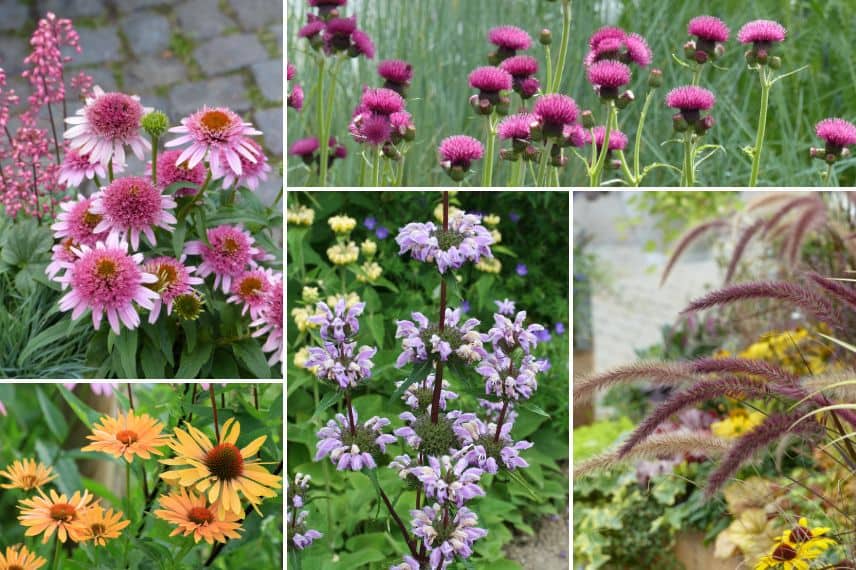
Echinacea purpurea, Rudbeckia, Cirsium japonicum, Phlomis samia, and Pennisetum Setaceum ‘Rubrum’
In a rockery
Jerusalem Sage is renowned for its excellent drought resistance. Additionally, it thrives in poor, stony, and well-drained soils, making it a suitable plant for sunny rockeries. While all varieties will acclimatise to these conditions, the Kashmir Phlomis will easily integrate thanks to its compact habit. It can be paired with other rockery plants, such as Achilleas, a Garden Valerian (Centranthus ruber), and the iconic Lavenders. For plants that are both beautiful in rockeries and useful in the kitchen, consider planting some aromatic perennials like Thyme or Rosemary.
At the front, place low-growing and spreading plants, such as a Cistus or a Helianthemum for its profusion of light, crumpled flowers like silk. Sedums, Saxifrages, Spanish lawn (Armeria maritima), Moss Phlox, and Corsican Spurge will be perfect as groundcovers at the base of stones and rocks.
If you have a large rockery, also consider dwarf conifers, Junipers, and Berberis. Add a few flowering shrubs, such as Ceanothus, St John’s Wort, and not forgetting landscape shrub roses.
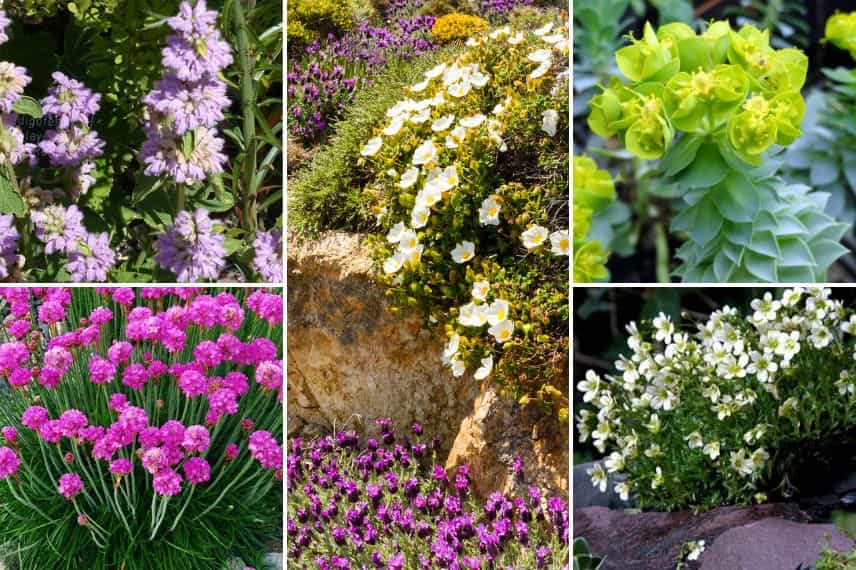
Kashmir Phlomis, Armeria maritima, Cistus and lavender, Corsican Spurge, saxifrage
For further reading
- Find all our varieties of Phlomis
- To learn more, browse our comprehensive sheet on Phlomis, Jerusalem Sage: planting, cultivation, and maintenance
- Subscribe!
- Contents
Comments