





























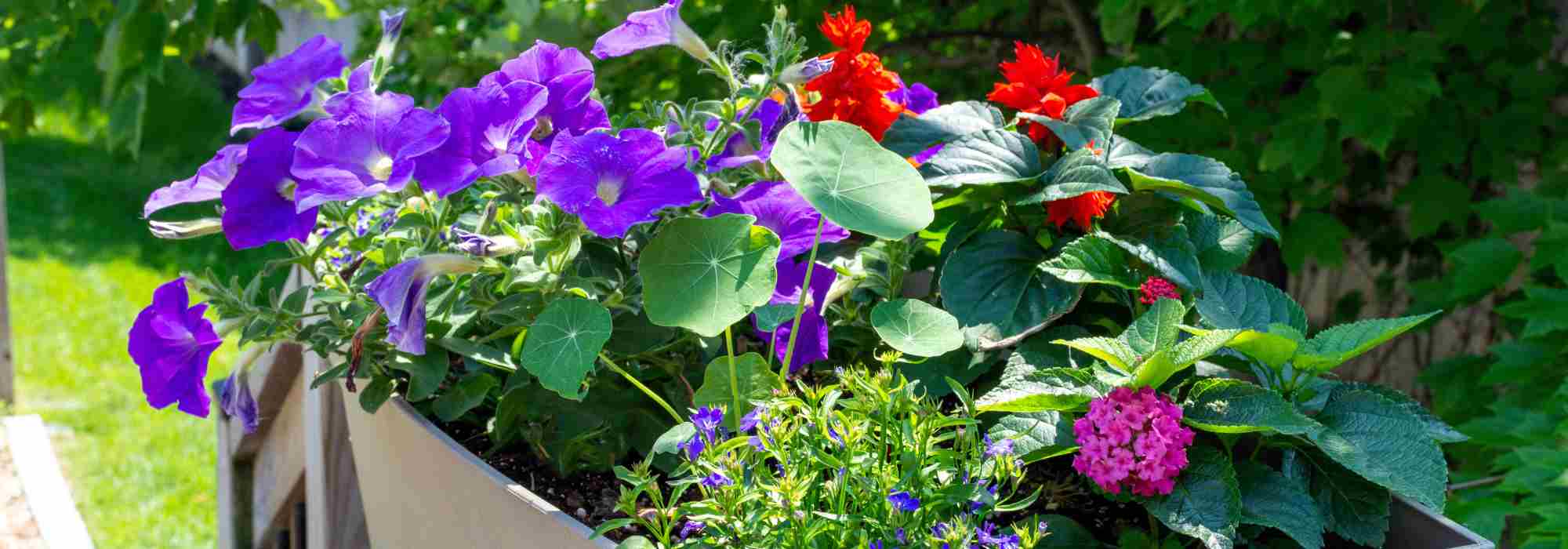
Annual flowers and plants: everything you need to know for a blooming garden nearly all year long
How to use them?
Contents
Overshadowed by perennial plants for several years, the annual plants, which complete their life cycle in a single year, are nonetheless very useful in a garden. Their ultra-rapid growth and the long flowering period give them a considerable advantage in spring and summer garden scenes.
Discover the sometimes overlooked potential of these seasonal plants that hide beautiful surprises.
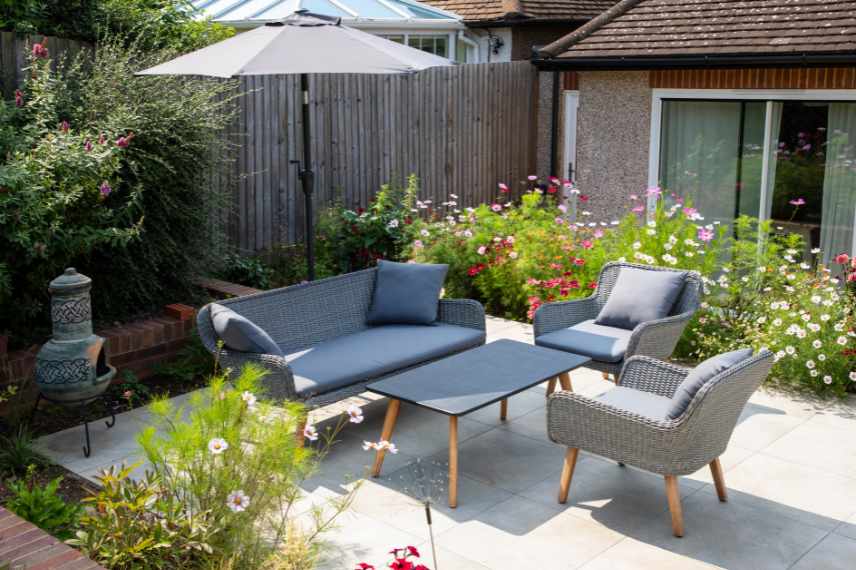
A small town garden, transformed in midsummer by a profusion of Cosmos.

Qualities that should not be overlooked
Annuals grow quickly, deliver a sustained flowering typically across three seasons, and allow you to change and renew your décor on the terrace, on a balcony, and also in the flower beds. They are often more suited to sun, with some even thriving in partial shade. These floriferous plants are, in fact, perennials in the warm countries from which they mainly originate (often Central America), which we must grow as annuals here due to their almost zero frost resistance.
Read also
5 annuals for a spring-flowering garden.The garden's flagship annuals
There are a vast number of flowers to choose from, in all colours, with shapes and habits (bushy, climbing, trailing or carpet-forming). Getting to know them better is also to discover beautiful plants that one might tend to forget, considering them the poor relation or a dated plant in the plant world. There are indeed species with a natural look, others more sophisticated, some with an exotic appearance, and varieties in different colours that are very attractive. Here is a small sampler of easy and classic annuals:
- Cosmos, so light they pair with almost any plant
- the white or blue nigella with a rustic charm
- the annual poppies almost as beautiful as the perennial poppies
- marigolds, vibrant in lively gardens
- sweet peas, scented in English-style gardens
- verbenas
- petunias and surfinnias
- the China asters (Callistephus) for late summer
- the lobelias, all blue… for a blue garden
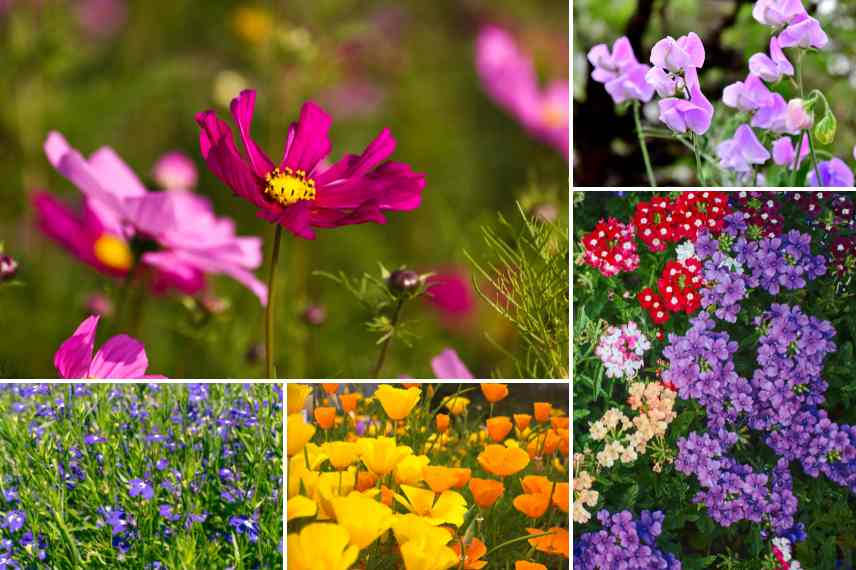
Cosmos, sweet peas, Lobelia erinus, California poppy and verbenas
… or more unusual
- purple hyacinth beans, a refined climber
- Mahon’s stock (Malcolmia maritima)
- The Mina lobata
- The all-yellow Melampodium
- The Chinese forget-me-not (Cynoglossum amabile), blue and very graceful
- the heliotropes in intense blue and fragrant
- and also the range of coloured foliage, striking Coleus, or the multicoloured Celosias
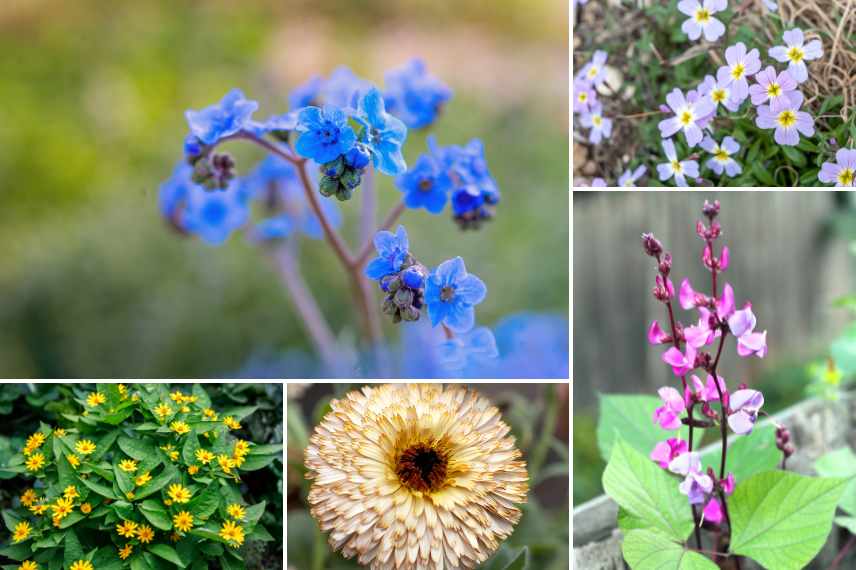
Cynoglossum amabile, Mahon’s stock, Melampodium, Calendula ‘Pygmy Buff’, and purple Dolichos
Use them to fill in the gaps
That’s their main advantage, besides their bright and charming colours. Annuals are, in fact, the queens of brightening up the gaps in the garden and ensuring the transition from spring to summer. As they grow quickly once sown, provided they are in the right conditions, they will rapidly fill the gaps left during spring, while awaiting the peak flowering of summer perennials. They slip into plant beds, borders or rock gardens, adding volume and colour after only a few weeks. To bridge the transition with perennials that are still underdeveloped or slow to emerge, or to fill gaps left by spring bulbs that cannot be lifted immediately (they must re-grow, letting their foliage yellow), such as tulips or daffodils. With their light root system, they never compete with other plants.
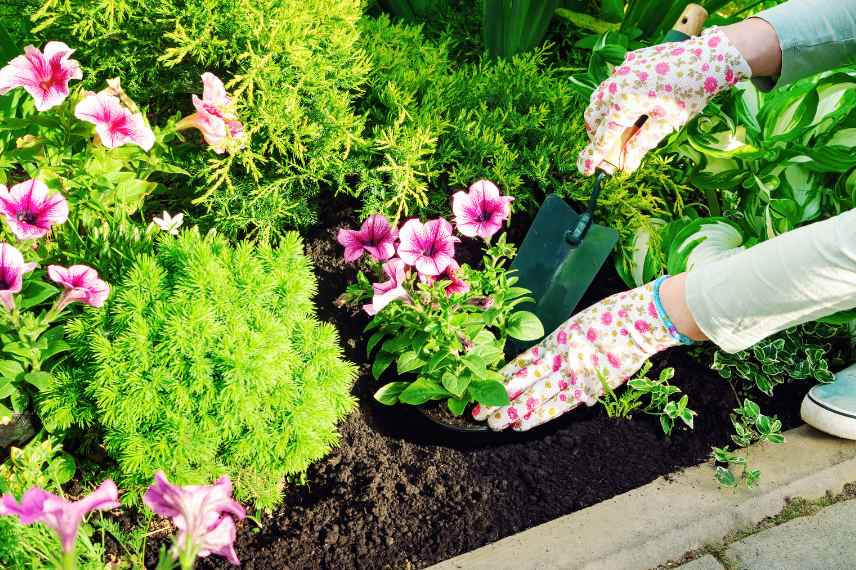
Petunias slip into the gaps in the flower beds
Ideal for changing colour each year
For a small garden or on a terrace, but also in a colour-themed border, annuals allow you to bring a different splash of colour each year. A border based on white perennials can thus be refreshed according to your wishes with yellow, blue or pink annuals (white nigella and Cosmos, for example), or the reverse. The pairings thus formed are very fresh, and their flowering period is often lengthened by the annuals.
Annuals help small spaces, in particular, to offer different scenes each new year, and to appreciate the wide variety of annuals. You can also use annuals on their own, especially when you have a well-exposed balcony or terrace: in blue-toned planters or hanging baskets, for example. They also thoughtfully enhance white, blue and pink monochrome gardens and bring a great deal of elegance.
- Blue annuals: Ageratum, Lobelia, cornflowers and annual Delphiniums, some hybrid salvias such as ‘Big Blue’, annual larkspurs, among others
- Yellow and orange annuals: Yellow and orange annuals : Eschscholzia, calendulas, carnations, Begonias, Calendula ‘Sherbet Fizz’, Cosmos sulphureus ‘Mandarin’, etc.
- Pink to red annuals: Papaver rhoeas and their varieties, annual poppies, Clarkias, petunias, Diascias annuals, Honesty, etc.
- White annuals: Nicotiana, Lunaria annua (money plant), Ammi visnaga, Cleomes, etc.
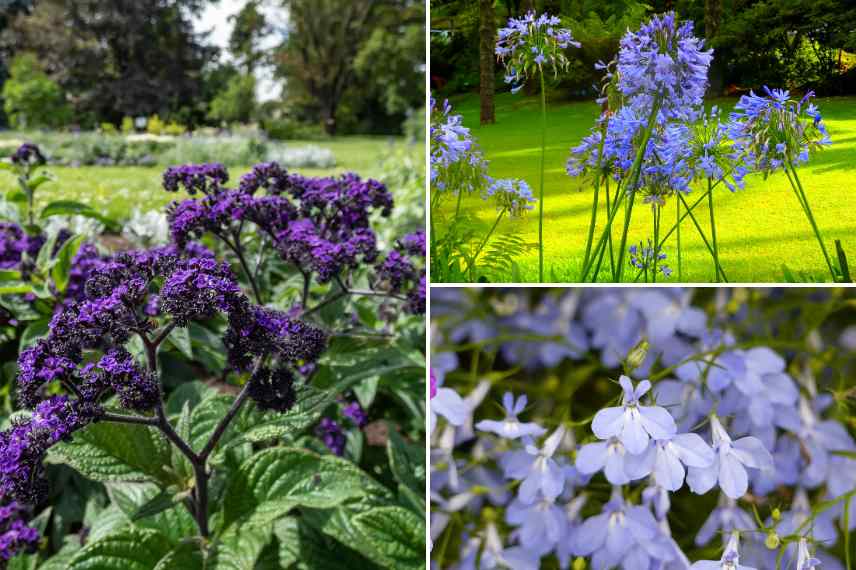
Here, in a blue-dominated border, agapanthus are accompanied by beautiful heliotropes and Lobelia ‘Hot Water Blue’
For window boxes, planters and pots
We love using annuals on balconies or terraces; they have long been used as the sole decoration for container plantings and other hanging arrangements. We favour those with a trailing, or bushy habit. Creating colour-themed window boxes will have a very striking effect and be more restrained than pairing several annuals in very disparate colour schemes.
Annual plants can also prove to be a magnificent companion plant at the base of a bush or a perennial, in a monochrome colour palette or by playing on its complementary colour.
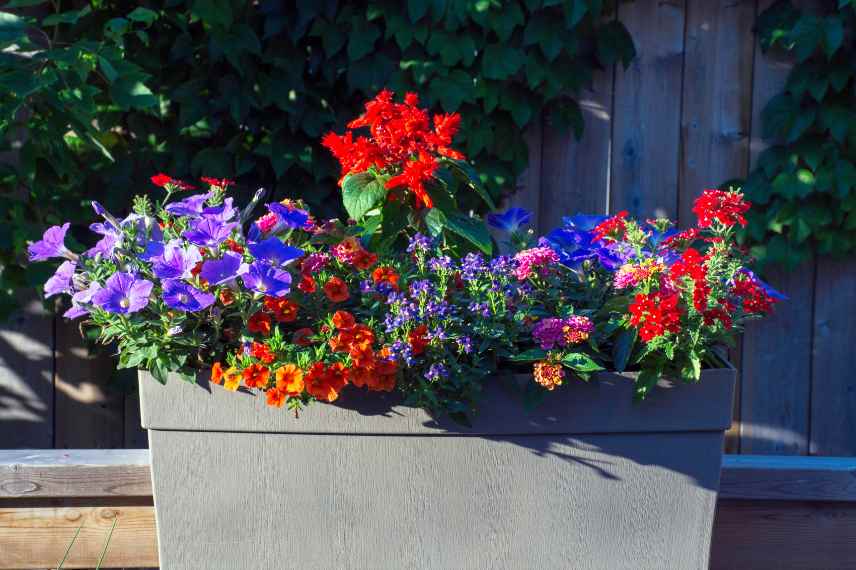
A full sun window box in red and blue tones
In the kitchen garden for colour and pollinators
The vegetable garden stands to gain greatly from inserting within its rows of vegetables some of the radiant flowering of annuals. For visual impact, firstly, but also for the melliferous qualities of some plants, which will thus benefit the pollination of vegetables. They attract pollinators, including bees and butterflies: Ammi visnaga, borage, heliotrope, Salvia viridis, zinnias, Nicotiana, melilot, Californian poppy, annual poppies, hollyhock (a biennial). A few sweet peas, ipomoeas or nasturtiums trained on a teepee also, in traditional fashion, brighten their planting neighbours for many months.
Annuals also play a protective role, such as tagetes (pot marigolds) which are true companion plants for tomatoes, attracting hoverflies and butterflies, aphid-eaters, but also calendulas acting as a natural repellent to many insects, and blue flax deterring Colorado potato beetles.
Phacelia, for its part, has an even more fitting place in the vegetable garden, since it serves as green manure and helps loosen the soil, in addition to its pretty blue flowering and finely divided foliage.
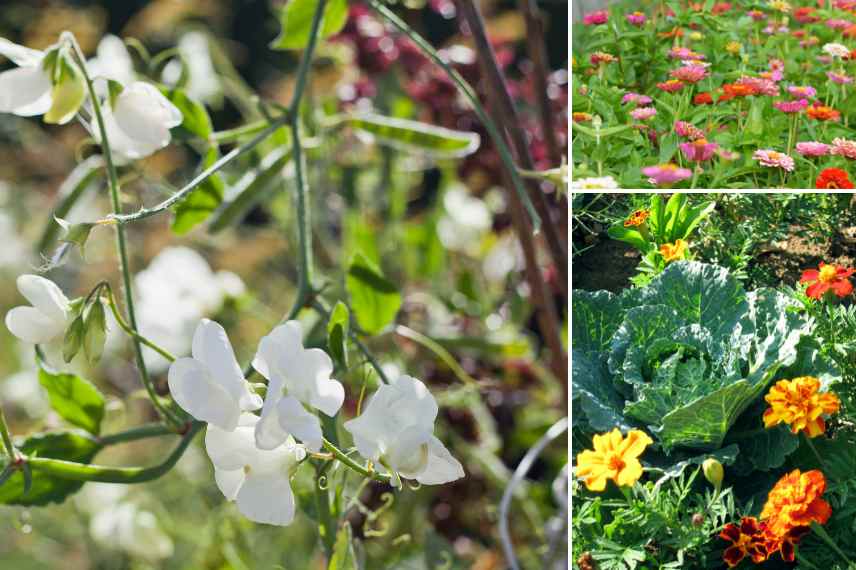
Sweet peas, zinnias and marigolds, beautiful and useful in the vegetable garden
For partial shade
Most annual plants love sun. Some, by contrast, are better suited to partial shade, even shade, and thus brighten areas of the garden that are less easy to flower in midsummer. You can rely on blue or white Nemophila, Impatiens (Impatiens balsamina, Impatiens walleriana), Begonia semperflorens, Streptocarpus, Ipomoea batatas, some Coleus and Digitalis (biennials).
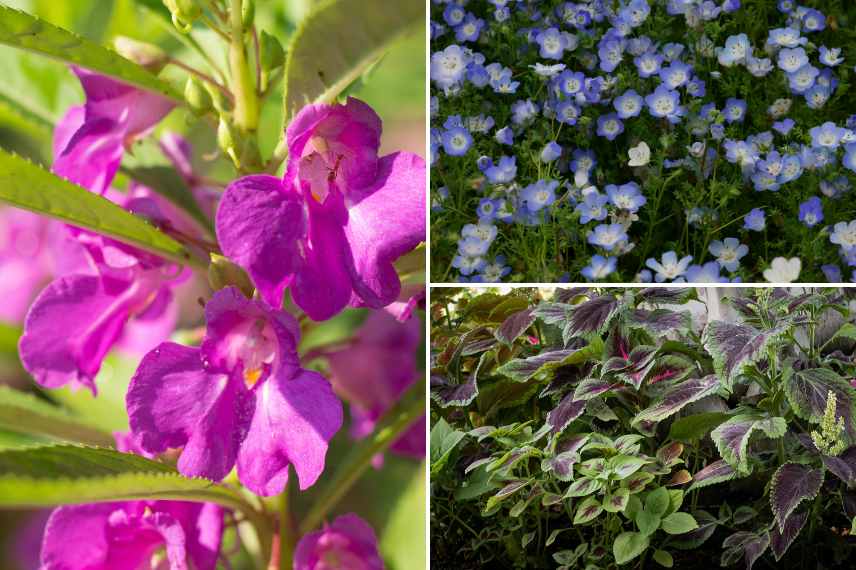
Impatiens balsamina, Nemophila and Coleus
For cut flower arrangements
Finally, annuals blend seamlessly with other pretty flowers in the cut-flower garden. They add a great deal of natural charm to a rustic bouquet, with their delicate inflorescences, their delicate petals, and their vibrant or soft colours.
Among them, to compose for example pastel bouquets: Chinese forget-me-nots, sweet peas, Callistephus, annual poppies, Mahon’s Julienne, and borage…
→ Read also: Create a cut-flower garden to make your own bouquets and The best long-lasting flowers and foliage for your bouquets.
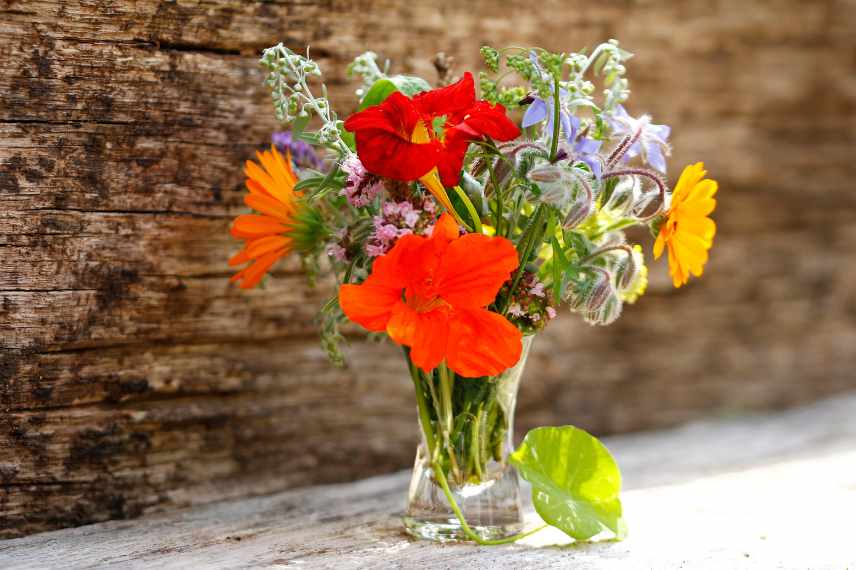
A 100% annual bouquet!
Plan ahead for sowing... and let self-seeding occur
With annuals, it’s true, you have to redo their sowing or planting each year. But with flowering over three seasons, it’s worth it! The important thing when you want to brighten your garden with annuals, and if you choose the sowing method, is to plan ahead. From March–April, in warmth, in a seed tray or under a frame, or directly in the ground, they all have one requirement: a very well-drained soil, even sandy, and for the tiniest seeds, barely cover the sowing.
Some, like annual poppies, sow directly in place rather than transplant, due to their pivoting root system which doesn’t like being pricked out. Check our detailed plant profiles or family profiles for planting advice.
Finally, if they perish from the cold at the first frosts, their seeds? No! And letting annuals self-seed spontaneously is the best way to see them settle into an area (see the next paragraph).
→ Read also: Annual seed sowing: How to sow successfully in the ground or in trays?, 10 easy-to-sow annual flowers, and Plants that self-seed all by themselves.
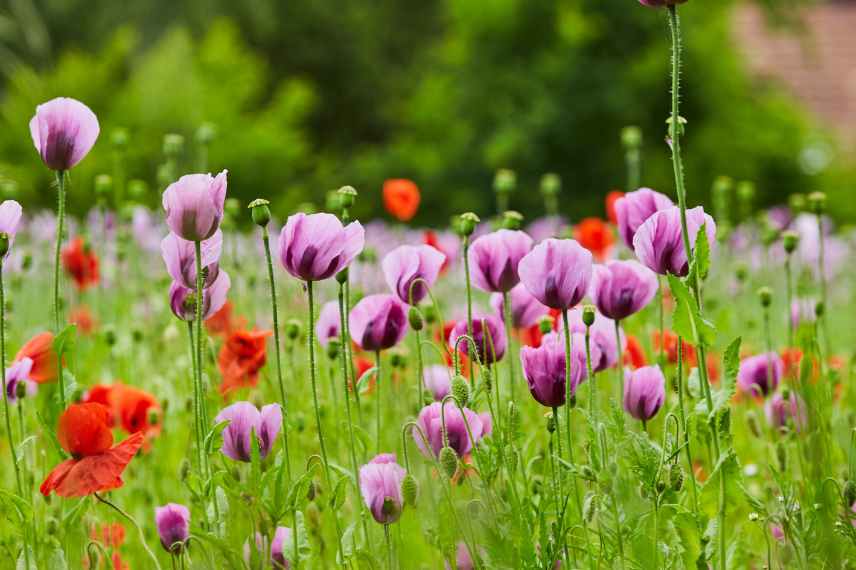
Annual poppies (Papaver somniferum and Papaver rhoeas), perfect for naturalistic areas
Our tips
Choosing the right option isn’t always easy, given the countless possibilities among annuals.
However, it is worth noting that some annuals are easier to grow than others, that a few establish themselves more permanently in the long run by self-seeding, and that others are a little more delicate (germination more or less capricious) , which you may prefer to buy in pots or plug plants.
→ Read also: Annuals: seeds, plug plants or pots?
| Annuals easy to grow | Delicate annuals | Annuals that self-seed easily |
| calendula (pot marigold) | cleome | nigella |
| cosmos | annual verbenas | California poppy, annual poppies |
| nasturtium | Nicotiana (ornamental tobacco) | honesty (Lunaria annua) Note: biennial |
| four o’clock | Heliotrope | Malva sylvestris |
| lavatera | ||
| godetia (Clarkia) |
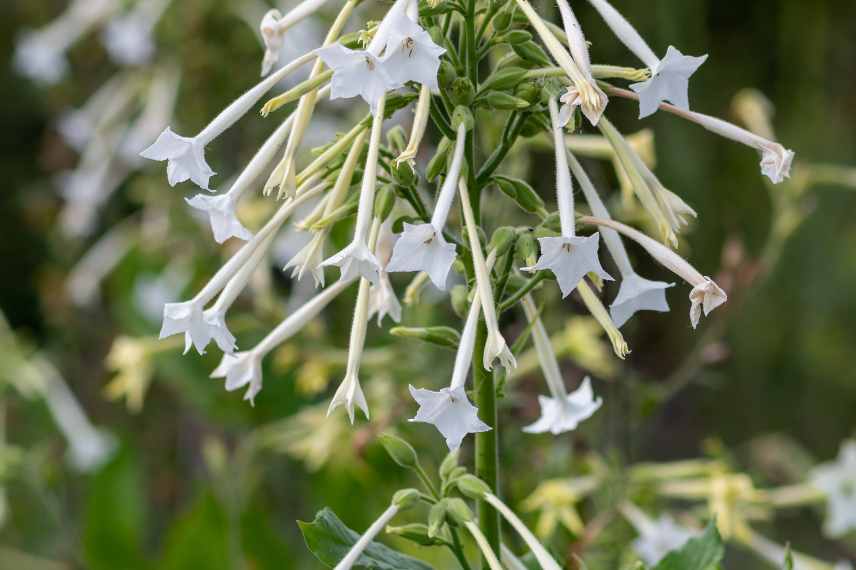
Nicotiana sylvestris
- Subscribe!
- Contents
Comments