





























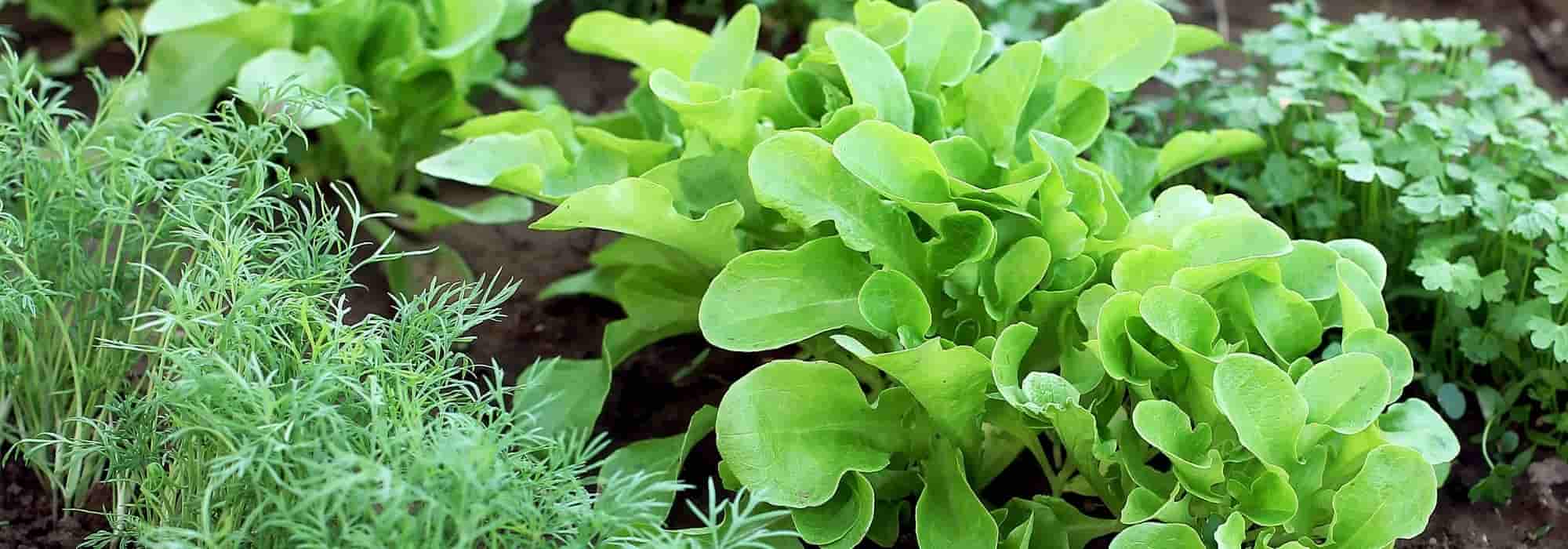
10 Essential Vegetables for Your First Vegetable Garden
The easiest vegetables to grow
Contents
Starting Your First Vegetable Garden already responds to a desire and to pleasure. You might also embark on this journey for the certainty of eating healthy vegetables, grown without chemicals, or for purely economic reasons. It can simply be a hobby or the necessity of not leaving a fallow plot… In any case, growing your first vegetable garden can be a source of great satisfaction, but also of significant disappointments. That’s why, after carefully considering the size and layout of your garden, choosing the right vegetables is crucial to avoid failures, and thus disappointments. Here is the tested and approved list of the 10 essential vegetables for starting your first vegetable garden.
Before you get started, feel free to read Aurélien’s article: Starting Your First Vegetable Garden – A Guide for Beginners.
Radishes, the fastest to shoot.
Crisp and delicious, radishes are best enjoyed simply, with butter and fleur de sel. They will taste even better if they come from your own vegetable garden! If there’s one vegetable suitable for beginner gardeners (and children too!), it’s definitely the radish. In particular, the so-called “monthly radish” (Raphanus sativus var. sativus). This is simply because it is easy to sow, simple to grow, and very quick to mature, with some varieties ready for harvest in just three weeks!
Adding to all these advantages is its long growing season (which spans from February-March to September-October), making the radish the number one essential vegetable for the first vegetable garden.
Its only real requirements are sun and water. So, plant it in the sun and water it regularly. But let’s face it, watering is one of the simplest tasks in gardening! However, when sowing, be light-handed to avoid thinning, or even simpler, use our radish ribbons.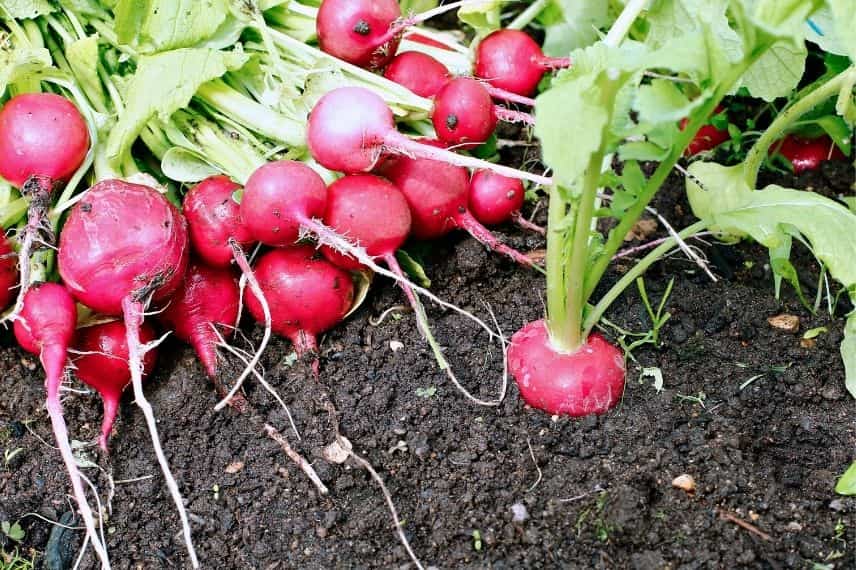
The easiest varieties:
- The 18-day radish: it produces semi-long radishes in 3 weeks to 1 month.
- The Flamboyant is very resistant to bolting and produces semi-long red radishes with a white tip.
- The Scarlet Globe offers perfectly round, all-red, and very crisp radishes.
Remember to stagger your sowings every three weeks to enjoy radishes from spring until the end of summer.
Read also
How to choose your radishes?Lettuce, foolproof salads
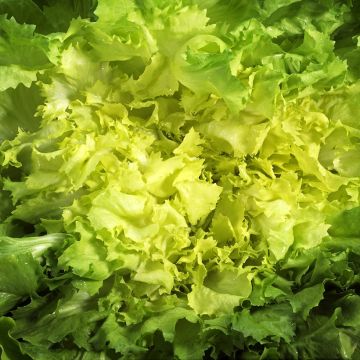
Among the lettuces (Lactuca sativa), the easiest to sow and grow are cutting lettuces from which leaves are harvested as needed, butterhead lettuces with tightly packed leaves, and batavias with crunchier leaves.
This salad requires little space and very little maintenance. It just needs to be watered regularly, and be sure to sow them a bit more in partial shade during summer to prevent them from running to seed too quickly.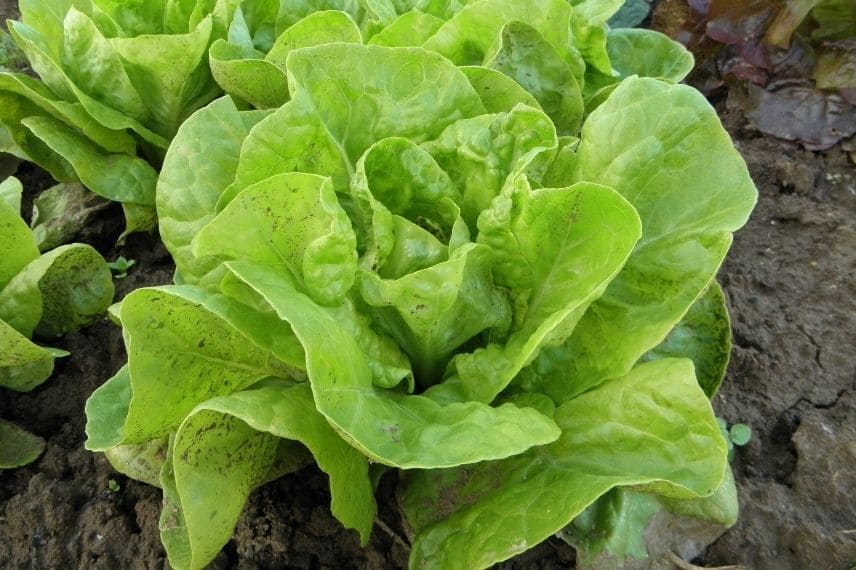
To make cultivation easier, you can choose to plant salads presented in pots or opt for seed tapes.
The easiest varieties:
- The cutting lettuce Oak Leaf tolerates heat very well and is resistant to running to seed.
- The butterhead lettuce Merveille des Quatre Saisons produces large heads of red leaves.
- The batavia Kinemontepas offers a firm head, very resistant to heat and running to seed.
Discover other Vegetables by variety
View all →
Available in 1 sizes
Available in 1 sizes
Available in 1 sizes
Available in 1 sizes
Available in 1 sizes
Available in 1 sizes
Available in 1 sizes
Available in 1 sizes
Available in 1 sizes
Available in 1 sizes
Spinach, a hardy vegetable plant
To grow spinach (Spinacia oleracea), it is first essential to choose the right variety. Some are referred to as short-day (for winter) or long-day (for summer). This is usually indicated on the packet!
Next, spinach requires cool soil (hence regular watering) and sunshine in spring and autumn, and partial shade in summer. Aside from these minor requirements, cultivation is straightforward. Harvesting is just as easy, done leaf by leaf.
The icing on the cake is that spinach is not very prone to diseases.
The easiest varieties:
- The Matador is a very vigorous and productive variety. Sow from June to September.
- The Monstrueux de Viroflay produces large leaves and is very vigorous.
- The Giant Winter lives up to its name as it is a short-day variety that produces large leaves.
Read also
Succeeding in growing lettucesCherry tomato, productive and vigorous
Tomatoes are not difficult vegetables to grow, but they are often susceptible to diseases like blight. In contrast, cherry tomatoes, also known as cocktail tomatoes, are often more disease-resistant, more productive, and more attractive due to their clusters of fruit.
Moreover, they require very little care and benefit from a very rapid growth. It is also unnecessary to prune or pinch them, actions that may seem daunting to some.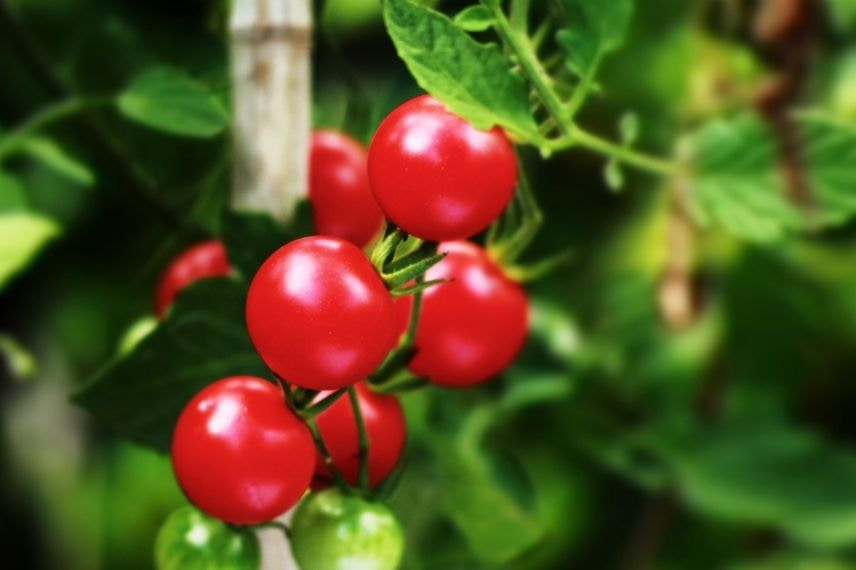
You can choose to sow them indoors as early as March or April, but more simply, purchasing young plants in pots ensures better success.
And to add a bit of flair to your plate, you can choose red cherry tomatoes, as well as yellow or orange ones.
Courgettes, another vegetable accessible to beginners
Here’s another vegetable that requires very little knowledge and grows (almost) on its own. For the courgette (Cucurbita pepo) (like squashes as well), it is quite simple to grow as long as you provide it with fertile soil, sunlight, and water.
The courgette should indeed be planted in full sun. Additionally, it requires watering that avoids wetting the foliage to prevent the first signs of powdery mildew from appearing.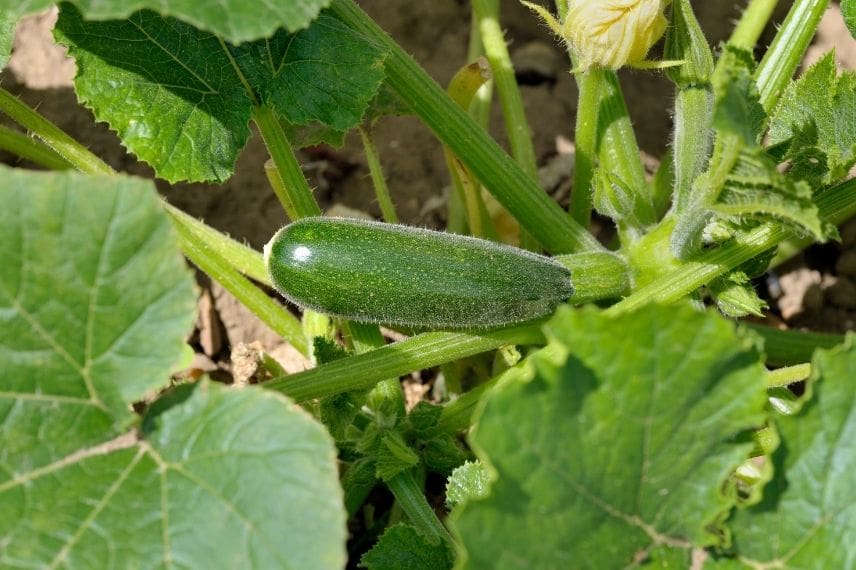
Once again, to make your life (and gardening) easier, get courgettes in pots or as plug plants that can simply be transplanted once the frosts have passed. About two months after planting, you can harvest beautiful courgettes.
Discover all our varieties of courgettes to sow or plant.
Green beans: harder to pick than to grow!
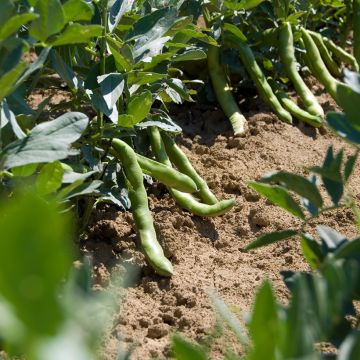
Nothing complicated about growing green beans (Phaseolus vulgaris). Sowing is done in situ and in the sun, starting from mid-May. However, they are somewhat sensitive to moisture, so watering should be limited.
Sowing is straightforward, as it can be done in rows or in clusters (that is, sowing 4 to 5 seeds every 30 to 40 cm), or by placing one seed every 5 cm. Then, about two weeks after germination, it is helpful to mound the plants to allow them to root well. And that’s it!
However, when the time for harvesting comes, you need to check every 2 days. But the joy of eating your own green beans is worth all the backaches!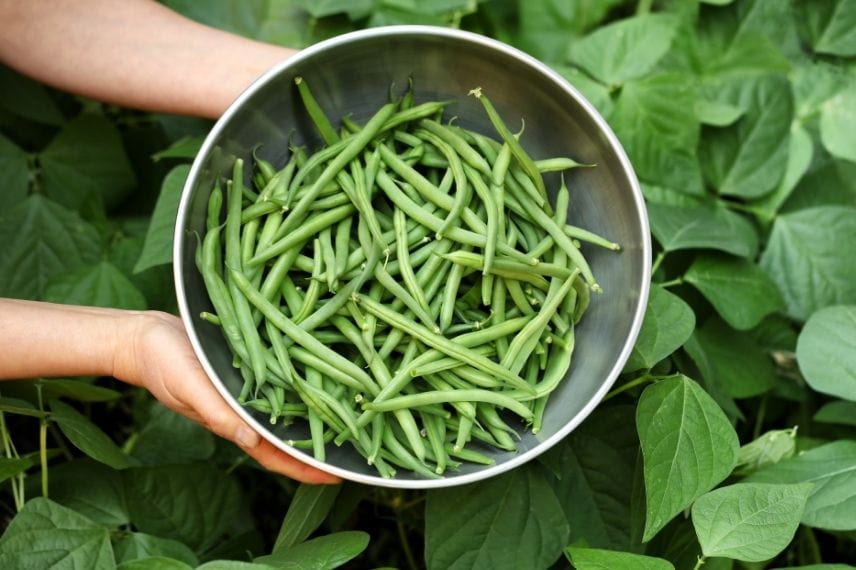
To ensure you harvest stringless green beans, choose dwarf string beans. And if you want to make harvesting easier, opt for climbing green beans.
Check out our article to help you decide: How to choose beans?
Equally easy to grow, broad beans and peas can also join your garden.
Aromatic herbs, to flavour the vegetable garden and the plates
Certainly, they may not be full-fledged vegetables, but aromatic herbs have their place in the vegetable garden. Firstly, because they add their aromas to our cooking, but also because they often have repellent properties that help keep unwanted pests at bay. Not to mention their medicinal virtues that you can explore by preparing infusions and decoctions.
These aromatic herbs often require little and most prefer sunny situations. So, don’t hesitate to introduce mint (which can be somewhat invasive), thyme, and rosemary, chives, parsley… This list is not exhaustive, and other herbs, more exotic, more fragrant, and more unusual… can join your garden.
Swiss chard, a robust vegetable that fears nothing.
In chard (Beta vulgaris), everything is good: the leaves can be enjoyed like spinach, and the midribs can be prepared in countless ways. So, to incorporate chard into your cooking, a trip to the vegetable garden is essential. And once again, chard proves to be a robust, vigorous, and very easy vegetable to grow, provided it has sunlight and its roots in rich, cool soil.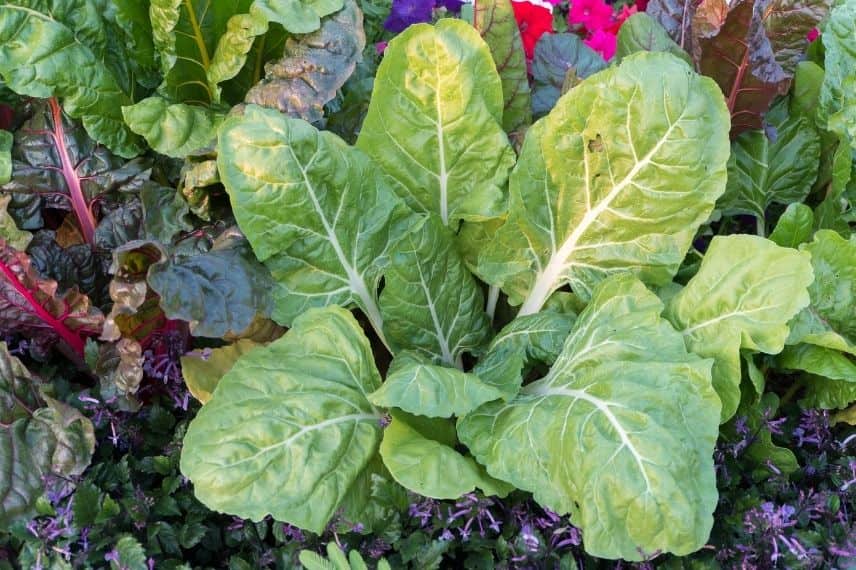
Moreover, as its cardes, available in various colours, are as good as they are beautiful, chard can even be grown within flower beds.
Chard is planted from May to August in the vegetable garden for a harvest until the frosts.
Kale, a vegetable to (re)discover
If you are not yet familiar with this cabbage without a head from which curly leaves are harvested as needed, you should quickly rectify this mistake by giving it a small place in your vegetable garden.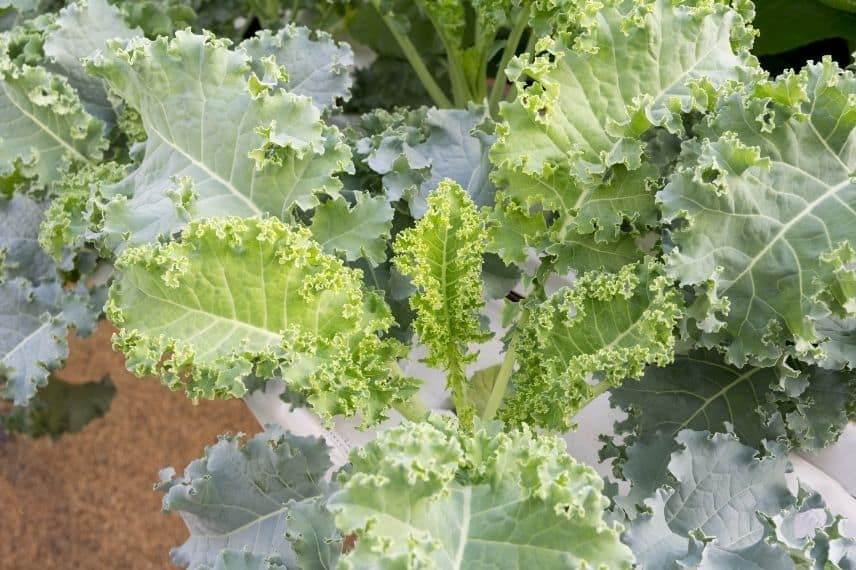
Very productive, this kale is significantly less demanding than its relatives, although it still requires fertile, cool soil. Watering should be regular, but can be reduced with good mulching.
Hardy, kale is very resistant to diseases. It can be planted from May until June-July.
Potato... if you have the space
It’s very rewarding to grow your own potatoes! Moreover, they require little care. However, they do take up some space for a few months.
The most interesting aspect for a beginner gardener is to grow early potatoes, which can be harvested 60 to 90 days after planting. They are planted from March to May, depending on the region, after being chitted, and they thrive in rich soil and sunny locations.
Ingrid explains to you how to grow new potatoes.
- Subscribe!
- Contents

Comments