




















We are approaching the end of the summer holidays, and many of us enjoy spending time by the Mediterranean... Holidays that are, of course, always too short! This frustrating phenomenon is something we strive to counter by giving our homes a touch of the Mediterranean! Whether it’s an antique pot, a small dry stone wall, an olive tree, a palm tree, a oleander, bougainvillea, an agave, and other "Mediterranean plants" whose mere mention brings us back to warmth and relaxation...
But what exactly is a "Mediterranean plant"? Is it a plant that grows spontaneously around the Mediterranean? A plant that thrives in a Mediterranean climate? A plant that has been produced in the Mediterranean basin? Let’s try to clarify...
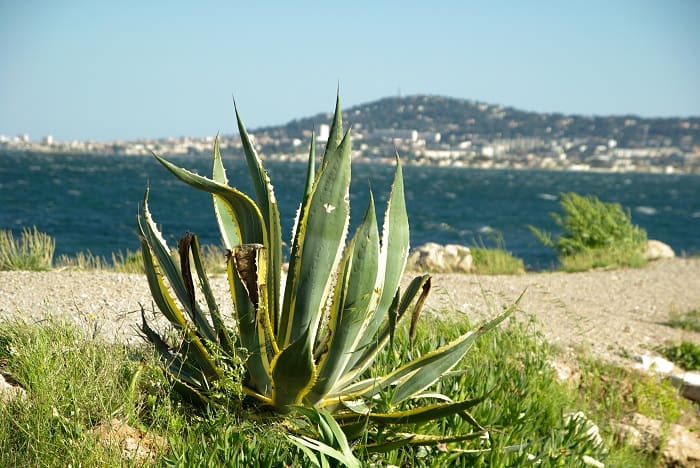
The Mediterranean climate that we cherish is primarily characterised by warm, dry summers that are very sunny, alternating with mild, wet winters. It is a temperate climate, with well-defined seasons. Rainfall is infrequent and highly concentrated, particularly in autumn. In summer, precipitation is less than soil evaporation and the consumption of living beings, leading to a water deficit for which Mediterranean plants have had to develop avoidance strategies. Finally, let’s not forget the wind, with the mistral and tramontane rivaling the famous north wind we are more accustomed to at Promesse de Fleurs!
.JPG)
This type of climate leads to two other significant phenomena for the Mediterranean natural environment: a high pressure from human activities and numerous outbreaks of fire, as sadly highlighted by current events. Lastly, the poor, well-draining soils, whether acidic or calcareous, are always low in nitrogen and potassium, often supporting only low and sparse vegetation, particularly in the garrigues. But there is a silver lining! These strong constraints generate a diversity that is all the more significant, with the number of plant species in the Mediterranean reaching 22,500, of which just over half are endemic, meaning they are only found in that specific location on the globe. This provides a first element of answer to our question, "What is a Mediterranean plant?".
Among these species of Mediterranean plants, there are many annuals that bloom and die before or after the dry summer period, bulbs that take refuge underground, and a whole range of so-called "sclerophyllous" vegetation, meaning plants with tough enough leaves to prevent rapid water loss. In particular, there are evergreen oaks, cork oaks, kermes oaks, olive trees, of course, but also oleanders and conifers like pines and cypresses. Note that they compensate for their slowed activity in summer by the persistence of their foliage in winter, which makes them particularly appreciated in gardens. Others have the opposite strategy and lose their leaves to survive during drought.

We must also mention the special cases of aromatic plants, such as lavenders, thymes, rosemaries, sages, hyssops, myrtles... which release volatile compounds, the essential oils, limiting water loss. Some cistus, like Cistus ladanifer, use the same technique, in addition to having a very deep taproot system. The velvety leaves, even downright cottony, of Stachys or Ballotta, are also a very effective barrier against water loss, which has been exploited for a long time in drought-free gardens. Brooms, on the other hand, simply have no leaves... And of course, nothing prevents plants from combining protections!

However, we have not yet discussed palms, mimosas, or even prickly pears, agaves, bougainvilleas, oranges, pittosporum, and all the others that populate our holiday memories on the Côte d'Azur! These plants, which have perfectly acclimatised to the Mediterranean zone, to the point of sometimes becoming invasive, are not native to there: we must therefore look for their origins elsewhere.
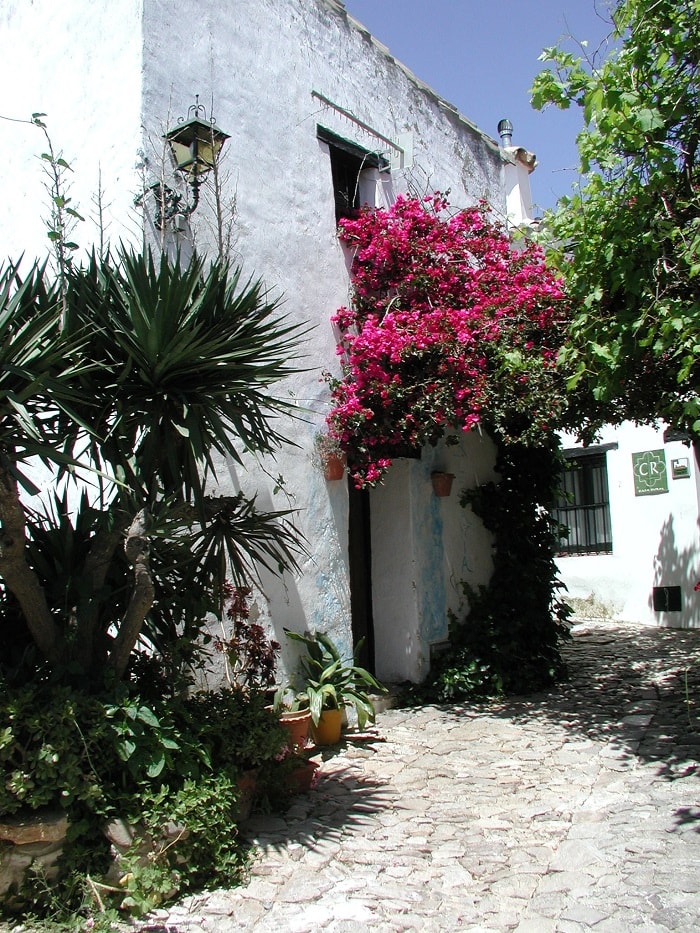
Indeed, while the Mediterranean region has given its name to its climate, it should not be inferred that the Mediterranean climate only exists around our beloved Mediterranean Sea! Similar conditions can be found in four other regions of the world:
- California
- central Chile
- South Africa
- southern Australia
Located on the western sides of continents, at latitudes between 30° and 45°, these temperate warm zones influenced by westerly winds correspond to the transition between subtropical and temperate climates in general.

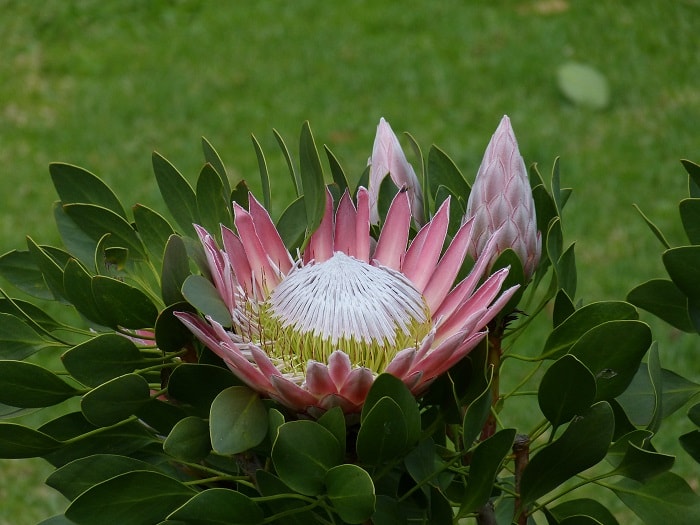
From South Africa originate many Ericaceae and Proteaceae, well adapted to poor soils (the Proteaceae have a particular root system known as "proteoid" consisting of numerous short, closely spaced rootlets that are thought to improve nutrient solubility by altering the soil environment in which they grow). Highly sought after for cut flowers (Banksia, Protea) and for the production of flowering potted plants (the Cape heather, for example, which is found at All Saints), these plant genera are rarely encountered in our gardens, whether Mediterranean or not, due to their very delicate growing conditions.
In reality, outside of collections, we cultivate very few plants in Europe that originate from the "other" Mediterranean climates. Thus, we must look even further for the origins of "Mediterranean plants" in the sense of the collective and horticultural imagination, which is ultimately what matters when creating a garden.

The mimosa (Acacia dealbata) is native to the east of Australia, an oceanic climate zone, and was introduced in France in the mid-19th century. It has remarkably naturalised since on the Côte d'Azur, just like the Pittosporum tobira, which is also cultivated for its foliage, native to the subtropical climates of Japan and Korea. Other plants commonly found in Mediterranean gardens come from desert-type climates, such as agaves, yuccas, and cacti. With the exception of 2 species out of 2,500 (!), palms are not native to the Mediterranean but to tropical and subtropical climates, just like the citrus trees that thrive in the mild Mediterranean climate but must be irrigated in summer. The spectacular bougainvilleas originate from the humid tropical forests of South America!
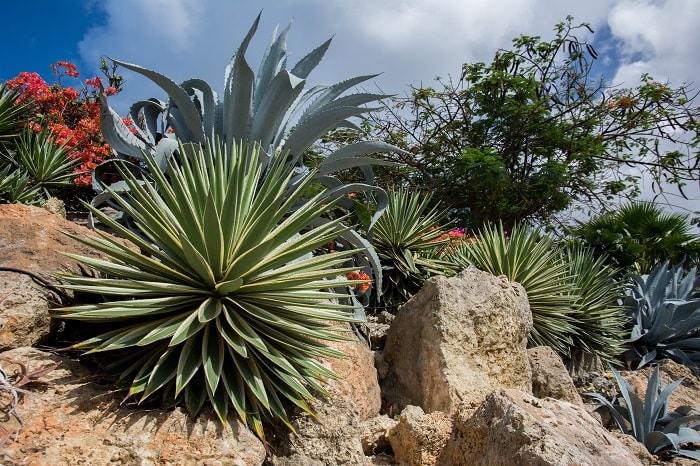
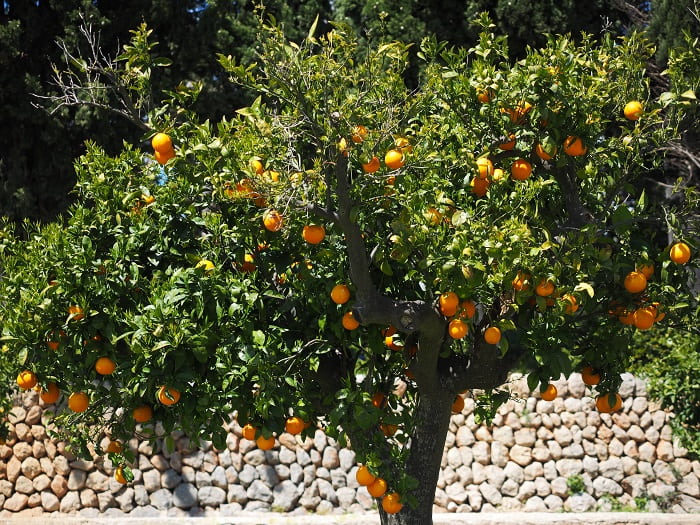
Thus, it is important to highlight the contrast between the image of the Mediterranean nature, vibrant in spring, much more subdued in summer, which corresponds to a long period of near-dormancy for the plants, and the image one might have of the Mediterranean garden, which is much more lush but is mainly composed of exotic plants that require watering in summer! In practical terms, the term "Mediterranean plant" thus means both everything and nothing, as it mixes botanical and cultural aspects! Caution is therefore advised for the gardener...
Plants that grow in the Mediterranean in nature are quite hardy (often down to -10°C to -12°C) and adapt easily in gardens throughout the rest of France, provided the soil is very well drained, even calcareous, and that a fairly sheltered spot from frost is chosen for planting; they grow easily without irrigation, which is why they are increasingly being planted. Many are so familiar to us that we easily forget their Mediterranean origins, as is the case with aromatics. Conversely, plants that grow in the Mediterranean in gardens can equally be called "Mediterranean" as the former, but they are nonetheless exotic, more frost-sensitive, and should be reserved for pot cultivation in a conservatory or on the terrace in summer where they can be regularly watered and wintered in a sheltered spot.


Comments