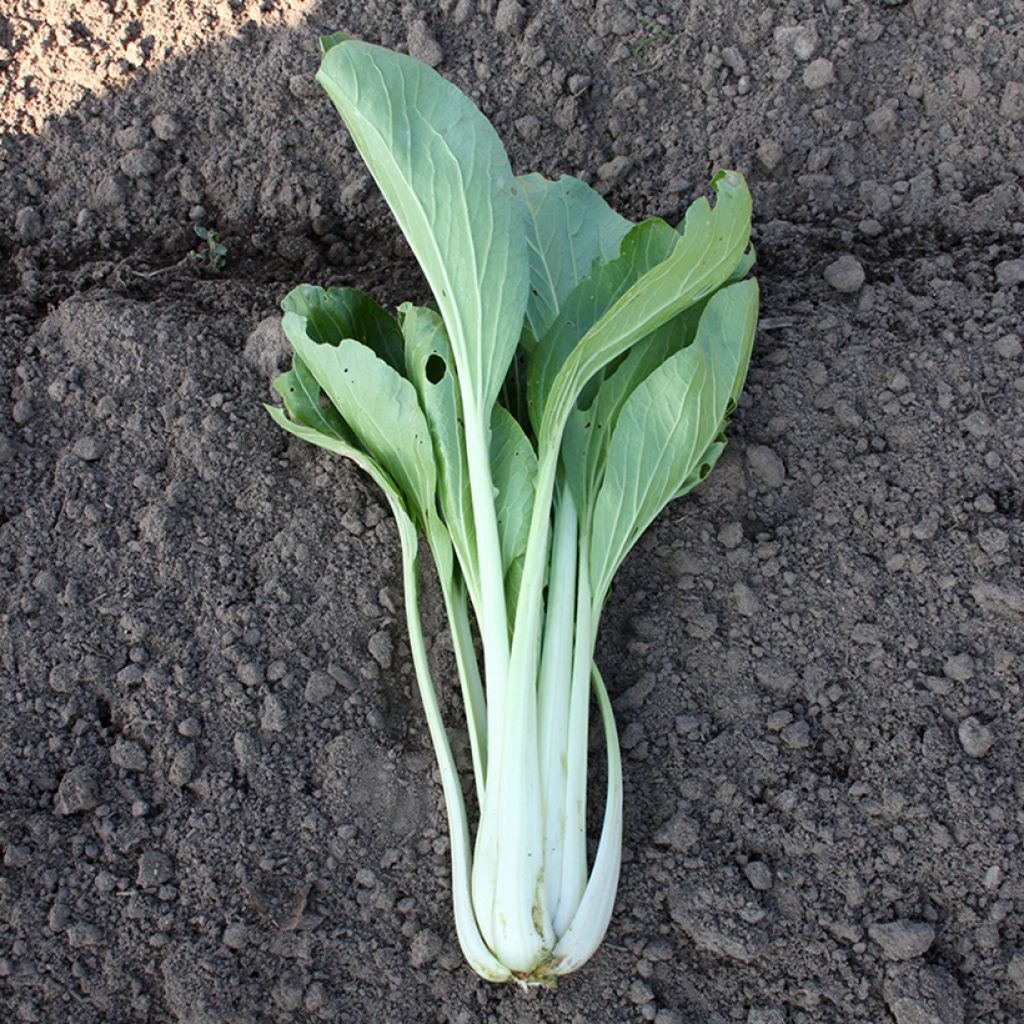
Taï Saï Rosette pak choi - Brassica rapa var. rosularis
Taï Saï Rosette pak choi - Brassica rapa var. rosularis
Brassica rapa var. rosularis Taï Saï
Rosette pak choi, tatsoi
Back-to-school special offer!
Get €10 off for every €50 you spend! And get up to €40 off on a single order.
How does it work?
1. Shop your favourites
Add your favourite plants to your basket. For every €50 you spend (excluding delivery charges, store credit and the plastic-free option), you’ll receive a €10 voucher.
€50 spent = €10 voucher
€100 spent = €20 voucher
€150 spent = €30 voucher
€200 spent = €40 voucher
2. Place your order
Once your basket reaches one of the spending thresholds, place your order. You can even choose your delivery date!
3. Receive your voucher
As soon as your order has been shipped, you’ll receive an email containing your personal voucher code and its value.
4. Use it on your next order
Your voucher is valid for 90 days from the date you receive it. It can be used once only, on a new order worth at least the value of the voucher, excluding delivery charges.
Please note: Vouchers can be combined with other offers, but cannot be split or refunded.
Home or relay delivery (depending on size and destination)
Important: You may be charged customs duties by your country’s customs authorities upon delivery.
Schedule delivery date,
and select date in basket
This plant carries a 6 months recovery warranty
More information
We guarantee the quality of our plants for a full growing cycle, and will replace at our expense any plant that fails to recover under normal climatic and planting conditions.
Description
The Pak-choï ‘Taisai’ is an early Chinese cabbage that forms generous, elongated heads with white midribs and dark green foliage, offering great delicacy of flavour. Its growth is very rapid and harvests are staggered from spring to autumn depending on the sowing date. It is an ideal Asian leaf vegetable for extending the salad and wok season.
Chinese cabbages are vegetable plants originating from China and, more generally, from East Asia. They belong, like their European homologues, to the large Brassicaceae family. The Chinese cabbage Taisoi bears the Latin name Brassica rapa var. rosularis; it is also called Rosette cabbage. These cabbages, which were scarcely found outside certain specialist shops just a few years ago, are gradually gaining ground on our market stalls and in our vegetable gardens, to the delight of lovers of Asian cuisine. They are biennial plants cultivated as annuals, brimming with qualities, both gustatory and nutritional.
From a dietary point of view, they are remarkable: low in calories, they are very rich in vitamins C, A and potassium, and also contain a lot of fibre and minerals like calcium.
The cultivar is distributed under several spellings: ‘Taisai’, ‘Tai Sai’, ‘Taï Saï’, ‘Pak-choï Taisaï’, ‘Bok-choï Taïsaï’. It is a non-hybrid open-pollinated seed variety.
The plant forms a semi-erect, vigorous rosette of smooth, dark green leaves borne on large, very fleshy white midribs. These thickened petioles narrow at the base and form a long, compact head, whose stalks remain crunchy even after cooking. A well-nourished plant reaches 25 to 35 cm in height with a spread of about 25 to 30 cm. 45 to 55 days pass between planting and harvest, i.e., 2 to 3 months after sowing. If the young plants are left in place, they send up tall, ramified flowering stems in spring or early summer, bearing clusters of small, four-petalled yellow flowers, typical of cabbages, pollinated by insects. The ‘Taisai’ variety tolerates brief frosts, especially when the heads are formed, but prefers temperate climates and mild winters.
In the kitchen, this cabbage can be eaten both raw and cooked: in salads, quickly stir-fried in a wok, in soups or in gratins.
In the vegetable garden, cultivating the Rosette cabbage is a little more delicate than that of classic cabbages, as it requires more warmth, but it shares the same requirements: a deep soil, excellent manuring and regular moisture. It is planted in full sun. Not very hardy, Chinese cabbages are exclusively late summer and early winter vegetables.
Harvest: the leaves of the rosette cabbage are harvested as needed.
Storage: They keep in the refrigerator for a few days.
The gardener's little tip: To limit watering, we advise you, when the young plants are well developed, to mulch the soil with thin successive layers of grass clippings, if possible mixed with dead leaves. This protection, which allows the soil to stay moist, also reduces weeding.
In the garden, the Chinese cabbage Pak-choï ‘Taisai’ is very well suited to late summer and autumn crops, at the edge of a bed or in close rows for successive harvests. This variety finds its place in a themed vegetable garden dedicated to "Asian flavours", mixed with mizunas like ‘Maserati F1’ for mixed young shoots, with a Chinese Red Giant Mustard, and with the Asian Spinach Fagopyrum dibotrys. These vegetables allow you to compose salads and stir-fries with Asian accents, rich in flavours and textures.
Harvest
Plant habit
Foliage
Botanical data
Brassica
rapa var. rosularis
Taï Saï
Brassicaceae
Rosette pak choi, tatsoi
Brassica rapa ‘Taisai’, ‘Tai Sai’, ‘Taï Saï’, ‘Pak-choï Taisaï’, ‘Bok-choï Taïsaï’
Cultivar or hybrid, East Asia
Biennial
Planting and care
Sowing:
The germination temperature for Chinese Cabbage Pak Choi Tai Sai is around 20°C and takes approximately 14 days.
Sow directly outdoors from April to May and then from August to September (until early October in a mild climate), for harvests 45–60 days later, from late May to July and then from September to November.
You can proceed by direct sowing in situ or prepare young plants which will later be planted in their final position in the garden.
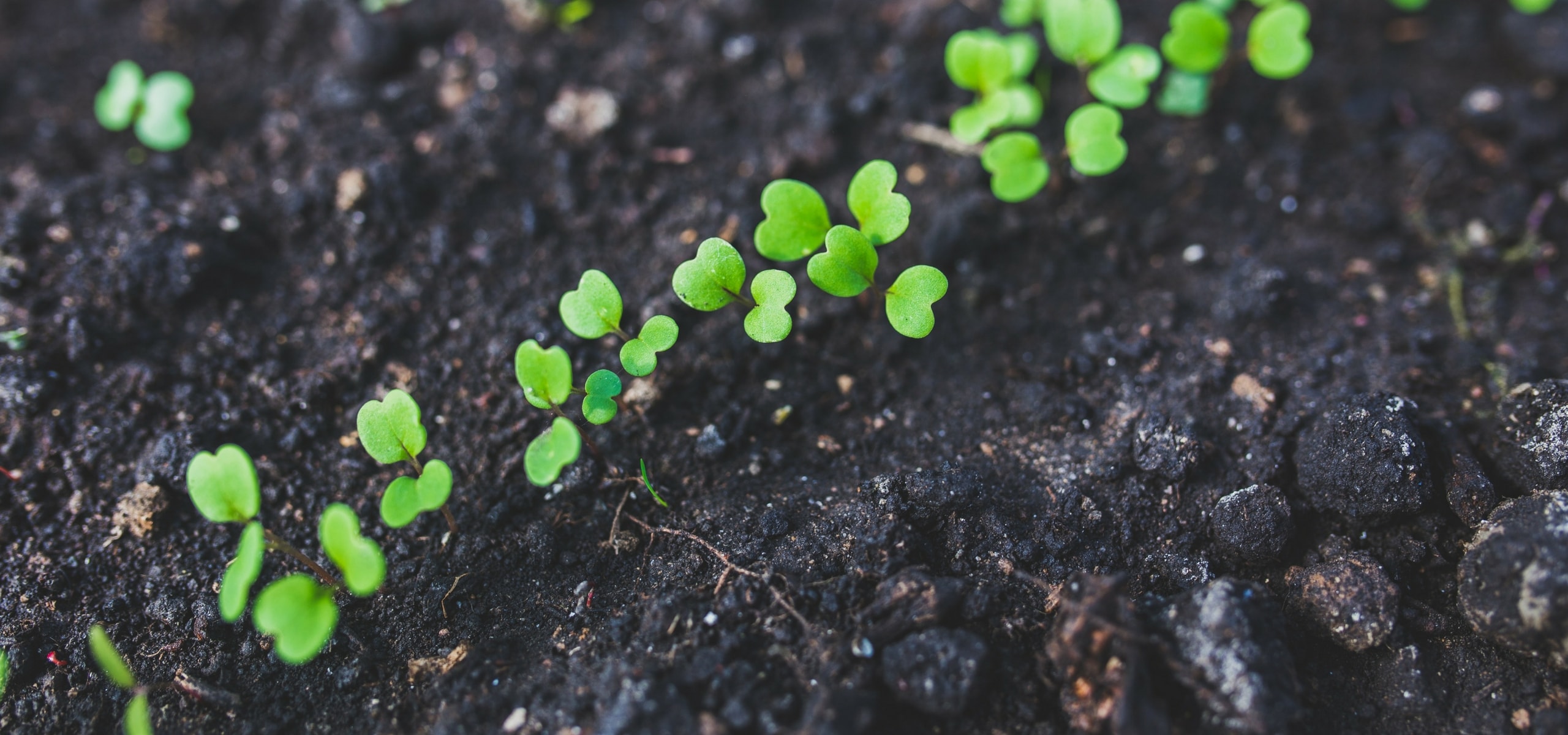
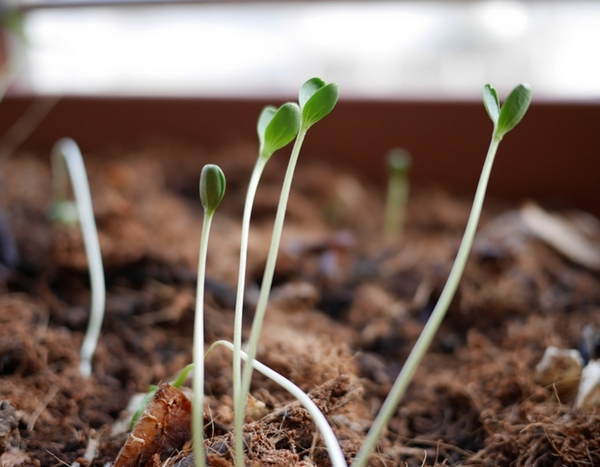
Preparing young plants: Under cover or in a nursery bed in the garden for the rest of the year (depending on the recommended sowing period), sow the seeds at a depth of 1 to 2 cm in good seed compost or very fine soil. Cover lightly with compost and remember to keep the substrate moist but not waterlogged.
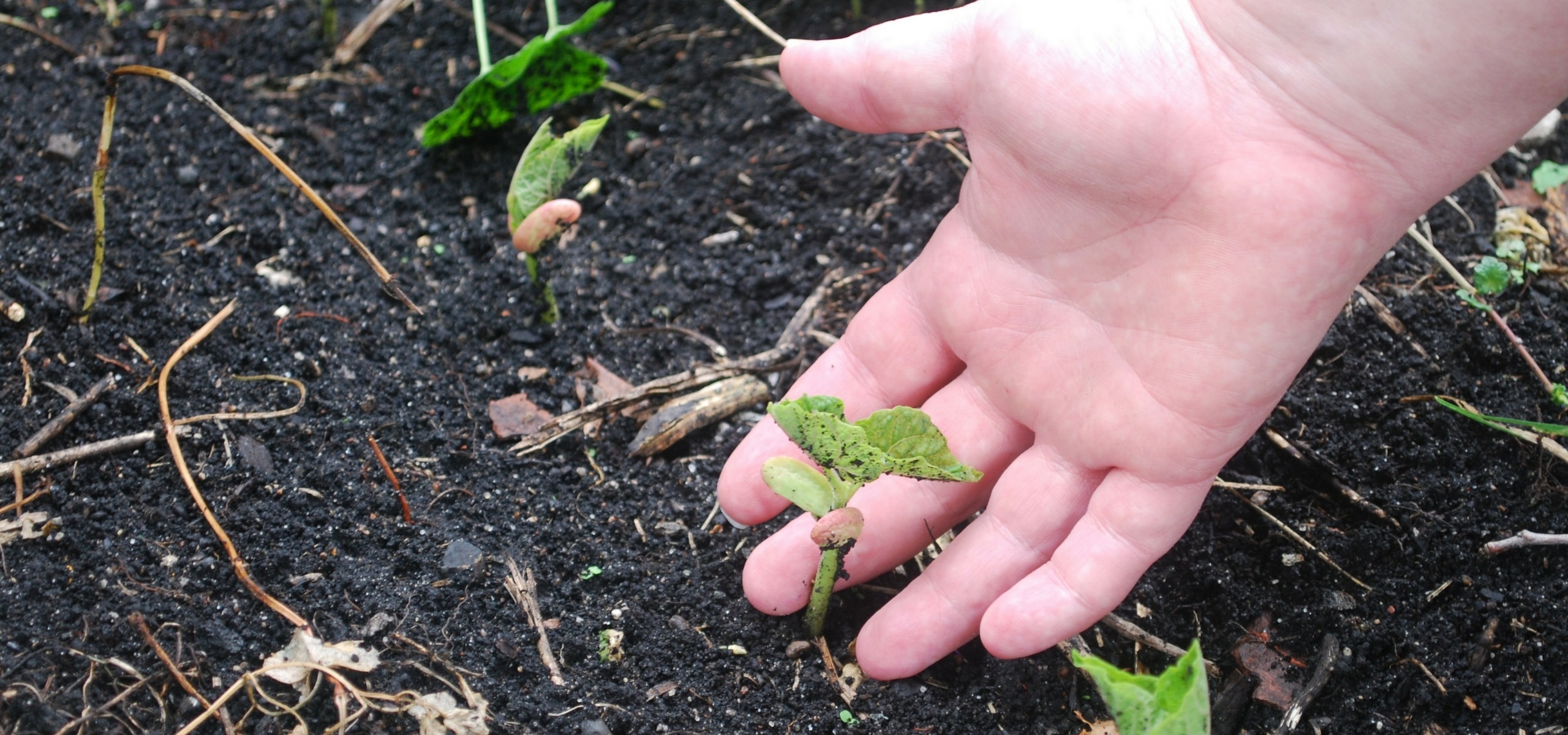
When the seedlings appear strong enough to be handled, prick them out into pots if necessary before transplanting them to the garden, when no more frost is expected. When planting, respect the recommended spacings for direct sowing.
Direct sowing: In properly amended and finely worked soil, draw furrows one or two centimetres deep, spaced 40 centimetres apart. Sow the seeds and cover them with a thin layer of fine soil. When the seedlings are well developed, thin them out, keeping only one young plant every 40 cm or so.
Cultivation:
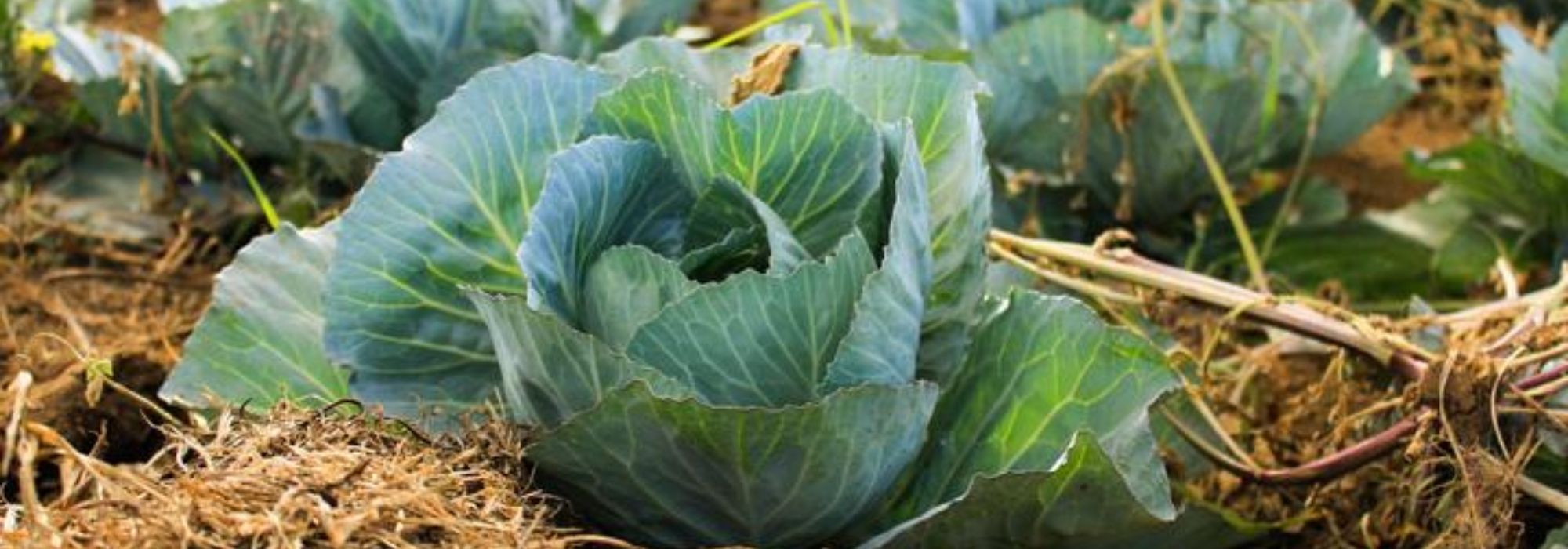
Chinese Cabbage is grown in full sun. It is a greedy vegetable, requiring well-manured soil, rich in nitrogen and potash. It is advisable to make a generous application of well-rotted compost (about 3/4 kg per m2), preferably in autumn, by lightly forking it in to a depth of 5 cm, after having, as with any vegetable crop, thoroughly loosened the soil. It is not very tolerant regarding soil pH, which should be between 5.6 and 6.5. In acidic soil, care must be taken to gradually raise this pH by adding calcium in the form of Dolomite or Lime.
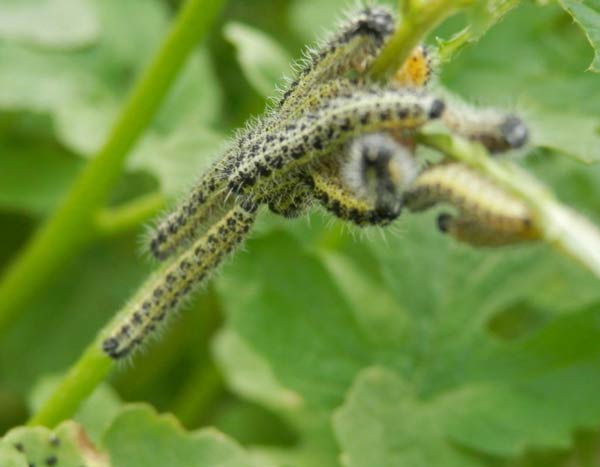
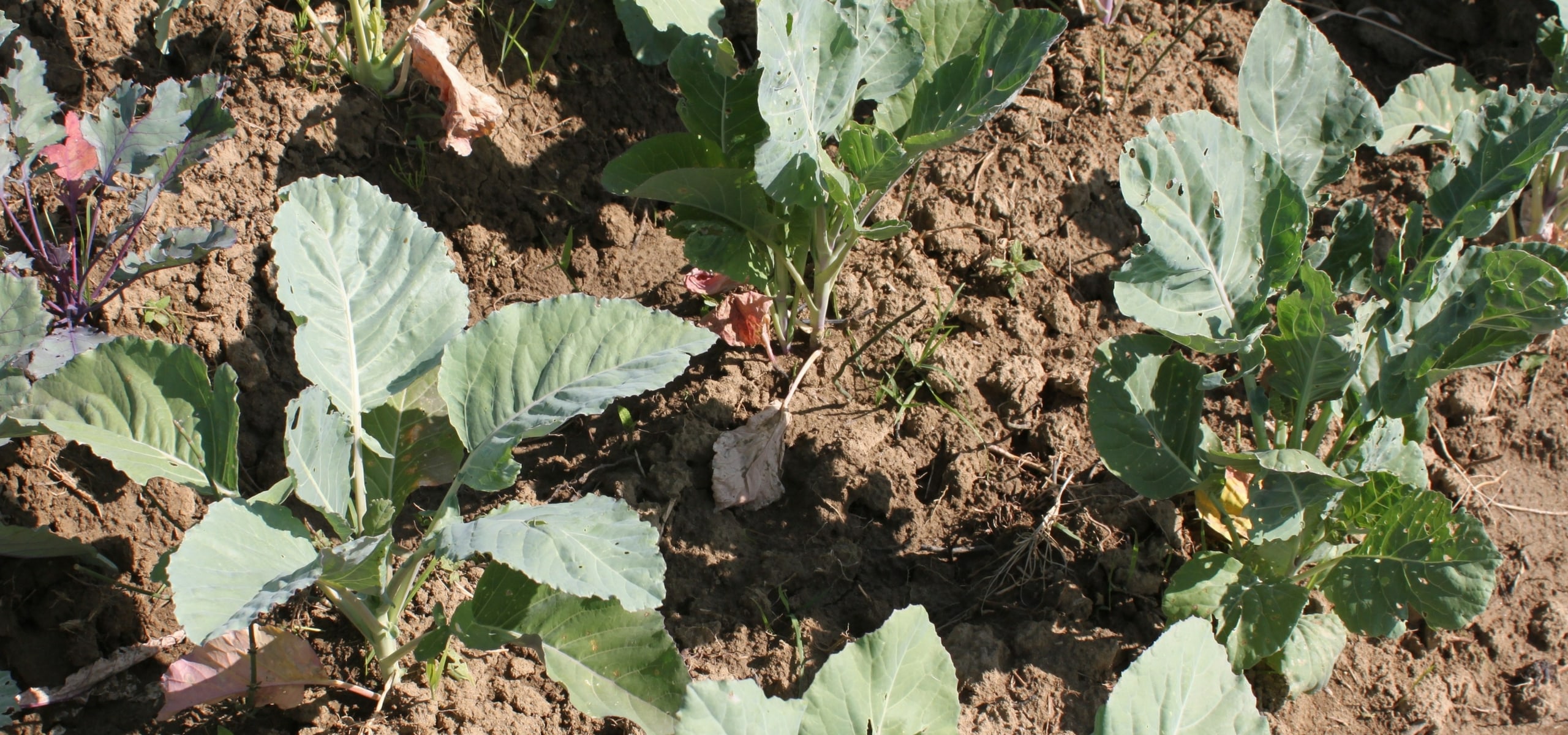
Be wary of pests such as the Cabbage White butterfly or Flea Beetles and plan to install insect-proof mesh.
Seedlings
Care
Intended location
Planting & care advice
-
-
-
-
-
-
-
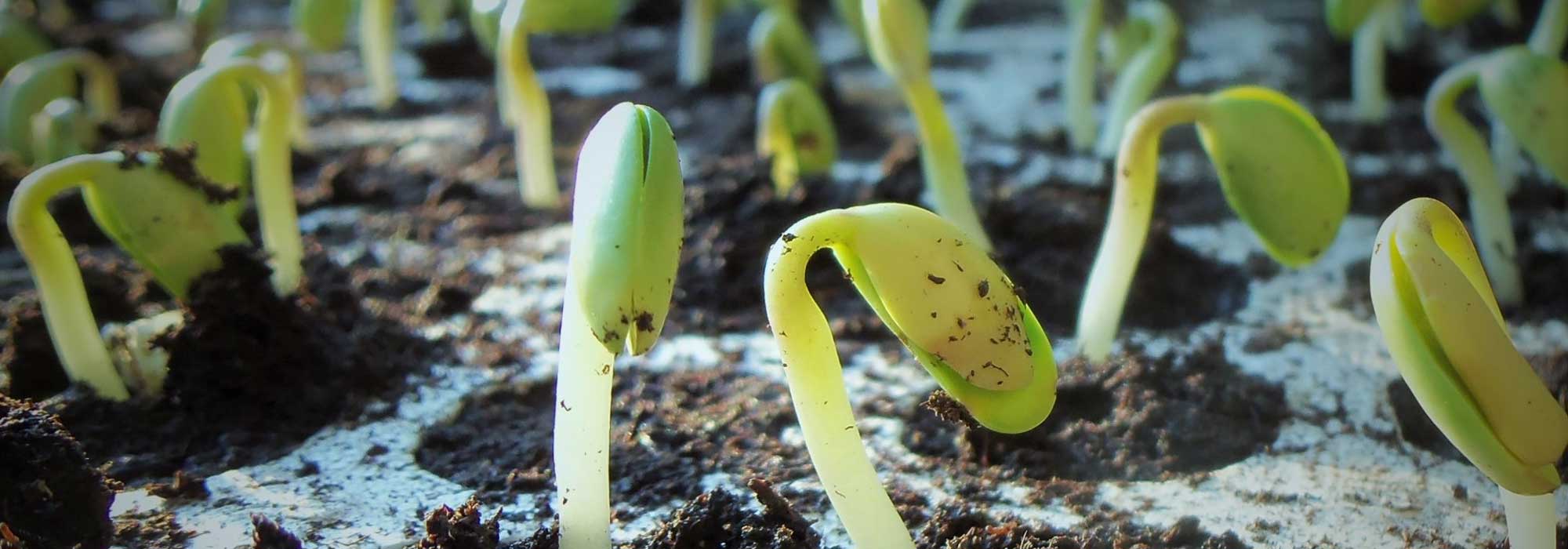
-
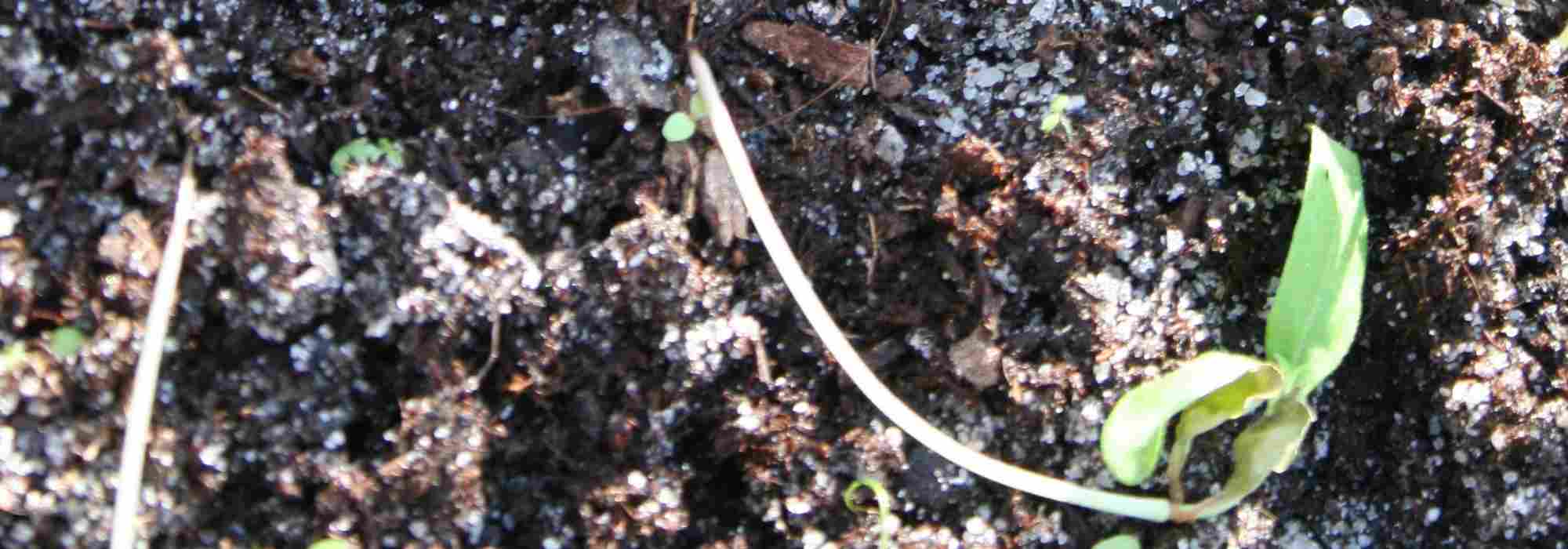
This item has not been reviewed yet - be the first to leave a review about it.
Recently viewed products
Haven't found what you were looking for?
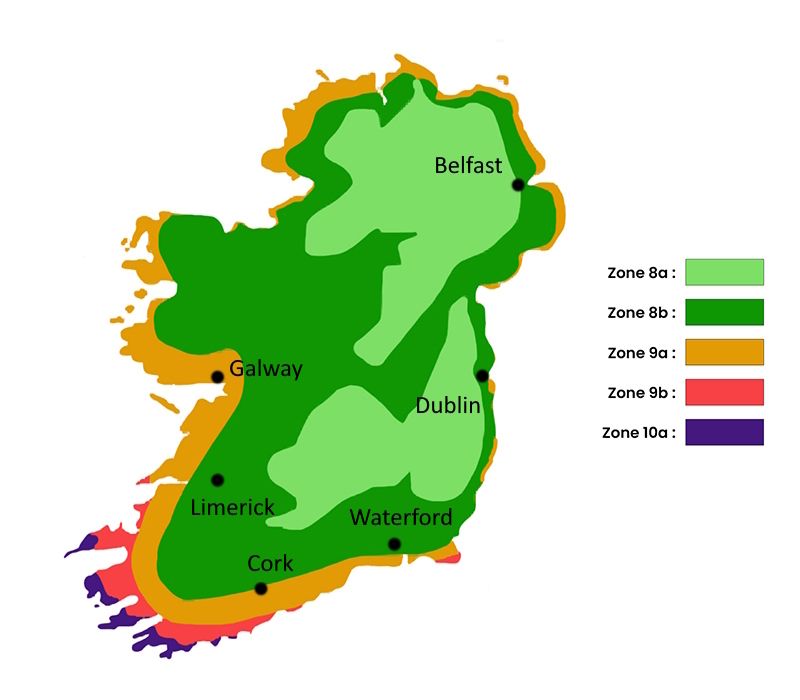
Hardiness is the lowest winter temperature a plant can endure without suffering serious damage or even dying. However, hardiness is affected by location (a sheltered area, such as a patio), protection (winter cover) and soil type (hardiness is improved by well-drained soil).
In temperate climates, pruning of spring-flowering shrubs (forsythia, spireas, etc.) should be done just after flowering.
Pruning of summer-flowering shrubs (Indian Lilac, Perovskia, etc.) can be done in winter or spring.
In cold regions as well as with frost-sensitive plants, avoid pruning too early when severe frosts may still occur.
The harvesting period indicated on our website applies to countries and regions in USDA zone 8 (France, England, Ireland, the Netherlands).
In colder areas (Scandinavia, Poland, Austria...) fruit and vegetable harvests are likely to be delayed by 3-4 weeks.
In warmer areas (Italy, Spain, Greece, etc.), harvesting will probably take place earlier, depending on weather conditions.
The sowing periods indicated on our website apply to countries and regions within USDA Zone 8 (France, UK, Ireland, Netherlands).
In colder areas (Scandinavia, Poland, Austria...), delay any outdoor sowing by 3-4 weeks, or sow under glass.
In warmer climes (Italy, Spain, Greece, etc.), bring outdoor sowing forward by a few weeks.
The planting period indicated on our website applies to regions in USDA Zone 9a (East Coast and Midlands: Dublin, Wexford, Waterford, Kilkenny, Portlaoise). It will vary depending on where you live:
- On the west coast and in the north-west (Galway, Limerick, Sligo, Donegal, Westport), delay planting by 1 to 2 weeks in spring and bring it forward by 1 to 2 weeks in autumn compared to the dates given, preferably choosing periods without strong winds.
- In the inland hills and plateaus (Wicklow Mountains, Macgillycuddy’s Reeks, Connemara, Killarney), it is best to plant in spring (April–May) or autumn (September–October), avoiding periods of waterlogged soil in winter and strong winds, which pose the main risk to newly planted trees in these areas.
The flowering period indicated on our website applies to regions in USDA Zone 9a, such as the East Coast and Midlands, including Dublin, Wexford, Waterford, Kilkenny and Portlaoise.
This will vary depending on where you live:
- On the west coast and in the northwest (Galway, Limerick, Sligo, Donegal and Westport), it will be delayed by one to two weeks compared to the given dates, due to stronger Atlantic winds and less spring sunshine.
- In the inland hills and plateaus (the Wicklow Mountains, the Macgillycuddy's Reeks, Connemara and Killarney), flowering will be delayed by two to three weeks. Flowering mainly occurs between May and July, with the limiting factors being less frost and more of the excessive humidity, strong winds and lack of sunshine that are characteristic of these areas.
Shipping country and language
Your country of residence may be:
Your country of residence is:
For a better user experience on our website, you can select:
Your shipping country:
-
 Austria
-
 Belgium
-
 Bosnia & Herzegovina
-
 Bulgaria
-
 Croatia
-
 Cyprus
-
 Czechia
-
 Denmark
-
 Estonia
-
 Finland
-
 France
-
 Germany
-
 Greece
-
 Hungary
-
 Iceland
-
 Ireland
-
 Italy
Italy
-
 Latvia
-
 Liechtenstein
-
 Lithuania
-
 Luxembourg
-
 Malta
Malta
-
 Netherlands
-
 Poland
-
 Portugal
-
 Romania
-
 Serbia
-
 Slovakia
-
 Slovenia
-
 Spain
Spain
-
 Sweden
-
 Switzerland
Language:
-
French
-
 English
-
Spanish
-
Italian
-
German
-
Portuguese
-
Dutch
-
Finnish
My Account
Hello
My wish lists
My cart
Log in / Register
Existing customer?
This form is protected by reCAPTCHA - the Google Privacy Policy and Terms of Service apply.
New customer?
Create an account to track your orders, access our customer service and, if you wish, make the most of our upcoming offers.