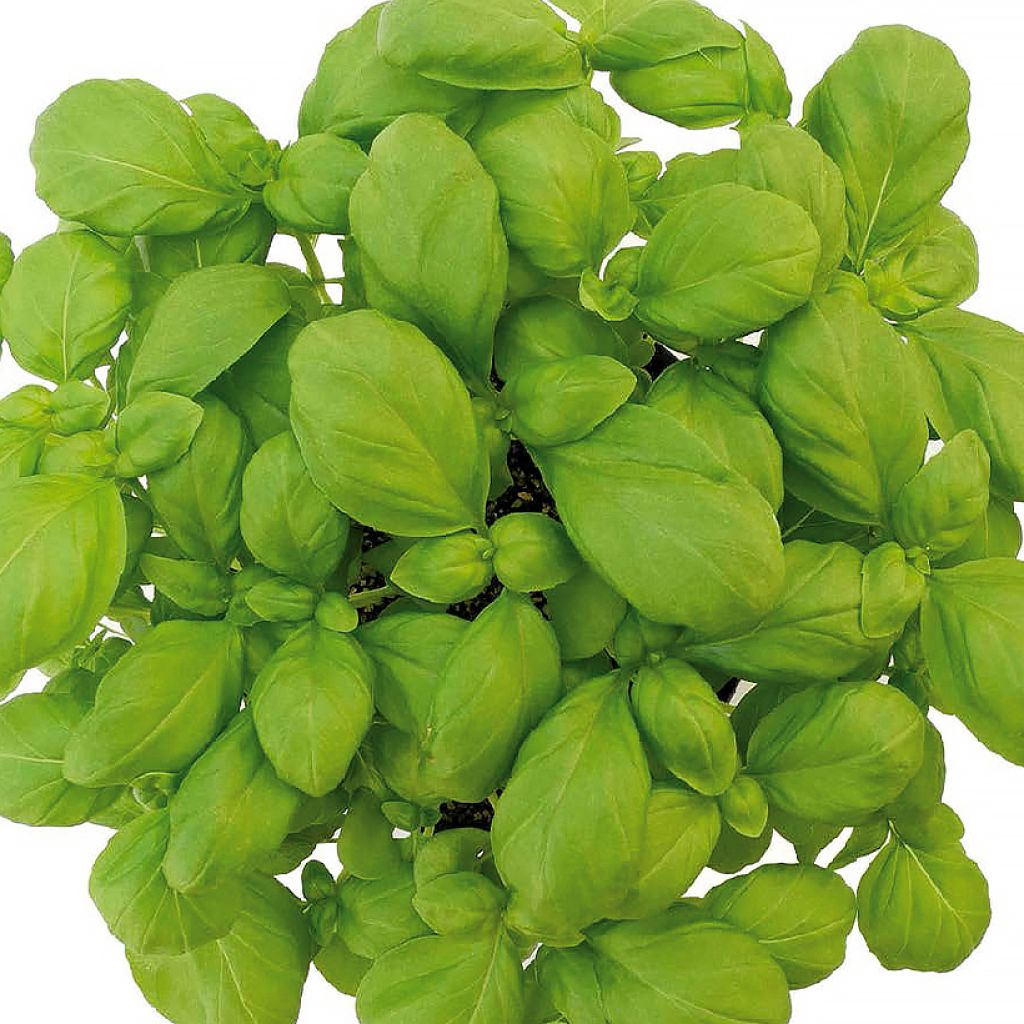
Ocimum basilicum Loki
Ocimum basilicum Loki
Ocimum basilicum Loki
Sweet Basil, Common Basil, Garden Basil, Saint Joseph's Wort
Back-to-school special offer!
Get €10 off for every €50 you spend! And get up to €40 off on a single order.
How does it work?
1. Shop your favourites
Add your favourite plants to your basket. For every €50 you spend (excluding delivery charges, store credit and the plastic-free option), you’ll receive a €10 voucher.
€50 spent = €10 voucher
€100 spent = €20 voucher
€150 spent = €30 voucher
€200 spent = €40 voucher
2. Place your order
Once your basket reaches one of the spending thresholds, place your order. You can even choose your delivery date!
3. Receive your voucher
As soon as your order has been shipped, you’ll receive an email containing your personal voucher code and its value.
4. Use it on your next order
Your voucher is valid for 90 days from the date you receive it. It can be used once only, on a new order worth at least the value of the voucher, excluding delivery charges.
Please note: Vouchers can be combined with other offers, but cannot be split or refunded.
Home or relay delivery (depending on size and destination)
Important: You may be charged customs duties by your country’s customs authorities upon delivery.
Schedule delivery date
and select date in basket
This plant carries a 6 months recovery warranty
More information
We guarantee the quality of our plants for a full growing cycle, and will replace at our expense any plant that fails to recover under normal climatic and planting conditions.
Description
The Ocimum basilicum 'Loki' is a variety of Genovese basil that stands out for its strong resistance to powdery mildew and its dense and compact growth, reaching a height of 20 to 25 cm (8 to 10in). This vigorous variety comes from Genovese basil, traditionally cultivated in Italy for the famous "pesto alla genovese". It produces beautiful tender, wide, and wavy leaves with a lovely bright green colour. The fresh leaves are highly aromatic and flavourful. They pleasantly season salads, raw vegetables, omelettes, and add flavor to fish and pasta dishes. When harvested in bunches, this basil keeps well dried. It is perfect for growing in pots or containers on a balcony or window ledge, with regular watering, but without excess, avoiding wetting the foliage. In the vegetable garden, it prefers an airy location, in the sun, with rich and well-drained soil. Sow from March to May for a harvest that will span from June to October.
The use of basil in the Mediterranean region dates back to ancient times. In Roman culture, this plant was a symbol of lovers, while in Greek culture, it symbolized hatred and misfortune! Basil is a culinary herb used to flavour and enhance dishes. Rich in essential oils, basil has soothing, anti-inflammatory, and stimulating properties.
The 'Loki' Basil offers very high resistance to basil powdery mildew, a greyish-white powdery coating that covers the leaves, new shoots, and flower buds. In case of severe infestation, young leaves, tender stems, and even affected buds become deformed. This variety is therefore well-suited for organic cultivation.
Basil flowers contain essential oils based on eucalyptol and eugenol. Its use helps fight anxiety and infections; it is an antispasmodic and antibacterial with calming and relaxing properties.
In the garden, Basil thrives in good humus-bearing and well-drained soil. It particularly dislikes cold and excessive moisture. It should be planted in non-burning sun or partial shade. Basil is an easy and practical plant to grow in pots or containers. To maintain sufficiently rich soil, provide an annual supply of well-decomposed compost (3 kg/m²) in late autumn or early spring.
Harvest: between 6 to 10 weeks after sowing. From early summer to autumn, harvest the leaves as needed by simply cutting them by hand or with scissors. The optimal time to harvest your potent basil is when its leaves release a pleasant and appealing fragrance.
Usage: Basil 'Loki' is appreciated for its mild, herbaceous, and aniseed flavor, ideal for garnishing and flavouring fresh and cooked dishes. It pairs well with many ingredients such as tomatoes, cheeses, fruits, and meats. The leaves enhance the flavours of Italian, Thai, and French cuisine. It is well-suited for making pesto (or pesto alla genovese), a traditional condiment in Italian cuisine. It can be stored in the refrigerator in water or between paper towels.
Storage: Basil can be stored for a few days in a cool place in a glass filled with water. It can also be dried in the shade and stored in an airtight jar, although it may lose some of its fragrance.
Gardener's tip: If you use your 'Loki' basil for culinary purposes, don't hesitate to regularly pinch the plant and water it to stimulate the production of new leaves. If, on the other hand, you want intense and long-lasting flowering throughout the summer, remove faded inflorescences to initiate the formation of new flowers.
Tip: In a vegetable garden, a beneficial association consists of growing basil between each tomato plant. Basil roots secrete nematocidal substances that provide protection to tomatoes against nematodes. This association is also extremely practical as it allows for harvesting tomatoes and basil in one place, creating an ideal combination for preparing a deliciously fragrant and flavourful summer salad!
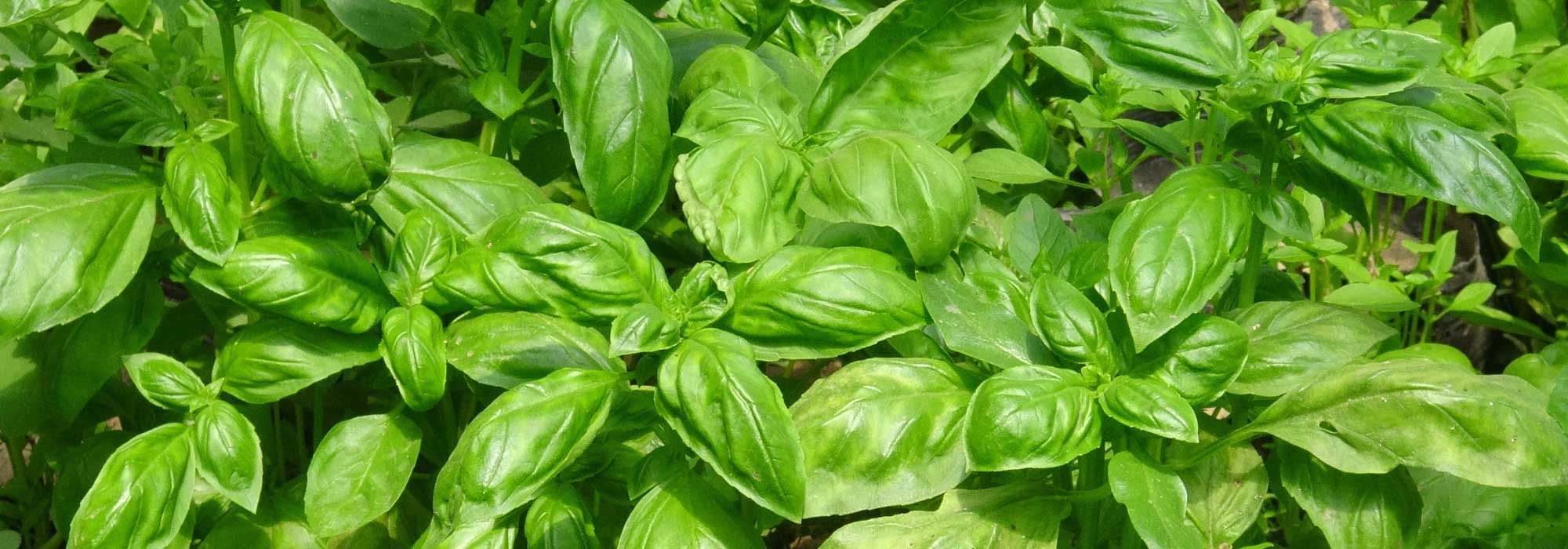
Harvest
Plant habit
Foliage
Botanical data
Ocimum
basilicum
Loki
Lamiaceae
Sweet Basil, Common Basil, Garden Basil, Saint Joseph's Wort
Cultivar or hybrid
Annual
Planting and care
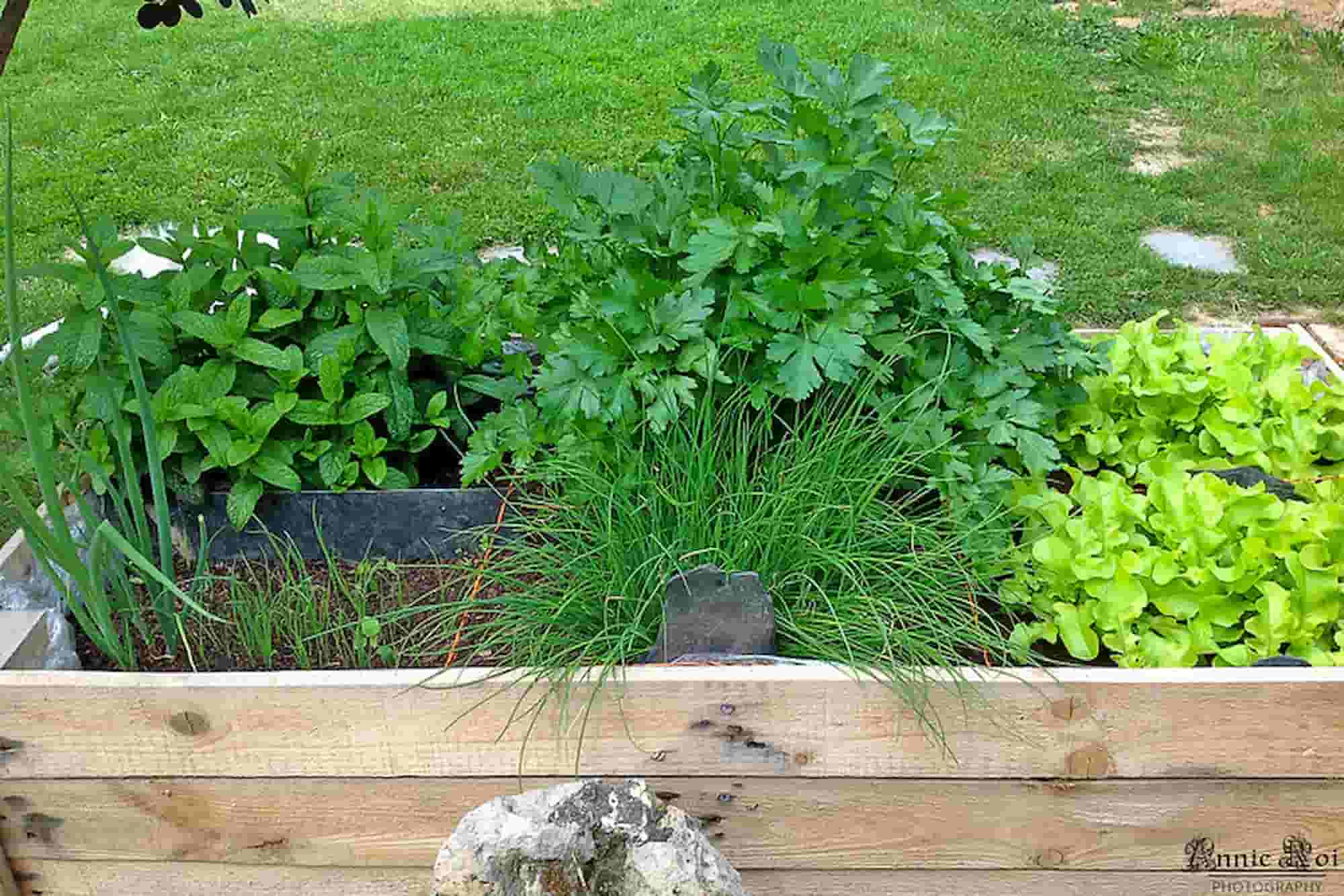
Sowing and maintenance: Basil likes a fresh and loose soil, rich in humus. This plant also needs a semi-shaded exposure to develop well. Basil is sensitive to direct sunlight, as it tends to burn the leaves. Basil is a plant that is installed in the vegetable garden, but it adapts very well in a pot in a veranda or on a balcony.
Sowing: Sowing is done in spring, from February under cover or in a frame and from April in open ground until the beginning of summer. Sow in a well-spaced furrow about ten centimeters wide and 2 cm (1in) deep. The rows should be 25 cm (10in) apart. Cover the seeds with the soil removed along the furrow and then water. Germination takes between 10 to 15 days. As soon as the first plants appear, thin them out slightly. The more staggered the sowing, the longer the harvesting period will be. Sowing can be done in trays to be replanted as soon as the plant reaches 10 cm (4 to 6 leaves) high. Basil can be kept in a pot to be available in the kitchen if it is bright.
When transplanting, space your plants 20 cm (8in) apart in all directions.
Maintenance: basil requires simple watering (or preventive mulching) when the soil dries out. It is the lack of water (water stress) that can cause basil to go to seed. Pinch off the inflorescences as soon as they appear to promote leaf production. Basil is susceptible to powdery mildew, grey rot, and aphids. To prevent rot and powdery mildew, reduce watering and thin out the planting. For aphids, you can treat the plants with a mixture of water and olive oil.
Seedlings
Care
Intended location
Planting & care advice
-
-
-
-
-
-
-
-

This item has not been reviewed yet - be the first to leave a review about it.
Recently viewed products
Haven't found what you were looking for?
Hardiness is the lowest winter temperature a plant can endure without suffering serious damage or even dying. However, hardiness is affected by location (a sheltered area, such as a patio), protection (winter cover) and soil type (hardiness is improved by well-drained soil).
In temperate climates, pruning of spring-flowering shrubs (forsythia, spireas, etc.) should be done just after flowering.
Pruning of summer-flowering shrubs (Indian Lilac, Perovskia, etc.) can be done in winter or spring.
In cold regions as well as with frost-sensitive plants, avoid pruning too early when severe frosts may still occur.
The harvesting period indicated on our website applies to countries and regions in USDA zone 8 (France, England, Ireland, the Netherlands).
In colder areas (Scandinavia, Poland, Austria...) fruit and vegetable harvests are likely to be delayed by 3-4 weeks.
In warmer areas (Italy, Spain, Greece, etc.), harvesting will probably take place earlier, depending on weather conditions.
The sowing periods indicated on our website apply to countries and regions within USDA Zone 8 (France, UK, Ireland, Netherlands).
In colder areas (Scandinavia, Poland, Austria...), delay any outdoor sowing by 3-4 weeks, or sow under glass.
In warmer climes (Italy, Spain, Greece, etc.), bring outdoor sowing forward by a few weeks.
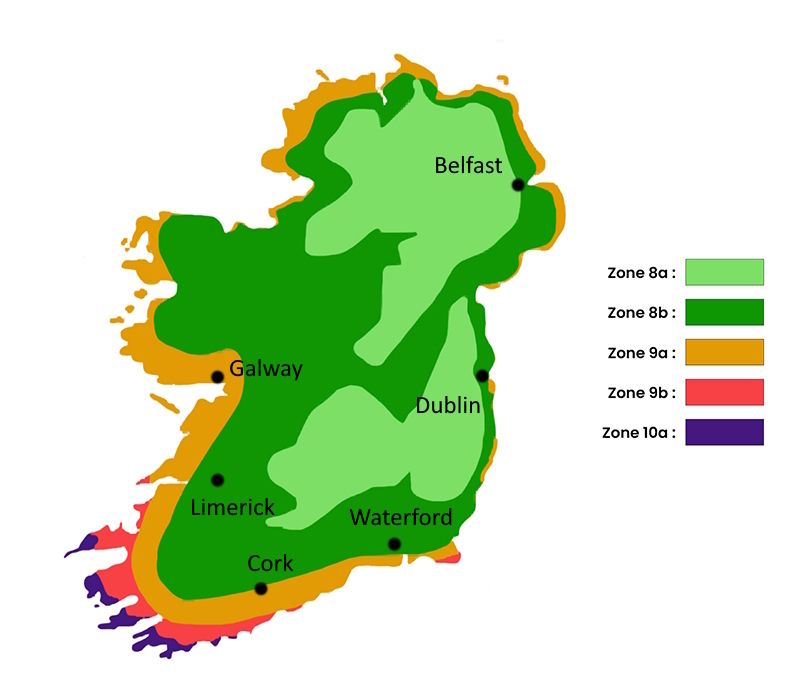
The planting period indicated on our website applies to regions in USDA Zone 9a (East Coast and Midlands: Dublin, Wexford, Waterford, Kilkenny, Portlaoise). It will vary depending on where you live:
- On the west coast and in the north-west (Galway, Limerick, Sligo, Donegal, Westport), delay planting by 1 to 2 weeks in spring and bring it forward by 1 to 2 weeks in autumn compared to the dates given, preferably choosing periods without strong winds.
- In the inland hills and plateaus (Wicklow Mountains, Macgillycuddy’s Reeks, Connemara, Killarney), it is best to plant in spring (April–May) or autumn (September–October), avoiding periods of waterlogged soil in winter and strong winds, which pose the main risk to newly planted trees in these areas.
The flowering period indicated on our website applies to regions in USDA Zone 9a, such as the East Coast and Midlands, including Dublin, Wexford, Waterford, Kilkenny and Portlaoise.
This will vary depending on where you live:
- On the west coast and in the northwest (Galway, Limerick, Sligo, Donegal and Westport), it will be delayed by one to two weeks compared to the given dates, due to stronger Atlantic winds and less spring sunshine.
- In the inland hills and plateaus (the Wicklow Mountains, the Macgillycuddy's Reeks, Connemara and Killarney), flowering will be delayed by two to three weeks. Flowering mainly occurs between May and July, with the limiting factors being less frost and more of the excessive humidity, strong winds and lack of sunshine that are characteristic of these areas.
Shipping country and language
Your country of residence may be:
Your country of residence is:
For a better user experience on our website, you can select:
Your shipping country:
-
 Austria
-
 Belgium
-
 Bosnia & Herzegovina
-
 Bulgaria
-
 Croatia
-
 Cyprus
-
 Czechia
-
 Denmark
-
 Estonia
-
 Finland
-
 France
-
 Germany
-
 Greece
-
 Hungary
-
 Iceland
-
 Ireland
-
 Italy
Italy
-
 Latvia
-
 Liechtenstein
-
 Lithuania
-
 Luxembourg
-
 Malta
Malta
-
 Netherlands
-
 Poland
-
 Portugal
-
 Romania
-
 Serbia
-
 Slovakia
-
 Slovenia
-
 Spain
Spain
-
 Sweden
-
 Switzerland
Language:
-
French
-
 English
-
Spanish
-
Italian
-
German
-
Portuguese
-
Dutch
-
Finnish
My Account
Hello
My wish lists
My cart
Log in / Register
Existing customer?
This form is protected by reCAPTCHA - the Google Privacy Policy and Terms of Service apply.
New customer?
Create an account to track your orders, access our customer service and, if you wish, make the most of our upcoming offers.