
































Artemisia ludoviciana Silver Queen - Armoise de Louisiane, Armoise argentée
Artemisia ludoviciana Silver Queen - Armoise de Louisiane, Armoise argentée
Artemisia ludoviciana Silver Queen - Armoise de Louisiane, Armoise argentée
Artemisia ludoviciana Silver Queen - Armoise de Louisiane, Armoise argentée
Artemisia ludoviciana Silver Queen - Armoise de Louisiane, Armoise argentée
Artemisia ludoviciana Silver Queen - Armoise de Louisiane, Armoise argentée
Artemisia ludoviciana Silver Queen - Armoise de Louisiane, Armoise argentée
Artemisia ludoviciana Silver Queen
Planted in early September, the young plant survived the winter. With the arrival of spring, I can see that it's growing well. Now all that's left is to wait patiently for the flowering, but the foliage is lovely.
Sylviane, 23/03/2025
Special offer!
Receive a €20 voucher for any order over €90 (excluding delivery costs, credit notes, and plastic-free options)!
1- Add your favorite plants to your cart.
2- Once you have reached €90, confirm your order (you can even choose the delivery date!).
3- As soon as your order is shipped, you will receive an email containing your voucher code, valid for 3 months (90 days).
Your voucher is unique and can only be used once, for any order with a minimum value of €20, excluding delivery costs.
Can be combined with other current offers, non-divisible and non-refundable.
Home or relay delivery (depending on size and destination)
Important: You may be charged customs duties by your country’s customs authorities upon delivery.
Schedule delivery date,
and select date in basket
This plant carries a 12 months recovery warranty
More information
We guarantee the quality of our plants for a full growing cycle, and will replace at our expense any plant that fails to recover under normal climatic and planting conditions.

Does this plant fit my garden?
Set up your Plantfit profile →
Description
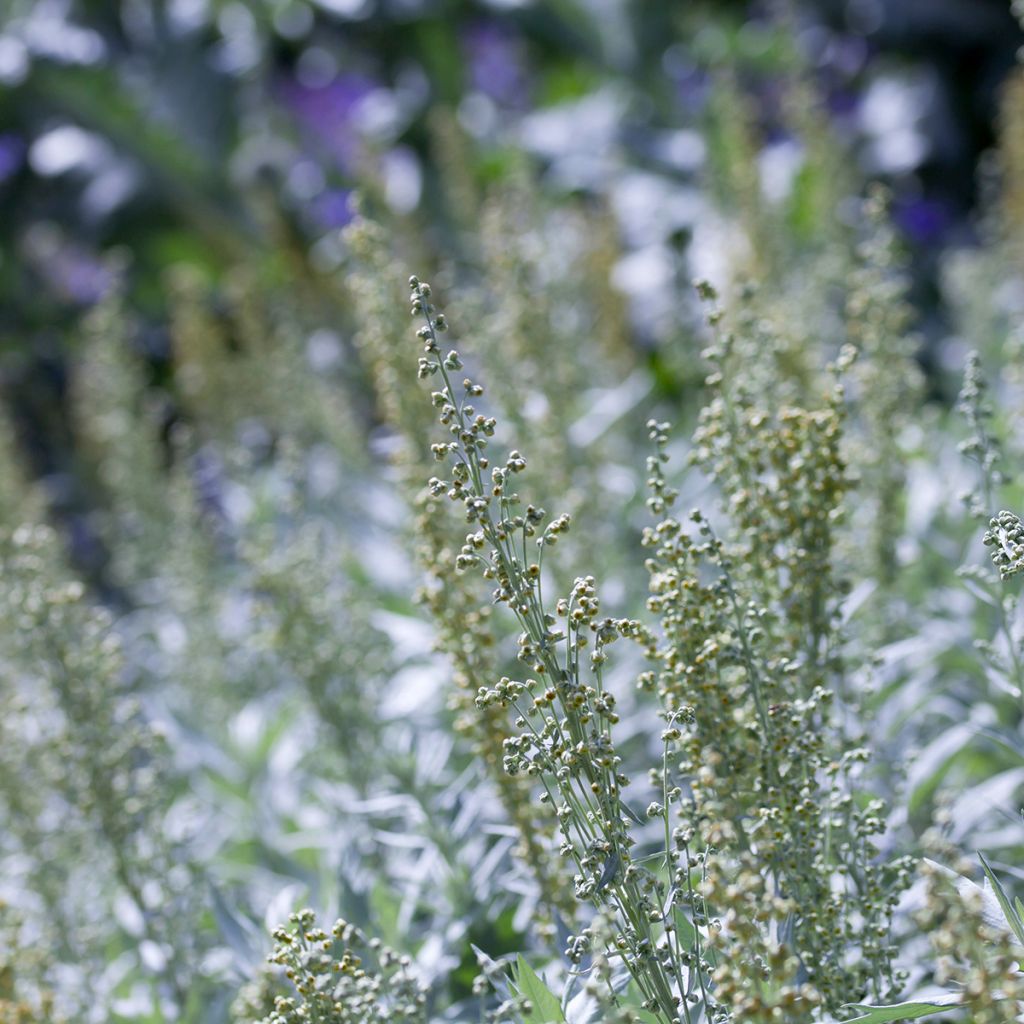
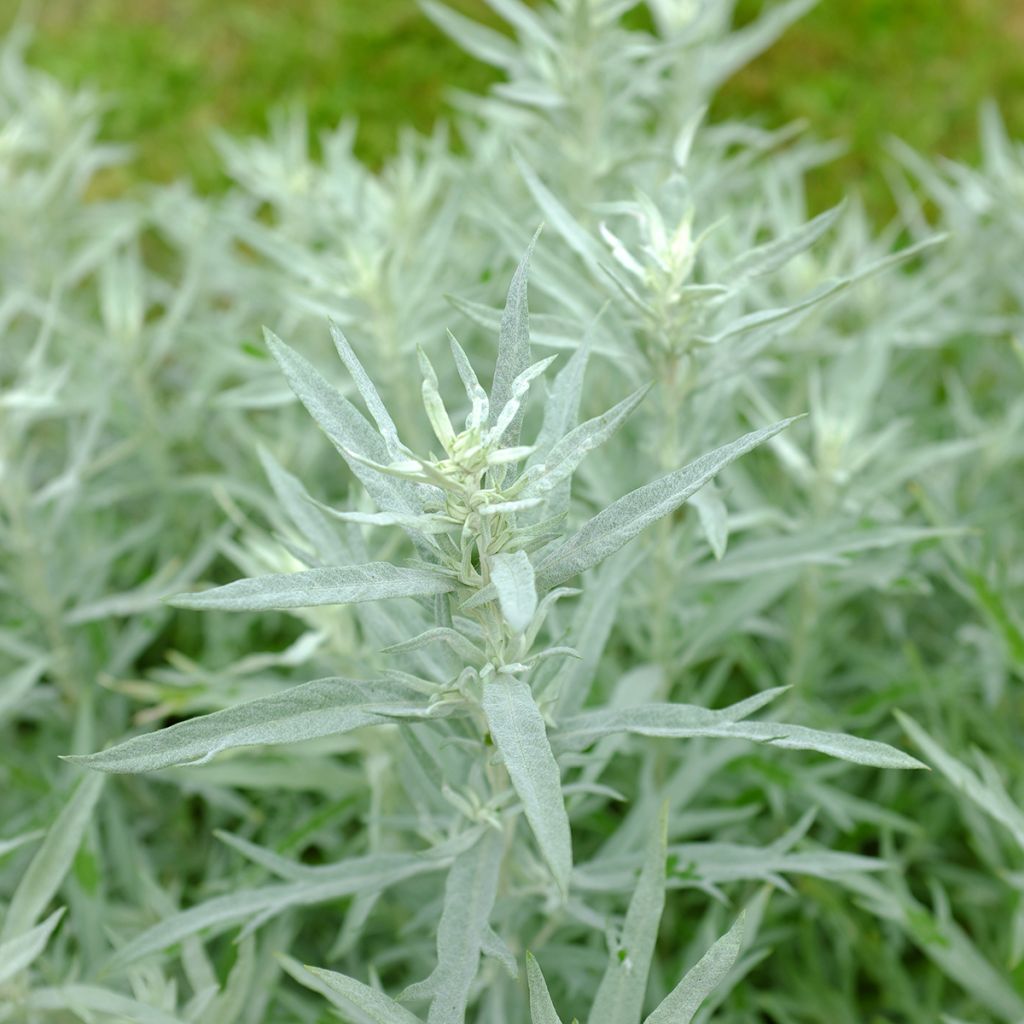
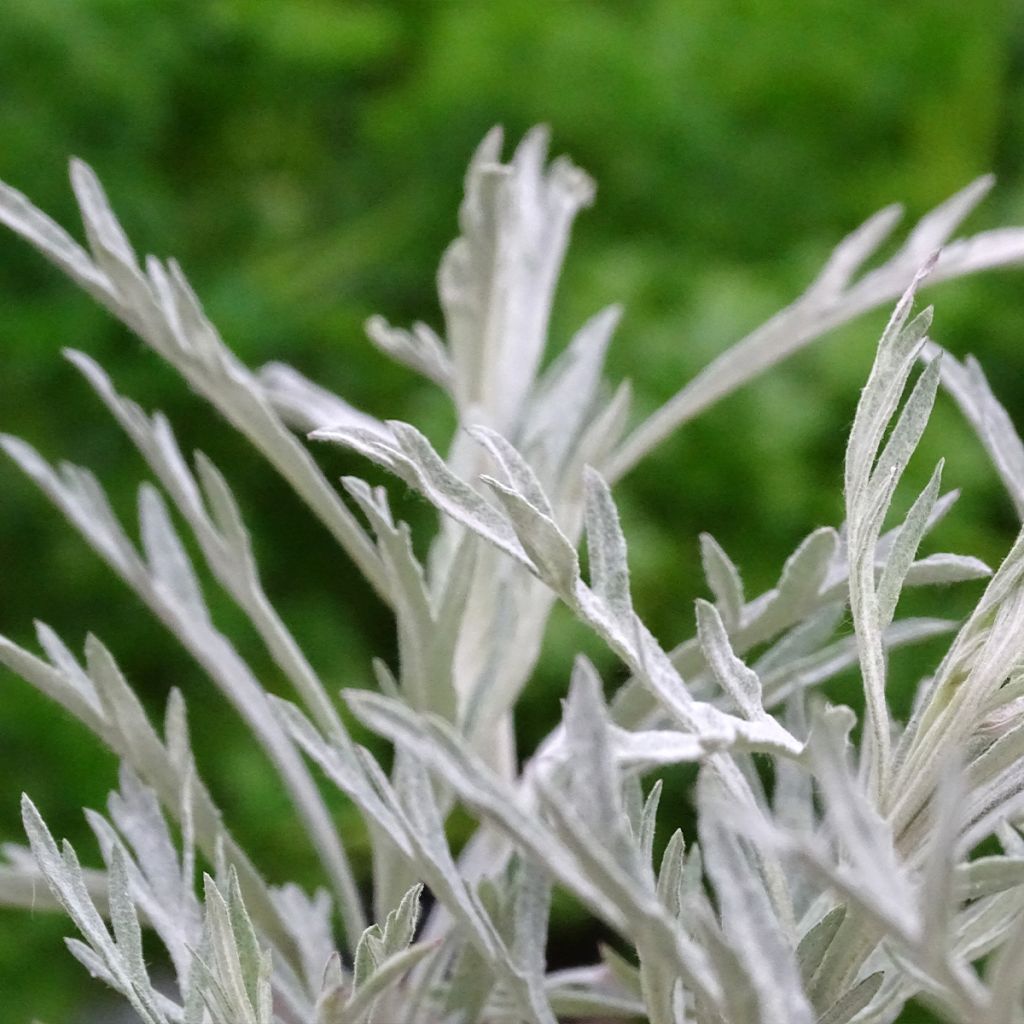
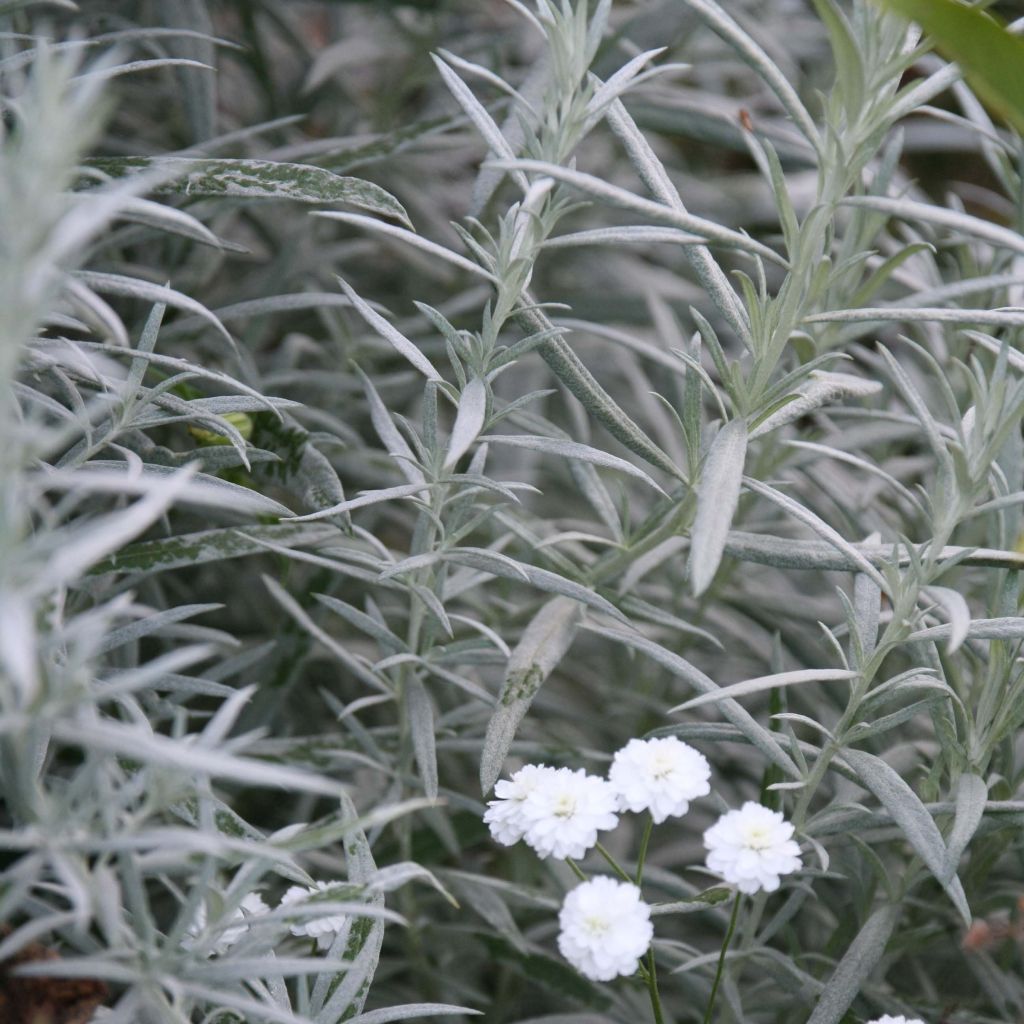
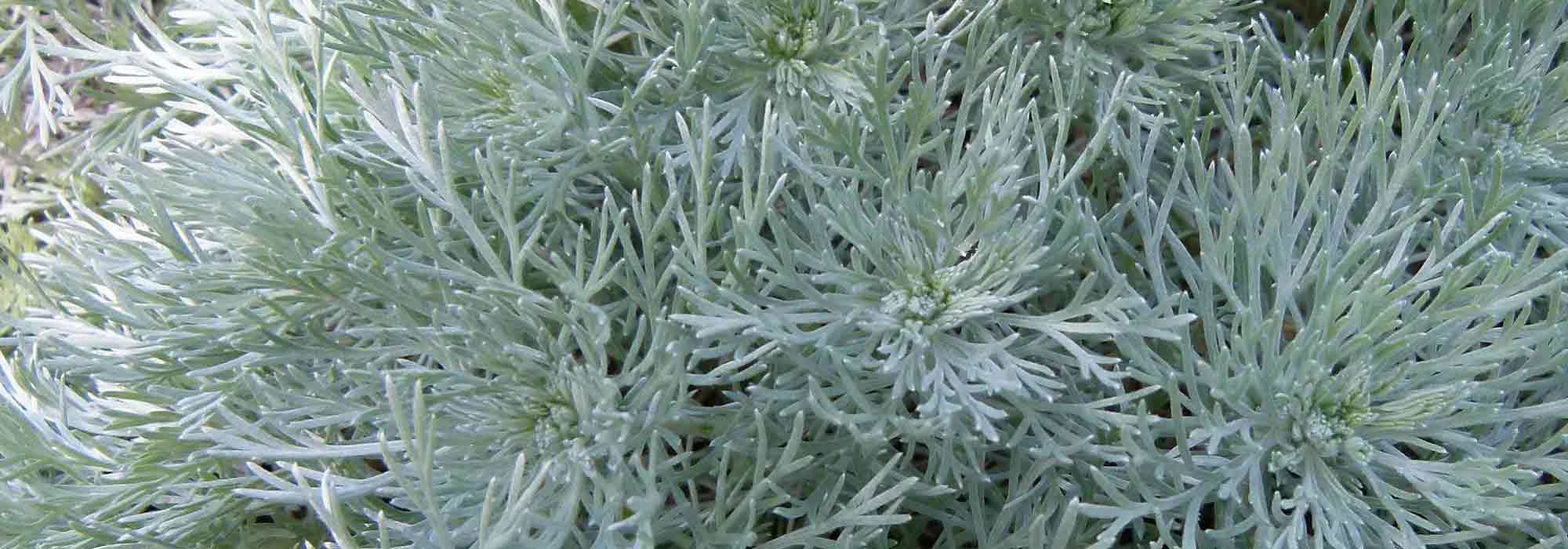
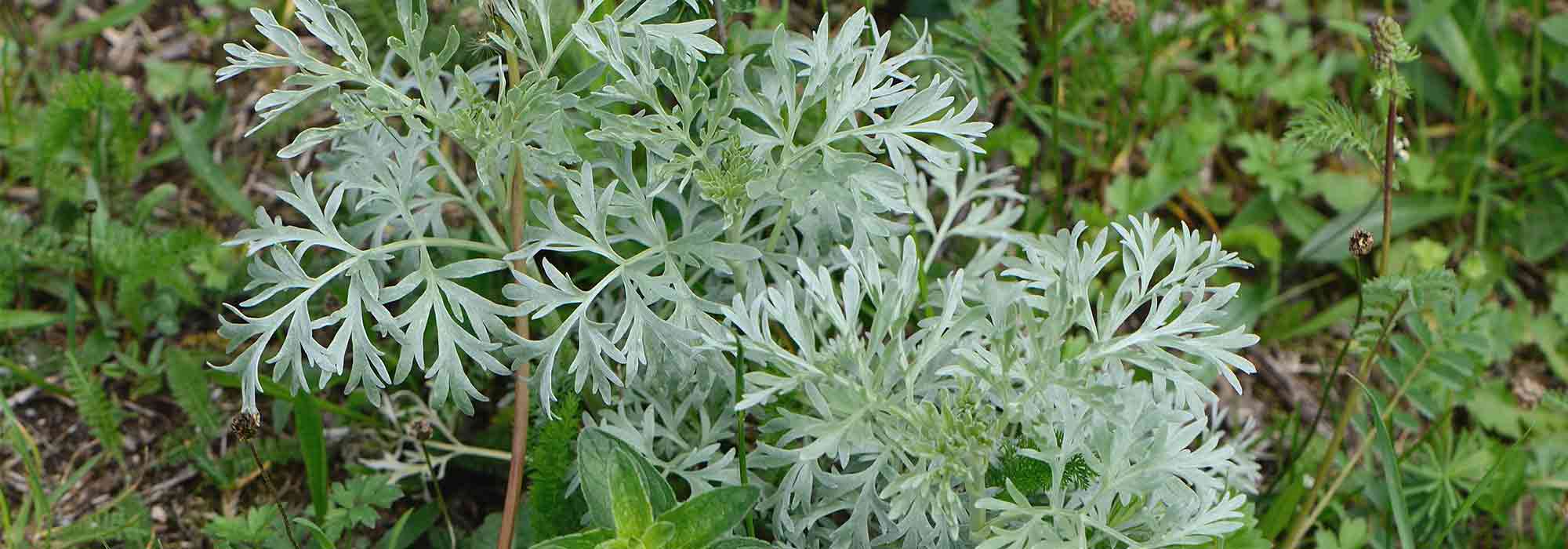
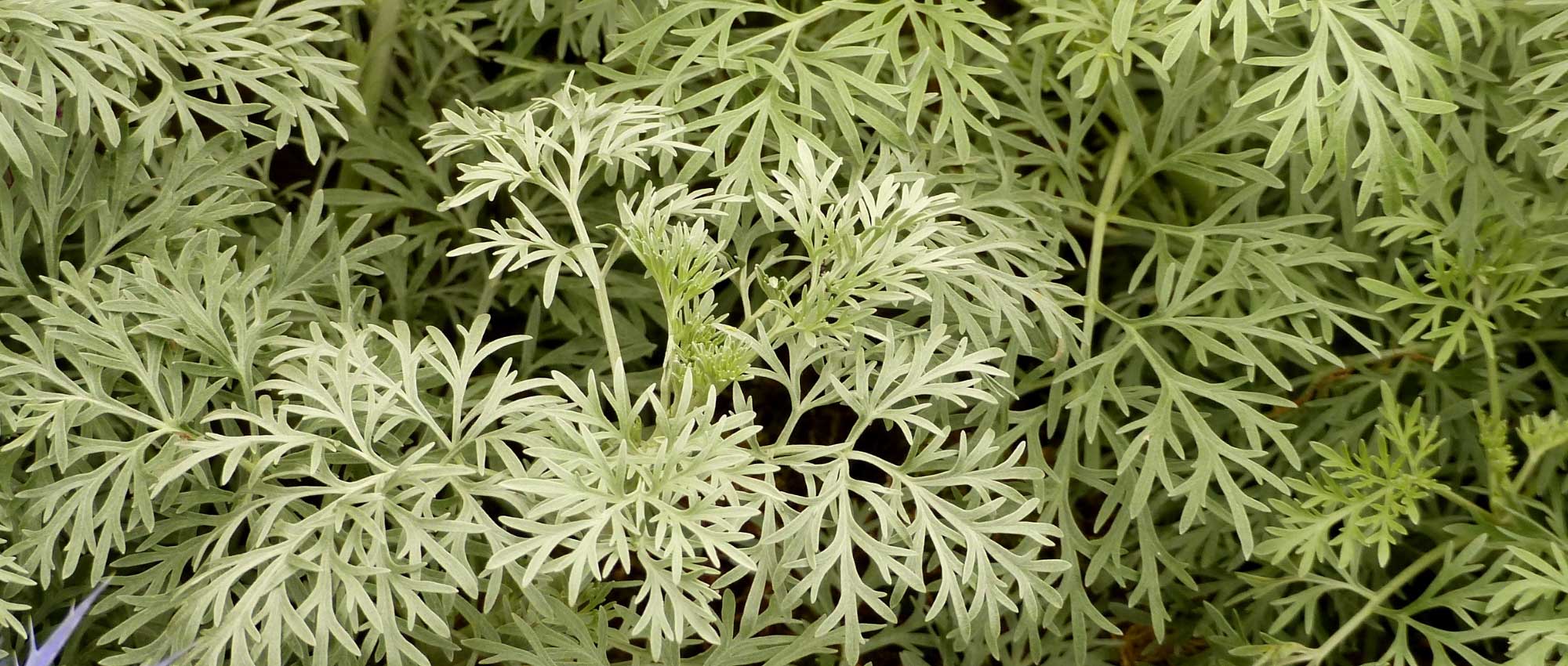
Artemisia ludoviciana ‘Silver Queen’, called Louisiana sagebrush or silver sage, is distinguished by its almost white foliage, brighter than that of the wild species. This perennial fairly quickly forms a flexible clump that brightens borders from spring onwards. Its summer flowering is discreet: it is planted above all for the colour and texture of its leaves. It is a good variety for dry gardens and sunny borders. Its foliage links the more colourful blooms in the garden.
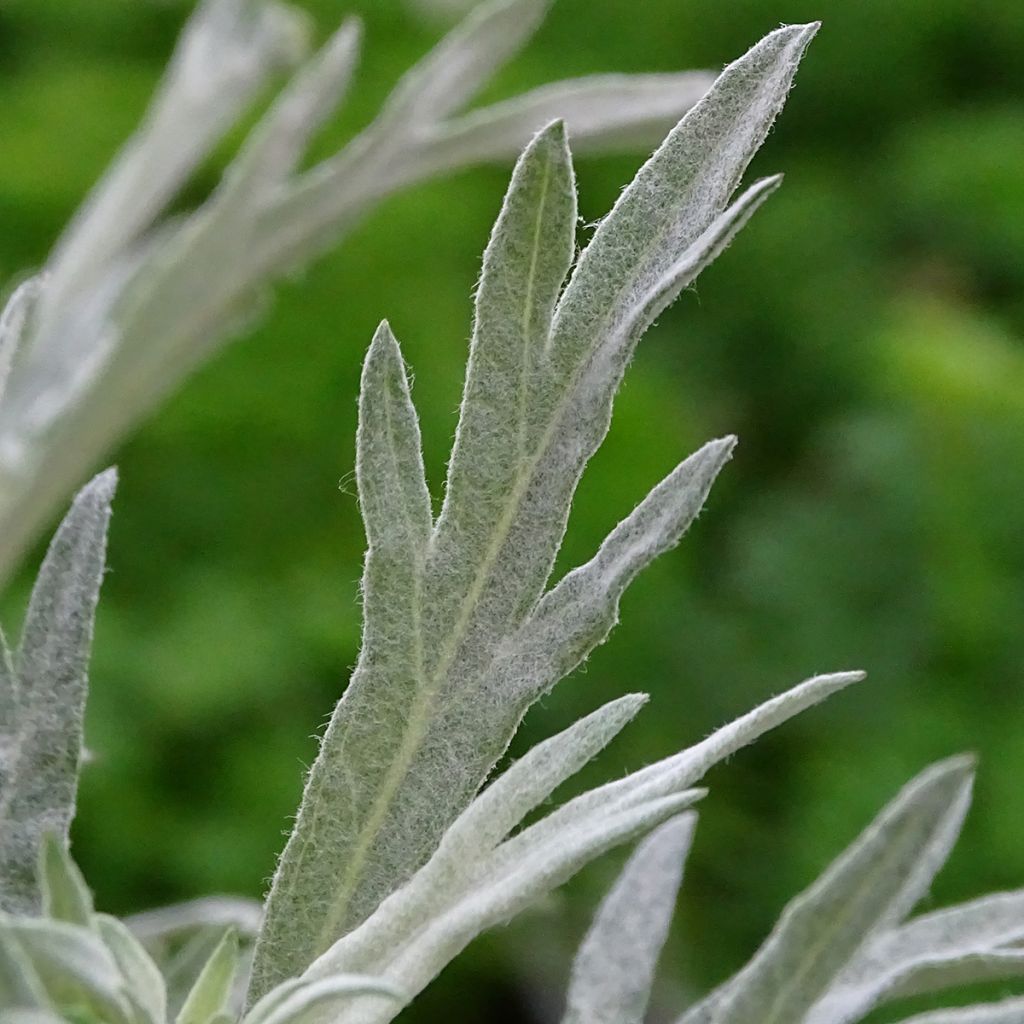
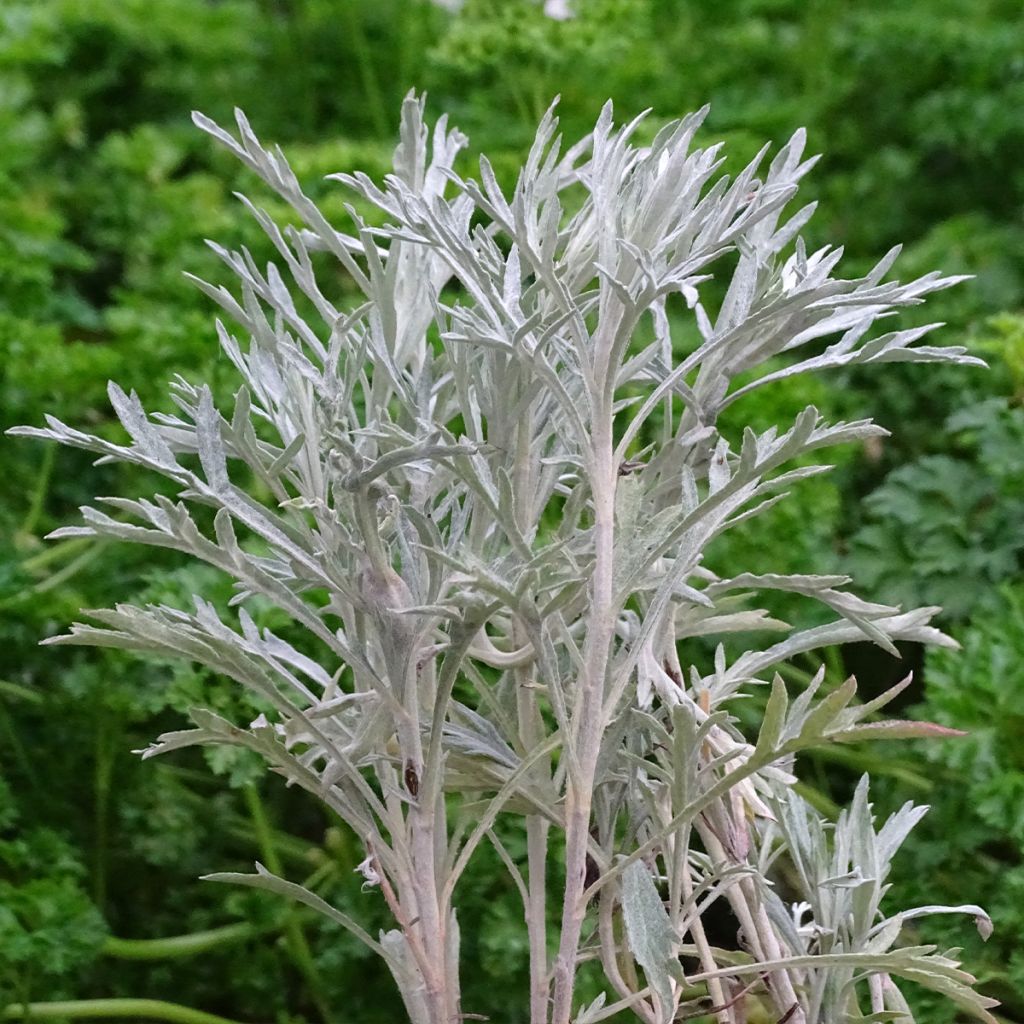
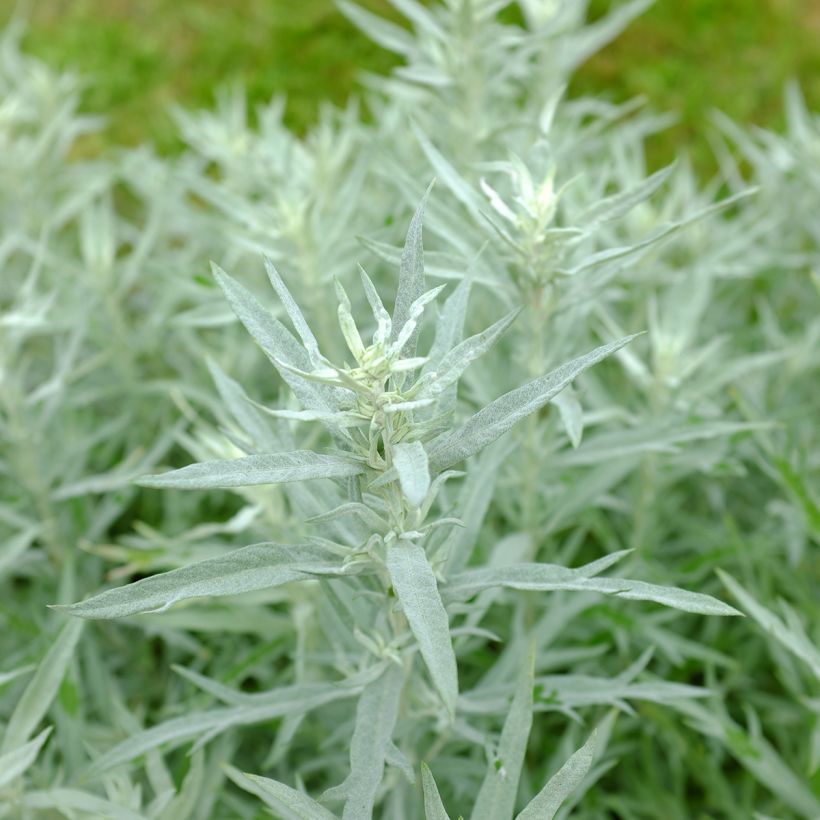
This sagebrush belongs to the Asteraceae family, like daisies and yarrows. Artemisia ludoviciana is a perennial plant native to a large part of America, from Canada to Mexico, Guatemala and El Salvador. It grows particularly in dry meadows, open ground, on banks, in stony soils and disturbed areas. Its vegetation resprouts each year from underground rootstocks. 'Silver Queen' forms an upright, fairly loose clump, 60 to 90 cm tall. It reaches 50 to 80 cm in width in a few years, but can spread further when its rootstocks encounter no obstacle. Its growth is fairly rapid. Young shoots appear in spring, producing straight stems covered with leaves. These are long, narrow and lanceolate, sometimes entire, sometimes coarsely dentate. Their surface is covered with fine hairs that give them a uniform grey-white colour and a soft feel. When crushed, they release an aromatic scent characteristic of sagebrushes. The foliage is deciduous to semi-evergreen depending on the severity of the winter: it disappears in cold regions but may partially persist in mild climates. Between June and August, the plant produces upright panicles of small yellowish or cream heads. These flowers, lacking large decorative petals, blend into the foliage and are of little ornamental interest. Early removal of them keeps the clump neater and encourages leaf development. This plant tolerates down to -18°C, poor soils and drought once established. Its rootstocks produce new shoots at a distance from the original clump, so it will be necessary to monitor their spread in small borders.
The species name ludoviciana refers to the former territory of Louisiana, which once covered a large part of central North America. Several indigenous peoples of North America have used different wild forms of this sagebrush as an aromatic plant and in traditional practices.
This sagebrush is planted on dry slopes, in scree gardens and naturalistic borders. Its silver foliage forms broad carpets and highlights small shrubs for dry soil. It is best to plant it away from their rootstocks or contain its rootstocks. It can be paired with Ceratostigma willmottianum 'Forest Blue', compact and floriferous, with the shrubby sage 'Royal Bumble', or with Teucrium fruticans 'Selection Erecta', well suited to poor soils. A shrubby cinquefoil such as 'Lemon Meringue' will brighten the whole with its long pale yellow summer flowering.
Artemisia ludoviciana Silver Queen - Armoise de Louisiane, Armoise argentée in pictures
Flowering
Foliage
Plant habit
Botanical data
Artemisia
ludoviciana
Silver Queen
Asteraceae
Artemisia purshiana ‘Silver Queen’, Artemisia ‘Silver Queen’
Cultivar or hybrid
Planting and care
Artemisia ludoviciana Silver Queen thrives in full sun in rather dry, neutral to lime-bearing soil. The soil should be light and not too rich, otherwise it will shorten the plant's lifespan. If the aspect is not sunny enough, the wormwood will lean towards the sun. Once well-rooted, it is perfectly adapted to drought. Beware of aphid attacks.
Planting period
Intended location
Care
Planting & care advice
-
-
-
-
-
-
-
-
-
, onOrder confirmed
Reply from on Promesse de fleurs
Recently viewed products
Haven't found what you were looking for?
Hardiness is the lowest winter temperature a plant can endure without suffering serious damage or even dying. However, hardiness is affected by location (a sheltered area, such as a patio), protection (winter cover) and soil type (hardiness is improved by well-drained soil).
In temperate climates, pruning of spring-flowering shrubs (forsythia, spireas, etc.) should be done just after flowering.
Pruning of summer-flowering shrubs (Indian Lilac, Perovskia, etc.) can be done in winter or spring.
In cold regions as well as with frost-sensitive plants, avoid pruning too early when severe frosts may still occur.
The harvesting period indicated on our website applies to countries and regions in USDA zone 8 (France, England, Ireland, the Netherlands).
In colder areas (Scandinavia, Poland, Austria...) fruit and vegetable harvests are likely to be delayed by 3-4 weeks.
In warmer areas (Italy, Spain, Greece, etc.), harvesting will probably take place earlier, depending on weather conditions.
The sowing periods indicated on our website apply to countries and regions within USDA Zone 8 (France, UK, Ireland, Netherlands).
In colder areas (Scandinavia, Poland, Austria...), delay any outdoor sowing by 3-4 weeks, or sow under glass.
In warmer climes (Italy, Spain, Greece, etc.), bring outdoor sowing forward by a few weeks.
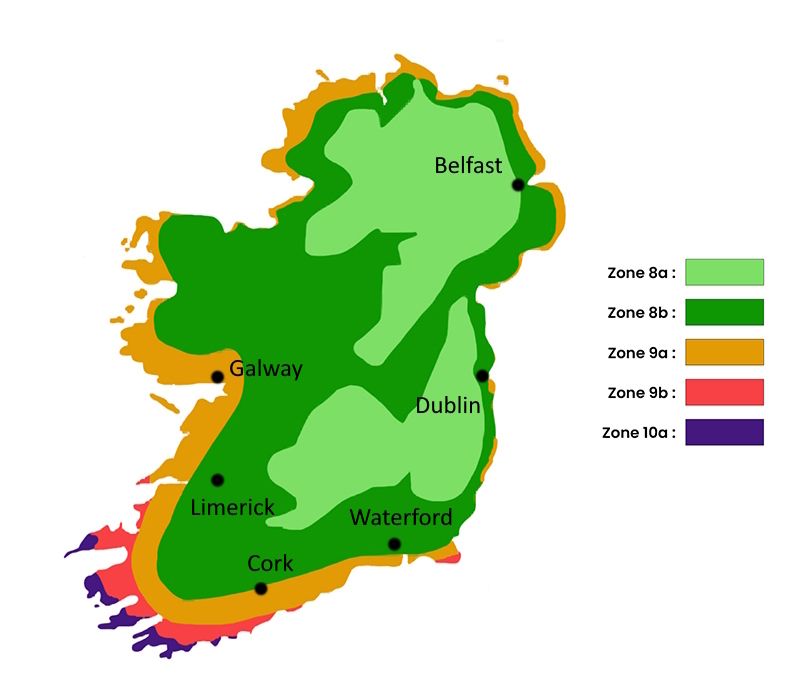
The planting period indicated on our website applies to regions in USDA Zone 9a (East Coast and Midlands: Dublin, Wexford, Waterford, Kilkenny, Portlaoise). It will vary depending on where you live:
- On the west coast and in the north-west (Galway, Limerick, Sligo, Donegal, Westport), delay planting by 1 to 2 weeks in spring and bring it forward by 1 to 2 weeks in autumn compared to the dates given, preferably choosing periods without strong winds.
- In the inland hills and plateaus (Wicklow Mountains, Macgillycuddy’s Reeks, Connemara, Killarney), it is best to plant in spring (April–May) or autumn (September–October), avoiding periods of waterlogged soil in winter and strong winds, which pose the main risk to newly planted trees in these areas.
The flowering period indicated on our website applies to regions in USDA Zone 9a, such as the East Coast and Midlands, including Dublin, Wexford, Waterford, Kilkenny and Portlaoise.
This will vary depending on where you live:
- On the west coast and in the northwest (Galway, Limerick, Sligo, Donegal and Westport), it will be delayed by one to two weeks compared to the given dates, due to stronger Atlantic winds and less spring sunshine.
- In the inland hills and plateaus (the Wicklow Mountains, the Macgillycuddy's Reeks, Connemara and Killarney), flowering will be delayed by two to three weeks. Flowering mainly occurs between May and July, with the limiting factors being less frost and more of the excessive humidity, strong winds and lack of sunshine that are characteristic of these areas.