































Cookies help us to offer you a personalised browsing experience and to measure our audience. You can configure them at any time and consult our privacy policy.
This website uses cookies to improve your experience when browsing the website. Of these, cookies classified as necessary are stored on your browser because they are essential for the basic functionality of the website to work. We also use third-party cookies to help us analyse and understand how you use this website. These cookies will only be stored on your browser with your consent. You also have the option of refusing these cookies. However, deactivating some of these cookies may have an effect on your browsing experience.
red
66
white
167
orange
16
salmon
1
yellow
109
green
33
purple
12
violet
30
pink
181
mauve
30
blue
57
grey
1
brown/bronze
3
black
10
two-tone
45
multicoloured
31
insignificant
5
Flowering time
Show more +Show less -
Height at maturity
Min.
Max.
Exposure
Show more +Show less -
Foliage persistence
Show more +Show less -
Fragrance
Show more +Show less -
Recommended planting time
Show more +Show less -
Supplied in
Show more +Show less -
Our selection
Show more +Show less -
Price
Min.
Max.
Bee-friendly
Show more +Show less -
Spread at maturity
Min.
Max.
Growth rate
Show more +Show less -
Garden style
Show more +Show less -
Habit
Show more +Show less -
Foliage colour
Green
677
Variegated
54
Silver
28
Golden
13
Brown
3
Purple
3
Red
3
Black
2
Bluish
1
Orange
1
Soil pH
Show more +Show less -
Soil moisture
Show more +Show less -
Soil type
Show more +Show less -
Hardiness - Cold resistance
Show more +Show less -
USDA Zone
Show more +Show less -
Ornamental interest
Show more +Show less -
Type of use
Show more +Show less -
Availability
More filters14
Fewer filters
Does this plant fit my garden?
Set up your Plantfit profile →
Filter
Sort by:
Display
785results
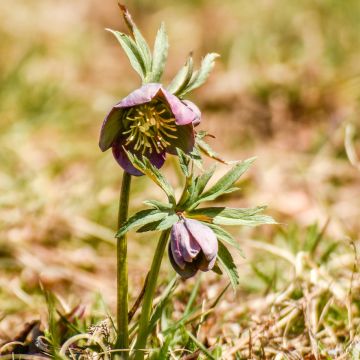
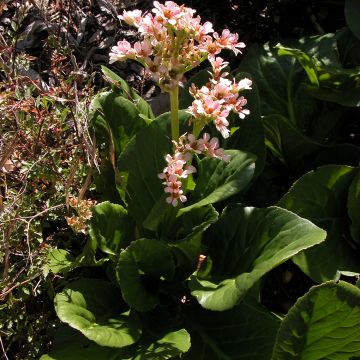
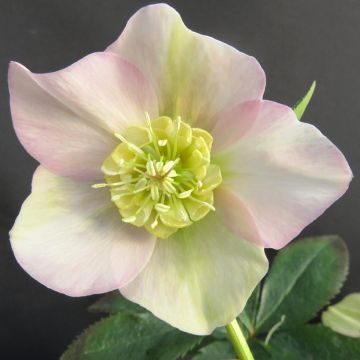
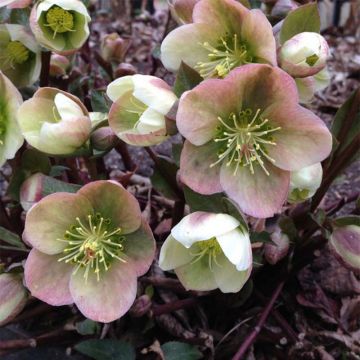
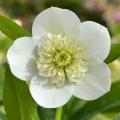
Early-flowering perennials enliven the garden from the end of winter and herald the return of fine days. Hellebores, (Oriental hellebore, Corsican hellebore) with their large colourful flowers, bloom from February. Violets, particularly the sweet violet, spread into fragrant carpets from March to June. Some botanical epimediums even flower as early as January-February. Tiarella 'Morning Star' with its spikes of small airy pinkish-white flowers, illuminates shady and cool areas of the garden. Don't forget the early bergenias, particularly Bergenia cordifolia and the 'Rosenkristall' variety, whose clusters of pink flowers can be admired from February to April.
Indifferent to the last frosts and easy to grow, these perennials form beautiful combinations with spring cyclamens and all spring bulbs. Discover our selection for a flowering garden from the first months of the year!
Early-flowering perennials enliven the garden from the end of winter and herald the return of fine days. Hellebores, (Oriental hellebore, Corsican hellebore) with their large colourful flowers, bloom from February. Violets, particularly the sweet violet, spread into fragrant carpets from March to June. Some botanical epimediums even flower as early as January-February. Tiarella 'Morning Star' with its spikes of small airy pinkish-white flowers, illuminates shady and cool areas of the garden. Don't forget the early bergenias, particularly Bergenia cordifolia and the 'Rosenkristall' variety, whose clusters of pink flowers can be admired from February to April.
Indifferent to the last frosts and easy to grow, these perennials form beautiful combinations with spring cyclamens and all spring bulbs. Discover our selection for a flowering garden from the first months of the year!
The flowering period indicated on our website applies to countries and regions located in USDA zone 8 (France, the United Kingdom, Ireland, the Netherlands, etc.)
It will vary according to where you live:
In zones 9 to 10 (Italy, Spain, Greece, etc.), flowering will occur about 2 to 4 weeks earlier.
In zones 6 to 7 (Germany, Poland, Slovenia, and lower mountainous regions), flowering will be delayed by 2 to 3 weeks.
In zone 5 (Central Europe, Scandinavia), blooming will be delayed by 3 to 5 weeks.
In temperate climates, pruning of spring-flowering shrubs (forsythia, spireas, etc.) should be done just after flowering.
Pruning of summer-flowering shrubs (Indian Lilac, Perovskia, etc.) can be done in winter or spring.
In cold regions as well as with frost-sensitive plants, avoid pruning too early when severe frosts may still occur.
The planting period indicated on our website applies to countries and regions located in USDA zone 8 (France, United Kingdom, Ireland, Netherlands).
It will vary according to where you live:
In Mediterranean zones (Marseille, Madrid, Milan, etc.), autumn and winter are the best planting periods.
In continental zones (Strasbourg, Munich, Vienna, etc.), delay planting by 2 to 3 weeks in spring and bring it forward by 2 to 4 weeks in autumn.
In mountainous regions (the Alps, Pyrenees, Carpathians, etc.), it is best to plant in late spring (May-June) or late summer (August-September).
The harvesting period indicated on our website applies to countries and regions in USDA zone 8 (France, England, Ireland, the Netherlands).
In colder areas (Scandinavia, Poland, Austria...) fruit and vegetable harvests are likely to be delayed by 3-4 weeks.
In warmer areas (Italy, Spain, Greece, etc.), harvesting will probably take place earlier, depending on weather conditions.
The sowing periods indicated on our website apply to countries and regions within USDA Zone 8 (France, UK, Ireland, Netherlands).
In colder areas (Scandinavia, Poland, Austria...), delay any outdoor sowing by 3-4 weeks, or sow under glass.
In warmer climes (Italy, Spain, Greece, etc.), bring outdoor sowing forward by a few weeks.