Provence hackberry: planting, cultivation, care
Contents
European nettle tree in a nutshell
- European nettle tree is a large tree with an elegant, spreading, rounded habit
- Appreciated for its dark green deciduous foliage and edible fruits
- Highly adaptable and tolerant of drought and pollution, even grows in poor, dry or calcareous soils
- Hardy, adapts to many regions
- Excellent shade or avenue tree
A word from our expert
The Celtis australis, better known as European nettle tree, is an iconic tree of the southern Mediterranean, notable for its rounded silhouette, attractive dark green deciduous foliage and fleshy edible fruits favoured by birds. Majestic, it is also valued for its longevity, rapid growth and adaptability to different soil types and climates. Its dense foliage provides pleasant shade in summer and turns attractive autumn colours. It is undemanding in terms of soil, provided the soil is deep enough.
Superb as a solitary specimen, drought- and pollution-tolerant, this tree is no longer confined to southern regions; it will adapt to any soil type, and its good hardiness means it can be acclimatised throughout France, provided it is given a sunny position sheltered from cold winds. Its substantial size, 25 m in height with a 15 m spread, reserves it for parks and large gardens. With its rounded crown, the nettle tree is often used as a solitary specimen or as an avenue tree.
Discover this vigorous, easy-to-grow tree which, once established in the garden, requires very little maintenance!
Description and botany
Botanical data
- Latin name Celtis australis
- Family Cannabaceae
- Common name Mediterranean hackberry, southern hackberry, austral hackberry, Falabreguier
- Flowering March to April
- Height 15 to 20 m
- Sun exposure Sun
- Soil type All, preferably fresh and well-drained
- Hardiness Down to -20 °C
Celtis, commonly known as the Mediterranean hackberry, is a majestic tree belonging to family Cannabaceae, like hemp (Cannabis sativa) or hop (Humulus lupulus). Genus comprises 60 to 70 species of deciduous trees found in warm temperate regions of northern hemisphere. Among them, most widespread are the European hackberry or Mediterranean hackberry (Celtis australis), Virginia hackberry (Celtis occidentalis), Chinese hackberry (Celtis sinensis) and Mississippi hackberry (Celtis laevigata). In southern France and Corsica, Celtis australis is commonly found, hence names “Micocoulier de Provence” or “Micocoulier du Midi”, native to southern Europe and western Asia and widespread across Mediterranean regions. It often develops in hedgerows and on slopes up to 900 metres altitude, where it benefits from favourable conditions.
This sun-loving species from southern regions needs good exposure to develop fully. In France, it is found mainly in plains and lower mountain areas, where climatic and geological conditions are optimal. It is notable for great longevity: Mediterranean hackberry can live up to 500 years.
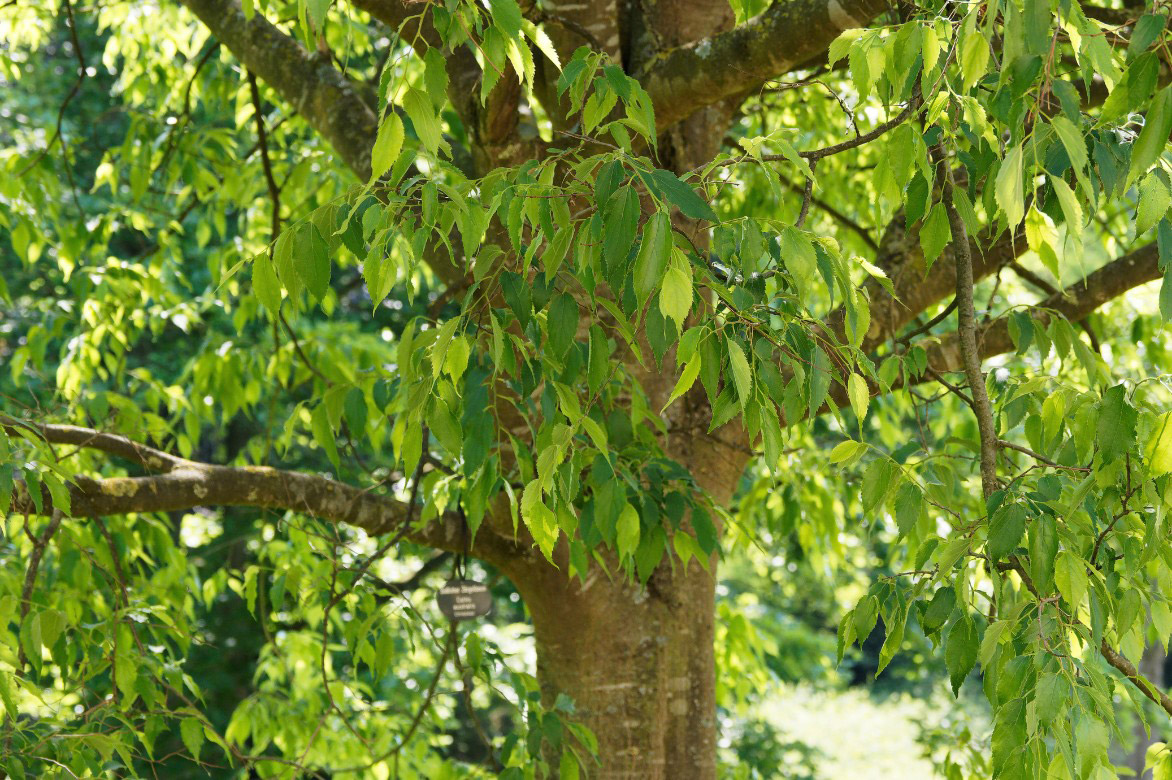
In southern regions, Mediterranean hackberry, encouraged by abundant sunlight and mild year-round temperatures, is a fast-growing tree. It can reach 25 metres in height with a 15-metre spread, making it an imposing tree. In cooler areas, where heat is lacking, growth is slower and more moderate, yet it still forms a robust, resilient tree capable of adapting.
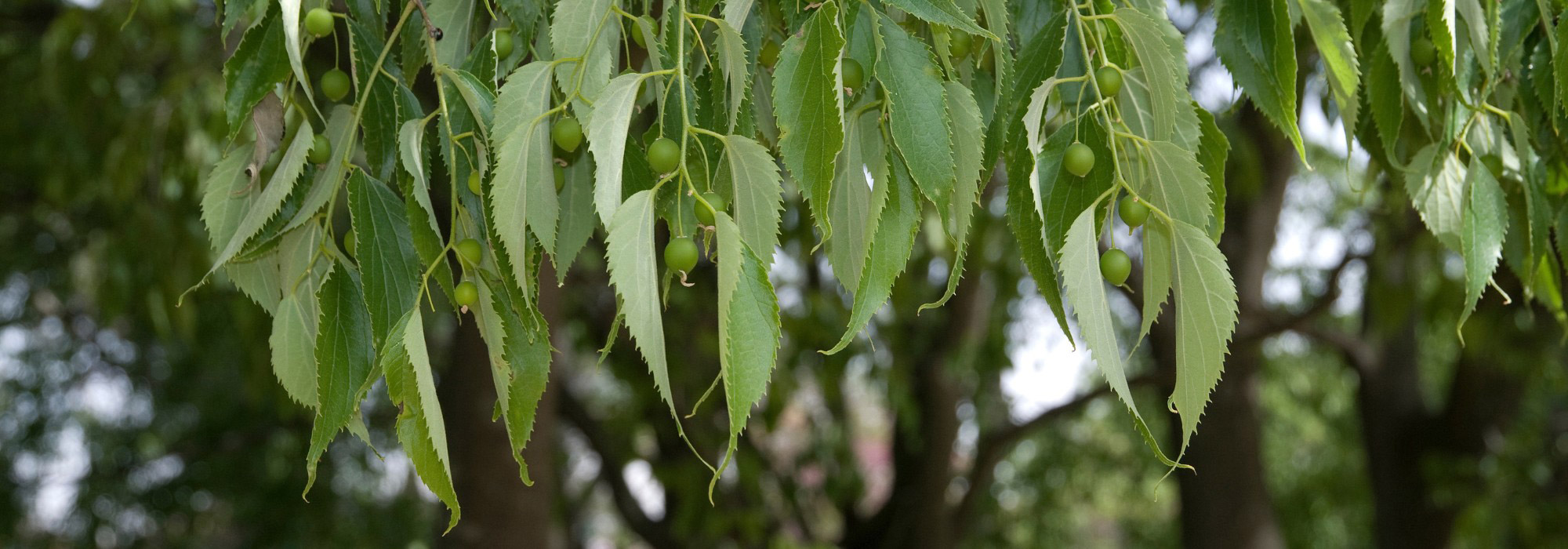
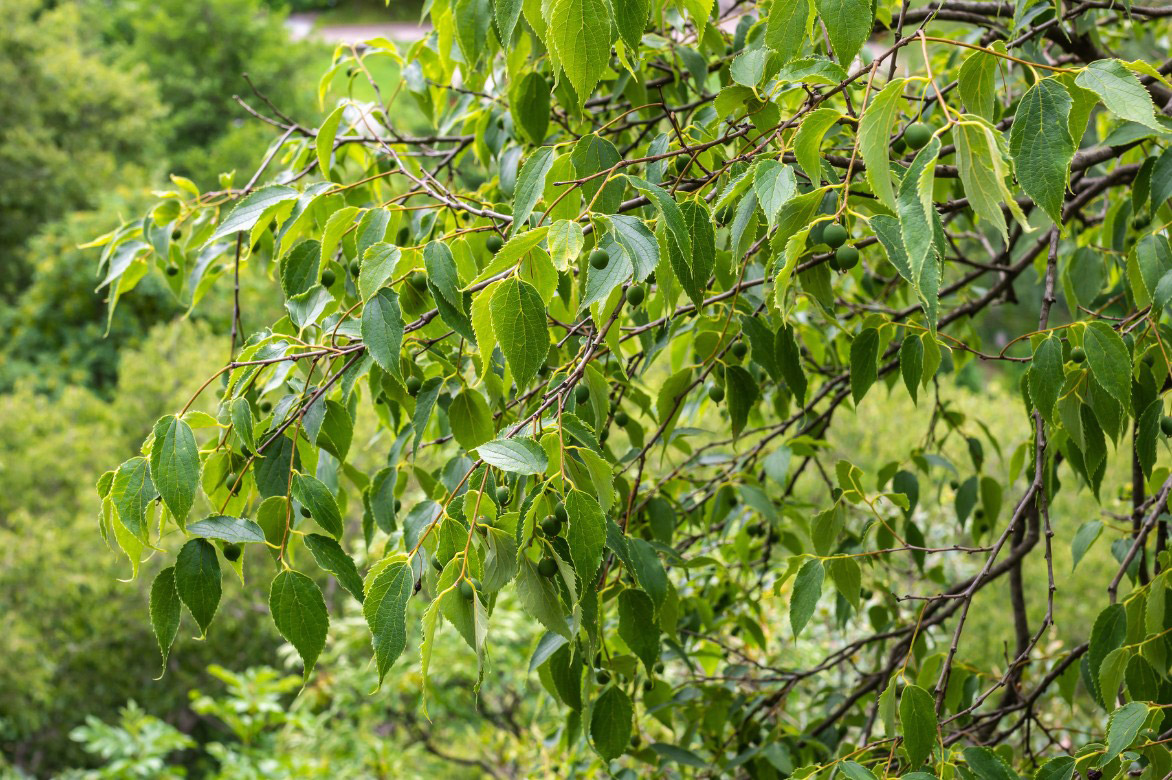
This tree, with a short bole and a dense, spreading to rounded habit, displays handsome dark-green deciduous foliage. Leaves are alternate, ovate and finely dentate, measuring 10–15 cm in length. They are rough to the touch, glossy dark green above and greyish beneath. They resemble nettle leaves, hence nickname “tree with nettle-like leaves”. In autumn, leaves turn pale yellow before falling. Bark is greyish and smooth, marked by fine longitudinal fissures.
Flowering is inconspicuous, with greenish flowers appearing at bud burst. These flowers give way in June to small, round fleshy fruits. These hackberries are green, becoming reddish-black at maturity in early autumn. Drupes of Mediterranean hackberry are edible and have a sweet flavour. They persist through winter on twigs and are much appreciated by birds, which feast on these sweet, juicy fruits.
Historically, fruits of Mediterranean hackberry, though small and scarcely fleshy, were valued for their sweet taste and used to flavour liqueurs or eaten raw. Its flexible, durable wood was used for tool handles, furniture and other wooden objects. Today, Mediterranean hackberry is mainly planted as a shade or avenue tree, especially in towns where it provides dense, cooling shade. Highly tolerant of pollution, it is well suited to urban heat islands where air quality may be poor.
Read also
10 shade treesMain species
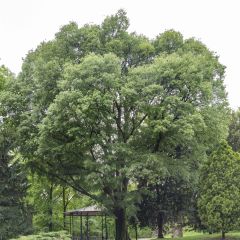
Celtis australis
- Flowering time April, May
- Height at maturity 20 m
Planting European nettle tree
Where to plant it?
The Provence nettle tree is easy to grow. Although native to Mediterranean regions, it has shown a great capacity to adapt to different climates and soils across France. Indeed, it has extended into northern regions, where it can withstand winter temperatures down to -20 °C. It is a very resilient tree, capable of adapting to a range of growing conditions. It needs a sunny position sheltered from cold winds. Although it can tolerate cold, it dislikes prolonged frosts. Remember it is a sun-loving tree that particularly needs warm summers. For this reason it is recommended to plant it in a sunny, sheltered spot, especially north of the Loire.
It prefers deep, cool and well-drained soil. It can tolerate poor or calcareous soils, making it easy to grow in many soil types. The Provence nettle tree requires sufficiently deep soil to allow its roots to develop properly and to withstand long periods of summer drought.
Magnificent as a specimen, it is ideal for planting in the centre of a park or large garden. It is also commonly used as an avenue tree to line long drives or wide avenues, providing generous shade and an attractive appearance.
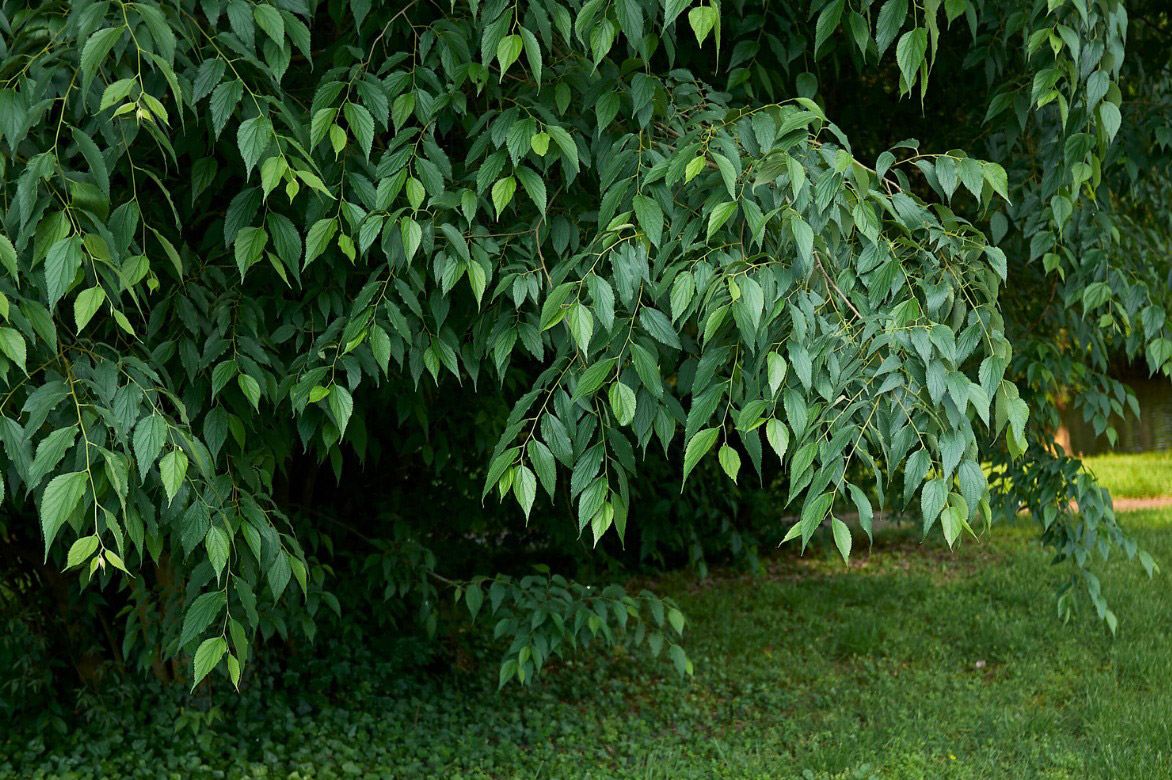
When to plant a Provence nettle tree?
Plant in spring, once risk of frost has passed, or in autumn, from September to November to ensure deep rooting before winter.
How to plant it?
- Choose a sunny, sheltered position with deep, cool and well-drained soil.
- Dig a planting hole two to three times larger than the tree’s rootball
- Place a drainage layer at the bottom of the hole (gravel, clay pebbles) if your soil is heavy and poorly drained.
- Set the rootball in the hole, ensuring the collar (base of the trunk) is level with the soil surface.
- Install a stake
- Backfill with excavated garden soil mixed with compost.
- Water thoroughly, then regularly to encourage establishment.
- Mulch soil around the trunk to retain moisture and reduce weed growth.
Read also
10 good reasons to plant a treeMaintenance, pruning and care
Celtis australis requires little maintenance. It is recommended to keep soil moist during the first two summers after planting to promote healthy growth. Thereafter it will rely on rainwater and will not require watering. Using mulch can also help keep soil cool. Once established, this tree is relatively drought-tolerant.
Pruning Celtis australis is not strictly necessary. Formative pruning can, however, be carried out on young specimens to shape the framework and clear the trunk. Thereafter, pruning every three years, to be carried out between October and December, is recommended to maintain a harmonious shape and remove dead or damaged branches. This tree tolerates pruning well. Remove the many offshoots that appear at the base of the trunk.
Celtis australis from Provence is not very susceptible to diseases and pests.
Multiplication
Celtis australis (European hackberry) is propagated by sowing, a simple method to obtain new young plants.
If you have a specimen in your garden, collect seeds in autumn. Seeds are sown after cold stratification.
- Sow seeds in autumn or spring under a cold frame or in a nursery bed and cover them with about 1 cm of potting compost
- Keep moist until germination, which may take more than a year
- Transplant into open ground in spring when seedlings are at least 50 cm tall
Companion planting in the garden
Celtis is a majestic tree that, if allowed to grow freely, develops an impressive stature. It is therefore suited to parks and very large gardens where it can be planted as a solitary specimen as a remarkable subject or in a line to frame a long avenue. A classic shade tree, it is ideal for creating a place to rest or dine sheltered from the sun’s heat. You can give it a backdrop of evergreen shrubs or conifers such as cypresses, yews or junipers, and pair it with Mediterranean perennials, shrubs and southern trees (Lychnis, Salvia, Cistuss, Ceanothus, Teucrium, Phlomis and Arbutus unedo).
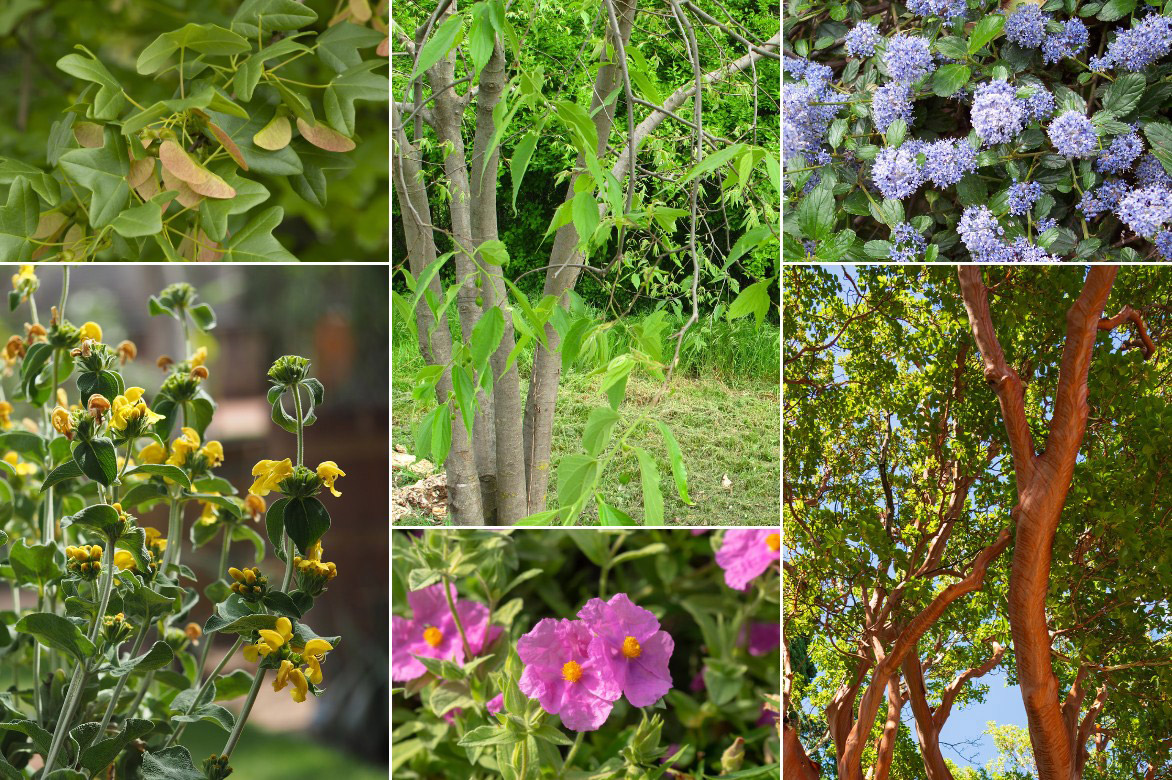
Acer monspessulanum, Celtis australis (photo: Claudio Gioseffi), Ceanothus thyrsiflorus ‘Repens’ (photo: A. Barra), Phlomis fruticosa, Cistus albidus and Arbutus andrachne
In the shade of this large tree, place an Photinia serratifolia with ornamental evergreen foliage all year round. Not far from it, in a large park, other characterful trees can be introduced without competing with it: holm oak, sycamore maple, Montpellier maple.
Useful resources
- Discover our selection of shade trees for large gardens.
- Some notable trees to plant in a park.
- Subscribe!
- Contents
This form is protected by reCAPTCHA - the Google Privacy Policy and Terms of Service apply.

































Comments