Choosing the right gooseberry bush
Our buyer's guide to choosing the best gooseberry variety
Contents
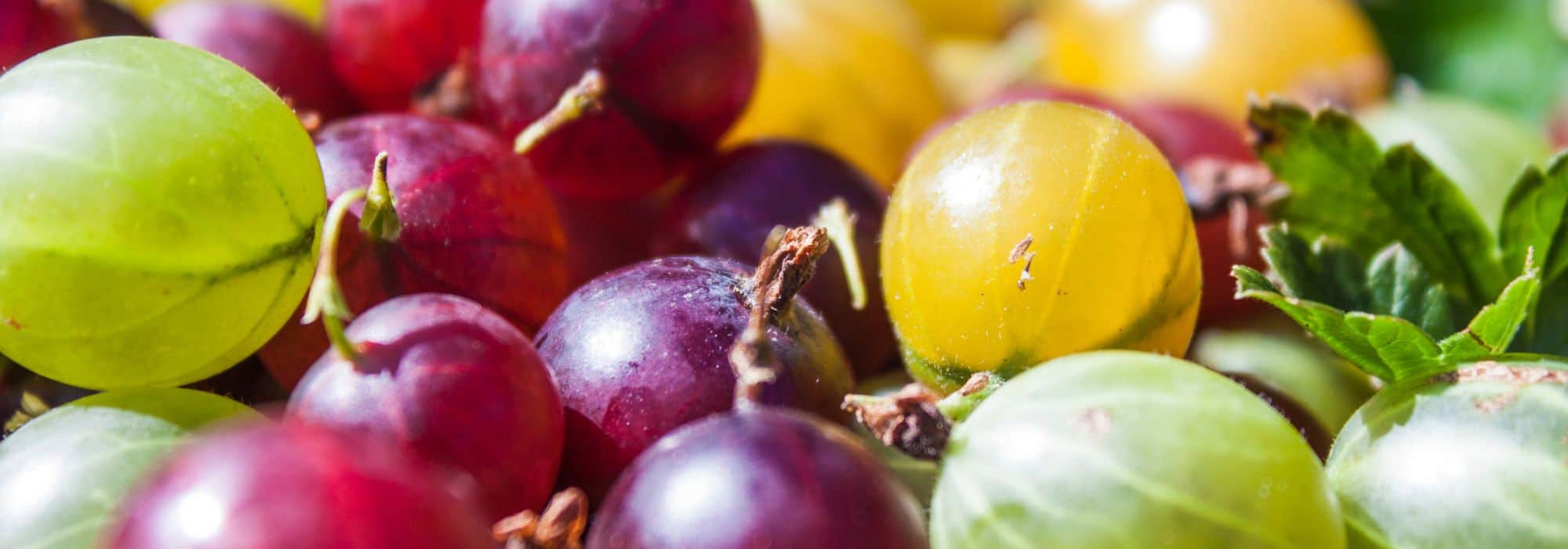
Ovoid, globose, translucent… fruits of the gooseberry bush (Ribes uva-cripsa) are easy to recognise. With a diameter of 1 to 3 cm depending on variety, gooseberries offer flavours ranging from mild and sweet to sugary or tart. If you wonder why this small fruit bears such a name, it is simply because the English used to make a sweet-and-sour sauce from it that went well with fish, particularly mackerel. In France, it is given other equally odd and colourful names: “raisin crépu” (crinkled grape), “croque-poux” (louse-cruncher), “pétasse” and “gogotte”!
The gooseberry bush forms indeed a handsome shrub growing like a bush, fairly vigorous, rarely exceeding 1.50 m in height and 75 cm in width. It bears deciduous, dentate and downy foliage, and very discreet greenish-white spring flowers. Very hardy (below -20°C), the gooseberry bush can be grown in ground or in a container, preferably in partial shade, in fresh to moist soil.
To help you choose among the many varieties of gooseberry bush, discover our selection made according to different criteria of flavour, growing requirements and yield…

Depending on the colour of gooseberries
Gooseberry fruits are easily distinguished from redcurrants. First by the way they grow! Indeed, redcurrants develop in clusters while gooseberries are produced directly on the stems, more or less thorny depending on variety. Gooseberries are therefore solitary fruits harvested one by one according to ripeness, whereas other currants are harvested as whole clusters.
Gooseberries also differ by the size of their berries, much larger and translucent. They can take different colours depending on variety. They are also rich in vitamins A, B and C and in minerals (calcium, iron, potassium and phosphorus) and are low in calories.
Green‑yellow gooseberries
Some gooseberry varieties produce berries with colours ranging from green to yellow, more or less hairy. The flesh is generally yellowish. Thus, variety ‘Lady Sun’ yields dark yellow fruits, very juicy. As its name suggests, variety ‘Golden Drop’ produces fruits more yellow than green. They are even a tangy yellow, and slightly fuzzy.
The gooseberry ‘Hinnonmaki vert’ is particularly interesting for its fruits heavily tinged with very pale green, with very pale flesh. In contrast, fruits of variety ‘Lady Delameen’ are very translucent green and above all of a large size.
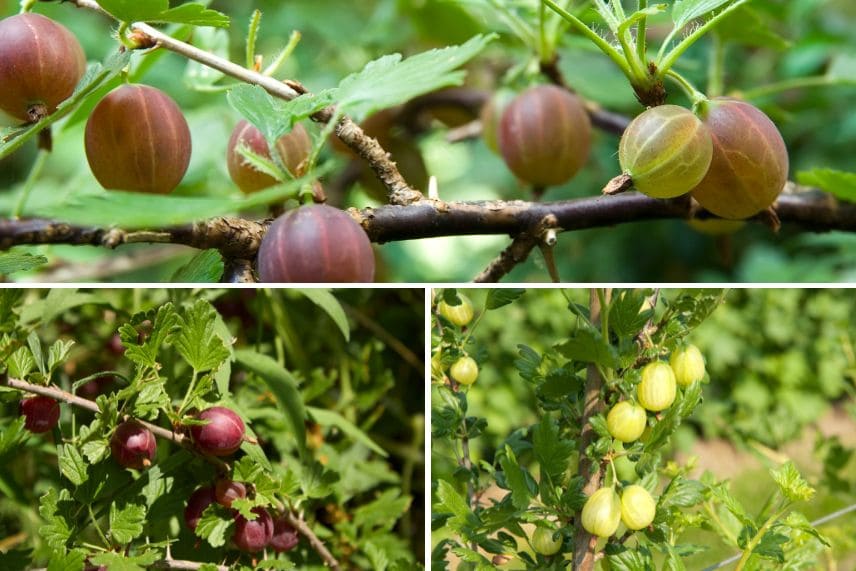
Gooseberry bushes come in green‑yellow, red or pink berries
Variety ‘Invicta’ produces fruits of a very pale yellow‑green that appears almost white. However, they are firm and juicy.
Red gooseberries
Some gooseberry varieties produce beautiful deep‑red berries. ‘Captivator’ yields burgundy fruits from the first year, with juicy, firm and well‑scented flesh. The gooseberry ‘Hinnonmaki Rouge’ produces large, rounded fruits with a dark red epidermis and yellow flesh. Fruits of ‘Freedonia’ are a very characteristic wine‑red, as are those of ‘Winham’s Industry’.
Berries of variety ‘Worcesterberry’ are also red but of a much lighter shade.
Pink gooseberries
Fruits of variety ‘Pixwell’ are pale green at first, then become reddish to pink‑violet at maturity. As they acquire their almost plum colour, these fruits also become sweeter.
Read also
Currant bush: planting, pruning and careDepending on the flavour of berries
Gooseberries are very tasty, with a fruity, well-balanced flavour that is both sweet and tangy. However, acidity is more pronounced in some varieties while others display a much milder flavour. Thus, variety ‘Freedonia’ is known for a very fruity flavour, both mild and sweet, well balanced. Likewise ‘Golden Drop’, whose fruits are mild and sweet. ‘Captivator’ offers the same taste characteristics: its gooseberries are well balanced, perhaps a little more tangy than sweet.
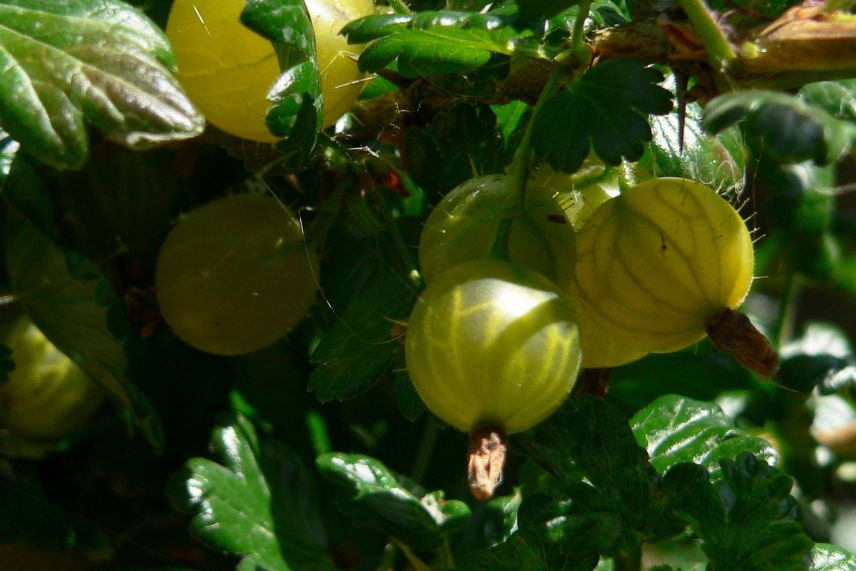
Gooseberries of variety ‘Golden Drop’ are particularly mild and sweet
More tangy are the fruits of ‘Lady Sun’ as well as those of ‘Lady Delameen’. However, sweetness is clearly detectable on tasting. Gooseberries of variety ‘Winham’s Industry’ have a high sugar content but present a very slightly tangy flavour.
By contrast, with the large fruits of ‘Worcesterberry’, tanginess prevails, but delicately and with finesse, making the taste buds tingle. They are also very fragrant.
As a reminder, fruits appear on 2- to 3-year-old main branches, which should be cut back by two-thirds to encourage and develop branching. By contrast, old stems, dead or dry, are cut back to ground level.
Depending on yield
Depending on variety, gooseberry harvest takes place in July–August and lasts about a month. Fruits are picked individually as they ripen. On average, An adult plant produces between 1.5 and 3 kg of fruit per year. Gooseberry bushes are also self-fertile, meaning pollination does not require the presence of several plants. They are therefore a small fruit shrub well worth planting in the vegetable garden, with a lifespan of about 12 to 15 years.
Among the different varieties, some are known for their excellent productivity. This is the case with ‘Invicta’, which from July produces large ovoid fruits with yellow flesh that are both juicy and fragrant. With this variety, you can expect an abundant harvest of around 3 to 5 kg per plant. It is also a gooseberry bush that is very resistant to the common diseases affecting this species, namely powdery mildew and leaf spots. Its only minor drawback, which makes harvesting a little tricky, is that it is very thorny. A pair of gloves is essential for harvesting the fruit.
‘Freedonia‘ also stands out as one of the most productive varieties. Less precocious than ‘Invicta’, this variety therefore produces from August round fruits with rose-red skin and translucent pink flesh, aromatic and well balanced between sweet and tart flavours. And the icing on the cake is that this variety is practically inermous, making harvesting much easier.
As for ‘Pixwell‘, a cultivar of American origin, it is also very productive. Depending on growing conditions, the harvest can reach up to 6 kg per plant of medium-sized fruit with sweet flesh and tangy skin, which change from green to pinkish-violet as they ripen. With this variety, it is best to pick the fruits just between the green and red stages.
By ease of harvest
With gooseberry bushes, harvesting can seem easy because of the shrubs’ size. Indeed, this small, growing-like-a-bush shrub, with a rigid habit, upright or slightly curved, and deciduous, medium-green, pubescent foliage, ranges from 80 cm to 1.50 m in height, with a nearly identical spread. So no need for a stepladder or ladder to pick gooseberries. This shrub is also well suited to a fruit hedge with raspberry plants or blackcurrant bushes.
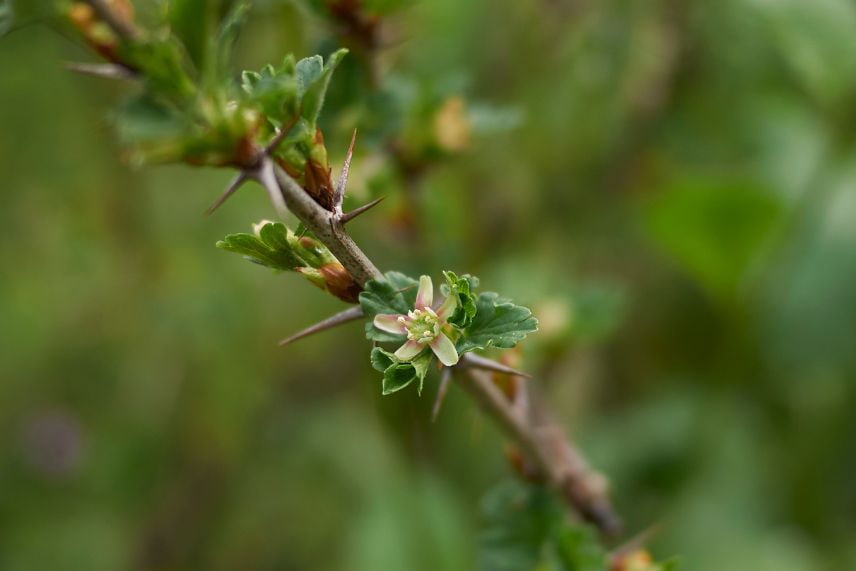
Thorns make harvesting gooseberries painful
The biggest difficulty when harvesting gooseberry bushes lies in the thorns. Indeed, this shrub, bearing thin twigs, carries three-branched thorns on its stems, very sharp. The presence of these very acute thorns can make picking tedious. Yet some horticultural varieties are known for their lack of thorns. Starting with ‘Captivator’, one of the rare inermous varieties with fairly dark garnet-red fruit and a tangy flavour.
Another variety makes picking less painful: ‘Lady Sun’. Although thorny, this variety presents noticeably fewer thorns than other varieties. Another variety is remarkable for having almost no thorns, namely ‘Freedonia’, a late variety producing nicely round gooseberries with a pinkish, slightly velvety skin.
To make cultivating gooseberry bushes easier, it is also possible to train them. Olivier explains how to do this in a short video, filmed alongside Patrick Chantry.
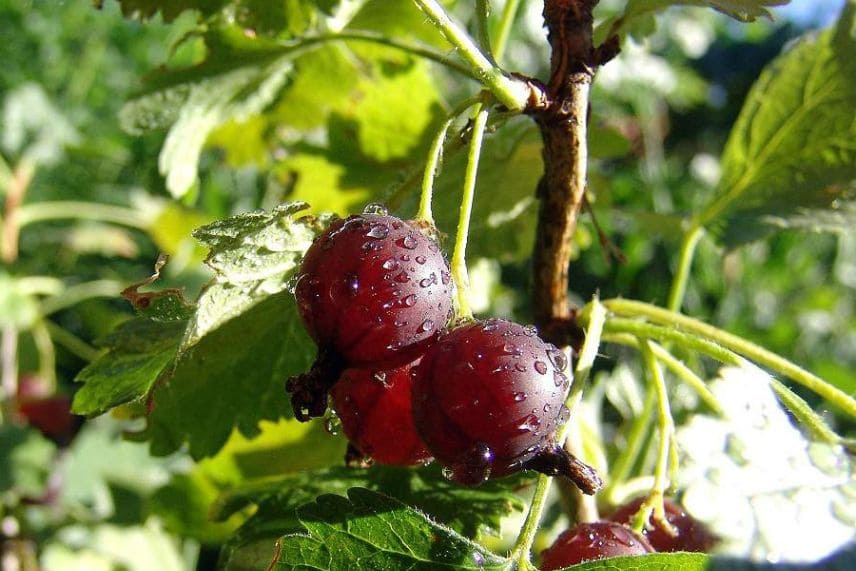
Variety ‘Captivator’ is inermous
Based on their disease resistance
Gooseberry can be susceptible to certain common cryptogamous diseases. Among the most common diseases is powdery mildew, recognisable by white, powdery patches on leaves, young shoots and berries. Leaf spot disease is also fairly common on gooseberries, especially on gooseberry bushes. It appears as spots that form and enlarge on foliage from June. Each spot has a pale central area with a brown margin. Leaves turn yellow and drop.
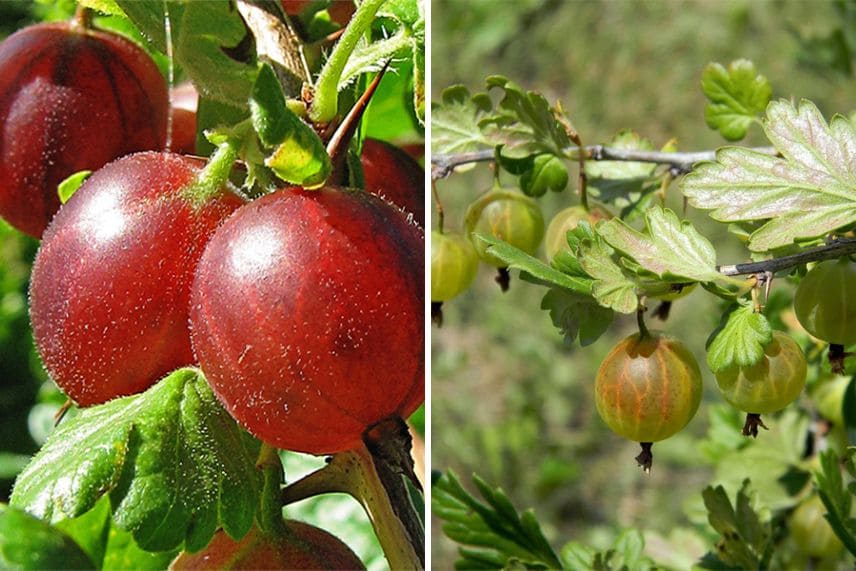
Varieties ‘Hinnonmaki rouge’ and ‘Hinnonmaki vert’ show resistance to powdery mildew
Breeders have developed vigorous varieties much more resistant to these cryptogamous diseases. Varieties ‘Hinnonmaki rouge’ and ‘Hinnonmaki vert’ are recognised for their great robustness, as are ‘Worcesterberry’ and ‘Freedonia’.
- Subscribe!
- Contents
This form is protected by reCAPTCHA - the Google Privacy Policy and Terms of Service apply.


































Comments