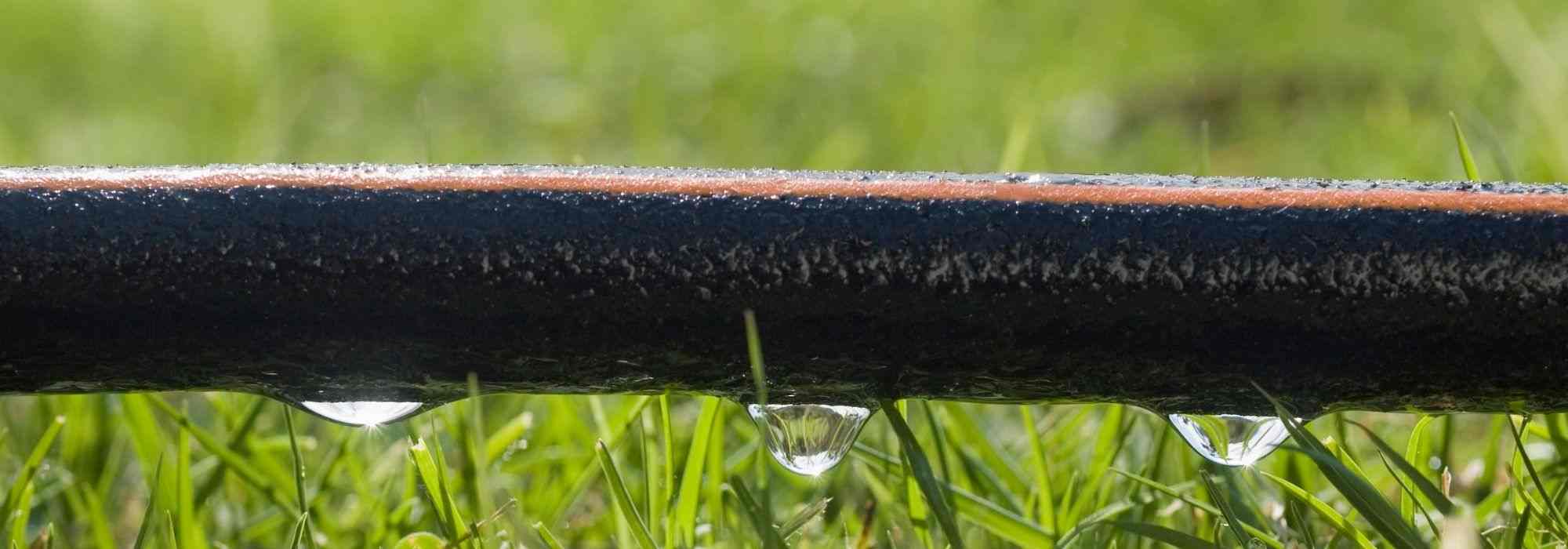
Watering with a soaker hose
All our advice
Contents
Watering with a microporous hose offers many advantages. First, it optimises irrigation of your garden. Indeed, this perforated hose is a simple-to-use, practical system that is easy to install. Positioned as close as possible to the base of the plants, watering is very targeted. Water seeps slowly, drip by drip, through the pores of the hose, which promotes good soil soaking and consistent moisture. Plants therefore absorb water optimally and regularly when supplied directly. No more water waste and soil leaching. Irrigation with a porous hose allows also time savings by avoiding trips back and forth with a heavy watering can. Finally, it is generally affordable. Discover our tips for watering your ornamental garden or vegetable patch in an eco-friendly and economical way.
What is a microporous hose?
A microporous hose is made of porous rubber. Finely perforated along its entire length, it lets water bead out gently through its micropores. Irrigation with this type of hose consists of watering a planting area all at once efficiently, at very low pressure, directly at base of plants. This hose has the advantage of not wetting foliage and therefore reducing risk of cryptogamous diseases (fungi) that often affect certain sensitive plants such as tomatoes, squashes or roses following overhead watering. This irrigation solution also helps to limit water waste: water penetrates slowly into soil, plants have time to absorb it and there is therefore no leaching of soil. In addition, soil remains friable, is not compacted thanks to fine seepage from the hose and no surface crust forms (hard, impermeable crust increasing run-off). However, porous hose has a few minor drawbacks. First, being fine to allow seepage, it is less sturdy than a conventional garden hose. Also, water distribution is less uniform along its length; there is generally more water flowing at start of hose than at end.
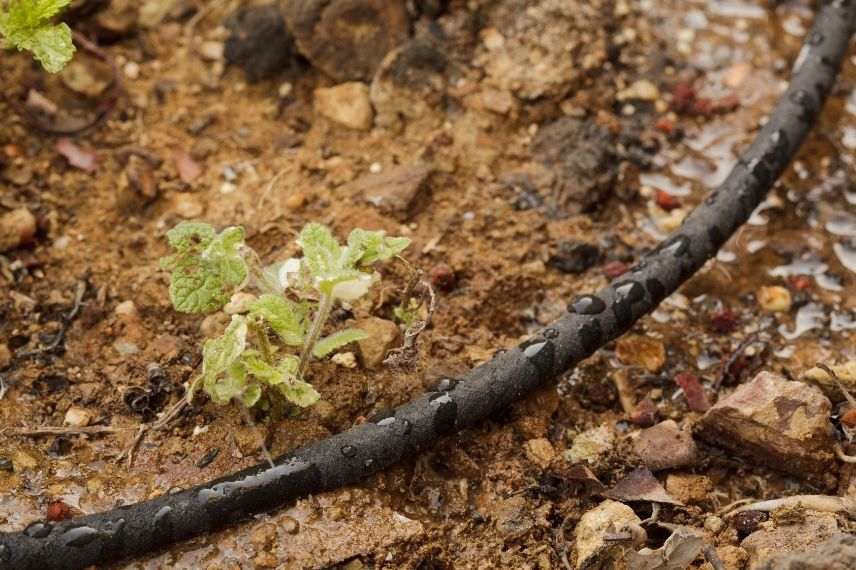
Watering at base of plants
How to choose your microporous hose?
Microporous hoses are reasonably priced, ranging from €10 to €60 depending on kit and included accessories (tap nozzle, various connectors). Lengths can range from 10 up to 200 metres. Very long hoses need to be cut into several sections. Connected together and laid side by side between rows of vegetables in a vegetable patch, they form a circuit supplied by a single water feed. Several plantings can then be watered simultaneously. Depending on garden size, the hose can be adjusted to required length by cutting or extending it. Note manufacturers recommend maximum lengths to respect. The most commonly offered hose diameter is 12 mm (internal), i.e. 16 mm external diameter. Before purchase, estimate roughly the distance to be watered. Hose should be longer than your measurement. In addition, the flow rate, usually specified on each model’s packaging, varies between 1 and 10 litres of water per metre of hose per hour.
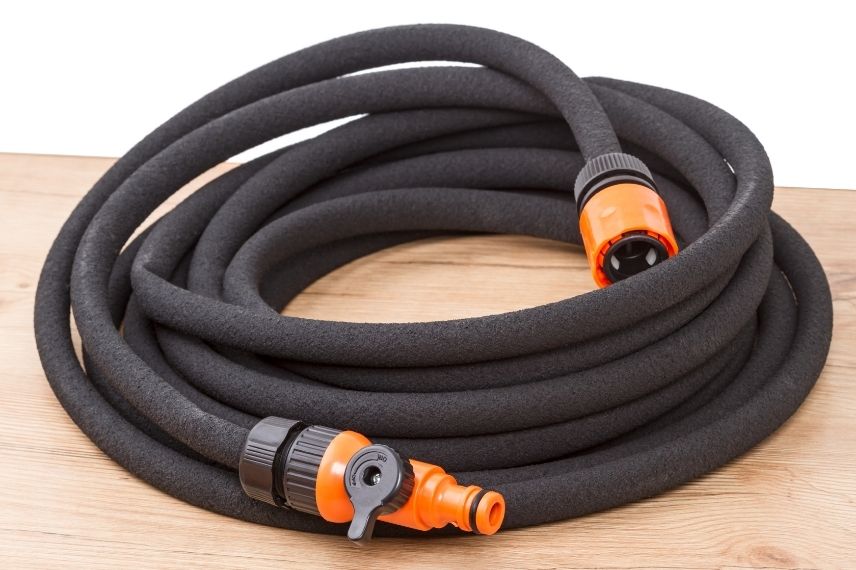
Microporous hose with fittings
Installation and use of a microporous hose
Where and when to install it?
This system is ideal for irrigation of young shrub hedges, flower beds, borders, narrow plantings and for sowing in rows in vegetable garden. It can remain in same place from spring to summer or be moved from one spot to another over time, as you wish, to water other plantings. Installation of hose should be carried out after planting or sowing, before plants grow too large.
How to connect it?
If water supply is far from planting, your micro-porous hose should be connected to a standard garden hose which, in turn, is attached to your tap. It can also be connected directly to water outlet if that is next to area to be watered. A water butt used to collect rainwater can also feed the hose, provided tank is elevated above planting to be watered.
End fittings that attach to hose ends are often included in kits to make installation easier, such as a connector with flow control that allows you to control and adjust water flow. Optionally, connectors in various shapes (angled, T- or Y-shaped) make it possible to create an inline irrigation network.
By adding a programmer, you can set up automatic irrigation of your garden at most favourable times or when you are away.
How to lay it out?
Thanks to its flexibility, micro-porous hose is easy to position. Once connected to the water supply or to standard garden hose, unroll hose and lay it in a straight line at base of closely planted plants or along sowing rows. For more widely spaced plants or staggered plantings, zigzag it between crops. Check that end cap connector is correctly secured.
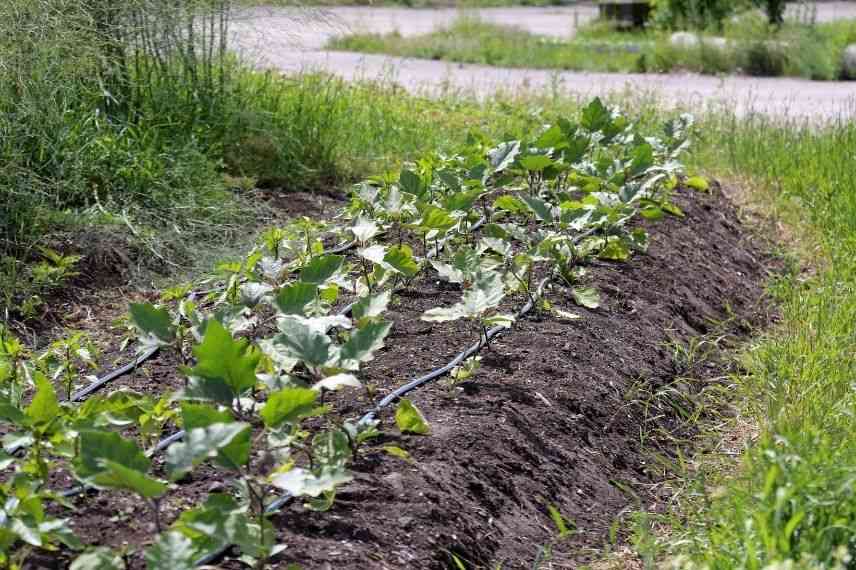
Layout of inline irrigation hoses (photo NRCS Massachusetts – Flickr)
How to water with a micro-porous hose?
Very gently, open tap only slightly. Operating at low pressure (0.5 to 1 bar), tap must not be fully opened, otherwise porous hose may be damaged. If water is ejected as small jets, pressure is too high and tap opening should be adjusted. Water should diffuse as droplets along entire length of hose. Carry out a test to check amount of water delivered to plants over a set time by placing a large container between two plants beneath hose, then opening valve. You can then observe flow rate and optimise setting.
When and how long to water?
Morning and evening are best times of day to run irrigation. As for duration, 15 minutes usually sufficient. Of course, this time should be adjusted according to weather. In case of severe drought or heatwave, watering should be extended. To reduce evaporation, mulch is effective and does not interfere with operation of micro-porous hose.
Can a micro-porous hose be buried?
Depending on brand, some hoses can be buried in a shallow trench (a few centimetres) and covered with a layer of loose soil. If packaging or user manual does not explicitly state this, we advise against burying it. Contact with soil may block micro-perforations. However, it is perfectly possible to hide it under a mulch, such as flax mulch.
Read also
How to manage watering in a greenhouse?How to properly clean and maintain a porous hose?
Micro-perforations can become blocked by limescale in tap water or by small particles in rainwater. Clean hose twice a year: during use mid-season and before storing for winter. To do this, soak it in a mix of water (5 litres) and white vinegar (1 litre) for around ten hours. Once limescale has dissolved, rinse hose thoroughly, empty well and leave to dry before storing by coiling it back on itself. Store flat if possible.
Tip: If hose is connected to a rainwater tank, place a nylon stocking at start of circuit; it will act as a filter.
- Subscribe!
- Contents
This form is protected by reCAPTCHA - the Google Privacy Policy and Terms of Service apply.

































Comments