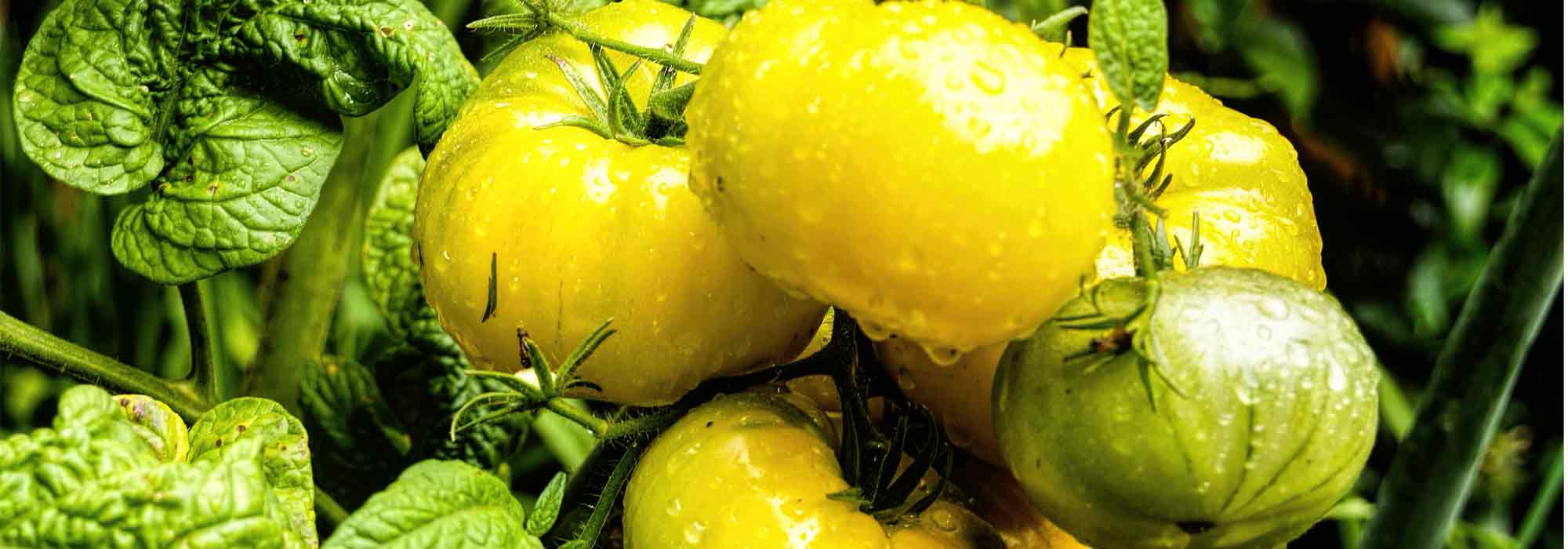
How to create a tomato variety?
Create a new tomato by cross-pollination
Contents
Tomatoes are not subject to the same risks of cross-pollination as other vegetables in the vegetable garden. Indeed, tomato flowers are essentially closed, and the female part is protected by the male part, which forms around it the structure known as the staminal tube. In other words, the tomato flower is not easily pollinated by external sources. Note, however, that this characteristic mainly applies to cultivated tomatoes, as wild tomatoes cross-pollinate freely.
While this is undeniably an advantage for preserving heirloom tomato strains, it also means that mixing genes to create a new tomato variety is a rather delicate operation. Rest assured, the process is not insurmountable!
Selection of parent plants, pollen collection and manual fertilization, harvesting and successive sowings of seeds until stabilisation of the new variety… discover, in the lines that follow, everything you need to know to create a tomato variety.
Basic principles for creating a tomato variety
To create a new tomato variety, it is necessary to cross two parent varieties, both chosen for their complementary characteristics.
For example, one would choose to hybridise an early, high-yielding variety with another variety well known for its flavour and disease resistance.
The possibilities for cross-breeding are therefore virtually endless, given the many interesting characteristics found among the numerous tomato varieties. Selection of the parent varieties is therefore made according to what you expect from their cross-breeding.
Note: cross-breeding is carried out between two stabilised tomato varieties, never using an F1 hybrid.
Cross-pollination
To hybridise tomatoes, most often the cross-pollination technique is used. Although not difficult in itself, the operation requires a great deal of care and patience. Indeed, this involves dissecting tomato flowers to transfer, by hand, pollen from the first parent to the stigma of the second parent.
Hybridisation: prerequisites
Prepare labels showing names of two parents to be crossed.
Decide in advance which of the two will be the female parent. As it will bear the fruit, prefer the more vigorous variety.
When to start hybridisation?
To start, wait until both tomato varieties are flowering at the same time. Then prefer to carry out hybridisation after the garden has enjoyed several consecutive days of fine weather.
How to proceed?
Select on the female parent a flower at an advanced bud stage, yellow or yellowing, but still closed to be sure it has not yet self-pollinated.
Note that your chosen flower must be alone on the cluster. Remove all other flowers present on the stem to avoid accidental pollen transfer.
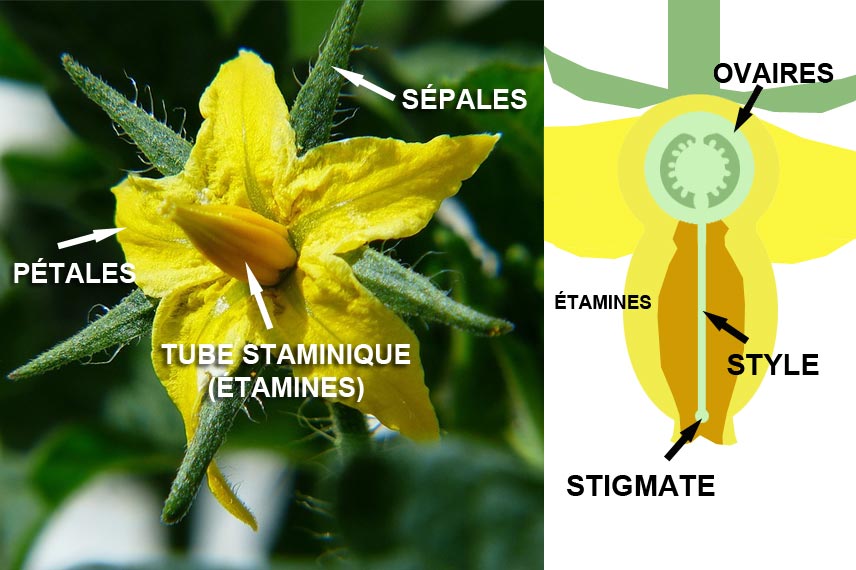
Then proceed as follows :
- Gently remove the petals from the flower using tweezers.
- Emasculate the flower by removing its male parts. Take care not to damage the style (female part) when removing the stamens (male part). Note failures are not uncommon at this stage. You will probably need to try several times to acquire sufficient dexterity.
- Once the style is bare, attach the label to the flower pedicel, and wait 24 to 36 hours before pollinating it.
- After this period, take an open flower from the male parent.
- Still using the tweezers, open its stamen tube lengthwise by spreading the stamens apart.
- Collect the pollen by running a brush from base to tip over the inner surface of the stamen.
- Apply the pollen to the tip of the style of the emasculated flower, called the stigma.
After a few days of patience, if fruit begins to develop, this means the cross has succeeded. If not, you will probably need to repeat the procedure.
Discover other Tomatoes
View all →
Available in 1 sizes
Available in 1 sizes
Available in 1 sizes
Available in 1 sizes

Available in 1 sizes

Available in 1 sizes
Available in 1 sizes

Available in 1 sizes
Available in 1 sizes
Available in 1 sizes
Year-after-year selection to obtain a stable variety
Selection work is only just beginning here. It will take you several years before you achieve a tomato variety that produces identical young plants from one spring to the next.
F1 hybrid seeds
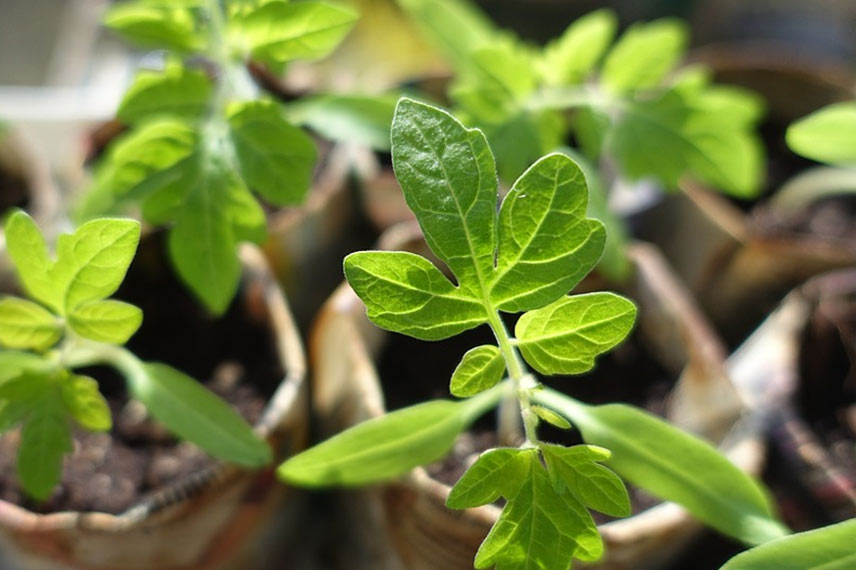
Once that the fruit thus pollinated is ripe, harvest it and collect its seeds. Clean the seeds and let them dry. Then place them in an envelope kept out of the light until the following spring. You have thus obtained home-grown F1 hybrid seeds.
The following year, carry out your sowing of hybrid tomato seeds, as you would for any other tomato variety. Bear in mind, however, that the young plants obtained will show the parental characters, but you will not be able to predict exactly what the result of this combination of characters will be.
F2 hybrid seeds
When the hybrid young plant produces in turn fruit, harvest those that best match your expectations. Collect from them once again the seeds for your sowing the following year. The seeds thus obtained can then be referred to as F2.
F3 hybrid seeds
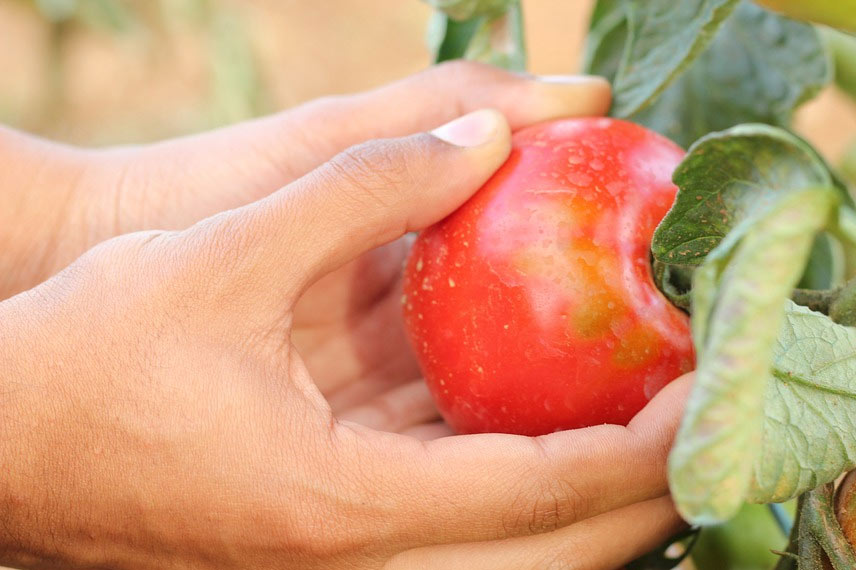
The following year, once these F2 seeds are sown, you will notice that each of the young plants obtained offers a great diversity of characteristics, the parents’ genes expressing themselves differently from one plant to another. You must then sort your young plants according to the characteristics originally sought. So harvest F3 seeds only from the young plants that meet your expectations.
F4 hybrid seeds
The same applies to the generation of hybrid tomato young plants derived from F3 seeds. Continue therefore your selection, and harvest the seeds that will form the F4 generation.
Stabilisation
It is estimated that after six generations (sometimes ten), it is then possible to obtain a new tomato variety that meets your initial objectives. The line will then have stabilised, and produce identical young plants from one year to the next.
- Subscribe!
- Contents
This form is protected by reCAPTCHA - the Google Privacy Policy and Terms of Service apply.

































Comments